
Search

James P. Sumner (65 KP) rated Joker (2019) in Movies
Oct 7, 2019
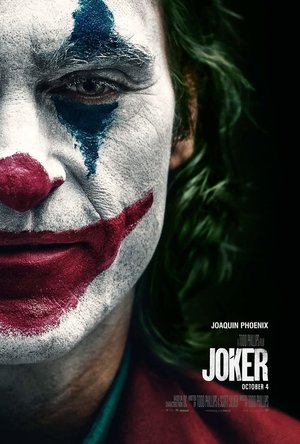


An unapologetic masterpiece.
I wasn't sure what to expect going into this film. I'm a huge comic book fan, so the controversy and scepticism surrounding this movie, as well as the fact it's based within an established story world, had me doubting how it would work and how good the execution of it would be.
I certainly didn't expect the film I saw.
The basis for this movie is simple and effective: Arthur Fleck (played with a career-defining performance by Joaquin Phoenix) is a mentally unstable and depressed wannabe stand-up comedian working as a clown in a 1980's Gotham City. The movie is set against a backdrop of civil unrest, worker strikes and city-wide poverty, with each being exaggerated to highlight both the severity of each one for the purposes of the film, but also to shine a spotlight on how tough the real world was back then.
A potentially fatal encounter on a late-night subway acts as a catalyst for Fleck, who is shown throughout the first 20 minutes to be a man living on a knife's edge - balancing his own pitiful existence with the way society believes he should act. You get the sense that it would take nothing more than a gentle push to send him one way or the other. The subway was that push.
In a city that very much reflects the character's state of mind, this served to push more than just Arthur Fleck over the edge. Because he happened to be dressed as a clown at the time, and because the *cough* victims *cough* worked for Wayne Enterprises (ran by Thomas Wayne himself), it's seen by many as a vigilante act - someone standing up to the rich elite. This sparks outrage and rioting across the city. The idea of a man dressed as a clown standing up for the little guy becomes the poster child for a civil movement, much in the styling of "V For Vendetta (2005)".
The more Arthur Fleck struggles personally, the worse the streets of Gotham seem to get, as if society's increasing tension and unrest is somehow linked to his own state of mind. He finally realises what he has inadvertently created and begins to transform himself into the vigilante icon people already believe him to be.
Despite the slow pace of the movie, it never seems to drag. The story of Fleck's inevitable descent unfolds patiently, showing you exactly what it wants you to see, when it wants you to see it. It's a very bold and confident step for a movie which would've known how controversial it was going to be before it was even released.
The style of the film is extremely clever. The soundtrack is little more than a low-frequency hum, which plays almost constantly throughout. The camerawork is also exceptional. In every shot of Arthur Fleck, the camera centres on him before very slowly closing in on him. It's subtle, perhaps only a few millimetres per shot, but it's noticeable enough that you feel yourself being pulled in, being legitimately gripped by what you're watching. This contributes to what is, overall, a claustrophobic and sometimes unnerving experience.
There has been initial controversy about the film, with reports of people leaving the cinema during the screening for varying reasons. You see this from time to time, and the cynic in me thinks this is rarely more than clever marketing tactics. And then you see the comments from people who say they were disgusted or sickened or disturbed or whatever. I usually think it's a load of rubbish. That people are just saying that for attention. I don't honestly believe people who are that easily offended by a movie would choose to see something that is clearly going to show you all the things you don't like.
However, with "Joker (2019)", I can actually understand it. This is a truly disturbing film. Not for the violence, which has been the subject of much debate. There's actually very little violence in the movie, but when it's there, it's pretty graphic, admittedly. But honestly, it's not anywhere near as bad as a lot of things you see nowadays. No, it's disturbing because of how believable Arthur Fleck is. Seeing how unstable he is. Seeing how easy he can choose to do terrible things. It's... uncomfortable to watch at times, but only because it's so well done, so well written, you hate yourself for sympathising with him.
If I had to draw comparisons for this movie, I would have to say it's more subtle than "Watchmen (2009)", it's grittier and darker than "Taxi Driver (1976)" or "Fight Club (1999)" and much more uncompromising and unapologetic than "Natural Born Killers (1994)". It is truly a modern-day masterpiece. There are two major plot twists, both occurring in the second act, which really highlight the genius behind the screenplay. This movie is written perfectly, and executed the same way on-screen by Phoenix, who draws from both Jack Nicholson and Heath Ledger to create this unique take on the character which more than holds its own.
Now, before I summarise, we do need to address the whole... y'know... Batman thing. This is the Joker's origin story, after all.
So, first thing's first: this isn't a comic book movie. Not by a long way. This belongs in the same conversation as Goodfellas, not Guardians of the Galaxy. Director Todd Phillips has even stated that this is simply a stand-alone movie telling a story that needed to be told. Yes, it has references to the DC comic universe (which I will omit here for fear of venturing into spolier territory), but it's unlikely to ever cross over with DC's attempt to mimic the MCU.
The nods to the comics are infrequent but clever, touching on themes and events we already know, and in some cases, re-writing them entirely - which definitely will draw controversy with the hardcore comic fans. For example, I did question why they used the civil unrest subplot and backdrop to essentially try and make Wayne Enterprises the villain of the story, but like it or not, it was necessary and it worked like a charm.
I don't know if this was intentional or not, but there was one scene in particular towards the end of the movie where the Joker (as he is now) is riding in the back of a car with his head leaning against the window. The camera was on the wing mirror, focused on his face, and almost frame-for-frame it reminded me of the iconic scene in "The Dark Knight (2008)" where Heath Ledger's Joker is driving with his head out of the window. I'd like to think this was a gracious tribute to the performance of this character that will never be topped.
For a film that breaks the conventions of story-telling by having no real build-up or climactic ending, I have to say I can't remember a time when I was so blown away, so moved, and so affected by a movie. As close to perfect as you'll see this year.
10/10
A quick side note:
The show "13 Reasons Why" has a disclaimer at the beginning of each series from the cast that essentially warns viewers that, due to the sensitive nature of the content, it's inadvisable to watch it if you're struggling with depression or suicidal thoughts. I genuinely think this film should carry a similar notice. It's a dark, grim, unrelenting journey into one man's depressive life. While I won't ever believe listening to Marilyn Manson can make you want to shoot schoolchildren, I do think that if someone is struggling with suicidal thoughts or depression, this movie probably isn't for them. The story focuses on the media glorifying the terrible acts of someone who is mentally unstable. Yes, it's a movie. It's not real. But for someone in a very bad place themselves, this probably isn't the kind of thing you need to, or should, watch.
I certainly didn't expect the film I saw.
The basis for this movie is simple and effective: Arthur Fleck (played with a career-defining performance by Joaquin Phoenix) is a mentally unstable and depressed wannabe stand-up comedian working as a clown in a 1980's Gotham City. The movie is set against a backdrop of civil unrest, worker strikes and city-wide poverty, with each being exaggerated to highlight both the severity of each one for the purposes of the film, but also to shine a spotlight on how tough the real world was back then.
A potentially fatal encounter on a late-night subway acts as a catalyst for Fleck, who is shown throughout the first 20 minutes to be a man living on a knife's edge - balancing his own pitiful existence with the way society believes he should act. You get the sense that it would take nothing more than a gentle push to send him one way or the other. The subway was that push.
In a city that very much reflects the character's state of mind, this served to push more than just Arthur Fleck over the edge. Because he happened to be dressed as a clown at the time, and because the *cough* victims *cough* worked for Wayne Enterprises (ran by Thomas Wayne himself), it's seen by many as a vigilante act - someone standing up to the rich elite. This sparks outrage and rioting across the city. The idea of a man dressed as a clown standing up for the little guy becomes the poster child for a civil movement, much in the styling of "V For Vendetta (2005)".
The more Arthur Fleck struggles personally, the worse the streets of Gotham seem to get, as if society's increasing tension and unrest is somehow linked to his own state of mind. He finally realises what he has inadvertently created and begins to transform himself into the vigilante icon people already believe him to be.
Despite the slow pace of the movie, it never seems to drag. The story of Fleck's inevitable descent unfolds patiently, showing you exactly what it wants you to see, when it wants you to see it. It's a very bold and confident step for a movie which would've known how controversial it was going to be before it was even released.
The style of the film is extremely clever. The soundtrack is little more than a low-frequency hum, which plays almost constantly throughout. The camerawork is also exceptional. In every shot of Arthur Fleck, the camera centres on him before very slowly closing in on him. It's subtle, perhaps only a few millimetres per shot, but it's noticeable enough that you feel yourself being pulled in, being legitimately gripped by what you're watching. This contributes to what is, overall, a claustrophobic and sometimes unnerving experience.
There has been initial controversy about the film, with reports of people leaving the cinema during the screening for varying reasons. You see this from time to time, and the cynic in me thinks this is rarely more than clever marketing tactics. And then you see the comments from people who say they were disgusted or sickened or disturbed or whatever. I usually think it's a load of rubbish. That people are just saying that for attention. I don't honestly believe people who are that easily offended by a movie would choose to see something that is clearly going to show you all the things you don't like.
However, with "Joker (2019)", I can actually understand it. This is a truly disturbing film. Not for the violence, which has been the subject of much debate. There's actually very little violence in the movie, but when it's there, it's pretty graphic, admittedly. But honestly, it's not anywhere near as bad as a lot of things you see nowadays. No, it's disturbing because of how believable Arthur Fleck is. Seeing how unstable he is. Seeing how easy he can choose to do terrible things. It's... uncomfortable to watch at times, but only because it's so well done, so well written, you hate yourself for sympathising with him.
If I had to draw comparisons for this movie, I would have to say it's more subtle than "Watchmen (2009)", it's grittier and darker than "Taxi Driver (1976)" or "Fight Club (1999)" and much more uncompromising and unapologetic than "Natural Born Killers (1994)". It is truly a modern-day masterpiece. There are two major plot twists, both occurring in the second act, which really highlight the genius behind the screenplay. This movie is written perfectly, and executed the same way on-screen by Phoenix, who draws from both Jack Nicholson and Heath Ledger to create this unique take on the character which more than holds its own.
Now, before I summarise, we do need to address the whole... y'know... Batman thing. This is the Joker's origin story, after all.
So, first thing's first: this isn't a comic book movie. Not by a long way. This belongs in the same conversation as Goodfellas, not Guardians of the Galaxy. Director Todd Phillips has even stated that this is simply a stand-alone movie telling a story that needed to be told. Yes, it has references to the DC comic universe (which I will omit here for fear of venturing into spolier territory), but it's unlikely to ever cross over with DC's attempt to mimic the MCU.
The nods to the comics are infrequent but clever, touching on themes and events we already know, and in some cases, re-writing them entirely - which definitely will draw controversy with the hardcore comic fans. For example, I did question why they used the civil unrest subplot and backdrop to essentially try and make Wayne Enterprises the villain of the story, but like it or not, it was necessary and it worked like a charm.
I don't know if this was intentional or not, but there was one scene in particular towards the end of the movie where the Joker (as he is now) is riding in the back of a car with his head leaning against the window. The camera was on the wing mirror, focused on his face, and almost frame-for-frame it reminded me of the iconic scene in "The Dark Knight (2008)" where Heath Ledger's Joker is driving with his head out of the window. I'd like to think this was a gracious tribute to the performance of this character that will never be topped.
For a film that breaks the conventions of story-telling by having no real build-up or climactic ending, I have to say I can't remember a time when I was so blown away, so moved, and so affected by a movie. As close to perfect as you'll see this year.
10/10
A quick side note:
The show "13 Reasons Why" has a disclaimer at the beginning of each series from the cast that essentially warns viewers that, due to the sensitive nature of the content, it's inadvisable to watch it if you're struggling with depression or suicidal thoughts. I genuinely think this film should carry a similar notice. It's a dark, grim, unrelenting journey into one man's depressive life. While I won't ever believe listening to Marilyn Manson can make you want to shoot schoolchildren, I do think that if someone is struggling with suicidal thoughts or depression, this movie probably isn't for them. The story focuses on the media glorifying the terrible acts of someone who is mentally unstable. Yes, it's a movie. It's not real. But for someone in a very bad place themselves, this probably isn't the kind of thing you need to, or should, watch.

Ryan Hill (152 KP) rated Man of Steel (2013) in Movies
May 21, 2019

"It's not an s on my world it means hope"
Superman's origin has been retold in comics more than any other character. But how do you reboot such a beloved icon in film form without making his origin feel unnecessary to go through again. By handing him over to the masters of all reboots. While developing the story for The Dark Knight Rises, Director Christopher Nolan and writer David S. Goyer developed a new way to bring the man of steel to life. The duo previously saved Batman and made him a cinematic legend again and now they plan to save Superman from uneven sequels and a stale image. And who did they invite to lead this revival? None other than director Zack Snyder, a visual wizard with a lackluster reputation in storytelling thanks to his remake of Dawn of the Dead, 300, Watchmen and Sucker Punch. Now despite some filmmaking stumbles along the way, the trio make for a surprisingly great combination and deliver the modern Superman film we have waited 75 years for with Man of Steel. We are given both Superman and a Clark Kent who doesn't know his place in the world and is coming to terms with how the public perceives him.
As with all Superman mythology the story begins on Krypton, the planet that's hundreds of thousands of civilized years ahead of Earth. The whole planet is science fiction nirvana. The zooming spaceships, winged beast and advanced technology crafted from liquid metal. For once we experience the entire planet, not just a couple rooms made out of cheap crystal. There's a system of ways things work that has never been fleshed out on screen before. The government, the science and it's culture. At the head of the planet's scientific research is Jor-El (Russell Crowe) and he has discovered proof that may lead to the planet's destruction. But unfortunately his pleas towards his leaders are ignored due to the ongoing civil war with Jor-El's old friend General Zod (Michael Shannon). There's more history to the Jor-El/ Zod dynamic this time around which just enriches their conflict. There are millions of stories concerning Marlon Brando's $3 million dollar slumming in the '78 film. He intentionally mispronounced Krypton, made outrageous production demands and in the end that put him on the cutting room floor for it's sequel. Crowe see's Brando's paycheck acting and raises it with a performance full of gravitas. When conflicts begin to soften and punishments are served, more and more evidence begin to support Jor-El's claims of Krypton's destruction and with time and options exhausted, his final resort is to save his only son Kal-El. Still an infant, Jor-El concludes the only way his son will ever have any chance of life is to be sent to a more primitive alien planet and have a significant advantage over it's species. So he sends him to Earth, where it's sun will grant his body incredible abilities.
Jump 33 years later as the adult Kal-El, now under the name Clark Kent (Henry Cavil) is wandering the world trying to discover his place in it. There are multiple flashbacks to Clark's childhood with his adoptive parents Jonathan and Martha Kent (Kevin Costner and Diane Lane). Costner gives a heartfelt performance full of warmth as the father concerned with his son's well-being if the world rejects him. If someone with Clark's abilities were to be exposed to the public, it would be one of the biggest moments in human history. His existence alone would make everyone question religion, science and everything they had ever thought about the universe. And Lane strikes quiet, charming notes as the more understanding mother. Throughout his entire life Clark had been using his powers in secret, from saving derrick workers from fires to fighting a massive hurricane in his hometown of Smallville. If there's one word to describe Cavil's performance it's "Modern". He is not the "Aw shucks" farm boy nor is he the angst filled mess many feared he was going to be. There's still a humbleness, a sweetness and a sense of forthrightness to him. And of course he is a perfect physical representation of the character as well. As much as Christopher Reeve's performance still means to audiences today, it has reached a point where it has unfairly overshadowed the character. The idealism of Reeve's Superman isn't relevant today, at least not in the purest sense of the word. Cavil's Superman understands the difficulty of what his powers mean for the world and understands there really isn't anything to smile about.
Of course you can't tell a Superman story without his supporting players at the Daily Planet. Perry White (Laurence Fishburne, in an inspired piece of casting) knows the only way a newspaper could ever have hope at functioning these days is if they had major exclusives to the first alien ever revealed to the masses. Enter Lois Lane (Amy Adams, full of spunk) who has been chasing Clark's story all across the globe for several years. Lois has always been a tricky character to adapt, seeing how it's difficult for audiences to like her if you get it wrong. Can somebody who can't see Superman past a pair of thick glasses really be a Pulitzer Prize winning journalist? Thankfully, this Lois isn't as Shrill as Margot Kidder or as bland as Kate Bosworth in previous versions. Snyder and Adams treat Lois as the talented, dedicated journalist we know she really is by making her active at her profession and not having to prove anything just because she's a woman. The only thing she has to prove are her credentials, which are just as impressive as everything else about her. While some might be disappointed by the lack of romance between the couple, but to be fair, this isn't a Lois and Clark story, it's the story of Clark discovering his place in the world. But the spark between the two of them is certainly present when they first meet. For Clark to go from a lifetime of loneliness to have somebody instantly discover everything about you and admiring all of it is a luxury he has never had before.
Clark couldn't have picked a better time to make his presence known to the world, with General Zod returning to finish what he started. The cinematic Superman villains have created a history of scenery chewing performances dating back to Gene Hackman's Lex Luthor. Terrence Stamp was the first actor to portray Zod on film in Superman ll, but despite some memorable dialogue ("Kneel before Zod!") he was still essentially just a typical mustache twirling maniac. Zod this time around is nothing but bold tactics and is fully fledged to preserving his lost race, no matter what the cost. Michael Shannon is nothing but pure, demented megalomania. The only disadvantage Zod possesses though is that his body isn't used to the yellow son and must try and control all his new powers at once. Clark on the other hand, has had a lifetime to perfect his gifts.
Visual aesthetics have leaped skyscrapers since the Donner era. Snyder takes that technological advantage and gives fans what they have dreamed of for years. To put it bluntly, to see Supes punch somebody- really fucking hard! Snyder understands all of Superman's abilities and test them on the grandest scale imaginable. And he does so without resorting to his trademark slow-mo sequences and putting macho fantasies on display. In terms of action alone this is the first time the character has been given justice. Even as bombastic or repetitive it occasionally becomes, it can easily be forgiven because the character has been so overdue for it. It is unfortunate that cinematographer Amir Morki captures it all in a rather unpolished handheld style. But at least Snyder's chaotic direction finally seems to have a sense of aim and isn't relying on green screen to tell his stories. It may have to do with the influence of Nolan producing, but the end result is gloriously flashy, gritty and contains a well needed sense of gravity. And while Man of Steel never reaches the same dizzying heights as Nolan's Dark Knight trilogy, it still preserves and reintroduces it's legendary character in the same respect.
Snyder, Nolan and Goyer certainly have stayed true to the modern lore of Superman by adapting elements of his classic comic stories Birthright, Man for All Seasons, New Krypton and Earth One, and do so without damaging or over-explaining any of it. But if anything it's a science fiction story first then a comic book adaptation, in the vein of such first contact films as the original Day the Earth Stood Still and War of the Worlds. Man of Steel reminds us that Superman is not human, but still represents the best that humanity has to offer. It's the story of fathers, understanding your roots and taking hold of your destiny. It's always been that way for Superman, ever since he was created by young Jewish immigrants Jerry Siegel and Joe Shuster.
While the original theme music by John Williams is still the granddaddy of all superhero cinematic anthems, Hans Zimmer still creates a thunderous pulse of a score. Atmospheric, gentle and adrenaline charged, Zimmer accompanies Clark's drifting, the concerns of his parents and Superman's clashes with one perfect note after another.
Christopher Reeve for many people is still going to be the definitive Superman, but that's too be expected. For so long that's all we've had to go on as far as a great man of steel. There are multiple generations separating Reeve and Cavil and multiple generations separating their audiences. Will everyone accept Cavil as this modern Superman that understands today's humanity? As with Batman Begins, the conclusion doesn't technically set itself up for a sequel but it establishes an iconic part of it's universe in a nice wink that makes you want to see more of it. It isn't quite perfect, but this universe certainly deserved to grow. Because unlike what occurred in 2006, this time Superman really has returned.
As with all Superman mythology the story begins on Krypton, the planet that's hundreds of thousands of civilized years ahead of Earth. The whole planet is science fiction nirvana. The zooming spaceships, winged beast and advanced technology crafted from liquid metal. For once we experience the entire planet, not just a couple rooms made out of cheap crystal. There's a system of ways things work that has never been fleshed out on screen before. The government, the science and it's culture. At the head of the planet's scientific research is Jor-El (Russell Crowe) and he has discovered proof that may lead to the planet's destruction. But unfortunately his pleas towards his leaders are ignored due to the ongoing civil war with Jor-El's old friend General Zod (Michael Shannon). There's more history to the Jor-El/ Zod dynamic this time around which just enriches their conflict. There are millions of stories concerning Marlon Brando's $3 million dollar slumming in the '78 film. He intentionally mispronounced Krypton, made outrageous production demands and in the end that put him on the cutting room floor for it's sequel. Crowe see's Brando's paycheck acting and raises it with a performance full of gravitas. When conflicts begin to soften and punishments are served, more and more evidence begin to support Jor-El's claims of Krypton's destruction and with time and options exhausted, his final resort is to save his only son Kal-El. Still an infant, Jor-El concludes the only way his son will ever have any chance of life is to be sent to a more primitive alien planet and have a significant advantage over it's species. So he sends him to Earth, where it's sun will grant his body incredible abilities.
Jump 33 years later as the adult Kal-El, now under the name Clark Kent (Henry Cavil) is wandering the world trying to discover his place in it. There are multiple flashbacks to Clark's childhood with his adoptive parents Jonathan and Martha Kent (Kevin Costner and Diane Lane). Costner gives a heartfelt performance full of warmth as the father concerned with his son's well-being if the world rejects him. If someone with Clark's abilities were to be exposed to the public, it would be one of the biggest moments in human history. His existence alone would make everyone question religion, science and everything they had ever thought about the universe. And Lane strikes quiet, charming notes as the more understanding mother. Throughout his entire life Clark had been using his powers in secret, from saving derrick workers from fires to fighting a massive hurricane in his hometown of Smallville. If there's one word to describe Cavil's performance it's "Modern". He is not the "Aw shucks" farm boy nor is he the angst filled mess many feared he was going to be. There's still a humbleness, a sweetness and a sense of forthrightness to him. And of course he is a perfect physical representation of the character as well. As much as Christopher Reeve's performance still means to audiences today, it has reached a point where it has unfairly overshadowed the character. The idealism of Reeve's Superman isn't relevant today, at least not in the purest sense of the word. Cavil's Superman understands the difficulty of what his powers mean for the world and understands there really isn't anything to smile about.
Of course you can't tell a Superman story without his supporting players at the Daily Planet. Perry White (Laurence Fishburne, in an inspired piece of casting) knows the only way a newspaper could ever have hope at functioning these days is if they had major exclusives to the first alien ever revealed to the masses. Enter Lois Lane (Amy Adams, full of spunk) who has been chasing Clark's story all across the globe for several years. Lois has always been a tricky character to adapt, seeing how it's difficult for audiences to like her if you get it wrong. Can somebody who can't see Superman past a pair of thick glasses really be a Pulitzer Prize winning journalist? Thankfully, this Lois isn't as Shrill as Margot Kidder or as bland as Kate Bosworth in previous versions. Snyder and Adams treat Lois as the talented, dedicated journalist we know she really is by making her active at her profession and not having to prove anything just because she's a woman. The only thing she has to prove are her credentials, which are just as impressive as everything else about her. While some might be disappointed by the lack of romance between the couple, but to be fair, this isn't a Lois and Clark story, it's the story of Clark discovering his place in the world. But the spark between the two of them is certainly present when they first meet. For Clark to go from a lifetime of loneliness to have somebody instantly discover everything about you and admiring all of it is a luxury he has never had before.
Clark couldn't have picked a better time to make his presence known to the world, with General Zod returning to finish what he started. The cinematic Superman villains have created a history of scenery chewing performances dating back to Gene Hackman's Lex Luthor. Terrence Stamp was the first actor to portray Zod on film in Superman ll, but despite some memorable dialogue ("Kneel before Zod!") he was still essentially just a typical mustache twirling maniac. Zod this time around is nothing but bold tactics and is fully fledged to preserving his lost race, no matter what the cost. Michael Shannon is nothing but pure, demented megalomania. The only disadvantage Zod possesses though is that his body isn't used to the yellow son and must try and control all his new powers at once. Clark on the other hand, has had a lifetime to perfect his gifts.
Visual aesthetics have leaped skyscrapers since the Donner era. Snyder takes that technological advantage and gives fans what they have dreamed of for years. To put it bluntly, to see Supes punch somebody- really fucking hard! Snyder understands all of Superman's abilities and test them on the grandest scale imaginable. And he does so without resorting to his trademark slow-mo sequences and putting macho fantasies on display. In terms of action alone this is the first time the character has been given justice. Even as bombastic or repetitive it occasionally becomes, it can easily be forgiven because the character has been so overdue for it. It is unfortunate that cinematographer Amir Morki captures it all in a rather unpolished handheld style. But at least Snyder's chaotic direction finally seems to have a sense of aim and isn't relying on green screen to tell his stories. It may have to do with the influence of Nolan producing, but the end result is gloriously flashy, gritty and contains a well needed sense of gravity. And while Man of Steel never reaches the same dizzying heights as Nolan's Dark Knight trilogy, it still preserves and reintroduces it's legendary character in the same respect.
Snyder, Nolan and Goyer certainly have stayed true to the modern lore of Superman by adapting elements of his classic comic stories Birthright, Man for All Seasons, New Krypton and Earth One, and do so without damaging or over-explaining any of it. But if anything it's a science fiction story first then a comic book adaptation, in the vein of such first contact films as the original Day the Earth Stood Still and War of the Worlds. Man of Steel reminds us that Superman is not human, but still represents the best that humanity has to offer. It's the story of fathers, understanding your roots and taking hold of your destiny. It's always been that way for Superman, ever since he was created by young Jewish immigrants Jerry Siegel and Joe Shuster.
While the original theme music by John Williams is still the granddaddy of all superhero cinematic anthems, Hans Zimmer still creates a thunderous pulse of a score. Atmospheric, gentle and adrenaline charged, Zimmer accompanies Clark's drifting, the concerns of his parents and Superman's clashes with one perfect note after another.
Christopher Reeve for many people is still going to be the definitive Superman, but that's too be expected. For so long that's all we've had to go on as far as a great man of steel. There are multiple generations separating Reeve and Cavil and multiple generations separating their audiences. Will everyone accept Cavil as this modern Superman that understands today's humanity? As with Batman Begins, the conclusion doesn't technically set itself up for a sequel but it establishes an iconic part of it's universe in a nice wink that makes you want to see more of it. It isn't quite perfect, but this universe certainly deserved to grow. Because unlike what occurred in 2006, this time Superman really has returned.