Search
Search results

Bookapotamus (289 KP) rated Unsheltered in Books
Jun 22, 2018


Not a favorite
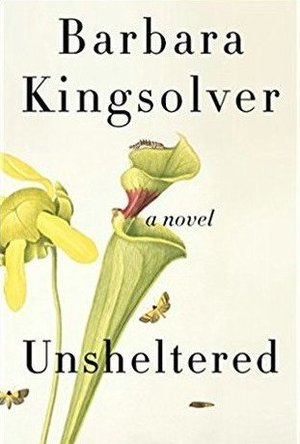
I am typically a big fan of Barbara Kingsolver's books. Her writing is exquisite and reads like a dream. She is usually one of the few writers of historical novels I read as it's not really my most favorite genre, but unfortunately this one was a total snooze-fest. I almost quit several times, I was just SO bored! Honestly, nothing really happens in this book, there are a few deaths, a shooting, and drama of beliefs with the push and pull of science vs. God, but it was just so uneventful and without buildup - I found myself really struggling to get through it.
The book is set in two different eras, in the same town, on the same street, in Vineland, NJ. Willa Knox, present day, is fictional. AS is her family. Mary Treat in 1871, is apparently a real person, a lover of science, plants and creatures. The connection between the two stories is a bit weak I felt. Not sure if it was intentional, but it just didn't really capture my attention in the way I believe it was supposed to. In 1871, Thatcher Greenwood (fictional as well I believe?) meets Mary, and they get along because their beliefs mesh well - they believe in science, and follow Darwin's teachings, and Thatcher finds himself in a bit of jam as the town is "ruled" by Landis, a strict believer that God has created everything, and science is witchcraft.
Willa, is struggling when we meet her - in fact, her entire family - every single one of them seems to have some serious issues! I found it depressing and really didn't find myself liking any of the family very much. We see some similar struggles to Thatcher (their houses are both falling down around them) but not much else mirrors the past.
I do know based on initial talk of this novel, and the title of course, that the joining of the past vs present is in the "Unsheltered" aspect of both of these stories, the way Landis mirrors Trump, the ways a world can come unraveled by rules and rulers, as well as the courage to stand for what you believe in. But it just wasn't there for me - it was so subtle, uninspiring, slow and boring.
I did LOVE the plants and stuff - it's the main reason I wanted to read this book, but sadly they just weren't too heavily featured. The little tidbits of random facts about Pitcher Plants and Venus Fly Traps, and some other plants and bugs was pretty fun and fascinating and I wish there was more of it.
In the end - this just fell really flat for me. I know some of the people and events are real, but some are not (which was hard for me to follow) and Barbara's research and writing is top-notch. I just really wanted an engaging story, with a bit more interest, and a lot less heavy eyelid.
The book is set in two different eras, in the same town, on the same street, in Vineland, NJ. Willa Knox, present day, is fictional. AS is her family. Mary Treat in 1871, is apparently a real person, a lover of science, plants and creatures. The connection between the two stories is a bit weak I felt. Not sure if it was intentional, but it just didn't really capture my attention in the way I believe it was supposed to. In 1871, Thatcher Greenwood (fictional as well I believe?) meets Mary, and they get along because their beliefs mesh well - they believe in science, and follow Darwin's teachings, and Thatcher finds himself in a bit of jam as the town is "ruled" by Landis, a strict believer that God has created everything, and science is witchcraft.
Willa, is struggling when we meet her - in fact, her entire family - every single one of them seems to have some serious issues! I found it depressing and really didn't find myself liking any of the family very much. We see some similar struggles to Thatcher (their houses are both falling down around them) but not much else mirrors the past.
I do know based on initial talk of this novel, and the title of course, that the joining of the past vs present is in the "Unsheltered" aspect of both of these stories, the way Landis mirrors Trump, the ways a world can come unraveled by rules and rulers, as well as the courage to stand for what you believe in. But it just wasn't there for me - it was so subtle, uninspiring, slow and boring.
I did LOVE the plants and stuff - it's the main reason I wanted to read this book, but sadly they just weren't too heavily featured. The little tidbits of random facts about Pitcher Plants and Venus Fly Traps, and some other plants and bugs was pretty fun and fascinating and I wish there was more of it.
In the end - this just fell really flat for me. I know some of the people and events are real, but some are not (which was hard for me to follow) and Barbara's research and writing is top-notch. I just really wanted an engaging story, with a bit more interest, and a lot less heavy eyelid.

Louise (64 KP) rated When Dimple Met Rishi in Books
Jul 2, 2018


*I received a copy of this book from Netgalley and the publisher in exchange for an honest review*
I do love myself a good YA contemporary, and this delivered. ‘When Dimple met Rishi’ has everything that you could want in a coming of age novel, it was diverse, there was romance, families, friendships and the difficulties of growing up.
I couldn’t believe this was Sandhya Menon’s debut novel as the characters felt so real and the writing was amazing.
Dimple Shah is 17 and looking forward to the prospect of college, she has enrolled for a course for computer programming and has so many ideas buzzing around her brain. Her mother has always wanted Dimple to get married and find the IIH (Ideal Indian Husband) than become a student. Dimple also wants to attend a summer camp where she can show off her programming skills and start making a name for herself, the course costs $1000 and is shocked when her parents allow her to go but what she doesn’t know is that they have other plans.
Rishi Patel wants to follow in his parents footsteps with his own arranged marriage. He too is to go to the same Summer camp where he is to meet his future bride, however when they come face to face he realises that Dimple’s parents have failed to mention the arrangement to her. Her future of computer programming seems to be slipping from her grasp at lightening speed.
This book was great it is told in dual perspective and the chapters are just the right length. The writing is easy to read and with the dual narrative you don’t get bored.
Going in to this book I had very little knowledge of Indian culture and arranged marriages as it’s not something that I have read about. This is a positive light on arranged marriages rather than the awful experiences that you hear about. I felt the impact that their culture had on these individuals to carry on with the traditions as expected of them.
I loved the characters Dimple and Rishi,they were different yet so right for each other. Dimple was head strong, determined to make a future out of something she loved and living her life as she wanted rather than expectations. She found her mother over-bearing at times as she was forceful in her suggestions. I loved that Dimple was a nerd, nowadays it’s cool to be one and be different from others and I see that now that I am older but not necessarily when I was a teenager.
Rishi was adorable, he was funny,nerdy and also really talented. He wanted to please his parents by doing what they thought best in his school work but when it came to LOVE, Rishi wanted to follow his culture, have an arranged marriage and children. This was firmly his decision and he such passion when he talked about his culture and the times he visited India.
There were a couple of reasons that I didn’t rate this book a 5 stars and they were; I didn’t really like Ashish’s storyline. The plot was a little predictable, it had great feels in the middle but then it fizzled out as I was getting frustrated with Dimples stubbornness.
This book was great it’s a perfect summer/beach read, I loved the characters, the feels that I got from Menon’s writing and the fulfillment of learning something new. I hope this isn’t the last we see from her as she can only continue to get better.
I rated this 4 out of 5 stars
I do love myself a good YA contemporary, and this delivered. ‘When Dimple met Rishi’ has everything that you could want in a coming of age novel, it was diverse, there was romance, families, friendships and the difficulties of growing up.
I couldn’t believe this was Sandhya Menon’s debut novel as the characters felt so real and the writing was amazing.
Dimple Shah is 17 and looking forward to the prospect of college, she has enrolled for a course for computer programming and has so many ideas buzzing around her brain. Her mother has always wanted Dimple to get married and find the IIH (Ideal Indian Husband) than become a student. Dimple also wants to attend a summer camp where she can show off her programming skills and start making a name for herself, the course costs $1000 and is shocked when her parents allow her to go but what she doesn’t know is that they have other plans.
Rishi Patel wants to follow in his parents footsteps with his own arranged marriage. He too is to go to the same Summer camp where he is to meet his future bride, however when they come face to face he realises that Dimple’s parents have failed to mention the arrangement to her. Her future of computer programming seems to be slipping from her grasp at lightening speed.
This book was great it is told in dual perspective and the chapters are just the right length. The writing is easy to read and with the dual narrative you don’t get bored.
Going in to this book I had very little knowledge of Indian culture and arranged marriages as it’s not something that I have read about. This is a positive light on arranged marriages rather than the awful experiences that you hear about. I felt the impact that their culture had on these individuals to carry on with the traditions as expected of them.
I loved the characters Dimple and Rishi,they were different yet so right for each other. Dimple was head strong, determined to make a future out of something she loved and living her life as she wanted rather than expectations. She found her mother over-bearing at times as she was forceful in her suggestions. I loved that Dimple was a nerd, nowadays it’s cool to be one and be different from others and I see that now that I am older but not necessarily when I was a teenager.
Rishi was adorable, he was funny,nerdy and also really talented. He wanted to please his parents by doing what they thought best in his school work but when it came to LOVE, Rishi wanted to follow his culture, have an arranged marriage and children. This was firmly his decision and he such passion when he talked about his culture and the times he visited India.
There were a couple of reasons that I didn’t rate this book a 5 stars and they were; I didn’t really like Ashish’s storyline. The plot was a little predictable, it had great feels in the middle but then it fizzled out as I was getting frustrated with Dimples stubbornness.
This book was great it’s a perfect summer/beach read, I loved the characters, the feels that I got from Menon’s writing and the fulfillment of learning something new. I hope this isn’t the last we see from her as she can only continue to get better.
I rated this 4 out of 5 stars

Bob Mann (459 KP) rated Gemini Man (2019) in Movies
Nov 10, 2019
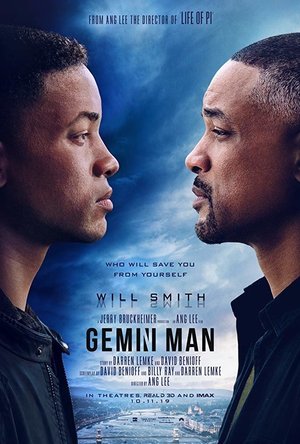


Will Smith plays top US hit-man Henry Brogan who is making the world "safer" one bullet at a time! With the mirror telling him his age, Henry hands in his firearm (not withstanding the arsenal under his stairs) to spend more time going fishing and doing the crossword.
But all is not well when Henry's 'one for the road' hit turns out to not be quite what it seems.
Teaming up with marina manager Danny (Danny??) Zakarweski (Mary Elizabeth Winstead), the pair go on the run from operatives of a government-funded black-ops organization called Gemini. Gemini is a private semi-military organization (didn't we just go here with "Angel Has Fallen"?!). These 'baddie goodies' would rather see Henry - and all who know him - fed to the fishes rather than have him catching them.
But one of these guys, under the direct command of Gemini-boss Clay Verris (Clive Owen), looks kinda familiar...
Let's focus on the positives for a minute. This is a spy movie that has all of the polish that the recent "Angel has Fallen" didn't have. Some nice photogenic locations fly in and out again (Georgia, Budapest and Colombia: the latter for no obvious reason I can remember!). It occasionally reminded me of a glossy Bond film, but without Bond.
There are also some high-class special effects (the special effects coordinator is Mark Hawker). A moonlit CGI Gulfstream with a zoom into the cockpit is particularly impressive.
Some of the action set pieces also entertain. A Will-on-Will bike chase is well done, and I've not seen a bike used as a hand-to-hand weapon in this way before!
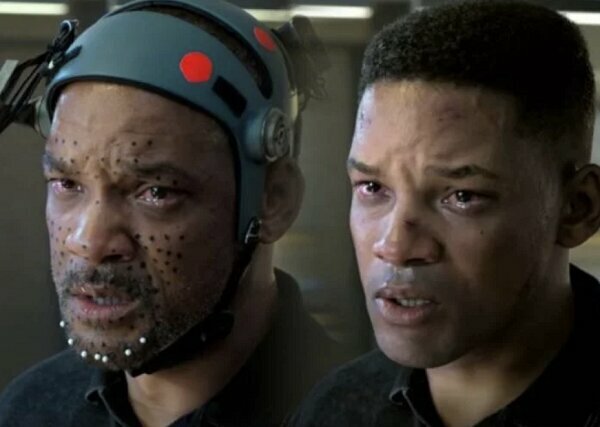
And Will Smith is no doubt a class act, with his 'youngification' (I'm not sure what the official word is) also being effectively done. I also enjoyed Mary Elizabeth Winstead, who was great in "10 Cloverfield Lane". The lady has real screen presence.
But man oh man, that script. Let's name the guilty parties in this film: the scriptwriters David Benioff (Game of Thrones), Darren Lemke and Billy Ray. (I'll put Ray last in the list, since the story was by Benioff and Lemke and this has the smell to me of Ray - who has a history of some great scripts like Captain Phillips under his name - being drafted in to steady a listing ship).
Some of the dialogue in this film is not just a bit dodgy. It's head in the hands groan-worthy (and I actually did at times: fortunately the cinema was barely half full and I was on my own in the whole row). And some of it is just plain offensive. Henry meets his old pal Jack Willis (Douglas Hodge) on his yacht where he explains his wife is on a trip to Paris as a scantily clad dolly-bird wanders past. Henry comically rolls his eyes at this adulterous behaviour, with some sort of "Jack, what are you loike!" comment. Cringe-worthy.
Will Smith, Mary Elizabeth Winstead and Benedict Wong (their ally, adding some comic relief) are clearly good actors. But the script often makes them look utterly vacuous and stupid. And Lee seems to have a "good enough, move on" approach to the filming. One jaw-dropping moment has Will Smith telling the others that they are going to Budapest. "Budapest?" Winstead and Wong are supposed to say in union, but mistime it. "Can we do that again?". Nope. It's on the screen.
As for Clive Owen... sorry, he's really not in the same acting league, and the script does him even fewer favours. As he says at one point "It's like the Hindenburg crashing into the Titanic". I couldn't have put it better myself.
"Uncanny Valley". You know this phrase. The Princess Leia and Moff Tarkin scenes in "Rogue One" is the classic example. Effects that don't quite work on the big screen. "But" - you say to yourself - "Dr Bob just said that the 'youngification' of Will Smith was done really well?". And I'll repeat again that it was. It's on a par with Samuel L. Jackson's 'youngification' in "Captain Marvel". Where something strange happens is in the film's overall projection. Ang Lee has tried again with his experiment of filming at a massive 120 frames per second..... five times the normal movie frame rate of 24 fps. And the quality of the picture - particularly during high-speed action scenes - becomes outstandingly good! But equally it just doesn't 'look right'.
When the human eye presumably works at an equivalent "fps" of thousands of 'frames per second' you'd think that it should all be fine. But for some reason I just found it distracting. Presumably the audiences for "The Jazz Singer" thought the same about sound; and those for "Gone with the Wind" and the "Wizard of Oz" about colour. Maybe we've seen the future, and its the new norm that we just need to get used to. We'll see.
Ang Lee's "Life of Pi" was extraordinary. His "Hulk" was one of the poorest of the Marvel canon. Unfortunately, this movie is at the "Hulk" end of the spectrum. Which is a real shame. The duo of the 51 year old Smith and the 35 year old Winstead work really well together. They have great chemistry, but, you'll be relieved to hear, avoid any icky love interest.
What a shame. With a different script, and some good production values, this could have been a very different story.
(For the full graphical review, please check out https://bob-the-movie-man.com/2019/10/18/one-manns-movies-film-review-gemini-man-2019/ )
But all is not well when Henry's 'one for the road' hit turns out to not be quite what it seems.
Teaming up with marina manager Danny (Danny??) Zakarweski (Mary Elizabeth Winstead), the pair go on the run from operatives of a government-funded black-ops organization called Gemini. Gemini is a private semi-military organization (didn't we just go here with "Angel Has Fallen"?!). These 'baddie goodies' would rather see Henry - and all who know him - fed to the fishes rather than have him catching them.
But one of these guys, under the direct command of Gemini-boss Clay Verris (Clive Owen), looks kinda familiar...
Let's focus on the positives for a minute. This is a spy movie that has all of the polish that the recent "Angel has Fallen" didn't have. Some nice photogenic locations fly in and out again (Georgia, Budapest and Colombia: the latter for no obvious reason I can remember!). It occasionally reminded me of a glossy Bond film, but without Bond.
There are also some high-class special effects (the special effects coordinator is Mark Hawker). A moonlit CGI Gulfstream with a zoom into the cockpit is particularly impressive.
Some of the action set pieces also entertain. A Will-on-Will bike chase is well done, and I've not seen a bike used as a hand-to-hand weapon in this way before!
And Will Smith is no doubt a class act, with his 'youngification' (I'm not sure what the official word is) also being effectively done. I also enjoyed Mary Elizabeth Winstead, who was great in "10 Cloverfield Lane". The lady has real screen presence.
But man oh man, that script. Let's name the guilty parties in this film: the scriptwriters David Benioff (Game of Thrones), Darren Lemke and Billy Ray. (I'll put Ray last in the list, since the story was by Benioff and Lemke and this has the smell to me of Ray - who has a history of some great scripts like Captain Phillips under his name - being drafted in to steady a listing ship).
Some of the dialogue in this film is not just a bit dodgy. It's head in the hands groan-worthy (and I actually did at times: fortunately the cinema was barely half full and I was on my own in the whole row). And some of it is just plain offensive. Henry meets his old pal Jack Willis (Douglas Hodge) on his yacht where he explains his wife is on a trip to Paris as a scantily clad dolly-bird wanders past. Henry comically rolls his eyes at this adulterous behaviour, with some sort of "Jack, what are you loike!" comment. Cringe-worthy.
Will Smith, Mary Elizabeth Winstead and Benedict Wong (their ally, adding some comic relief) are clearly good actors. But the script often makes them look utterly vacuous and stupid. And Lee seems to have a "good enough, move on" approach to the filming. One jaw-dropping moment has Will Smith telling the others that they are going to Budapest. "Budapest?" Winstead and Wong are supposed to say in union, but mistime it. "Can we do that again?". Nope. It's on the screen.
As for Clive Owen... sorry, he's really not in the same acting league, and the script does him even fewer favours. As he says at one point "It's like the Hindenburg crashing into the Titanic". I couldn't have put it better myself.
"Uncanny Valley". You know this phrase. The Princess Leia and Moff Tarkin scenes in "Rogue One" is the classic example. Effects that don't quite work on the big screen. "But" - you say to yourself - "Dr Bob just said that the 'youngification' of Will Smith was done really well?". And I'll repeat again that it was. It's on a par with Samuel L. Jackson's 'youngification' in "Captain Marvel". Where something strange happens is in the film's overall projection. Ang Lee has tried again with his experiment of filming at a massive 120 frames per second..... five times the normal movie frame rate of 24 fps. And the quality of the picture - particularly during high-speed action scenes - becomes outstandingly good! But equally it just doesn't 'look right'.
When the human eye presumably works at an equivalent "fps" of thousands of 'frames per second' you'd think that it should all be fine. But for some reason I just found it distracting. Presumably the audiences for "The Jazz Singer" thought the same about sound; and those for "Gone with the Wind" and the "Wizard of Oz" about colour. Maybe we've seen the future, and its the new norm that we just need to get used to. We'll see.
Ang Lee's "Life of Pi" was extraordinary. His "Hulk" was one of the poorest of the Marvel canon. Unfortunately, this movie is at the "Hulk" end of the spectrum. Which is a real shame. The duo of the 51 year old Smith and the 35 year old Winstead work really well together. They have great chemistry, but, you'll be relieved to hear, avoid any icky love interest.
What a shame. With a different script, and some good production values, this could have been a very different story.
(For the full graphical review, please check out https://bob-the-movie-man.com/2019/10/18/one-manns-movies-film-review-gemini-man-2019/ )

Natalia (73 KP) rated Detroit: Become Human in Video Games
Dec 17, 2018


Story (4 more)
Characters
Art direction
Soundtrack
Controls
More Than Just a Video Game
I'll admit that hearing the initial premise of Detroit, it seemed to me cliche: a future in which technology has advanced to the point that androids exist, and how these androids themselves gain sentience. This, sprinkled in with messages of how we must improve how we treat the planet, and how we need to have a more consistent moral compass. All this I had expected from the game, but it ended up being so much more than that.
While the messages weaved into the game may not be ones people wanted or enjoyed, it can't be denied that the high-risk choices and the way we see glimpses into a wider world around these certainly engage any player. All of your choices seem high stake. Choices you make are timed, and there's no telling if they will have a completely unexpected outcome in the long-run of the story, and even if they don't, at the moment they feel like the most important choices you will ever make. Sure, some choices end up being, ultimately, pointless, but that seems to be a way that reflects life - you will make choices that seem incredibly important, but in the end, have no major result.
The game also follows three separate storylines - all of which do cross at some point within the game - and each has its charms. The most known story is the one following Connor, an android working in the DPD, but the other two focus on characters of seemingly varying importance: Kara, an android in charge of taking care of her owns daughter Alice, and Markus, an android who is charged with helping an elderly man live his day-to-day life as an artist. Within the game, however, these characters hold a similar kind of importance, perhaps due to the fact you play from their perspectives, or perhaps because you will personally gain an attachment to each characters bonds, motivations and lives as androids in a pivotal point in time for this fictional universe.
It's virtually impossible for me to review this game without mentioning the artistic efforts that went into it. Primarily, I mean the art direction and soundtrack. I'm a fan of 2D Indie games as much as the next person, just as I am a fan of the stylized graphics of the Borderlands universe and the art styles of visual novels, but something about how Detroit teeters on the edge of the uncanny valley in the best way possible speaks to how it's trying to reflect the real world. The depth of field in the game is fantastic, and small details are given their deserved attention to make a player feel as though they are watching a real-world story going on in front of them as they play. The music is certainly something that never fails for me in video games (looking at the Sonic games for influencing my love for video game music) but it completely excels in Detroit. Each story has its own collection of songs and a theme - musical loops that repeat throughout the majority of the songs in their sections to boot - and this truly helps with the experience. The way the music helps create an atmosphere, and how it fits almost perfectly into the actions going on, moves you. I don't know how else I can say this, really. Tempo changes, intensity and volume all come together to immerse you into what is happening on screen and have yet to jar me at all from my experience.
I've already mentioned the effect of the music on your mood, but what links well into this is the representation in the game - literally and symbolically. Literally, you see a diverse cast of characters that, despite most of them being androids, provide more proportional race-representation than actual films. Symbolically though, there is a much deeper idea of the past, present and future shown in the game. Perhaps this is me digging a whole lot further than necessary. I wouldn't be surprised. To avoid making this reviews very much filled with spoilers I'll have to talk in a vaguely cryptic way. Throughout Kara's story, there is a sense of being attached to the past, and this is amplified by the tracks that pair with the gameplay, truly making me cry no matter how many times I've seen a similar scene play out before me in a previous run of the game. This same link is shown with Connor and Markus, who link into the present and the past respectively. Unless I want to give away major plot points, I'll have to end my exploration of that little theory there, but if you are planning on playing through, or perhaps doing it again, it may be a good idea to look out for these themes. When you keep them in mind, they seem to pop up all over.
I know plenty of people have a problem with the pacing of the game, which can be quite understandable. Some scenes are long, some bursts of action seem unnecessary and stick around for a while longer than you may want them to, but this doesn't put as much of a damper on playing as it would seem. Pacing is an issue plenty of games have, and it seems perfectly fine to me in Detroit.
This is certainly turning into a much longer review than I had expected to give. I think to wrap this all up I can say that I have an overwhelmingly positive view of this game. Certainly, if you have enough interest in the game to be looking at reviews, this game is for you. I would recommend this for anyone looking for a unique gaming experience.
While the messages weaved into the game may not be ones people wanted or enjoyed, it can't be denied that the high-risk choices and the way we see glimpses into a wider world around these certainly engage any player. All of your choices seem high stake. Choices you make are timed, and there's no telling if they will have a completely unexpected outcome in the long-run of the story, and even if they don't, at the moment they feel like the most important choices you will ever make. Sure, some choices end up being, ultimately, pointless, but that seems to be a way that reflects life - you will make choices that seem incredibly important, but in the end, have no major result.
The game also follows three separate storylines - all of which do cross at some point within the game - and each has its charms. The most known story is the one following Connor, an android working in the DPD, but the other two focus on characters of seemingly varying importance: Kara, an android in charge of taking care of her owns daughter Alice, and Markus, an android who is charged with helping an elderly man live his day-to-day life as an artist. Within the game, however, these characters hold a similar kind of importance, perhaps due to the fact you play from their perspectives, or perhaps because you will personally gain an attachment to each characters bonds, motivations and lives as androids in a pivotal point in time for this fictional universe.
It's virtually impossible for me to review this game without mentioning the artistic efforts that went into it. Primarily, I mean the art direction and soundtrack. I'm a fan of 2D Indie games as much as the next person, just as I am a fan of the stylized graphics of the Borderlands universe and the art styles of visual novels, but something about how Detroit teeters on the edge of the uncanny valley in the best way possible speaks to how it's trying to reflect the real world. The depth of field in the game is fantastic, and small details are given their deserved attention to make a player feel as though they are watching a real-world story going on in front of them as they play. The music is certainly something that never fails for me in video games (looking at the Sonic games for influencing my love for video game music) but it completely excels in Detroit. Each story has its own collection of songs and a theme - musical loops that repeat throughout the majority of the songs in their sections to boot - and this truly helps with the experience. The way the music helps create an atmosphere, and how it fits almost perfectly into the actions going on, moves you. I don't know how else I can say this, really. Tempo changes, intensity and volume all come together to immerse you into what is happening on screen and have yet to jar me at all from my experience.
I've already mentioned the effect of the music on your mood, but what links well into this is the representation in the game - literally and symbolically. Literally, you see a diverse cast of characters that, despite most of them being androids, provide more proportional race-representation than actual films. Symbolically though, there is a much deeper idea of the past, present and future shown in the game. Perhaps this is me digging a whole lot further than necessary. I wouldn't be surprised. To avoid making this reviews very much filled with spoilers I'll have to talk in a vaguely cryptic way. Throughout Kara's story, there is a sense of being attached to the past, and this is amplified by the tracks that pair with the gameplay, truly making me cry no matter how many times I've seen a similar scene play out before me in a previous run of the game. This same link is shown with Connor and Markus, who link into the present and the past respectively. Unless I want to give away major plot points, I'll have to end my exploration of that little theory there, but if you are planning on playing through, or perhaps doing it again, it may be a good idea to look out for these themes. When you keep them in mind, they seem to pop up all over.
I know plenty of people have a problem with the pacing of the game, which can be quite understandable. Some scenes are long, some bursts of action seem unnecessary and stick around for a while longer than you may want them to, but this doesn't put as much of a damper on playing as it would seem. Pacing is an issue plenty of games have, and it seems perfectly fine to me in Detroit.
This is certainly turning into a much longer review than I had expected to give. I think to wrap this all up I can say that I have an overwhelmingly positive view of this game. Certainly, if you have enough interest in the game to be looking at reviews, this game is for you. I would recommend this for anyone looking for a unique gaming experience.
Sophia (Bookwyrming Thoughts) (530 KP) rated Black Bird of the Gallows in Books
Jan 23, 2020

<b><i>The author/publisher provided a free copy of the book for review purposes - thank you! Receiving a review copy does not guarantee a positive review and therefore do not affect the opinion or content of the review.</i></b>
"I'm going to sleep!” says reviewer, as she furiously types on the keyboard. The next time she looks up, an hour has passed, leaving her with one less hour of sleep and an 8 am class looming closer.
Obviously, I am a complete night owl because all of my decent reviews (aka my usual self and not some half hearted attempt of I THINK THIS IS A REVIEW BUT MY BRAIN IS CRYING SO I GIVE UP *presses schedule*) are all written after all the other souls in the house are sleeping soundly.
<b>There's only one other soul 99% of the time.</b>
Also, I read this weeks ago and completely forgot about the release date being last week, so I started writing other reviews and reading other books and poor Meg Kassel’s debut just sat there crying at me silently, “Are you going to review me?”
<h3 style="text-align: center;"><b>Five Things about Black Bird of the Gallows</b></h3>
At the same time, I had high expectations for Kassel’s debut novel, I also didn't, for some weird and odd reason my brain won't conjure up (the brain is strange, very strange). Here are some things to be aware of before/when picking up the book:
<b>Death is a theme, but used differently </b>- the few novels I've read with a death theme always have something in common: there's probably a grim reaper, and the grim reaper collects souls. Kassel uses a similar theme, but <b>it's not the exact same theme</b>. Honestly, I'm curious if this has mythology ties - is it okay if I kind of regret dropping myth and folklore senior year? I sacrificed it for college credit in speech instead (that's okay, right?).
<b>I am in love with gorgeous lines, and Kassel delivers</b> - I mean, they're not enough that I want to <i>draw </i>them (this is a rare thing to happen), but there are lovely lines and descriptions! And there's humor. I think I enjoyed the humor more often.
<blockquote class="tr_bq">Suddenly, I notice the light steam coming off his skin—the same coming from my mouth when I speak. It feels like I’m sitting next to an attractive, boy-shaped wood stove.</blockquote>
<b>There's a music aspect</b> - As a once upon a violin player, music is important! Okay, maybe not important in my life as much as books are, but music books are cute. Music plays a major role in <i>Black Bird of the Gallows</i> when it comes to character development. When we first meet Angie, she's not as confident with her music as she eventually becomes later in the book.
<b>
</b> <b>Birds! (Okay, Crows)</b> - It's probably a bad idea for me to read another book involving birds after <i>Shatter Me</i>, but I'm fine with birds in this one. The crows are also one of my favorite parts of the book - the crows aren't directly involved with death, but they play a role as well.
<b>It gets dark </b>- <i>Black Bird of the Gallows </i>might be less dark at the beginning, but it gets dark, VERY dark near the end. (Secretly my evil little heart likes this. I'm worried.)
Overall: <i>Black Bird of the Gallows</i> is perfect for those who enjoy books about death but are looking for something different than what we usually see.
<a href="https://bookwyrmingthoughts.com/black-bird-of-gallows-by-meg-kassel-arc-review/"; target="_blank">This review was originally posted on Bookwyrming Thoughts</a>
"I'm going to sleep!” says reviewer, as she furiously types on the keyboard. The next time she looks up, an hour has passed, leaving her with one less hour of sleep and an 8 am class looming closer.
Obviously, I am a complete night owl because all of my decent reviews (aka my usual self and not some half hearted attempt of I THINK THIS IS A REVIEW BUT MY BRAIN IS CRYING SO I GIVE UP *presses schedule*) are all written after all the other souls in the house are sleeping soundly.
<b>There's only one other soul 99% of the time.</b>
Also, I read this weeks ago and completely forgot about the release date being last week, so I started writing other reviews and reading other books and poor Meg Kassel’s debut just sat there crying at me silently, “Are you going to review me?”
<h3 style="text-align: center;"><b>Five Things about Black Bird of the Gallows</b></h3>
At the same time, I had high expectations for Kassel’s debut novel, I also didn't, for some weird and odd reason my brain won't conjure up (the brain is strange, very strange). Here are some things to be aware of before/when picking up the book:
<b>Death is a theme, but used differently </b>- the few novels I've read with a death theme always have something in common: there's probably a grim reaper, and the grim reaper collects souls. Kassel uses a similar theme, but <b>it's not the exact same theme</b>. Honestly, I'm curious if this has mythology ties - is it okay if I kind of regret dropping myth and folklore senior year? I sacrificed it for college credit in speech instead (that's okay, right?).
<b>I am in love with gorgeous lines, and Kassel delivers</b> - I mean, they're not enough that I want to <i>draw </i>them (this is a rare thing to happen), but there are lovely lines and descriptions! And there's humor. I think I enjoyed the humor more often.
<blockquote class="tr_bq">Suddenly, I notice the light steam coming off his skin—the same coming from my mouth when I speak. It feels like I’m sitting next to an attractive, boy-shaped wood stove.</blockquote>
<b>There's a music aspect</b> - As a once upon a violin player, music is important! Okay, maybe not important in my life as much as books are, but music books are cute. Music plays a major role in <i>Black Bird of the Gallows</i> when it comes to character development. When we first meet Angie, she's not as confident with her music as she eventually becomes later in the book.
<b>
</b> <b>Birds! (Okay, Crows)</b> - It's probably a bad idea for me to read another book involving birds after <i>Shatter Me</i>, but I'm fine with birds in this one. The crows are also one of my favorite parts of the book - the crows aren't directly involved with death, but they play a role as well.
<b>It gets dark </b>- <i>Black Bird of the Gallows </i>might be less dark at the beginning, but it gets dark, VERY dark near the end. (Secretly my evil little heart likes this. I'm worried.)
Overall: <i>Black Bird of the Gallows</i> is perfect for those who enjoy books about death but are looking for something different than what we usually see.
<a href="https://bookwyrmingthoughts.com/black-bird-of-gallows-by-meg-kassel-arc-review/"; target="_blank">This review was originally posted on Bookwyrming Thoughts</a>
Purple Phoenix Games (2266 KP) rated Beatdown: Streets of Justice in Tabletop Games
Nov 12, 2019
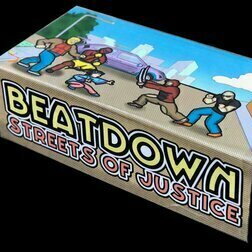
Ever wanted to be a street level thug? Or the hero that fights said thugs? I haven’t really. But! I did used to love playing the Street Fighter games growing up. Now, you cannot Hadouken in real life (right?) and take out E. Honda, but you CAN fight thugs in the street… if you really wanted. You know what? I’m just gonna stick to fighting via card play. Wanna help?
Beatdown: Streets of Justice is a cooperative, push-your-luck, fighting card game that pits you and your team of heroes against waves of thugs and a boss fight. As it is cooperative, the players win by beating the boss (typically in the third wave of fights), or lose by being all knocked out. Silly heroes.
DISCLAIMER: We were provided a copy of this game for the purposes of this review. This is a retail copy of the game, so what you see in these photos is exactly what would be received in your box. I do not intend to cover every single rule included in the rulebook, but will describe the overall game flow and major rule set so that our readers may get a sense of how the game plays. For more in depth rules, you may purchase a copy online or from your FLGS. -T
To setup, each player takes a player mat, chooses a hero to play, and takes the dice of matching color to use during the game. Shuffle all the different decks of cards and place them on the table within easy reach of all players. The Attacks deck will include the base attack cards plus all cards that match the players in the game (like Invicta’s attack cards if she is in the game). Place tiny clear cubes on your starting health, as well as the starting health for the thugs you will be fighting in Wave 1, and you are ready to play!
Beatdown: Streets of Justice (or just Beatdown from now on) is played over three waves of fights where the heroes will play cards and do their fighting and then the bad guys will take their turns to fight. Generally, play will go like this: on a player’s turn they will play a card from their hand or one blindly from the top of the Attack deck. This is the opening to their “combo.” The Attack cards will typically have a damage amount and a combo rating number. In order to play more cards to the combo, the player will need to roll their d10 and roll a number equal to or higher than their accumulated combo rating (the little numbers showing in the green arrows of cards played + the green arrow number on the hero card). A combo can continue as long as the player can roll higher than their combo rating, but a failed roll doesn’t necessarily mean c-c-c-combo breaker, but rather that the hero has left themselves open for attack by the thugs. I won’t go into any more detail on fighting, as the rules are a little complex and I will let you discover those for yourselves.
After the heroes have taken all their turns, if thugs are still on the battlefield, they will now take their fighting turns. Flip over an Enemy Attack card from the deck for each enemy and resolve it against the heroes. Each baddie will make their attacks and if heroes are still conscious another round of the wave will begin. New thugs do not enter play, as they only populate at the beginning of a Wave. The thugs are no joke, and the bosses are even rougher. Can you be defeated? Yes. I was defeated in my first game. Can you be revived? Yes. Between Waves the players can participate in a Shopping Phase where they can use trophies (the cards of enemies they have defeated) to purchase health back, revive a fallen hero, or purchase a revealed Loot card to help in future fights. Play continues in this fashion for three Waves until the heroes complete the Boss Wave (by defeating all enemies) or all the heroes are knocked out.
Components. I have some good news and bad news here. Good news first. The dice are great. The tiny clear cubes are… tiny and clear. And they are just fine. The cards are good quality, as are the cardboard mats and tokens. The card layout is good too. The bad news: the rulebook is a little confusing for the first couple read-throughs and the art style does nothing for me. I appreciate the way the rules are very informal and make several chuckle-worthy jokes, but I feel like it could flow different and more efficiently. Similarly, in an industry where art can really make a good game great, this one is lacking. It’s really a shame, because everything else about the game is really good quality. The iconography is… fine, but the character art in-game is an issue I have with this.
Beatdown is actually a really decent game once you are playing. The rulebook needs work, and the art needs an update, but those grievances aside, Beatdown is an enjoyable experience at the table. I usually play pretty conservatively in push-your-luck games, but I went all out with this one and was more often than not rewarded handsomely for it. If your group enjoys cooperative, push-your-luck, fighting, card games give this one a look. Just don’t pay attention to the character art. This all said Purple Phoenix Games gives this one a 6 / 12. Improve the rulebook and art and that rating improves.
Beatdown: Streets of Justice is a cooperative, push-your-luck, fighting card game that pits you and your team of heroes against waves of thugs and a boss fight. As it is cooperative, the players win by beating the boss (typically in the third wave of fights), or lose by being all knocked out. Silly heroes.
DISCLAIMER: We were provided a copy of this game for the purposes of this review. This is a retail copy of the game, so what you see in these photos is exactly what would be received in your box. I do not intend to cover every single rule included in the rulebook, but will describe the overall game flow and major rule set so that our readers may get a sense of how the game plays. For more in depth rules, you may purchase a copy online or from your FLGS. -T
To setup, each player takes a player mat, chooses a hero to play, and takes the dice of matching color to use during the game. Shuffle all the different decks of cards and place them on the table within easy reach of all players. The Attacks deck will include the base attack cards plus all cards that match the players in the game (like Invicta’s attack cards if she is in the game). Place tiny clear cubes on your starting health, as well as the starting health for the thugs you will be fighting in Wave 1, and you are ready to play!
Beatdown: Streets of Justice (or just Beatdown from now on) is played over three waves of fights where the heroes will play cards and do their fighting and then the bad guys will take their turns to fight. Generally, play will go like this: on a player’s turn they will play a card from their hand or one blindly from the top of the Attack deck. This is the opening to their “combo.” The Attack cards will typically have a damage amount and a combo rating number. In order to play more cards to the combo, the player will need to roll their d10 and roll a number equal to or higher than their accumulated combo rating (the little numbers showing in the green arrows of cards played + the green arrow number on the hero card). A combo can continue as long as the player can roll higher than their combo rating, but a failed roll doesn’t necessarily mean c-c-c-combo breaker, but rather that the hero has left themselves open for attack by the thugs. I won’t go into any more detail on fighting, as the rules are a little complex and I will let you discover those for yourselves.
After the heroes have taken all their turns, if thugs are still on the battlefield, they will now take their fighting turns. Flip over an Enemy Attack card from the deck for each enemy and resolve it against the heroes. Each baddie will make their attacks and if heroes are still conscious another round of the wave will begin. New thugs do not enter play, as they only populate at the beginning of a Wave. The thugs are no joke, and the bosses are even rougher. Can you be defeated? Yes. I was defeated in my first game. Can you be revived? Yes. Between Waves the players can participate in a Shopping Phase where they can use trophies (the cards of enemies they have defeated) to purchase health back, revive a fallen hero, or purchase a revealed Loot card to help in future fights. Play continues in this fashion for three Waves until the heroes complete the Boss Wave (by defeating all enemies) or all the heroes are knocked out.
Components. I have some good news and bad news here. Good news first. The dice are great. The tiny clear cubes are… tiny and clear. And they are just fine. The cards are good quality, as are the cardboard mats and tokens. The card layout is good too. The bad news: the rulebook is a little confusing for the first couple read-throughs and the art style does nothing for me. I appreciate the way the rules are very informal and make several chuckle-worthy jokes, but I feel like it could flow different and more efficiently. Similarly, in an industry where art can really make a good game great, this one is lacking. It’s really a shame, because everything else about the game is really good quality. The iconography is… fine, but the character art in-game is an issue I have with this.
Beatdown is actually a really decent game once you are playing. The rulebook needs work, and the art needs an update, but those grievances aside, Beatdown is an enjoyable experience at the table. I usually play pretty conservatively in push-your-luck games, but I went all out with this one and was more often than not rewarded handsomely for it. If your group enjoys cooperative, push-your-luck, fighting, card games give this one a look. Just don’t pay attention to the character art. This all said Purple Phoenix Games gives this one a 6 / 12. Improve the rulebook and art and that rating improves.

Emma @ The Movies (1786 KP) rated Aladdin (2019) in Movies
Jun 22, 2019 (Updated Sep 25, 2019)
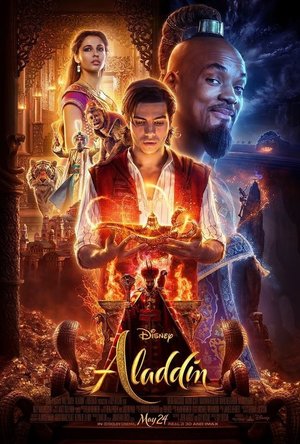
Oh. My. This was always going to be a tough one for me, and I've been thinking long and hard about how on earth I was going to review this. I love the original, anyone who even remotely enjoys it would be able to sing you at least one of the songs, and therein lies one of the problems. Would I have had a different opinion about some of the elements had I not seen the original so many times? After a lot of contemplating I think the answer in most cases is no.
Note: I went to see this for a second time so I'm going to edit what I previously wrote up as I go because on second viewing it was better. Once the initial shock and annoyance had passed after seeing it the first time it was much easier to watch for the second time.
Remaking something that's peak Disney has so many issues, recasting roles, changing social views and cultural sensitivities, are probably the biggest ones.
Let's talk about the (blue) elephant in the room... although I guess that phrase isn't really accurate as we all want to talk about it. Oh Genie, my Genie. I don't think anyone would have been able to fill that lamp the way Robin Williams did, he was larger than life and brought such a sense of fun whenever he did roles like this. The man is a comedic legend. Recasting this was always going to be difficult, and honestly, I don't know if there's anyone I would have been happy with taking over the mantle.
When I found out that Will Smith was on board I wasn't completely put off. On paper he's got everything you'd need for this role. He had one of two choices, stick to the original faithfully or take it your own way. I just don't think Smith actually had a choice though, he was going to have to do a reinterpretation of the role, but how could you ever follow Williams?
The thing I'm most surprised about with Genie is just how bad the CGI is. It's not like this is something Disney are unfamiliar with. Why did some of it even need to be CGId? I obviously don't know the ins and outs of these techniques or options, but if people can make Robbie Coltrane look larger than life in Harry Potter without mucking it up then why aren't they smurfing Will Smith up and doing the same?
Casting across the rest of the film wasn't such an epic task, Mena Massoud as Aladdin and Navid Negahban as the Sultan hit exactly the right spot. I had issues with Jafar, that's nothing to do with Marwan Kenzari's acting which was very good, but it was the fact that in my head Jafar should have been older. (Dream casting: Ben Kingsley.) I'm sure I won't be popular saying this but I didn't really like Naomi Scott as Jasmine, I don't think she brought enough sass to the role, I also felt that some of the new inclusions into the film around Jasmine negatively affected my view of her.
By far and away my favourite from the live action cast was Nasim Pedrad as Dalia, Jasmine's lady in waiting. I don't know why they felt the need to bring this character in, but I'm really glad they did. She's funny and a welcome break in some scenes. She completely outshines Jasmine as almost every point in the film... actually, I retract the word "almost". While I might not be happy about part of her character's story (ask me for the spoilers) she was definitely the best added extra in the film.
Our group of sidekicks, Abu, Iago, Rajah and Carpet all come out with varying degrees of success. Abu wasn't entirely lucky with the CGI and didn't get such a fun part as before. Iago was much more bird-like than previously which meant less actual talking so I have to wonder why they hired Alan Tudyk if they weren't going to use him properly. Rajah while less quizzical than in the original was entertaining and luckily wasn't mutilated by the CGI. Carpet though, I loved Carpet. He was super cute and absolutely adorable with Abu.
I'm not going to go over every change they made to the original, but one tweak particularly bugged me. They change the way that Aladdin gets out of the cave of wonders. The verbal trickery that Aladdin uses in the original is gone and they switch it out for a much more deceitful moment. The idea isn't as clever as its predecessor and also means that later in the film when Aladdin tricks Jafar you don't get that same connection, watching Genie working out what was going on was painful viewing.
I can't really put off talking about the songs anymore.
As trailers and sneak peeks appeared online I became increasingly nervous about the songs. Prince Ali seemed to be less upbeat than before, and while the sequence looked like it had potential all of it together didn't feel as vibrant. I appreciate that they tried to keep all those little Genie added extra in but it felt like they went with a "safe" option.
I enjoy Will Smith's singing, but I'm not a fan of it in this. I don't think the change in style is suited to these songs. I've seen people saying about how he's rapping in it... but I wouldn't have identified it as rapping. If anything it felt like they went "you should get some rapping in there, but we're Disney so tone it down... a lot."
We get a new offering on the soundtrack in the shape of Speechless, Jasmine's empowering song. I like the song, it certainly has the Disney vibe, and Scott sings it beautifully... but it didn't give me those goosebumps that I expect from power songs. I probably would have given the song a pass had it not been for the way it was included in the film. The frozen scenes with Jasmine dramatically moving in and out of the cast and set... ugh... that just didn't work for me.
Massoud had originally given me so much hope for the music when I heard One Jump Ahead at the beginning. It was excellent, and throughout the film I loved his singing.
Here's where my opinion changed a bit after my second visit... the songs weren't all as bad as I'd felt after the first viewing. I still didn't enjoy Genie's offering, but Aladdin and Jasmine both felt like an excellent choice. The main thing that didn't change was the fact that I didn't feel the songs fit well into the scenes. Part of the draw of Disney is the toe-tapping singalong vibe you get from the music, and there was a lack of pizzaz in most of the sequences that left my toes untapped.
I could probably go on for a very long time about this film. (I already have.) Ultimately, I don't think it's an improvement on the original, I don't think these modern rehashes really add a lot when you have to adjust for the modern culture. I'm not saying that you shouldn't take the changing times into consideration, I just think you should do it in a way that doesn't just come across as trying to score points with the audience to prove how "with it" you are. I also don't think that coming up with 30 minutes of extra footage is ever a sensible idea. If that's what you want to do then perhaps you need to really mix things up and come up with a whole new concept for the story.
What you should do
You're either a Disney nut or you're not. Personally, I would recommend staying at home and having a binge of old Disney classics, starting with the one true Genie.
Movie thing you wish you could take home
Could I get Genie powers without the itty-bitty living space?
Note: I went to see this for a second time so I'm going to edit what I previously wrote up as I go because on second viewing it was better. Once the initial shock and annoyance had passed after seeing it the first time it was much easier to watch for the second time.
Remaking something that's peak Disney has so many issues, recasting roles, changing social views and cultural sensitivities, are probably the biggest ones.
Let's talk about the (blue) elephant in the room... although I guess that phrase isn't really accurate as we all want to talk about it. Oh Genie, my Genie. I don't think anyone would have been able to fill that lamp the way Robin Williams did, he was larger than life and brought such a sense of fun whenever he did roles like this. The man is a comedic legend. Recasting this was always going to be difficult, and honestly, I don't know if there's anyone I would have been happy with taking over the mantle.
When I found out that Will Smith was on board I wasn't completely put off. On paper he's got everything you'd need for this role. He had one of two choices, stick to the original faithfully or take it your own way. I just don't think Smith actually had a choice though, he was going to have to do a reinterpretation of the role, but how could you ever follow Williams?
The thing I'm most surprised about with Genie is just how bad the CGI is. It's not like this is something Disney are unfamiliar with. Why did some of it even need to be CGId? I obviously don't know the ins and outs of these techniques or options, but if people can make Robbie Coltrane look larger than life in Harry Potter without mucking it up then why aren't they smurfing Will Smith up and doing the same?
Casting across the rest of the film wasn't such an epic task, Mena Massoud as Aladdin and Navid Negahban as the Sultan hit exactly the right spot. I had issues with Jafar, that's nothing to do with Marwan Kenzari's acting which was very good, but it was the fact that in my head Jafar should have been older. (Dream casting: Ben Kingsley.) I'm sure I won't be popular saying this but I didn't really like Naomi Scott as Jasmine, I don't think she brought enough sass to the role, I also felt that some of the new inclusions into the film around Jasmine negatively affected my view of her.
By far and away my favourite from the live action cast was Nasim Pedrad as Dalia, Jasmine's lady in waiting. I don't know why they felt the need to bring this character in, but I'm really glad they did. She's funny and a welcome break in some scenes. She completely outshines Jasmine as almost every point in the film... actually, I retract the word "almost". While I might not be happy about part of her character's story (ask me for the spoilers) she was definitely the best added extra in the film.
Our group of sidekicks, Abu, Iago, Rajah and Carpet all come out with varying degrees of success. Abu wasn't entirely lucky with the CGI and didn't get such a fun part as before. Iago was much more bird-like than previously which meant less actual talking so I have to wonder why they hired Alan Tudyk if they weren't going to use him properly. Rajah while less quizzical than in the original was entertaining and luckily wasn't mutilated by the CGI. Carpet though, I loved Carpet. He was super cute and absolutely adorable with Abu.
I'm not going to go over every change they made to the original, but one tweak particularly bugged me. They change the way that Aladdin gets out of the cave of wonders. The verbal trickery that Aladdin uses in the original is gone and they switch it out for a much more deceitful moment. The idea isn't as clever as its predecessor and also means that later in the film when Aladdin tricks Jafar you don't get that same connection, watching Genie working out what was going on was painful viewing.
I can't really put off talking about the songs anymore.
As trailers and sneak peeks appeared online I became increasingly nervous about the songs. Prince Ali seemed to be less upbeat than before, and while the sequence looked like it had potential all of it together didn't feel as vibrant. I appreciate that they tried to keep all those little Genie added extra in but it felt like they went with a "safe" option.
I enjoy Will Smith's singing, but I'm not a fan of it in this. I don't think the change in style is suited to these songs. I've seen people saying about how he's rapping in it... but I wouldn't have identified it as rapping. If anything it felt like they went "you should get some rapping in there, but we're Disney so tone it down... a lot."
We get a new offering on the soundtrack in the shape of Speechless, Jasmine's empowering song. I like the song, it certainly has the Disney vibe, and Scott sings it beautifully... but it didn't give me those goosebumps that I expect from power songs. I probably would have given the song a pass had it not been for the way it was included in the film. The frozen scenes with Jasmine dramatically moving in and out of the cast and set... ugh... that just didn't work for me.
Massoud had originally given me so much hope for the music when I heard One Jump Ahead at the beginning. It was excellent, and throughout the film I loved his singing.
Here's where my opinion changed a bit after my second visit... the songs weren't all as bad as I'd felt after the first viewing. I still didn't enjoy Genie's offering, but Aladdin and Jasmine both felt like an excellent choice. The main thing that didn't change was the fact that I didn't feel the songs fit well into the scenes. Part of the draw of Disney is the toe-tapping singalong vibe you get from the music, and there was a lack of pizzaz in most of the sequences that left my toes untapped.
I could probably go on for a very long time about this film. (I already have.) Ultimately, I don't think it's an improvement on the original, I don't think these modern rehashes really add a lot when you have to adjust for the modern culture. I'm not saying that you shouldn't take the changing times into consideration, I just think you should do it in a way that doesn't just come across as trying to score points with the audience to prove how "with it" you are. I also don't think that coming up with 30 minutes of extra footage is ever a sensible idea. If that's what you want to do then perhaps you need to really mix things up and come up with a whole new concept for the story.
What you should do
You're either a Disney nut or you're not. Personally, I would recommend staying at home and having a binge of old Disney classics, starting with the one true Genie.
Movie thing you wish you could take home
Could I get Genie powers without the itty-bitty living space?

Lee Richmond (19 KP) rated Halloween (2018) in Movies
Mar 5, 2019
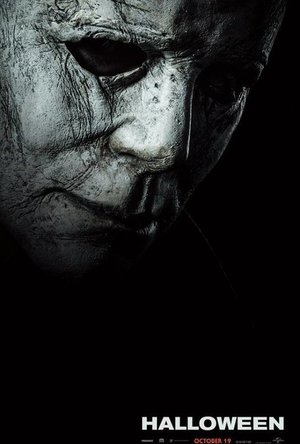
Face your fate.
It's 1999 and my twenty years younger self is spending the entire year getting hyped for The Phantom Menace. That movie dominated my year. I had queued at ToysRUs when they released the new figures just to get my hands on a Darth Maul and a Podracer. I had brought the CD of John Williams Soundtrack. I had seen every trailer countless times and as soon as they were put on sale I brought two tickets so that I could watch the movie twice on the same day. I sat in the theatre as the Lucasfilm logo appeared and thought 'this is it'. Then the end credits rolled and I left the movie and headed to get something to eat before the next showing, all the while trying to convince myself that I had loved what I had just watched. Truth is I couldn't do it. I hadn't loved it at all. It left me deflated and all I could think was that I had to sit and watch it all again as all that excitement turned to shit with every clunky piece of dialogue and every scene featuring Jar Jar fucking Binks. It hurt and I promised I would never get so hyped for a movie again.
Fast forward to 2018. I had been excited for the prospect of Halloween since it was announced. Jamie Lee was involved and it was a direct sequel. Both of these things had me invested. Then the trailer dropped and that old familiar feeling of hype that I had promised to forgo started to creep over me once more. Now I should add that John Carpenters original 1978 movie is one of my all time favourites. I love that movie. To me it is an example of perfect horror story telling. It's simple yet incredibly effective at doing what it says on the tin and I rewatch it every year on Haloween as a tradition.
Time came for opening night and I had purchased my ticket in advance (but only one this time just in case) and as we sat waiting for the movie to start even my wife commented that I appeared nervous. I was nervous. I had every right to be nervous because the mishandling of something that means so much to me would mean major disappointment. I am a movie geek. Movies mean so much to me, especially Halloween and I take disappointment pretty badly. So the movie played out. That old familiar score played over the top of bright orange titles against a black background as a pumpkin seemed to unrot and I loved it. I loved the steady build to Michaels escape. I loved how being locked up for so long just seemed to make him more relentless. Once he was out and let loose on Haddonfield I was hooked. The killing spree that followed as Michael went from house to house on a rampage fueled by 40 years of incarceration had me mentally punching the air with happiness. Jamie Lee Curtis though was something else all together. Her portrayal of Laurie suffering from four decades of pent up PTSD was nothing short of brilliant. I could really feel for this character that I have adored for so many years. Laurie will always be my number 1 final girl. She survived the original Halloween because she was smart, and wasn't distracted like her sex mad, airhead friends. Seeing how the events of the first film had effected her life so dramatically was like watching an old friend going through a really hard time. The closing twenty minutes literally had me on the edge of my seat as Laurie searches one dark room after another, the hunted becoming the hunter. You know Michael is there lurking somewhere, but where? The final image as a trapped Michael stares up at his escaping prey, so fixed on Laurie that he fails to even notice that he is being engulfed in flames really stuck with me after the credits rolled.
Now I'm not going as far as to say this film was perfect. Some of the humour fell a little flat and felt out of place and I hated the new Dr Loomis character and his plot twist. It felt crowbarred in and completely unnecessary. Had the rest of the film not been as tight it would have taken me out of the movie completely, but thankfully that was not the case. A lot of love and passion went into making this movie. Clearly the film makers are fans of the original and that really comes across on screen. It really honours Carpenters movie and evidently comes across as a love letter more than a cash in. I know this movie divided people. You either loved it or hated it and I am definitely in the camp of the former. Do I want another sequel? If the quality of this one is maintained then hell yeah. Halloween 2018 has taught me that allowing myself to get a little hyped now and again can sometimes be rewarding. Not everything has to be The Phantom Menace.
Fast forward to 2018. I had been excited for the prospect of Halloween since it was announced. Jamie Lee was involved and it was a direct sequel. Both of these things had me invested. Then the trailer dropped and that old familiar feeling of hype that I had promised to forgo started to creep over me once more. Now I should add that John Carpenters original 1978 movie is one of my all time favourites. I love that movie. To me it is an example of perfect horror story telling. It's simple yet incredibly effective at doing what it says on the tin and I rewatch it every year on Haloween as a tradition.
Time came for opening night and I had purchased my ticket in advance (but only one this time just in case) and as we sat waiting for the movie to start even my wife commented that I appeared nervous. I was nervous. I had every right to be nervous because the mishandling of something that means so much to me would mean major disappointment. I am a movie geek. Movies mean so much to me, especially Halloween and I take disappointment pretty badly. So the movie played out. That old familiar score played over the top of bright orange titles against a black background as a pumpkin seemed to unrot and I loved it. I loved the steady build to Michaels escape. I loved how being locked up for so long just seemed to make him more relentless. Once he was out and let loose on Haddonfield I was hooked. The killing spree that followed as Michael went from house to house on a rampage fueled by 40 years of incarceration had me mentally punching the air with happiness. Jamie Lee Curtis though was something else all together. Her portrayal of Laurie suffering from four decades of pent up PTSD was nothing short of brilliant. I could really feel for this character that I have adored for so many years. Laurie will always be my number 1 final girl. She survived the original Halloween because she was smart, and wasn't distracted like her sex mad, airhead friends. Seeing how the events of the first film had effected her life so dramatically was like watching an old friend going through a really hard time. The closing twenty minutes literally had me on the edge of my seat as Laurie searches one dark room after another, the hunted becoming the hunter. You know Michael is there lurking somewhere, but where? The final image as a trapped Michael stares up at his escaping prey, so fixed on Laurie that he fails to even notice that he is being engulfed in flames really stuck with me after the credits rolled.
Now I'm not going as far as to say this film was perfect. Some of the humour fell a little flat and felt out of place and I hated the new Dr Loomis character and his plot twist. It felt crowbarred in and completely unnecessary. Had the rest of the film not been as tight it would have taken me out of the movie completely, but thankfully that was not the case. A lot of love and passion went into making this movie. Clearly the film makers are fans of the original and that really comes across on screen. It really honours Carpenters movie and evidently comes across as a love letter more than a cash in. I know this movie divided people. You either loved it or hated it and I am definitely in the camp of the former. Do I want another sequel? If the quality of this one is maintained then hell yeah. Halloween 2018 has taught me that allowing myself to get a little hyped now and again can sometimes be rewarding. Not everything has to be The Phantom Menace.
Heather Cranmer (2721 KP) rated Nine in Books
Sep 13, 2020
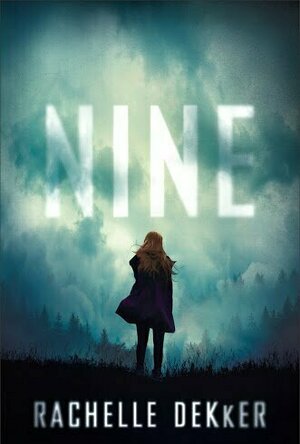
I've been a fan of Rachelle Dekker ever since I read The Girl Behind the Red Rope. When I saw that Rachelle Dekker had released a new book entitled Nine, I knew it was a book that I needed to read. I was so glad I picked this book up!
I felt that the plot to Nine was solid. Zoe Johnson is busy working at her mundane job as a waitress when a young 17 year old girl shows up. From the get go, Zoe is protective of this young girl named Lucy who appears naive, scared, confused, and willing to trust anyone. However, trying to protect Lucy will have a high cost as Lucy is much more than she appears to be.
I read Nine in about a day. The pacing was so spot on that I didn't want to put this book down. The action starts out right in the first chapter and just carries on throughout the book. From the very first page, I was sucked into this suspenseful world Rachelle Dekker had masterfully created. Though it does have some similarities with the video game/movie Resident Evil (sans zombies), Dekker did a fantastic job at making the plot line feel original although it's been done many times before. There are a few plot twists including one that links back to The Girl Behind the Red Rope which I was very excited to read about! Yes, some of the plot twists are a bit predictable, but Nine is a very interesting story nonetheless.
I have to gush about the characters in Nine now. Dekker did an amazing job making her characters feel fleshed out. I felt as if the characters in Nine were people I actually knew in real life; that's how realistic these characters were written. I loved Zoe's character. Even though she had a sad story and baggage of her own, it was refreshing to see her actually put her trust and care about someone else. I will say I would have liked to know more about her brother Stephen and read more in detail about what happened to him. Perhaps Dekker will write a story about Stephen another time. Anyway, Zoe was an amazing character, and I could always feel what she felt from elation to deep sadness and more. Although Olivia isn't in the book very much, I also loved Olivia and how much she sacrificed for a certain experiment. Lucy was my favorite character, and it was interesting to be able to see her thought process starting in part two of Nine. Reading about her internal struggle with how she was raised versus who she wanted to be felt very emotional to me. We have all had that struggle with ourselves to become a better version of ourself. Seeley was a bit of a wild card. Sometimes I loved him, and other times I hated him although I could understand why he was doing what he did (not that it was justified for most of it). I would have hated to have the same ultimatum given to me as Hammon gave Seeley. Even all the minor characters (especially McCoy) I really enjoyed. Every character added to the story and fleshed it out even more.
Trigger warnings for Nine include violence (including gun violence), torture, and murder.
Overall, Nine is an emotional story with a positive message that really makes you think about how you can change no matter your given circumstances. Nine would make a fantastic movie or tv series, and I know I would watch it should anyone ever do that. I would definitely recommend Nine by Rachelle Dekker to those aged 16+ that love highly suspenseful stories that include a positive message.
--
(A special thank you to Revell for providing me with a paperback of Nine by Rachelle Dekker in exchange for an honest and unbiased review.)
I felt that the plot to Nine was solid. Zoe Johnson is busy working at her mundane job as a waitress when a young 17 year old girl shows up. From the get go, Zoe is protective of this young girl named Lucy who appears naive, scared, confused, and willing to trust anyone. However, trying to protect Lucy will have a high cost as Lucy is much more than she appears to be.
I read Nine in about a day. The pacing was so spot on that I didn't want to put this book down. The action starts out right in the first chapter and just carries on throughout the book. From the very first page, I was sucked into this suspenseful world Rachelle Dekker had masterfully created. Though it does have some similarities with the video game/movie Resident Evil (sans zombies), Dekker did a fantastic job at making the plot line feel original although it's been done many times before. There are a few plot twists including one that links back to The Girl Behind the Red Rope which I was very excited to read about! Yes, some of the plot twists are a bit predictable, but Nine is a very interesting story nonetheless.
I have to gush about the characters in Nine now. Dekker did an amazing job making her characters feel fleshed out. I felt as if the characters in Nine were people I actually knew in real life; that's how realistic these characters were written. I loved Zoe's character. Even though she had a sad story and baggage of her own, it was refreshing to see her actually put her trust and care about someone else. I will say I would have liked to know more about her brother Stephen and read more in detail about what happened to him. Perhaps Dekker will write a story about Stephen another time. Anyway, Zoe was an amazing character, and I could always feel what she felt from elation to deep sadness and more. Although Olivia isn't in the book very much, I also loved Olivia and how much she sacrificed for a certain experiment. Lucy was my favorite character, and it was interesting to be able to see her thought process starting in part two of Nine. Reading about her internal struggle with how she was raised versus who she wanted to be felt very emotional to me. We have all had that struggle with ourselves to become a better version of ourself. Seeley was a bit of a wild card. Sometimes I loved him, and other times I hated him although I could understand why he was doing what he did (not that it was justified for most of it). I would have hated to have the same ultimatum given to me as Hammon gave Seeley. Even all the minor characters (especially McCoy) I really enjoyed. Every character added to the story and fleshed it out even more.
Trigger warnings for Nine include violence (including gun violence), torture, and murder.
Overall, Nine is an emotional story with a positive message that really makes you think about how you can change no matter your given circumstances. Nine would make a fantastic movie or tv series, and I know I would watch it should anyone ever do that. I would definitely recommend Nine by Rachelle Dekker to those aged 16+ that love highly suspenseful stories that include a positive message.
--
(A special thank you to Revell for providing me with a paperback of Nine by Rachelle Dekker in exchange for an honest and unbiased review.)
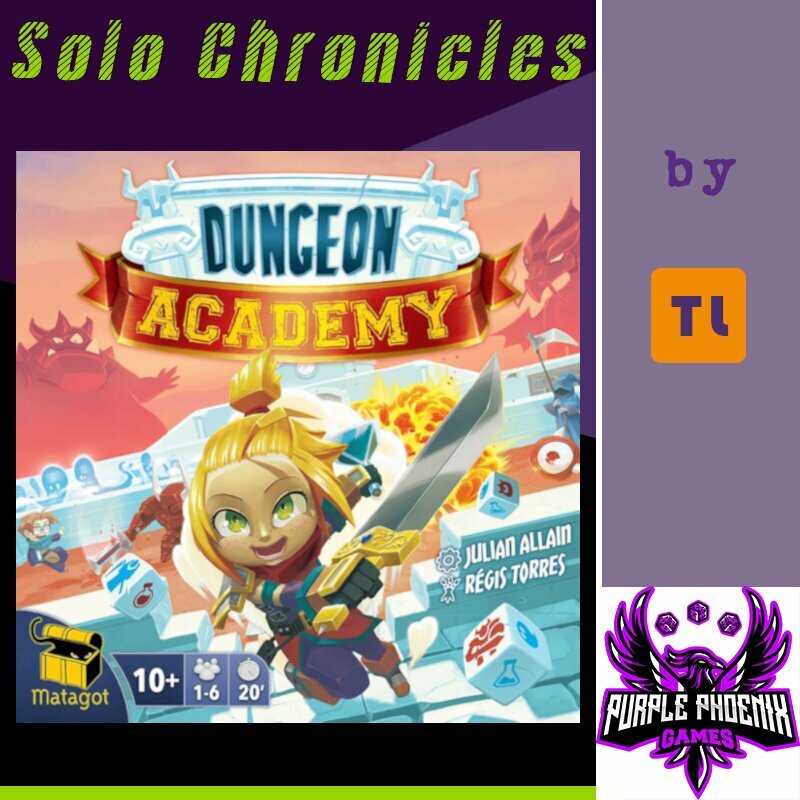
Purple Phoenix Games (2266 KP) rated Dungeon Academy in Tabletop Games
Dec 8, 2020
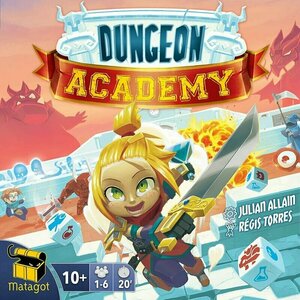
Roll-and-write style games have come a really long way over the past couple years. In the olden days we had Yahtzee, and that satisfied us. But then designers began dusting off that olde mechanic and breathing new life into it. While roll-and-write may never become my favorite mechanic, I am starting to appreciate the good ones more and more each time I play them. Dungeon Academy is one of these good games.
In Dungeon Academy players are taking the roles of students attempting their finals to become graduated warriors and mages in the land. They must pass their tests though, and that entails surviving through the dreaded Dungeon four times and surpassing all opponents to receive their degree.
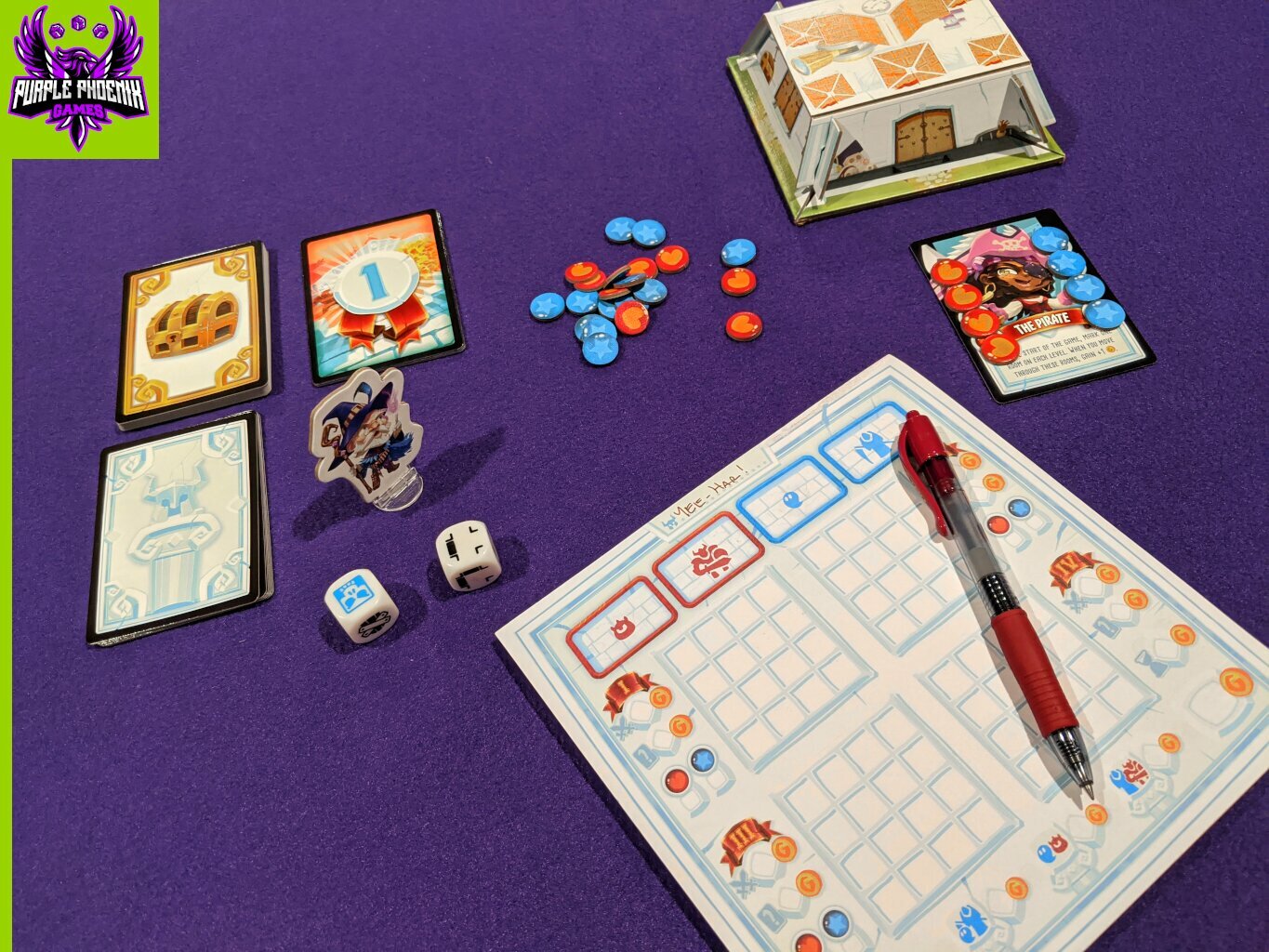
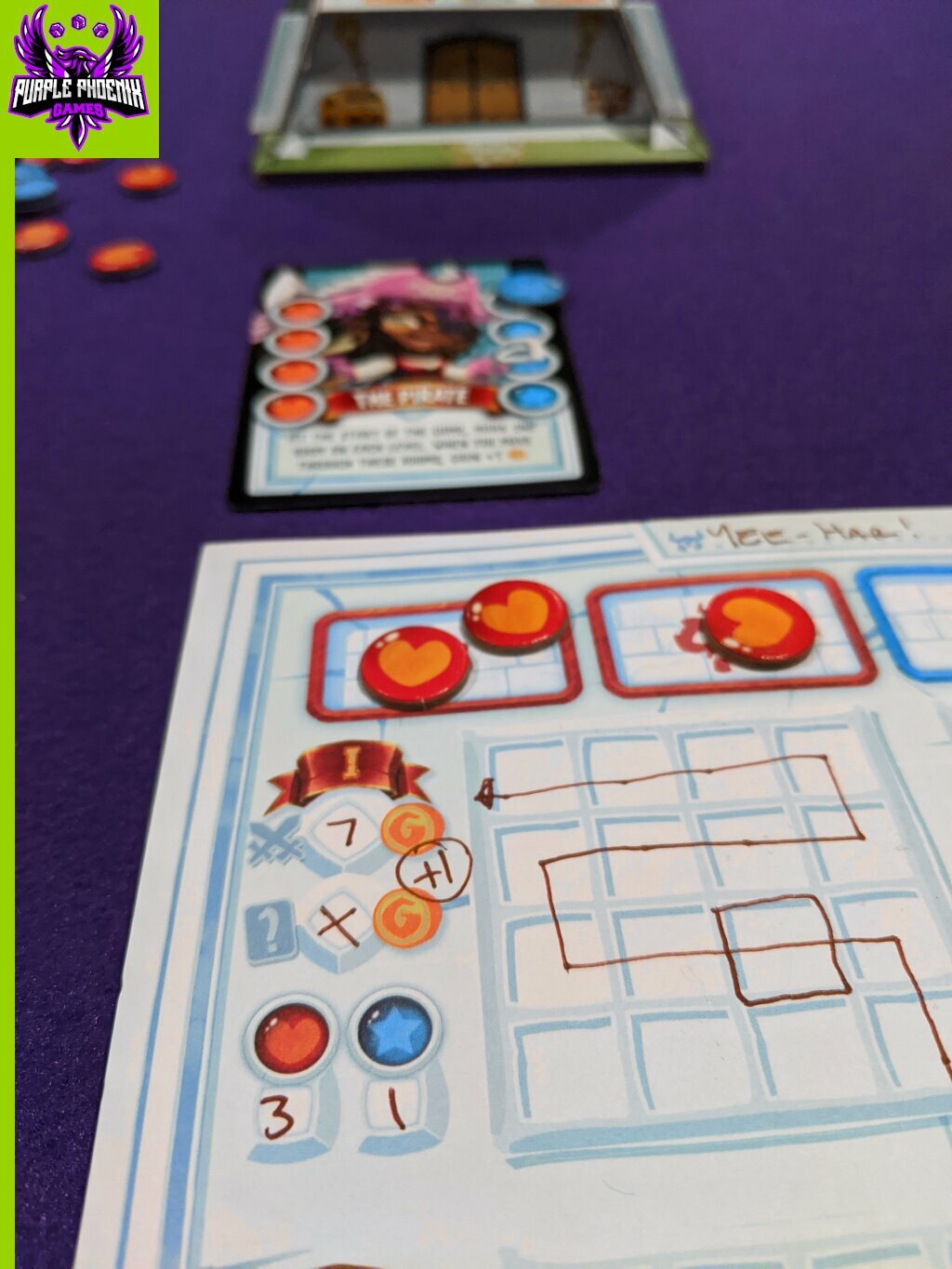
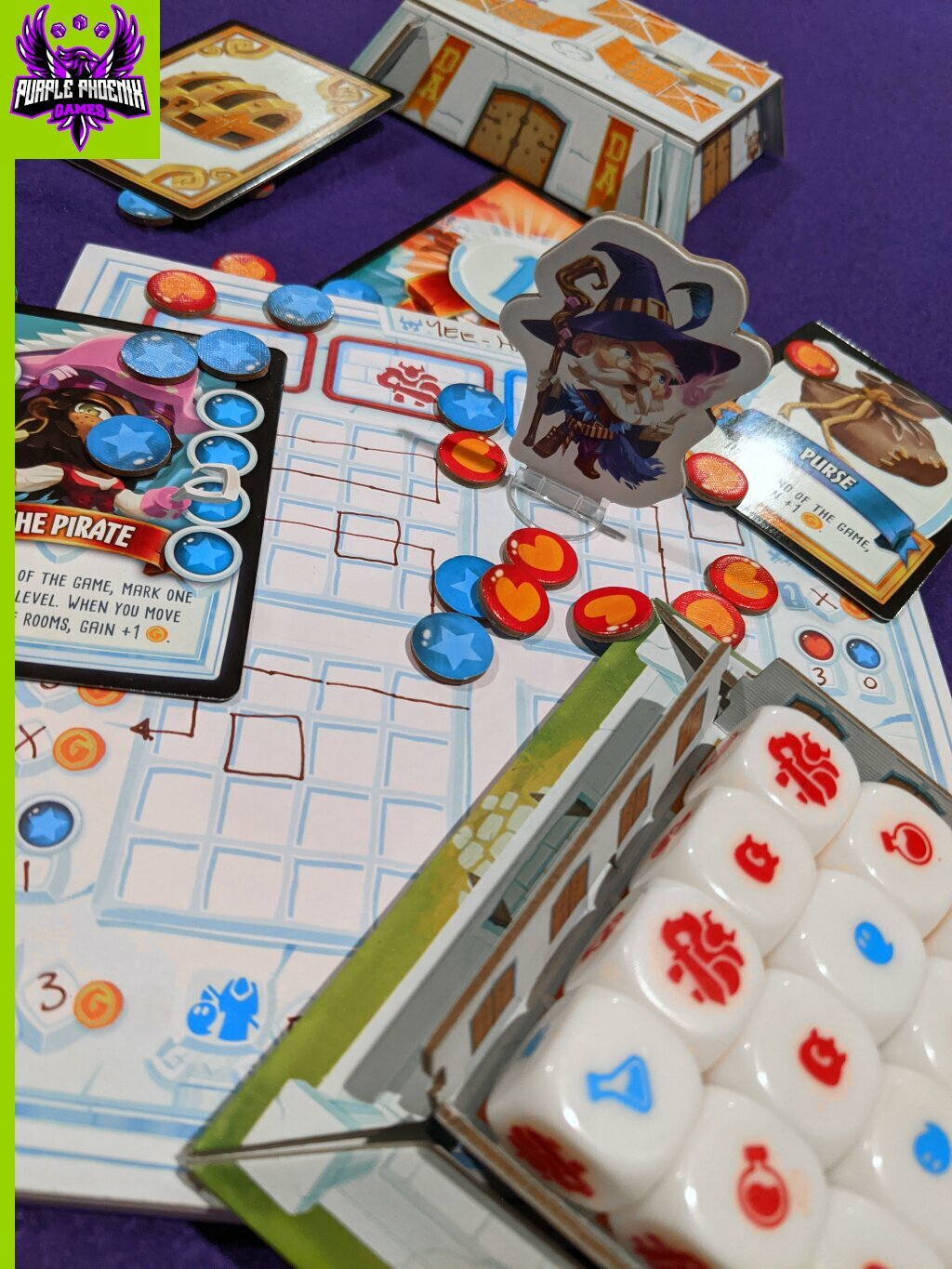
DISCLAIMER: We were provided a copy of this game for the purposes of this review. This is a retail copy of the game, so what you see in these photos is exactly what would be received in your box. I do not intend to cover every single rule included in the rulebook, but will describe the overall game flow and major rule set so that our readers may get a sense of how the game plays. For more in depth rules, you may purchase a copy online or from your FLGS. -T
To setup a solo game of Dungeon Academy, assemble the Dungeon component per the instructions. The player is dealt a character card with a special ability and markers to track Health and Mana throughout the game. Pile the Health and Mana tokens on the table, shuffle the Loot cards into a deck, and place the Teacher pawn nearby. Grab the pad of paper and pen and you are ready to begin.
Each attempt in the Dungeon will require the 16 Base Dice to be rolled and set inside the Dungeon. It is then flipped upside down when the timer begins and the mad dash to the Exit commences. As the player marks a line through every “room” (each die is considered a “room” in the Dungeon) they create a path to be checked at the end of the round. Once the player has made it through the Dungeon satisfactorily the Teacher will check the path.
The Teacher pawn is now used to track movement in the Dungeon. As the player tracks the path they drew on the paper, the Teacher is moved through the rooms. In each room (each die face) will be one of these possible encounters: a Mana potion to refill an empty Mana space on the character card, a Health potion, a small red Blob, a small blue Ghost, a large red Colossus, or a large blue Reaper. Each small foe encountered will be overtaken by spending one Health or Mana token from the character card. Each potion will restore spent Health or Mana. Each large foe encountered will require two Health or Mana to be spent. As the Teacher follows the path set by the player, Health and Mana will be spent and replenished on the character card, and foes defeated tracked on the sheet.
Once complete, the player will add up all the points from defeated foes (1VP per foe) and any VP from special character abilities or Loot cards. Additionally, the player will choose one of the four Quests at the bottom of the sheet to score each round for extra VP. They write these numbers on the sheet and prepare for the next level. After four total levels the game ends and the total is compared to a scale in the rulebook.
Multiplayer Dungeon Academy works the exact same way except once a player exits the Dungeon, they must grab the lowest-numbered Exit card as representation of the place finished in the Dungeon (so the first one out grabs the 1 card, etc.). The other difference from solo play is that players all compare total VP at the game end to determine the winner.
Components. This game has a large scorepad of 150 double-sided sheets, a bunch of cards for Hero characters, Loot, and Exits, as well as 18 total dice, about a trillion double-sided Health/Mana tokens and an impressive cardboard Dungeon. Everything is of wonderful Matagot quality… except for the Duneon. In my copy the Dungeon does not stay together very well. I may attempt some glue to keep the parts down that need to stay down, but it is still functional and a great design. The art style across the game is cute and fun, and I like the muted bright color scheme. That feels so weird to say/type, but the colors are vibrant hues, but muted so they stay out of the way. It’s strange and I love it.
Speaking of I love it, I love this game! It is quickly becoming one of my favorite roll-and-write games, and I can play it solo. In about 15 minutes. These are all positives, and I haven’t even really touched on the gameplay. Being able to get through a light solo game in 15 minutes while having a great time throughout is an achievement, and one I would like to applaud here. I wasn’t really sure going into this if I was going to enjoy it, but it has blown me away. Trying to evaluate the best path through the Dungeon while keeping track of how the Health and Mana is always in flux gives my brain a welcomed workout that is just a breath of fresh air for me. I love the art style and the theme, and the simple but easy to understand iconography on the dice is much appreciated.
I think that if you are looking for or lacking a similar type game in your collection you should do yourself a favor and check out Dungeon Academy. It is super quick, easy to grasp and play, requires little table space, and is simply a great time alone or with your gamer friends and family. I know I am going to be tracking lots of plays with this one. I am going to have to find a place on my shelves at eye-level because I don’t want it to be overshadowed down at foot-level.
If you already enjoy roll-and-write games and want something a little different with a great theme, or you don’t have any roll-and-writes and want to check one out for the first time, or you simply cannot get enough games featuring great art about wizards in school check this one out. I recommend it.
In Dungeon Academy players are taking the roles of students attempting their finals to become graduated warriors and mages in the land. They must pass their tests though, and that entails surviving through the dreaded Dungeon four times and surpassing all opponents to receive their degree.
DISCLAIMER: We were provided a copy of this game for the purposes of this review. This is a retail copy of the game, so what you see in these photos is exactly what would be received in your box. I do not intend to cover every single rule included in the rulebook, but will describe the overall game flow and major rule set so that our readers may get a sense of how the game plays. For more in depth rules, you may purchase a copy online or from your FLGS. -T
To setup a solo game of Dungeon Academy, assemble the Dungeon component per the instructions. The player is dealt a character card with a special ability and markers to track Health and Mana throughout the game. Pile the Health and Mana tokens on the table, shuffle the Loot cards into a deck, and place the Teacher pawn nearby. Grab the pad of paper and pen and you are ready to begin.
Each attempt in the Dungeon will require the 16 Base Dice to be rolled and set inside the Dungeon. It is then flipped upside down when the timer begins and the mad dash to the Exit commences. As the player marks a line through every “room” (each die is considered a “room” in the Dungeon) they create a path to be checked at the end of the round. Once the player has made it through the Dungeon satisfactorily the Teacher will check the path.
The Teacher pawn is now used to track movement in the Dungeon. As the player tracks the path they drew on the paper, the Teacher is moved through the rooms. In each room (each die face) will be one of these possible encounters: a Mana potion to refill an empty Mana space on the character card, a Health potion, a small red Blob, a small blue Ghost, a large red Colossus, or a large blue Reaper. Each small foe encountered will be overtaken by spending one Health or Mana token from the character card. Each potion will restore spent Health or Mana. Each large foe encountered will require two Health or Mana to be spent. As the Teacher follows the path set by the player, Health and Mana will be spent and replenished on the character card, and foes defeated tracked on the sheet.
Once complete, the player will add up all the points from defeated foes (1VP per foe) and any VP from special character abilities or Loot cards. Additionally, the player will choose one of the four Quests at the bottom of the sheet to score each round for extra VP. They write these numbers on the sheet and prepare for the next level. After four total levels the game ends and the total is compared to a scale in the rulebook.
Multiplayer Dungeon Academy works the exact same way except once a player exits the Dungeon, they must grab the lowest-numbered Exit card as representation of the place finished in the Dungeon (so the first one out grabs the 1 card, etc.). The other difference from solo play is that players all compare total VP at the game end to determine the winner.
Components. This game has a large scorepad of 150 double-sided sheets, a bunch of cards for Hero characters, Loot, and Exits, as well as 18 total dice, about a trillion double-sided Health/Mana tokens and an impressive cardboard Dungeon. Everything is of wonderful Matagot quality… except for the Duneon. In my copy the Dungeon does not stay together very well. I may attempt some glue to keep the parts down that need to stay down, but it is still functional and a great design. The art style across the game is cute and fun, and I like the muted bright color scheme. That feels so weird to say/type, but the colors are vibrant hues, but muted so they stay out of the way. It’s strange and I love it.
Speaking of I love it, I love this game! It is quickly becoming one of my favorite roll-and-write games, and I can play it solo. In about 15 minutes. These are all positives, and I haven’t even really touched on the gameplay. Being able to get through a light solo game in 15 minutes while having a great time throughout is an achievement, and one I would like to applaud here. I wasn’t really sure going into this if I was going to enjoy it, but it has blown me away. Trying to evaluate the best path through the Dungeon while keeping track of how the Health and Mana is always in flux gives my brain a welcomed workout that is just a breath of fresh air for me. I love the art style and the theme, and the simple but easy to understand iconography on the dice is much appreciated.
I think that if you are looking for or lacking a similar type game in your collection you should do yourself a favor and check out Dungeon Academy. It is super quick, easy to grasp and play, requires little table space, and is simply a great time alone or with your gamer friends and family. I know I am going to be tracking lots of plays with this one. I am going to have to find a place on my shelves at eye-level because I don’t want it to be overshadowed down at foot-level.
If you already enjoy roll-and-write games and want something a little different with a great theme, or you don’t have any roll-and-writes and want to check one out for the first time, or you simply cannot get enough games featuring great art about wizards in school check this one out. I recommend it.