
Search
Search results

Debbiereadsbook (1839 KP) rated Before You Break (Secrets #1) in Books
Apr 24, 2019
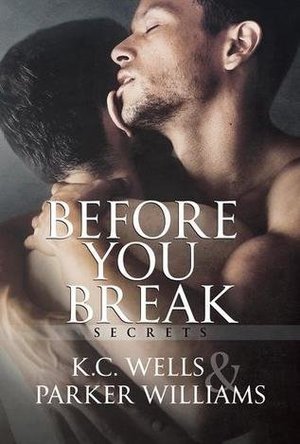

awesome narration of an awesome book!
Independent reviewer for Divine Magazine, I was gifted the AUDIO file of this book.
Six years ago, Ellis joined the Specialist Firearms Unit. Wayne was his partner, but Wayne wanted more, much more. Ellis is straight though. When Ellis begins a spiral downwards, and Wayne can no longer keep covering for him, he knows what he needs to do. Question is, will Ellis let Wayne help the way he wants to, the way Ellis NEEDS him to?
Book one of the Secrets series, which is a spin off from the Collars and Cuffs series. I’ve no read ANY of those, so this is brand new to me.
I really REALLY loved this one!
Ellis is, by his own admission, struggling to come to terms with his responsibilities forced on him at an early age, an age when he should have been learning how to be a boy, not a man. Wayne keeps covering for his silly mistakes but it’s getting more and more difficult. After a particularly difficult op, Wayne decides enough is enough and knows what Ellis needs. But Ellis has always portrayed himself as straight, and vanilla and Wayne is neither. Wayne knows Ellis needs to be “taken in hand” to get to the bottom of what’s bothering him, and Wayne is just the man to do it: the ONLY man to do it.
Not all of Ellis’ problems are immediately clear, and it takes time for the full picture to develop and I loved that. You don’t get a massive info dump. Ellis is. . . .difficult . . .when Wayne introduces him to the lifestyle and it is, in some places, rather amusing the conversations Ellis has with himself about what Wayne is doing, WHY he is doing it.
Wayne has loved Ellis since first meeting him 6 years ago, and to have carried that flame for so long was hard on him, but finally getting his hands (quite literally!) on Ellis is a balm to his soul. Ellis is his other half and he needs Ellis to see that.
The story unfolds at a steady pace, with Wayne kinda plodding along with Ellis till ELLIS decides he wants more, and I really did like that. Sometimes, things need to speed along but not so much here and it made for a great listen.
Joel Leslie narrates.
Leslie is, in my humble opinion, a MASTER at accents. These two guys are Londoners, and the accents were spot on. Jarod and Eli pop up, they are the new owners of Secrets and their accents are very different but again, spot on. Leslie does get all the emotions that both Ellis and Wayne are going through, and I cried in some places. I ooohhh-ed and aaahhh-ed and YAY-ed and NOOOOOOOOOOOOOOOOOOOOOOOOOO-ed in places, out loud. I don’t do that when I’m reading but when I’m listening I seem to be more vocal with my reactions and I can only assume that’s the skill of the narrator coming across.
I had to giggle a bit though. Mr Leslie is, I think, American, and the man CANNOT say leisurely like we do in the UK. Every other word was spot on, but that one? Nope, not right. But I won’t hold it against him, cos I LOVED this narration!
I already have book 2 lined up, and I hope that Wayne, Ellis, Eli and Jarod pop up along the way. Be great to catch up with them.
5 stars for the book
5 stars for the narration
5 stars overall
**same worded review will appear elsewhere**
Six years ago, Ellis joined the Specialist Firearms Unit. Wayne was his partner, but Wayne wanted more, much more. Ellis is straight though. When Ellis begins a spiral downwards, and Wayne can no longer keep covering for him, he knows what he needs to do. Question is, will Ellis let Wayne help the way he wants to, the way Ellis NEEDS him to?
Book one of the Secrets series, which is a spin off from the Collars and Cuffs series. I’ve no read ANY of those, so this is brand new to me.
I really REALLY loved this one!
Ellis is, by his own admission, struggling to come to terms with his responsibilities forced on him at an early age, an age when he should have been learning how to be a boy, not a man. Wayne keeps covering for his silly mistakes but it’s getting more and more difficult. After a particularly difficult op, Wayne decides enough is enough and knows what Ellis needs. But Ellis has always portrayed himself as straight, and vanilla and Wayne is neither. Wayne knows Ellis needs to be “taken in hand” to get to the bottom of what’s bothering him, and Wayne is just the man to do it: the ONLY man to do it.
Not all of Ellis’ problems are immediately clear, and it takes time for the full picture to develop and I loved that. You don’t get a massive info dump. Ellis is. . . .difficult . . .when Wayne introduces him to the lifestyle and it is, in some places, rather amusing the conversations Ellis has with himself about what Wayne is doing, WHY he is doing it.
Wayne has loved Ellis since first meeting him 6 years ago, and to have carried that flame for so long was hard on him, but finally getting his hands (quite literally!) on Ellis is a balm to his soul. Ellis is his other half and he needs Ellis to see that.
The story unfolds at a steady pace, with Wayne kinda plodding along with Ellis till ELLIS decides he wants more, and I really did like that. Sometimes, things need to speed along but not so much here and it made for a great listen.
Joel Leslie narrates.
Leslie is, in my humble opinion, a MASTER at accents. These two guys are Londoners, and the accents were spot on. Jarod and Eli pop up, they are the new owners of Secrets and their accents are very different but again, spot on. Leslie does get all the emotions that both Ellis and Wayne are going through, and I cried in some places. I ooohhh-ed and aaahhh-ed and YAY-ed and NOOOOOOOOOOOOOOOOOOOOOOOOOO-ed in places, out loud. I don’t do that when I’m reading but when I’m listening I seem to be more vocal with my reactions and I can only assume that’s the skill of the narrator coming across.
I had to giggle a bit though. Mr Leslie is, I think, American, and the man CANNOT say leisurely like we do in the UK. Every other word was spot on, but that one? Nope, not right. But I won’t hold it against him, cos I LOVED this narration!
I already have book 2 lined up, and I hope that Wayne, Ellis, Eli and Jarod pop up along the way. Be great to catch up with them.
5 stars for the book
5 stars for the narration
5 stars overall
**same worded review will appear elsewhere**

Sassy Brit (97 KP) rated Love, Secrets and Absolution in Books
Jun 6, 2019

Contains spoilers, click to show
I’m reviewing Love, Secrets and Absolution, by K.L. Lovely. Here are my thoughts:
^^ Told from alternative viewpoints, Love, Secrets and Absolution is an emotional story revolving around the lives of a couple, Grace and Paul, who are trying to come to terms with the stresses and strains of bringing up an autistic child. But what makes this story different is how it’s set at a time which coincides with the Nottingham miners strikes of the 80s, where pit closures and pay restraints led to unofficial strikes, job losses and violence. Harsh times to say the least. This added a new dimension to the story, and of course, more pressure for Paul, and ultimately the whole family. They were terrible times in Britain, a lot of families suffered because of it.
^^ Right from the beginning we see young Alfie is different to other children. The author, K. L.oveley, helps show us this, by what I thought was a highly unusual technique- giving baby and toddler versions of Alfie his own voice.
^^ I must admit at first I was thinking, this doesn’t sound like a baby. After all, very young babies are not able to communicate in such a coherent manner. However, as I read further, I saw how Alfie’s voice as a child — seeing things differently from his POV — really helped to provide a deeper look into his inner thoughts and feelings. A fresh and unique approach, which revealed his own perspective of how he didn’t fit in with other kids, even if he was unable to understand the “why” himself. Very clever. It certainly made things clearer for me and highlighted aspects of autism I may have missed otherwise.
^^ Taking the time-period into consideration, I found the portrayal of the teachers and the way they behaved cruelly and professionally towards Alfie and Grace shocking, yet realistic. Back in those days many professionals were not trained to spot differences and learning difficulties in the way they are today. To outsiders who didn’t understand what Alfie was going though and thinking, he did just look like a trouble maker. Nowadays we know better and there is an ever-growing awareness and understanding of the many different spectrums of autism.
^^ Alfie’s father, Paul, may not have won the best dad of the year award, but I felt he was a realistic representation of a man living and working in a very masculine environment, where men were largely regarded as the breadwinners of the household and job scarcity was a huge issue. He didn’t know how to handle Alfie, and in a way you can’t blame him for that. Not everyone is capable of being a really good parent, especially when their own life has turned upside down in a blink of an eye.
^^ There’s also a really good story line around a girl called Magenta, which I felt helped strengthen both Alfie and Grace’s bond. A lovely touch. As was Grace’s newfound strength and courage, which really made this story become more than just gloom and doom. Her steadfast devotion to her son is both amazing and commendable, and I enjoyed seeing how she turned her life around.
Overall: This thought-provoking book is as much about relationships, as it is autism. We see the hopes and dreams of a young family shattered by a lack of communication, misunderstandings and even betrayal. Yet, despite all the struggles and heartache this family go through, we discover the true power of love; how it can heal, comfort and carry us forward through the toughest of times. A heart-warming, memorable and most satisfying read.
^^ Told from alternative viewpoints, Love, Secrets and Absolution is an emotional story revolving around the lives of a couple, Grace and Paul, who are trying to come to terms with the stresses and strains of bringing up an autistic child. But what makes this story different is how it’s set at a time which coincides with the Nottingham miners strikes of the 80s, where pit closures and pay restraints led to unofficial strikes, job losses and violence. Harsh times to say the least. This added a new dimension to the story, and of course, more pressure for Paul, and ultimately the whole family. They were terrible times in Britain, a lot of families suffered because of it.
^^ Right from the beginning we see young Alfie is different to other children. The author, K. L.oveley, helps show us this, by what I thought was a highly unusual technique- giving baby and toddler versions of Alfie his own voice.
^^ I must admit at first I was thinking, this doesn’t sound like a baby. After all, very young babies are not able to communicate in such a coherent manner. However, as I read further, I saw how Alfie’s voice as a child — seeing things differently from his POV — really helped to provide a deeper look into his inner thoughts and feelings. A fresh and unique approach, which revealed his own perspective of how he didn’t fit in with other kids, even if he was unable to understand the “why” himself. Very clever. It certainly made things clearer for me and highlighted aspects of autism I may have missed otherwise.
^^ Taking the time-period into consideration, I found the portrayal of the teachers and the way they behaved cruelly and professionally towards Alfie and Grace shocking, yet realistic. Back in those days many professionals were not trained to spot differences and learning difficulties in the way they are today. To outsiders who didn’t understand what Alfie was going though and thinking, he did just look like a trouble maker. Nowadays we know better and there is an ever-growing awareness and understanding of the many different spectrums of autism.
^^ Alfie’s father, Paul, may not have won the best dad of the year award, but I felt he was a realistic representation of a man living and working in a very masculine environment, where men were largely regarded as the breadwinners of the household and job scarcity was a huge issue. He didn’t know how to handle Alfie, and in a way you can’t blame him for that. Not everyone is capable of being a really good parent, especially when their own life has turned upside down in a blink of an eye.
^^ There’s also a really good story line around a girl called Magenta, which I felt helped strengthen both Alfie and Grace’s bond. A lovely touch. As was Grace’s newfound strength and courage, which really made this story become more than just gloom and doom. Her steadfast devotion to her son is both amazing and commendable, and I enjoyed seeing how she turned her life around.
Overall: This thought-provoking book is as much about relationships, as it is autism. We see the hopes and dreams of a young family shattered by a lack of communication, misunderstandings and even betrayal. Yet, despite all the struggles and heartache this family go through, we discover the true power of love; how it can heal, comfort and carry us forward through the toughest of times. A heart-warming, memorable and most satisfying read.

Heather Cranmer (2721 KP) rated The Grotto Under the Tree in Books
Jun 7, 2018

(This review can be found on my blog <a href="http://themisadventuresofatwentysomething.blogspot.com/">The (Mis)Adventures of a Twenty-Something Year Old Girl</a>).
To be honest, I really didn't know what to make of this book when I first received the tour invite in my inbox. It sounded interesting, so I thought I'd take a chance on it. Luckily, the book turned out to be likable.
Sara and Sebastian are both in 5th grade and are best friends. While in school, the learn the legend of the big, old oak tree that sits outside their classroom window. During a storm, the oak is damaged. When Sara and Sebastian are walking by the now damaged oak tree, the notice a hole that leads them into a grotto filled with beautiful and magical beings. However, there are also dangerous beings in this grotto. Little do Sara and Sebastian know that they've just got themselves into a dangerous war between these creatures underground. Will Sara and Sebastian make it back home in one piece?
I think the cover is absolutely gorgeous! I love the magical feel of this picture! The grotto under the tree on the cover is breathtaking! The cover definitely suits the book.
The title is very straight forward. The whole setting is the grotto under the tree, so I think this is a fantastic title for this book.
I thought the world building, for a middle grade novel, was done fantastically! It's so easy to get lost in this magical world thanks to the author's great descriptions! In fact, I wanted to visit this grotto under the oak tree!
The pacing was a bit slow to begin with, and I was thinking that I had made a mistake in agreeing to review this book. Luckily, without even realizing it, the pacing picked up, and I was enthralled with this story.
The book definitely has an interesting plot. I love, love, love the idea of a grotto under a tree. There's not many subplots, but I think this is because it's a middle grade novel. I was quite happy there wasn't many subplots though. The use of mystical creatures as well as a traditional figure was interesting. I even like the way the author made up his own type of mythical creatures. The best thing about the plot was the life lessons found throughout the novel.
I liked the characters. I thought they sounded like they were really sweet. I would've liked to know more about them such as what they were like when they were in their normal existence. I did like the way they looked out for each other no matter what happened. It was touching to see how they were willing to sacrifice their own life for the other's many times. It was obvious how close these two were.
The dialogue was mostly written well for a middle grade novel. However, there were some words in there that I think tweens and younger teens might struggle with. Also, there were times when the children spoke that made them seem more like high school kids rather than elementary kids. Oh, and I found it annoying how the book had to mention every time they held hands or rested their head on each other. It got a bit repetitive. Other than that, the dialogue flows really well and suits a middle grade novel! There's no swearing although there is mild violence.
Overall, The Grotto Under the Tree is a very amusing read which will transport you into a magical realm. With only a few minor issues, this is a novel that children will thoroughly enjoy.
I'd recommend this to children aged 10 - 13 who would love to be transported into a magical and mystical universe!
(I received a free ebook of this title from the tour host in exchange for a fair and honest review).
To be honest, I really didn't know what to make of this book when I first received the tour invite in my inbox. It sounded interesting, so I thought I'd take a chance on it. Luckily, the book turned out to be likable.
Sara and Sebastian are both in 5th grade and are best friends. While in school, the learn the legend of the big, old oak tree that sits outside their classroom window. During a storm, the oak is damaged. When Sara and Sebastian are walking by the now damaged oak tree, the notice a hole that leads them into a grotto filled with beautiful and magical beings. However, there are also dangerous beings in this grotto. Little do Sara and Sebastian know that they've just got themselves into a dangerous war between these creatures underground. Will Sara and Sebastian make it back home in one piece?
I think the cover is absolutely gorgeous! I love the magical feel of this picture! The grotto under the tree on the cover is breathtaking! The cover definitely suits the book.
The title is very straight forward. The whole setting is the grotto under the tree, so I think this is a fantastic title for this book.
I thought the world building, for a middle grade novel, was done fantastically! It's so easy to get lost in this magical world thanks to the author's great descriptions! In fact, I wanted to visit this grotto under the oak tree!
The pacing was a bit slow to begin with, and I was thinking that I had made a mistake in agreeing to review this book. Luckily, without even realizing it, the pacing picked up, and I was enthralled with this story.
The book definitely has an interesting plot. I love, love, love the idea of a grotto under a tree. There's not many subplots, but I think this is because it's a middle grade novel. I was quite happy there wasn't many subplots though. The use of mystical creatures as well as a traditional figure was interesting. I even like the way the author made up his own type of mythical creatures. The best thing about the plot was the life lessons found throughout the novel.
I liked the characters. I thought they sounded like they were really sweet. I would've liked to know more about them such as what they were like when they were in their normal existence. I did like the way they looked out for each other no matter what happened. It was touching to see how they were willing to sacrifice their own life for the other's many times. It was obvious how close these two were.
The dialogue was mostly written well for a middle grade novel. However, there were some words in there that I think tweens and younger teens might struggle with. Also, there were times when the children spoke that made them seem more like high school kids rather than elementary kids. Oh, and I found it annoying how the book had to mention every time they held hands or rested their head on each other. It got a bit repetitive. Other than that, the dialogue flows really well and suits a middle grade novel! There's no swearing although there is mild violence.
Overall, The Grotto Under the Tree is a very amusing read which will transport you into a magical realm. With only a few minor issues, this is a novel that children will thoroughly enjoy.
I'd recommend this to children aged 10 - 13 who would love to be transported into a magical and mystical universe!
(I received a free ebook of this title from the tour host in exchange for a fair and honest review).

Kayleigh (12 KP) rated The Hunger Games in Books
Jan 2, 2019
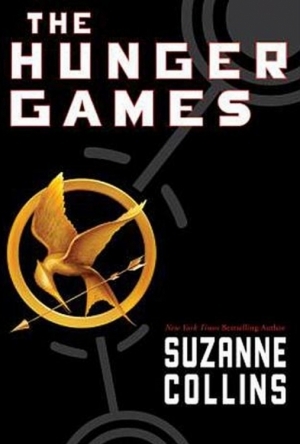
I finished this book for the second time around 15 minutes ago, and I’m still missing being part of its world. Yes, it’s that good. Actually, I read the whole book just today. The first time I read it, just before the film came out, I’d followed a friend’s recommendation to read the books first, and devoured all three in as many days. I then had to give up my Kindle for a few days so that my friend could read it, and she was just as enamoured. I know my American cousins loved it too. Safe to say, it was very popular in my circle of friends! I have heard a couple of dismissive comments saying it’s a rip-off of Battle Royale, but I haven’t read that yet, so I’ll reserve judgement.
Set in post-apocalyptic America, now known as Panem, the book very quickly sets Katniss, the protagonist, up as a fiercely protective older sister. <spoiler>So protective, she learnt to hunt, barter on the black market and generally help her family survive when their father dies and their mother is overcome by depression. So protective, she volunteers in her sister’s place for the practically suicidal Hunger Games.</spoiler> It’s not long into the book that the reaping takes place, but by the time it does, the reader knows all they need to about who Katniss is, where she’s coming from, and also sets the scene for her dilemma over the coming books. I was rooting for her all the way, and the way Suzanne Collins writes from Katniss’s perspective is extremely effective. I was constantly sympathising with her, while at the same time simply admiring how the cogs in her mind worked in helping her to survive. None of it seemed contrived.
I’m a really big fan of dystopias anyway, but I loved what this plot was based on. Collins has said that her idea for The Hunger Games came from reality TV, and what might happen if it got warped. In a society where it’s almost impossible to avoid reality television, the plot is really contemporary, whilst also having a definite mix of Orwell’s Big Brother in there. Having also read the next two stories before, I know it gets a lot darker, but I’ll review those another time. <spoiler>In the TV context, it’s also really easy to see how anything that boosted ratings (the “star-crossed lovers”) would be extremely powerful. It took me a while to get this, but actually, being torn between Gale and Peeta is quite understandable, given the different extremes she knows both under. I suppose comparisons could be made, but it’s definitely no Twilight.</spoiler>
The pacing of the book is done brilliantly (hence why I’ve read it twice, both taking less than a day!). Collins controls the twists and turns of the plot as adeptly as the gamemakers. The main characters are really multi-faceted, and the important themes – action, politics, and yes, even love – all come out in sometimes unexpected places.
Having also seen the film, I’m really impressed with how well it translated across. Obviously, no film can ever compete with the level of detail and the reader’s own imagination in a book, but it was good. I can’t remember what I thought of casting at the time, but I must admit, I did see Jennifer Lawrence and Josh Hutcherson in my mind when reading the book this time. This may come across as a backhanded compliment, but Jennifer Lawrence seems to have the right level of awkwardness/social unease in front of the cameras that I associated with Katniss, and also fits the book’s description.
This review is also on my <a href="http://awowords.wordpress.com">blog</a>; - if you liked it, please check it out!
Set in post-apocalyptic America, now known as Panem, the book very quickly sets Katniss, the protagonist, up as a fiercely protective older sister. <spoiler>So protective, she learnt to hunt, barter on the black market and generally help her family survive when their father dies and their mother is overcome by depression. So protective, she volunteers in her sister’s place for the practically suicidal Hunger Games.</spoiler> It’s not long into the book that the reaping takes place, but by the time it does, the reader knows all they need to about who Katniss is, where she’s coming from, and also sets the scene for her dilemma over the coming books. I was rooting for her all the way, and the way Suzanne Collins writes from Katniss’s perspective is extremely effective. I was constantly sympathising with her, while at the same time simply admiring how the cogs in her mind worked in helping her to survive. None of it seemed contrived.
I’m a really big fan of dystopias anyway, but I loved what this plot was based on. Collins has said that her idea for The Hunger Games came from reality TV, and what might happen if it got warped. In a society where it’s almost impossible to avoid reality television, the plot is really contemporary, whilst also having a definite mix of Orwell’s Big Brother in there. Having also read the next two stories before, I know it gets a lot darker, but I’ll review those another time. <spoiler>In the TV context, it’s also really easy to see how anything that boosted ratings (the “star-crossed lovers”) would be extremely powerful. It took me a while to get this, but actually, being torn between Gale and Peeta is quite understandable, given the different extremes she knows both under. I suppose comparisons could be made, but it’s definitely no Twilight.</spoiler>
The pacing of the book is done brilliantly (hence why I’ve read it twice, both taking less than a day!). Collins controls the twists and turns of the plot as adeptly as the gamemakers. The main characters are really multi-faceted, and the important themes – action, politics, and yes, even love – all come out in sometimes unexpected places.
Having also seen the film, I’m really impressed with how well it translated across. Obviously, no film can ever compete with the level of detail and the reader’s own imagination in a book, but it was good. I can’t remember what I thought of casting at the time, but I must admit, I did see Jennifer Lawrence and Josh Hutcherson in my mind when reading the book this time. This may come across as a backhanded compliment, but Jennifer Lawrence seems to have the right level of awkwardness/social unease in front of the cameras that I associated with Katniss, and also fits the book’s description.
This review is also on my <a href="http://awowords.wordpress.com">blog</a>; - if you liked it, please check it out!

Gareth von Kallenbach (980 KP) rated Splice (2010) in Movies
Aug 8, 2019


I consider myself a pretty well educated horror-movie buff. As a child, my brother lovingly showed me movies like Critters” and Ghoulies, along with the Halloween and Friday the 13th series. Freddy Krueger scared me no more than Ronald McDonald did (and no, I don’t have a fear of clowns). I have pretty much grown immune to horror films and their ilk, so it takes a lot to get a rise out of me. Sadly, like many many others, Splice failed miserably in doing so.
Meet Clive (Adrian Brody) and Elsa (Sarah Polley), two very cliché, defiant scientists who lead their industry by creating a prototype of the first ever genetically engineered creature. These two creatures, dubbed “Fred” and “Ginger”, claim a genetic code that they hope to someday use for veterinary and medicinal advances. In light of their success, Elsa conveys her desire to start working with human genes, a desire her supervisors immediately shoot down. Ever rebellious, Elsa and Clive begin splicing human genomes on their own, hoping to create a creature that will be unequaled in its genetic capabilities and advances. Yet their result turns out to be something far more humanoid than previously hoped. Soon they find themselves with a creature, lovingly named “Dren”, that’s startlingly human and yet embodies the abilities of amphibian and bird, a creature that’s capable of employing human emotion and intelligence while reveling in its animalistic tendencies. Even with Elsa's nurturing, their experiment takes a turn for the worse.
At first I had high hopes for this film. It was an independent film that premiered at Sundance (it's also being shown currently at the Seattle Independent Film Festival), had Adrian Brody as its lead, and one of my favorite directors, Guillermo Del Toro as one of its executive producers. All in all, I thought this might prove to be one of those rare horror-movie exceptions. But I was wrong.
Remember that time when you first watched Saw in the movie theater, and how comical that scene was where Cary Elwes' character is sawing off his leg to break free to save his family, only to have the game end less than an hour or so later? It was supposed to be one of those "dramatic" moments but everyone ends up laughing instead. Yeah, that's kind of what happens in Splice. Numerous times throughout the movie, the audience ended up laughing at the more dramatic moments. Sadly, the plot in and of itself was decent.
Perhaps if there had been a bigger budget or if more attention had been paid to the acting and the movie's resolution it might have turned out in much better form. It's my understanding that the original Sundance film had been edited and altered, thus resulting in what we see. Whether this was for better or worse, I've no clue. Given the ridiculous ending and the generic horror-movie allure, it flopped terribly and the ending just seemed thrown together more than anything else. Plus, if the plot didn't get under your skin, Dren's chirps and warbles would.
The opening credits were amazing (I have to give credit where credit is due) and the beginning scenes weren't terribly bad. Overall, the movie is more comical than terrifying and the plot weaker than watered-down instant coffee. There are far too many holes in the storyline and Adrian Brody's character wasn't strong enough to carry a cast as obscure as this. I would wait to see what the DVD would hold for this one. Maybe the extras will help fill in the gaps or the unedited film will present itself in a different light?
Meet Clive (Adrian Brody) and Elsa (Sarah Polley), two very cliché, defiant scientists who lead their industry by creating a prototype of the first ever genetically engineered creature. These two creatures, dubbed “Fred” and “Ginger”, claim a genetic code that they hope to someday use for veterinary and medicinal advances. In light of their success, Elsa conveys her desire to start working with human genes, a desire her supervisors immediately shoot down. Ever rebellious, Elsa and Clive begin splicing human genomes on their own, hoping to create a creature that will be unequaled in its genetic capabilities and advances. Yet their result turns out to be something far more humanoid than previously hoped. Soon they find themselves with a creature, lovingly named “Dren”, that’s startlingly human and yet embodies the abilities of amphibian and bird, a creature that’s capable of employing human emotion and intelligence while reveling in its animalistic tendencies. Even with Elsa's nurturing, their experiment takes a turn for the worse.
At first I had high hopes for this film. It was an independent film that premiered at Sundance (it's also being shown currently at the Seattle Independent Film Festival), had Adrian Brody as its lead, and one of my favorite directors, Guillermo Del Toro as one of its executive producers. All in all, I thought this might prove to be one of those rare horror-movie exceptions. But I was wrong.
Remember that time when you first watched Saw in the movie theater, and how comical that scene was where Cary Elwes' character is sawing off his leg to break free to save his family, only to have the game end less than an hour or so later? It was supposed to be one of those "dramatic" moments but everyone ends up laughing instead. Yeah, that's kind of what happens in Splice. Numerous times throughout the movie, the audience ended up laughing at the more dramatic moments. Sadly, the plot in and of itself was decent.
Perhaps if there had been a bigger budget or if more attention had been paid to the acting and the movie's resolution it might have turned out in much better form. It's my understanding that the original Sundance film had been edited and altered, thus resulting in what we see. Whether this was for better or worse, I've no clue. Given the ridiculous ending and the generic horror-movie allure, it flopped terribly and the ending just seemed thrown together more than anything else. Plus, if the plot didn't get under your skin, Dren's chirps and warbles would.
The opening credits were amazing (I have to give credit where credit is due) and the beginning scenes weren't terribly bad. Overall, the movie is more comical than terrifying and the plot weaker than watered-down instant coffee. There are far too many holes in the storyline and Adrian Brody's character wasn't strong enough to carry a cast as obscure as this. I would wait to see what the DVD would hold for this one. Maybe the extras will help fill in the gaps or the unedited film will present itself in a different light?

Twisted Cysts (13 KP) rated Terminator: Dark Fate (2019) in Movies
Oct 24, 2019

Action (2 more)
Performances
VFX
Terminator 3?
I need your clothes, your Re-boot and your motorcycle.
That’s the second l pun I’ve made out of that infamous terminator 2 line this week and I feel dirty because of it;
Dirty, much like how I imagine the Terminator franchise feels after Genisys (or however they spelt it)
Terminator:Dark Fate however is billed as a follow up to Terminator & T2;
The former an 80’s classic that sparked a franchise & its sequel that has easily landed itself as one of the best sequels of all time.
So you probably know that this one is ditching all those other terminator films that came in the couple of decades that came between & aims to be the definitive third instalment of franchise (for the third time after Rise Against The Machines & Gen-I-size also promised to do the same) and it’s actually succeeds somewhat, but maybe not in the way a lot of die-hards will want it to.
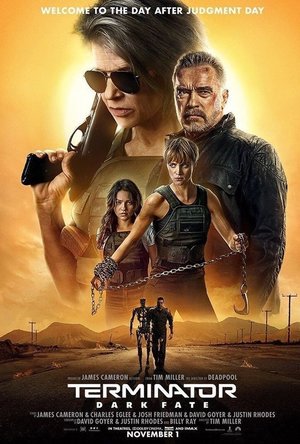
It’s the “Day After Judgement Day” and Dark Fate opens strong; using footage of Sarah Connor’s crazed speech of Judgement day & machines whilst being interviewed by doctors from T2.
you’ll immediately appreciate Linda Hamilton’s presence one again & from the first scene that follows it’s immediately clear that the previous sequels were missing her presence on screen.
We get a very brief tease of that 80’s style future of skulls on beaches and red & blue lasers that you’ve now seen in 6 films before it but This film doesn’t mess about, Judgement Day didn’t Happen, Sarah, John & The T-800 stopped it in terminator 2 and this film wants you to know that.
You see this film takes a huge risk that may divide fans, but imo it’s a risk that needed to be taken;
it’s no longer about John Connor, not anymore.
We’re introduced to Dani Ramos (Natalia Reyes) & her brother Diego (Diego Boneta) as factory workers facing replacement my machines (see what they did there, I’ll forgive it though as it gets good).
Next up is the rather brutal and badass introduction to the new Kyle Reese in the form of McKenzie Davis’s Grace & then a similar although ironically more Graceful introduction to the new Terminator (Gabriel Luna) both coming back in time via the iconic time bubble effect of series has had since 1984.
And he’s The most polite & possibly menacing Terminator since the T-1000…
Yes I said polite but I’ll get back to that later.
This new ‘black metal’ terminator or “Rev-9” as its referred to is a sort of 2 for 1 deal Terminator, like a T-800 and a T-1000 at the same time, able to split up and act independently as liquid and skeleton simultaneously.
Unlike previous attempts though this terminator is genuinely threatening, he isn’t messing around and finds his new target Dani within minutes.
He’s lightening fast, intelligent and creepy.
The VFX on him thankfully holds up as well and look fantastic other than a few shoddy cgi jumps that can be forgiven.
Within minutes we’re into an explosive highway car chase and the action rarely lets up after.
Genuinely… theres a Mexican border assault, a US detention pen riot, a fight on fucking C5-M plane (it’s big) and then some.
The action in this film Is relentless, gripping and satisfying as fuck.
But story itself, is Terminator 1984, again…
New familiar threat from the future under a different name and that’s all that’s really new at its core.
That’s because Terminator Dark Fate actually serves as a Star Wars: The Force Awakens style Reboot.
T2’s Judgement Day didn’t happen, Skynet didn’t happen, Terminators as we know and love didn’t happen…
But eventually another A.I does and forces our incredibly toned soldier & the black-metal Rev-9 to Time Travel back to our present day.
Despite the opening chase echoing T2 this film matches Terminator 1 in tone entirely,
Everything is very desperate and our character are almost constantly on the run. If anything this is a beat for beat remake that also happens to be a sequel by bringing along the old cast (No J.J Abrams was not involved.
The cast are fantastic, every single member, this film is stollen by McKenzie Davis and Natalia Reyes, they own their roles.
Gabriel Luna as mentioned before is fantastically creepy, this terminator has one mission and won’t waste time killing innocent bystanders, he’s even well mannered! Which just adds to the creep factor.
And don’t worry, his eye-rolling one liner of “my whole body is a weapon” from the trailer is thankfully immediately shut down by an extra in the full scene.
As a re-boot these cast need to be the ones you care about. Wether you like it or not this is a passing of the torch from old to new and luckily They deliver.
I cared about them more than I did about Sarah Connor!
Who Now bitter as fuck, as ruthless as ever and making it known that she had nothing in life other than a vengeance for Terminators and a fear of a Judgement Day she’s actually prevented.
Linda Hamilton is also great as expected. Her character being even more cold, cynical and sarcastic than ever and if you think about that’s how it should be. Her presence is essential though and makes it feel like a sequel to terminator 2.
The comedy of T2 is missing until we’re eventually re-introduced to Arnie’s Terminator.
I genuinely found him hilarious, and his humour it not forced, he’s the most dead-Pan he’s ever been and of course you know that Sarah Connor isn’t going to trust this weirdly humorous rust-bucket.
But his story is quite a hard one to swallow, without spoiling we get an evolution of his character, one that’s definitely an interesting take, one that also create its own Jokes out it. But it’s doesn’t quite land. It’s too much.
That having been said Arnie is also absolutely fantastic with what he’s been given but unfortunately I didn’t care for him as much as I wanted to.
You’ll have questions multiple times throughout this film but thankfully our characters are intelligent enough to ask them before too long whilst the action is unfolding.
The film never hangs around too much and suffers a little for it, the story comes off as very little more than a remake and passing of the torch.
We get the sorry of this new threatening 2042 future via flashbacks (or is it flash forwards? time travel) and it’s grittier than we’re used to.
More in vein of Salvations dusty, military future than the synth wave metal and blue lasers, which is a shame but ultimately makes sense and enforces the idea that the future we saw in T1 & T2 was actually prevented by John & Sarah back in T2.
It’s risky but it’s the deviation from the formulae of the past attempts at a new Terminator that the franchise needs.
Luckily the risks set up also give us an appropriately emotional if predictable ending. There’s just not enough of the touching character development the the first two films had.
The film succeeded in making me care about the new characters but I left feeling like I didn’t get enough despite a bit of fleshing out via flashbacks that unfold as the film progressed.
Tim Miller (Deadpool) has directed one hell of an action film, Dark Fate is a sequel that wipes the slate clean for a future of new terminator films and just about succeeds buy the skin of it’s endo-skeleton teeth.
It’s not the best, it’s essentially the first film again with new and old cast but it’s good enough for a new series to blossom off it and thrill ride for the most part.
There are few questions left for the sequel and three-quel that I know are already planned (what the fuck does Rev-9 actually stand for anyway?) but that’s understandable, I just hope we get that sequel and that it’s as good or even better because this is the only terminator film I cared about since terminator 2.
The box office will ultimately be the decider and I can already hear the keyboard warriors that haven’t even seen the movie panning it on twitter but I for one, really enjoyed Terminator: Dark Fate.
Photo courtesy of Skydance & Paramount VIa talent house media.
7/10
That’s the second l pun I’ve made out of that infamous terminator 2 line this week and I feel dirty because of it;
Dirty, much like how I imagine the Terminator franchise feels after Genisys (or however they spelt it)
Terminator:Dark Fate however is billed as a follow up to Terminator & T2;
The former an 80’s classic that sparked a franchise & its sequel that has easily landed itself as one of the best sequels of all time.
So you probably know that this one is ditching all those other terminator films that came in the couple of decades that came between & aims to be the definitive third instalment of franchise (for the third time after Rise Against The Machines & Gen-I-size also promised to do the same) and it’s actually succeeds somewhat, but maybe not in the way a lot of die-hards will want it to.
It’s the “Day After Judgement Day” and Dark Fate opens strong; using footage of Sarah Connor’s crazed speech of Judgement day & machines whilst being interviewed by doctors from T2.
you’ll immediately appreciate Linda Hamilton’s presence one again & from the first scene that follows it’s immediately clear that the previous sequels were missing her presence on screen.
We get a very brief tease of that 80’s style future of skulls on beaches and red & blue lasers that you’ve now seen in 6 films before it but This film doesn’t mess about, Judgement Day didn’t Happen, Sarah, John & The T-800 stopped it in terminator 2 and this film wants you to know that.
You see this film takes a huge risk that may divide fans, but imo it’s a risk that needed to be taken;
it’s no longer about John Connor, not anymore.
We’re introduced to Dani Ramos (Natalia Reyes) & her brother Diego (Diego Boneta) as factory workers facing replacement my machines (see what they did there, I’ll forgive it though as it gets good).
Next up is the rather brutal and badass introduction to the new Kyle Reese in the form of McKenzie Davis’s Grace & then a similar although ironically more Graceful introduction to the new Terminator (Gabriel Luna) both coming back in time via the iconic time bubble effect of series has had since 1984.
And he’s The most polite & possibly menacing Terminator since the T-1000…
Yes I said polite but I’ll get back to that later.
This new ‘black metal’ terminator or “Rev-9” as its referred to is a sort of 2 for 1 deal Terminator, like a T-800 and a T-1000 at the same time, able to split up and act independently as liquid and skeleton simultaneously.
Unlike previous attempts though this terminator is genuinely threatening, he isn’t messing around and finds his new target Dani within minutes.
He’s lightening fast, intelligent and creepy.
The VFX on him thankfully holds up as well and look fantastic other than a few shoddy cgi jumps that can be forgiven.
Within minutes we’re into an explosive highway car chase and the action rarely lets up after.
Genuinely… theres a Mexican border assault, a US detention pen riot, a fight on fucking C5-M plane (it’s big) and then some.
The action in this film Is relentless, gripping and satisfying as fuck.
But story itself, is Terminator 1984, again…
New familiar threat from the future under a different name and that’s all that’s really new at its core.
That’s because Terminator Dark Fate actually serves as a Star Wars: The Force Awakens style Reboot.
T2’s Judgement Day didn’t happen, Skynet didn’t happen, Terminators as we know and love didn’t happen…
But eventually another A.I does and forces our incredibly toned soldier & the black-metal Rev-9 to Time Travel back to our present day.
Despite the opening chase echoing T2 this film matches Terminator 1 in tone entirely,
Everything is very desperate and our character are almost constantly on the run. If anything this is a beat for beat remake that also happens to be a sequel by bringing along the old cast (No J.J Abrams was not involved.
The cast are fantastic, every single member, this film is stollen by McKenzie Davis and Natalia Reyes, they own their roles.
Gabriel Luna as mentioned before is fantastically creepy, this terminator has one mission and won’t waste time killing innocent bystanders, he’s even well mannered! Which just adds to the creep factor.
And don’t worry, his eye-rolling one liner of “my whole body is a weapon” from the trailer is thankfully immediately shut down by an extra in the full scene.
As a re-boot these cast need to be the ones you care about. Wether you like it or not this is a passing of the torch from old to new and luckily They deliver.
I cared about them more than I did about Sarah Connor!
Who Now bitter as fuck, as ruthless as ever and making it known that she had nothing in life other than a vengeance for Terminators and a fear of a Judgement Day she’s actually prevented.
Linda Hamilton is also great as expected. Her character being even more cold, cynical and sarcastic than ever and if you think about that’s how it should be. Her presence is essential though and makes it feel like a sequel to terminator 2.
The comedy of T2 is missing until we’re eventually re-introduced to Arnie’s Terminator.
I genuinely found him hilarious, and his humour it not forced, he’s the most dead-Pan he’s ever been and of course you know that Sarah Connor isn’t going to trust this weirdly humorous rust-bucket.
But his story is quite a hard one to swallow, without spoiling we get an evolution of his character, one that’s definitely an interesting take, one that also create its own Jokes out it. But it’s doesn’t quite land. It’s too much.
That having been said Arnie is also absolutely fantastic with what he’s been given but unfortunately I didn’t care for him as much as I wanted to.
You’ll have questions multiple times throughout this film but thankfully our characters are intelligent enough to ask them before too long whilst the action is unfolding.
The film never hangs around too much and suffers a little for it, the story comes off as very little more than a remake and passing of the torch.
We get the sorry of this new threatening 2042 future via flashbacks (or is it flash forwards? time travel) and it’s grittier than we’re used to.
More in vein of Salvations dusty, military future than the synth wave metal and blue lasers, which is a shame but ultimately makes sense and enforces the idea that the future we saw in T1 & T2 was actually prevented by John & Sarah back in T2.
It’s risky but it’s the deviation from the formulae of the past attempts at a new Terminator that the franchise needs.
Luckily the risks set up also give us an appropriately emotional if predictable ending. There’s just not enough of the touching character development the the first two films had.
The film succeeded in making me care about the new characters but I left feeling like I didn’t get enough despite a bit of fleshing out via flashbacks that unfold as the film progressed.
Tim Miller (Deadpool) has directed one hell of an action film, Dark Fate is a sequel that wipes the slate clean for a future of new terminator films and just about succeeds buy the skin of it’s endo-skeleton teeth.
It’s not the best, it’s essentially the first film again with new and old cast but it’s good enough for a new series to blossom off it and thrill ride for the most part.
There are few questions left for the sequel and three-quel that I know are already planned (what the fuck does Rev-9 actually stand for anyway?) but that’s understandable, I just hope we get that sequel and that it’s as good or even better because this is the only terminator film I cared about since terminator 2.
The box office will ultimately be the decider and I can already hear the keyboard warriors that haven’t even seen the movie panning it on twitter but I for one, really enjoyed Terminator: Dark Fate.
Photo courtesy of Skydance & Paramount VIa talent house media.
7/10
A Bibliophagist (113 KP) rated Wuthering Heights in Books
Feb 12, 2020

Stands up (2 more)
Enthralling
Unique
Dislikable characters (1 more)
Difficult accents without translations
I will do my best to review this, however, I didn't heed the intro, this tour de force really does leave you as quickly as it comes, and reading another book before reviewing this one was a mistake.
In reading reviews prior to reading this book, I learned three major things; 1, people either love or hate this book, 2. I had no idea what I was actually in for, and 3. this may have not been the romantic pick for February I was expecting it to be.
So yes, PSA for anyone out there considering going into this thinking it's a romance. It is NOT. There are love stories in this, absolutely, powerful love stories that made me read quotes to my boyfriend with snarky statements like "if you don't say this at my funeral, did you ever really love me?". But it is NOT a romance. If anything this has more in common with "The Count of Monte Cristo" than it does "Pride and Prejudice". Honestly, the only thing it has in common with other, romantic books of this time, is the time period. But beware, no balls and high society and Mr. Darcy's await you in this novel. I feel a number of the reviews decrying the book, calling the characters "monstrous" both were the orchestrators of their own disappointment by assuming it to be like an Austin, and really need to look in the mirror and reflect on if they are really as perfect as they think they are. Especially if they were in the circumstances that surround this tale.
I find that Heathcliff himself addresses this mistake many readers had going into this book.
"picturing in me a hero of romance, and expecting unlimited indulgences from my chivalrous devotion. I can hardly regard her in the light of a rational creature, so obstinately has she persisted in forming a fabulous notion of my character and actin gon false impressions she cherished."
SO many readers went into this expecting Heathcliff to be some misunderstood brute or one harsh but salvaged by the purity of his love of Catherine. But this isn't the case.
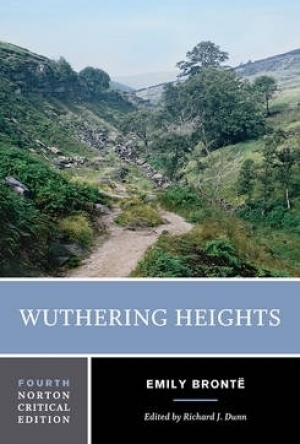
Wuthering Heights tells the story of (I guess technically 3) but really 2 generations of families. Living in the Yorkshire Moors, isolated from high society. We have the Liptons, primmer and properer and more in touch with society, and the Earnshaws which become a little rough around the edges in their isolation and loss. Papa Earnshaw has two children, Catherine and Hindley, and adopts a small boy of unknown heritage but is implied to be Romani or of mixed race (sorry Tom Hardy and nearly every portrayal of Heathcliff), that he names, simply, Heathcliff. He loves Heathcliff, and dotes on him greatly, much to the chagrin of Hindly who grows to resent Heathcliff, treating him terribly until Hindly leaves for school. Catherine and Heathcliff become great playmates, their care is given primarily to a maid scarcely older than them, as Papa Earnshaw is a single daddy. They are wild things, as children I would assume would be, in such isolation as the Yorkshire Moors in a time before the creature comforts and entertainment we have. They grow very close, obsessively close. Upon Papa Earnshaw's death, Hindley returns (at around the age of 23) to run the household, and take over the care of these two youngsters, one of which, he hates. So, Cinderella-style, Heathcliff gets treated worse and worse and treated like a servant rather than the adoptive child that Papa Earnshaw loved so dearly. Suddenly Heathcliff is nothing, treated terribly, and has the most important thing in his life banned from him, Catherine. Meanwhile, the Liptons also have two children, not wild, but spoilt in their own ways, Edgar and Isabella, close in age to Heathcliff and Catherine. When H and C run off on a camping adventure and find themselves at the Lipton's house, Catherine is injured and stays with the Liptons, in their higher society for 5 weeks. Leaving Heathcliff to the abuse of her brother and further isolation. She returns much more a lady and with her connection to Heathcliff slightly burned. In an attempt to protect Heathcliff, and because Heathcliff is now no more than a servant and not an option to marry, Catherine intends to marry Edgar. Causing our resident bad boy to run off for a number of years. Only to return a proper, but still broody gentleman, and confuse Catherine's affection much to the displeasure of Edgar.
Now, this is where a number of shows and movies end things. With a focus on Catherine and Heathcliff's whirlwind romance, obsession. It has some of the most to the point and beautiful lines regarding love, not all flowery, not "I love you most ardently" but rather cries of "I am Heathcliff" by Catherine. Absolutely heart-rending, even though I didn't like Catherine. But this is not where the book ends. The book goes on to follow Heathcliff's obsession with revenge, with his treatment as a child, his rage against Hindley, and against losing Catherine to Edgar. He spends years slowly ruining everyone's lives. Not that you could really ruin Hindley's life, he was a mean drunk. But he even goes as far as to meddle with the next generation, Hindley's son Hareton is raised terribly and is a bit of a wild thing (those his redemption and love story is quite beautiful), Catherine's daughter Cathy and Heathcliff's son Lipton are whisked up into a big scheme by Heathcliff to take everything. Heathcliff even marry's out of pure spite.
Love does not redeem this man, he's barely an antihero without his youth story. He is angry and passionate and obsessed. Which for the first half of the book I didn't fault him for, but he does do some damnable things in the second half that you cannot argue away. No matter how romantic and beautiful and heartrending his lamentations can be. I was quite the character arc, quite the tale of revenge and loss. He was unredeemable because of his big sprawling schemes and harsh intentions. Catherine for me was unredeemable because she was an obnoxious, selfish thing, that honestly if Heathcliff had stopped thinking about two minutes would have found a better woman in every town. She whined and treated Edgar (who was honestly super sweet) so terribly, she had an anger problem and would work herself up until she was sick. But it is in this imperfection that I fell in love more with the book. Here is something unique and real, this is no Elizabeth Bennett. The isolation and hermetic lifestyle created very different characters than what we see in Jane Austin or even in Emily's sister's novel.
It's no wonder this book was harshly critiqued upon release, here is a woman, writing a revenge story, with love stories in it. That based on the biographical intro had some parallels to her own life. She lived an isolated existence, surrounded by the death of the majority of her family young. She was in her late 20s when she wrote this and died a year after publication. She made humans of monsters and monsters of humans and wrote something unexpected and truly unique.
It's hard for me to explain, amongst the harshness and bleakness of this novel, why I loved it so much. But I did, I loved every bit. The anger, the passion, the love, the scheming, I loved it all.
I also feel it's important to note that this whole story is told by a maid to a new tenant. So the narrator is unreliable. Were these people truly this way? Or is it clouded by this maid's opinions of them? How much is omitted due to the maid not being privy to an event?
Truly a fantastic read, that punched me in my chest and gut, grabbed and twisted my insides and refuses to let go. I would argue it's a cult classic rather than a classic. So please, shed all preconceived notions of what this book is, shake that Austin out of your mind and read this tale of obsession and revenge. It's well worth it.
In reading reviews prior to reading this book, I learned three major things; 1, people either love or hate this book, 2. I had no idea what I was actually in for, and 3. this may have not been the romantic pick for February I was expecting it to be.
So yes, PSA for anyone out there considering going into this thinking it's a romance. It is NOT. There are love stories in this, absolutely, powerful love stories that made me read quotes to my boyfriend with snarky statements like "if you don't say this at my funeral, did you ever really love me?". But it is NOT a romance. If anything this has more in common with "The Count of Monte Cristo" than it does "Pride and Prejudice". Honestly, the only thing it has in common with other, romantic books of this time, is the time period. But beware, no balls and high society and Mr. Darcy's await you in this novel. I feel a number of the reviews decrying the book, calling the characters "monstrous" both were the orchestrators of their own disappointment by assuming it to be like an Austin, and really need to look in the mirror and reflect on if they are really as perfect as they think they are. Especially if they were in the circumstances that surround this tale.
I find that Heathcliff himself addresses this mistake many readers had going into this book.
"picturing in me a hero of romance, and expecting unlimited indulgences from my chivalrous devotion. I can hardly regard her in the light of a rational creature, so obstinately has she persisted in forming a fabulous notion of my character and actin gon false impressions she cherished."
SO many readers went into this expecting Heathcliff to be some misunderstood brute or one harsh but salvaged by the purity of his love of Catherine. But this isn't the case.
Wuthering Heights tells the story of (I guess technically 3) but really 2 generations of families. Living in the Yorkshire Moors, isolated from high society. We have the Liptons, primmer and properer and more in touch with society, and the Earnshaws which become a little rough around the edges in their isolation and loss. Papa Earnshaw has two children, Catherine and Hindley, and adopts a small boy of unknown heritage but is implied to be Romani or of mixed race (sorry Tom Hardy and nearly every portrayal of Heathcliff), that he names, simply, Heathcliff. He loves Heathcliff, and dotes on him greatly, much to the chagrin of Hindly who grows to resent Heathcliff, treating him terribly until Hindly leaves for school. Catherine and Heathcliff become great playmates, their care is given primarily to a maid scarcely older than them, as Papa Earnshaw is a single daddy. They are wild things, as children I would assume would be, in such isolation as the Yorkshire Moors in a time before the creature comforts and entertainment we have. They grow very close, obsessively close. Upon Papa Earnshaw's death, Hindley returns (at around the age of 23) to run the household, and take over the care of these two youngsters, one of which, he hates. So, Cinderella-style, Heathcliff gets treated worse and worse and treated like a servant rather than the adoptive child that Papa Earnshaw loved so dearly. Suddenly Heathcliff is nothing, treated terribly, and has the most important thing in his life banned from him, Catherine. Meanwhile, the Liptons also have two children, not wild, but spoilt in their own ways, Edgar and Isabella, close in age to Heathcliff and Catherine. When H and C run off on a camping adventure and find themselves at the Lipton's house, Catherine is injured and stays with the Liptons, in their higher society for 5 weeks. Leaving Heathcliff to the abuse of her brother and further isolation. She returns much more a lady and with her connection to Heathcliff slightly burned. In an attempt to protect Heathcliff, and because Heathcliff is now no more than a servant and not an option to marry, Catherine intends to marry Edgar. Causing our resident bad boy to run off for a number of years. Only to return a proper, but still broody gentleman, and confuse Catherine's affection much to the displeasure of Edgar.
Now, this is where a number of shows and movies end things. With a focus on Catherine and Heathcliff's whirlwind romance, obsession. It has some of the most to the point and beautiful lines regarding love, not all flowery, not "I love you most ardently" but rather cries of "I am Heathcliff" by Catherine. Absolutely heart-rending, even though I didn't like Catherine. But this is not where the book ends. The book goes on to follow Heathcliff's obsession with revenge, with his treatment as a child, his rage against Hindley, and against losing Catherine to Edgar. He spends years slowly ruining everyone's lives. Not that you could really ruin Hindley's life, he was a mean drunk. But he even goes as far as to meddle with the next generation, Hindley's son Hareton is raised terribly and is a bit of a wild thing (those his redemption and love story is quite beautiful), Catherine's daughter Cathy and Heathcliff's son Lipton are whisked up into a big scheme by Heathcliff to take everything. Heathcliff even marry's out of pure spite.
Love does not redeem this man, he's barely an antihero without his youth story. He is angry and passionate and obsessed. Which for the first half of the book I didn't fault him for, but he does do some damnable things in the second half that you cannot argue away. No matter how romantic and beautiful and heartrending his lamentations can be. I was quite the character arc, quite the tale of revenge and loss. He was unredeemable because of his big sprawling schemes and harsh intentions. Catherine for me was unredeemable because she was an obnoxious, selfish thing, that honestly if Heathcliff had stopped thinking about two minutes would have found a better woman in every town. She whined and treated Edgar (who was honestly super sweet) so terribly, she had an anger problem and would work herself up until she was sick. But it is in this imperfection that I fell in love more with the book. Here is something unique and real, this is no Elizabeth Bennett. The isolation and hermetic lifestyle created very different characters than what we see in Jane Austin or even in Emily's sister's novel.
It's no wonder this book was harshly critiqued upon release, here is a woman, writing a revenge story, with love stories in it. That based on the biographical intro had some parallels to her own life. She lived an isolated existence, surrounded by the death of the majority of her family young. She was in her late 20s when she wrote this and died a year after publication. She made humans of monsters and monsters of humans and wrote something unexpected and truly unique.
It's hard for me to explain, amongst the harshness and bleakness of this novel, why I loved it so much. But I did, I loved every bit. The anger, the passion, the love, the scheming, I loved it all.
I also feel it's important to note that this whole story is told by a maid to a new tenant. So the narrator is unreliable. Were these people truly this way? Or is it clouded by this maid's opinions of them? How much is omitted due to the maid not being privy to an event?
Truly a fantastic read, that punched me in my chest and gut, grabbed and twisted my insides and refuses to let go. I would argue it's a cult classic rather than a classic. So please, shed all preconceived notions of what this book is, shake that Austin out of your mind and read this tale of obsession and revenge. It's well worth it.

Hadley (567 KP) rated Stranger Things: Runaway Max in Books
Feb 16, 2020

More of Max & Billy's relationship (1 more)
Max's life in California
Brenna Yovanoff wrote this novel after season two of Stranger Things debuted on Netflix. And it reads exactly like season two, but from Max's point-of-view with some flashbacks of her life before Hawkins mixed in to make a pleasurable meal for the eyes.
Max Mayfield is a pre-teen that just moved to Hawkins, Indiana after her mother remarried and added an abusive step-father and step-brother to the family equation. She spends most of her time trying to not want to fit in with the kids at her new school, riding her trusty skateboard behind the building during recess and telling a group of boys who can't stop staring at her to leave her alone. Max's home life has become unbearable to the point that she debates running back to her real father in California. Fortunately, two of those boys that couldn't stop staring try to be friends with her, but when she begins to hang around them, she learns that things are not what they seem in Hawkins, Indiana. Merging with this group of boys, Max's life is forever changed, and probably for the better.
Runaway Max doesn't focus on the supernatural aspect that Stranger Things is known for. Instead, the focus is on a girl's life that gets turned upside down [pun intended] by the introduction of two abusive people that enter it with the intent of either destroying her or making her compliant, the struggle with who she is and who everyone else says she should be, to the desperation for just one real friend. Personally, I believe Yovanoff did an amazing job at telling Stranger Things fans the backstory of our Mad Max. As a result, I have no complaints about this novel whatsoever.
Yovanoff starts readers off with Max riding her skateboard through downtown Hawkins, with Max telling us how she was happy there was an arcade in this small town. Max wipes out on her skateboard, where a woman who will be very familiar to fans, runs out of a store to help her to her feet until the loud sound of engine comes pulling up; enter Billy and his Camaro. All throughout the story, readers get to see more of what was going on inside the Mayfield/Hargrove's household, which viewers of the series were only witness to one of the abuses happening to Billy by his father.
Runaway Max picks up the pace when a familiar scene happens with Max joining Stranger Things regulars: Lucas and Dustin, for Halloween around Hawkins. But with this story, we follow Max home after Will's encounter with a creature from the Upside Down. We learn that Billy never picked Max up, as he was suppose to, and that his father, Neil, is beyond angry when Billy comes home drunk and high:
" When Billy came slamming into the house, the smell came with him, rolling like the clouds of smoke and alcohol wafting out of a dive bar. Like bad weather. He was stumbling a little. His eyes were red-rimmed and heavier than ever, and he still had the leather jacket on, but he wasn't wearing a shirt. The light from the stained-glass lamp on the end table made him look deranged.
Neil breathed in through his nose and heaved himself out of his chair. 'And where the hell have you been?'
'Nowhere,' Billy muttered, and tried to brush past him, but Neil stepped in front of him and stopped him with a hand on his chest.
'What was that?'
Billy ducked his head and mumbled something about a flat tire. I couldn't tell if he was being honest or not - - - probably not - - - but as soon as he said it, it was pretty obvious that I had been lying. Whatever he'd been doing, it definitely hadn't been giving a school friend a ride home.
Neil had stayed ominously quiet, but now he drew himself up and took a step forward so he had Billy trapped against the wall. 'I'm curious to know where you learned to be so disobedient.'
Billy stared back at him. He was standing with his chin down and his jacket open, looking mutinous. He smelled like beer and the dry-skunk smell of Nate's brother, Silas, and all the other eighth-grade boys who got stoned behind the baseball diamond back home. It was the smell of not caring. 'Bite me, Neil. I'm not in the mood.'
For a second, they just stood looking at each other.
Then Neil spoke in a low, dangerous voice. The air was heavy and metallic, like right before a thunderstorm. 'I don't know where you've been or what you've been up to, but you will show me some respect!'
He shouted the last part. His voice sounded much too big in the smallness of the living room, and I winced, even though I was willing myself not to."
After Max quickly heads to her room to count her Halloween candy...
"Out in the living room, Neil was tuning up. For a while, it was just a rumble of voices, softer sometimes, then louder. There was a short, sharp cry and then a flat, meaty sound, like punching the pocket of a baseball glove. "
Runaway Max does a superb job of detailing abuse and the psychology that plays a role in it. Readers, also, get to see more of Billy's abuse towards Max. Focusing on the shift of personality Billy goes through (those who have watched season three of Stranger Things will have more of an understanding behind Billy, I recommend that if you haven't watched that season yet, that you do after reading this book). While all of this is going on, Yovanoff also retells season two, winding it within Max's story effortlessly and concisely:
"Dustin bent over the table, gazing at the creature in his hands like it was the sweetest, most adorable thing. He kept calling it a he, even though it was so weird and shapeless that how could you tell?
When he saw me staring, he asked if I wanted to hold it, and I shook my head, but he turned and tipped it out of his cupped palms and into mine.
It felt cool and squishy, heavier than it looked, and I passed it to Lucas fast. Lucas handed it off to Will, and it made its way around the circle. I was a little relieved to see that I wasn't the only one shrinking back from it. Will was looking at it like it had some kind of disease, and even Mike didn't exactly seem thrilled to touch it. He was the bravest, though, and held it up for a closer look. "
All-in-all, Runaway Max is season two of Stranger Things to-a-tee. But with Max's relationship with Billy being molded more by this novel, it can make even the most die-hard fans look at the two in a different way. There are even small splotches of scenes where Billy seems to want Max as a little sister, one such, when Max catches him in the garage of their California home, working on his car and smoking a cigarette:
" I leaned forward with my knees on my elbows and cupped my chin in my hands. 'At the health assembly in school, they told us that we're not supposed to smoke.'
Billy straightened and closed the hood, wiping his hands with a rag. 'And do you always do everything your teachers tell you?'
That idea was so wrong it was hilarious. My grades were usually okay, but my conduct cards were a mess. I was always in trouble for something- - - talking back, or drawing cartoon hot rods on my desk with a felt pen. I laughed and shook my head.
That seemed to make him happy. He smiled in a slow, lazy way, then pulled the pack of Parliaments out of his shirt pocket. He held it out to me and waited, watching my face until I took one." When readers get to see the small moments between the two, it hurts more to know that Billy is just an abused young man that is reflecting his father's behavior.
Overall, I really enjoyed Max's story, but was it needed? Before season three, I would have said yes, but with what we learned of Billy in season three, I don't think it was completely necessary. I think only die-hard fans of the show will enjoy this book, otherwise watching the series is the majority of the novel.
Max Mayfield is a pre-teen that just moved to Hawkins, Indiana after her mother remarried and added an abusive step-father and step-brother to the family equation. She spends most of her time trying to not want to fit in with the kids at her new school, riding her trusty skateboard behind the building during recess and telling a group of boys who can't stop staring at her to leave her alone. Max's home life has become unbearable to the point that she debates running back to her real father in California. Fortunately, two of those boys that couldn't stop staring try to be friends with her, but when she begins to hang around them, she learns that things are not what they seem in Hawkins, Indiana. Merging with this group of boys, Max's life is forever changed, and probably for the better.
Runaway Max doesn't focus on the supernatural aspect that Stranger Things is known for. Instead, the focus is on a girl's life that gets turned upside down [pun intended] by the introduction of two abusive people that enter it with the intent of either destroying her or making her compliant, the struggle with who she is and who everyone else says she should be, to the desperation for just one real friend. Personally, I believe Yovanoff did an amazing job at telling Stranger Things fans the backstory of our Mad Max. As a result, I have no complaints about this novel whatsoever.
Yovanoff starts readers off with Max riding her skateboard through downtown Hawkins, with Max telling us how she was happy there was an arcade in this small town. Max wipes out on her skateboard, where a woman who will be very familiar to fans, runs out of a store to help her to her feet until the loud sound of engine comes pulling up; enter Billy and his Camaro. All throughout the story, readers get to see more of what was going on inside the Mayfield/Hargrove's household, which viewers of the series were only witness to one of the abuses happening to Billy by his father.
Runaway Max picks up the pace when a familiar scene happens with Max joining Stranger Things regulars: Lucas and Dustin, for Halloween around Hawkins. But with this story, we follow Max home after Will's encounter with a creature from the Upside Down. We learn that Billy never picked Max up, as he was suppose to, and that his father, Neil, is beyond angry when Billy comes home drunk and high:
" When Billy came slamming into the house, the smell came with him, rolling like the clouds of smoke and alcohol wafting out of a dive bar. Like bad weather. He was stumbling a little. His eyes were red-rimmed and heavier than ever, and he still had the leather jacket on, but he wasn't wearing a shirt. The light from the stained-glass lamp on the end table made him look deranged.
Neil breathed in through his nose and heaved himself out of his chair. 'And where the hell have you been?'
'Nowhere,' Billy muttered, and tried to brush past him, but Neil stepped in front of him and stopped him with a hand on his chest.
'What was that?'
Billy ducked his head and mumbled something about a flat tire. I couldn't tell if he was being honest or not - - - probably not - - - but as soon as he said it, it was pretty obvious that I had been lying. Whatever he'd been doing, it definitely hadn't been giving a school friend a ride home.
Neil had stayed ominously quiet, but now he drew himself up and took a step forward so he had Billy trapped against the wall. 'I'm curious to know where you learned to be so disobedient.'
Billy stared back at him. He was standing with his chin down and his jacket open, looking mutinous. He smelled like beer and the dry-skunk smell of Nate's brother, Silas, and all the other eighth-grade boys who got stoned behind the baseball diamond back home. It was the smell of not caring. 'Bite me, Neil. I'm not in the mood.'
For a second, they just stood looking at each other.
Then Neil spoke in a low, dangerous voice. The air was heavy and metallic, like right before a thunderstorm. 'I don't know where you've been or what you've been up to, but you will show me some respect!'
He shouted the last part. His voice sounded much too big in the smallness of the living room, and I winced, even though I was willing myself not to."
After Max quickly heads to her room to count her Halloween candy...
"Out in the living room, Neil was tuning up. For a while, it was just a rumble of voices, softer sometimes, then louder. There was a short, sharp cry and then a flat, meaty sound, like punching the pocket of a baseball glove. "
Runaway Max does a superb job of detailing abuse and the psychology that plays a role in it. Readers, also, get to see more of Billy's abuse towards Max. Focusing on the shift of personality Billy goes through (those who have watched season three of Stranger Things will have more of an understanding behind Billy, I recommend that if you haven't watched that season yet, that you do after reading this book). While all of this is going on, Yovanoff also retells season two, winding it within Max's story effortlessly and concisely:
"Dustin bent over the table, gazing at the creature in his hands like it was the sweetest, most adorable thing. He kept calling it a he, even though it was so weird and shapeless that how could you tell?
When he saw me staring, he asked if I wanted to hold it, and I shook my head, but he turned and tipped it out of his cupped palms and into mine.
It felt cool and squishy, heavier than it looked, and I passed it to Lucas fast. Lucas handed it off to Will, and it made its way around the circle. I was a little relieved to see that I wasn't the only one shrinking back from it. Will was looking at it like it had some kind of disease, and even Mike didn't exactly seem thrilled to touch it. He was the bravest, though, and held it up for a closer look. "
All-in-all, Runaway Max is season two of Stranger Things to-a-tee. But with Max's relationship with Billy being molded more by this novel, it can make even the most die-hard fans look at the two in a different way. There are even small splotches of scenes where Billy seems to want Max as a little sister, one such, when Max catches him in the garage of their California home, working on his car and smoking a cigarette:
" I leaned forward with my knees on my elbows and cupped my chin in my hands. 'At the health assembly in school, they told us that we're not supposed to smoke.'
Billy straightened and closed the hood, wiping his hands with a rag. 'And do you always do everything your teachers tell you?'
That idea was so wrong it was hilarious. My grades were usually okay, but my conduct cards were a mess. I was always in trouble for something- - - talking back, or drawing cartoon hot rods on my desk with a felt pen. I laughed and shook my head.
That seemed to make him happy. He smiled in a slow, lazy way, then pulled the pack of Parliaments out of his shirt pocket. He held it out to me and waited, watching my face until I took one." When readers get to see the small moments between the two, it hurts more to know that Billy is just an abused young man that is reflecting his father's behavior.
Overall, I really enjoyed Max's story, but was it needed? Before season three, I would have said yes, but with what we learned of Billy in season three, I don't think it was completely necessary. I think only die-hard fans of the show will enjoy this book, otherwise watching the series is the majority of the novel.

Purple Phoenix Games (2266 KP) rated Abstract Academy in Tabletop Games
Feb 25, 2022
There’s just something about a well-thought out and appealing box cover to really get you into it, am I right? Look at that graphic. The negative space used for the A and Y in AcademY is just sublime! Wait, I recognize those names on the box. Didn’t they also design some other games I enjoy? (1 minute later after consulting BGG) IT’S THE TEAM BEHIND TRUFFLE SHUFFLE, POINT SALAD, AND DOLLARS TO DONUTS?? I love those games! Oh, this is going to be good! AND it’s from Crafty Games? Boom. Gotta be a hit, I just know it. But where is all the food?
Abstract Academy is a card laying, hand management, pattern building game for two to four players. In it, players become art school students trying to impress their teachers. The only problem is that they must share a canvas, as the costs of school allow them very few luxuries. The player who can most effectively build masterpieces and satisfy all tested requirements over three rounds will ace the class and claim victory over the other starving artists.
DISCLAIMER 1: We were provided a copy of this game for the purposes of this review. This is a retail copy of the game, so what you see in these photos is exactly what would be received in your box. I do not intend to cover every single rule included in the rulebook, but will describe the overall game flow and major rule set so that our readers may get a sense of how the game plays. For more in depth rules, you may purchase a copy online or from your FLGS. -T
DISCLAIMER 2: My current temporary housing did not want me to have great lighting for photos in this review. Please try to ignore the yellow tint; I do not enjoy over-editing game photos.
To setup, shuffle each deck type and place the decks on the table. The rulebook does not specify where, so just throw them wherever. This is a game about art, so be creative. Each player draws a hand of three Canvas cards (with the whitish back and colors on the faces). The starting Teacher’s Pet player will then reveal cards according to the round from the respective decks, per the rules and provided reference cards. Each round will reveal different sets of Assignment and Professor cards. Players also draw one Inspiration card and the game is ready to begin! Paintbrushes at the ready!
Turns could not be simpler: Play a Canvas card, and then Draw a Canvas card. Both of these actions are self-explanatory, but let me expound on this a bit. Once the first Canvas card has been played by the current Teacher’s Pet, each subsequent card must be played orthogonally adjacent to another card on the table. To define the size of the entire project’s canvas, players will be confined to a 4 x 4 grid of cards. Once a column (the cards that would lead a path to the opponent) has been completed with four cards, the rows gain special rules. Firstly, the row closest to each player becomes the “Home Row.” Players may only play cards into their own Home Row, unless the only legal place to play a card is in the opponent’s Home Row. Secondly, the Home Row and the row above it is now consider the Scoring Zone, and will dictate which cards are able to be used to satisfy Inspiration, Professor, and Assignment requirements for VP. Therefore, until the 4 x 4 grid has been solidified, players are unaware which cards may end up in their Home Rows or Scoring Zones!
Victory Points are earned by scoring the special requirements of Inspiration, Professor, and Assignment cards once the entire 4 x 4 grid of Canvas cards is complete. Oftentimes players will need to compare scores to determine which player earns the points. For example, the Moret Professor card states that five VP are earned when the player controls the “most color areas with four or more quadrants.” Each Canvas card is divided into four quadrants, and quadrants are colored with one of the primary colors. A “color area” is simply a connected network of the same color within the player’s Scoring Zone. So, to satisfy Professor Moret, the player who controls the most amount of color areas that are four quadrants or larger.
Assignment cards come in Red, Blue, and Yellow, and pertain to those colors. For example, the red “Get to the Point!” Assignment requires the “most red areas with only one quadrant.” So the assignment is asking players to dapple their canvas with unconnected red quadrants.
In stark contrast, the Inspiration card requirements resemble shapes of quadrants, as opposed to colors or numbers of quadrants. Most of the shapes on these cards are reminiscent of Tetris-style shapes, where players will score their Inspiration cards by building the correct shape of connected quadrants of the same color within their Scoring Zone.
Once these cards are all scored for the round, the Teacher’s Pet sets up for the next round per the rulebook/reference cards. The subsequent rounds will require alternate decks to reveal cards, or choice of decks. When the third and final round has been scored, the points are tallied and the victor is crowned! With a construction paper and macaroni crown, most likely. They ARE starving artists, after all.
Components. This game is a double-card-deck box with 90+ cards and a rulebook. The cards are great quality, but the true hero here is, and appropriately so, the artwork. Every card is very stylish, the Professors are all nods to real artists (well, except maybe not the promo), and it has just a really great look overall. While being played, it just has an amazing table presence. I like that a lot.
I struggled with assigning a score to this one for a few reasons. First, I like so much about this game, and I dislike a few things. I very much enjoy having so many ways to score points each round, as it keeps my mind busy with trying to put the puzzle together. The monkey wrench, though, is that when you start a round, you play cards that may not even end up in your Scoring Zone. As your hand is always three cards, it is difficult to really plan too far in advance to create a perfect Scoring Zone. Is that a bad thing? Maybe, but I think it is also quite necessary to add a little chaos to this specific game. I will explain what I mean in a bit. Perhaps a few points docked for that.
Playing Canvas cards effectively is absolutely the crux of this game, because if a pattern or shape is being built to your benefit, your opponent can easily (and definitely accidentally) ruin your best laid plans with an ill-placed card to wonkify the grid. I think that is both delicious and very very frustrating. You know what? I will decide to give a few points back for this.
The ability for the Teacher’s Pet, a title that can be passed to the other player throughout the game, to choose which two of the three Assignment decks to reveal during Round 3 just adds to the replayability factor of Abstract Academy. True, there are only five cards in each Assignments deck, and there are mathematical or statistical formulae that can calculate the exact number of possible different unique games, the ever-changing grid of cards is what makes this nearly infinitely replayable. Okay, more points earned here.
I guess I judged too harshly, and my true rating is a little lower than perhaps this little game deserves. I absolutely know that I will be playing this a whole lot more – with gamers of all ages and weight preferences. It is easy to teach, keeps the brain engaged throughout, and forces players to step back and truly appreciate that which they have equally built together. I can completely foresee my score for Abstract Academy increasing with more and more plays, so please do not regard a 4 / 6 from Purple Phoenix Games as an absolute and inflexible score.
If you are a gamer who enjoys just a little chaos added to their careful planning, light and quick card games that pack more punch than expected, and some truly awesome table presence, then you most certainly need to grab a copy of Abstract Academy. I am soon to be culling my collection and curating it to only include games I thoroughly enjoy. I have a feeling Abstract Academy is going to make the cut. It checks off so many boxes for me and how I game, and I cannot wait to introduce my kiddos to it when they can grasp the concepts.
Abstract Academy is a card laying, hand management, pattern building game for two to four players. In it, players become art school students trying to impress their teachers. The only problem is that they must share a canvas, as the costs of school allow them very few luxuries. The player who can most effectively build masterpieces and satisfy all tested requirements over three rounds will ace the class and claim victory over the other starving artists.
DISCLAIMER 1: We were provided a copy of this game for the purposes of this review. This is a retail copy of the game, so what you see in these photos is exactly what would be received in your box. I do not intend to cover every single rule included in the rulebook, but will describe the overall game flow and major rule set so that our readers may get a sense of how the game plays. For more in depth rules, you may purchase a copy online or from your FLGS. -T
DISCLAIMER 2: My current temporary housing did not want me to have great lighting for photos in this review. Please try to ignore the yellow tint; I do not enjoy over-editing game photos.
To setup, shuffle each deck type and place the decks on the table. The rulebook does not specify where, so just throw them wherever. This is a game about art, so be creative. Each player draws a hand of three Canvas cards (with the whitish back and colors on the faces). The starting Teacher’s Pet player will then reveal cards according to the round from the respective decks, per the rules and provided reference cards. Each round will reveal different sets of Assignment and Professor cards. Players also draw one Inspiration card and the game is ready to begin! Paintbrushes at the ready!
Turns could not be simpler: Play a Canvas card, and then Draw a Canvas card. Both of these actions are self-explanatory, but let me expound on this a bit. Once the first Canvas card has been played by the current Teacher’s Pet, each subsequent card must be played orthogonally adjacent to another card on the table. To define the size of the entire project’s canvas, players will be confined to a 4 x 4 grid of cards. Once a column (the cards that would lead a path to the opponent) has been completed with four cards, the rows gain special rules. Firstly, the row closest to each player becomes the “Home Row.” Players may only play cards into their own Home Row, unless the only legal place to play a card is in the opponent’s Home Row. Secondly, the Home Row and the row above it is now consider the Scoring Zone, and will dictate which cards are able to be used to satisfy Inspiration, Professor, and Assignment requirements for VP. Therefore, until the 4 x 4 grid has been solidified, players are unaware which cards may end up in their Home Rows or Scoring Zones!
Victory Points are earned by scoring the special requirements of Inspiration, Professor, and Assignment cards once the entire 4 x 4 grid of Canvas cards is complete. Oftentimes players will need to compare scores to determine which player earns the points. For example, the Moret Professor card states that five VP are earned when the player controls the “most color areas with four or more quadrants.” Each Canvas card is divided into four quadrants, and quadrants are colored with one of the primary colors. A “color area” is simply a connected network of the same color within the player’s Scoring Zone. So, to satisfy Professor Moret, the player who controls the most amount of color areas that are four quadrants or larger.
Assignment cards come in Red, Blue, and Yellow, and pertain to those colors. For example, the red “Get to the Point!” Assignment requires the “most red areas with only one quadrant.” So the assignment is asking players to dapple their canvas with unconnected red quadrants.
In stark contrast, the Inspiration card requirements resemble shapes of quadrants, as opposed to colors or numbers of quadrants. Most of the shapes on these cards are reminiscent of Tetris-style shapes, where players will score their Inspiration cards by building the correct shape of connected quadrants of the same color within their Scoring Zone.
Once these cards are all scored for the round, the Teacher’s Pet sets up for the next round per the rulebook/reference cards. The subsequent rounds will require alternate decks to reveal cards, or choice of decks. When the third and final round has been scored, the points are tallied and the victor is crowned! With a construction paper and macaroni crown, most likely. They ARE starving artists, after all.
Components. This game is a double-card-deck box with 90+ cards and a rulebook. The cards are great quality, but the true hero here is, and appropriately so, the artwork. Every card is very stylish, the Professors are all nods to real artists (well, except maybe not the promo), and it has just a really great look overall. While being played, it just has an amazing table presence. I like that a lot.
I struggled with assigning a score to this one for a few reasons. First, I like so much about this game, and I dislike a few things. I very much enjoy having so many ways to score points each round, as it keeps my mind busy with trying to put the puzzle together. The monkey wrench, though, is that when you start a round, you play cards that may not even end up in your Scoring Zone. As your hand is always three cards, it is difficult to really plan too far in advance to create a perfect Scoring Zone. Is that a bad thing? Maybe, but I think it is also quite necessary to add a little chaos to this specific game. I will explain what I mean in a bit. Perhaps a few points docked for that.
Playing Canvas cards effectively is absolutely the crux of this game, because if a pattern or shape is being built to your benefit, your opponent can easily (and definitely accidentally) ruin your best laid plans with an ill-placed card to wonkify the grid. I think that is both delicious and very very frustrating. You know what? I will decide to give a few points back for this.
The ability for the Teacher’s Pet, a title that can be passed to the other player throughout the game, to choose which two of the three Assignment decks to reveal during Round 3 just adds to the replayability factor of Abstract Academy. True, there are only five cards in each Assignments deck, and there are mathematical or statistical formulae that can calculate the exact number of possible different unique games, the ever-changing grid of cards is what makes this nearly infinitely replayable. Okay, more points earned here.
I guess I judged too harshly, and my true rating is a little lower than perhaps this little game deserves. I absolutely know that I will be playing this a whole lot more – with gamers of all ages and weight preferences. It is easy to teach, keeps the brain engaged throughout, and forces players to step back and truly appreciate that which they have equally built together. I can completely foresee my score for Abstract Academy increasing with more and more plays, so please do not regard a 4 / 6 from Purple Phoenix Games as an absolute and inflexible score.
If you are a gamer who enjoys just a little chaos added to their careful planning, light and quick card games that pack more punch than expected, and some truly awesome table presence, then you most certainly need to grab a copy of Abstract Academy. I am soon to be culling my collection and curating it to only include games I thoroughly enjoy. I have a feeling Abstract Academy is going to make the cut. It checks off so many boxes for me and how I game, and I cannot wait to introduce my kiddos to it when they can grasp the concepts.


Futuristic Fantasy
This eBook was provided by the publisher via NetGalley in exchange for an honest review
Red Queen by Victoria Aveyard is a futuristic, fantasy novel where society is divided by rich and poor; powerful and weak; elite and commoners; Silver and Red. Those with silver blood have magical abilities which make them believe they are more important than the talentless Reds who are forced to live in dilapidated towns and be sent to their deaths in wars they cannot survive.
Mare Barrow is a Red and knows that her future is doomed. Desperate to escape she confides in a stranger and lands herself a serving position in the Silver palace. Suddenly, however, her world is turned upside down after an accident reveals that, although she has red blood, she has a magical ability too. Instead of killing her as she expected, the king and queen force her to pretend she is a Silver, threatening her family if she steps out of line.
Naturally Mare hates the Silvers and involves herself with the Scarlet Guard – a terrorist group of Red rebels. However a complicated love triangle, and a shocking plot twist, puts Mare in even more danger than she bargained for.
The Cinderella-like idea of Mare coming from a poor background yet finding herself a member of the elite is nothing new. The difference here is that Mare does not want anything to do with the Silvers. She does not trust them and is angry about the way they are treating her family and her people.
Red Queen reminds me slightly of a couple of other young adult novels. It is a mishmash of The Selection by Kiera Cass (the poor become elite) and stories such as The Hunger Games (violence, rich verses poor etc.) Therefore this did not feel like a completely original piece of work. Nevertheless it was still exciting and Mare is such an admirable character.
I recommend this novel to readers of fantasy, dystopia and romance as Red Queen combines all three ideas. It is suitable for teenagers and adults alike, and do not let the word “Queen” make you believe that it is going to be overly girly. It will be interesting to see what happens in the next installment of this series – the ending suggests that there will be a lot more fighting!
Red Queen by Victoria Aveyard is a futuristic, fantasy novel where society is divided by rich and poor; powerful and weak; elite and commoners; Silver and Red. Those with silver blood have magical abilities which make them believe they are more important than the talentless Reds who are forced to live in dilapidated towns and be sent to their deaths in wars they cannot survive.
Mare Barrow is a Red and knows that her future is doomed. Desperate to escape she confides in a stranger and lands herself a serving position in the Silver palace. Suddenly, however, her world is turned upside down after an accident reveals that, although she has red blood, she has a magical ability too. Instead of killing her as she expected, the king and queen force her to pretend she is a Silver, threatening her family if she steps out of line.
Naturally Mare hates the Silvers and involves herself with the Scarlet Guard – a terrorist group of Red rebels. However a complicated love triangle, and a shocking plot twist, puts Mare in even more danger than she bargained for.
The Cinderella-like idea of Mare coming from a poor background yet finding herself a member of the elite is nothing new. The difference here is that Mare does not want anything to do with the Silvers. She does not trust them and is angry about the way they are treating her family and her people.
Red Queen reminds me slightly of a couple of other young adult novels. It is a mishmash of The Selection by Kiera Cass (the poor become elite) and stories such as The Hunger Games (violence, rich verses poor etc.) Therefore this did not feel like a completely original piece of work. Nevertheless it was still exciting and Mare is such an admirable character.
I recommend this novel to readers of fantasy, dystopia and romance as Red Queen combines all three ideas. It is suitable for teenagers and adults alike, and do not let the word “Queen” make you believe that it is going to be overly girly. It will be interesting to see what happens in the next installment of this series – the ending suggests that there will be a lot more fighting!