
Search
Search results

Bob Mann (459 KP) rated Emma (2020) in Movies
Feb 21, 2020
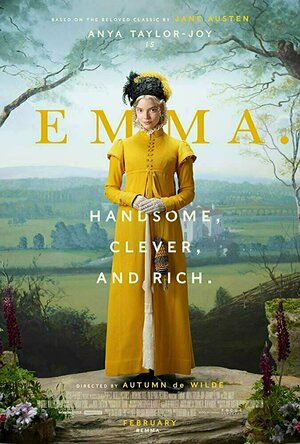


Anya Taylor-Joy.... mesmerising (2 more)
Gorgeous to look at; stunning locations and costumes
Witty and well-observed debut script
Simply Sublime
I loved the look of "Emma" from the trailer. And I was not disappointed. It is a simply sublime piece of comic entertainment.
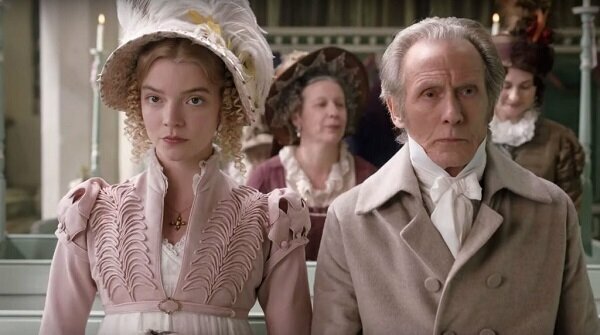
Emma Woodhouse (Anya Taylor-Joy) is a rich, privileged 21 year-old looking after her elderly and quirky father (Bill Nighy) in the family stately home. She has never loved, despite the persistent presence of 'family friend' George Knightley (Johnny Flynn), but finds it entertaining to engage in matchmaking, particularly in respect to her somewhat lower class friend Harriet Smith (Mia Goth). Emma has high ambitions for Harriet... ideas significantly above what her social station and looks might suggest.
Emma has her sights on a dream.... the mystery man Frank Churchill (Callum Turner), son of wealthy local landowner Mr Weston (Rupert Graves). She has never actually met him, but is obsessed with his myth. #fangirl. As a source of immense annoyance to her, but often a source of valuable information on news of Churchill, is the village 'old maid' Miss Bates (Miranda Hart). "Such fun"!
But Emma's perfect life is about to face sticky times, as her machinations fail to yield the expected results and a stray comment, at a disastrous picnic, threatens to damage both her reputation and her social standing.
If you like your movies full of action and suspense, you are digging in the wrong place. "Emma" is slow... glacially slow... wallowing in beautiful bucolic scenes (with superb cinematography by Christopher Blauvelt); gorgeous costumes by Alexandra Byrne; and hair styling by Marese Langan.
The movie also benefits from a joyfully tight and funny script by debut screenwriter Eleanor Catton (a Man-Booker prize winner). This picks relentlessly at the strata of the class system set up by Jane Austen's novel: "Every body has their level" spits spurned suitor Mr Elton (Josh O'Connor).
I know Anya Taylor-Joy as the spirited Casey from "Split" and "Glass": she was impressive in "Split"; less so for me in the disappointing "Glass". But here, I found her UTTERLY mesmerising. She has such striking features - those eyes! - that she fully inhabits the role of the beautiful heiress who haunts multiple men sequentially. I even muttered the word "Oscar nomination" at the end of the film: though we are too early in the year to seriously go there.
An even bigger surprise was the actor playing George Knightley. Johnny Flynn has been in a number of TV shows I haven't seen, and a few films I haven't seen either (e.g. "Beast"). But I had the nagging feeling I knew him really well. The illustrious Mrs Movie Man clocked him: he's the Cineworld "plaid man"! (For those outside the UK or not patrons of Cineworld cinemas, he was the 'star' of a Cineworld advert that played over and Over AND OVER again for months on end before every film I saw. Arrrgggghhhh!).
Here, Flynn is excellent as the frustrated and brooding Austen-hunk. He even gets away with an ar*e-shot within a U-certificate!
Particularly strong in the supporting cast are Bill Nighy (being delightfully more restrained in his performance); Miranda Hart (being "Miranda", but perfectly cast) and Mia Goth (memorable for that eel-bath in "A Cure for Wellness").
And a big thank-you for a web review in the online Radio Times for naming one of the comical (and bizarrely uncredited) footmen as Angus Imrie - - the truly disturbed stepson of Claire in "Fleabag". It was driving me crazy where I knew him from!
The one criticism I would have is that I found the (perfectly fine and well-fitting) music, by David Schweitzer and Isobel Waller-Bridge (sister of Phoebe) poorly mixed within the soundtrack. There were times when I found it overly intrusive, suddenly ducking under dialogue and then BLASTING out again. Sometimes music should be at the forefront.... but more often it should be barely perceptible.
As you might guess....
...I loved this one. The story is brilliant (obsv!); the film is simply gorgeous to look at; the locations (including the village of Lower Slaughter in the Cotswolds and Wilton House - near me - in Salisbury) are magnificent and a blessing for the English Tourist Board.
All the more impressive then that this is the directorial feature of video/short director Autumn de Wilde.
This comes with a "highly recommended" from both myself and the illustrious Mrs Movie-Man.
(For the full graphical review, please check out https://bob-the-movie-man.com/2020/02/20/one-manns-movies-film-review-emma-2020/ .)
Emma Woodhouse (Anya Taylor-Joy) is a rich, privileged 21 year-old looking after her elderly and quirky father (Bill Nighy) in the family stately home. She has never loved, despite the persistent presence of 'family friend' George Knightley (Johnny Flynn), but finds it entertaining to engage in matchmaking, particularly in respect to her somewhat lower class friend Harriet Smith (Mia Goth). Emma has high ambitions for Harriet... ideas significantly above what her social station and looks might suggest.
Emma has her sights on a dream.... the mystery man Frank Churchill (Callum Turner), son of wealthy local landowner Mr Weston (Rupert Graves). She has never actually met him, but is obsessed with his myth. #fangirl. As a source of immense annoyance to her, but often a source of valuable information on news of Churchill, is the village 'old maid' Miss Bates (Miranda Hart). "Such fun"!
But Emma's perfect life is about to face sticky times, as her machinations fail to yield the expected results and a stray comment, at a disastrous picnic, threatens to damage both her reputation and her social standing.
If you like your movies full of action and suspense, you are digging in the wrong place. "Emma" is slow... glacially slow... wallowing in beautiful bucolic scenes (with superb cinematography by Christopher Blauvelt); gorgeous costumes by Alexandra Byrne; and hair styling by Marese Langan.
The movie also benefits from a joyfully tight and funny script by debut screenwriter Eleanor Catton (a Man-Booker prize winner). This picks relentlessly at the strata of the class system set up by Jane Austen's novel: "Every body has their level" spits spurned suitor Mr Elton (Josh O'Connor).
I know Anya Taylor-Joy as the spirited Casey from "Split" and "Glass": she was impressive in "Split"; less so for me in the disappointing "Glass". But here, I found her UTTERLY mesmerising. She has such striking features - those eyes! - that she fully inhabits the role of the beautiful heiress who haunts multiple men sequentially. I even muttered the word "Oscar nomination" at the end of the film: though we are too early in the year to seriously go there.
An even bigger surprise was the actor playing George Knightley. Johnny Flynn has been in a number of TV shows I haven't seen, and a few films I haven't seen either (e.g. "Beast"). But I had the nagging feeling I knew him really well. The illustrious Mrs Movie Man clocked him: he's the Cineworld "plaid man"! (For those outside the UK or not patrons of Cineworld cinemas, he was the 'star' of a Cineworld advert that played over and Over AND OVER again for months on end before every film I saw. Arrrgggghhhh!).
Here, Flynn is excellent as the frustrated and brooding Austen-hunk. He even gets away with an ar*e-shot within a U-certificate!
Particularly strong in the supporting cast are Bill Nighy (being delightfully more restrained in his performance); Miranda Hart (being "Miranda", but perfectly cast) and Mia Goth (memorable for that eel-bath in "A Cure for Wellness").
And a big thank-you for a web review in the online Radio Times for naming one of the comical (and bizarrely uncredited) footmen as Angus Imrie - - the truly disturbed stepson of Claire in "Fleabag". It was driving me crazy where I knew him from!
The one criticism I would have is that I found the (perfectly fine and well-fitting) music, by David Schweitzer and Isobel Waller-Bridge (sister of Phoebe) poorly mixed within the soundtrack. There were times when I found it overly intrusive, suddenly ducking under dialogue and then BLASTING out again. Sometimes music should be at the forefront.... but more often it should be barely perceptible.
As you might guess....
...I loved this one. The story is brilliant (obsv!); the film is simply gorgeous to look at; the locations (including the village of Lower Slaughter in the Cotswolds and Wilton House - near me - in Salisbury) are magnificent and a blessing for the English Tourist Board.
All the more impressive then that this is the directorial feature of video/short director Autumn de Wilde.
This comes with a "highly recommended" from both myself and the illustrious Mrs Movie-Man.
(For the full graphical review, please check out https://bob-the-movie-man.com/2020/02/20/one-manns-movies-film-review-emma-2020/ .)

Lee (2222 KP) rated Richard Jewell (2019) in Movies
Jan 15, 2020
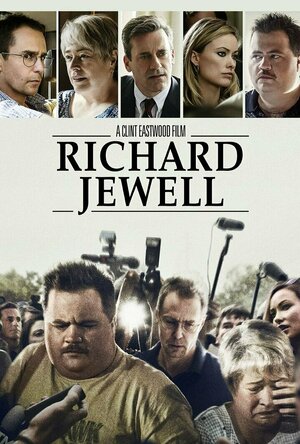

Richard Jewell tells the true story of a security guard, hailed a hero for spotting a suspicious package at the 1996 Olympic games in Atlanta, before going on to be accused of masterminding the whole thing and having his life turned upside down by the media and the FBI. Directed by Clint Eastwood, Richard Jewell is another one of those stories from recent history that I knew very few details about, other than there was a bombing at the Olympics, and it's a story that clearly deserves to be told.
We start by getting to know a bit about Richard Jewell (Paul Walter Hauser) and how he eventually found himself working security at such a high profile event. When we first meet Richard, he's working as a supply clerk for a public law firm in 1986. He meets attorney Watson Bryant (Sam Rockwell), who can be heard from across the other side of the office loudly and angrily shouting at somebody on the phone. He's not much friendlier to Richard when he puts the phone down either, discovering that Richard has very kindly replaced some stationery in his desk drawers, and even added some more Snickers bars in there after noticing empty wrappers in Watson's bin. But the pair do eventually build up a good rapport, even sharing an interest in playing video games at a local arcade during their lunch breaks.
Richard eventually leaves the firm to become a security guard at a college. With dreams of some day working his way up into law enforcement, Richard takes his role a bit too seriously, resulting in a number of complaints being made to the dean and his subsequent dismissal. Having moved in with his mother Bobi (Kathy Bates) in Atlanta, Richard lands a job working security at the Olympic games, working alongside police officers in Centennial Park during a number of events. His mother joins him to enjoy a Kenny Rogers concert one night, and then a few nights later Richard gets to work while his favourite group are playing. It's during that time, while trying to move on a group of drunk and rowdy boys, that Richard notices a suspicious backpack beneath a nearby bench. Police are alerted, and the backpack is determined to be carrying a bomb. As Richard and the police officers try to disperse the crowd, the bomb detonates and casualties are much lower than they could have been. Richard is hailed a hero.
As Richard quickly begins appearing on TV, and being offered book deals, the FBI begin their investigation. Agent Shaw (Jon Hamm) was there when the bomb went off and feels responsible for something that happened on his watch, so is determined to find the man responsible. It's not long before they decide that Richard fits the profile of previous bombers - a wannabe police officer who carries out attacks and then seeks fame and glory by helping out his victims. The situation isn't helped when ballsy reporter Kathy Scruggs (Olivia Wilde), who will go to any lengths to get her story, including sleeping around, publishes a front page story declaring Richard to be prime suspect with the FBI. From there, Richard's life, along with his mothers, is sent into turmoil and Richard is forced to contact old friend Watson Bryant to see if he'll help defend him as his lawyer.
The dynamic between Richard and Watson is what really made this movie for me. They're old friends, but clearly two very different people - Watson doesn't take any crap from anyone while Richard is a kindly, thoughtful man who just wants to help everyone, so ends up not doing himself any favours. On one occasion, Watson tells Richard not to say a word while the FBI are searching his home, and then Richard proceeds to talk to them all about anything and everything, blissfully ignorant of the glares he's receiving from Watson. There's a lot of humour in Richard Jewell, which I wasn't really expecting, and while it did make for an enjoyable movie, I felt it detracted a little from the drama and tension at times. Outside of that, both Jon Hamm and Kathy Bates were perfect in their roles, Kathy Bates this week receiving an Oscar nomination for her performance.
As the movie progresses, the injustice of it all is truly incredible. Just by Watson walking the route from the phone-booth where the warning call originated and the location where Richard was when the bomb went off, it was clear that he couldn't have done it. He even passed a polygraph test and yet he still continued to be hounded in the absence of any other leads or suspects, as he was just an easy target. It's an enjoyable watch, and certainly an important story, but because of the humour I described earlier, it just didn't have enough intensity or drama to make a bigger impact on me.
We start by getting to know a bit about Richard Jewell (Paul Walter Hauser) and how he eventually found himself working security at such a high profile event. When we first meet Richard, he's working as a supply clerk for a public law firm in 1986. He meets attorney Watson Bryant (Sam Rockwell), who can be heard from across the other side of the office loudly and angrily shouting at somebody on the phone. He's not much friendlier to Richard when he puts the phone down either, discovering that Richard has very kindly replaced some stationery in his desk drawers, and even added some more Snickers bars in there after noticing empty wrappers in Watson's bin. But the pair do eventually build up a good rapport, even sharing an interest in playing video games at a local arcade during their lunch breaks.
Richard eventually leaves the firm to become a security guard at a college. With dreams of some day working his way up into law enforcement, Richard takes his role a bit too seriously, resulting in a number of complaints being made to the dean and his subsequent dismissal. Having moved in with his mother Bobi (Kathy Bates) in Atlanta, Richard lands a job working security at the Olympic games, working alongside police officers in Centennial Park during a number of events. His mother joins him to enjoy a Kenny Rogers concert one night, and then a few nights later Richard gets to work while his favourite group are playing. It's during that time, while trying to move on a group of drunk and rowdy boys, that Richard notices a suspicious backpack beneath a nearby bench. Police are alerted, and the backpack is determined to be carrying a bomb. As Richard and the police officers try to disperse the crowd, the bomb detonates and casualties are much lower than they could have been. Richard is hailed a hero.
As Richard quickly begins appearing on TV, and being offered book deals, the FBI begin their investigation. Agent Shaw (Jon Hamm) was there when the bomb went off and feels responsible for something that happened on his watch, so is determined to find the man responsible. It's not long before they decide that Richard fits the profile of previous bombers - a wannabe police officer who carries out attacks and then seeks fame and glory by helping out his victims. The situation isn't helped when ballsy reporter Kathy Scruggs (Olivia Wilde), who will go to any lengths to get her story, including sleeping around, publishes a front page story declaring Richard to be prime suspect with the FBI. From there, Richard's life, along with his mothers, is sent into turmoil and Richard is forced to contact old friend Watson Bryant to see if he'll help defend him as his lawyer.
The dynamic between Richard and Watson is what really made this movie for me. They're old friends, but clearly two very different people - Watson doesn't take any crap from anyone while Richard is a kindly, thoughtful man who just wants to help everyone, so ends up not doing himself any favours. On one occasion, Watson tells Richard not to say a word while the FBI are searching his home, and then Richard proceeds to talk to them all about anything and everything, blissfully ignorant of the glares he's receiving from Watson. There's a lot of humour in Richard Jewell, which I wasn't really expecting, and while it did make for an enjoyable movie, I felt it detracted a little from the drama and tension at times. Outside of that, both Jon Hamm and Kathy Bates were perfect in their roles, Kathy Bates this week receiving an Oscar nomination for her performance.
As the movie progresses, the injustice of it all is truly incredible. Just by Watson walking the route from the phone-booth where the warning call originated and the location where Richard was when the bomb went off, it was clear that he couldn't have done it. He even passed a polygraph test and yet he still continued to be hounded in the absence of any other leads or suspects, as he was just an easy target. It's an enjoyable watch, and certainly an important story, but because of the humour I described earlier, it just didn't have enough intensity or drama to make a bigger impact on me.

Janeeny (200 KP) rated How to Be Famous in Books
Jul 8, 2019
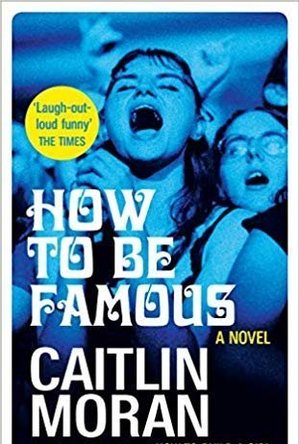

I’ve been ‘aware’ of Caitlin Moran’s work for a number of years. I think she first came to my attention in 2011. I worked in a bookshop and Morans book ‘How to be a Woman’ was in the charts. The cover art just seemed to exude a quirky confidence and it went straight into my ‘theoretical’ TBR pile.
As you can imagine, a booksellers TBR pile is a challenging Behemoth, so when ‘Raised by Wolves’ (a sitcom written by Caitlin Moran and her sister Caroline) came on the telly in 2013 I still hadn’t read ‘How to be a Woman’.
Happily, ‘Raised by Wolves’ was hilarious, putting Caitlin Moran well and truly on my radar as someone who had a lot of interesting and humorous opinions that I would really need to read about some day.
(On a little side note Alexa davies who plays Aretha in this is hilarious and worth keeping an eye on.)
Cut to 2019 Caitlin Moran has released 4 more books and I haven’t read a single one of them! So when NETgalley offered me a copy of ‘How to be famous’ in exchange for an honest review I had to say yes, as despite the fact that I actually own a copy of ‘How to be a girl’ I still haven’t read it, so I figured, if I have a deadline for a review that is going to spur me on to actually read this one!
It worked, I read it, and it was everything I thought it would be.
It had some definite laugh out loud moments, Morans humorous writing style comes through triumphantly.
So, the blurb . . .
“Johanna Morrigan (AKA Dolly Wilde) has it all: at eighteen, she lives in her own flat in London and writes for the coolest music magazine in Britain. But Johanna is miserable. Her best friend and man of her dreams John Kite has just made it big in 1994’s hot new BritPop scene. Suddenly John exists on another plane of reality: that of the Famouses.
Never one to sit on the sidelines, Johanna hatches a plan: she will Saint Paul his Corinthians, she will Jimmy his Pinocchio—she will write a monthly column, by way of a manual to the famous, analyzing fame, its power, its dangers, and its amusing aspects. In stories, girls never win the girl—they are won. Well, Johanna will re-write the stories, and win John, through her writing.
But as Johanna’s own star rises, an unpleasant one-night stand she had with a stand-up comedian, Jerry Sharp, comes back to haunt in her in a series of unfortunate consequences. How can a girl deal with public sexual shaming? Especially when her new friend, the up-and-coming feminist rock icon Suzanne Banks, is Jimmy Cricketing her?”
First off, despite the fact that this is the second book in a series, you don’t lose anything of the story by not having read the first one. If anything it makes you want to read the first one even more, as you want to know how Dolly got to where she is and the adventures she’s had on the way.
Secondly, the characters were just brilliant not a two-dimensional one among them, the dialogue just flows beautifully, and you’ll end the book wishing you were friends with them.
Thirdly, in my inexpert opinion its really well written, the story flows effortlessly and you are just grabbed by the collar and dragged along on this adventure.
I quite literally cannot find the words to say how much I admire Morans writing style, as I said before, this is so well written and the characters are so relatable. It’s full of many laugh out loud moments and some very frank and hilarious conversations about sex, and amongst the humour are actually some quite serious issues, like the clear displays of the inequality of women within the music industry (even though this was set in the 90s, I’m sure much of it is still true today)
And coming from somebody who never seems to get symbolism or messages from books, I took away a LOT from this one
One of my favourite moments was a letter that Dolly writes to her musician friend (Johnny) who is troubled by accusations of ‘selling out’
It basically addresses the scorn heaped on bands, with a predominantly teenage female following, by ‘Elitist’ fans and the music industry. She asks Johnny to appreciate his ‘screaming’ girls fans, as just because they’re louder, more emotional, younger, and haven’t been part of the fanbase since day one, doesn’t mean they don’t appreciate the music any less or feel any less. Yes, they are the ones putting money in your bank account, putting you in the charts, but just because they are part of the mass market doesn’t make their feelings any less valid.
Seeing as I’ve been both a ‘screaming girl fan’ and an ‘Elitist Fan’ I understand and appreciate what’s being said here.
There is so much to love bout this book, the strong female characters, the humour, the feminist message, and underneath it all a good old fashioned love story
As you can imagine, a booksellers TBR pile is a challenging Behemoth, so when ‘Raised by Wolves’ (a sitcom written by Caitlin Moran and her sister Caroline) came on the telly in 2013 I still hadn’t read ‘How to be a Woman’.
Happily, ‘Raised by Wolves’ was hilarious, putting Caitlin Moran well and truly on my radar as someone who had a lot of interesting and humorous opinions that I would really need to read about some day.
(On a little side note Alexa davies who plays Aretha in this is hilarious and worth keeping an eye on.)
Cut to 2019 Caitlin Moran has released 4 more books and I haven’t read a single one of them! So when NETgalley offered me a copy of ‘How to be famous’ in exchange for an honest review I had to say yes, as despite the fact that I actually own a copy of ‘How to be a girl’ I still haven’t read it, so I figured, if I have a deadline for a review that is going to spur me on to actually read this one!
It worked, I read it, and it was everything I thought it would be.
It had some definite laugh out loud moments, Morans humorous writing style comes through triumphantly.
So, the blurb . . .
“Johanna Morrigan (AKA Dolly Wilde) has it all: at eighteen, she lives in her own flat in London and writes for the coolest music magazine in Britain. But Johanna is miserable. Her best friend and man of her dreams John Kite has just made it big in 1994’s hot new BritPop scene. Suddenly John exists on another plane of reality: that of the Famouses.
Never one to sit on the sidelines, Johanna hatches a plan: she will Saint Paul his Corinthians, she will Jimmy his Pinocchio—she will write a monthly column, by way of a manual to the famous, analyzing fame, its power, its dangers, and its amusing aspects. In stories, girls never win the girl—they are won. Well, Johanna will re-write the stories, and win John, through her writing.
But as Johanna’s own star rises, an unpleasant one-night stand she had with a stand-up comedian, Jerry Sharp, comes back to haunt in her in a series of unfortunate consequences. How can a girl deal with public sexual shaming? Especially when her new friend, the up-and-coming feminist rock icon Suzanne Banks, is Jimmy Cricketing her?”
First off, despite the fact that this is the second book in a series, you don’t lose anything of the story by not having read the first one. If anything it makes you want to read the first one even more, as you want to know how Dolly got to where she is and the adventures she’s had on the way.
Secondly, the characters were just brilliant not a two-dimensional one among them, the dialogue just flows beautifully, and you’ll end the book wishing you were friends with them.
Thirdly, in my inexpert opinion its really well written, the story flows effortlessly and you are just grabbed by the collar and dragged along on this adventure.
I quite literally cannot find the words to say how much I admire Morans writing style, as I said before, this is so well written and the characters are so relatable. It’s full of many laugh out loud moments and some very frank and hilarious conversations about sex, and amongst the humour are actually some quite serious issues, like the clear displays of the inequality of women within the music industry (even though this was set in the 90s, I’m sure much of it is still true today)
And coming from somebody who never seems to get symbolism or messages from books, I took away a LOT from this one
One of my favourite moments was a letter that Dolly writes to her musician friend (Johnny) who is troubled by accusations of ‘selling out’
It basically addresses the scorn heaped on bands, with a predominantly teenage female following, by ‘Elitist’ fans and the music industry. She asks Johnny to appreciate his ‘screaming’ girls fans, as just because they’re louder, more emotional, younger, and haven’t been part of the fanbase since day one, doesn’t mean they don’t appreciate the music any less or feel any less. Yes, they are the ones putting money in your bank account, putting you in the charts, but just because they are part of the mass market doesn’t make their feelings any less valid.
Seeing as I’ve been both a ‘screaming girl fan’ and an ‘Elitist Fan’ I understand and appreciate what’s being said here.
There is so much to love bout this book, the strong female characters, the humour, the feminist message, and underneath it all a good old fashioned love story

Hadley (567 KP) rated The Turn of the Screw in Books
Mar 24, 2020 (Updated Mar 24, 2020)
Well written (1 more)
Ahead of its time
Overly descriptive (1 more)
Vague
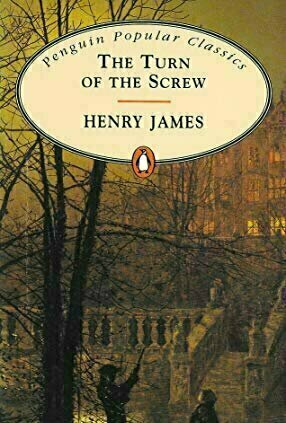
The ghost stories of the Victorian era are full of scares and mysteries- - - from the karma-ridden future, past and present ghosts of Charles Dickens' "A Christmas Carol" to the comedic ghost story by Oscar Wilde called 'the Canterville Ghost." But among all of them, Henry James found another subject to add to the pot in the novella 'the Turn of the Screw.'
With only 93 pages and the viewpoint of a governess, the story is one that has been up for debate as to its meaning for over a century, a story that blends child abuse and ghostly possession way ahead of its time. But even with its great plot, the story falls short and becomes bland throughout most of its short pages.
So why is the meaning of the Turn of the Screw still being debated? There's only one thing that has caused that --- it's in the way that James wrote the story, nothing is explained and everything is vague, these being very important parts that can keep this book from being enjoyable to many readers. Here's a summary of the story: a woman becomes governess of two children, one of which is sent home from school (technically expelled, in today's terms), the entire book has this woman trying to figure out why the child was sent home, but with ghosts thrown into the mix.
The story starts off with a man telling this ghost story from letters he received from a woman (the governess). But, even at the end of the book, the story never turns back to the man finishing the letters, yet this was done so masterfully that when you are done with the book, you completely forget about the man at the beginning, something that isn't easily done today in most writing. The man is reading these letters to a small audience that is also never revealed why, something that will seem completely irrelevant for the reader.
Readers finally get their paranormal fix when our main character, the governess, sees her first ghost in the Turn of the Screw. Our governess goes on an isolated walk when she spots an older man staring at her from a tower on the estate. But not until after a second encounter with this man, she decides to tell a housemaid about it, who quickly knows whom she speaks of. The maid is very certain that the man the governess has spotted twice is a deceased man that used to work for the family, but the maid is terrified by this because this man seems to have been abusive towards the son of the family and now seems to be continuing to torment him even after death.
Our governess seems to go down a path of paranoia as she seems to believe that the children are seeing the ghosts, too, but refusing to tell her so, and she becomes convinced that the key to getting them to confess is to finding out why the boy was sent home from school in the first place. She tries many times to get him to tell her why, but lets him take control of the conversations where he is able to divert the attention to something else. When things seem to be too much for the governess and housemaid to handle, they decide to try to write the childrens' uncle, and ask him to visit - - - this being the uncle that hired the governess and asked to never be bothered by her again, and that he wants nothing to do with his niece and nephew ever again, and especially don't write to him about any problems.
James is considered one of the greatest authors of the English language, but although this novella did very well, he wasn't known for ghost stories. His most popular book is 'the Portrait of a Lady,' which is about a young woman who comes into a large amount of money only to have it stolen by two con-men. Being that he is a Victorian-era writer, you can expect the overly long paragraphs and descriptions that the time was known for in 'the Turn of the Screw.' I personally felt the story had too many interludes of the governess' thoughts and ideas, which border on rambling. There seemed no point in the governess obsessing over why the boy was sent home from school when there are ghosts tormenting them at home- - - how this mode was suppose to work has left me clueless.
It's a usual horror trope to have children being possessed as the core of a book because it's something that can shake adults to their core at the thought that their own children could be that vulnerable. But James was way ahead of his time in the Turn of the Screw. He was able to put together psychological standpoints that weren't even discussed in his time, bouncing between child abuse with those children acting out to the power that abusers can still hold over their victims, even after death.
I'm giving the story a high rating, although I really didn't enjoy it. Why? Because it was a great idea and it was well written. If James hadn't been so vague on key parts, and hadn't left readers with a shocking unexplained ending, then maybe I would have liked it more. I can only recommend this book to people who like Victorian ghost stories, but for paranormal lovers, I think it falls short.
With only 93 pages and the viewpoint of a governess, the story is one that has been up for debate as to its meaning for over a century, a story that blends child abuse and ghostly possession way ahead of its time. But even with its great plot, the story falls short and becomes bland throughout most of its short pages.
So why is the meaning of the Turn of the Screw still being debated? There's only one thing that has caused that --- it's in the way that James wrote the story, nothing is explained and everything is vague, these being very important parts that can keep this book from being enjoyable to many readers. Here's a summary of the story: a woman becomes governess of two children, one of which is sent home from school (technically expelled, in today's terms), the entire book has this woman trying to figure out why the child was sent home, but with ghosts thrown into the mix.
The story starts off with a man telling this ghost story from letters he received from a woman (the governess). But, even at the end of the book, the story never turns back to the man finishing the letters, yet this was done so masterfully that when you are done with the book, you completely forget about the man at the beginning, something that isn't easily done today in most writing. The man is reading these letters to a small audience that is also never revealed why, something that will seem completely irrelevant for the reader.
Readers finally get their paranormal fix when our main character, the governess, sees her first ghost in the Turn of the Screw. Our governess goes on an isolated walk when she spots an older man staring at her from a tower on the estate. But not until after a second encounter with this man, she decides to tell a housemaid about it, who quickly knows whom she speaks of. The maid is very certain that the man the governess has spotted twice is a deceased man that used to work for the family, but the maid is terrified by this because this man seems to have been abusive towards the son of the family and now seems to be continuing to torment him even after death.
Our governess seems to go down a path of paranoia as she seems to believe that the children are seeing the ghosts, too, but refusing to tell her so, and she becomes convinced that the key to getting them to confess is to finding out why the boy was sent home from school in the first place. She tries many times to get him to tell her why, but lets him take control of the conversations where he is able to divert the attention to something else. When things seem to be too much for the governess and housemaid to handle, they decide to try to write the childrens' uncle, and ask him to visit - - - this being the uncle that hired the governess and asked to never be bothered by her again, and that he wants nothing to do with his niece and nephew ever again, and especially don't write to him about any problems.
James is considered one of the greatest authors of the English language, but although this novella did very well, he wasn't known for ghost stories. His most popular book is 'the Portrait of a Lady,' which is about a young woman who comes into a large amount of money only to have it stolen by two con-men. Being that he is a Victorian-era writer, you can expect the overly long paragraphs and descriptions that the time was known for in 'the Turn of the Screw.' I personally felt the story had too many interludes of the governess' thoughts and ideas, which border on rambling. There seemed no point in the governess obsessing over why the boy was sent home from school when there are ghosts tormenting them at home- - - how this mode was suppose to work has left me clueless.
It's a usual horror trope to have children being possessed as the core of a book because it's something that can shake adults to their core at the thought that their own children could be that vulnerable. But James was way ahead of his time in the Turn of the Screw. He was able to put together psychological standpoints that weren't even discussed in his time, bouncing between child abuse with those children acting out to the power that abusers can still hold over their victims, even after death.
I'm giving the story a high rating, although I really didn't enjoy it. Why? Because it was a great idea and it was well written. If James hadn't been so vague on key parts, and hadn't left readers with a shocking unexplained ending, then maybe I would have liked it more. I can only recommend this book to people who like Victorian ghost stories, but for paranormal lovers, I think it falls short.
Piper (13 KP) rated Strangers: Prey at Night (2018) in Movies
Nov 27, 2019
Real-feeling Characters (2 more)
Escalating Tension
Some Excellent Scenes
Some Naff Shots (1 more)
Hammy Acting
Contains spoilers, click to show
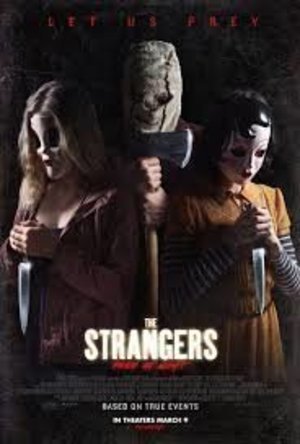
I’ve heard a lot of trash about this movie, and only some of it is right. Don’t get me wrong - it has its downfalls. We’ll get to those. But it’s a genuinely fun horror movie and, considering the predictability of the slasher genre, it’s fairly terrifying: the suspense doesn’t let up from damn near the beginning. For full disclosure, I haven’t seen the original Strangers movie, and I’ve heard it’s a whole lot better than this 2018 sequel. But the fact that Prey at Night stands successfully alone as a movie means it doesn’t matter which order you watch them in - all I’d say is that it’s probably best not to pay much attention to the reviews on this one (as sefl-destructive as a comment like that might be). It’s impressive in its own right, and if this apparently-subpar sequel is anything to go by, the original must be worthwhile. I’ll let you know once I’ve actually seen it.
Now, onto the juicy stuff. There really isn’t a whole lot of bad to this movie, and what there is is fairly standard for modern horror movies. The plot is fairly predictable: people with knives hunt down people without (the good guys do have a single gun between them, and in a display that makes you genuinely shout at your television it never gets used); a dysfunctional American family gets torn completely apart; every single time you think the evil nasty villain man is dead, he stands up, just a little out of our good guy’s eyeline. It’s fairly repetitive - how much story can you get out of some knives and masks and a little bit of running? - and while it nicely strays from the standard twisty ending, there’s a hint of danger at the end that a) doesn’t make sense, b) doesn’t mean anything, and c) isn’t explored or explained so falls very short of what it’s trying to do. And that’s nearly all the bad out of the way, but I’d like to give an honourable mention to some very corny Raimi-esque camera zooms that, momentarily, take the viewer completely out of the film and just look terrible.
Having said that, most of the camerawork is good - shaky where it needs to be, dead straight when it works. There are some claustrophobic close-ups that leave you wondering just what the director’s hiding out of frame. And while watching a creepily-masked figure loom silently into frame can get a little less scary every time, it’s certainly well-shot. Despite the pitfalls, most of which are just so easy to slip into, the good parts to this movie mostly fall into the categories of character work and nice, understated gore. The bloody parts are suitably bloody, but they don’t become unrealistic. In fact, there are gory moments that seem meticulously well-crafted and you can almost feel the pain. The characters are annoying at times, they all have their own quirks and tightly-wound baggage, and there are places where their obviously set-up arcs just don’t get the resolution they need - hang on, why do I think this is a good film?
Here’s why. Because it’s real. People don’t always get resolution (okay, it isn’t always because one of the conflicting characters dies about five minutes into the experience, but we don’t always get closure, we don’t always get to fix relationships before it’s too late). The characters in this film are, despite everything, quite likeable once you get to know them, and there’s a truly heartbreaking moment fairly early on that can’t be shunned. The injuries these characters sustain throughout don’t just go away - they stick around, for the most part, slow them down, make them vulnerable. The setting is unassuming until you realise this family are literally the only characters in the film that aren’t dead (and quite beautifully mutilated) or wielding a knife/axe/pickup truck - and if you dare make the connection between a spooky trailer park and a certain Camp Crystal Lake, it makes sense. The slashers themselves are fairly unoriginal (I’m really trying not to stray into the negatives again) but they’re human. They can die. Their motives are revealed in a simple, nicely-put “Why not?” and it’s clear they don’t need a reason, this is just fun for them. The masks, obviously, add a little layer of creep, and there’s a swimming pool scene that really is quite beautifully done. Watching people get murdered to a corny, cheerful eighties soundtrack might get irritating, if it wasn’t established that that’s just a chilling preference of the primary slasher character. The popping-up-out-of-nowhere gimmick might get a little annoying if it wasn’t established that really, this is just that kind of movie. The fact that we never find out what Kenzie did to get her shipped off to boarding school, or who Tamara was (should I have seen the first movie? I’ll have to watch it soon or I just might be lambasted for my ignorance) didn't put us too out-of-place, because there are enough wonderful gore and inventive set-piece-driven slasher moments to remind you that, hang on, you don't really need to know. The tension builds, and it builds, and oh it keeps on building right until the end, and it’s the one thing about this film that's masterfully done.
At the end of the day, this isn’t a great movie. It’s certainly not perfect. But it’s good. It feels real, and it feels, in places, genuinely terrifying. It’s a fun watch and it hasn’t been ridiculously drawn-out like some recent films (I’m looking at you, Chapter Two) so it’s quick, it’s choppy, and there’s a half-decent scare every now and then. Will it scar you for life? Depends how you feel about Kim Wilde.
Now, onto the juicy stuff. There really isn’t a whole lot of bad to this movie, and what there is is fairly standard for modern horror movies. The plot is fairly predictable: people with knives hunt down people without (the good guys do have a single gun between them, and in a display that makes you genuinely shout at your television it never gets used); a dysfunctional American family gets torn completely apart; every single time you think the evil nasty villain man is dead, he stands up, just a little out of our good guy’s eyeline. It’s fairly repetitive - how much story can you get out of some knives and masks and a little bit of running? - and while it nicely strays from the standard twisty ending, there’s a hint of danger at the end that a) doesn’t make sense, b) doesn’t mean anything, and c) isn’t explored or explained so falls very short of what it’s trying to do. And that’s nearly all the bad out of the way, but I’d like to give an honourable mention to some very corny Raimi-esque camera zooms that, momentarily, take the viewer completely out of the film and just look terrible.
Having said that, most of the camerawork is good - shaky where it needs to be, dead straight when it works. There are some claustrophobic close-ups that leave you wondering just what the director’s hiding out of frame. And while watching a creepily-masked figure loom silently into frame can get a little less scary every time, it’s certainly well-shot. Despite the pitfalls, most of which are just so easy to slip into, the good parts to this movie mostly fall into the categories of character work and nice, understated gore. The bloody parts are suitably bloody, but they don’t become unrealistic. In fact, there are gory moments that seem meticulously well-crafted and you can almost feel the pain. The characters are annoying at times, they all have their own quirks and tightly-wound baggage, and there are places where their obviously set-up arcs just don’t get the resolution they need - hang on, why do I think this is a good film?
Here’s why. Because it’s real. People don’t always get resolution (okay, it isn’t always because one of the conflicting characters dies about five minutes into the experience, but we don’t always get closure, we don’t always get to fix relationships before it’s too late). The characters in this film are, despite everything, quite likeable once you get to know them, and there’s a truly heartbreaking moment fairly early on that can’t be shunned. The injuries these characters sustain throughout don’t just go away - they stick around, for the most part, slow them down, make them vulnerable. The setting is unassuming until you realise this family are literally the only characters in the film that aren’t dead (and quite beautifully mutilated) or wielding a knife/axe/pickup truck - and if you dare make the connection between a spooky trailer park and a certain Camp Crystal Lake, it makes sense. The slashers themselves are fairly unoriginal (I’m really trying not to stray into the negatives again) but they’re human. They can die. Their motives are revealed in a simple, nicely-put “Why not?” and it’s clear they don’t need a reason, this is just fun for them. The masks, obviously, add a little layer of creep, and there’s a swimming pool scene that really is quite beautifully done. Watching people get murdered to a corny, cheerful eighties soundtrack might get irritating, if it wasn’t established that that’s just a chilling preference of the primary slasher character. The popping-up-out-of-nowhere gimmick might get a little annoying if it wasn’t established that really, this is just that kind of movie. The fact that we never find out what Kenzie did to get her shipped off to boarding school, or who Tamara was (should I have seen the first movie? I’ll have to watch it soon or I just might be lambasted for my ignorance) didn't put us too out-of-place, because there are enough wonderful gore and inventive set-piece-driven slasher moments to remind you that, hang on, you don't really need to know. The tension builds, and it builds, and oh it keeps on building right until the end, and it’s the one thing about this film that's masterfully done.
At the end of the day, this isn’t a great movie. It’s certainly not perfect. But it’s good. It feels real, and it feels, in places, genuinely terrifying. It’s a fun watch and it hasn’t been ridiculously drawn-out like some recent films (I’m looking at you, Chapter Two) so it’s quick, it’s choppy, and there’s a half-decent scare every now and then. Will it scar you for life? Depends how you feel about Kim Wilde.