

Lonely Planet Grand Canyon National Park
Lonely Planet, Bridget Gleeson and Jennifer Rasin Denniston
Book
Lonely Planet: The world's leading travel guide publisher Lonely Planet Grand Canyon National Park...
Mediterranean: A Year Around a Charmed and Troubled Sea
Book
On 26th April 2014 Huw kayaked away from Anzac Cove at Gallipoli, Turkey, taking the next three...

the Urbane Forager: Fruit & Nuts for Free
Book
"The perfect book for anyone wanting to launch themselves into foraging...without swapping their...
The Infinite Sea
7.9 Rate It
Book
The Infinite Sea is the second book in the phenomenal and bestselling 5th Wave series by...

LeftSideCut (3776 KP) rated The Falcon and the Winter Soldier in TV
Apr 24, 2021 (Updated Jul 16, 2021)
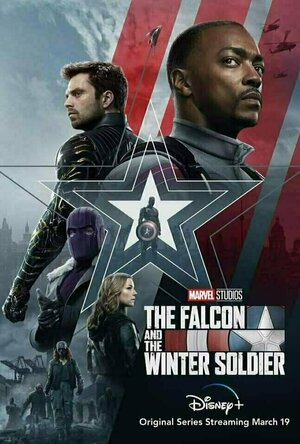

The narrative mainly focuses on the two titular Avengers taking on a revolutionary group, hell bent on returning to a post snap world. It deals head first with the fallout of Thanos' devastating blow in Infinity War, and the subsequent return of the 3.5 billion people who re-materialised after Endgame, and the issues that came with them. It's good to see that Marvel Studios aren't avoiding these complicated plot points that could have potentially just been swept under the rug.
The series also develops the John Walker/U.S. Agent comic story. Its well realised and Wyatt Russell is fantastic in the role. Daniel Brühl returns as Baron Zemo after an underwhelming narrative in Civil War, and unexpectedly is plain hilarious (and finally in full costume, even if it is for one scene).
As well as all this, fans of the comics are treated to a plethora of potential future stories - The introduction of Madripoor marks the first proper acknowledgement of X-Men material. Lesser known comic characters such as Isiah Bradley, Madame Hydra, Battlestar, Batroc, and Ayo are given screentime. There's even some carrots dangled for a potential Young Avengers adaption with the appearance of Eli Bradley/Patriot (and with Kate Bishop incoming, surely this is a thing)
Perhaps most importantly, TFATWS doesn't shy away from tackling race issues, touching upon real world events, and developing them into the plot. This spills over into the future of Captain America, and what the shield represents to the black community. There are some truly powerful moments of dialogue, especially between Isiah and Sam. It's all handled respectfully, and brings new depth the MCU, as they stride into a more diverse future.
With this series, and the preceding WandaVision, this new phase for the MCU is off to an incredibly strong start, and I'm so excited to see where they take it. Between Falcon rightfully taking the reigns as Captain America, the upcoming Shang Chi movie finally adapting the martial arts corner of Marvel for the MCU, and the tantalising promise of the multiverse, it's a good time to be a Marvel fan.

Ross (3284 KP) rated Squeeze Me in Books
Oct 13, 2020
I am quite a big fan of Carl Hiaasen, having discovered his quirky corrupt Floridian crime novels as a recommendation for fans of Chris Brookmyre. His books are filled with pollution, government corruption, and bizarre things happening to extreme characters.
Squeeze Me follows the strange disappearance of a rich old fan of the president (who isn't explicitly named but is a bulky chap who likes a tanning bed and has a younger, more attractive wife) at one of her many charity balls near her winter Florida home. Coincidentally, pest control expert Angie Armstrong is asked to dispose of a large, engorged python from the property. There then follows a rollicking tale of cover-ups, dodgy gangsters, racial intolerance, extra-marital affairs and murder, and a small appearance from everyone's favourite governor-turned-hobo-eco-terrorist.
This book is fairly typical of Hiaasen, with all the different characters crossing paths through unlikely events and plots. However, his books are famed for their extreme, unbelievable bad guys: the hoods hired to do a corrupt supposedly honest businessman/government official's dirty work. We have had someone in the past whose hand was bitten off and replaced with a weed-whacker, someone who was hooked on steroids and raped by a dolphin etc. This book is sadly lacking of such characters, as all the bad guys are fairly textbook thugs or criminals.
Also, Hiaasen readers are used to the unbelievable corruption at the hands of government officials, but when the real life president is so corrupt and unethical, any such corruption will struggle in comparison to the real thing. The president is more of a bumbling oaf who hires one man purely to service his sunbeds, another as a body double to test them out before he uses them. His racial hatred of non-North Americans is present, but becomes a small part of his character here.
This is a book about the bizarre adulation towards the president in those who are in his outer inner circle and clamouring for his attention, and the industry that builds up around them.
It is a little bit of a letdown from Hiaasen's best work, but still a great crime and corruption caper.

Road Trip • MPG, Mileage and Fuel Economy
Productivity and Finance
App
Road Trip is the fastest and easiest app for tracking of your car’s fuel economy, maintenance...
Mickey Mouse Clubhouse - Color & Play
Entertainment and Book
App
Unleash your child's inner artist as they explore this best-selling, award-winning creativity app...

Sun Surveyor (Sun & Moon)
Photo & Video and Utilities
App
Sun Surveyor takes the mystery out of the sunrise, sunset, and moon phases, allowing photographers...
Matthew Krueger (10051 KP) rated Star Wars: Episode V – The Empire Strikes Back (1980) in Movies
May 6, 2020 (Updated May 6, 2020)
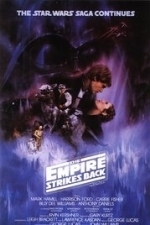
The plot: The adventure continues in this "Star Wars" sequel. Luke Skywalker (Mark Hamill), Han Solo (Harrison Ford), Princess Leia (Carrie Fisher) and Chewbacca (Peter Mayhew) face attack by the Imperial forces and its AT-AT walkers on the ice planet Hoth. While Han and Leia escape in the Millennium Falcon, Luke travels to Dagobah in search of Yoda. Only with the Jedi master's help will Luke survive when the dark side of the Force beckons him into the ultimate duel with Darth Vader (David Prowse).
To me their are better movie sequels than this one like.. "Back To The Future Part II", "Lord of The Rings: The Two Towers", "The Dark Knight", "Captain America: The Winter Soilder", "Toy Story 2", "Terminator 2: Judgement Day" and "Aliens". All of these sequels are 10x better than Empire Strikes Back.
AFI's 100 Years...100 Movies – Nominated
AFI's 100 Years...100 Thrills – Nominated
AFI's 100 Years...100 Heroes and Villains:
Darth Vader – No. 3 Villain
AFI's 100 Years...100 Movie Quotes:
"I am your father." – Nominated
"Do, or do not. There is no try." – Nominated
AFI's 100 Years...100 Movies (10th
Anniversary Edition) – Nominated.
Darth Vader was ranked as the third-greatest film villain of all time in the American Film Institute's 2003 list of the 100 greatest heroes and villains, and Wizard magazine selected the ending of The Empire Strikes Back as the greatest cliffhanger of all time.
The line "No, I am your father" is often misquoted as "Luke, I am your father." The line was selected as one of the 400 nominees for the American Film Institute's 100 Years... 100 Movie Quotes, a list of the greatest American film quotes.
I think Empire Strikes Back, even though its good. Its overrated and hyped up, to the point were its not just not as good as people say it is.
Like i said its good, but not excellent.