

Lucy Buglass (45 KP) rated Jojo Rabbit (2019) in Movies
Oct 14, 2019
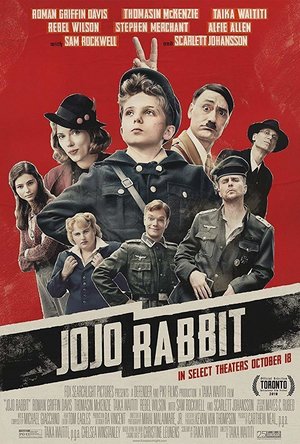


Whilst you might feel some apprehension about the concept of a 10-year-old boy who has Hitler as an imaginary friend, Taika Waititi has turned it into something brilliant and poignant.
As mentioned above, the film follows Johannes ‘Jojo’ Betzler, who lives in Nazi Germany. He’s a fanatic and is driven by his desire to serve Adolf Hitler in the German army during World War II, even joining a Hitler Youth Camp which is run by Captain Klenzendorf (Sam Rockwell).
Jojo is unlike any other child protagonist I’ve seen, because it’s easy to have very mixed feelings about who he is as a person. He’s a child and his everyday behaviour is indicative of someone who lacks maturity, resulting in some laugh out loud moments.
However, a lot of what he says happens to be horrendous insults towards the Jewish community. He’s fuelled by a love of Hitler (even going as far as to describe him as his ‘best friend’).
Throughout the film, he imagines scenarios in which Hitler is there with him, such as when he’s looking in the mirror and giving himself a pep-talk.
The strength of Jojo Rabbit‘s protagonist is a testament to actor Roman Griffin Davis, and I found it hard to believe that this was his first ever film performance. He’s funny, flawed, and a very well-rounded character brilliantly brought to life.
As for Jojo’s imaginary Hitler, he’s hysterically funny and not at all how you’d imagine the real man to be. Played brilliantly by director Taika Waititi, he is a caricature of a deplorable historical figure, and fuels Jojo’s delusions of how wonderful he is.
He’s simply someone’s interpretation of a political leader, created by a child who has been brainwashed into believing Nazi propaganda by adults in his life.
This bubbly oversimplification of a dictator is what you’d expect from a naive child, who isn’t fully aware of the atrocities around him.
The fact Taika Waititi plays this version of Hitler feels important, because he’s mocking him in the best possible way. As a Jewish man, it feels very appropriate that he criticises Hitler’s ideology through his satirical performance. It was brilliant.
Adding jokes to such a horrific situation is difficult, but this is where Jojo Rabbit really excels. The balance between humour and gut-punching reality checks is beautifully done, and there were times when I wasn’t sure whether my tears were from laughing or because I was genuinely sad at what I’d just seen.
Relationships are an important part of the film, particularly the one between Jojo and his mother Rosie (Scarlett Johansson). However, this becomes strained when he finds out that his mother is hiding a young Jewish woman in their home.
Jojo’s meeting with Elsa Korr (Thomasin McKenzie) is central to the story and gives us a real insight into the horrific treatment of Jewish people during this period, and the extreme lengths they’d go to keep themselves safe.
Despite Elsa’s life constantly being in jeopardy, she’s very sassy and gives young Jojo a run for his money once the two meet. The way the two characters bounce off each other is exceptional, and again, you’ll laugh and cry in equal measure.
I was also impressed by some brief appearances in the film such as Rebel Wilson as Fraulein Rahm, who I found hilarious in this film. I must admit I’m not always a fan of her work, but here she really delivered.
Stephen Merchant as Captain Deertz and Archie Yates as young Yorki are also worthy of praise, as every time they were on screen I found them delightful to watch. Much like Roman Griffin Davis, this was Archie’s first film, and he stole the show every time he was in a scene.
Jojo Rabbit is, simply put, political satire at its finest. As a result of this, it’s an emotional rollercoaster and one that I am excited to revisit whenever I get the chance.
It’s darkly funny with an important overall message of confronting ideologies, and I’d urge you to seek it out ASAP.

Gareth von Kallenbach (980 KP) rated Aquaman (2018) in Movies
Jun 19, 2019
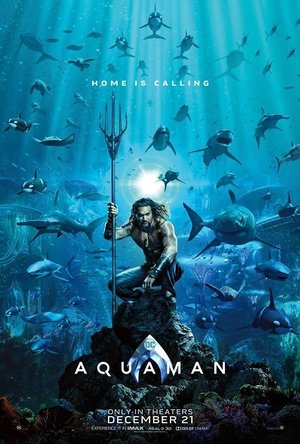

The film tells the origin of Arthur Curry (Jason Momoa), who is half mortal and half Atlantean, thanks to his human father rescuing his mother, an Atlantean royal, and falling in love.
The love between his parents is forbidden under the customs of the people of Atlantis and in time his mother is forced to return to Atlantis, leaving Arthur to be raised by his human father.
When his power-hungry half-brother Orm (Patrick Wilson), plots to wage war on the surface world, Princess Mera (Amber Heard), attempts to convince Arthur to make his first trip to Atlantis to challenge Orm for the throne and become king. Naturally a lifetime of resentment toward the people who divided his parents has made Arthur unwilling to help, especially when the key to victory requires locating and retrieving an artfact that will bring peace to
his people and those of the surface world.
With an army of Atlantean soldiers pursuing him as well as the evil Black Manta set on revenge, Arthur faces an uphill battle as he races against time and his own conflicted emotions to save the day.
Director James Wan has done an amazing job of giving audiences a lavish and action-filled experience that never loses the characters as the main
focus of the story. He cleverly blends the lore of Aquaman with a modern
twist yet stays true to the character. Jason Momoa has an intriguing presence, giving the character more depth than expected. The supporting cast is solid and the film rarely loses pacing or fails to keep you fascinated throughout.
Warner has had some issues with recent adaptations of DC characters but, like Wonder Woman, “Aquaman” delivers on action and storytelling. The film also contains a strong message about ecology without being preachy. This is one of the more entertaining films of the year and should make fans of the character happy. I look forward to seeing what adventure comes next for Aquaman.
http://sknr.net/2018/12/18/aquaman/

ClareR (6256 KP) rated The Island of Missing Trees in Books
Sep 28, 2021
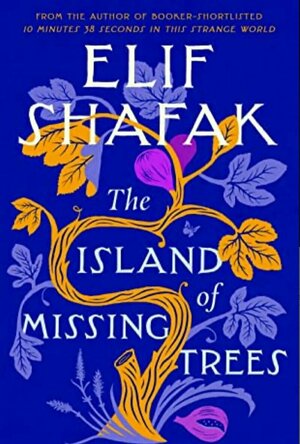
There’s a feel of Romeo and Juliet about this: a Greek-Cypriot boy (Kostas), and a Turkish-Cypriot girl (Defne) fall in love - something forbidden in the climate they’re living in. They meet in secret in a tavern that has a fig tree growing through the centre of it. This is a significant tree - it’s one of the main narrators of this story. And what a story it has to tell. It talks about the natural world in which it lives, the humans that it comes into contact with, the conflict it lives through, the sorrow, the loss.
This book describes the fracturing of a country, people forced to leave the country they love. Kostas is one of these people. He moves to London to live with his uncle, but he never seems to feel as though he fits in in there. He does follow his passion though, and becomes an expert in Natural History: the trees and plants around him, around the world, and in his native Cyprus. Which is what brings him and Defne back together, and reunites them with the fig tree.
The three of them return to London together, all cast adrift from their homeland.
Later, Kostas and Defne’s daughter carries this feeling of not quite belonging as well, but her father doesn’t seem to be able to give her what she needs. She knows nothing of her roots: she has no contact with her Cypriot family - until the day her aunt arrives.
The way that Shafak writes about loss and the pain of loss is visceral, but there’s a great deal of hope and the promise of healing. This book just has it all. I was completely enveloped in this story, and I’ve been left with a pressing need to read everything else that Elif Shafak has written!
Many thanks to Jellybooks and Penguin for providing me with a copy of this book to read.

Suswatibasu (1703 KP) rated Postcapitalism: A Guide to Our Future in Books
Nov 28, 2017
Mason writes about the way in which the present model of capitalism, and by extension the capitalist system itself, has reached a critical point. The old model is coming off the rails, sinking under the weight of the massive debts that it has created as a result of financialisation and downright fraud, and finding that its very success in transferring wealth upwards leaves it short of the demand that it needs to keep the wheels turning. It’s not suited to a world in which the marginal cost of the stuff that people want to buy is approaching zero. It is in any case ill-equipped to deal with the challenges of climate change, an ageing population and instability-induced mass migrations.
What's great about this book is the way it synthesises some of the best writing about the transformative potential of the internet and the web with a non-dogmatic perspective from the Marxist tradition.
There are a lot of arguments made in this book, that can easily be strung out into a university course. Consequently, Mason spreads himself a little thin in some areas such as climate change. Despite this, it's still important and worth the dense read.

Awix (3310 KP) rated Blood Red Skies in Tabletop Games
May 18, 2018 (Updated May 18, 2018)
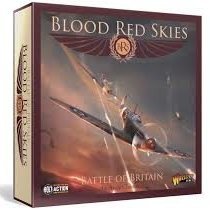
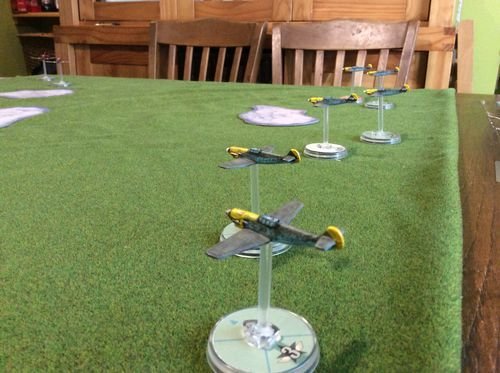
Most of the components in the starter box are very appealing and well put-together; the planes come in different coloured plastic so even without paint they are easy to distinguish. If I had to sling a slight brick at this release it's that the rulebooks are very skimpy and don't cover a number of situations which are almost certain to arise in your first few games; it's easy enough to figure out what 'should' happen but it would be good to have official confirmation. The advanced rules for using bombers and other multi-engined planes are also somewhat confusingly presented.
There's also the point that even a week or so after the game's release, the general consensus is that the points values for some of the starting planes are a little bit hinky - the Spits and 109s seem well-balanced, but Russian Yaks seem generously priced while Japanese Zeroes cost too many points, for instance. However, many supplementary releases of other planes and so on are planned, so no doubt this will be fixed in due time. In the meantime this is a very enjoyable, attractive and extremely playable game.



Natari (73 KP) rated Hunt the Moon (Cassandra Palmer, #5) in Books
Jul 19, 2019

I really enjoyed Hunt the Moon. Karen Chance onces again nails the pace of action, romance and deepening our understanding of the loveable characters she has created. In Hunt the Moon we learn a lot about the big three, Cassie, Pritkin and Mircea which puts their behaviour and way of reacting to life in a whole new light. It's a work of art.
In Hunt the Moon, Cassie finds herself a brand new enemy, because rogue vampires, black wizards and gods were't enough. Now she gets to throw in the fae and demi-gods too. Who bring with them a whole new bag of tricks. And while you shouldn't laugh at someone who always seems to find herself and her bodyguards in the midst of explosions, but, well, it's damn funny when a stoned pythia is glaring at a possessed fridge. Karen is able to be serious and cover some unsettling topics like war, politics and childhood trauma (of all varieties) and balance it with pleasant prose and just straight-up fun. That's the best word for the Cassie Palmer series, it is fun to read.
Margaret of York: The Diabolical Duchess
6.0 Rate It
Book
The amazing life of Margaret of York, the woman who tried to overthrow the Tudors. Reared in a...

Warped Space: Art, Architecture and Anxiety in Modern Culture
Book
Beginning with agoraphobia and claustrophobia in the late nineteenth century, followed by shell...
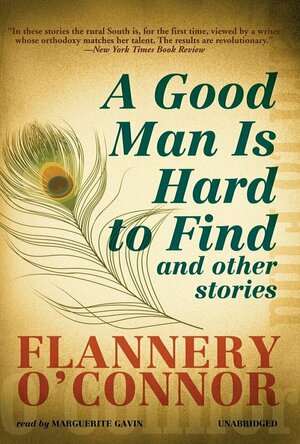
A Good Man is Hard to Find and Other Stories
Book
ONE OF THE GREATEST AMERICAN SHORT STORY COLLECTIONS In 1955, with this short story collection,...

Tea: A Very British Beverage
Book
The ubiquitous cup of tea is as much a part of British life as indifferent weather, the BBC or the...