
Search
Search results

Top Christmas Songs, Music & Carols with Lyrics: Holiday Edition
Music and Entertainment
App
"Voted No. 1 Christmas Music App in the AppStore!" "All Time Christmas Classics That Never Gets...

5 Minute Movie Guy (379 KP) rated Mad Max: Fury Road (2015) in Movies
Jun 30, 2019 (Updated Sep 16, 2019)
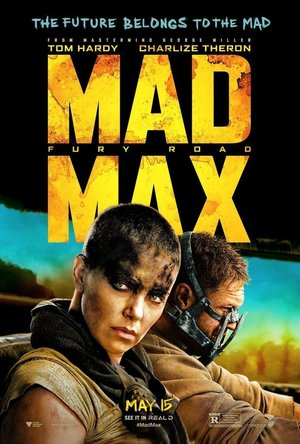


Mad Max: Fury Road is an intense, action-packed, visually stunning, and wildly entertaining film. It's only when the action slows down that the film starts to show signs of decay.
30 years and a fresh face later, the Mad Max series makes an extravagant and exhilarating return to theaters with Mad Max: Fury Road. Mel Gibson’s iconic wasteland warrior hero Max Rockatansky has been recast with the talented Tom Hardy, who gives us a more visceral and damaged portrayal of the character. Having endured years in the Hellish wasteland, Max now acts on his sole instinct of surviving. He’s ravaged by the horrors of his past and has lost all semblance of hope in this bleak, post-apocalyptic future where water is scarce and mayhem is bountiful. Director and series creator George Miller does a masterful job in creating a remarkable and inventive world of chaos and destruction, with action sequences that are practically unparalleled. Mad Max: Fury Road is a movie that keeps its fat, irradiated foot firmly pressed on the gas pedal throughout almost its entire duration, resulting in a movie that’s intense, action-packed, visually stunning, perfectly bizarre, wonderfully inventive, and wildly entertaining. It’s only when the action slows down that the film starts to show signs of decay.
In Fury Road, we first encounter Max alone in the wasteland in what is about to be a very long and very bad day. He’s quickly spotted and pursued by a pack of deathly-pale skinhead warriors known as Warboys. Outnumbered and easily captured, Max is taken to The Citadel, which serves as the home of the film’s central conflict. The monstrously plagued Immortan Joe rules over The Citadel like a cult leader, promising eternal salvation to his army of Warboys who die fighting for him. The city is a place of great disparity, as Joe teases the peasants with water, while he enjoys the excesses of his precious resources. Even worse is that he’s enslaved healthy, young women, known as his Five Wives, for the sake of producing his children.
This predicament doesn’t sit well with the battle-hardened woman warrior Imperator Furiosa (Charlize Theron) who serves under Immortan Joe’s command. Tired of Joe’s tyrannous ways, Imperator Furiosa betrays her leader during a routine gas run by venturing her armored war-rig offroad with the Five Wives secretly in tow. When news spreads that Furiosa is trying to escape and has taken the Wives with her, Joe and his army of Warboys feverishly follow in pursuit. This begins an epic, elaborate, and expertly crafted chase sequence that is absolutely outrageous and unmistakably brilliant.
Meanwhile, the enslaved Max ends up being inopportunely thrust into the action at full throttle, chained to the front of a car like a hood ornament. While Max’s name may be in the title, make no mistake about it, this is Furiosa’s story. Max is primarily just along for the ride, and doing whatever he can to survive. That’s not to say that Max is simply an unfortunate onlooker to the events of the film, but he is given little in the way of dialogue and backstory, and is chained up for a substantial portion of Fury Road. Though it should be said that the movie as a whole is rather thin on story and dialogue and it merely glosses over the plot to retain its focus on the action, which is where the film really sets itself apart.
The majority of the Fury Road serves as this long, impressive chase sequence that miraculously continues to escalate as the film goes on, despite appearing to throw the whole kitchen sink at you right at the beginning. It’s explosive, crazy, and jaw-droppingly awesome from the get-go, and yet believe me, it only gets bigger and better. Just wait until later when they start adding monster trucks, mini-guns, pole-vaulters, dirt bike-riding grannies, and a guitar flamethrower. It will leave you giddy with excitement. It’s an amazing, heavy-metal, end-of-the-world spectacle that you just got to see to believe. What makes it all even more incredible is that so much of the action is achieved by practical effects, with real stunts and car crashes and explosions.
Unfortunately, in the rare moments when Fury Road lets its foot off the gas and slows down the action, it sometimes sputters. Take for instance, the film’s climactic turning point when Furiosa’s dreams are spoiled. She dramatically falls to her knees in the sand, reeling in despair, and screams out into the void. This pivotal moment should be the most powerful moment of the film, but for me it fell completely flat. The problem here is that I never felt a strong attachment to the characters. While I respect Furiosa and Max for their strength in this struggle, I also feel like I don’t know much of anything about them, except that they’re adept at surviving and have battled through Hell to get to this point. So while this brief interlude drags a bit, Max thankfully turns things back around and leads us right back into the heart of the action, where Fury Road is at its best.
Charlize Theron gives a commanding performance as Furiosa, easily establishing herself among the ranks of the great female action stars. She makes for an excellent partner to Tom Hardy’s Max (though reportedly not so much on set). Hardy, on the other hand, puts in a solid performance, but I do take some issue with it. Truthfully, he just didn’t quite feel like Mad Max. His take on the character is too rugged. He’s missing the charm and likability that Mel Gibson’s Max had. His character may be cool, but he’s difficult to relate to, and feels remarkably reduced as he grunts throughout half of the movie without uttering a word. I can’t help but feel that perhaps Hardy took Max’s madness and survival instincts a little too far. The film also stars Nicholas Hoult as Nux, the Warboy that led Max into this whole mess, who expresses a much more appealing level of craziness. Whereas Nux is an energetic, lunatic cult follower, Max seems like he’s just a few bolts short of becoming a mentally-deranged hobo, which might not bode so well for future films. Lastly, there’s Immortan Joe, played by Hugh Keays-Byrne, who has an exceptional screen presence by being imposing, frightening, and so over-the-top that he’s kind of funny.
Visually and artistically, Mad Max: Fury Road is a triumphant success. It’s more gorgeous than you would ever think possible for a decrepit, wasteland warzone. Considerable skill and attention to detail are demonstrated to bring beauty out of this decaying environment. It features first-rate cinematography and unbelievable creativity. You’ll wonder how anyone ever thought of this stuff, but you’ll be grateful they did. The characters all look outstanding, unique, and memorable. I particularly loved Furiosa’s appearance with her prosthetic arm and grease-smeared warpaint. More impressive still is the menacing Immortan Joe with his mask and elaborate body armor. Fury Road similarly has beautiful special effects which greatly enhance the atmosphere as well as the film’s many remarkable stunts. In all, this is sure to be one of the best looking films of the year.
Mad Max: Fury Road may not be a perfect film, but it makes for an explosive and unforgettable return to the series. It’s truly a creative tour-de-force, with ingenious action, stellar design, and stunning visuals. It features brilliantly choreographed fights and chases, and some of the coolest movie stunts I’ve ever seen. The movie doesn’t always get the emotional punch it’s aiming for, and it has its share of awkward moments, but it sure makes a lasting impression with its intense, adrenaline-pumping theatrics. It might be a little too strange and twisted for some (though it’s relatively tame for being rated R), however, those who can handle the wasteland are sure to find a film that is deserving of respect and admiration. While I have my gripes with Hardy’s portrayal of Max, I know that I, for one, still can’t wait to see what the future holds for everybody’s favorite road warrior.
(The review was originally posted at 5mmg.com on 5.19.15.)
In Fury Road, we first encounter Max alone in the wasteland in what is about to be a very long and very bad day. He’s quickly spotted and pursued by a pack of deathly-pale skinhead warriors known as Warboys. Outnumbered and easily captured, Max is taken to The Citadel, which serves as the home of the film’s central conflict. The monstrously plagued Immortan Joe rules over The Citadel like a cult leader, promising eternal salvation to his army of Warboys who die fighting for him. The city is a place of great disparity, as Joe teases the peasants with water, while he enjoys the excesses of his precious resources. Even worse is that he’s enslaved healthy, young women, known as his Five Wives, for the sake of producing his children.
This predicament doesn’t sit well with the battle-hardened woman warrior Imperator Furiosa (Charlize Theron) who serves under Immortan Joe’s command. Tired of Joe’s tyrannous ways, Imperator Furiosa betrays her leader during a routine gas run by venturing her armored war-rig offroad with the Five Wives secretly in tow. When news spreads that Furiosa is trying to escape and has taken the Wives with her, Joe and his army of Warboys feverishly follow in pursuit. This begins an epic, elaborate, and expertly crafted chase sequence that is absolutely outrageous and unmistakably brilliant.
Meanwhile, the enslaved Max ends up being inopportunely thrust into the action at full throttle, chained to the front of a car like a hood ornament. While Max’s name may be in the title, make no mistake about it, this is Furiosa’s story. Max is primarily just along for the ride, and doing whatever he can to survive. That’s not to say that Max is simply an unfortunate onlooker to the events of the film, but he is given little in the way of dialogue and backstory, and is chained up for a substantial portion of Fury Road. Though it should be said that the movie as a whole is rather thin on story and dialogue and it merely glosses over the plot to retain its focus on the action, which is where the film really sets itself apart.
The majority of the Fury Road serves as this long, impressive chase sequence that miraculously continues to escalate as the film goes on, despite appearing to throw the whole kitchen sink at you right at the beginning. It’s explosive, crazy, and jaw-droppingly awesome from the get-go, and yet believe me, it only gets bigger and better. Just wait until later when they start adding monster trucks, mini-guns, pole-vaulters, dirt bike-riding grannies, and a guitar flamethrower. It will leave you giddy with excitement. It’s an amazing, heavy-metal, end-of-the-world spectacle that you just got to see to believe. What makes it all even more incredible is that so much of the action is achieved by practical effects, with real stunts and car crashes and explosions.
Unfortunately, in the rare moments when Fury Road lets its foot off the gas and slows down the action, it sometimes sputters. Take for instance, the film’s climactic turning point when Furiosa’s dreams are spoiled. She dramatically falls to her knees in the sand, reeling in despair, and screams out into the void. This pivotal moment should be the most powerful moment of the film, but for me it fell completely flat. The problem here is that I never felt a strong attachment to the characters. While I respect Furiosa and Max for their strength in this struggle, I also feel like I don’t know much of anything about them, except that they’re adept at surviving and have battled through Hell to get to this point. So while this brief interlude drags a bit, Max thankfully turns things back around and leads us right back into the heart of the action, where Fury Road is at its best.
Charlize Theron gives a commanding performance as Furiosa, easily establishing herself among the ranks of the great female action stars. She makes for an excellent partner to Tom Hardy’s Max (though reportedly not so much on set). Hardy, on the other hand, puts in a solid performance, but I do take some issue with it. Truthfully, he just didn’t quite feel like Mad Max. His take on the character is too rugged. He’s missing the charm and likability that Mel Gibson’s Max had. His character may be cool, but he’s difficult to relate to, and feels remarkably reduced as he grunts throughout half of the movie without uttering a word. I can’t help but feel that perhaps Hardy took Max’s madness and survival instincts a little too far. The film also stars Nicholas Hoult as Nux, the Warboy that led Max into this whole mess, who expresses a much more appealing level of craziness. Whereas Nux is an energetic, lunatic cult follower, Max seems like he’s just a few bolts short of becoming a mentally-deranged hobo, which might not bode so well for future films. Lastly, there’s Immortan Joe, played by Hugh Keays-Byrne, who has an exceptional screen presence by being imposing, frightening, and so over-the-top that he’s kind of funny.
Visually and artistically, Mad Max: Fury Road is a triumphant success. It’s more gorgeous than you would ever think possible for a decrepit, wasteland warzone. Considerable skill and attention to detail are demonstrated to bring beauty out of this decaying environment. It features first-rate cinematography and unbelievable creativity. You’ll wonder how anyone ever thought of this stuff, but you’ll be grateful they did. The characters all look outstanding, unique, and memorable. I particularly loved Furiosa’s appearance with her prosthetic arm and grease-smeared warpaint. More impressive still is the menacing Immortan Joe with his mask and elaborate body armor. Fury Road similarly has beautiful special effects which greatly enhance the atmosphere as well as the film’s many remarkable stunts. In all, this is sure to be one of the best looking films of the year.
Mad Max: Fury Road may not be a perfect film, but it makes for an explosive and unforgettable return to the series. It’s truly a creative tour-de-force, with ingenious action, stellar design, and stunning visuals. It features brilliantly choreographed fights and chases, and some of the coolest movie stunts I’ve ever seen. The movie doesn’t always get the emotional punch it’s aiming for, and it has its share of awkward moments, but it sure makes a lasting impression with its intense, adrenaline-pumping theatrics. It might be a little too strange and twisted for some (though it’s relatively tame for being rated R), however, those who can handle the wasteland are sure to find a film that is deserving of respect and admiration. While I have my gripes with Hardy’s portrayal of Max, I know that I, for one, still can’t wait to see what the future holds for everybody’s favorite road warrior.
(The review was originally posted at 5mmg.com on 5.19.15.)

Bob Mann (459 KP) rated The Post (2017) in Movies
Sep 29, 2021
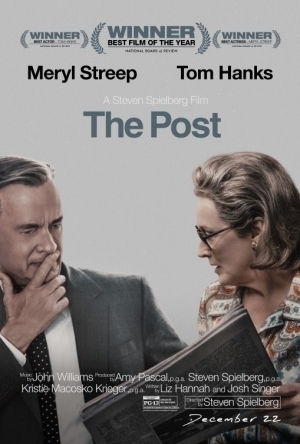

Landing the Hindenburg in a Thunderstorm.
What a combination: Streep, Hanks, Spielberg, Kaminski behind the camera, Williams behind the notes. What could possibly go wrong?
Nothing as it turns out. After, for me, the disappointment of “The BFG” here is Spielberg on firm ground and at the height of his game.
It’s 1971 and the New York Times is in trouble for publishing what became known as “The Pentagon Papers”: a damning account of multiple administration’s dodgy dealings around the Vietnam War, put together by Robert McNamara (Bruce Greenwood, “Star Trek: Into Darkness“) and meant for “posterity” – not for publication! Watching from the sidelines with frustration at their competitor’s scoop are the Washington Post’s editor Ben Bradlee (Tom Hanks, “Bridge of Spies“, “Inferno“) and the new owner Kay Graham (Meryl Streep, “Florence Foster Jenkins“, “Suffragette“). With immaculate timing, Graham is taking the paper public, so needs the newspaper embroiled in any sort of scandal like a hole in the head. But with the US First Amendment under pressure, will Graham and Bradlee put their business and their freedom at risk by publishing and being damned?
Bradlee (Tom Hanks) and Graham (Meryl Streep) in the Washington Post’s newsroom.
Both of the leads play characters that are quite strikingly out of character from their normal roles.
In a seamingly endless run of ‘kick-ass’ women in the movie driving seat, here I expected Streep to be in full “Iron Lady” mode, but in fact she starts the film as quite the opposite: nervous, timid, vascillating. For although the story is about “The Washington Post” and “The Pentagon Papers”, the real story is about Graham herself (Liz Hannah’s script is actually based on Graham’s autobiography). In many ways it’s about a woman, in a male world, overcoming her fear and finding her own voice. As has been demonstrated in many recent films (“Hidden Figures” for example) the working world for woman has changed so markedly since the 60’s and 70’s that it’s almost impossible to relate to these chavenistic attitudes. Graham is repeatedly downtrodden as “not good enough” by her underlings within earshot, and then thanks them “for their frankness”. When the women folk retire at dinner, to let the men-folk talk politics, Graham meekly goes with them. Even her father, for God’s sake, left the newspaper not to her but to her (now late) husband! It’s no surprise then that she is coming from a pretty low base of self-confidence, and her journey in the film – as expertly played by Streep – is an extraordinarily rousing one.
The real deal: Ben Bradlee and Kay Graham.
Hanks, normally the guy you’d most like to invite round for dinner (@tomhanks if you happen to be reading this sir, that’s a genuine invitation… we make a mean lasagne here!) also plays somewhat outside of his normal character here. As Bradlee, he is snappy, brusque and businesslike. Although I don’t think he could ever quite match the irascibility of the character’s portrayal by Jason Robards in the classic “All the President’s Men” – who could? – its a character with real screen presence.
The similarities with Alan J Pakula’s 1976 classic Watergate movie – one of my personal favourites – don’t stop there. The same sets that were once populated by Redford and Hoffman are gloriously reproduced with Spielberg and Janusz Kaminski delivering great tracking shots through the newsroom. (Watch out for Sacha Spielberg – daughter of Stephen and Kate Capshaw – who also turns up there delivering a package).
The scoop revealed: Odenkirk, Hanks and David Cross get the low-down.
The supporting cast includes Sarah Paulson (so memorable in “The Trial of O.J. Simpson”) as Bradlee’s wife Tony, Bradley Whitford (“The West Wing”, “Get Out“) and Tracy Letts (“The Big Short“) as two of Graham’s board advisors and Jesse Plemons (“The Program“, “Bridge of Spies“) as the lead legal advisor. Particularly impressive though is Bob Odenkirk (“Breaking Bad”) as Ben Bagdikian, Bradlee’s lead investigative reporter on the case: all stress, loose change and paranoia in his dealings with the leaky Daniel Ellsberg (Matthew Rhys).
Bagdikian (Bob Odenkirk) ordering a drink for himself and his travelling companion.
In a memorable piece of casting Richard Nixon is played by…. Richard Nixon. Although a silluohetted Curzon Dobell stalks the Oval office, the ex-president’s original phone recordings are played on the soundtrack. (There, I knew those recordings would be useful for something… thank heavens he kept them all!)
The film also demonstrates in fascinating style the newsprint business of yesteryear. When I click a button on my PC and a beautifully laser-printed page streams out of my Epson printer, it still seems like witchcraft to me! But it is extraordinary to think that newspapers in those days were put together by typesetters manually building up the pages from embossed metal letters laboriously slotted into a frame. Brilliantly evocative.
Ellsberg (Matthew Rhys) takes a risk.
If Spielberg has a fault, it is one of sentimentality – something that is pointed out in Susan Lacy’s superb HBO documentary on Spielberg (something I have yet to write a review on, but if you like Spielberg you should definitely seek out). Here he falls into that trap again, with an unnecessary bedroom scene between Graham and her daughter tipping the screenplay into mawkishness. It’s unnecessary since we don’t need the points raised rammed down our throats again. It’s something repeated in a rather bizarre final scene with Graham walking down the steps of the supreme court with admiring woman – only woman – watching her. These irritations tarnish for me what could have been a top-rated film.
But the movie is an impressive watch and older viewers, and anyone interested in American political history will, I think, love it. The film, especially with its nice epilogue, did make me immediately want to come home and put “All the President’s Men” on again… which is never a bad thing. Highly recommended.
Nothing as it turns out. After, for me, the disappointment of “The BFG” here is Spielberg on firm ground and at the height of his game.
It’s 1971 and the New York Times is in trouble for publishing what became known as “The Pentagon Papers”: a damning account of multiple administration’s dodgy dealings around the Vietnam War, put together by Robert McNamara (Bruce Greenwood, “Star Trek: Into Darkness“) and meant for “posterity” – not for publication! Watching from the sidelines with frustration at their competitor’s scoop are the Washington Post’s editor Ben Bradlee (Tom Hanks, “Bridge of Spies“, “Inferno“) and the new owner Kay Graham (Meryl Streep, “Florence Foster Jenkins“, “Suffragette“). With immaculate timing, Graham is taking the paper public, so needs the newspaper embroiled in any sort of scandal like a hole in the head. But with the US First Amendment under pressure, will Graham and Bradlee put their business and their freedom at risk by publishing and being damned?
Bradlee (Tom Hanks) and Graham (Meryl Streep) in the Washington Post’s newsroom.
Both of the leads play characters that are quite strikingly out of character from their normal roles.
In a seamingly endless run of ‘kick-ass’ women in the movie driving seat, here I expected Streep to be in full “Iron Lady” mode, but in fact she starts the film as quite the opposite: nervous, timid, vascillating. For although the story is about “The Washington Post” and “The Pentagon Papers”, the real story is about Graham herself (Liz Hannah’s script is actually based on Graham’s autobiography). In many ways it’s about a woman, in a male world, overcoming her fear and finding her own voice. As has been demonstrated in many recent films (“Hidden Figures” for example) the working world for woman has changed so markedly since the 60’s and 70’s that it’s almost impossible to relate to these chavenistic attitudes. Graham is repeatedly downtrodden as “not good enough” by her underlings within earshot, and then thanks them “for their frankness”. When the women folk retire at dinner, to let the men-folk talk politics, Graham meekly goes with them. Even her father, for God’s sake, left the newspaper not to her but to her (now late) husband! It’s no surprise then that she is coming from a pretty low base of self-confidence, and her journey in the film – as expertly played by Streep – is an extraordinarily rousing one.
The real deal: Ben Bradlee and Kay Graham.
Hanks, normally the guy you’d most like to invite round for dinner (@tomhanks if you happen to be reading this sir, that’s a genuine invitation… we make a mean lasagne here!) also plays somewhat outside of his normal character here. As Bradlee, he is snappy, brusque and businesslike. Although I don’t think he could ever quite match the irascibility of the character’s portrayal by Jason Robards in the classic “All the President’s Men” – who could? – its a character with real screen presence.
The similarities with Alan J Pakula’s 1976 classic Watergate movie – one of my personal favourites – don’t stop there. The same sets that were once populated by Redford and Hoffman are gloriously reproduced with Spielberg and Janusz Kaminski delivering great tracking shots through the newsroom. (Watch out for Sacha Spielberg – daughter of Stephen and Kate Capshaw – who also turns up there delivering a package).
The scoop revealed: Odenkirk, Hanks and David Cross get the low-down.
The supporting cast includes Sarah Paulson (so memorable in “The Trial of O.J. Simpson”) as Bradlee’s wife Tony, Bradley Whitford (“The West Wing”, “Get Out“) and Tracy Letts (“The Big Short“) as two of Graham’s board advisors and Jesse Plemons (“The Program“, “Bridge of Spies“) as the lead legal advisor. Particularly impressive though is Bob Odenkirk (“Breaking Bad”) as Ben Bagdikian, Bradlee’s lead investigative reporter on the case: all stress, loose change and paranoia in his dealings with the leaky Daniel Ellsberg (Matthew Rhys).
Bagdikian (Bob Odenkirk) ordering a drink for himself and his travelling companion.
In a memorable piece of casting Richard Nixon is played by…. Richard Nixon. Although a silluohetted Curzon Dobell stalks the Oval office, the ex-president’s original phone recordings are played on the soundtrack. (There, I knew those recordings would be useful for something… thank heavens he kept them all!)
The film also demonstrates in fascinating style the newsprint business of yesteryear. When I click a button on my PC and a beautifully laser-printed page streams out of my Epson printer, it still seems like witchcraft to me! But it is extraordinary to think that newspapers in those days were put together by typesetters manually building up the pages from embossed metal letters laboriously slotted into a frame. Brilliantly evocative.
Ellsberg (Matthew Rhys) takes a risk.
If Spielberg has a fault, it is one of sentimentality – something that is pointed out in Susan Lacy’s superb HBO documentary on Spielberg (something I have yet to write a review on, but if you like Spielberg you should definitely seek out). Here he falls into that trap again, with an unnecessary bedroom scene between Graham and her daughter tipping the screenplay into mawkishness. It’s unnecessary since we don’t need the points raised rammed down our throats again. It’s something repeated in a rather bizarre final scene with Graham walking down the steps of the supreme court with admiring woman – only woman – watching her. These irritations tarnish for me what could have been a top-rated film.
But the movie is an impressive watch and older viewers, and anyone interested in American political history will, I think, love it. The film, especially with its nice epilogue, did make me immediately want to come home and put “All the President’s Men” on again… which is never a bad thing. Highly recommended.

Connor Sheffield (293 KP) rated Assassin's Creed: Forsaken in Books
May 15, 2017
The story of a Templar rather than the Assassin (3 more)
Set out like a journal, makes it intriguing
Good descriptive action
An insight to the history of the character
Some chapters are slow (1 more)
The journal format limits the experience to the view of only one character
Insight to a character we barely see
- MINOR SPOILER IF YOU HAVEN'T PLAYED ASSASSINS CREED 3 -
The 5th book in the Oliver Bowden collection of Assassin's Creed novels, follows the life of Haytham Kenway, son of Pirate / Assassin, Edward Kenway and father of the Native American Assassin Connor Kenway, who you play as in the video game Assassin's Creed 3.
Haytham is a British Templar who is sent to America during the French and Indian and American Revolutionary Wars, to learn more about, and find an ancient cave that would help the Templar Order discover more about the first civilization, also known as 'Those who came before'. After centuries of the two factions, Assassins and Templar, fighting a never ending war in secret, over advanced technology known as the Pieces of Eden, created by the first civilization.
Though it is interesting to learn more about Haytham, since we only get to play a small part of his story in the video game, my only issue, though minor it may be, with the book is that the journal format limits our experience of the story to the view point of one man, and there are so many interesting characters within the plot that are sure to have their own interesting stories to be told, but sadly we are limited to one man's thoughts and opinions, and learn very little about other characters, besides their outspoken interactions with Haytham.
However this book is exciting and really does open up a whole new story within the franchise that we do not get to see. The descriptive writing ensures that the world that is described to us, is enough to clearly imagine, as the writer imagines it, in our minds, but enough for us to also have our own image of the areas, the surroundings and the sights, sounds and smells of such a place that our protagonist visits.
If you're a fan of the franchise then I highly recommend any of these novels to you, because they open up so much more to the characters and the stories that we do not get within the games. This is what makes the books such an exciting read, because we get to delve deep inside the minds of the characters, from start to finish.
The 5th book in the Oliver Bowden collection of Assassin's Creed novels, follows the life of Haytham Kenway, son of Pirate / Assassin, Edward Kenway and father of the Native American Assassin Connor Kenway, who you play as in the video game Assassin's Creed 3.
Haytham is a British Templar who is sent to America during the French and Indian and American Revolutionary Wars, to learn more about, and find an ancient cave that would help the Templar Order discover more about the first civilization, also known as 'Those who came before'. After centuries of the two factions, Assassins and Templar, fighting a never ending war in secret, over advanced technology known as the Pieces of Eden, created by the first civilization.
Though it is interesting to learn more about Haytham, since we only get to play a small part of his story in the video game, my only issue, though minor it may be, with the book is that the journal format limits our experience of the story to the view point of one man, and there are so many interesting characters within the plot that are sure to have their own interesting stories to be told, but sadly we are limited to one man's thoughts and opinions, and learn very little about other characters, besides their outspoken interactions with Haytham.
However this book is exciting and really does open up a whole new story within the franchise that we do not get to see. The descriptive writing ensures that the world that is described to us, is enough to clearly imagine, as the writer imagines it, in our minds, but enough for us to also have our own image of the areas, the surroundings and the sights, sounds and smells of such a place that our protagonist visits.
If you're a fan of the franchise then I highly recommend any of these novels to you, because they open up so much more to the characters and the stories that we do not get within the games. This is what makes the books such an exciting read, because we get to delve deep inside the minds of the characters, from start to finish.

Nicole Hadley (380 KP) rated The Banana-Leaf Ball: How Play Can Change the World in Books
Jun 18, 2018


The Banana-Leaf Ball by Katie Smith Milway is book is based on a real refuge camp in East Africa and a boy whose life got better when the sport of soccer was introduced to the children. The coaches from the organization Right to Play taught kids how to get along by playing together.
The main character, Deo Rukundo, an East African boy is forced to flee his home because of a war in his country. He ends up separated from his family and keeps running deep into the forest for safety. After many weeks where he lives on dew drops, wild fruits and leaves he finds his way to a refugee camp in Northwest Tanzania. Frightened, homesick and alone, he prays for the well-being of the rest of his family.
With little resources in the refugee camp bullies emerge and vandalize those living there. They steal and intimidate everyone and they especially target Deo. Remy the gang leader is menacing and poses threats to all those he encounters.
One day a coach arrives and gathers up the children to play a game of soccer. He hesitates about joining in the game but his excitement overcomes him and he touts his excellent soccer skills in front of the coach. Very impressed, the coach makes Deo captain of the "shirts" team. As the game progresses brand new feelings of comradery and acceptance emerge from the players as they work together as a team to score that winning goal. The kids start to laugh, forget their worries and relax. They area transformed into" kids" once again.
In the following days the kids gather at Deo's house and he teaches them his soccer moves and how to make a ball out of dried banana leaves. Most importantly they open up to each other about their feelings and share their experiences both before refugee camp and the life they are living now.
This book is based upon a true story. It is heartwarming and inspiring. It points out that truly frightening, seemingly hopeless situations can indeed be turned around into something positive and bearable for those caught in such tragic circumstances.
The book is a perfect catalyst to get kids talking about others less fortunate and the social justice issues that surround refugees all over the world. It allows them to discuss the handling of bullies and the value of sports, teamwork, sharing with each other and acceptance.
I received this ARC book from Kids Can press via NetGalley in exchange for an honest review.
The main character, Deo Rukundo, an East African boy is forced to flee his home because of a war in his country. He ends up separated from his family and keeps running deep into the forest for safety. After many weeks where he lives on dew drops, wild fruits and leaves he finds his way to a refugee camp in Northwest Tanzania. Frightened, homesick and alone, he prays for the well-being of the rest of his family.
With little resources in the refugee camp bullies emerge and vandalize those living there. They steal and intimidate everyone and they especially target Deo. Remy the gang leader is menacing and poses threats to all those he encounters.
One day a coach arrives and gathers up the children to play a game of soccer. He hesitates about joining in the game but his excitement overcomes him and he touts his excellent soccer skills in front of the coach. Very impressed, the coach makes Deo captain of the "shirts" team. As the game progresses brand new feelings of comradery and acceptance emerge from the players as they work together as a team to score that winning goal. The kids start to laugh, forget their worries and relax. They area transformed into" kids" once again.
In the following days the kids gather at Deo's house and he teaches them his soccer moves and how to make a ball out of dried banana leaves. Most importantly they open up to each other about their feelings and share their experiences both before refugee camp and the life they are living now.
This book is based upon a true story. It is heartwarming and inspiring. It points out that truly frightening, seemingly hopeless situations can indeed be turned around into something positive and bearable for those caught in such tragic circumstances.
The book is a perfect catalyst to get kids talking about others less fortunate and the social justice issues that surround refugees all over the world. It allows them to discuss the handling of bullies and the value of sports, teamwork, sharing with each other and acceptance.
I received this ARC book from Kids Can press via NetGalley in exchange for an honest review.

Gareth von Kallenbach (980 KP) rated Call of Duty: Infinite Warfare - Absolultion in Video Games
Jun 19, 2019
The third of a planned four content packs for Call of Duty: Infinite Warfare has arrived with Absolution. The collection was first available for the Playstation 4 system and was released for the Xbox One and PC platforms about five weeks later and contains the usual offerings of four new maps and a new chapter for the Zombie mode of the game.
The maps are as follows…
Ember
This is a remake of the classic map “Resistance” From the castle lined landscape to the close-quarters fighting in rooms like gallows or a torture area this is a great map for those looking to run and gun.
Bermuda
This is a fun map based on a Shanty Town fishing village. There are locales ranging from a Fish Market to a Lighthouse and the mix of colors and action make this one really enjoyable.
Permafrost
This is a frozen landscape set in the ruins of a city. The map has several open areas where players can attack from above thanks to holes in the roof and streets. The debris strewn map offers plenty of cover but also numerous places for enemies to attack from all angles.
Fore
This is a large map that is so much fun to play. Set in a mini-golf course, players can run into the arcade, putting areas, and props to attack the enemy. There is plenty of cover and also terrain that is uneven giving a new and diverse set of challenges to players.
While the new maps are lots of fun, the main draw of the collection was the latest chapter in the Zombie mode where four aspiring actors are drawn into actual horror films by a demented Director.
The previous chapters have given us an 80s theme park, a 90s Summer Camp, and a 70s Disco Infused Martial Arts setting. This time out, Attack of the Radioactive things lets players play with and interact with Elvira in a 1950s Atomic Monster setting. The mode starts in Black and White before moving to color and even allows for a red tint Chroma mode.
Of course waves of Zombies and other terrors await and players must run and fight to survive.
This has been another winning collection for Infinite Warfare. While it does not offer anything radically new or different, it does offer plenty of fun and will increase your enjoyment of the game.
I am looking forward to seeing the final pack, around October ahead of the new Call of Duty: World War 2.
http://sknr.net/2017/08/13/call-duty-infinite-warfare-absolution-dlc/
The maps are as follows…
Ember
This is a remake of the classic map “Resistance” From the castle lined landscape to the close-quarters fighting in rooms like gallows or a torture area this is a great map for those looking to run and gun.
Bermuda
This is a fun map based on a Shanty Town fishing village. There are locales ranging from a Fish Market to a Lighthouse and the mix of colors and action make this one really enjoyable.
Permafrost
This is a frozen landscape set in the ruins of a city. The map has several open areas where players can attack from above thanks to holes in the roof and streets. The debris strewn map offers plenty of cover but also numerous places for enemies to attack from all angles.
Fore
This is a large map that is so much fun to play. Set in a mini-golf course, players can run into the arcade, putting areas, and props to attack the enemy. There is plenty of cover and also terrain that is uneven giving a new and diverse set of challenges to players.
While the new maps are lots of fun, the main draw of the collection was the latest chapter in the Zombie mode where four aspiring actors are drawn into actual horror films by a demented Director.
The previous chapters have given us an 80s theme park, a 90s Summer Camp, and a 70s Disco Infused Martial Arts setting. This time out, Attack of the Radioactive things lets players play with and interact with Elvira in a 1950s Atomic Monster setting. The mode starts in Black and White before moving to color and even allows for a red tint Chroma mode.
Of course waves of Zombies and other terrors await and players must run and fight to survive.
This has been another winning collection for Infinite Warfare. While it does not offer anything radically new or different, it does offer plenty of fun and will increase your enjoyment of the game.
I am looking forward to seeing the final pack, around October ahead of the new Call of Duty: World War 2.
http://sknr.net/2017/08/13/call-duty-infinite-warfare-absolution-dlc/
Gareth von Kallenbach (980 KP) rated How to Train Your Dragon 2 (2014) in Movies
Aug 6, 2019

In 2010, the most unlikely Viking proved that dragons and humans can co-exist in the first How To Train Your Dragon film. Set five years after the original movie, How to Train Your Dragon 2 opens up on the Village of Berk where Vikings and dragons have developed a fond relationship. Hiccup (Jay Baruchel), the nerdy chieftain’s son, is now a few years older and has made himself a winged suit and spends his days soaring the skies with his beloved dragon, Toothless. This film brings together the original gang of friends, Astrid (America Ferrera), Fishlegs (Christopher Mintz-Plasse), Snotlout (Jonah Hill), and twins Ruffnut and Tuffnut (Kristen Wiig and TJ Miller). Still at odds with his expectations, Hiccup’s father Stoick (Gerard Butler) demands that he begins the preparations and training to follow in his footsteps and become chief of their Village. This is not the future Hiccup sees for himself, he and Toothless flee the Village and explore the world and stumble upon a cave full of dragons and encounter a Mysterious Dragon Rider (Cate Blanchett), with a similar affinity for dragons. Hiccup has realized that war still exists between dragons and men beyond the borders of his Village. He attempts to negotiate peace with dragon-hunter Drago (Djimon Hounsou), who is threatening to invade the village with his army.
Writer/director Dean DeBlois helms the reins on this one; he has opened up the story without losing the tone of the original. The true delight is in the details, the visual effects are stunning; a prime example of how much computer generated animation has progressed in such a short amount of time. From the diverse landscapes to the design of the characters were absolutely breathtaking. Even the most minute details, such as the texture from the armor, to the scales on the dragons, even the battles scars on the soldiers are so vividly expressed, they assisted in creating the most dramatic and heartfelt moments.
The overall theme has matured from the first film with a continually surprising plot. In the first go around, Hiccup learned to be himself; in this installment Hiccup is taught to become a better version of himself when those unbreakable bonds are tested, and the line between good vs. evil is skewed.
I wouldn’t say there is much training in the sequel, however there is still a wonderful message of friendship, love, and loyalty. Some of the material may be a little too dark, and there were moments that spent way too much time developing the characters which can be pretty taxing for young children.
A worthy follow up….
Writer/director Dean DeBlois helms the reins on this one; he has opened up the story without losing the tone of the original. The true delight is in the details, the visual effects are stunning; a prime example of how much computer generated animation has progressed in such a short amount of time. From the diverse landscapes to the design of the characters were absolutely breathtaking. Even the most minute details, such as the texture from the armor, to the scales on the dragons, even the battles scars on the soldiers are so vividly expressed, they assisted in creating the most dramatic and heartfelt moments.
The overall theme has matured from the first film with a continually surprising plot. In the first go around, Hiccup learned to be himself; in this installment Hiccup is taught to become a better version of himself when those unbreakable bonds are tested, and the line between good vs. evil is skewed.
I wouldn’t say there is much training in the sequel, however there is still a wonderful message of friendship, love, and loyalty. Some of the material may be a little too dark, and there were moments that spent way too much time developing the characters which can be pretty taxing for young children.
A worthy follow up….
Taut Lines: Extraordinary True Fishing Stories
Book
Since the earliest writings of civilization, people have been writing about fish and the pursuit of...
Bob Mann (459 KP) rated Churchill (2017) in Movies
Sep 29, 2021
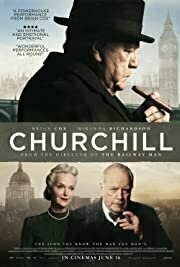


“We will bore them on the beaches”.
“Churchill” tells the story of the great leader’s extreme opposition to “Operation Overlord”, the Eisenhower-led invasion of Normandy in 1944 that ultimately led – more by luck that judgement perhaps – to the fall of the Third Reich in the following year.
I’m not a historian but am married to one, so know the importance of “sources” in the pursuit of “truth”: one man’s terrorist is after all another man’s freedom fighter from a different perspective. Some sources on the internet (here for example) certainly suggest the The British (led by Churchill as Prime Minister) might have sensibly promoted the acceleration of the Italian campaign to reach Berlin rather than the far riskier Channel crossing.
This film however paints Churchill as a man demonised by his decision to send young men to their deaths in the fateful Gallipoli beach landings of World War One, with this – rather than a sensible strategic one – being the primary reason for opposing the Normandy landings. To further paint him as a bumbling old fool that is “worked around” by his peers strikes you as borderline libellous.
So the film’s script, by novice Alex von Tunzelmann, immediately set the wrong tone with me, and the undeniably strong performances of Brian Cox (“The Bourne Identity”) as Churchill and the wonderful Miranda Richardson (“Harry Potter” and the soon to be released “Stronger”) as Clemmie can’t fill the gap.
Besides anything else, diretor Jonathan Teplitzky (“The Railway Man”) delivers a piece so dull and lifeless, and with so much brooding, that its not remotely enjoyable. You think the introduction of a bullied secretary – Ms Garrett (Ella Purnell) – with a strong personal connection to ‘Overlord’ will add dramatic colour? But this angle too seems to go nowhere in particular.
There are many tales of the Normandy landings that are fascinating, over and above the dramatic sweep of “The Longest Day” (which is surely well overdue for a remake?) and Spielberg’s fictionalisation of the Niland brothers in “Saving Private Ryan”. How about the 2 out of 29 American amphibious tanks that reached Omaha beach after ignoring British advice to not launch so far from shore in rough seas?
So, as a film, it might be “worthy”. But I didn’t remotely believe the depiction of Churchill and it astonished me that such a rivetingly exciting period of British history could deliver a film that bored me. So, sorry, can’t recommend this one. Perhaps Joe Wright will have a better go with Gary Oldman as Churchill in “Darkest Hour”…
I’m not a historian but am married to one, so know the importance of “sources” in the pursuit of “truth”: one man’s terrorist is after all another man’s freedom fighter from a different perspective. Some sources on the internet (here for example) certainly suggest the The British (led by Churchill as Prime Minister) might have sensibly promoted the acceleration of the Italian campaign to reach Berlin rather than the far riskier Channel crossing.
This film however paints Churchill as a man demonised by his decision to send young men to their deaths in the fateful Gallipoli beach landings of World War One, with this – rather than a sensible strategic one – being the primary reason for opposing the Normandy landings. To further paint him as a bumbling old fool that is “worked around” by his peers strikes you as borderline libellous.
So the film’s script, by novice Alex von Tunzelmann, immediately set the wrong tone with me, and the undeniably strong performances of Brian Cox (“The Bourne Identity”) as Churchill and the wonderful Miranda Richardson (“Harry Potter” and the soon to be released “Stronger”) as Clemmie can’t fill the gap.
Besides anything else, diretor Jonathan Teplitzky (“The Railway Man”) delivers a piece so dull and lifeless, and with so much brooding, that its not remotely enjoyable. You think the introduction of a bullied secretary – Ms Garrett (Ella Purnell) – with a strong personal connection to ‘Overlord’ will add dramatic colour? But this angle too seems to go nowhere in particular.
There are many tales of the Normandy landings that are fascinating, over and above the dramatic sweep of “The Longest Day” (which is surely well overdue for a remake?) and Spielberg’s fictionalisation of the Niland brothers in “Saving Private Ryan”. How about the 2 out of 29 American amphibious tanks that reached Omaha beach after ignoring British advice to not launch so far from shore in rough seas?
So, as a film, it might be “worthy”. But I didn’t remotely believe the depiction of Churchill and it astonished me that such a rivetingly exciting period of British history could deliver a film that bored me. So, sorry, can’t recommend this one. Perhaps Joe Wright will have a better go with Gary Oldman as Churchill in “Darkest Hour”…

RəX Regent (349 KP) rated Pandora's Box (1929) in Movies
Feb 18, 2019

Pandora’s Box was one of the last films of the silent era, a period of transition to sound which I believe set the art of cinematography back a decade.
In short. Pandora’s Box looks stunning! Using the frame to its fullest, with a combination of wide framing and exploiting the art of the close up as Lulu herself, would the men around her, as well as driven by brilliant performances by most of the cast. But kudos needs to go to the star, Louise Brooks, as she portrays Lulu, the alluring flapper girl who can work her innocent, secutive magic on anyone, men and women alike.
But this is not limited to the narrative’s characters as her performance is subtle and underplayed, oozing out the silver screen and seducing the audience with same allure. If looks could kill, then this movie has them all.
With a sparse use of inter-titles, the film relies on both the physicality of the cast and imaginative cinematography to convey the seductive and danger of the events as they unfold over the two and bit hour runtime. Fritz Korner in particular rivals Brooks with the intensity of his performance as the ill fated husband of the girl about town.
And then there’s Alice Roberts, the Countess, who is widely thought to have the first lesbian to be seen on screen. Only Belgian actress’s second film in her short career, is played very Germanic, yet sympathetic as she too, has been drawn under Lulu’s spell.
This was made during the period in which German cinema was ruling, driving the art form from the nickelodeon to the theatre, but this was about to change in the 1930’s with advent of the sound and the golden age of American cinema. But as this film proves, you do not need sound to tell or show a good story.
Granted, the central story is pretty mediocre; a simple tale of a damaged woman who instinctively uses her allure to get her own way yet not as a diva, just an instinctive manipulator, casting her spell far and wide until that spell leads her into the hands London serial killer, Jack The Ripper (Gustav Diessl). But she is never portrayed as evil or scheming, just as herself as those around her are drawn to her aide.
There is little of the pantamine action or motives that you can expect from this genre even now, 90 years on.
But German director G.W. Pabst manages to create a multi-layered tale, deepened by psychological and social subtext, achieved as much because of the relationship he garnered with the star, Brookes, as he played on her natural talents to bring one of cinemas most defining roles to the screen. This would be the first of two collaborations between the director and the wayward starlet that year.
Pandora’s Box is yet another example of how German Cinema was leading the world back in the 1920’s; and even though the second world war may have brought this golden era to an abrupt end, it’s legacy lives on today with the styles, both in front and behind the camera, still being honoured by entire film industry now and hopefully for decades to come.
In short. Pandora’s Box looks stunning! Using the frame to its fullest, with a combination of wide framing and exploiting the art of the close up as Lulu herself, would the men around her, as well as driven by brilliant performances by most of the cast. But kudos needs to go to the star, Louise Brooks, as she portrays Lulu, the alluring flapper girl who can work her innocent, secutive magic on anyone, men and women alike.
But this is not limited to the narrative’s characters as her performance is subtle and underplayed, oozing out the silver screen and seducing the audience with same allure. If looks could kill, then this movie has them all.
With a sparse use of inter-titles, the film relies on both the physicality of the cast and imaginative cinematography to convey the seductive and danger of the events as they unfold over the two and bit hour runtime. Fritz Korner in particular rivals Brooks with the intensity of his performance as the ill fated husband of the girl about town.
And then there’s Alice Roberts, the Countess, who is widely thought to have the first lesbian to be seen on screen. Only Belgian actress’s second film in her short career, is played very Germanic, yet sympathetic as she too, has been drawn under Lulu’s spell.
This was made during the period in which German cinema was ruling, driving the art form from the nickelodeon to the theatre, but this was about to change in the 1930’s with advent of the sound and the golden age of American cinema. But as this film proves, you do not need sound to tell or show a good story.
Granted, the central story is pretty mediocre; a simple tale of a damaged woman who instinctively uses her allure to get her own way yet not as a diva, just an instinctive manipulator, casting her spell far and wide until that spell leads her into the hands London serial killer, Jack The Ripper (Gustav Diessl). But she is never portrayed as evil or scheming, just as herself as those around her are drawn to her aide.
There is little of the pantamine action or motives that you can expect from this genre even now, 90 years on.
But German director G.W. Pabst manages to create a multi-layered tale, deepened by psychological and social subtext, achieved as much because of the relationship he garnered with the star, Brookes, as he played on her natural talents to bring one of cinemas most defining roles to the screen. This would be the first of two collaborations between the director and the wayward starlet that year.
Pandora’s Box is yet another example of how German Cinema was leading the world back in the 1920’s; and even though the second world war may have brought this golden era to an abrupt end, it’s legacy lives on today with the styles, both in front and behind the camera, still being honoured by entire film industry now and hopefully for decades to come.