
Search
Search results

Mekhi Phifer recommended A Soldier's Story (1984) in Movies (curated)


Hazel (2934 KP) rated The Rainbow in Books
Aug 1, 2021

What a read that was ... so good!
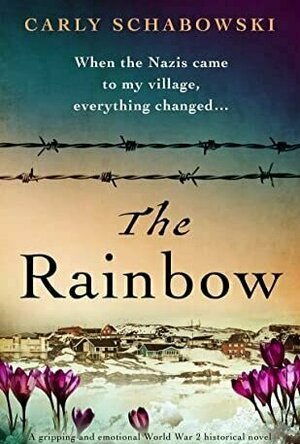
I am not normally a fan of historical fiction but the cover and then the blurb had me interested and I am so pleased I didn't let this pass me by. Although this is a work of fiction, it is inspired by a true story but it feels like a "real" story and I was totally and utterly absorbed and invested in the lives of all the characters.
The story starts off in the present when Isla finds a photograph of her grandad in a German uniform, this raised questions and caused confusion as the story always told was how her grandad fought against the German's in World War II. Unable to find answers from her grandad, who has dementia, she begins a quest to uncover the truth and so begins this brilliantly written story of war, adversity, strength, courage, love, loss and friendship.
I am unable to give this book the review it deserves, I can't find the right words to put across how much I enjoyed it for which I apologise but a massive thank you to Bookouture and NetGalley for my copy in return for an honest, unbiased and unedited review.
I am not normally a fan of historical fiction but the cover and then the blurb had me interested and I am so pleased I didn't let this pass me by. Although this is a work of fiction, it is inspired by a true story but it feels like a "real" story and I was totally and utterly absorbed and invested in the lives of all the characters.
The story starts off in the present when Isla finds a photograph of her grandad in a German uniform, this raised questions and caused confusion as the story always told was how her grandad fought against the German's in World War II. Unable to find answers from her grandad, who has dementia, she begins a quest to uncover the truth and so begins this brilliantly written story of war, adversity, strength, courage, love, loss and friendship.
I am unable to give this book the review it deserves, I can't find the right words to put across how much I enjoyed it for which I apologise but a massive thank you to Bookouture and NetGalley for my copy in return for an honest, unbiased and unedited review.

David McK (3921 KP) rated 1917 (2020) in Movies
Feb 13, 2020 (Updated Oct 17, 2020)
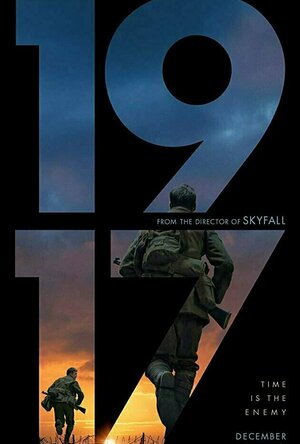

Sam Mendes World War One epic, which follows - in virtually one long tracking shot - two British soldiers sent on a mission across No Mans Land and enemy territory to deliver a message to stop their comrades (including one of the soldiers older brother) from walking into a trap.
Undeniably beautifully shot, showing the true horrors of the war - this does, however, require a serious amount of buy-in from the viewer: just why would a British General send only tow soldiers to deliver such an important message (especially against the clock), when it could have been delivered far quicker, easier and safer by the Royal Flying Corp??
Putting that aside for the moment, the only other recent movie I can think of that even attempts to show the trenches during World War One is 2017's 'Wonder Woman'. Remember the stand-out scene where Diana charges heroically across No Mans Land, under fire from the Germans the entire way? This is nothing like that.
Undeniably beautifully shot, showing the true horrors of the war - this does, however, require a serious amount of buy-in from the viewer: just why would a British General send only tow soldiers to deliver such an important message (especially against the clock), when it could have been delivered far quicker, easier and safer by the Royal Flying Corp??
Putting that aside for the moment, the only other recent movie I can think of that even attempts to show the trenches during World War One is 2017's 'Wonder Woman'. Remember the stand-out scene where Diana charges heroically across No Mans Land, under fire from the Germans the entire way? This is nothing like that.

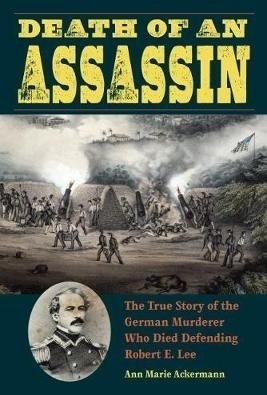

I had never heard about this true crime cases till I come upon Ann Marie Ackermann most excellent book. The story begins in the German town of Bonnigheim in the year 1835 where the town is left shocked by the assassination of its most respected citizen it's mayor. The reader follows the twists and turns of the muder investigation as a killer is searched for.
Eventually the investigation leads to the other side of the world and to one of Americans most respected Civil War heroes General Robert E Lee. The author has produced an excellent well researched study of the case and I would highly recommend this to other readers .
Eventually the investigation leads to the other side of the world and to one of Americans most respected Civil War heroes General Robert E Lee. The author has produced an excellent well researched study of the case and I would highly recommend this to other readers .
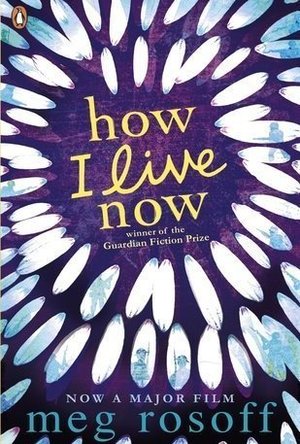
How I Live Now
7.5 Rate It
Book
“Every war has turning points and every person too.” Fifteen-year-old Daisy is sent from...

Carma (21 KP) rated Avengers: Endgame (2019) in Movies
Jun 17, 2019 (Updated Jun 23, 2019)
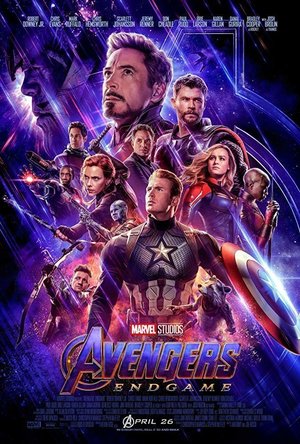
Thanos show down part two
Contains spoilers, click to show
I absolutely couldn't wait for the conclusion to Infinity War to see how our heroes reverse the snap. Honestly I have to say I read some spoilers before and had an idea of what might happen (not that most of that did) but I can say I was a little disappointed. Full disclosure, I saw the movie 4 times, I didn't plan to but I did. Anyway, while I appreciated the movie working on the core 6 and finishing up their story arcs, I still can't get on board with the total movie "knocking my socks off". There were too little fight scenes for me, too much filler in spots and conversations that didn't move the story line forward for me. Now the end big assemble was exactly what I was looking for but wishing it was a couple more time throughout the movie. The humor was high in this one (I think making up for Infinity Wars darkness) and some points were worth it, others the humor was a little much. I definitely enjoyed Infinity War better than Endgame but I am still a MCU fan forever. I did the culmination of Tony becoming the hero in the end, something he struggled with but had in him from the first Avengers movie in 2012. We see Cap call him out as not falling on the sword for others and in each movie after Tony definitely has his sword moments.
Merissa (14198 KP) rated Fables & Lies: A WWII Novel Based on a True Story in Books
Jul 3, 2026
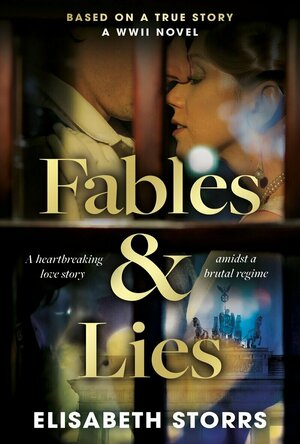
FABLES & LIES tells a story of World War II from the perspective of Freyja, a Berliner who learns that not everything is as true as she is being told. It's a hard realisation for her when the newspapers, radio, etc., all tell the same story - that Germany is the one trying to hold peace together, and it is the rest of the world that is the aggressor. People she meets along the way, whether in the apartment block she lives in, at work, or even the underground Church movement to help Jews leave Berlin/Germany, help to open her eyes as to what's really going on. By that time, it is too late in one respect, but Freyja doesn't give up.
This was a gripping story that completely held my attention. It is sensitively written, while still showing the difficulties and horrors faced by the German people who didn't necessarily agree 100% with what they were being told.
I have lived in Germany for sixteen years, and I respect their attitude to the First and Second World Wars. They teach it in the schools as lessons to be learnt, to ensure it doesn't happen again. So reading a story from their perspective was really eye-opening.
If reading about the Second World War is something that fascinates you, then I can HIGHLY RECOMMEND this book.
** The same worded review will appear elsewhere. **
* A copy of this book was provided to me with no requirements for a review. I voluntarily read this book; the comments here are my honest opinion. *
Merissa
Archaeolibrarian - I Dig Good Books!
Jul 3, 2026
This was a gripping story that completely held my attention. It is sensitively written, while still showing the difficulties and horrors faced by the German people who didn't necessarily agree 100% with what they were being told.
I have lived in Germany for sixteen years, and I respect their attitude to the First and Second World Wars. They teach it in the schools as lessons to be learnt, to ensure it doesn't happen again. So reading a story from their perspective was really eye-opening.
If reading about the Second World War is something that fascinates you, then I can HIGHLY RECOMMEND this book.
** The same worded review will appear elsewhere. **
* A copy of this book was provided to me with no requirements for a review. I voluntarily read this book; the comments here are my honest opinion. *
Merissa
Archaeolibrarian - I Dig Good Books!
Jul 3, 2026
Merissa (14198 KP) rated War (The Four Horsemen #2) in Books
Apr 25, 2023
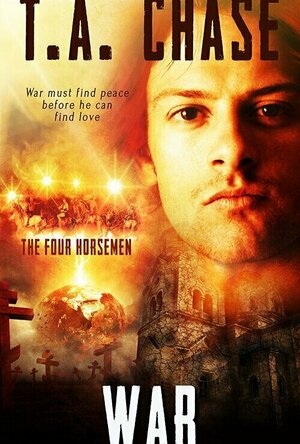
In this story, we meet with War, the second of the Horsemen. He is still wrapped in guilt at the role he played in the destruction of a neighbouring tribe when he was alive. He was murdered by a survivor of that village, and he let it happen, thinking that he deserved it. Russell is a modern-day soldier, serving in Afghanistan, when he is wounded and left for dead. Death shows up and tells him to hang on, help is on the way. War then arrives, on Death's instructions, and feels the need to help this individual. We have a quick reunion with Aldo, before Russell gets taken to a hospital in Germany. He is sent back to war far too soon and ends up having a mental breakdown due to circumstances.
The PTSD is handled incredibly well in this book, and it doesn't shy away from the grim reality of war. Both Russell and War have guilt issues to work through, and together, they help each other. Their relationship, although fast, still has time to develop.
We get a few extra snippets in this book, including the fact that the horses can speak in the world between worlds. Death is as intriguing and cryptic as ever, although I still love him.
A very different series that I am thoroughly enjoying. Definitely recommended for anyone who wants a slightly different read.
* A copy of this book was provided to me with no requirements for a review. I voluntarily read this book, and the comments here are my honest opinion. *
Merissa
Archaeolibrarian - I Dig Good Books!
Nov 12, 2015
The PTSD is handled incredibly well in this book, and it doesn't shy away from the grim reality of war. Both Russell and War have guilt issues to work through, and together, they help each other. Their relationship, although fast, still has time to develop.
We get a few extra snippets in this book, including the fact that the horses can speak in the world between worlds. Death is as intriguing and cryptic as ever, although I still love him.
A very different series that I am thoroughly enjoying. Definitely recommended for anyone who wants a slightly different read.
* A copy of this book was provided to me with no requirements for a review. I voluntarily read this book, and the comments here are my honest opinion. *
Merissa
Archaeolibrarian - I Dig Good Books!
Nov 12, 2015

BobbiesDustyPages (1259 KP) rated The Pianist (2002) in Movies
Feb 21, 2018 (Updated Feb 21, 2018)
This movie will literally crush your soul
Okay to start off I am not a crier it is so rare that I cry in a movie that I honestly can say I've only cried in about a handful of movies. And when I first saw this movie I don't even think I'd ever cried during a movie except when I was like four and I watch The Little Mermaid but oh man did I openly oh man did I openly SOB like a baby during this movie.... he'll even thinking about a certain scene in this movie makes me want to cry.
The movie follows a Polish Jewish man's Journey through Warsaw during World War II and all the horrors he not only witnessed but survived. The whole movie is just so raw and Adrian Brody' s performance is just so heart-wrenchingly beautiful that I felt like I've been through everything he's been through and by the end I found myself so shaken I had to take a few minutes just to calm myself down.
The movie follows a Polish Jewish man's Journey through Warsaw during World War II and all the horrors he not only witnessed but survived. The whole movie is just so raw and Adrian Brody' s performance is just so heart-wrenchingly beautiful that I felt like I've been through everything he's been through and by the end I found myself so shaken I had to take a few minutes just to calm myself down.
Parade's End: Some Do Not...; No More Parades; A Man Could Stand Up -; The Last Post
Julian Barnes and Ford Madox Ford
Book
Booker Prize-winner Julian Barnes introduces Ford Madox Ford's masterpiece Parade's End - now a...