

ClareR (6256 KP) rated Not Speaking in Books
Jun 14, 2019
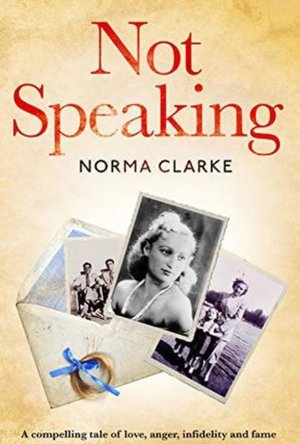

There’s more to this than a family history though. Norma takes us through some of the social history of East London, Greek mythology (which explains some of her mother’s mindset, I think), and links some of he places she visits to her favourite authors.
It’s just such an interesting book. I wanted to know what happened to all of these people, why they weren’t speaking for one thing! It was truly a delight to read. She writes so descriptively: one minute you can’t believe that her mother can be so blunt and seemingly unfeeling (and therefore I rather disliked her for it), and the next minute, you realise she is as she is, and feel empathy for her. And during all of this, there is the rest of the family. They have their disagreements, yes, but ultimately they are family and they’re always there for one another when they are needed.
I really enjoyed this book. Many thanks to The Pigeonhole, and to Norma Clarke for reading along with us and answering questions.

Life Of Caesar
Podcast
On the 19th August, 14 CE, 767 years after the founding of Rome, nearly exactly 2001 years ago, the...

Jakob's Colours
Book
Inspired by the lost voices of the Romany Holocaust this heartbreaking and tender novel will appeal...

Rural and Regional Futures
Anthony Hogan and Young Michelle
Book
Agriculture, mining and related rural industries have been central to the development of Australia's...

The Complete Short Stories: Volume One: Volume one
Book
The Complete Short Stories of Roald Dahl in the first of two unsettling and sinister volumes. 'They...

Ivana A. | Diary of Difference (1171 KP) rated A Single Thread in Books
Feb 3, 2020

<img src="https://i1.wp.com/diaryofdifference.com/wp-content/uploads/2019/09/Book-Review-Banner-18.png?resize=1024%2C576&ssl=1"/>;
<i>When the team from LoveReading UK contacted me regarding A Single Thread, all I knew was that I loved Girl With A Pearl Earring by Tracy Chevalier and would therefore read any other book she writes.</i>
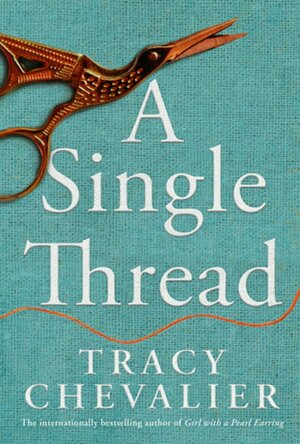
A Single Thread follows the life of Violet, during the year 1932, a few years after the First World War. Violet has lost her brother and fiance in the war and is still learning to cope. She is labelled as a ”surplus woman” by the society, a woman that in unlikely to marry.
With the grief, the society label and the suffocation of her mother, Violet starts a journey that will change her life.
She is determined to find where she belongs and who she truly is, in a time where being a woman and succeeding on your own was not praised by others.
Her journey starts with a long walk in a few towns, something she used to do with her late father and brother, and it continues with her learning canvas embroidery (today knows as needlepoint), and the beautiful art of bell ringing (which pleasantly reminded me of The Hunchback of Notre Dame by Victor Hugo, a book I read in high school and one I should re-read).
With Tracy’s writing, it is always so easy to lose yourself in the book and teleport to the past and re-live every scene as if you’re there. It is such a pleasurable experience.
I loved Violet, and I loved how she coped with all challenges of that era. Post First World War times were extremely hard, with too many men dying and too many women not being able to ever marry. Violet’s courage and hope kept moving her forward!
<b><i>This novel yells courage. It yells freedom. It yells independence. And standing along Violet, while she finds courage when you least expect to was a moment I will cherish.</i></b>
I recommend it to you, if you love novels in the war time period, or novels that talk about courage!
Thank you to the team at LoveReading UK, for sending me a copy of this book in exchange for my honest review.
<a href="https://diaryofdifference.com/">Blog</a>; | <a href="https://www.facebook.com/diaryofdifference/">Facebook</a>; | <a href="https://twitter.com/DiaryDifference">Twitter</a>; | <a href="https://www.instagram.com/diaryofdifference/">Instagram</a>; | <a href="https://www.pinterest.co.uk/diaryofdifference/pins/">Pinterest</a>;
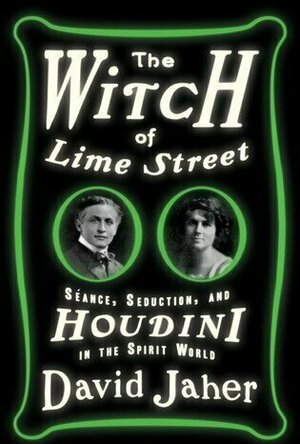
The Witch of Lime Street: Séance, Seduction, and Houdini in the Spirit World
7.0 Rate It
Book
History comes alive in this textured account of the rivalry between Harry Houdini and the so-called...

Bombing Hitler: The Story of the Man Who Almost Assassinated the Fuhrer
Hellmut G. Haasis and William Odom
Book
Georg Elser was just a working-class citizen living in Munich, Germany. He was employed as a...

Sean Astin recommended Patton (1970) in Movies (curated)

ClareR (6256 KP) rated The German House in Books
Dec 30, 2019

I really enjoyed this novel. It was hard-going at times, and it did read like a translated novel. It did however, catch the spirit of the time. Eva’s longing to break out of the societal restrictions of the time (for example when she refers to how much she likes a new Beatles song that Jürgen can’t understand, he doesn’t like pop music) and Jürgen’s wish that she stops work as soon as she gets engaged (as a modern woman, I was positively fuming at this point!!).
I was fascinated by the trip the Court makes to Auschwitz - somewhere I’ve never been, and after a trip to Oranienburg (a camp for political prisoners outside Berlin), I feel that I would struggle to go. This was one of the most emotional parts of the book.
The side story involving Eva’s older sister is also fascinating, and I feel portrays the effect of seeing so much violence and hatred as a young child (no spoilers here!).
All in all, after I got used to the writing style, I really enjoyed this. It was an interesting insight into the post-war years, and West Germany’s reaction to the damage and destruction that the Nazis had caused during the Holocaust.
This is well worth a read.
Many thanks to NetGalley and the publisher for my copy of this book to read and honestly review.