
Search
Search results

Bob Mann (459 KP) rated The Great Wall (2016) in Movies
Sep 29, 2021
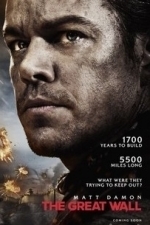

Exercising your Damons.
Millions of people watching the Oscars would have seen Jimmy Kimmel roasting poor Matt Damon as a part of their long running ‘feud’. At one point he points out that Matt gave up the leading role in “Manchester by the Sea” to star in a “Chinese ponytail movie” that “went on to lose $80 million at the box office”. “The Great Wall” is that movie!
So is it really that bad?
Well, it’s no “Manchester by the Sea” for sure. But I don’t think it’s quite the total turkey that critics have been labelling it as either. I went to see it on a Sunday afternoon, and approaching it as a matinee bit of frothy action is a good mental state to be in.
Matt Damon plays the ponytailed-wonder William, a European mercenary travelling in 11th Century China with his colleague Tovar (Pedro Pascal) in an attempt to determine the secrets of black powder – a secret well-guarded by the Chinese. Captured by the ‘New Order’ at the Great Wall and imprisoned there by General Shao (Hanyu Zhang), William earns the respect of Shao and his beautiful warrior second-in-command Lin Mae (Tian Jing) with his bowmanship. This is almost immediately put to use by the arrival (after 60 year’s absence – a funny thing, timing, isn’t it?) of hoards of vicious creatures called Taoties. (I thought they said Tauntauns initially, so was expecting some sort of Chinese/Star Wars crossover! But no.)
Taoties who scale the wall are defeated by William who poleaxes them. (This is an attempt at brilliant humour to anyone who has already seen the film – poleaxe…. get it? POLEaxe. Oh, never mind!) Despite being a mercenary at heart, William is torn between staying and helping Lin Mae fight the beasts and fleeing with Tovar, their new chum Ballard (Willem Dafoe) and their black powder loot. (I’m sure something about Lin Mae’s tight-fitting blue armour was influential in his decision).
This is an historic film in that although in recent years there has been cross-fertilization of Chinese actors into Western films for box-office reasons (for example, in the appalling “Independence Day: Resurgence” and the much better Damon vehicle “The Martian“) this was the first truly co-produced Chinese/Hollywood feature filmed entirely in China. It might also be the last given the film’s $150 million budget and the dismal box-office!
To start with some positives, you can rely on a Chinese-set film (the film location was Qingdao) to allow the use of an army of extras and – although a whole bunch of CGI was also no doubt used – some of the battles scenes are impressive. There is a stirring choral theme by Ramin Djawadi (best known for his TV themes for “Game of Thrones” and the brilliant “Westworld”) played over silk-screen painted end titles that just make for a beautiful combination. And Tian Jing as the heroine Lin Mae is not only stunningly good-looking but also injects some much needed acting talent into the cast, where most of those involved (including Damon himself) look like they would rather be somewhere else.
And some of the action scenes are rather fun in a ‘park your brain by the door’ sort of way, including (nonsensically) cute warrior girls high-diving off the wall on bungey ropes to near certain death. While the CGI monsters are of the (yawn) over-the-top LoTR variety, their ability to swarm like locusts at the Queen’s command is also quite entertainingly rendered.
Where the movie balloon comes crashing down to earth in flames though is with the story and the screenplay – all done by three different people each, which is NEVER a good sign.
The story (by Max Brooks (“World War Z”), Edward Zwick and Marshall Herskovitz (both on “The Last Samurai”) is plain nonsensical at times. No spoilers here, but the transition from “wall under siege” to “wall not under siege” gives the word ‘clunky’ a bad name. As another absurdity, the “New Order” seem amazed how William was able to slay one of the creatures (thanks to the poleaxing ‘McGuffin’ previously referenced) but then throughout the rest of the film he slays creatures left right and centre (McGuffin-less) through just the use of a spear or an arrow! Bonkers.
Things get worse when you add words to the actions. The screenplay by Carlo Bernard and Doug Miro (both “Prince of Persia: The Sands of Time”) and Tony Gilroy (Tony Gilroy? Surely not he of all the “Bourne” films and “Rogue One” fame? The very same!) has a reading age of about an 8 year old. It feels like it has been translated into Chinese and then back again to English with Google Translate. “Is that the best you can do?” asks Tovar to William at one point. I was thinking exactly the same thing.
The combination of the cinematography and the special effects have the unfortunate effect of giving the film the veneer of a video game, but this is one where your kid-brother has stolen the controls and refuses to give them back to you.
Having had the great thrill of visiting a section of The Great Wall near Beijing, I can confirm that it is an astonishing engineering masterpiece that has to be seen to be truly believed. It ranks as one of the genuine wonders of the world. The same can not be said of this movie. Early teens might enjoy it as a mindless action flick. But otherwise best avoided until it emerges on a raining Sunday afternoon on the TV.
So is it really that bad?
Well, it’s no “Manchester by the Sea” for sure. But I don’t think it’s quite the total turkey that critics have been labelling it as either. I went to see it on a Sunday afternoon, and approaching it as a matinee bit of frothy action is a good mental state to be in.
Matt Damon plays the ponytailed-wonder William, a European mercenary travelling in 11th Century China with his colleague Tovar (Pedro Pascal) in an attempt to determine the secrets of black powder – a secret well-guarded by the Chinese. Captured by the ‘New Order’ at the Great Wall and imprisoned there by General Shao (Hanyu Zhang), William earns the respect of Shao and his beautiful warrior second-in-command Lin Mae (Tian Jing) with his bowmanship. This is almost immediately put to use by the arrival (after 60 year’s absence – a funny thing, timing, isn’t it?) of hoards of vicious creatures called Taoties. (I thought they said Tauntauns initially, so was expecting some sort of Chinese/Star Wars crossover! But no.)
Taoties who scale the wall are defeated by William who poleaxes them. (This is an attempt at brilliant humour to anyone who has already seen the film – poleaxe…. get it? POLEaxe. Oh, never mind!) Despite being a mercenary at heart, William is torn between staying and helping Lin Mae fight the beasts and fleeing with Tovar, their new chum Ballard (Willem Dafoe) and their black powder loot. (I’m sure something about Lin Mae’s tight-fitting blue armour was influential in his decision).
This is an historic film in that although in recent years there has been cross-fertilization of Chinese actors into Western films for box-office reasons (for example, in the appalling “Independence Day: Resurgence” and the much better Damon vehicle “The Martian“) this was the first truly co-produced Chinese/Hollywood feature filmed entirely in China. It might also be the last given the film’s $150 million budget and the dismal box-office!
To start with some positives, you can rely on a Chinese-set film (the film location was Qingdao) to allow the use of an army of extras and – although a whole bunch of CGI was also no doubt used – some of the battles scenes are impressive. There is a stirring choral theme by Ramin Djawadi (best known for his TV themes for “Game of Thrones” and the brilliant “Westworld”) played over silk-screen painted end titles that just make for a beautiful combination. And Tian Jing as the heroine Lin Mae is not only stunningly good-looking but also injects some much needed acting talent into the cast, where most of those involved (including Damon himself) look like they would rather be somewhere else.
And some of the action scenes are rather fun in a ‘park your brain by the door’ sort of way, including (nonsensically) cute warrior girls high-diving off the wall on bungey ropes to near certain death. While the CGI monsters are of the (yawn) over-the-top LoTR variety, their ability to swarm like locusts at the Queen’s command is also quite entertainingly rendered.
Where the movie balloon comes crashing down to earth in flames though is with the story and the screenplay – all done by three different people each, which is NEVER a good sign.
The story (by Max Brooks (“World War Z”), Edward Zwick and Marshall Herskovitz (both on “The Last Samurai”) is plain nonsensical at times. No spoilers here, but the transition from “wall under siege” to “wall not under siege” gives the word ‘clunky’ a bad name. As another absurdity, the “New Order” seem amazed how William was able to slay one of the creatures (thanks to the poleaxing ‘McGuffin’ previously referenced) but then throughout the rest of the film he slays creatures left right and centre (McGuffin-less) through just the use of a spear or an arrow! Bonkers.
Things get worse when you add words to the actions. The screenplay by Carlo Bernard and Doug Miro (both “Prince of Persia: The Sands of Time”) and Tony Gilroy (Tony Gilroy? Surely not he of all the “Bourne” films and “Rogue One” fame? The very same!) has a reading age of about an 8 year old. It feels like it has been translated into Chinese and then back again to English with Google Translate. “Is that the best you can do?” asks Tovar to William at one point. I was thinking exactly the same thing.
The combination of the cinematography and the special effects have the unfortunate effect of giving the film the veneer of a video game, but this is one where your kid-brother has stolen the controls and refuses to give them back to you.
Having had the great thrill of visiting a section of The Great Wall near Beijing, I can confirm that it is an astonishing engineering masterpiece that has to be seen to be truly believed. It ranks as one of the genuine wonders of the world. The same can not be said of this movie. Early teens might enjoy it as a mindless action flick. But otherwise best avoided until it emerges on a raining Sunday afternoon on the TV.
5 Minute Movie Guy (379 KP) rated Live Die Repeat: Edge of Tomorrow (2014) in Movies
Jun 26, 2019


One of the best action films of Tom Cruise's incredible career. (4 more)
Emily Blunt is a true force to be reckoned with.
The film's aliens and special effects are simply outstanding.
Unexpectedly hilarious. Who knew watching Tom Cruise die repeatedly could be so funny?
Edge of Tomorrow feels like a video game made into an unforgettably great movie.
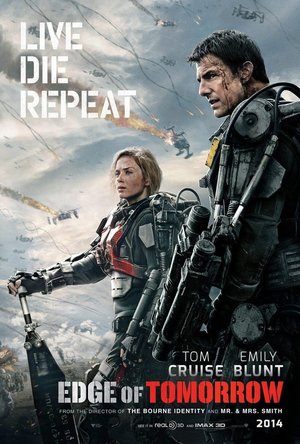
Edge of Tomorrow is one of the best action movies of Tom Cruise’s illustrious career and might just be the most fun you'll have at the movies all year.
Amidst the yearly barrage of unimaginative action movies, Edge of Tomorrow is a breath of fresh air. It’s smart, funny, and full of action-packed excitement. It is a definitive summer blockbuster and is one of the best action movies of Tom Cruise’s illustrious career. Based on the graphic novel All You Need is Kill by Hiroshi Sakurazaka, Edge of Tomorrow stars Tom Cruise as Major William Cage, who has earned his rank without ever having served a day in combat. All of that quickly comes to a change when he’s put on the frontlines of a war that threatens humanity’s entire existence. Thrust into combat, Cage is cowardly, and also comically unprepared. He fearfully fights for his life, but is quickly killed in the conflict, only to reawaken at the start of the same day. Cage is given another chance at life, with the benefit of having lived the day before and fully remembering it. This is not a gift bestowed upon Tom Cruise by the power of Scientology, nor by Tom Cruise’s near-invincibility in his films, but instead his character Cage inadvertently has tapped into a divine alien power through which he is able to re-spawn from death over and over again. Trapped In this seemingly infinite loop, Cage is able to learn from his mistakes and thereby has the power to single-handedly change the outcome of this war and save the human race from complete annihilation.
The brilliance of Edge of Tomorrow is in its execution. This is a movie that could have easily been tiresome considering it replays the same day continuously on repeat, but it’s handled in a way that makes it entertaining and engaging. It is superbly edited to keep the story moving and the laughs coming. Even as a huge fan of Tom Cruise, I had a marvelous time watching him die off again and again while thoroughly laughing at his expense. What makes it so funny is that Tom is completely in on the joke and is able to generously poke fun at himself. He is perfectly cast in this role, as it allows him to act totally crazy and completely spineless, while gradually transitioning into his usual kick-ass, cool Cruise persona. Edge of Tomorrow feels both exhilarating and original, although it is clearly inspired in part by some other films, such as the comedy classic Groundhog Day, and even The Matrix trilogy. However, having these influences doesn’t take away from the film’s enormous accomplishments. To call it an action sci-fi version of Groundhog Day is only to sell it short. In fact, Edge of Tomorrow might just be the most fun you’ll have at the movies all year.
The conflict in Edge of Tomorrow is an alien invasion that is obliterating humanity. The aliens, known as Mimics, have taken over most of Europe, and with the exception of one keystone battle, have easily routed human military forces. Rita Vrataski, played by Emily Blunt, led that decisive victory at Verdun, earning herself the moniker the “Angel of Verdun” after single-handedly killing hundreds of Mimics in humanity’s first and only victory against the alien species. How was one woman able to massacre these aliens that can lay waste to an armed infantry in minutes? Well, as Cage finds out, she previously had his ability to reset in death, although she no longer possesses that power. Nevertheless, with her knowledge and skill set acquired from her nearly infinite practice, she can transform Cage into Earth’s greatest weapon.
Edge of Tomorrow is a thoroughly impressive package, complete with superb special effects, a heart-pounding musical score, and outstanding performances from its lead characters. Tom Cruise carries the film with veteran expertise, making the film fun and deeply entertaining. Emily Blunt is a powerhouse as Rita, showcasing a heroic toughness with a survivor mentality. I don’t think there are many actresses in Hollywood that could play such a role as convincingly as Blunt does here. Meanwhile, Bill Paxton is as enjoyable to watch as ever. He plays Master Sergeant Farrell, who is Cage’s cocky commanding officer that takes great pleasure in giving him a hard time. As for the aliens in the movie, they look absolutely incredible, not to mention highly original. I think they’re some of the coolest aliens I’ve ever seen, and they’re also far more threatening than your typical movie alien. They’re deathly fast and unpredictable, which makes the film’s action all the more intense. Edge of Tomorrow actually feels very much like a video game, and not just because of the respawning feature. The characters are memorable, the stakes are high, and the action is so engrossing that you feel like you’re an active participant in it. The creativity and combat at work in this film are worthy of belonging in a blockbuster game series. It rarely lets up and is an adrenaline-fueled ride from beginning to end.
I’ll admit that Edge of Tomorrow far-exceeded my expectations. It’s cool in every way imaginable, from the story and the action to the aliens and characters. It will immerse you in its desolate, doomed world that unknowingly rests on the brink of total destruction. Tom Cruise and Emily Blunt are both in top form and make this a movie you won’t want to miss. Edge of Tomorrow is certain to become an instant action classic. One that I wholly look forward to watching again and again and again.
(This review was originally posted at 5mmg.com on 6.30.14.)
The brilliance of Edge of Tomorrow is in its execution. This is a movie that could have easily been tiresome considering it replays the same day continuously on repeat, but it’s handled in a way that makes it entertaining and engaging. It is superbly edited to keep the story moving and the laughs coming. Even as a huge fan of Tom Cruise, I had a marvelous time watching him die off again and again while thoroughly laughing at his expense. What makes it so funny is that Tom is completely in on the joke and is able to generously poke fun at himself. He is perfectly cast in this role, as it allows him to act totally crazy and completely spineless, while gradually transitioning into his usual kick-ass, cool Cruise persona. Edge of Tomorrow feels both exhilarating and original, although it is clearly inspired in part by some other films, such as the comedy classic Groundhog Day, and even The Matrix trilogy. However, having these influences doesn’t take away from the film’s enormous accomplishments. To call it an action sci-fi version of Groundhog Day is only to sell it short. In fact, Edge of Tomorrow might just be the most fun you’ll have at the movies all year.
The conflict in Edge of Tomorrow is an alien invasion that is obliterating humanity. The aliens, known as Mimics, have taken over most of Europe, and with the exception of one keystone battle, have easily routed human military forces. Rita Vrataski, played by Emily Blunt, led that decisive victory at Verdun, earning herself the moniker the “Angel of Verdun” after single-handedly killing hundreds of Mimics in humanity’s first and only victory against the alien species. How was one woman able to massacre these aliens that can lay waste to an armed infantry in minutes? Well, as Cage finds out, she previously had his ability to reset in death, although she no longer possesses that power. Nevertheless, with her knowledge and skill set acquired from her nearly infinite practice, she can transform Cage into Earth’s greatest weapon.
Edge of Tomorrow is a thoroughly impressive package, complete with superb special effects, a heart-pounding musical score, and outstanding performances from its lead characters. Tom Cruise carries the film with veteran expertise, making the film fun and deeply entertaining. Emily Blunt is a powerhouse as Rita, showcasing a heroic toughness with a survivor mentality. I don’t think there are many actresses in Hollywood that could play such a role as convincingly as Blunt does here. Meanwhile, Bill Paxton is as enjoyable to watch as ever. He plays Master Sergeant Farrell, who is Cage’s cocky commanding officer that takes great pleasure in giving him a hard time. As for the aliens in the movie, they look absolutely incredible, not to mention highly original. I think they’re some of the coolest aliens I’ve ever seen, and they’re also far more threatening than your typical movie alien. They’re deathly fast and unpredictable, which makes the film’s action all the more intense. Edge of Tomorrow actually feels very much like a video game, and not just because of the respawning feature. The characters are memorable, the stakes are high, and the action is so engrossing that you feel like you’re an active participant in it. The creativity and combat at work in this film are worthy of belonging in a blockbuster game series. It rarely lets up and is an adrenaline-fueled ride from beginning to end.
I’ll admit that Edge of Tomorrow far-exceeded my expectations. It’s cool in every way imaginable, from the story and the action to the aliens and characters. It will immerse you in its desolate, doomed world that unknowingly rests on the brink of total destruction. Tom Cruise and Emily Blunt are both in top form and make this a movie you won’t want to miss. Edge of Tomorrow is certain to become an instant action classic. One that I wholly look forward to watching again and again and again.
(This review was originally posted at 5mmg.com on 6.30.14.)
Bob Mann (459 KP) rated Avengers: Endgame (2019) in Movies
Sep 28, 2021
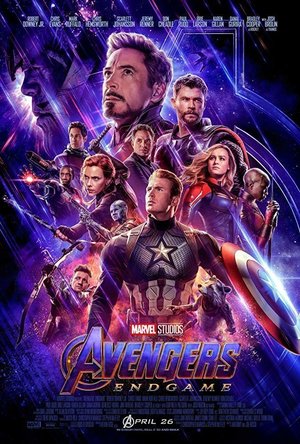

The final curtain.
So… thanks again to work and family commitments, I’ve spent 7 days dodging social media to arrive at my showing of “Endgame” spoiler free… and was successful in doing so! It is of course impossible to write just about anything on this film without dropping spoilers. So I will keep this first part of the review short, but add some footnotes (indexed with <#> symbols) to a “spoiler section” below the trailer video. Proceed at your peril if you haven’t yet seen it!
The Plot
The MCU has delivered an impressively well-connected movie series. In the case of Thanos, this is a story-arc that started in the mid-credit “monkey” at the end of 2012’s “The Avengers” and, at the conclusion of “Avengers: Infinity War”, saw half the universe’s population drift away – Voldemort-style – into grey ash. This, of course, also wiped out half of our heroes (good trivia question for future years: who was the first we saw drift away? Answer below* ). This included Spider-Man (Tom Holland); Dr Strange (Benedict Cumberbatch); Black Panther (Chadwick Boseman); Nick Fury (Samuel L. Jackson); half of the remaining Guardians; The Wasp (Evangeline Lilly) and Dr Pym (Michael Douglas). Oblivious to all of this is Ant Man (Paul Rudd), still stranded in the ‘quantum realm’ following the demise of his colleagues, and with no one to flick the ‘return’ switch.
After some early action, Endgame’s story revolves around a desperate attempt by the remaining Avengers, led by Black Widow (Scarlett Johansson) and a ‘retired’ Tony Stark (Robert Downey Jnr) to undo the undoable. Can they succeed against all the odds? (With a new Spider-Man film due out in the summer, I’ll give you a guess!). Of more relevance perhaps is whether the team can stay unscathed from their encounter with the scheming and massively powerful Thanos (Josh Brolin)?
Thoughtful
The film will not be to every fan’s taste. After the virtually non-stop rip-roaring action of “Infinity War”, “Endgame” takes a far more contemplative approach to its first hour.
The film starts with a devastating prologue, and a great lesson in statistics: that you need a decent sized population to guarantee getting a 50:50 split! There is also a very surprising twist in the first 15 minutes or so that I didn’t see coming AT ALL.
But then things settle down into a far more sombre section of the film: short on action; long on character development. The world is grieving for its loss, unable to move on past the non-stop counselling sessions that everyone is getting. This first hour was, for me, by far, my favourite part of the film. Seeing how the characters we know and love have been impacted – some for better rather than for worse – was terrific. Mark Ruffalo’s Hulk (with a rather glib plot-point) takes on an hilarious new aspect; and Chris Hemsworth adds hugely comedic value as Thor, setting up in Scotland a “New Asgard” settlement in uncharacteristically laid-back fashion.
Cast
As an ensemble cast, everyone plays their parts extremely well. But it is just the breadth of the cast that astounds in this film: just about everyone who is anyone in the Marvel Universe – at least, those who are still alive (alive!) and not dead (dead!) – pop up for an appearance! This is great fun with, in one particular case, the opportunity to try some more rejuvenation of an old timer as previously done with Samuel L. Jackson in “Captain Marvel”.
Inevitably, some of these appearances are overly brief, and characters that I wanted to see developed more in this film (particularly Brie Larson’s Captain Marvel) get very little screen time. Drax (Dave Bautista) and Mantis (Pom Klementieff) barely get a single line each. So it will depend on where your loyalties lie as to whether you are satisfied with the coverage or not. (I personally find Chris Evans‘ Captain America a bit of a po-faced bore, so I wasn’t keen on the amount of screen time he had).
Stan Lee again gets another cameo in the bag before his demise: will this actually be his last live one?
Overall view
I enjoyed this movie. It could obviously NEVER live up to the over-hyped expectations of the fan base. But as a cinematic spectacle, for me, it delivered on its billing as a blockbuster finale, but one filled with a degree of nuance I was not expecting. The problem with the way that the plot have been structured (no spoilers – <#>) is that it is easy to pick holes in the storyline. Indeed, some dramatic options (that to me seemed obvious ones to ‘mine’) were left ‘unmined’ <##>; others were left inexplicably hanging <###>.
I suspect the reason for some of this is that the initial cut of this film probably ran to 5 hours rather than the – still bladder-testing – 3 hours as released. There were probably a bunch of scenes left on the cutting room floor that might allow things to make more sense in the extended BluRay release.
It’s at times slow, but for me never dull. It does suffer from one significant flaw though: the “Return of the King” disease. It doesn’t know when to quit. There was a natural MCU arc to follow and a perfect time at which to end it: but the directors (the Russo Brothers, Anthony Russo and Joe Russo) kept adding additional scenes that detracted from the natural ending <####>.
Above all, unlike I think all but one film in MCU history, there is NO “MONKEY” in the end credits: either mid-credit or end-credit! So, after the long title crawl (and some rather odd choices for end-title music by Alan Silvestri), if you are not to look bloody stupid as the lights come up, and face a storm of derision from your partner, then leave after the dramatic roll-call sequence of the film’s stars!
(*BTW, the answer to the trivia question is, I believe, Bucky.)
So… thanks again to work and family commitments, I’ve spent 7 days dodging social media to arrive at my showing of “Endgame” spoiler free… and was successful in doing so! It is of course impossible to write just about anything on this film without dropping spoilers. So I will keep this first part of the review short, but add some footnotes (indexed with <#> symbols) to a “spoiler section” below the trailer video. Proceed at your peril if you haven’t yet seen it!
The Plot
The MCU has delivered an impressively well-connected movie series. In the case of Thanos, this is a story-arc that started in the mid-credit “monkey” at the end of 2012’s “The Avengers” and, at the conclusion of “Avengers: Infinity War”, saw half the universe’s population drift away – Voldemort-style – into grey ash. This, of course, also wiped out half of our heroes (good trivia question for future years: who was the first we saw drift away? Answer below* ). This included Spider-Man (Tom Holland); Dr Strange (Benedict Cumberbatch); Black Panther (Chadwick Boseman); Nick Fury (Samuel L. Jackson); half of the remaining Guardians; The Wasp (Evangeline Lilly) and Dr Pym (Michael Douglas). Oblivious to all of this is Ant Man (Paul Rudd), still stranded in the ‘quantum realm’ following the demise of his colleagues, and with no one to flick the ‘return’ switch.
After some early action, Endgame’s story revolves around a desperate attempt by the remaining Avengers, led by Black Widow (Scarlett Johansson) and a ‘retired’ Tony Stark (Robert Downey Jnr) to undo the undoable. Can they succeed against all the odds? (With a new Spider-Man film due out in the summer, I’ll give you a guess!). Of more relevance perhaps is whether the team can stay unscathed from their encounter with the scheming and massively powerful Thanos (Josh Brolin)?
Thoughtful
The film will not be to every fan’s taste. After the virtually non-stop rip-roaring action of “Infinity War”, “Endgame” takes a far more contemplative approach to its first hour.
The film starts with a devastating prologue, and a great lesson in statistics: that you need a decent sized population to guarantee getting a 50:50 split! There is also a very surprising twist in the first 15 minutes or so that I didn’t see coming AT ALL.
But then things settle down into a far more sombre section of the film: short on action; long on character development. The world is grieving for its loss, unable to move on past the non-stop counselling sessions that everyone is getting. This first hour was, for me, by far, my favourite part of the film. Seeing how the characters we know and love have been impacted – some for better rather than for worse – was terrific. Mark Ruffalo’s Hulk (with a rather glib plot-point) takes on an hilarious new aspect; and Chris Hemsworth adds hugely comedic value as Thor, setting up in Scotland a “New Asgard” settlement in uncharacteristically laid-back fashion.
Cast
As an ensemble cast, everyone plays their parts extremely well. But it is just the breadth of the cast that astounds in this film: just about everyone who is anyone in the Marvel Universe – at least, those who are still alive (alive!) and not dead (dead!) – pop up for an appearance! This is great fun with, in one particular case, the opportunity to try some more rejuvenation of an old timer as previously done with Samuel L. Jackson in “Captain Marvel”.
Inevitably, some of these appearances are overly brief, and characters that I wanted to see developed more in this film (particularly Brie Larson’s Captain Marvel) get very little screen time. Drax (Dave Bautista) and Mantis (Pom Klementieff) barely get a single line each. So it will depend on where your loyalties lie as to whether you are satisfied with the coverage or not. (I personally find Chris Evans‘ Captain America a bit of a po-faced bore, so I wasn’t keen on the amount of screen time he had).
Stan Lee again gets another cameo in the bag before his demise: will this actually be his last live one?
Overall view
I enjoyed this movie. It could obviously NEVER live up to the over-hyped expectations of the fan base. But as a cinematic spectacle, for me, it delivered on its billing as a blockbuster finale, but one filled with a degree of nuance I was not expecting. The problem with the way that the plot have been structured (no spoilers – <#>) is that it is easy to pick holes in the storyline. Indeed, some dramatic options (that to me seemed obvious ones to ‘mine’) were left ‘unmined’ <##>; others were left inexplicably hanging <###>.
I suspect the reason for some of this is that the initial cut of this film probably ran to 5 hours rather than the – still bladder-testing – 3 hours as released. There were probably a bunch of scenes left on the cutting room floor that might allow things to make more sense in the extended BluRay release.
It’s at times slow, but for me never dull. It does suffer from one significant flaw though: the “Return of the King” disease. It doesn’t know when to quit. There was a natural MCU arc to follow and a perfect time at which to end it: but the directors (the Russo Brothers, Anthony Russo and Joe Russo) kept adding additional scenes that detracted from the natural ending <####>.
Above all, unlike I think all but one film in MCU history, there is NO “MONKEY” in the end credits: either mid-credit or end-credit! So, after the long title crawl (and some rather odd choices for end-title music by Alan Silvestri), if you are not to look bloody stupid as the lights come up, and face a storm of derision from your partner, then leave after the dramatic roll-call sequence of the film’s stars!
(*BTW, the answer to the trivia question is, I believe, Bucky.)

Kaysee Hood (83 KP) rated The Novice (Summoner Book 1) in Books
Apr 30, 2018
Fletcher Wulf & Ignatius (2 more)
Dwarfs & Elves
Magic & Demons
War (2 more)
Orcs
Race Issues
A new favorite...
Can I say this book took me by surprise? This has been on my TBR for a bit and was going to be an ebook purchase until I came across the paperback copy at B&N. What became a read out of interest with not much for expectations has become a new favorite for me.
Now, there are some issues I do have. It's well written. The characters are very well fleshed out to where we get to know them (though I kept having to turn to the back to refer to things because I got confused which was a bummer). I love and hate the fact how some parts were detailed and others were. However it is well paced in a way where even when I felt I didn't need anymore info I wasn't bored and put off. I was still able to read about and stay into the world written.
I liked how with Fletcher we have no clue was his past because he has no clue. It leaves it all open for so many possibilities as to how Fletcher is a Battlemage/Summoner without leading us to one idea where we can guess everything before it happens. Which is the best part because little surprise are peppered through as well as bits of what could be. Actually I enjoyed the idea of nobles get the better treatment while those who are lowborn have to struggle because it was referred to where those who have been taught all their life may have an understanding of the basic and seem ahead of those who are only learning now will have better control where they'll succeeded in other ways. I thought there would only be the orcs and humans. I had no clue about the elves and the dwarves so it was a great surprise.
All the conflict, possible looming of other wars, and all chaos possible overall it made for a good book. Fletcher is a brilliant character who has faults and is human as anyone else yet he makes up for it by being a decent human being and his quirky ideas. That's what makes this book great. I recommend to those who like fantasy books with magic heavily involved.
Now, there are some issues I do have. It's well written. The characters are very well fleshed out to where we get to know them (though I kept having to turn to the back to refer to things because I got confused which was a bummer). I love and hate the fact how some parts were detailed and others were. However it is well paced in a way where even when I felt I didn't need anymore info I wasn't bored and put off. I was still able to read about and stay into the world written.
I liked how with Fletcher we have no clue was his past because he has no clue. It leaves it all open for so many possibilities as to how Fletcher is a Battlemage/Summoner without leading us to one idea where we can guess everything before it happens. Which is the best part because little surprise are peppered through as well as bits of what could be. Actually I enjoyed the idea of nobles get the better treatment while those who are lowborn have to struggle because it was referred to where those who have been taught all their life may have an understanding of the basic and seem ahead of those who are only learning now will have better control where they'll succeeded in other ways. I thought there would only be the orcs and humans. I had no clue about the elves and the dwarves so it was a great surprise.
All the conflict, possible looming of other wars, and all chaos possible overall it made for a good book. Fletcher is a brilliant character who has faults and is human as anyone else yet he makes up for it by being a decent human being and his quirky ideas. That's what makes this book great. I recommend to those who like fantasy books with magic heavily involved.
MaryAnn (14 KP) rated A Promise Forged (Ohio Brides #3) in Books
Mar 5, 2019

Kat transformed in front of him. Her chin came up, her fingers stopped twitching with the fabric of her gown, and a real sparkle bubbled in her eyes. It was like watching Snow White come to life when the prince kissed her. A heartwarming WWII historical from award-winning author Cara Putman: Kat Miller has dreamed of playing baseball her entire life. When she earns a spot on a team in the All-American Girls Professional Softball League, she finds that things aren’t as glamorous as she imagined. She struggles with long road trips, grueling practices, and older teammates who are jealous of her success. And to top it all off, an irritating reporter is constantly getting under Kat’s skin. Events in Jack Raymond’s career have left him cynical and distanced from God. He never wanted to write at a small paper, and he certainly didn’t want to be assigned to something as inconsequential as a women’s softball team. Then Kat walks into his life. The fiery, young softball player somehow climbs the walls around his heart and makes him want to hope again. When lies fly and the league appears to fail, will Kat and Jack’s new love survive?
My Thoughts: Every girl has a dream, and this time it's Kat's turn to have hers come true! A chance to play professional baseball. Cara Putman has weaved history and fiction in an entertaining storyline; s based the all women's league that was formed during the second world war.
Kat is the youngest member on the team and as I read the book, I wanted to take her under my wing and protect her from her jealous teammates. Kat had to suffer being away from her family, the jealousy of some of her teammates, traveling, grueling schedules and falling in love for the first time.
This was a very entertaining novel. I truly enjoyed it and it was a pleasure to read. One of the things I enjoyed about the book, was that Kat wanted to make a difference. She wanted to be a light for the Lord where ever she went. Her actions actually made Jack turn back to the Lord.
Even though I hadn't read the first two books, this was easy to follow on its own. I would love to read more from Cara Putman.
My Thoughts: Every girl has a dream, and this time it's Kat's turn to have hers come true! A chance to play professional baseball. Cara Putman has weaved history and fiction in an entertaining storyline; s based the all women's league that was formed during the second world war.
Kat is the youngest member on the team and as I read the book, I wanted to take her under my wing and protect her from her jealous teammates. Kat had to suffer being away from her family, the jealousy of some of her teammates, traveling, grueling schedules and falling in love for the first time.
This was a very entertaining novel. I truly enjoyed it and it was a pleasure to read. One of the things I enjoyed about the book, was that Kat wanted to make a difference. She wanted to be a light for the Lord where ever she went. Her actions actually made Jack turn back to the Lord.
Even though I hadn't read the first two books, this was easy to follow on its own. I would love to read more from Cara Putman.

London Uncovered: Sixty Unusual Places to Explore
Book
London Uncovered opens the doors to sixty of the capital's most intriguing places, all visitable but...

Crime City
Games and Entertainment
App
*****#1 free game in 26 countries and counting *****#1 free app in 10 countries and counting ...

Frontline Commando: D-Day
Games and Entertainment
App
Lead the charge on D-Day as the tip of the spear in the largest Allied invasion of WW2! Defeat the...
Bob Mann (459 KP) rated The Irishman (2019) in Movies
Jan 20, 2020
An endurance test but a great endurance test
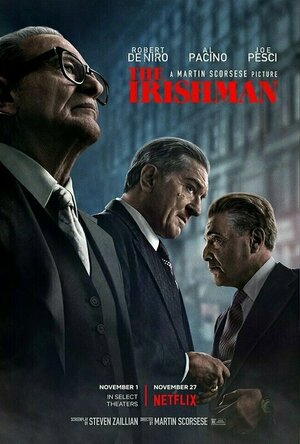
Martin Scorsese made a lot of enemies recently with his rant against the superficiality of the Marvel movies. But you can hardly argue that his latest film is superficial. We see the mobster Frank Sheeran (Robert De Niro) in his old people's home wistfully recalling his past life. Through flashback we go back to times as early as his service in World War II, where he learned to kill other men without a second thought.
Later, back in Philadelphia, Sheeran has a chance meeting with mob-leader Russell Buffalino (Joe Pesci) and Buffalino hires him as a hit man. It's a working relationship and friendship that is going to last a lifetime.... however long that may be in this business! But it also brings Sheeran into a relationship with union leader Jimmy Hoffa (Al Pacino). And those of you with any knowledge of the history of Jimmy Hoffa (or remember that scene in "Bruce Almighty"!) will recall what happened to him!
One of the issues with these sort of films is that it is impossible (unless you are reading this as a borderline psycho) to form any sort of empathetic relationship with any of the characters. It's horrifying that this is based on a true story: you'd really like to assume that all of this sort of stuff was solely on the pages of tacky crime novels, and not reality.
The horror of Sheeran's actions are neatly reflected by screenwriter Steven Zaillian ("Schindler's List", "Clear and Present Danger") in the impact on his family, particularly on his impressionable young daughter Peggy (Lucy Gallina). Only when he is old and grey can Peggy (now Anna Paquin) vent at her father for the damage done.
The "youngification" work on De Niro and Pesci is really essential for the film to work. Finding a younger actor to play either of these iconic actors would have been a stretch. Here it's very well done. But I will again suggest that we are probably another ten years of technology advancement away from removing the "uncanny valley" effect from scenes like this. It just doesn't quite work for me for a reason I can't put my finger on.
After the career nadir of "Dirty Grandpa" it looked like Robert De Niro might have nothing but bread commercials and dog-food ads to look forward to. However, within three months we've had a resurgence of form: his great performance in "Joker" and now this. Of course, this is a role that he can play in his sleep. And I suspect that might count against him in the Oscar/Bafta season. But its undeniably a great performance.
Joe Pesci (famously mocked as "Baby Yoda" by Ricky Gervais in his hilarious Golden Globe roasting) and Al Pacino are also great, with Pacino being particular impressive as the fanatically focused union boss unable to see the danger he is in. "It is what it is" repeats Sheeran over and over again to deaf ears. A memorable scene.
Again Zaillian's script is brilliant in creating an impossibly tense triangular friendship between the three men. His family love Hoffa and dislike/distrust Buffalino. When the triangle gets stretched to breaking point, and a link needs to be broken, which way will Sheeran jump?
For me, good movies should be seen in the cinema. But I missed its short (to make it Oscar-worthy) release so had to catch it up on the small(-er) screen. Cinemas seem reluctant to stick an "interval" in programmes these days: never quite sure why, since most movie-goers if we are talking a 2 hour+ movie might welcome a loo-break, and the cinema could also sell more ice-cream! But at three and a half hours, a cinema trip would be a bladder-testing challenge for sure. So this is one that I wasn't unhappy to use the pause button on!
It's a superbly constructed movie and well deserved its place on the Oscars "Best Movie" shortlist. It's tense, dramatic and has enough variety of people being shot in the head to make it ghoulishly watchable.
However, while I can appreciate the technical art of the film, and I'm delighted I got to see it, a top film for me needs to be one I would reach for on my DVD rack (spot the old-fashinoned git) for multiple watches. And for all its worthiness, this doesn't really fit the bill.
(For the full graphical review, please check out One Mann's Movies at https://bob-the-movie-man.com/2020/01/20/one-manns-movies-film-review-the-irishman-2019/ ).
Later, back in Philadelphia, Sheeran has a chance meeting with mob-leader Russell Buffalino (Joe Pesci) and Buffalino hires him as a hit man. It's a working relationship and friendship that is going to last a lifetime.... however long that may be in this business! But it also brings Sheeran into a relationship with union leader Jimmy Hoffa (Al Pacino). And those of you with any knowledge of the history of Jimmy Hoffa (or remember that scene in "Bruce Almighty"!) will recall what happened to him!
One of the issues with these sort of films is that it is impossible (unless you are reading this as a borderline psycho) to form any sort of empathetic relationship with any of the characters. It's horrifying that this is based on a true story: you'd really like to assume that all of this sort of stuff was solely on the pages of tacky crime novels, and not reality.
The horror of Sheeran's actions are neatly reflected by screenwriter Steven Zaillian ("Schindler's List", "Clear and Present Danger") in the impact on his family, particularly on his impressionable young daughter Peggy (Lucy Gallina). Only when he is old and grey can Peggy (now Anna Paquin) vent at her father for the damage done.
The "youngification" work on De Niro and Pesci is really essential for the film to work. Finding a younger actor to play either of these iconic actors would have been a stretch. Here it's very well done. But I will again suggest that we are probably another ten years of technology advancement away from removing the "uncanny valley" effect from scenes like this. It just doesn't quite work for me for a reason I can't put my finger on.
After the career nadir of "Dirty Grandpa" it looked like Robert De Niro might have nothing but bread commercials and dog-food ads to look forward to. However, within three months we've had a resurgence of form: his great performance in "Joker" and now this. Of course, this is a role that he can play in his sleep. And I suspect that might count against him in the Oscar/Bafta season. But its undeniably a great performance.
Joe Pesci (famously mocked as "Baby Yoda" by Ricky Gervais in his hilarious Golden Globe roasting) and Al Pacino are also great, with Pacino being particular impressive as the fanatically focused union boss unable to see the danger he is in. "It is what it is" repeats Sheeran over and over again to deaf ears. A memorable scene.
Again Zaillian's script is brilliant in creating an impossibly tense triangular friendship between the three men. His family love Hoffa and dislike/distrust Buffalino. When the triangle gets stretched to breaking point, and a link needs to be broken, which way will Sheeran jump?
For me, good movies should be seen in the cinema. But I missed its short (to make it Oscar-worthy) release so had to catch it up on the small(-er) screen. Cinemas seem reluctant to stick an "interval" in programmes these days: never quite sure why, since most movie-goers if we are talking a 2 hour+ movie might welcome a loo-break, and the cinema could also sell more ice-cream! But at three and a half hours, a cinema trip would be a bladder-testing challenge for sure. So this is one that I wasn't unhappy to use the pause button on!
It's a superbly constructed movie and well deserved its place on the Oscars "Best Movie" shortlist. It's tense, dramatic and has enough variety of people being shot in the head to make it ghoulishly watchable.
However, while I can appreciate the technical art of the film, and I'm delighted I got to see it, a top film for me needs to be one I would reach for on my DVD rack (spot the old-fashinoned git) for multiple watches. And for all its worthiness, this doesn't really fit the bill.
(For the full graphical review, please check out One Mann's Movies at https://bob-the-movie-man.com/2020/01/20/one-manns-movies-film-review-the-irishman-2019/ ).

Gareth von Kallenbach (980 KP) rated I, Tonya (2017) in Movies
Jul 8, 2019
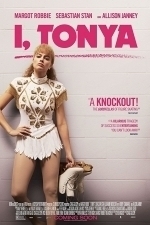

Most people when they hear the name Tonya Harding immediately have images of Nancy Kerrigan holding her knee and crying out “Why?” over and over again come to their minds. They may even think of Harding herself crying to a panel of judges about the state of the laces on her skates during Olympic competition. Her name and image became a point of ridicule and shame. She became the butt of jokes throughout the 90s and a never-ending punchline. People were not sympathetic to her and were not willing to hear her story. She was condemned to being the monster that we convinced ourselves that she was. The film I, Tonya sheds light onto who this woman was in demonstrating the complexities of her upbringing, years of abuse at the hands of her mother and later her husband. Margot Robbie (Suicide Squad, Wolf of Wall Street) stars as Tonya Harding, the disgraced Olympic figure skater.
I Tonya, takes audiences deep into the world that Tonya Harding experiences. We see the heartache, we bear witness to the brutal violence and abuse she suffers. Audiences find themselves rooting for Tonya to break out and become a success. The film, based on interviews, court testimony, and sports and news footage allows us all to have a greater picture of exactly who Tonya was. It points out in a mixture of humor, terror, and realism what the public got wrong about her and how we all became her worst abusers. The public wanted her to not only fail, but to fail miserably as most had fallen in love with her competitor and the victim of an attack committed in Tonya’s name. I Tonya, through brutal honesty shows us how someone who is already flawed due to their appearance, presentation, or lack of polish can quickly become villainized because they do not fit our description of innocent or are seen as someone we want representing us. The true reality of I, Tonya is that the film is a reflection in the mirror. It is one of the most honest representations of what the human, and more specifically, the American experience is. You have successes and failures, but despite this, we are recognized for the worst actions that are linked to our names and images.
I, Tonya takes the best elements of Mommy Dearest, Blades of Glory, Black Swan, and Sleeping With The Enemy in order to create a sports biopic that audiences will not realize they needed until they find themselves walking out of the theater. Margot Robbie, Allison Janney (Mom, The Help, Juno), and Sebastian Stan (Captain America: Civil War) will have audiences angered, elated, and heartbroken as they take audiences on a full tour of their emotions. I, Tonya is an instant classic that will capture audiences with its storytelling and demonstrate that Tonya Harding’s life is much more than a one-liner.
I Tonya, takes audiences deep into the world that Tonya Harding experiences. We see the heartache, we bear witness to the brutal violence and abuse she suffers. Audiences find themselves rooting for Tonya to break out and become a success. The film, based on interviews, court testimony, and sports and news footage allows us all to have a greater picture of exactly who Tonya was. It points out in a mixture of humor, terror, and realism what the public got wrong about her and how we all became her worst abusers. The public wanted her to not only fail, but to fail miserably as most had fallen in love with her competitor and the victim of an attack committed in Tonya’s name. I Tonya, through brutal honesty shows us how someone who is already flawed due to their appearance, presentation, or lack of polish can quickly become villainized because they do not fit our description of innocent or are seen as someone we want representing us. The true reality of I, Tonya is that the film is a reflection in the mirror. It is one of the most honest representations of what the human, and more specifically, the American experience is. You have successes and failures, but despite this, we are recognized for the worst actions that are linked to our names and images.
I, Tonya takes the best elements of Mommy Dearest, Blades of Glory, Black Swan, and Sleeping With The Enemy in order to create a sports biopic that audiences will not realize they needed until they find themselves walking out of the theater. Margot Robbie, Allison Janney (Mom, The Help, Juno), and Sebastian Stan (Captain America: Civil War) will have audiences angered, elated, and heartbroken as they take audiences on a full tour of their emotions. I, Tonya is an instant classic that will capture audiences with its storytelling and demonstrate that Tonya Harding’s life is much more than a one-liner.