
Search
Search results

BankofMarquis (1832 KP) rated Sisu (2023) in Movies
Dec 4, 2023



Pretty Darned Entertaining
The BankofMarquis stumbled across a Finnish action flick that makes Quentin Tarantino Movies - and the John Wick films - look like Disney movies.
SISU tells the story of the waning days of WWII in Finland where a lone man has left the death and destruction of war behind to live a life of solitude. Into his world come some retreating NAZI’s who (to their detriment, they will soon find out) decide to NOT leave this lone man alone.
Chaos (and violence) ensues.
A variation of the “Man with No Name” type of action film that pits this lone person who just wants to be left alone against a group of thugs, SISU (a Finnish word that has no direct translation but roughly translates to “persevering against tremendous odds”) generates a fun action/revenge flick that is extremely violent…and extremely implausible (but that’s part of the fun).
While this is a Finnish film, all of the actors/characters speak English (except when the Nazi’s speak German), so there is no translating needed.
Jorma Tommila (a veteran Finnish actor that has no U.S. credits that I could find) is stoic, rugged and damned determined as the nameless loner (he gets named about half-way through the film) that perseveres and this is the best part of his performance. His sparkling blue eyes constantly seem active and alive even though the rest of his face is stoic and his body is bruised, bloodied, beaten and mud-covered. His internal resolve shines through in his eyes and really holds the film together well.
Aksel Hennie (who you might know as Alex Vogel one of the Astronauts that is in the ship that turns back to get Matt Damon aka THE MARTIAN) as the Head Nazi is quite good and just as determined to use his men as fodder in his vendetta against the nameless man while Jack Doolan (Horse Tommy in THE BOYS) is ruthless as his main henchman and Mimosa Willamo (the Finnish TV series DEADWIND) is strong and determined as a prisoner held by the Nazis.
Director Jalmari Helander (again, no U.S. credits that I can find) does a wonderful job of keeping the action moving and the choreography of the piece simple (you know where everyone is at all times, so when something comes out of nowhere, you have a pretty good idea as to who/what it is). He does ratchet the violence up to a Tarantino-John Wick- The Equalizer level, so if you are squeamish, this film is not for you.
But, if you are into action films, then…hoo-boy….is SISU a film for you!
Letter Grade: A-
8 stars (out of 10) and you can take that to the Bank(ofMarquis)
SISU tells the story of the waning days of WWII in Finland where a lone man has left the death and destruction of war behind to live a life of solitude. Into his world come some retreating NAZI’s who (to their detriment, they will soon find out) decide to NOT leave this lone man alone.
Chaos (and violence) ensues.
A variation of the “Man with No Name” type of action film that pits this lone person who just wants to be left alone against a group of thugs, SISU (a Finnish word that has no direct translation but roughly translates to “persevering against tremendous odds”) generates a fun action/revenge flick that is extremely violent…and extremely implausible (but that’s part of the fun).
While this is a Finnish film, all of the actors/characters speak English (except when the Nazi’s speak German), so there is no translating needed.
Jorma Tommila (a veteran Finnish actor that has no U.S. credits that I could find) is stoic, rugged and damned determined as the nameless loner (he gets named about half-way through the film) that perseveres and this is the best part of his performance. His sparkling blue eyes constantly seem active and alive even though the rest of his face is stoic and his body is bruised, bloodied, beaten and mud-covered. His internal resolve shines through in his eyes and really holds the film together well.
Aksel Hennie (who you might know as Alex Vogel one of the Astronauts that is in the ship that turns back to get Matt Damon aka THE MARTIAN) as the Head Nazi is quite good and just as determined to use his men as fodder in his vendetta against the nameless man while Jack Doolan (Horse Tommy in THE BOYS) is ruthless as his main henchman and Mimosa Willamo (the Finnish TV series DEADWIND) is strong and determined as a prisoner held by the Nazis.
Director Jalmari Helander (again, no U.S. credits that I can find) does a wonderful job of keeping the action moving and the choreography of the piece simple (you know where everyone is at all times, so when something comes out of nowhere, you have a pretty good idea as to who/what it is). He does ratchet the violence up to a Tarantino-John Wick- The Equalizer level, so if you are squeamish, this film is not for you.
But, if you are into action films, then…hoo-boy….is SISU a film for you!
Letter Grade: A-
8 stars (out of 10) and you can take that to the Bank(ofMarquis)

Bong Mines Entertainment (15 KP) rated Eargasms for Short-Sighted Post-Truth Era People by Helsinki Headnod Convention in Music
Jun 7, 2019

Helsinki Headnod Convention is a Jazz/Spoken Word band. Not too long ago, they released their debut EP, entitled, “Eargasms for Short-Sighted Post-Truth Era People”.
WHO’S MAKING YOU?
Mellow and subtle. This jazzy tune poses a series of interesting questions.
At the end of the day, it’s you and only you. You keep trying to place the blame on somebody else but it’s you. Also, you and only you are can make you or break you.
OUR TIME IS NOW
This 30 seconds clip tells listeners that their time is now. Also, it’s short, representing that time is short on earth and it shouldn’t be taken for granted.
SORROW AND PAIN
A mixture of Negro Spiritual mixed with Blues and elements of ‘60s Soul.
The black and white video shows an African-American woman walking in the evening. Also, a vehicle with its headlights on approaches and a Caucasian cop parks it.
The following scene shows the woman running away while the cop, dressed as a terrorist, is chasing her with a lit smoke screen in his hand.
The courageous woman falls to the ground, grabs a handful of snow, and throws it in her attacker’s face. Momentarily, it blinds him and she gets up and runs away.
But she can’t see where she’s going because of the smoke. Then, she’s confronted by another Caucasian man, dressed in riot gear. Also, he’s walking towards her while her other attacker is gaining ground behind her.
In the end, while snow is falling and visibility is blurry, the rioter beats the woman with the stick in his hand.
The suggestive video implies that those who are supposed to protect and serve urban communities contain an uncertain amount of national terrorists within their organizations.
Also, some things from the past have changed, but on the other hand, some things have remained the same.
SOLIDARITY
Mellow and smooth. One minute and 13 seconds of conscious therapy, which begins with a calming voice, “We glorify war when we should glorify peace.”
The title is a unity campaign that binds people together as one. Also, its aim is social change within a racist power structure.
DOWN ON BENDED KNEE
The poem is based on Colin Kaepernick’s epic gesture of bending his knee during the National Anthem to protest social injustices happening in urban communities. Also, it speaks on reasons humanity, equality, civility, decency, justice, and other rights.
ANOTHER DAY IN PARADISE
An instrument plays in solitude against a vacant backdrop, where paradise is imagined as an ordinary day in hell, where being cautious is the best way to proceed.
Also, a story is told about a woman who is begging on the street, but the man she is seeking help from doesn’t even acknowledge her.
She calls out to a man on the street, “Sir, can you help me. It’s cold and I have nowhere to sleep. Is there somewhere you can tell me?”
He walks on doesn’t look back. He pretends he can’t hear her. Starts to whistle as he crosses the street. Seems embarrassed to be there.
This story paints a perfect picture of people frowning down on the have-nots, who oftentimes get overlooked while seeking monetary help or begging for information in public.
THE BIGGER PICTURE
With so many points of views to look from, what’s really the bigger picture?
The artist raps, “Watch me step it up. Cape blowing in the wind standing tough. Can’t give up.”
The song implies what’s necessary to see the bigger picture. One must have the courage to not get blown away by the world-wind and its influences.
Also, it implies taking a step up, by elevating your mind, body, and soul. Only then, will you be able to see the bigger picture, which is quite an exquisite view?
HUMAN KINDNESS
Beings with a jazzy fiesta of affectionate sounds perfumed with love. It depicts the hustle and bustle of an inner-city boulevard. It’s fast-paced and warm like the blood flowing in our veins.
CONCLUSION
“Eargasms for Short-Sighted Post-Truth Era People” is an undiluted audible ear drop solution, perfumed with nostalgia. It’s revolutionary but its non-violence approach in combating social inequality is highly effective.
https://www.bongminesentertainment.com/helsinki-headnod-eargasms/
WHO’S MAKING YOU?
Mellow and subtle. This jazzy tune poses a series of interesting questions.
At the end of the day, it’s you and only you. You keep trying to place the blame on somebody else but it’s you. Also, you and only you are can make you or break you.
OUR TIME IS NOW
This 30 seconds clip tells listeners that their time is now. Also, it’s short, representing that time is short on earth and it shouldn’t be taken for granted.
SORROW AND PAIN
A mixture of Negro Spiritual mixed with Blues and elements of ‘60s Soul.
The black and white video shows an African-American woman walking in the evening. Also, a vehicle with its headlights on approaches and a Caucasian cop parks it.
The following scene shows the woman running away while the cop, dressed as a terrorist, is chasing her with a lit smoke screen in his hand.
The courageous woman falls to the ground, grabs a handful of snow, and throws it in her attacker’s face. Momentarily, it blinds him and she gets up and runs away.
But she can’t see where she’s going because of the smoke. Then, she’s confronted by another Caucasian man, dressed in riot gear. Also, he’s walking towards her while her other attacker is gaining ground behind her.
In the end, while snow is falling and visibility is blurry, the rioter beats the woman with the stick in his hand.
The suggestive video implies that those who are supposed to protect and serve urban communities contain an uncertain amount of national terrorists within their organizations.
Also, some things from the past have changed, but on the other hand, some things have remained the same.
SOLIDARITY
Mellow and smooth. One minute and 13 seconds of conscious therapy, which begins with a calming voice, “We glorify war when we should glorify peace.”
The title is a unity campaign that binds people together as one. Also, its aim is social change within a racist power structure.
DOWN ON BENDED KNEE
The poem is based on Colin Kaepernick’s epic gesture of bending his knee during the National Anthem to protest social injustices happening in urban communities. Also, it speaks on reasons humanity, equality, civility, decency, justice, and other rights.
ANOTHER DAY IN PARADISE
An instrument plays in solitude against a vacant backdrop, where paradise is imagined as an ordinary day in hell, where being cautious is the best way to proceed.
Also, a story is told about a woman who is begging on the street, but the man she is seeking help from doesn’t even acknowledge her.
She calls out to a man on the street, “Sir, can you help me. It’s cold and I have nowhere to sleep. Is there somewhere you can tell me?”
He walks on doesn’t look back. He pretends he can’t hear her. Starts to whistle as he crosses the street. Seems embarrassed to be there.
This story paints a perfect picture of people frowning down on the have-nots, who oftentimes get overlooked while seeking monetary help or begging for information in public.
THE BIGGER PICTURE
With so many points of views to look from, what’s really the bigger picture?
The artist raps, “Watch me step it up. Cape blowing in the wind standing tough. Can’t give up.”
The song implies what’s necessary to see the bigger picture. One must have the courage to not get blown away by the world-wind and its influences.
Also, it implies taking a step up, by elevating your mind, body, and soul. Only then, will you be able to see the bigger picture, which is quite an exquisite view?
HUMAN KINDNESS
Beings with a jazzy fiesta of affectionate sounds perfumed with love. It depicts the hustle and bustle of an inner-city boulevard. It’s fast-paced and warm like the blood flowing in our veins.
CONCLUSION
“Eargasms for Short-Sighted Post-Truth Era People” is an undiluted audible ear drop solution, perfumed with nostalgia. It’s revolutionary but its non-violence approach in combating social inequality is highly effective.
https://www.bongminesentertainment.com/helsinki-headnod-eargasms/

Gareth von Kallenbach (980 KP) rated Scary Stories to Tell in the Dark (2019) in Movies
Aug 9, 2019
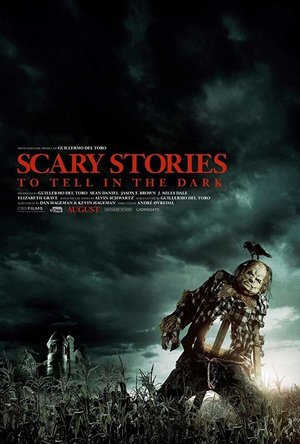
I was introduced to Scary Stories to Tell in the Dark (the amazing book series written by Alvin Schwartz back in 1981) in my Junior High history class. An odd place for sure to listen to this amazing collection of stories, and yet it displayed how these stories are impactful even if you aren’t reading them around a campfire in the middle of the woods. Schwartz had written two additional sequels to his stories in 1984 and 1991 and the incredibly creepy illustrations (by Stephen Gammell) helped to complete a collection of books that are at home in anyone’s collection both young and old.
The 80’s was a decade obsessed with the occult and works of fiction that parents thought were written to corrupt the minds of the youth of the age. Before video games were blamed for all the evil in the world there was Heavy Metal music, the fantastical role-playing games such as Dungeons and Dragons and books such as these that parents rallied around and attempted to ban from schools and after school functions. Looking back now at the hysteria that this caused is almost laughable, but for those of us growing up in that time it was a very real threat to the imaginations of youth around the globe. Outside of this brief history lesson however, I wondered how the books would translate into a movie.
Our story begins on Halloween night, the year is 1968 and the Vietnam War and the upcoming presidential elections are on everyone’s mind. Stella (Zoe Colletti) and her nerd friends Chuck (Austin Zajur) and Auggie (Gabriel Rush) decide that this will be the year that they get revenge on the local bully Tommy (Austin Abrams) for all his years of stealing candy from them on Halloween. After things go predictably wrong, the young group of kids are pursued to a drive-in theater where they seek refuge in a car that is owned by another out-of-town youngster named Ramon (Michael Garza). As thanks for “saving” them from a certain beating, Stella and the group decide to take Ramon to a real-life haunted house. A place where a young Sarah Bellows would tell stories to frighten children only for them to end up dead days later. While exploring the house the young group discover the hidden room of young Sarah Bellows and come across her book of “Scary Stories”. Unable to contain her own curiosity, Stella takes the book home with her and watches as the words on the pages turn into living nightmares of their own darkest fears.
Produced by Guillermo del Toro, Patrick Melton and Marcus Dunstan, Scary Stories takes a handful of fan favorites and weaves them into a “scary” story of their very own. Instead of simply being a collection of haunting tales, each one serves a purpose, whether it’s the “Red Dot” or “Harold”, each one is used to drive the story even further along. While at first, I was hoping that it would be a collection of short stories featuring these timeless classics, the way in which each individual story progresses the plot leads to a far more interesting experience overall.
Those looking for a movie filled with frightening tales that will have you reaching for the closest shoulder (whether you know who it belongs to or not) will be in for a bit of disappointment. That’s not to take away from the incredible amount of vision needed to bring these classic stories to life, but it takes on a far more contemporary feel, then the dark stories and supernatural visions of the books that came before it. The film comes away feeling more like Goosebumps and less like Freakshow which makes sense given its PG-13 rating and its obvious pre-teen to teen demographic. The movie is still fun however, particularly for those who fondly remember the stories from their youth and is one that will proudly sit beside the likes of Hocus Pocus when it comes to network television down the road as part of its likely Halloween line-up.
4 out of 5 stars
http://sknr.net/2019/08/08/scary-stories-to-tell-in-the-dark/
The 80’s was a decade obsessed with the occult and works of fiction that parents thought were written to corrupt the minds of the youth of the age. Before video games were blamed for all the evil in the world there was Heavy Metal music, the fantastical role-playing games such as Dungeons and Dragons and books such as these that parents rallied around and attempted to ban from schools and after school functions. Looking back now at the hysteria that this caused is almost laughable, but for those of us growing up in that time it was a very real threat to the imaginations of youth around the globe. Outside of this brief history lesson however, I wondered how the books would translate into a movie.
Our story begins on Halloween night, the year is 1968 and the Vietnam War and the upcoming presidential elections are on everyone’s mind. Stella (Zoe Colletti) and her nerd friends Chuck (Austin Zajur) and Auggie (Gabriel Rush) decide that this will be the year that they get revenge on the local bully Tommy (Austin Abrams) for all his years of stealing candy from them on Halloween. After things go predictably wrong, the young group of kids are pursued to a drive-in theater where they seek refuge in a car that is owned by another out-of-town youngster named Ramon (Michael Garza). As thanks for “saving” them from a certain beating, Stella and the group decide to take Ramon to a real-life haunted house. A place where a young Sarah Bellows would tell stories to frighten children only for them to end up dead days later. While exploring the house the young group discover the hidden room of young Sarah Bellows and come across her book of “Scary Stories”. Unable to contain her own curiosity, Stella takes the book home with her and watches as the words on the pages turn into living nightmares of their own darkest fears.
Produced by Guillermo del Toro, Patrick Melton and Marcus Dunstan, Scary Stories takes a handful of fan favorites and weaves them into a “scary” story of their very own. Instead of simply being a collection of haunting tales, each one serves a purpose, whether it’s the “Red Dot” or “Harold”, each one is used to drive the story even further along. While at first, I was hoping that it would be a collection of short stories featuring these timeless classics, the way in which each individual story progresses the plot leads to a far more interesting experience overall.
Those looking for a movie filled with frightening tales that will have you reaching for the closest shoulder (whether you know who it belongs to or not) will be in for a bit of disappointment. That’s not to take away from the incredible amount of vision needed to bring these classic stories to life, but it takes on a far more contemporary feel, then the dark stories and supernatural visions of the books that came before it. The film comes away feeling more like Goosebumps and less like Freakshow which makes sense given its PG-13 rating and its obvious pre-teen to teen demographic. The movie is still fun however, particularly for those who fondly remember the stories from their youth and is one that will proudly sit beside the likes of Hocus Pocus when it comes to network television down the road as part of its likely Halloween line-up.
4 out of 5 stars
http://sknr.net/2019/08/08/scary-stories-to-tell-in-the-dark/

Lucy Buglass (45 KP) rated Jojo Rabbit (2019) in Movies
Oct 14, 2019


The premise of Jojo Rabbit is a bold one, and something that could have very easily been executed terribly on-screen.
Whilst you might feel some apprehension about the concept of a 10-year-old boy who has Hitler as an imaginary friend, Taika Waititi has turned it into something brilliant and poignant.
As mentioned above, the film follows Johannes ‘Jojo’ Betzler, who lives in Nazi Germany. He’s a fanatic and is driven by his desire to serve Adolf Hitler in the German army during World War II, even joining a Hitler Youth Camp which is run by Captain Klenzendorf (Sam Rockwell).
Jojo is unlike any other child protagonist I’ve seen, because it’s easy to have very mixed feelings about who he is as a person. He’s a child and his everyday behaviour is indicative of someone who lacks maturity, resulting in some laugh out loud moments.
However, a lot of what he says happens to be horrendous insults towards the Jewish community. He’s fuelled by a love of Hitler (even going as far as to describe him as his ‘best friend’).
Throughout the film, he imagines scenarios in which Hitler is there with him, such as when he’s looking in the mirror and giving himself a pep-talk.
The strength of Jojo Rabbit‘s protagonist is a testament to actor Roman Griffin Davis, and I found it hard to believe that this was his first ever film performance. He’s funny, flawed, and a very well-rounded character brilliantly brought to life.
As for Jojo’s imaginary Hitler, he’s hysterically funny and not at all how you’d imagine the real man to be. Played brilliantly by director Taika Waititi, he is a caricature of a deplorable historical figure, and fuels Jojo’s delusions of how wonderful he is.
He’s simply someone’s interpretation of a political leader, created by a child who has been brainwashed into believing Nazi propaganda by adults in his life.
This bubbly oversimplification of a dictator is what you’d expect from a naive child, who isn’t fully aware of the atrocities around him.
The fact Taika Waititi plays this version of Hitler feels important, because he’s mocking him in the best possible way. As a Jewish man, it feels very appropriate that he criticises Hitler’s ideology through his satirical performance. It was brilliant.
Adding jokes to such a horrific situation is difficult, but this is where Jojo Rabbit really excels. The balance between humour and gut-punching reality checks is beautifully done, and there were times when I wasn’t sure whether my tears were from laughing or because I was genuinely sad at what I’d just seen.
Relationships are an important part of the film, particularly the one between Jojo and his mother Rosie (Scarlett Johansson). However, this becomes strained when he finds out that his mother is hiding a young Jewish woman in their home.
Jojo’s meeting with Elsa Korr (Thomasin McKenzie) is central to the story and gives us a real insight into the horrific treatment of Jewish people during this period, and the extreme lengths they’d go to keep themselves safe.
Despite Elsa’s life constantly being in jeopardy, she’s very sassy and gives young Jojo a run for his money once the two meet. The way the two characters bounce off each other is exceptional, and again, you’ll laugh and cry in equal measure.
I was also impressed by some brief appearances in the film such as Rebel Wilson as Fraulein Rahm, who I found hilarious in this film. I must admit I’m not always a fan of her work, but here she really delivered.
Stephen Merchant as Captain Deertz and Archie Yates as young Yorki are also worthy of praise, as every time they were on screen I found them delightful to watch. Much like Roman Griffin Davis, this was Archie’s first film, and he stole the show every time he was in a scene.
Jojo Rabbit is, simply put, political satire at its finest. As a result of this, it’s an emotional rollercoaster and one that I am excited to revisit whenever I get the chance.
It’s darkly funny with an important overall message of confronting ideologies, and I’d urge you to seek it out ASAP.
Whilst you might feel some apprehension about the concept of a 10-year-old boy who has Hitler as an imaginary friend, Taika Waititi has turned it into something brilliant and poignant.
As mentioned above, the film follows Johannes ‘Jojo’ Betzler, who lives in Nazi Germany. He’s a fanatic and is driven by his desire to serve Adolf Hitler in the German army during World War II, even joining a Hitler Youth Camp which is run by Captain Klenzendorf (Sam Rockwell).
Jojo is unlike any other child protagonist I’ve seen, because it’s easy to have very mixed feelings about who he is as a person. He’s a child and his everyday behaviour is indicative of someone who lacks maturity, resulting in some laugh out loud moments.
However, a lot of what he says happens to be horrendous insults towards the Jewish community. He’s fuelled by a love of Hitler (even going as far as to describe him as his ‘best friend’).
Throughout the film, he imagines scenarios in which Hitler is there with him, such as when he’s looking in the mirror and giving himself a pep-talk.
The strength of Jojo Rabbit‘s protagonist is a testament to actor Roman Griffin Davis, and I found it hard to believe that this was his first ever film performance. He’s funny, flawed, and a very well-rounded character brilliantly brought to life.
As for Jojo’s imaginary Hitler, he’s hysterically funny and not at all how you’d imagine the real man to be. Played brilliantly by director Taika Waititi, he is a caricature of a deplorable historical figure, and fuels Jojo’s delusions of how wonderful he is.
He’s simply someone’s interpretation of a political leader, created by a child who has been brainwashed into believing Nazi propaganda by adults in his life.
This bubbly oversimplification of a dictator is what you’d expect from a naive child, who isn’t fully aware of the atrocities around him.
The fact Taika Waititi plays this version of Hitler feels important, because he’s mocking him in the best possible way. As a Jewish man, it feels very appropriate that he criticises Hitler’s ideology through his satirical performance. It was brilliant.
Adding jokes to such a horrific situation is difficult, but this is where Jojo Rabbit really excels. The balance between humour and gut-punching reality checks is beautifully done, and there were times when I wasn’t sure whether my tears were from laughing or because I was genuinely sad at what I’d just seen.
Relationships are an important part of the film, particularly the one between Jojo and his mother Rosie (Scarlett Johansson). However, this becomes strained when he finds out that his mother is hiding a young Jewish woman in their home.
Jojo’s meeting with Elsa Korr (Thomasin McKenzie) is central to the story and gives us a real insight into the horrific treatment of Jewish people during this period, and the extreme lengths they’d go to keep themselves safe.
Despite Elsa’s life constantly being in jeopardy, she’s very sassy and gives young Jojo a run for his money once the two meet. The way the two characters bounce off each other is exceptional, and again, you’ll laugh and cry in equal measure.
I was also impressed by some brief appearances in the film such as Rebel Wilson as Fraulein Rahm, who I found hilarious in this film. I must admit I’m not always a fan of her work, but here she really delivered.
Stephen Merchant as Captain Deertz and Archie Yates as young Yorki are also worthy of praise, as every time they were on screen I found them delightful to watch. Much like Roman Griffin Davis, this was Archie’s first film, and he stole the show every time he was in a scene.
Jojo Rabbit is, simply put, political satire at its finest. As a result of this, it’s an emotional rollercoaster and one that I am excited to revisit whenever I get the chance.
It’s darkly funny with an important overall message of confronting ideologies, and I’d urge you to seek it out ASAP.

Darren (1599 KP) rated Street Fighter (1994) in Movies
Aug 24, 2019

Verdict: Basic Action Nonsense
Story: Street Fighter starts as the evil tyrant Bison (Julia) has been controlling the country of Shadaloo, Col William Guile (Van Damme) is leading the assault to bring him down after his latest demand is 20 Billion Dollars, to save the hostages he has taken. Chun-Li (Wen) has been reporting the story only for herself to have a personal investment in taking him down too.
Colonel Guile recruits Ken (Chapa) and Ryu (Mann) to go undercover to locate the secret base, before it is too late giving Guile a chance to go face to face with Bison in an ultimate fight between the two men.
Thoughts on Street Fighter
Characters – Colonel Guile is part of the Allied Nations a soldier that is trying a bring an end to the evil tyrant Bison, he is an expert in martial arts and will put himself in the line of fire in an attempt to stop this man. Bison is the dictator tyrant holding the country hostage, he is willing to offer anybody a chance to fight for their freedom, but his skills are beyond anything any normal person can handle, he is almost waiting for Guile to arrive for a worthy opponent. Chun-Li is a journalist with her own reasons for hunting down Bison, she is able to handle herself in a fight and willing to take just as many chances as Guile in finding the truth. Ken is involved in his own dealings with one of Bison’s supplies, he is used to get close to Bison to help locate the base of operations, while being one of the best fighters in the world.
Performances – Jean-Claude Van Damme is nowhere near his best in this role, he might handle the fighting, but everything else just looks out of place. Raul Julia is easily the best thing in this film, he is so wildly over the top you just want to see where he takes this character next. Ming-Na Wen does bring her character to life which is entertaining, though she seems to vanish for parts of the second half. We do get plenty of different characters from the history of the games, the performances are mixed as they look to bring these generic figures to life.
Story – The story follows the Allied Nations trying to bring down a tyrant trying to take over a country with his ludicrous demands, we see the favourite fighters from the game come into battle on both sides as they look to bring the end to the war for the country. This was one of the first attempts to bring a video game to life, we do get the characters, though as I am not a fan of the game, I can’t tell you how accurate the characters are. This isn’t a difficult story to follow, though it does feel like it wants to put all the favourite characters in scenes even if they aren’t always written strongly. This is however a good alcohol story because you can make a drinking game out of it.
Action/Comedy – The action in the film is countless numbers of fights, each fighter does have their own style, only for the scenes not being shot in the strongest style. This film does have comedy, though I am not sure if it is meant to be a comedy or not.
Settings – The film uses the typical locations with the secret base for the villain being a major part of the settings, it is filled with the gadgets you would expect to see from a video game style location.
Special Effects – The effects are low budget without being anything that will be remembered for being strong.
Scene of the Movie – The final showdown.
That Moment That Annoyed Me – Too many characters not getting enough time to shine.
Final Thoughts –This is the typical video game movie that just didn’t work, we have too many iconic characters that don’t get their time to shine which would only disappoint the fans of the game.
Overall: Disappointing video game movie.
Story: Street Fighter starts as the evil tyrant Bison (Julia) has been controlling the country of Shadaloo, Col William Guile (Van Damme) is leading the assault to bring him down after his latest demand is 20 Billion Dollars, to save the hostages he has taken. Chun-Li (Wen) has been reporting the story only for herself to have a personal investment in taking him down too.
Colonel Guile recruits Ken (Chapa) and Ryu (Mann) to go undercover to locate the secret base, before it is too late giving Guile a chance to go face to face with Bison in an ultimate fight between the two men.
Thoughts on Street Fighter
Characters – Colonel Guile is part of the Allied Nations a soldier that is trying a bring an end to the evil tyrant Bison, he is an expert in martial arts and will put himself in the line of fire in an attempt to stop this man. Bison is the dictator tyrant holding the country hostage, he is willing to offer anybody a chance to fight for their freedom, but his skills are beyond anything any normal person can handle, he is almost waiting for Guile to arrive for a worthy opponent. Chun-Li is a journalist with her own reasons for hunting down Bison, she is able to handle herself in a fight and willing to take just as many chances as Guile in finding the truth. Ken is involved in his own dealings with one of Bison’s supplies, he is used to get close to Bison to help locate the base of operations, while being one of the best fighters in the world.
Performances – Jean-Claude Van Damme is nowhere near his best in this role, he might handle the fighting, but everything else just looks out of place. Raul Julia is easily the best thing in this film, he is so wildly over the top you just want to see where he takes this character next. Ming-Na Wen does bring her character to life which is entertaining, though she seems to vanish for parts of the second half. We do get plenty of different characters from the history of the games, the performances are mixed as they look to bring these generic figures to life.
Story – The story follows the Allied Nations trying to bring down a tyrant trying to take over a country with his ludicrous demands, we see the favourite fighters from the game come into battle on both sides as they look to bring the end to the war for the country. This was one of the first attempts to bring a video game to life, we do get the characters, though as I am not a fan of the game, I can’t tell you how accurate the characters are. This isn’t a difficult story to follow, though it does feel like it wants to put all the favourite characters in scenes even if they aren’t always written strongly. This is however a good alcohol story because you can make a drinking game out of it.
Action/Comedy – The action in the film is countless numbers of fights, each fighter does have their own style, only for the scenes not being shot in the strongest style. This film does have comedy, though I am not sure if it is meant to be a comedy or not.
Settings – The film uses the typical locations with the secret base for the villain being a major part of the settings, it is filled with the gadgets you would expect to see from a video game style location.
Special Effects – The effects are low budget without being anything that will be remembered for being strong.
Scene of the Movie – The final showdown.
That Moment That Annoyed Me – Too many characters not getting enough time to shine.
Final Thoughts –This is the typical video game movie that just didn’t work, we have too many iconic characters that don’t get their time to shine which would only disappoint the fans of the game.
Overall: Disappointing video game movie.

Bob Mann (459 KP) rated Mamma Mia: Here We Go Again! (2018) in Movies
Sep 29, 2021

I had a dream. A sob. A sing.
You remember in “Aliens” when Ripley (Sigourney Weaver) fought through hell and high water against that “bitch” to protect the youngster Newt (Carrie Henn)? And then how betrayed you felt in that emotional investment at the start of “Alien 3”?
Which brings us spoiler-free to the start of “Mamma Mia! Here We Go Again”, typically shortened by everyone to “Mamma Mia 2”, the sequel to the enormously successful cheese-fest (and Bros-fest) that was the first film, now – unbelievably – 10 years old.
Sophie (Amanda Seyfried) is trying to open the Bella Donna hotel on that magical Greek island separated from her husband Sky (Dominic Cooper) who is learning the tips of the hotel trade in New York. As preparations for the opening party progress we flash back to the back-story of Donna (as a post-graduate played by Lily James) as she meets Harry (Hugh Skinner, “The Windsors”, “W1A”), Bill (Josh Dylan, “Allied”) and Sam (Jeremy Irvine, “War Horse”) en route to Greece.
If you remember the first film and thought Donna (Meryl Streep) was a bit of a… erm… ‘loose woman’, then this plot point could have been amplified by seeing the “dot, dot, dot” acts in the flesh, as it were. Fortunately, in steps Lily James as the young Donna who is so mesmerisingly gorgeous and vivacious that you can forgive her just about anything. “Beguiling” was the description my better half came up with, and I couldn’t describe her better. Supporting her effectively are Alexa Davies (as the young version of Julie Walters‘ character) and Jessica Keenan Wynn (as the young version of Christine Baranski‘s character). The trio’s exuberant performance of “When I Kissed the Teacher” sets the tone well for the grin-fest to follow. (By the way, if you are a Mary Poppins fan then a bit of trivia is that Wynn is the great-granddaughter of Ed Wynn, the character who “Loved to Laugh” on the ceiling!).
In these days of drought, Trump vs the world, Brexit and universal bruhaha, this is a much-needed joyful film, and far better I would say than the original. A good story, well executed and stuffed with excellent tunes. True, apart from a number of key repeats, we are more in the territory – in CD terms – of “More Abba Gold” than “Abba Gold”, but Bjorn and Benny’s B-sides are still better than many other’s A-sides. What’s really nice is that the songs are well chosen to mesh better into the story and the lead singing of Seyfried and James is uniformly excellent. Pierce Brosnan gets to sing (no, no, come back!) but it is cleverly low-key and genuinely touching. And as for Celia Imrie, you’re a legend and we forgive you!
It’s also far better at finding both humour and pathos than the original, with the splendid Hugh Skinner exhibiting perfect comic timing and comedian Omid Djalili being very funny (stay to the end of the end-credits for a very funny monkey). National treasure Julie Walters also adds excellent comic content, particularly in a number of dance scenes.
And as for the pathos, if the duet at the finale doesn’t move you to tears you are either made of rock or are immune to being shamelessly manipulated! It’s a well-scripted convergence of grief and joy (I feel Richard Curtis‘s hand in the story here) around one of Abba’s most beautifully tear-jerking songs. I will admit to you – don’t tell anyone else – that I was left in a complete mess… another reason to sit through the end titles!
At the elderly end of the cast list Andy Garcia is magnificent as the South American hotel manager Mr Cienfuegos (you’ll NEVER guess what his first name is!) and Cher (“Moonstruck”) literally rocks up trying hard to steal the show as Sophie’s Vegas superstar grandmother.
Directed and scripted by “Best Exotic Marigold Hotel” director Ol Parker (the lucky guy who is married to Thandie Newton!) it drips with cheese again, but who cares when it is so stylishly done. Should you see this? The test is simple: if you hated “Mamma Mia” then you will hate this one; if you loved “Mamma Mia” you will simply adore this one.
Which brings us spoiler-free to the start of “Mamma Mia! Here We Go Again”, typically shortened by everyone to “Mamma Mia 2”, the sequel to the enormously successful cheese-fest (and Bros-fest) that was the first film, now – unbelievably – 10 years old.
Sophie (Amanda Seyfried) is trying to open the Bella Donna hotel on that magical Greek island separated from her husband Sky (Dominic Cooper) who is learning the tips of the hotel trade in New York. As preparations for the opening party progress we flash back to the back-story of Donna (as a post-graduate played by Lily James) as she meets Harry (Hugh Skinner, “The Windsors”, “W1A”), Bill (Josh Dylan, “Allied”) and Sam (Jeremy Irvine, “War Horse”) en route to Greece.
If you remember the first film and thought Donna (Meryl Streep) was a bit of a… erm… ‘loose woman’, then this plot point could have been amplified by seeing the “dot, dot, dot” acts in the flesh, as it were. Fortunately, in steps Lily James as the young Donna who is so mesmerisingly gorgeous and vivacious that you can forgive her just about anything. “Beguiling” was the description my better half came up with, and I couldn’t describe her better. Supporting her effectively are Alexa Davies (as the young version of Julie Walters‘ character) and Jessica Keenan Wynn (as the young version of Christine Baranski‘s character). The trio’s exuberant performance of “When I Kissed the Teacher” sets the tone well for the grin-fest to follow. (By the way, if you are a Mary Poppins fan then a bit of trivia is that Wynn is the great-granddaughter of Ed Wynn, the character who “Loved to Laugh” on the ceiling!).
In these days of drought, Trump vs the world, Brexit and universal bruhaha, this is a much-needed joyful film, and far better I would say than the original. A good story, well executed and stuffed with excellent tunes. True, apart from a number of key repeats, we are more in the territory – in CD terms – of “More Abba Gold” than “Abba Gold”, but Bjorn and Benny’s B-sides are still better than many other’s A-sides. What’s really nice is that the songs are well chosen to mesh better into the story and the lead singing of Seyfried and James is uniformly excellent. Pierce Brosnan gets to sing (no, no, come back!) but it is cleverly low-key and genuinely touching. And as for Celia Imrie, you’re a legend and we forgive you!
It’s also far better at finding both humour and pathos than the original, with the splendid Hugh Skinner exhibiting perfect comic timing and comedian Omid Djalili being very funny (stay to the end of the end-credits for a very funny monkey). National treasure Julie Walters also adds excellent comic content, particularly in a number of dance scenes.
And as for the pathos, if the duet at the finale doesn’t move you to tears you are either made of rock or are immune to being shamelessly manipulated! It’s a well-scripted convergence of grief and joy (I feel Richard Curtis‘s hand in the story here) around one of Abba’s most beautifully tear-jerking songs. I will admit to you – don’t tell anyone else – that I was left in a complete mess… another reason to sit through the end titles!
At the elderly end of the cast list Andy Garcia is magnificent as the South American hotel manager Mr Cienfuegos (you’ll NEVER guess what his first name is!) and Cher (“Moonstruck”) literally rocks up trying hard to steal the show as Sophie’s Vegas superstar grandmother.
Directed and scripted by “Best Exotic Marigold Hotel” director Ol Parker (the lucky guy who is married to Thandie Newton!) it drips with cheese again, but who cares when it is so stylishly done. Should you see this? The test is simple: if you hated “Mamma Mia” then you will hate this one; if you loved “Mamma Mia” you will simply adore this one.
Bob Mann (459 KP) rated Paddington 2 (2017) in Movies
Sep 29, 2021

Bear faced brilliance.
I never went to see “Paddington 2” at the cinema when it came out. Well, it’s a kids film isn’t it? And my grandkids I thought… well, their probably a bit too young for the long haul on this one. But – after catching up with it recently on a transatlantic flight – I’m sorry I missed it. For it is brilliant in its own way.
Having not seen the first “Paddington”, also directed by Paul King, there is a useful little flashback to the Peruvian origins of the little chap before we pitch into the plot proper. Paddington (voiced by Ben Wishaw, “Spectre“) has nicely settled down to life with The Brown’s in their London home and is a well-loved member of the community (well, well loved that is by everyone except the cranky Mr Curry (Peter Capaldi, “Dr Who“, “World War Z“). But he longs to buy his Aunt Lucy (Imelda Staunton, “Finding Your Feet“) a special birthday present – a pop-up book of London scenes that he’s seen in a local antique shop. But for that he needs a lot of cash, and so proceeds to earn it through a variety of different jobs.
However, fading actor Phoenix Buchanan (Hugh Grant, “Florence Foster Jenkins“, “The Man From U.N.C.L.E.“) also shows an unhealty interest in the book and, after it disappears from the shop with Paddington’s paw prints all over the scene, the poor bear finds himself on the wrong side of the law.
This is a continually inventive movie, which rockets along with truly impressive verve and panache from scene to scene. As a particular example of this, an animated walk through the pop-up book is marvellously done: a tribute to the 2D retro nature (even in those days!) of the TV animation of the 70’s that will go over the heads of younger viewers. There are plenty of slapstick scenes – notably of Paddington trying window cleaning, and his job in a barber’s shop – which will not only delight younger children but also made this 57 year old laugh out loud too! The prison sequence also delights, with a laundry blunder by the bear leading into a comical showdown with the prison’s chief poisoner, sorry, head chef played by Brendan Gleeson (“Alone in Berlin“, “Live By Night“).
Vision AND sound! Paddington with incarcerated friends, including Brendan Gleeson (centre).
The cast all seem to revel in their parts, with Hugh Bonneville (“Viceroy’s House“, “The Monuments Men“) energetic as Mr Brown and Oscar runner-up (surely!) Sally Hawkins (“The Shape of Water“) very chirpy as Mrs Brown. All of the residents of Windsor Gardens are a who’s who of UK film and TV, and each cameo has a lovely little tale behind it: Julie Walters (“Brooklyn“) as Mrs Bird, the Brown’s help; Sanjeev Bhaskar as Dr Jafri, forever nearly locking himself out; Miss Kitts (Jessica Hynes) and the crusty Colonel Lancaster (Ben Miller) in a ‘will they/won’t they’ potential romance. Elsewhere, Jim Broadbent (“Bridget Jones Baby“, “Eddie the Eagle“) is great as the antique store owner; Tom Conti adds both gravitas and humour as Judge Biggleswade and Richard Ayoade (“The Double“) is very funny as a forensic expert.
The Brown family: from left; Mr Brown (Hugh Bonneville); Jonathan (Samuel Joslin); Mrs Brown (Sally Hawkins); Mrs Bird (Julie Walters); and Judy Brown (Madeleine Harris).
Head and shoulders above all of them though is Hugh Grant who is just outstandingly good as the puffed-up and self-important ham-actor. His Best Supporting Actor nomination for a BAFTA was surprising, but having seen the film so very much deserved. Hang around in the end credits for his last words of the film which are cornily hilarious! One can only hope that Phoenix Buchanen returns for Paddington 3.
A career best… Hugh Grant as the devilishly slippery Phoenix Buchanan.
I would have thought that some of the scenes towards the end of the film, particularly one where Paddington seems doomed to a watery end, might be a little frightening for younger viewers. Thank heavens Sally Hawkins has gills! 🙂
Overall, this is a movie I would gladly watch again, with or without kids. In a movie landscape that is pretty devoid of good comedy, here is a movie that really did make me laugh out loud.
Having not seen the first “Paddington”, also directed by Paul King, there is a useful little flashback to the Peruvian origins of the little chap before we pitch into the plot proper. Paddington (voiced by Ben Wishaw, “Spectre“) has nicely settled down to life with The Brown’s in their London home and is a well-loved member of the community (well, well loved that is by everyone except the cranky Mr Curry (Peter Capaldi, “Dr Who“, “World War Z“). But he longs to buy his Aunt Lucy (Imelda Staunton, “Finding Your Feet“) a special birthday present – a pop-up book of London scenes that he’s seen in a local antique shop. But for that he needs a lot of cash, and so proceeds to earn it through a variety of different jobs.
However, fading actor Phoenix Buchanan (Hugh Grant, “Florence Foster Jenkins“, “The Man From U.N.C.L.E.“) also shows an unhealty interest in the book and, after it disappears from the shop with Paddington’s paw prints all over the scene, the poor bear finds himself on the wrong side of the law.
This is a continually inventive movie, which rockets along with truly impressive verve and panache from scene to scene. As a particular example of this, an animated walk through the pop-up book is marvellously done: a tribute to the 2D retro nature (even in those days!) of the TV animation of the 70’s that will go over the heads of younger viewers. There are plenty of slapstick scenes – notably of Paddington trying window cleaning, and his job in a barber’s shop – which will not only delight younger children but also made this 57 year old laugh out loud too! The prison sequence also delights, with a laundry blunder by the bear leading into a comical showdown with the prison’s chief poisoner, sorry, head chef played by Brendan Gleeson (“Alone in Berlin“, “Live By Night“).
Vision AND sound! Paddington with incarcerated friends, including Brendan Gleeson (centre).
The cast all seem to revel in their parts, with Hugh Bonneville (“Viceroy’s House“, “The Monuments Men“) energetic as Mr Brown and Oscar runner-up (surely!) Sally Hawkins (“The Shape of Water“) very chirpy as Mrs Brown. All of the residents of Windsor Gardens are a who’s who of UK film and TV, and each cameo has a lovely little tale behind it: Julie Walters (“Brooklyn“) as Mrs Bird, the Brown’s help; Sanjeev Bhaskar as Dr Jafri, forever nearly locking himself out; Miss Kitts (Jessica Hynes) and the crusty Colonel Lancaster (Ben Miller) in a ‘will they/won’t they’ potential romance. Elsewhere, Jim Broadbent (“Bridget Jones Baby“, “Eddie the Eagle“) is great as the antique store owner; Tom Conti adds both gravitas and humour as Judge Biggleswade and Richard Ayoade (“The Double“) is very funny as a forensic expert.
The Brown family: from left; Mr Brown (Hugh Bonneville); Jonathan (Samuel Joslin); Mrs Brown (Sally Hawkins); Mrs Bird (Julie Walters); and Judy Brown (Madeleine Harris).
Head and shoulders above all of them though is Hugh Grant who is just outstandingly good as the puffed-up and self-important ham-actor. His Best Supporting Actor nomination for a BAFTA was surprising, but having seen the film so very much deserved. Hang around in the end credits for his last words of the film which are cornily hilarious! One can only hope that Phoenix Buchanen returns for Paddington 3.
A career best… Hugh Grant as the devilishly slippery Phoenix Buchanan.
I would have thought that some of the scenes towards the end of the film, particularly one where Paddington seems doomed to a watery end, might be a little frightening for younger viewers. Thank heavens Sally Hawkins has gills! 🙂
Overall, this is a movie I would gladly watch again, with or without kids. In a movie landscape that is pretty devoid of good comedy, here is a movie that really did make me laugh out loud.
Gareth von Kallenbach (980 KP) rated the PC version of Wolfenstein: The New Order in Video Games
Jun 19, 2019
Although I’m undoubtedly dating myself by admitting this, I can finally remember playing Castle Wolfenstein and Return to Castle Wolfenstein in the 80s on an Apple IIe computer. Highly innovative for its time the game helped spawn the rise of the first-person shooter when it reemerged in the 90s and has had successful returns approximately every few years since. Machine Games working with the Id Tech 5 engine via Bethesda/Zenimax has given gamers a very graphically impressive new entry into the series called Wolfenstein: The New Order.
Once again playing as BJ Blazkowicz, players will take on the darkest forces that the Nazi’s can unleash and in a very interesting new twist, the game starts in World War II and then ventures to 1960 where BJ is recovering from an injury and awakens from a coma to a world where the Nazis have unleashed atomic weapons on the United States and have won the war.
BJ must gather up his strength and locate the few remaining resistance fighters left alive to mount a counter attack to save the day. While this sounds simple enough, it is anything but as the legions of adversaries in your way are daunting and challenging.
Not only are there the standard Nazi goons, but there are mechanized units that are clad in armor and do huge amounts of damage with their weapons as well as plenty of nasty characters along the way for you to deal with.
Thankfully to go with your hate of the Nazis you have an impressive arsenal including knives, pistols, shotguns, machine guns, energy weapons, Tesla grenades, and a sniper rifle, many of which can be dual wielded to get that extra ounce of carnage.
There are also gun emplacements which can be manned to mow down the hordes or can be detached to serve as a heavy hitter even though your mobility is greatly reduced.
The game is very hardcore in its content as sex, language, and graphic violence are the norm but when you consider locales ranging from concentration camps to battlefield strongholds are the norm, this is not a tea and cookies type of game.
There is plenty to like about the game from the great looking graphics to the characters and storyline and I really enjoyed the moon level of the game complete with my space suit and walk in reduced gravity with muffled sound.
That being said, there are a few things that became frustrating to me from time to time. First off, the game does have a few timed jumps and puzzles including one early in the game. Playing on a PC, it was a pain to set the keys the way that was best to do said jumps yet maintain the settings I wanted for the rest of the game.
If I wanted timed jumps to and from platforms, I would fire up the Wii U and load up something in the Donkey Kong or Mario line, as in a game of this type, want the action to flow without having to make a leap in order to advance the story.
I could also see the influence of Call of Duty on games of this type as there were the levels of wave after wave coming at you as well as the stealth missions and checkpoint save system. All of which have become all too standard in this era of consoles. I miss the day when I could save my progress at any point in a game.
This would have been nice as the game does have some very tough challenges but thankfully players can adjust their skill level as they go so if they become overly frustrated they can lower the difficulty and play on.
The game has a great energy weapon with a dual use cutting tool which allowed me to cut through vents and chains, and the use of metal scraps to increase your armor was a nice throwback to the earlier games in the series.
I really admired how the designers took the best parts of the series yet improved the graphics and told a story that was darker and more engaging than ever before.
The game does not have a multiplay feature which is a disappointment as I had hoped to get online with the amazing maps and weapons of the game, but who knows what the future will hold.
With over 20 hours of gameplay, there is much that I liked about the game and upon completion I was able to overlook many of the frustrations I had in game.
The ending is open to interpretations so who knows what the future of the series will be, but I think that we have not seen the last of the series, and I look forward to more in a few years.
http://sknr.net/2014/06/23/wolfenstein-new-order/
Once again playing as BJ Blazkowicz, players will take on the darkest forces that the Nazi’s can unleash and in a very interesting new twist, the game starts in World War II and then ventures to 1960 where BJ is recovering from an injury and awakens from a coma to a world where the Nazis have unleashed atomic weapons on the United States and have won the war.
BJ must gather up his strength and locate the few remaining resistance fighters left alive to mount a counter attack to save the day. While this sounds simple enough, it is anything but as the legions of adversaries in your way are daunting and challenging.
Not only are there the standard Nazi goons, but there are mechanized units that are clad in armor and do huge amounts of damage with their weapons as well as plenty of nasty characters along the way for you to deal with.
Thankfully to go with your hate of the Nazis you have an impressive arsenal including knives, pistols, shotguns, machine guns, energy weapons, Tesla grenades, and a sniper rifle, many of which can be dual wielded to get that extra ounce of carnage.
There are also gun emplacements which can be manned to mow down the hordes or can be detached to serve as a heavy hitter even though your mobility is greatly reduced.
The game is very hardcore in its content as sex, language, and graphic violence are the norm but when you consider locales ranging from concentration camps to battlefield strongholds are the norm, this is not a tea and cookies type of game.
There is plenty to like about the game from the great looking graphics to the characters and storyline and I really enjoyed the moon level of the game complete with my space suit and walk in reduced gravity with muffled sound.
That being said, there are a few things that became frustrating to me from time to time. First off, the game does have a few timed jumps and puzzles including one early in the game. Playing on a PC, it was a pain to set the keys the way that was best to do said jumps yet maintain the settings I wanted for the rest of the game.
If I wanted timed jumps to and from platforms, I would fire up the Wii U and load up something in the Donkey Kong or Mario line, as in a game of this type, want the action to flow without having to make a leap in order to advance the story.
I could also see the influence of Call of Duty on games of this type as there were the levels of wave after wave coming at you as well as the stealth missions and checkpoint save system. All of which have become all too standard in this era of consoles. I miss the day when I could save my progress at any point in a game.
This would have been nice as the game does have some very tough challenges but thankfully players can adjust their skill level as they go so if they become overly frustrated they can lower the difficulty and play on.
The game has a great energy weapon with a dual use cutting tool which allowed me to cut through vents and chains, and the use of metal scraps to increase your armor was a nice throwback to the earlier games in the series.
I really admired how the designers took the best parts of the series yet improved the graphics and told a story that was darker and more engaging than ever before.
The game does not have a multiplay feature which is a disappointment as I had hoped to get online with the amazing maps and weapons of the game, but who knows what the future will hold.
With over 20 hours of gameplay, there is much that I liked about the game and upon completion I was able to overlook many of the frustrations I had in game.
The ending is open to interpretations so who knows what the future of the series will be, but I think that we have not seen the last of the series, and I look forward to more in a few years.
http://sknr.net/2014/06/23/wolfenstein-new-order/

Contains spoilers, click to show
Where to begin with my review? I guess I should start out by being completely honest and mentioning that I did not buy Cinder for myself, and I likely never would have either. After begging me to read it for a while, my best friend ended up buying me a copy for Christmas in the hope that I would give it a go. And to be fair to her, I did. Four times to be precise. The first three times I ended up giving up before chapter four. However, don't let that deter you. On my fourth attempt, I loved it! The only reason I can think of as to why I struggled the other times was because I was in a serious book hangover from another story. So I was a little reluctant to start a new story with characters I wasn't invested in yet, and a story I already knew. Or at least, I thought I did.
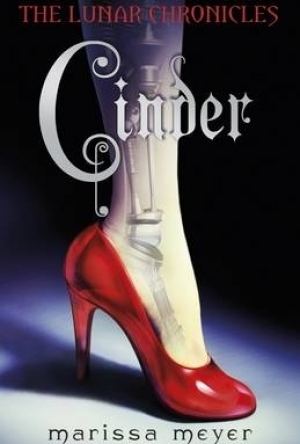
So let's start with the plot. Cinder is a retelling of Cinderella. Perhaps another reason for my lack of interest in the beginning as I've never really been a huge fan of that particular princess. What I do enjoy is a fresh twist on a well known story, so I should have known I would enjoy it if I gave it a chance. Like Cinderella, Cinder follows the story of a young girl who lives with her step-mother, and her two step-sisters, no love lost between them. In both, the girl leads a tough, though somewhat mundane life, right up until she meets her prince, and then things start to look up. Blah, blah, blah... We all know the story right? No. Marissa Meyer gives the traditional tale a new spin, and it was like reading the story for the first time. Because of this, I easily finished the story over one (busy) weekend. The story contained just the right mix of adventure, romance, and sci-fi to keep me hooked, even if -in places- the story seemed to drag a little. This was more than made up for with the explosive ending though. The story ends with enough unresolved conflict to keep you wanting more... And if you're anything like me, thankfully you don't have to wait months for the next one (It's called Scarlet BTW). Another great part of this story was the world building and backstory. At one point, the events of WW4 are mentioned, giving us a little insight as to how the world we know morphed into the one in the story. This also prevented the world from becoming too complicated when other races (The Lunars) are introduced, and helped blend the backstories of both races nicely. Lunars are the genetically mutated humans that live on the moon (Luna), and they have the ability to use a power known as "Glamour" to influence other's minds and make them see and believe what they want them to. This particular part impressed me as it was a clever way of introducing magic in an otherwise "normal" world. Because I'm a sucker for a bit of magic. The only real problem I had with this story was that the plot was somewhat predictable at times... For example, pretty much as soon as it was mentioned that there was once a princess who -if she was still alive- could usurp the Queen of the Lunars and restore peace to the two worlds... It was obvious that it was going to end up being Cinder. (This is confirmed at the end of the book).
Now, onto the characters! Meet our protagonist, Linh Cinder. Cinder is a sixteen-year-old living in New Beijing with her evil Step-mother and two step-sisters... But that's pretty much where the similarities with her and the traditional Cinderella end. Not only is our protagonist more than just a pretty face with a kind heart, she is a badass! Throughout the story she impressed me with her attitude, intelligence, and ability to call people out on their bullshit. Fair enough she came across a little whiny at times, but this can be overlooked when you remember she is pretty much still a child who has had a pretty rough life. Unable to remember her life before a crash that claimed the lives of her family, she was adopted by a man who soon died, leaving her at the mercy of his wife, who was not a fan of Cinder. Why, you ask? Well, Cinder is a cyborg, and that is unforgivable and clearly Cinder's fault... According to the step mother at least. Still, despite being shunned by most people who knew the truth about her, Cinder still manages to be a likable character. Yeah she has her flaws, but that's what I liked about her. She's realistic. She's embarrassed by the fact she is a cyborg, especially when she meets the handsome Prince Kai. It was frustrating at times to read scenes with these two, mainly because Cinder was reluctant to tell Kai about her being a cyborg, and it built a wall between them. I mean, I can see where she's coming from. It would be a nice change to just be a normal girl to someone after years of being told she was less. BUT DAMN GIRL! KAI IS A CINNAMON ROLL AND WOULD LOVE YOU EITHER WAY!!!
*Clears throat* Anyway, moving on... Now we can talk about Kai. Handsome, charming, clueless, Prince Kai. We meet Kai pretty early on in the story (first chapter in fact) and from the moment we meet him, we know he and Cinder are destined. Or at least I hope so... I haven't read the second book yet! The only child of the emperor, Kai will someday rule the Eastern Commonwealth. Unfortunately that day comes all too soon when his father contracts the plague and soon after dies, leaving the job to the young Prince. If I'm being completely honest, I was expecting him to crash and burn at some point, but I was pleasantly surprised when he managed to hack it, even going as far as to stand up to the Lunar Queen- A megabitch we will discuss later- despite the fact she could start a war that would cause chaos for the Earthlings. His character development was fun to read. He started as a charismatic prince with a rebellious streak, and by the end of the book he was an Emperor loyal to his people and smarter than he lets on. I was a little disappointed in his reaction to finding out Cinder was a cyborg (and a Lunar), but under the circumstances, he can be forgiven. I'm quite interested in how the rest of Emperor Kai's story is going to play out, especially as he seemed to have something planned at the end of the first book, but I have yet to see if my suspicions are correct about him.
Now time to talk about our main antagonist, Queen Levana AKA The Megabitch. As far as antagonists go, she isn't the most evil I've met, but she is one of the more interesting. Queen of the Lunars, she is a cold, flawless, evil lady, who hates technology, and is infamous for using her glamour to hide her true face. Her motives seem pretty simple. She wants to rule. As Queen of the Lunars, she can do this by marriage, or she can take it by force. She doesn't really seem to care which way she goes about it, but she does suggest a marriage alliance with Prince/Emperor Kai Puh-lease. He and Cinder are OTP. (Also, I have to praise Meyer for the lack of a love triangle here, even though it would have been easy enough to include one. Bless you, child!) For the majority of the story she seems to be cool and in control, which is worrying for those of us rooting for the heroes, but at the Ball Naturally Cinder manages to crack the flawless facade and give us a little insight to the Queen's weakness Score 1 for Cinder! I have a feeling though that the next time we see the Queen, she is going to up her game and really give our heroes some problems, but we shall see!
Overall, I really enjoyed Cinder and I'm glad that I gave it another go. I should really start listening when my friend suggests books to me. It was an entertaining, frustrating, and even heart-breaking story at times, but I loved it. Marissa Meyer has definitely earned another fan, and I cannot wait to get my hands on the rest of the series. I NEED TO KNOW WHAT HAPPENS TO MY SHIP. The book had a few issues of course, but not enough that I would hesitate to read the next book... Hopefully I'll get around to it soon! In the mean time, anyone debating reading Cinder, you should definitely do it! 100%. And if anyone -like me- is struggling to get into it... Stick at it! I swear it's worth it in the end!
So let's start with the plot. Cinder is a retelling of Cinderella. Perhaps another reason for my lack of interest in the beginning as I've never really been a huge fan of that particular princess. What I do enjoy is a fresh twist on a well known story, so I should have known I would enjoy it if I gave it a chance. Like Cinderella, Cinder follows the story of a young girl who lives with her step-mother, and her two step-sisters, no love lost between them. In both, the girl leads a tough, though somewhat mundane life, right up until she meets her prince, and then things start to look up. Blah, blah, blah... We all know the story right? No. Marissa Meyer gives the traditional tale a new spin, and it was like reading the story for the first time. Because of this, I easily finished the story over one (busy) weekend. The story contained just the right mix of adventure, romance, and sci-fi to keep me hooked, even if -in places- the story seemed to drag a little. This was more than made up for with the explosive ending though. The story ends with enough unresolved conflict to keep you wanting more... And if you're anything like me, thankfully you don't have to wait months for the next one (It's called Scarlet BTW). Another great part of this story was the world building and backstory. At one point, the events of WW4 are mentioned, giving us a little insight as to how the world we know morphed into the one in the story. This also prevented the world from becoming too complicated when other races (The Lunars) are introduced, and helped blend the backstories of both races nicely. Lunars are the genetically mutated humans that live on the moon (Luna), and they have the ability to use a power known as "Glamour" to influence other's minds and make them see and believe what they want them to. This particular part impressed me as it was a clever way of introducing magic in an otherwise "normal" world. Because I'm a sucker for a bit of magic. The only real problem I had with this story was that the plot was somewhat predictable at times... For example, pretty much as soon as it was mentioned that there was once a princess who -if she was still alive- could usurp the Queen of the Lunars and restore peace to the two worlds... It was obvious that it was going to end up being Cinder. (This is confirmed at the end of the book).
Now, onto the characters! Meet our protagonist, Linh Cinder. Cinder is a sixteen-year-old living in New Beijing with her evil Step-mother and two step-sisters... But that's pretty much where the similarities with her and the traditional Cinderella end. Not only is our protagonist more than just a pretty face with a kind heart, she is a badass! Throughout the story she impressed me with her attitude, intelligence, and ability to call people out on their bullshit. Fair enough she came across a little whiny at times, but this can be overlooked when you remember she is pretty much still a child who has had a pretty rough life. Unable to remember her life before a crash that claimed the lives of her family, she was adopted by a man who soon died, leaving her at the mercy of his wife, who was not a fan of Cinder. Why, you ask? Well, Cinder is a cyborg, and that is unforgivable and clearly Cinder's fault... According to the step mother at least. Still, despite being shunned by most people who knew the truth about her, Cinder still manages to be a likable character. Yeah she has her flaws, but that's what I liked about her. She's realistic. She's embarrassed by the fact she is a cyborg, especially when she meets the handsome Prince Kai. It was frustrating at times to read scenes with these two, mainly because Cinder was reluctant to tell Kai about her being a cyborg, and it built a wall between them. I mean, I can see where she's coming from. It would be a nice change to just be a normal girl to someone after years of being told she was less. BUT DAMN GIRL! KAI IS A CINNAMON ROLL AND WOULD LOVE YOU EITHER WAY!!!
*Clears throat* Anyway, moving on... Now we can talk about Kai. Handsome, charming, clueless, Prince Kai. We meet Kai pretty early on in the story (first chapter in fact) and from the moment we meet him, we know he and Cinder are destined. Or at least I hope so... I haven't read the second book yet! The only child of the emperor, Kai will someday rule the Eastern Commonwealth. Unfortunately that day comes all too soon when his father contracts the plague and soon after dies, leaving the job to the young Prince. If I'm being completely honest, I was expecting him to crash and burn at some point, but I was pleasantly surprised when he managed to hack it, even going as far as to stand up to the Lunar Queen- A megabitch we will discuss later- despite the fact she could start a war that would cause chaos for the Earthlings. His character development was fun to read. He started as a charismatic prince with a rebellious streak, and by the end of the book he was an Emperor loyal to his people and smarter than he lets on. I was a little disappointed in his reaction to finding out Cinder was a cyborg (and a Lunar), but under the circumstances, he can be forgiven. I'm quite interested in how the rest of Emperor Kai's story is going to play out, especially as he seemed to have something planned at the end of the first book, but I have yet to see if my suspicions are correct about him.
Now time to talk about our main antagonist, Queen Levana AKA The Megabitch. As far as antagonists go, she isn't the most evil I've met, but she is one of the more interesting. Queen of the Lunars, she is a cold, flawless, evil lady, who hates technology, and is infamous for using her glamour to hide her true face. Her motives seem pretty simple. She wants to rule. As Queen of the Lunars, she can do this by marriage, or she can take it by force. She doesn't really seem to care which way she goes about it, but she does suggest a marriage alliance with Prince/Emperor Kai Puh-lease. He and Cinder are OTP. (Also, I have to praise Meyer for the lack of a love triangle here, even though it would have been easy enough to include one. Bless you, child!) For the majority of the story she seems to be cool and in control, which is worrying for those of us rooting for the heroes, but at the Ball Naturally Cinder manages to crack the flawless facade and give us a little insight to the Queen's weakness Score 1 for Cinder! I have a feeling though that the next time we see the Queen, she is going to up her game and really give our heroes some problems, but we shall see!
Overall, I really enjoyed Cinder and I'm glad that I gave it another go. I should really start listening when my friend suggests books to me. It was an entertaining, frustrating, and even heart-breaking story at times, but I loved it. Marissa Meyer has definitely earned another fan, and I cannot wait to get my hands on the rest of the series. I NEED TO KNOW WHAT HAPPENS TO MY SHIP. The book had a few issues of course, but not enough that I would hesitate to read the next book... Hopefully I'll get around to it soon! In the mean time, anyone debating reading Cinder, you should definitely do it! 100%. And if anyone -like me- is struggling to get into it... Stick at it! I swear it's worth it in the end!
Bob Mann (459 KP) rated Mortal Engines (2018) in Movies
Sep 28, 2021
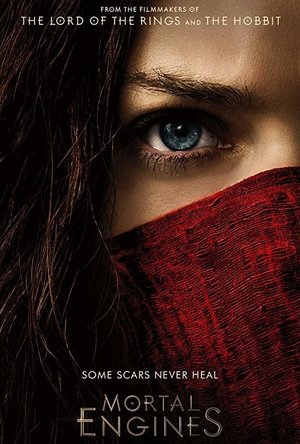

At last, the hilarious Brexit comedy we’ve all been waiting for.
As comedy goes it’s classic gold! London has been transferred, presumably via a futuristic big-arsed forklift truck of some kind, onto a huge chassis and is now chugging its way across mainland Europe. Needing fuel, it has the capability to gobble-up other roving towns and cities (take that Barnier!) which London ‘digests’ (smoke that Tusk!). Curiously, the captured cities’ inhabitants are not exterminated but integrated into the City’s population: so much for any anti-immigration policy! (LOL).
But all doesn’t go entirely smoothly for the UK capital. The Lord Mayor of London (Patrick Malahide) declares “We should never have gone into Europe. It’s the biggest mistake we ever made”. (Classic: how we SNORTED with laughter!)
Cities on wheels. London in hot pursuit of a Bavarian mining town. (Some things you just write, and then have to do a double take!). (Source: Universal Pictures International).
Stuffing it squarely to the ‘remainers’, London makes its own future. “It’s time to show the world how strong London can be”. Having conquered most of Europe, it’s time to set its sights on new markets to conquer: so London takes the Chinese on! (Now the tears of laughter are flowing freely!) Trade deals have never been more entertaining since “Star Wars: The Phantom Menace”!
Well, perhaps not
OK, so in the interests of ‘advertising standards’, I’d better make clear before you rush out to the cinema expecting a comedy feature that my tongue is firmly in my cheek here. For “Mortal Engines” is the latest sci-fi feature from Peter Jackson. But when viewed from a Brexit perspective, it’s friggin’ hilarious!
In terms of plot, this (like “Waterworld”) makes clever use of the Universal logo to set the agenda. The world has been decimated with a worldwide war – though clearly one that selectively destroyed bits of London and not others! – and the survivors must try to survive in any way they can. Settlements are divided between those that are ‘static’ and those (like London) that are mobile and constantly evolving: “Municipal Darwinism” as it is hysterically described. But London, or rather the power-crazed Londoner Thaddeus Valentine (Hugo Weaving), wants revolution rather than evolution and he is working on development of one of the super-weapons that started the world’s demise in the first place.
But Hester Shaw (Hera Hilmar), separated when young from her mother Pandora (yes, she has a box and we’ve seen it: wink, wink) is intent on stopping him, since she is on a personal path of vengence. Teaming up with Londoner Tom (Robert Sheehan) and activist Anna Fang (Jihae) they must face both Thaddeus and the ever-relentless Shrike (Stephen Lang) to try to derail the destructive plan.
“I’m not subtle”
So says Anna Fang, but then neither is this movie. The film is loud and action-filled and (as a significant plus) visually extremely impressive with it. I’m not a great fan of excessive CGI but here it is essential, and the special-effects team do a great job. The production design is tremendous – a lot of money has been thrown at this – and the costume design inventive, a high-spot (again snortworthy) being the Beefeater guards costumes!
Where the film really crashes, like a post-Brexit stock market, is with the dialogue. The screenplay by Jackson himself, with his regular writers Fran Walsh and Phillipa Boyens contains some absolute clunkers, notwithstanding the unintended LOL-worthy Brexit irony. It’s jaw-droppingly bad, believe me.
The turns
The only real “name” in the whole film is Jackson-favourite Hugo Weaving. Just about everyone else in the cast is pretty well unknown, and in many cases it shows. Standing head and shoulders though for me over the rest of the cast was Icelandic actress Hera Hilmar, who strikes a splendidly feisty pose as the mentally and physically scarred Hester. I look forward to seeing what she does next.
Plagerism: the movie
Story-wise, there’s not a sci-fi film that’s not been looted, and a number of other films seem to be plundered too. (I can’t comment on how much of this comes from the source book by Philip Reeve). The Londonmobile looks for all the world like Monty Python’s “Crimson Permanent Assurance Company”; the teenage female lead is Sarah Connors, relentlessly pursued by The Terminator; the male lead is archaologist cum hot-shot pilot Indiana Solo, leather jacket and all; there is a Blade Runner moment; a battle that is a meld of “The Great Wall” and Morannon from “The Lord of the Rings: The Two Towers”; a less sophisticated aerial location from “The Empire Strikes Back”; and another classic Star Wars moment (without the words being actually said!).
A case of the Jackson Pollocks
Now I’m loathe to say anything bad about director Peter Jackson, after his breathtakingly memorable “They Shall Not Grown Old“. And the film has its moments of flair, most memorably a “life flashing before your eyes scene” that I found genuinely moving. But overall, as an actioner, it’s a bit of a mess.
It’s a long way from being the worse film I’ve seen this year by a long stroke – it kept me interested and amused in equal measure for the running time. But I think given it’s initially bombed at the Box Office, any plans Jackson had to deliver a series of these movies might need to be self-funded.
But all doesn’t go entirely smoothly for the UK capital. The Lord Mayor of London (Patrick Malahide) declares “We should never have gone into Europe. It’s the biggest mistake we ever made”. (Classic: how we SNORTED with laughter!)
Cities on wheels. London in hot pursuit of a Bavarian mining town. (Some things you just write, and then have to do a double take!). (Source: Universal Pictures International).
Stuffing it squarely to the ‘remainers’, London makes its own future. “It’s time to show the world how strong London can be”. Having conquered most of Europe, it’s time to set its sights on new markets to conquer: so London takes the Chinese on! (Now the tears of laughter are flowing freely!) Trade deals have never been more entertaining since “Star Wars: The Phantom Menace”!
Well, perhaps not
OK, so in the interests of ‘advertising standards’, I’d better make clear before you rush out to the cinema expecting a comedy feature that my tongue is firmly in my cheek here. For “Mortal Engines” is the latest sci-fi feature from Peter Jackson. But when viewed from a Brexit perspective, it’s friggin’ hilarious!
In terms of plot, this (like “Waterworld”) makes clever use of the Universal logo to set the agenda. The world has been decimated with a worldwide war – though clearly one that selectively destroyed bits of London and not others! – and the survivors must try to survive in any way they can. Settlements are divided between those that are ‘static’ and those (like London) that are mobile and constantly evolving: “Municipal Darwinism” as it is hysterically described. But London, or rather the power-crazed Londoner Thaddeus Valentine (Hugo Weaving), wants revolution rather than evolution and he is working on development of one of the super-weapons that started the world’s demise in the first place.
But Hester Shaw (Hera Hilmar), separated when young from her mother Pandora (yes, she has a box and we’ve seen it: wink, wink) is intent on stopping him, since she is on a personal path of vengence. Teaming up with Londoner Tom (Robert Sheehan) and activist Anna Fang (Jihae) they must face both Thaddeus and the ever-relentless Shrike (Stephen Lang) to try to derail the destructive plan.
“I’m not subtle”
So says Anna Fang, but then neither is this movie. The film is loud and action-filled and (as a significant plus) visually extremely impressive with it. I’m not a great fan of excessive CGI but here it is essential, and the special-effects team do a great job. The production design is tremendous – a lot of money has been thrown at this – and the costume design inventive, a high-spot (again snortworthy) being the Beefeater guards costumes!
Where the film really crashes, like a post-Brexit stock market, is with the dialogue. The screenplay by Jackson himself, with his regular writers Fran Walsh and Phillipa Boyens contains some absolute clunkers, notwithstanding the unintended LOL-worthy Brexit irony. It’s jaw-droppingly bad, believe me.
The turns
The only real “name” in the whole film is Jackson-favourite Hugo Weaving. Just about everyone else in the cast is pretty well unknown, and in many cases it shows. Standing head and shoulders though for me over the rest of the cast was Icelandic actress Hera Hilmar, who strikes a splendidly feisty pose as the mentally and physically scarred Hester. I look forward to seeing what she does next.
Plagerism: the movie
Story-wise, there’s not a sci-fi film that’s not been looted, and a number of other films seem to be plundered too. (I can’t comment on how much of this comes from the source book by Philip Reeve). The Londonmobile looks for all the world like Monty Python’s “Crimson Permanent Assurance Company”; the teenage female lead is Sarah Connors, relentlessly pursued by The Terminator; the male lead is archaologist cum hot-shot pilot Indiana Solo, leather jacket and all; there is a Blade Runner moment; a battle that is a meld of “The Great Wall” and Morannon from “The Lord of the Rings: The Two Towers”; a less sophisticated aerial location from “The Empire Strikes Back”; and another classic Star Wars moment (without the words being actually said!).
A case of the Jackson Pollocks
Now I’m loathe to say anything bad about director Peter Jackson, after his breathtakingly memorable “They Shall Not Grown Old“. And the film has its moments of flair, most memorably a “life flashing before your eyes scene” that I found genuinely moving. But overall, as an actioner, it’s a bit of a mess.
It’s a long way from being the worse film I’ve seen this year by a long stroke – it kept me interested and amused in equal measure for the running time. But I think given it’s initially bombed at the Box Office, any plans Jackson had to deliver a series of these movies might need to be self-funded.