Search

Search only in certain items:

40x40

James Dean Bradfield recommended Fried by Julian Cope in Music (curated)
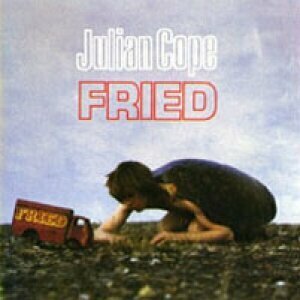
 
Fried by Julian Cope
1984 | Pop, Rock, Psychedelic
8.0 (2 Ratings)
Album Favorite

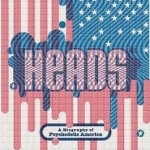
"It's really weird: I kind of had a bit of a problem with The Teardrop Explodes. I really didn't like them as a group, and it's very strange because our recording desk in Cardiff… I think Kilimanjaro was recorded on it. But as soon as Julian Cope left Teardrop Explodes I just completely turned onto him, and especially this record, because it's brilliant. There's some benchmark songs on here, which are hard for anybody to top. There's one called 'Bill Drummond Said' which is just fucking brilliant, and there's a song called 'Reynard The Fox', which is just… he does such a brilliant job of having a narrative of why he disagrees with something but pitching it in such a beautiful way. And there's 'The Bloody Assizes'; Julian Cope, now, has this afterlife of being this writer who seems to mix the high-rise block of ideas in his head with reality. It's really amazing. And he's become some sort of historian about myth and Krautrock, and I loved one of his quotes when he did an interview for this book: "I only look like this because I feel like such a cunt when I'm crying inside all the time." This record shows why he's such a brilliant solo artist. It's got a lovely, bucolic flintiness to it. There's something about it; you realise he's detached himself from his previous life and The Teardrop Explodes, and he's just out there in the woods doing something. And you cannot like a record which has a cover of the artist's… you know. Naked inside a big turtle shell on the cover. I remember it got really mixed reviews, but I think a lot of people do consider it a classic. I do; he's done other good stuff, but it's his best record."

Source
  
40x40

Tom Ford recommended Little Women (2019) in Movies (curated)

 
Little Women (2019)
Little Women (2019)
2019 | Drama

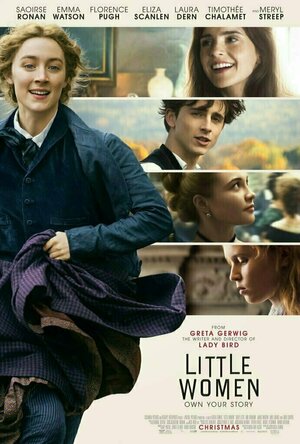
"When I first heard that “Little Women” was being made as a film yet again, I thought to myself; why? I honestly never understand remakes, especially when there are great versions that have already been made. And in the case of “Little Women,” some very dull ones as well. The simple fact that Louisa May Alcott never actually wanted to write “Little Women” and that she and her editor thought it was flat at the time that it was published in 1868, has been obvious in several of the film and television versions of this story. However, when I read that Greta Gerwig had written a new screenplay based on the novel and that Gerwig was going to direct, my interest was piqued. Perhaps I had been wrong about the merits of a remake of “Little Women.” Perhaps the fact that an incredibly talented and wholly contemporary female writer-director had decided to take this on meant that I had overlooked something. And indeed I had. There is nothing dull or flat about Greta Gerwig’s “Little Women.” It is at once a classic and yet completely contemporary. It is lush and fresh. The exceptional screenplay, the brilliant casting, the nuanced and original performances, the sets, the costumes, the rhythm and pace are all exactly right. The film speaks to the struggles of women in our culture to break free from the conventions that in many ways still attempt to ground them. It is a coming of age tale, but it is not a coming-of-age tale mired in the mid-19th century; it is a coming-of-age tale for all time. After “Lady Bird” I was of course impressed with Ms. Gerwig’s directing, but with “Little Women” I’ve become jealous. Very jealous. Which for me is always the greatest compliment. Brava. "

Source
  
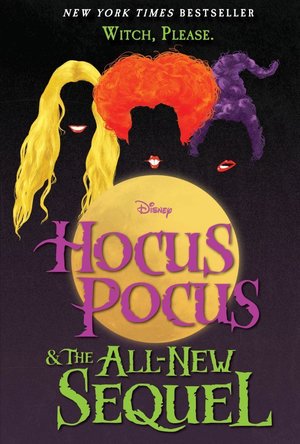
Hocus Pocus and the All-New Sequel
A.W. Jantha | 2018 | Science Fiction/Fantasy, Young Adult (YA)
8
6.8 (6 Ratings)
Book Rating
It's a very sad thing when the book you were so excited about lets you down. Such is the case with Hocus Pocus & The All-New Sequel. The book, written by A. W. Jantha is split into two parts.

Then.

Now.

Then is a novelization of the movie which I very much enjoyed. 90 percent of the dialogue is taken directly from the movie while there's just enough added detail to give the characters some new depth and set up for the second half of the book.

Now: the second half of the book, the sequel was...

well, It was disappointing.

How?

First, there's the bizarre jump from third person to first and later second POV.

It just throws you into Poppy's world with minimal backstory on who she is and why we should like her or her friends, Travis and Isabella.

Secondly, the characters are STUPID!

Stupid choices left, right, and, center.

As a writer, I understand there needs to be some way to kickstart the conflict but going to the Sanderson house has danger written all over it.

Oh, let's talk about the Sandersons,

The witches are back in all their evil glory with added sister Elizabeth who turned her back on the family legacy of darkness.

Then there's their mother. Their mother who they could not shut up about. Mother this and Mother that.

All the hype got me excited about Sanderson's sister's flashbacks. Backstory. Entire chapters dedicated to them.

it didn't happen.

I was treated to brief remembrances but no backstory.

Then the Mother who was so hyped up made a one chapter appearance before going kersplat.

WHAT WAS THE POINT??

You don't hype a character that much for them to do NOTHING.

The book gets by on nostalgia alone.

Don't even get me started on the bizarre and unneeded cliffhanger.

Very sad.
  
40x40

James Wood recommended Falling Awake in Books (curated)

 
Falling Awake
Falling Awake
Alice Oswald | 2016 | Fiction & Poetry
(0 Ratings)
Book Favorite

" Oswald is probably best known for her last book, “Memorial,” an extraordinarily free reinterpretation of the Iliad. (At public readings of “Memorial,” she recites it from memory, in homage to the orality of the original. I was lucky enough to witness this in London. The effect is rhapsodic, spellbinding.) Oswald does indeed have a classical power: she’s at once a grand elegist and a close celebrant of life, a rhetorician and a playful contemporary—a writer who can describe Hector dying in battle but can also depict how he “used to nip home deafened by weapons / To stand in full armour by the doorway / Like a man rushing in leaving his motorbike running.” At the heart of her new book is a long poem titled “Tithonus,” after one of Eos’s lovers from Greek mythology. It is a minutely detailed, ravishing, and rapturously observant account of the English countryside waking up at dawn—what Oswald calls “46 Minutes in the Life of the Dawn.” Slowly, the light builds and the stars disappear and the woods awaken to the birds: “as soon as dawn one star then / suddenly none then blue then pale / and the whole apparition only / ever known backwards already too / late now almost gone.” I’m sometimes reminded of Gerard Manley Hopkins and Edward Thomas, but the tutelary spirit seems to be Virginia Woolf’s “The Waves,” and that novel’s patient italicized passages (written from the point of view of the author) about sunlight building and spreading across the English landscape. (“The day waves yellow with all its crops” is one of my very favorite sentences from Woolf’s novel, and one that Oswald might easily have written herself.) This poet is, for me, a perpetual inspiration."

Source