Search
Search results
Acanthea Grimscythe (300 KP) rated Glow in Books
May 16, 2018
I have a love hate relationship with Glow, an upcoming young adult novel from Megan E. Bryant. Earlier this year, I read The Radium Girls by Kate Moore - an absolutely horrifying account of injustices committed against young women under the guise of patriotism. Before Moore, I cannot recall ever hearing about the dial painters. This book provides a fictional account based heavily on true stories about the girls that met their untimely demise.
The main character of Glow is a young woman of eighteen by the name of Jubilee - but don't you dare call her that! She prefers Julie. After making the ultimate sacrifice for her mother, she spends the summer unraveling the mysteries behind paintings she finds at thrift stores while her best friend prepares for college.
Between each chapter, readers find an epistolary account from the mind of Lydia Grayson. Like her sisters, Lydia is one of the many girls that worked for the American Radium Company (I think I got that right). The Grayson sisters, for those that haven't read The Radium Girls in order to make the comparison, appears to be based loosely on the Maggia sisters, while the company is, obviously, a fictionalized version of the United States Radium Corporation. (Amelia "Mollie" Maggia was the first of the Radium Girls to die.)
Unlike most books that attempt this method, I do not find the switch between perspectives and styles to be detrimental or clunky - if anything, it is inconvenient. Rather than wrap up preceding chapters, Bryant uses these switches to leave Julie's story on a cliffhanger more than once throughout the book. This style can easily be avoided, considering the letters written from Lydia to her boyfriend are interesting enough on their own to propel the reader forward.
While Julie's story offers an plot that appeals to younger readers, I feel Glow would have worked just fine without it. For that purpose, I'm caught between a three and a four on this book. Ultimately, I lean toward the latter and must applaud Bryant on the amount of research she obviously put into writing this book. Julie's story is unbelievable and full of things that I simply have no interest in, but the haunting tale that the Grayson sisters weave is horrifying.
I would like to thank NetGalley and the publisher for providing me with a copy of this book for the purpose of unbiased review.
The main character of Glow is a young woman of eighteen by the name of Jubilee - but don't you dare call her that! She prefers Julie. After making the ultimate sacrifice for her mother, she spends the summer unraveling the mysteries behind paintings she finds at thrift stores while her best friend prepares for college.
Between each chapter, readers find an epistolary account from the mind of Lydia Grayson. Like her sisters, Lydia is one of the many girls that worked for the American Radium Company (I think I got that right). The Grayson sisters, for those that haven't read The Radium Girls in order to make the comparison, appears to be based loosely on the Maggia sisters, while the company is, obviously, a fictionalized version of the United States Radium Corporation. (Amelia "Mollie" Maggia was the first of the Radium Girls to die.)
Unlike most books that attempt this method, I do not find the switch between perspectives and styles to be detrimental or clunky - if anything, it is inconvenient. Rather than wrap up preceding chapters, Bryant uses these switches to leave Julie's story on a cliffhanger more than once throughout the book. This style can easily be avoided, considering the letters written from Lydia to her boyfriend are interesting enough on their own to propel the reader forward.
While Julie's story offers an plot that appeals to younger readers, I feel Glow would have worked just fine without it. For that purpose, I'm caught between a three and a four on this book. Ultimately, I lean toward the latter and must applaud Bryant on the amount of research she obviously put into writing this book. Julie's story is unbelievable and full of things that I simply have no interest in, but the haunting tale that the Grayson sisters weave is horrifying.
I would like to thank NetGalley and the publisher for providing me with a copy of this book for the purpose of unbiased review.
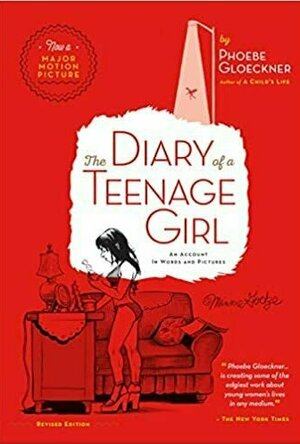
The Diary of a Teenage Girl: An Account In Words and Pictures
Book
First released in 2002, this provocative, critically acclaimed novel is now a major motion picture...
Hazel (1853 KP) rated You Know Me Well in Books
May 25, 2017
LGBT
This ARC was provided by the publisher via NetGalley in exchange for an honest review
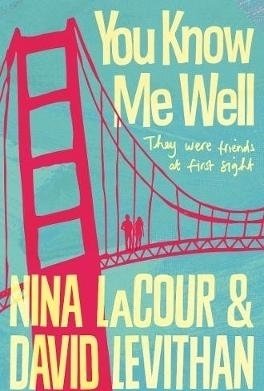
David Levithan is a well-known young adult author particularly in the LGBT communities. Throughout his career he has teamed up with other authors to write contemporary fiction that explores romantic relationships and feelings between teenagers. You Know Me Well is the result of a collaboration between Levithan and Nina LaCour, another American YA author.
Alternating between two points of view, You Know Me Well is about two homosexual teenagers, Mark and Katie, who are both going through difficult times in terms of their love life. Mark is in love with his best friend, but clearly the feelings are not reciprocated. On the other hand, Katie has run away from the chance to meet the girl of her dreams. A case of being in the right place at the right time results in a great friendship blooming between the two characters. Whilst relationships are breaking down all around them as a result of their actions, Mark and Katie discover that they understand each other more than anyone else has done in the past. With each other’s help, they begin to repair or come to terms with their current situations.
Although set near San Francisco during Pride Week – a positive festival to promote the stance against discrimination toward homosexuality – Levithan and LaCour write so freely about the topic that it appears a “normal” way of life, which is ultimately what people are campaigning for. Neither of the main characters experience any judgment on account of their sexuality.
Whilst You Know Me Well is a deeply honest novel about coming to terms with the truth and the heartaches of love, it does not particularly work well as a story. The ending feels ambiguous leaving both Mark and Katie in very similar situations to the beginning of the book, although marginally happier. In a way this enforces the point that there are not always “happy ever after” endings, but in terms of literature it does not make much of a story.
You Know Me Well comes with all sorts of messages about love, coming up with plans for the future, running away from your problems etc. but it is arguably a disappointment for readers who want a fictional tale to delve into and take them away from their everyday life. The subject matter, whilst listed as young adult, is more appropriate for school leavers or college students due to the unrealistic lack of parental intervention. On the other hand, if you are already a fan of David Levithan and know what to expect in his novels, You Know Me Well should live up to your anticipations.
David Levithan is a well-known young adult author particularly in the LGBT communities. Throughout his career he has teamed up with other authors to write contemporary fiction that explores romantic relationships and feelings between teenagers. You Know Me Well is the result of a collaboration between Levithan and Nina LaCour, another American YA author.
Alternating between two points of view, You Know Me Well is about two homosexual teenagers, Mark and Katie, who are both going through difficult times in terms of their love life. Mark is in love with his best friend, but clearly the feelings are not reciprocated. On the other hand, Katie has run away from the chance to meet the girl of her dreams. A case of being in the right place at the right time results in a great friendship blooming between the two characters. Whilst relationships are breaking down all around them as a result of their actions, Mark and Katie discover that they understand each other more than anyone else has done in the past. With each other’s help, they begin to repair or come to terms with their current situations.
Although set near San Francisco during Pride Week – a positive festival to promote the stance against discrimination toward homosexuality – Levithan and LaCour write so freely about the topic that it appears a “normal” way of life, which is ultimately what people are campaigning for. Neither of the main characters experience any judgment on account of their sexuality.
Whilst You Know Me Well is a deeply honest novel about coming to terms with the truth and the heartaches of love, it does not particularly work well as a story. The ending feels ambiguous leaving both Mark and Katie in very similar situations to the beginning of the book, although marginally happier. In a way this enforces the point that there are not always “happy ever after” endings, but in terms of literature it does not make much of a story.
You Know Me Well comes with all sorts of messages about love, coming up with plans for the future, running away from your problems etc. but it is arguably a disappointment for readers who want a fictional tale to delve into and take them away from their everyday life. The subject matter, whilst listed as young adult, is more appropriate for school leavers or college students due to the unrealistic lack of parental intervention. On the other hand, if you are already a fan of David Levithan and know what to expect in his novels, You Know Me Well should live up to your anticipations.
Author's new direction
This ARC was provided by the publisher via NetGalley in exchange for an honest review
Cecelia Ahern is the well-known Irish author of contemporary women’s fiction, particularly P.S. I Love You. However, Ahern has decided to branch out and has penned her first dystopian, young adult novel, Flawed. It is dubious when an author, who is loved for her work, changes their style, but it appears she has pulled it off.
Seventeen-year-old Celestine is a logical girl who is soon to learn she lives in an illogical world. In an attempt to create a perfect society, citizens must avoid making moral or ethical mistakes; otherwise they will be branded as Flawed. And branded means literal branding with a hot iron, there is no hiding the fact that they have flaws. Celestine, like everyone else, has been brainwashed into believing that Flawed people should be avoided and do not deserve the same privileges as the “perfect” people. However, after seeing an elderly Flawed man choking on a bus, her logical brain kicks in and goes to help him. Big mistake.
After finding herself accused of being Flawed, Celestine reaslises how corrupt society is, yet there is nothing she can do about it without enduring further punishment. Despite her bleak outlook on her future, her hopes begin to rise when she discovers that there are people on her side – people that want rid of the government that disciplines people when they should not be punished in the first place.
As a reader of Ahern’s previous works and a fan of dystopian fiction, I honestly did not expect Flawed to be any good. Ahern has proved she has the talent to write women’s fiction, but this book was a complete contrast. The first few chapters of the novel were admittedly a bit shaky. It did not look promising. Yet eventually Ahern found her flow and produced a pretty good young adult novel.
When I saw the title, Flawed, I immediately assumed it would be a book about physical appearance and was hesitant about reading it. Therefore I was pleasantly surprised when this was not the case at all. The concept is fresh and original and does not become apocalyptical like many other dystopian fictions.
How the majority will receive this book is difficult to say. Fans of Cecelia Ahern may be disappointed by her change in genre. Fans of dystopia may be put off by the author’s previous novels. I urge readers to approach this story with an open mind; you may be pleasantly surprised. Flawed will not look out of place amongst other books of similar themes, and for those who do enjoy it, there will be a sequel, Perfect, next year.
Cecelia Ahern is the well-known Irish author of contemporary women’s fiction, particularly P.S. I Love You. However, Ahern has decided to branch out and has penned her first dystopian, young adult novel, Flawed. It is dubious when an author, who is loved for her work, changes their style, but it appears she has pulled it off.
Seventeen-year-old Celestine is a logical girl who is soon to learn she lives in an illogical world. In an attempt to create a perfect society, citizens must avoid making moral or ethical mistakes; otherwise they will be branded as Flawed. And branded means literal branding with a hot iron, there is no hiding the fact that they have flaws. Celestine, like everyone else, has been brainwashed into believing that Flawed people should be avoided and do not deserve the same privileges as the “perfect” people. However, after seeing an elderly Flawed man choking on a bus, her logical brain kicks in and goes to help him. Big mistake.
After finding herself accused of being Flawed, Celestine reaslises how corrupt society is, yet there is nothing she can do about it without enduring further punishment. Despite her bleak outlook on her future, her hopes begin to rise when she discovers that there are people on her side – people that want rid of the government that disciplines people when they should not be punished in the first place.
As a reader of Ahern’s previous works and a fan of dystopian fiction, I honestly did not expect Flawed to be any good. Ahern has proved she has the talent to write women’s fiction, but this book was a complete contrast. The first few chapters of the novel were admittedly a bit shaky. It did not look promising. Yet eventually Ahern found her flow and produced a pretty good young adult novel.
When I saw the title, Flawed, I immediately assumed it would be a book about physical appearance and was hesitant about reading it. Therefore I was pleasantly surprised when this was not the case at all. The concept is fresh and original and does not become apocalyptical like many other dystopian fictions.
How the majority will receive this book is difficult to say. Fans of Cecelia Ahern may be disappointed by her change in genre. Fans of dystopia may be put off by the author’s previous novels. I urge readers to approach this story with an open mind; you may be pleasantly surprised. Flawed will not look out of place amongst other books of similar themes, and for those who do enjoy it, there will be a sequel, Perfect, next year.
FilmIntuition (33 KP) rated Picture Us In The Light in Books
May 23, 2018
A Book of the Heart
While many novelists refer to their latest works as “the book of my heart,” in the case of young adult author Kelly Loy Gilbert’s finely crafted, humanistic new effort Picture Us In the Light, that description is entirely justified.
Sensitively penned within the immediately convincing first person point-of-view of our main character, high school senior and aspiring artist Danny Cheng, the author pulls us into Picture’s picturesque world within the very first chapter.
After stumbling upon a mysterious box of his father's and going through it with gusto, Danny begins to wonder just how much his loving but secretive parents have been keeping from him.
Unable to come of age until he can come to terms with unexplained gaps and tragedies in his past, he enlists the help of his two best friends - only to discover that he can’t examine the lives of those closest to him without doing the same himself.
Balancing wry observations and deft characterizations with heavy subject matter, Loy Gilbert foreshadows big twists to come as we move further into the novel. And although it begins with a steady climb, Picture slows down just long enough to ensure that we feel as connected to the characters as they are to each other.
Now sure she’s got you, the author returns to full speed - moving like a bullet train from roughly the hundred page mark all the way through to its bittersweet but very satisfying final chapter.
Written during the tumultuous 2016 election and revised afterward, Loy Gilbert is right on YouTube when she acknowledges the vital role that stories play in this post election world where “facts don't matter,” due to fiction’s empathetic ability to introduce us to people, places, and plights we might not encounter otherwise.
Filled with so much internal and external dramatic mystery that in less gifted hands, Picture could’ve easily resulted in a messy collision of conflicts, although there are a few revelations about both the plot and our protagonist that we’re able to deduce long before he does, the author wraps things up artfully.
Dropping hints and red herrings into sentences and passages so gorgeous that I found myself making multiple notes throughout, Kelly Loy Gilbert never once lets us feel as though she’s taking a shortcut on her way to the book’s resolution.
Relatively new to twenty-first century post-Harry Potter young adult fiction, if I had not received this stunning Picture through the Bookish First raffle, I would’ve completely missed what’s since become one of the best novels I’ve read so far this year.
To put it another way, it’s a book of the heart indeed.
Sensitively penned within the immediately convincing first person point-of-view of our main character, high school senior and aspiring artist Danny Cheng, the author pulls us into Picture’s picturesque world within the very first chapter.
After stumbling upon a mysterious box of his father's and going through it with gusto, Danny begins to wonder just how much his loving but secretive parents have been keeping from him.
Unable to come of age until he can come to terms with unexplained gaps and tragedies in his past, he enlists the help of his two best friends - only to discover that he can’t examine the lives of those closest to him without doing the same himself.
Balancing wry observations and deft characterizations with heavy subject matter, Loy Gilbert foreshadows big twists to come as we move further into the novel. And although it begins with a steady climb, Picture slows down just long enough to ensure that we feel as connected to the characters as they are to each other.
Now sure she’s got you, the author returns to full speed - moving like a bullet train from roughly the hundred page mark all the way through to its bittersweet but very satisfying final chapter.
Written during the tumultuous 2016 election and revised afterward, Loy Gilbert is right on YouTube when she acknowledges the vital role that stories play in this post election world where “facts don't matter,” due to fiction’s empathetic ability to introduce us to people, places, and plights we might not encounter otherwise.
Filled with so much internal and external dramatic mystery that in less gifted hands, Picture could’ve easily resulted in a messy collision of conflicts, although there are a few revelations about both the plot and our protagonist that we’re able to deduce long before he does, the author wraps things up artfully.
Dropping hints and red herrings into sentences and passages so gorgeous that I found myself making multiple notes throughout, Kelly Loy Gilbert never once lets us feel as though she’s taking a shortcut on her way to the book’s resolution.
Relatively new to twenty-first century post-Harry Potter young adult fiction, if I had not received this stunning Picture through the Bookish First raffle, I would’ve completely missed what’s since become one of the best novels I’ve read so far this year.
To put it another way, it’s a book of the heart indeed.
Hazel (1853 KP) rated You Know Me Well in Books
Dec 7, 2018
<i>This ARC was provided by the publisher via NetGalley in exchange for an honest review </i>
David Levithan is a well-known young adult author particularly in the LGBT communities. Throughout his career he has teamed up with other authors to write contemporary fiction that explores romantic relationships and feelings between teenagers. <i>You Know Me Well</i> is the result of a collaboration between Levithan and Nina LaCour, another American YA author.
Alternating between two points of view, <i>You Know Me Well</i> is about two homosexual teenagers, Mark and Katie, who are both going through difficult times in terms of their love life. Mark is in love with his best friend, but clearly the feelings are not reciprocated. On the other hand, Katie has run away from the chance to meet the girl of her dreams. A case of being in the right place at the right time results in a great friendship blooming between the two characters. Whilst relationships are breaking down all around them as a result of their actions, Mark and Katie discover that they understand each other more than anyone else has done in the past. With each other’s help, they begin to repair or come to terms with their current situations.
Although set near San Francisco during Pride Week – a positive festival to promote the stance against discrimination toward homosexuality – Levithan and LaCour write so freely about the topic that it appears a “normal” way of life, which is ultimately what people are campaigning for. Neither of the main characters experience any judgment on account of their sexuality.
Whilst <i>You Know Me Well </i>is a deeply honest novel about coming to terms with the truth and the heartaches of love, it does not particularly work well as a story. The ending feels ambiguous leaving both Mark and Katie in very similar situations to the beginning of the book, although marginally happier. In a way this enforces the point that there are not always “happy ever after” endings, but in terms of literature it does not make much of a story.
<i>You Know Me Well </i>comes with all sorts of messages about love, coming up with plans for the future, running away from your problems etc. but it is arguably a disappointment for readers who want a fictional tale to delve into and take them away from their everyday life. The subject matter, whilst listed as young adult, is more appropriate for school leavers or college students due to the unrealistic lack of parental intervention. On the other hand, if you are already a fan of David Levithan and know what to expect in his novels, You Know Me Well should live up to your anticipations.
David Levithan is a well-known young adult author particularly in the LGBT communities. Throughout his career he has teamed up with other authors to write contemporary fiction that explores romantic relationships and feelings between teenagers. <i>You Know Me Well</i> is the result of a collaboration between Levithan and Nina LaCour, another American YA author.
Alternating between two points of view, <i>You Know Me Well</i> is about two homosexual teenagers, Mark and Katie, who are both going through difficult times in terms of their love life. Mark is in love with his best friend, but clearly the feelings are not reciprocated. On the other hand, Katie has run away from the chance to meet the girl of her dreams. A case of being in the right place at the right time results in a great friendship blooming between the two characters. Whilst relationships are breaking down all around them as a result of their actions, Mark and Katie discover that they understand each other more than anyone else has done in the past. With each other’s help, they begin to repair or come to terms with their current situations.
Although set near San Francisco during Pride Week – a positive festival to promote the stance against discrimination toward homosexuality – Levithan and LaCour write so freely about the topic that it appears a “normal” way of life, which is ultimately what people are campaigning for. Neither of the main characters experience any judgment on account of their sexuality.
Whilst <i>You Know Me Well </i>is a deeply honest novel about coming to terms with the truth and the heartaches of love, it does not particularly work well as a story. The ending feels ambiguous leaving both Mark and Katie in very similar situations to the beginning of the book, although marginally happier. In a way this enforces the point that there are not always “happy ever after” endings, but in terms of literature it does not make much of a story.
<i>You Know Me Well </i>comes with all sorts of messages about love, coming up with plans for the future, running away from your problems etc. but it is arguably a disappointment for readers who want a fictional tale to delve into and take them away from their everyday life. The subject matter, whilst listed as young adult, is more appropriate for school leavers or college students due to the unrealistic lack of parental intervention. On the other hand, if you are already a fan of David Levithan and know what to expect in his novels, You Know Me Well should live up to your anticipations.
<i>This ARC was provided by the publisher via NetGalley in exchange for an honest review </i>
Cecelia Ahern is the well-known Irish author of contemporary women’s fiction, particularly <i>P.S. I Love You.</i> However, Ahern has decided to branch out and has penned her first dystopian, young adult novel, <i>Flawed</i>. It is dubious when an author, who is loved for her work, changes their style, but it appears she has pulled it off.
Seventeen-year-old Celestine is a logical girl who is soon to learn she lives in an illogical world. In an attempt to create a perfect society, citizens must avoid making moral or ethical mistakes; otherwise they will be branded as Flawed. And branded means literal branding with a hot iron, there is no hiding the fact that they have flaws. Celestine, like everyone else, has been brainwashed into believing that Flawed people should be avoided and do not deserve the same privileges as the “perfect” people. However, after seeing an elderly Flawed man choking on a bus, her logical brain kicks in and goes to help him. Big mistake.
After finding herself accused of being Flawed, Celestine reaslises how corrupt society is, yet there is nothing she can do about it without enduring further punishment. Despite her bleak outlook on her future, her hopes begin to rise when she discovers that there are people on her side – people that want rid of the government that disciplines people when they should not be punished in the first place.
As a reader of Ahern’s previous works and a fan of dystopian fiction, I honestly did not expect <i>Flawed</i> to be any good. Ahern has proved she has the talent to write women’s fiction, but this book was a complete contrast. The first few chapters of the novel were admittedly a bit shaky. It did not look promising. Yet eventually Ahern found her flow and produced a pretty good young adult novel.
When I saw the title, <i>Flawed</i>, I immediately assumed it would be a book about physical appearance and was hesitant about reading it. Therefore I was pleasantly surprised when this was not the case at all. The concept is fresh and original and does not become apocalyptical like many other dystopian fictions.
How the majority will receive this book is difficult to say. Fans of Cecelia Ahern may be disappointed by her change in genre. Fans of dystopia may be put off by the author’s previous novels. I urge readers to approach this story with an open mind; you may be pleasantly surprised. <i>Flawed</i> will not look out of place amongst other books of similar themes, and for those who do enjoy it, there will be a sequel, <i>Perfect</i>, next year.
Cecelia Ahern is the well-known Irish author of contemporary women’s fiction, particularly <i>P.S. I Love You.</i> However, Ahern has decided to branch out and has penned her first dystopian, young adult novel, <i>Flawed</i>. It is dubious when an author, who is loved for her work, changes their style, but it appears she has pulled it off.
Seventeen-year-old Celestine is a logical girl who is soon to learn she lives in an illogical world. In an attempt to create a perfect society, citizens must avoid making moral or ethical mistakes; otherwise they will be branded as Flawed. And branded means literal branding with a hot iron, there is no hiding the fact that they have flaws. Celestine, like everyone else, has been brainwashed into believing that Flawed people should be avoided and do not deserve the same privileges as the “perfect” people. However, after seeing an elderly Flawed man choking on a bus, her logical brain kicks in and goes to help him. Big mistake.
After finding herself accused of being Flawed, Celestine reaslises how corrupt society is, yet there is nothing she can do about it without enduring further punishment. Despite her bleak outlook on her future, her hopes begin to rise when she discovers that there are people on her side – people that want rid of the government that disciplines people when they should not be punished in the first place.
As a reader of Ahern’s previous works and a fan of dystopian fiction, I honestly did not expect <i>Flawed</i> to be any good. Ahern has proved she has the talent to write women’s fiction, but this book was a complete contrast. The first few chapters of the novel were admittedly a bit shaky. It did not look promising. Yet eventually Ahern found her flow and produced a pretty good young adult novel.
When I saw the title, <i>Flawed</i>, I immediately assumed it would be a book about physical appearance and was hesitant about reading it. Therefore I was pleasantly surprised when this was not the case at all. The concept is fresh and original and does not become apocalyptical like many other dystopian fictions.
How the majority will receive this book is difficult to say. Fans of Cecelia Ahern may be disappointed by her change in genre. Fans of dystopia may be put off by the author’s previous novels. I urge readers to approach this story with an open mind; you may be pleasantly surprised. <i>Flawed</i> will not look out of place amongst other books of similar themes, and for those who do enjoy it, there will be a sequel, <i>Perfect</i>, next year.
Hazel (1853 KP) rated Unremembered (Unremembered, #1) in Books
Dec 17, 2018
<i>Unremembered</i> is the first in a young adult, science-fiction trilogy by American author, Jessica Brody. Set in current day California, <i>Unremembered</i> is told from the point of view of a sixteen-year-old girl, Seraphina, who has no memories of anything prior to the first page of the book.
Whilst it may be imagined that a first person narrative of someone who does not know anything may hinder the telling of the story, it actually connects the audience with the main character. As readers we also have no knowledge of what happened before the first page of the story. We learn everything as Seraphina does, the only difference being that we are aware of what certain items are – particularly technological ones – as well as being able to communicate and understand other people, not just through words but also with sarcasm and body language.
What we learn at the start is that there has been a plane crash into the Pacific Ocean with only one survivor, an unidentifiable girl with serious amnesia. Further on it transpires that there was never any record of her being on the plane in the first place. This is where all the question and mysteries begin. Temporarily given the name Violet, she is placed with a foster family, the Carson family, whose thirteen-year-old son Cody is intimidated by her flawless beauty. He begins to connect with her more after it emerges that she is a mathematical genius. So yet another question arises, how comes she can remembered how to solve complicated equations yet cannot even remember who she is?
There are also mysteries surrounding a peculiar tattoo on her wrist; a boy named Lyzender who keeps appearing, claiming to know who Violet, or should we say Sera, is; her uncanny ability to speak fluently in a range of languages; and the number 1609. What is the significance of this number? Not only is it the year Sera believes it is after recovering from the crash, it is also engraved onto a locket she was wearing along with the initials “S + Z”.
<i>Unremembered</i> is a fast paced novel whose mysteries get solved at the same time as more questions develop. It shows us how people with no experience of the modern world would struggle to understand the things we take for granted. It also poses the question of what it truly makes a human human.
I definitely recommend this novel and believe that it is something young adult girls would certainly enjoy. I am looking forward to reading the next book in the trilogy to find out what happens to Seraphina next.
Whilst it may be imagined that a first person narrative of someone who does not know anything may hinder the telling of the story, it actually connects the audience with the main character. As readers we also have no knowledge of what happened before the first page of the story. We learn everything as Seraphina does, the only difference being that we are aware of what certain items are – particularly technological ones – as well as being able to communicate and understand other people, not just through words but also with sarcasm and body language.
What we learn at the start is that there has been a plane crash into the Pacific Ocean with only one survivor, an unidentifiable girl with serious amnesia. Further on it transpires that there was never any record of her being on the plane in the first place. This is where all the question and mysteries begin. Temporarily given the name Violet, she is placed with a foster family, the Carson family, whose thirteen-year-old son Cody is intimidated by her flawless beauty. He begins to connect with her more after it emerges that she is a mathematical genius. So yet another question arises, how comes she can remembered how to solve complicated equations yet cannot even remember who she is?
There are also mysteries surrounding a peculiar tattoo on her wrist; a boy named Lyzender who keeps appearing, claiming to know who Violet, or should we say Sera, is; her uncanny ability to speak fluently in a range of languages; and the number 1609. What is the significance of this number? Not only is it the year Sera believes it is after recovering from the crash, it is also engraved onto a locket she was wearing along with the initials “S + Z”.
<i>Unremembered</i> is a fast paced novel whose mysteries get solved at the same time as more questions develop. It shows us how people with no experience of the modern world would struggle to understand the things we take for granted. It also poses the question of what it truly makes a human human.
I definitely recommend this novel and believe that it is something young adult girls would certainly enjoy. I am looking forward to reading the next book in the trilogy to find out what happens to Seraphina next.
<a href="http://fuzzysparrow.tumblr.com/post/96277346177">This was my Book of the Month for August 2014.</a>
<i>This eBook was provided by the publisher via NetGalley in exchange for an honest review</i>
The recently televised novel <i>The 100</i> by Kass Morgan is the first in a unique dystopian series set centuries into the future. Cataclysmic nuclear and biological wars rendered Earth uninhabitable forcing humans to create a new life in space on a very large ship. Three hundred years later scientists judge that the harmful radiation that destroyed Earth may have reduced or even completely disappeared meaning that the planet would finally be safe for humans. To test this theory the Colony sends one hundred adolescent lawbreakers with the mission to begin to recolonize Earth.
The novel is told from the point of view of four characters: Clarke, Wells, Bellamy and Glass. The first three are on the drop ship to Earth, however Glass escapes at the very last second and remains behind. Although there may be a hundred people on this mission, none of them have any idea what to expect or how to live on a planet. It does not help matters when the drop ship crash lands leaving them, particularly Clarke, the only one with medical knowledge, with an even more difficult situation than they were anticipating. Meanwhile, back on ship Glass is discovering that human life may be in as much danger there as they would be on Earth.
Each character also has flashbacks to their life on the ship, which gradually reveals the events that led up to them being convicted as criminals and thus sent to their new lives, or even possible deaths. Due to this there was less action set on Earth than there could have been – there was not enough time for a <i>Lord of the Flies</i> situation to arise. However it was fascinating to imagine their reaction to the first time they saw the sun set or felt the rain; being mesmerized by bird song and enjoying their first ever piece of meat.
As with most young adult novels there is the inevitable romance theme consisting of conflicting feelings and love triangles. The overall situation the main characters found themselves in was, in part, due to actions they committed in the name of love. Sometimes this theme could get a little annoying and hinder the dystopian side of the story, however it would not have been able to function without these elements.
Kass Morgan concludes <i>The 100</i> at the peak of the climax leaving us desperately wanting to find out what happens next. This is a highly recommended book for young adult readers with a love for science fiction.
<i>This eBook was provided by the publisher via NetGalley in exchange for an honest review</i>
The recently televised novel <i>The 100</i> by Kass Morgan is the first in a unique dystopian series set centuries into the future. Cataclysmic nuclear and biological wars rendered Earth uninhabitable forcing humans to create a new life in space on a very large ship. Three hundred years later scientists judge that the harmful radiation that destroyed Earth may have reduced or even completely disappeared meaning that the planet would finally be safe for humans. To test this theory the Colony sends one hundred adolescent lawbreakers with the mission to begin to recolonize Earth.
The novel is told from the point of view of four characters: Clarke, Wells, Bellamy and Glass. The first three are on the drop ship to Earth, however Glass escapes at the very last second and remains behind. Although there may be a hundred people on this mission, none of them have any idea what to expect or how to live on a planet. It does not help matters when the drop ship crash lands leaving them, particularly Clarke, the only one with medical knowledge, with an even more difficult situation than they were anticipating. Meanwhile, back on ship Glass is discovering that human life may be in as much danger there as they would be on Earth.
Each character also has flashbacks to their life on the ship, which gradually reveals the events that led up to them being convicted as criminals and thus sent to their new lives, or even possible deaths. Due to this there was less action set on Earth than there could have been – there was not enough time for a <i>Lord of the Flies</i> situation to arise. However it was fascinating to imagine their reaction to the first time they saw the sun set or felt the rain; being mesmerized by bird song and enjoying their first ever piece of meat.
As with most young adult novels there is the inevitable romance theme consisting of conflicting feelings and love triangles. The overall situation the main characters found themselves in was, in part, due to actions they committed in the name of love. Sometimes this theme could get a little annoying and hinder the dystopian side of the story, however it would not have been able to function without these elements.
Kass Morgan concludes <i>The 100</i> at the peak of the climax leaving us desperately wanting to find out what happens next. This is a highly recommended book for young adult readers with a love for science fiction.
Hazel (1853 KP) rated Storm Watcher in Books
Dec 17, 2018
<i>This eBook was provided by the publisher via NetGalley in exchange for an honest review </i>
Is it possible for a book to be both too fast and too slow? This is what the story feels like in Maria V. Snyder’s contemporary children’s book <i>Storm Watcher</i>. It is the summer holidays and twelve year old Luke is working at the <i>Storm Watcher Kennel</i>, helping to take care of and train the many dogs living there. For his thirteenth birthday his father has promised him a bloodhound puppy, but what Luke really wants is a fluffy white Papillon – a dog that his father and brothers believe is useless and girly.
An important aspect of the story is Luke’s debilitating fear of storms. Although he has always been frightened of thunder and lightening, his mother’s recent death during a storm has greatly heightened his fears. Despite this phobia, Luke has enough knowledge and interest to act as an amateur meteorologist.
It takes a long time to get into the storyline. To begin with there is so much going on – dog breeding and training, starting to work with Willajean and her daughter Megan, feelings of guilt about mother’s death, fear of storms – making it difficult to determine which parts are essential to the plot, and more importantly, figure out the plot in the first place. Three months rapidly fly by, which in a short novel does not leave much room for an exciting climax, yet nothing major occurs.
Perhaps only the adult reader will detect the dullness <i>Storm Watcher</i> exudes, whereas when seen through a child’s eyes the story may be more exciting. Snyder has included a few interesting concepts such as over coming fear, dealing with grief and standing up for yourself. All these ideas are important for young people to understand and utilize in their own lives. The topic of meteorology, on the other hand, is not something children<i> need</i> to know, however it may interest them and provide the opportunity to learn something new. The author used to be a meteorologist before she turned to the world of literature, therefore has been able to provide a vast amount of knowledge about storms and weather, including a lengthy list of facts at the back of the book.
Maria V. Snyder’s young adult novels are well known throughout online communities, therefore <i>Storm Watcher</i>, although written for a younger target audience, had a standard to live up to. Unfortunately the result was disappointing, slow and a struggle to read. The book contains interesting ideas; however these could be expanded on to create a more engaging, full-length novel.
Is it possible for a book to be both too fast and too slow? This is what the story feels like in Maria V. Snyder’s contemporary children’s book <i>Storm Watcher</i>. It is the summer holidays and twelve year old Luke is working at the <i>Storm Watcher Kennel</i>, helping to take care of and train the many dogs living there. For his thirteenth birthday his father has promised him a bloodhound puppy, but what Luke really wants is a fluffy white Papillon – a dog that his father and brothers believe is useless and girly.
An important aspect of the story is Luke’s debilitating fear of storms. Although he has always been frightened of thunder and lightening, his mother’s recent death during a storm has greatly heightened his fears. Despite this phobia, Luke has enough knowledge and interest to act as an amateur meteorologist.
It takes a long time to get into the storyline. To begin with there is so much going on – dog breeding and training, starting to work with Willajean and her daughter Megan, feelings of guilt about mother’s death, fear of storms – making it difficult to determine which parts are essential to the plot, and more importantly, figure out the plot in the first place. Three months rapidly fly by, which in a short novel does not leave much room for an exciting climax, yet nothing major occurs.
Perhaps only the adult reader will detect the dullness <i>Storm Watcher</i> exudes, whereas when seen through a child’s eyes the story may be more exciting. Snyder has included a few interesting concepts such as over coming fear, dealing with grief and standing up for yourself. All these ideas are important for young people to understand and utilize in their own lives. The topic of meteorology, on the other hand, is not something children<i> need</i> to know, however it may interest them and provide the opportunity to learn something new. The author used to be a meteorologist before she turned to the world of literature, therefore has been able to provide a vast amount of knowledge about storms and weather, including a lengthy list of facts at the back of the book.
Maria V. Snyder’s young adult novels are well known throughout online communities, therefore <i>Storm Watcher</i>, although written for a younger target audience, had a standard to live up to. Unfortunately the result was disappointing, slow and a struggle to read. The book contains interesting ideas; however these could be expanded on to create a more engaging, full-length novel.