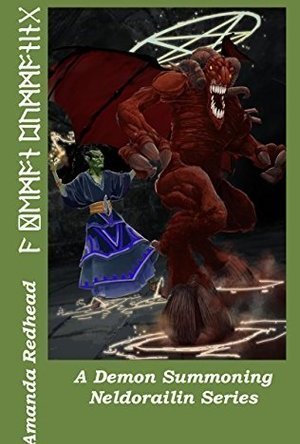
A Demon Summoning: Neldorailin Series
Book
For ages, the peoples of Neldorailin had been drawn to the Druid's Stone. Some, for the druids...
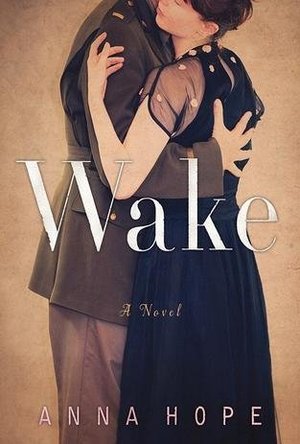
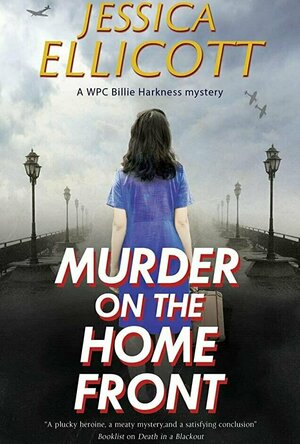
Murder on the Home Front
Book
Disrespect, disdain - and dead bodies! It's all in a day's work for WPC Billie Harkness, a...
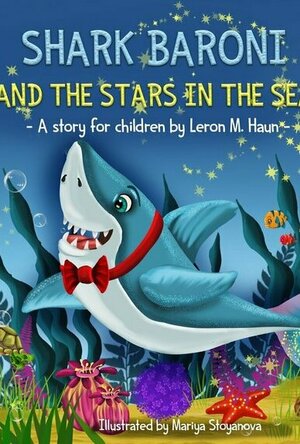
Shark Baroni And The Stars In The Sea
Book
A fantastic debut from a budding young author, Shark Baroni and the Stars in the Sea is a tale full...
children's book children's picture book
Hazel (1853 KP) rated The Water Babies in Books
Oct 9, 2017
This year (2017), Calla Editions are printing a new hardback version of the original 1863 children’s classic The Water Babies written by the Anglican clergyman, Charles Kingsley (1819-75). Subtitled “A Fairytale for a land-baby” the book was intended for Kingsley’s youngest son and therefore was targeted at a juvenile demographic. However, as a result of the 1800’s vernacular and particularly deep themes, it has become more appropriate for older readers. With full-colour illustrations by Jessie Wilcox Smith (1863-1935) from the height of the golden age of illustration, this edition promises to be a collector’s item.
Charles Kingsley, the founder of England’s Christian Socialist movement, was exceedingly interested in the plight of the working class, particularly of the abuse and protection of children. This is reflected in his story about Tom, the ten-year-old London chimney sweep, who suffers ill-treatment at the hands of his employer. Tom, who has known nothing but the sooty streets of London, is embarrassed after scaring a beautiful young girl with his grimy appearance. Running away through a countryside he is unfamiliar with, Tom dives into a river to wash, however, falls asleep in the water.
On awakening, Tom discovers he has been transformed into a water baby; he can live and breathe amongst all the fishes and other mystical water creatures. Forgetting his horrible past, Tom is soon frolicking with the characters he meets, teasing and provoking unsuspecting individuals. But the fairies in charge of water babies are determined to teach him many lessons about truth, mercy, justice and courage.
The Water Babies is a morality fable with fairy-tale-like qualities. It educates young readers about the consequences of their actions but also enlightens them about the cruelty of some adults. Kingsley often talks to the reader (in this instance his son), drawing them into the story and making the scenarios as relatable as possible. The magical underwater setting is merely a veil to hide the lessons Kingsley is attempting to preach.
For the adult reader, Kingsley has a much more political message. Written at the time of political and scientific advancement, particularly in respect to the concept of natural selection, Kingsley attempts to ridicule the ideas of thinkers such as Charles Darwin by producing a satirical narrative. He suggests that scientists are fools who use unnecessarily long and foreign terms, evidenced by his use of the made-up subject of Necrobioneopalæonthydrochthonanthropopithekology. He also goes as far as to mock the majority of adults and appears to be completely anti-Irish people.
In some instances, Charles Kingsley goes too far in his satire, resulting in something that would not be accepted by publishers today. In order for Tom to be the hero of the story, adults need to be viewed as less than good – people who need to be punished for their discourteous treatment of children, which in this instance, they are, and quite graphically. But the most controversial theme explored is death. The more naïve may not cotton on to the fact that Tom falling asleep in the river equates to drowning, yet that is exactly what happened. Only through death can one become a water baby. To make matters slightly more alarming, Kingsley does not see this death as a bad thing; he describes Tom’s new life as something far better than life on earth – coming from a clergyman this is understandable – which suggests that death is better than living for an abused child.
Despite these controversies, Kingsley’s prose is humorous and entertaining - far more mind-boggling than you may initially expect. With characters named Mrs Bedonebyasyoudid and Professor Ptthmllnsprts, there is plenty to make readers laugh. Some of the hilarities may go above the heads of children since the jargon is no longer used in today’s society, however, adults will be able to appreciate the comical aspect.
Over 150 years old, The Water Babies has remained a classic. It reveals the political, scientific and social situations of the mid-1800s, yet it contains wisdom that is still relevant today. As Kingsley’s daughter Rose says in the introduction, “What a fine thing it is to love truth, mercy, justice, courage, and all things noble and of good report.” No matter how peculiar this novel is, it says a lot about the virtues of our character.
Hazel (1853 KP) rated The Water Babies in Books
Dec 7, 2018
This year (2017), Calla Editions are printing a new hardback version of the original 1863 children’s classic <i>The Water Babies</i> written by the Anglican clergyman, Charles Kingsley (1819-75). Subtitled “<i>A Fairytale for a land-baby</i>” the book was intended for Kingsley’s youngest son and therefore was targeted at a juvenile demographic. However, as a result of the 1800’s vernacular and particularly deep themes, it has become more appropriate for older readers. With full-colour illustrations by Jessie Wilcox Smith (1863-1935) from the height of the golden age of illustration, this edition promises to be a collector’s item.
Charles Kingsley, the founder of England’s Christian Socialist movement, was exceedingly interested in the plight of the working class, particularly of the abuse and protection of children. This is reflected in his story about Tom, the ten-year-old London chimney sweep, who suffers ill-treatment at the hands of his employer. Tom, who has known nothing but the sooty streets of London, is embarrassed after scaring a beautiful young girl with his grimy appearance. Running away through a countryside he is unfamiliar with, Tom dives into a river to wash, however, falls asleep in the water.
On awakening, Tom discovers he has been transformed into a water baby; he can live and breathe amongst all the fishes and other mystical water creatures. Forgetting his horrible past, Tom is soon frolicking with the characters he meets, teasing and provoking unsuspecting individuals. But the fairies in charge of water babies are determined to teach him many lessons about truth, mercy, justice and courage.
<i>The Water Babies</i> is a morality fable with fairy-tale-like qualities. It educates young readers about the consequences of their actions but also enlightens them about the cruelty of some adults. Kingsley often talks to the reader (in this instance his son), drawing them into the story and making the scenarios as relatable as possible. The magical underwater setting is merely a veil to hide the lessons Kingsley is attempting to preach.
For the adult reader, Kingsley has a much more political message. Written at the time of political and scientific advancement, particularly in respect to the concept of natural selection, Kingsley attempts to ridicule the ideas of thinkers such as Charles Darwin by producing a satirical narrative. He suggests that scientists are fools who use unnecessarily long and foreign terms, evidenced by his use of the made-up subject of <i>Necrobioneopalæonthydrochthonanthropopithekology</i>. He also goes as far as to mock the majority of adults and appears to be completely anti-Irish people.
In some instances, Charles Kingsley goes too far in his satire, resulting in something that would not be accepted by publishers today. In order for Tom to be the hero of the story, adults need to be viewed as less than good – people who need to be punished for their discourteous treatment of children, which in this instance, they are, and quite graphically. But the most controversial theme explored is death. The more naïve may not cotton on to the fact that Tom falling asleep in the river equates to drowning, yet that is exactly what happened. Only through death can one become a water baby. To make matters slightly more alarming, Kingsley does not see this death as a bad thing; he describes Tom’s new life as something far better than life on earth – coming from a clergyman this is understandable – which suggests that death is better than living for an abused child.
Despite these controversies, Kingsley’s prose is humorous and entertaining - far more mind-boggling than you may initially expect. With characters named Mrs Bedonebyasyoudid and Professor Ptthmllnsprts, there is plenty to make readers laugh. Some of the hilarities may go above the heads of children since the jargon is no longer used in today’s society, however, adults will be able to appreciate the comical aspect.
Over 150 years old, <i>The Water Babies</i> has remained a classic. It reveals the political, scientific and social situations of the mid-1800s, yet it contains wisdom that is still relevant today. As Kingsley’s daughter Rose says in the introduction, “What a fine thing it is to love truth, mercy, justice, courage, and all things noble and of good report.” No matter how peculiar this novel is, it says a lot about the virtues of our character.
Coping with Chloe
Book
Anna and Chloe are twins. They share everything. Even Chloe's terrible accident hasn't split them...
Hadley (567 KP) rated The Graveyard Book in Books
Sep 30, 2019
Yet, when Bod showed up at the graveyard, not all the residents wanted to keep the boy, but when a woman in grey appears, she settles the argument by telling them to keep him - - - bringing in the woman in grey seemed as though it only happened to introduce the character, which, unfortunately she is only seen one other time throughout the entire novel; this character really wasn't necessary. When Bod is kept, he is given the "Freedom of the Graveyard," which gives him the ability to see and talk to ghosts, as well as other things. This makes for a very intriguing adventure for us readers.
This book is almost flawless with the concept being very original. I honestly have nothing bad to say about the story. Gaiman doesn't use the usual horror tropes, instead he describes horrific events through the eyes of Bod, as he becomes more familiar with the world outside of the graveyard. Gaiman explains all of Bod's natural needs effortlessly within a graveyard, such as Bod learning to read and spell by using the letters on headstones. This book will surely change the way you look at graveyards for the rest of your life, if you hadn't already seen them in this way. 'The Graveyard Book' is a different type of ghost story, where the reader isn't afraid of the spirits, but rather of the living.
Later on in 'the Graveyard Book,' we meet a character named Scarlett. She is one of the only friends that Bod makes who is alive. For the majority of the book, Scarlett believes that Bod is just her imaginary friend, as her mother brings her to the graveyard every day to play (by this time, it is a claimed nature reserve) . But later on, when Scarlett returns as a teenager, she realizes that Bod is actually a real person. My only complaint about Scarlett's character is that the reader gets to see her dream walk- - - something we have been told only ghosts, supernatural creatures and Bod can do- - - yet, this is never explained why she is able to do this. It leaves one to wonder if Scarlett is a supernatural being or just a human with a particular ability?
" One grave in every graveyard belongs to the ghouls. Wander any graveyard long enough and you will find it- - - waterstained and bulging, with cracked or broken stone, scraggly grass or rank weeds about it, and a feeling, when you reach it, of abandonment. It may be colder than the other gravestones, too, and the name on the stone is all too often impossible to read. If there is a statue on the grave it will be headless or so scabbed with fungus and lichens as to look like a fungus itself. If one grave in a graveyard looks like a target for petty vandals, that is the ghoul-gate. If the grave makes you want to be somewhere else, that is the ghoul-gate. " The ghoul-gate has it's own entire scene in the book, but I wish the ghouls had been in the story quite a bit more. Overall, Gaiman wrote a very pleasing book that looks at ghosts in a different light. He brings up real life fears and fictional ones as well. Unfortunately, the book was written in 2008, and it doesn't seem that Gaiman is working on a sequel, so some questions may never be answered for the readers.
I really liked this book, and I think readers who enjoy paranormal aspects will love this story, too. As far as a ghost story goes, this one I highly recommend, but if you are looking for scares, I suggest you look elsewhere.
Hazel (1853 KP) rated A Grimm Legacy (Grimm Tales #1) in Books
Dec 17, 2018
Fairy tale enthusiasts will love this young adult novel by Colorado based author Janna Jennings. Full with lots of magical references <i>A Grimm Legacy</i> is about four teenagers who get dragged out of their world and into the enchanted realm of Elorium. The mysterious Mr. Jackson, who they find in a mansion with a couple of elf servants, tells them that they have been brought there for a reason; but before anyone gets the chance to explain what that reason is, the four run away only to encounter many dangerous characters.
As the title suggests <i>A Grimm Legacy</i> is loosely based upon the stories collected by Jacob and Wilhelm Grimm. To get the most out of this book the reader needs to have an understanding of a variety of fairy-tales, for instance <i>Cinderella</i>. As well as the more commonly known, there are less recognized stories, which are of great significance to the novel: for example <i>Jorindel and Jorinda</i> and <i>The Fisherman and his Wife</i>.
Whilst Jennings has done well in her research into the different fairytales, she includes <i>Jack and the Beanstalk</i> as one of the references, which is in fact not a Brothers’ Grimm tale. <i>Jack and the Beanstalk</i> is an English tale that was first recorded by Benjamin Tabart in 1807. Either Jennings failed to realize this or she was including all fairytales within this book, in which case the title is misleading.
The book on the whole was quick to read and was full of exciting twists. I enjoyed discovering the various references to the well-known stories. One thing that made the text confusing, however, was the lack of breaks between certain paragraphs. Within a chapter there were occasionally more than one scene or setting and without a gap to distinguish between them it was often difficult to understand the changes in time period etc.
This book was written with young adults in mind but can be enjoyed by older readers too. It is not suitable for younger children however, not only due to the sinister nature of the original fairytales, but <i>A Grimm Legacy</i> has the occasional violent scene in it.
Despite the inaccuracy regarding <i>Jack and the Beanstalk</i>, this is a fun book to read. My only advice is to read it after you have explored some of the Brothers’ Grimm collection.
Sous Les Ordres de Rommel: Des Deserts D'Afrique Du Nord Aux Plages de Normandie
Hans Holler and Markus Reisner
Book
In this extraordinary autobiography by Hans Holler, an Austrian born in 1921 near Wiener Neustadt,...