
Search
Search results

Ross (3284 KP) rated A Time of Dread in Books
Jan 16, 2018

Twists were quite obvious from very early on (1 more)
Less action on much smaller scale than previous
A new series following on from the events of The Faithful and the Fallen
*** Disclosure: I received an advance copy of this book from NetGalley in return for an honest review. Typos and formatting issues (of which there were many) have not been reflected in this review ***
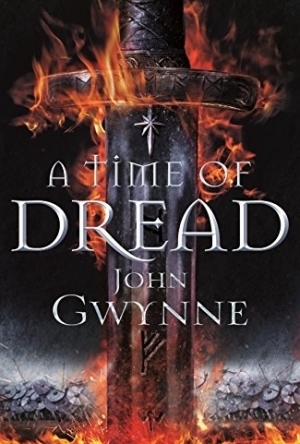
The first book in John Gwynne's new series (Of Blood and Bone) comes a little over 100 years after the conclusion of Wrath.
In some senses, and I have seen a number of reviews opining this, this marks the start of a different series, and no prior knowledge of the Banished Lands is needed. I would agree to an extent, though I would imagine a lot of things are taken for granted (the creatures and races of people for one, if not the actual storyline). However, if someone then wants to read the previous series I think a lot of the events of those books has been spoilt, not the overall conclusion but certain little details would be annoying to have spoilt. I would strongly encourage readers to read Malice et all first (though beware of the epic scope and cast of characters from the off).
The story follows three main paths which at times become two. Riv (a trainee warrior) and Bleda (a young ward, stolen from his family at a young age) are living with the "angels" that have broken through to the real world and are training to fight the "demons". Their story serves to chronicle the events of the first series quite neatly, and shows how the angels are not perfect in their role as mankind's guardians. Drem is a trapper living in the wilderness with his father and begins to uncover some unusual signs of dark work afoot. Finally, Sig the giant (a minor character in the first series) also works to eliminate the demons from the world, but does so independently of the angels.
The scope of the story and cast of characters is so much smaller more focused than Gwynne's previous books, which took some getting used to. While I felt the scope of the first series was so epic it was hard work, here it seems like a very different, simpler work. Almost, but not quite, like a step backwards.
As usual, there are twists and turns along the way, not all of which were particularly surprising (sometimes you just know that unless someone's head was cut off, they're going to come back again later!) and I felt they could have been dealt with better.
I felt there was maybe another chunk of the story that could have been added as the final 50 pages rattled along all of a sudden and ended abruptly with more still to tell.
I very much enjoyed the book and am looking forward to the next instalment to see where the story goes from here, though I expect it will be a smaller series than TFAF, looking to tie up loose ends.
The first book in John Gwynne's new series (Of Blood and Bone) comes a little over 100 years after the conclusion of Wrath.
In some senses, and I have seen a number of reviews opining this, this marks the start of a different series, and no prior knowledge of the Banished Lands is needed. I would agree to an extent, though I would imagine a lot of things are taken for granted (the creatures and races of people for one, if not the actual storyline). However, if someone then wants to read the previous series I think a lot of the events of those books has been spoilt, not the overall conclusion but certain little details would be annoying to have spoilt. I would strongly encourage readers to read Malice et all first (though beware of the epic scope and cast of characters from the off).
The story follows three main paths which at times become two. Riv (a trainee warrior) and Bleda (a young ward, stolen from his family at a young age) are living with the "angels" that have broken through to the real world and are training to fight the "demons". Their story serves to chronicle the events of the first series quite neatly, and shows how the angels are not perfect in their role as mankind's guardians. Drem is a trapper living in the wilderness with his father and begins to uncover some unusual signs of dark work afoot. Finally, Sig the giant (a minor character in the first series) also works to eliminate the demons from the world, but does so independently of the angels.
The scope of the story and cast of characters is so much smaller more focused than Gwynne's previous books, which took some getting used to. While I felt the scope of the first series was so epic it was hard work, here it seems like a very different, simpler work. Almost, but not quite, like a step backwards.
As usual, there are twists and turns along the way, not all of which were particularly surprising (sometimes you just know that unless someone's head was cut off, they're going to come back again later!) and I felt they could have been dealt with better.
I felt there was maybe another chunk of the story that could have been added as the final 50 pages rattled along all of a sudden and ended abruptly with more still to tell.
I very much enjoyed the book and am looking forward to the next instalment to see where the story goes from here, though I expect it will be a smaller series than TFAF, looking to tie up loose ends.
Hazel (1853 KP) rated The Screaming Staircase: Lockwood & Co. #1 in Books
Dec 7, 2018


<i>This eBook was provided by the publisher via NetGalley in exchange for an honest</i>
Fantasy author Jonathan Stroud is widely known for the <i>Bartimaeus</i> trilogy, a children’s series about magicians, however none of his other works seem to be much talked about. This includes his latest paranormal series <i>Lockwood & Co</i>. It is about time that the world became aware of this clever, exciting adventure.
<i>The Screaming Staircase</i> is the first of four books set in a version of London that has suddenly become plagued by ghosts of the past. It is unclear why the dead have come back to haunt the living, but something must be done about them. Unfortunately adults are unable to see these ghastly phantoms and rely on trained psychic investigators, i.e. children, to dispatch the dead.
<i>Lockwood & Co</i> is comprised of three young teenagers with the ability to hunt and destroy these eerie Visitors: Anthony Lockwood, Lucy Carlyle and their friend George. Unfortunately, despite having the right skills, something always seems to go wrong on their jobs. So, when a prestigious gentleman offers them a very dangerous task, they jump at the chance to prove themselves a competent agency, if not one of the best. Conversely, they find themselves in a lot more trouble than they bargained for.
Although there is a central plot, <i>The Screaming Staircase</i> is made up of several events that combine to create a mind-blowing conclusion. But it is not solely the ghost fighting, heart stopping scenes that make this story a success. Even without the sinister setting this series would be enjoyable due to the hilarious three main characters. Not once are the ages of Lockwood, Lucy and George mentioned, however it can be presumed that are around thirteen years old. Their relationship takes on a form similar to a brotherly, sisterly bond complete with bickering, threats and sharp, witty comebacks. Despite the dangerous atmosphere there is always the opportunity for at least one of the characters to get in a quick insult that is bound to make the reader laugh out loud.
<i>Lockwood & Co</i> is primarily targeted at readers between the ages of ten and fifteen, although there is nothing to prevent anyone else from enjoying it too. Thankfully no romantic relationships are formed, leaving Lucy to become as independent and strong as the boys, thus making this a suitable series for both genders. While there is a lot of humour, there is mild horror too, so perhaps young children should wait until they are a bit older to join in with the entertainment this series provides.
When I was younger I attempted to read the <i>Bartemaeus</i> trilogy and found it rather dull, so I was not expecting all that much with this series. However, <i>The Screaming Staircase</i> was fantastic in comparison. It is fast paced, amusing, thrilling, and never a boring moment. I guarantee once you’ve read this book you will immediately want to read the sequel. <i>Lockwood & Co</i> is a series that definitely needs more attention that it is getting.
Fantasy author Jonathan Stroud is widely known for the <i>Bartimaeus</i> trilogy, a children’s series about magicians, however none of his other works seem to be much talked about. This includes his latest paranormal series <i>Lockwood & Co</i>. It is about time that the world became aware of this clever, exciting adventure.
<i>The Screaming Staircase</i> is the first of four books set in a version of London that has suddenly become plagued by ghosts of the past. It is unclear why the dead have come back to haunt the living, but something must be done about them. Unfortunately adults are unable to see these ghastly phantoms and rely on trained psychic investigators, i.e. children, to dispatch the dead.
<i>Lockwood & Co</i> is comprised of three young teenagers with the ability to hunt and destroy these eerie Visitors: Anthony Lockwood, Lucy Carlyle and their friend George. Unfortunately, despite having the right skills, something always seems to go wrong on their jobs. So, when a prestigious gentleman offers them a very dangerous task, they jump at the chance to prove themselves a competent agency, if not one of the best. Conversely, they find themselves in a lot more trouble than they bargained for.
Although there is a central plot, <i>The Screaming Staircase</i> is made up of several events that combine to create a mind-blowing conclusion. But it is not solely the ghost fighting, heart stopping scenes that make this story a success. Even without the sinister setting this series would be enjoyable due to the hilarious three main characters. Not once are the ages of Lockwood, Lucy and George mentioned, however it can be presumed that are around thirteen years old. Their relationship takes on a form similar to a brotherly, sisterly bond complete with bickering, threats and sharp, witty comebacks. Despite the dangerous atmosphere there is always the opportunity for at least one of the characters to get in a quick insult that is bound to make the reader laugh out loud.
<i>Lockwood & Co</i> is primarily targeted at readers between the ages of ten and fifteen, although there is nothing to prevent anyone else from enjoying it too. Thankfully no romantic relationships are formed, leaving Lucy to become as independent and strong as the boys, thus making this a suitable series for both genders. While there is a lot of humour, there is mild horror too, so perhaps young children should wait until they are a bit older to join in with the entertainment this series provides.
When I was younger I attempted to read the <i>Bartemaeus</i> trilogy and found it rather dull, so I was not expecting all that much with this series. However, <i>The Screaming Staircase</i> was fantastic in comparison. It is fast paced, amusing, thrilling, and never a boring moment. I guarantee once you’ve read this book you will immediately want to read the sequel. <i>Lockwood & Co</i> is a series that definitely needs more attention that it is getting.
Hazel (1853 KP) rated Cuckoo Song in Books
Dec 14, 2018

<i>I received this book for free through Goodreads First Reads.</i>
Frances Hardinge’s <i>Cuckoo Song</i> is a historical, horror story for children. Six years have past since the end of the First World War, a war in which the Crescent family lost their eldest child. Eleven-year-old Theresa Crescent “Triss” lives with her parents and nine year old sister, Penelope “Pen” in the fictional town of Ellchester, England. Since losing Sebastian, Triss has become a very frail child and so it is no surprise to her parents that she develops an awful fever after falling into a millpond. The question, though, is how she came to be in the pond to begin with and why Pen is so scared of her?
Things become even more mystifying when Triss sees dolls start to move, finds leaves on her pillow, and is constantly ravenously hungry. Her parents begin to consider that Triss is suffering from some form of mental illness, however, Pen, the bad-tempered child, is adamant that that is not the case. She claims that Triss is a fake.
The horrible realization is that perhaps Triss is not Triss at all. This discovery leads the tale into paranormal territory with the introduction of unique new creatures: Besiders.
Cuckoo Song is not just an entertaining, fantastical story; it also deals with themes of family and personal emotion. Piers and Celeste Crescent are examples of parents whose behaviour and response to the death of a child impact on their remaining children. Triss becomes a child they want to protect and save leaving Pen to become an attention-seeking troublemaker.
As the story progresses, Triss and Pen’s relationship develops, or rather Pen and Not-Triss’, into something more recognizable and sisterly. Through their strength and newfound love for each other, they fight to get the happy ending they deserve. And through it all Triss discovers that just because someone calls you a monster, it does not mean that you are a monster.
The 1920’s setting did not feel quite accurate. At times it felt as though the story could have been set today. This, however, was not a major issue as, apart from Sebastian’s death during WW1, the time period was not a key aspect of the plot.
Initially the children, particularly Pen, were written in a way that made them seem older than Hardinge intended them to be, although by the end it is clear that they are fairly young. This is shown in the way that Pen begins to become attached to, and slightly more dependent, on Triss.
It is difficult to say who the target audience of <i>Cuckoo Song</i> is. The protagonist is eleven but the writing may be a little difficult for some children, on the other hand it cannot exactly be classed as Young Adult fiction since the characters are not even in their teens.
Overall, <i>Cuckoo Song</i> is an exciting, fast paced, fairy tale-like story with original characters. It is not scary and is fun to read; there is nothing to stop older readers from enjoying it too!
Frances Hardinge’s <i>Cuckoo Song</i> is a historical, horror story for children. Six years have past since the end of the First World War, a war in which the Crescent family lost their eldest child. Eleven-year-old Theresa Crescent “Triss” lives with her parents and nine year old sister, Penelope “Pen” in the fictional town of Ellchester, England. Since losing Sebastian, Triss has become a very frail child and so it is no surprise to her parents that she develops an awful fever after falling into a millpond. The question, though, is how she came to be in the pond to begin with and why Pen is so scared of her?
Things become even more mystifying when Triss sees dolls start to move, finds leaves on her pillow, and is constantly ravenously hungry. Her parents begin to consider that Triss is suffering from some form of mental illness, however, Pen, the bad-tempered child, is adamant that that is not the case. She claims that Triss is a fake.
The horrible realization is that perhaps Triss is not Triss at all. This discovery leads the tale into paranormal territory with the introduction of unique new creatures: Besiders.
Cuckoo Song is not just an entertaining, fantastical story; it also deals with themes of family and personal emotion. Piers and Celeste Crescent are examples of parents whose behaviour and response to the death of a child impact on their remaining children. Triss becomes a child they want to protect and save leaving Pen to become an attention-seeking troublemaker.
As the story progresses, Triss and Pen’s relationship develops, or rather Pen and Not-Triss’, into something more recognizable and sisterly. Through their strength and newfound love for each other, they fight to get the happy ending they deserve. And through it all Triss discovers that just because someone calls you a monster, it does not mean that you are a monster.
The 1920’s setting did not feel quite accurate. At times it felt as though the story could have been set today. This, however, was not a major issue as, apart from Sebastian’s death during WW1, the time period was not a key aspect of the plot.
Initially the children, particularly Pen, were written in a way that made them seem older than Hardinge intended them to be, although by the end it is clear that they are fairly young. This is shown in the way that Pen begins to become attached to, and slightly more dependent, on Triss.
It is difficult to say who the target audience of <i>Cuckoo Song</i> is. The protagonist is eleven but the writing may be a little difficult for some children, on the other hand it cannot exactly be classed as Young Adult fiction since the characters are not even in their teens.
Overall, <i>Cuckoo Song</i> is an exciting, fast paced, fairy tale-like story with original characters. It is not scary and is fun to read; there is nothing to stop older readers from enjoying it too!
Hazel (1853 KP) rated Looking at the Stars in Books
Dec 17, 2018
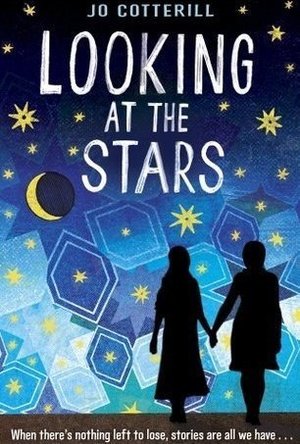

<i>Looking at the Stars</i> by Jo Cotterill is a beautiful story targeted at older children/young adults. It handles serious themes that most readers would not have, and hopefully never will, deal with.
Amina is thirteen years old living in a country where women have absolutely no power. Prohibited from going to school, she spends her days with her sister, Jenna, weaving baskets and rugs, which they sell to stool holders in the local market. The novel begins with the two girls witnessing the arrival of foreign soldiers. They are overjoyed believing that all their troubles are over now that the liberation has begun. This, however, turns out to be a false hope.
Separated from their family, Amina and Jenna head to a refugee camp where they hope to find their younger sister, Vivie, and even discover information about what has happened to their mother. In order to prevent them from succumbing to despair both on the journey and living in the camp, Amina makes up stories about the stars in the sky – hence the title of the novel.
Amina and Jenna’s personalities are vastly different meaning that the reader should be able to identify with at least one of the girls and place themselves within the story to get a closer feel of what their lives must have been like. It makes us wonder how we would cope ourselves in these situations. Amina is the kind of person who asks questions. She wants to know why things happen and is constantly asking “what if?” Despite being a year younger than Jenna she is the more confident of the two, and it is partly her determination that keeps them alive. Personally, I think I am more like Jenna: quiet, anxious, always wanting to do the right thing. Jenna “just wants everyone to be happy”. Jenna is a realist, whereas Amina is a dreamer.
The storytelling aspect to this novel makes it unique to others in this genre. There are many books that deal with war, refugees and death, but Amina’s stories provide something extra. They are beautiful and bring hope and faith into such as bleak and dangerous setting.
Whilst this story is set in fictional towns in an unnamed country, it is not unlike recent civil wars in Syria and conflicts in Iraq and Afghanistan. Mostly we are able to distance ourselves from these new stories, because to us they are just that: stories, reports; not something we have to deal with. But this novel, told from the point of view of a thirteen year old girl reveals to us what it is like for the innocent – the thousand of innocents. And even better, it is tells it in a way that children/young adults will understand in order to learn more about what has happened and what is happening in these countries.
I think Looking at the Stars is a brilliant book that is, and I know I have used this word a lot, beautifully told. I definitely recommend it!
Amina is thirteen years old living in a country where women have absolutely no power. Prohibited from going to school, she spends her days with her sister, Jenna, weaving baskets and rugs, which they sell to stool holders in the local market. The novel begins with the two girls witnessing the arrival of foreign soldiers. They are overjoyed believing that all their troubles are over now that the liberation has begun. This, however, turns out to be a false hope.
Separated from their family, Amina and Jenna head to a refugee camp where they hope to find their younger sister, Vivie, and even discover information about what has happened to their mother. In order to prevent them from succumbing to despair both on the journey and living in the camp, Amina makes up stories about the stars in the sky – hence the title of the novel.
Amina and Jenna’s personalities are vastly different meaning that the reader should be able to identify with at least one of the girls and place themselves within the story to get a closer feel of what their lives must have been like. It makes us wonder how we would cope ourselves in these situations. Amina is the kind of person who asks questions. She wants to know why things happen and is constantly asking “what if?” Despite being a year younger than Jenna she is the more confident of the two, and it is partly her determination that keeps them alive. Personally, I think I am more like Jenna: quiet, anxious, always wanting to do the right thing. Jenna “just wants everyone to be happy”. Jenna is a realist, whereas Amina is a dreamer.
The storytelling aspect to this novel makes it unique to others in this genre. There are many books that deal with war, refugees and death, but Amina’s stories provide something extra. They are beautiful and bring hope and faith into such as bleak and dangerous setting.
Whilst this story is set in fictional towns in an unnamed country, it is not unlike recent civil wars in Syria and conflicts in Iraq and Afghanistan. Mostly we are able to distance ourselves from these new stories, because to us they are just that: stories, reports; not something we have to deal with. But this novel, told from the point of view of a thirteen year old girl reveals to us what it is like for the innocent – the thousand of innocents. And even better, it is tells it in a way that children/young adults will understand in order to learn more about what has happened and what is happening in these countries.
I think Looking at the Stars is a brilliant book that is, and I know I have used this word a lot, beautifully told. I definitely recommend it!

Night Reader Reviews (683 KP) rated Exile in Books
Nov 24, 2020
Surprise its the first book in a series.
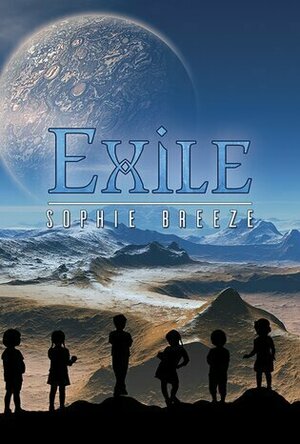
Exile by Sophie Breeze is a great book. It is the first book in a series of unknown length as the second has yet to be released. The cover however says nothing about it being part of a series. Please keep in mind as well that Sophie was only nine years old when she started writing Exile, no small feat.
A group of five kids live on the planet Mellania but are not accepted there. Mellania only accepts those without human DNA and unfortunately these kids are all half human. The kids live with Lucia, a demon whom they believe to be their friend until she takes them to Earth. Upon arrival they are almost immediately attacked and discover Lucia’s true intentions. Now on the run from an evil demon on a planet they are unfamiliar with the kids don’t know who to trust and the stress creates a rift in the group.
Two of the kids go one way and the other three go another, wondering if they will ever see each other again. Soon it is clear that even apart they are not safe as both groups are attacked and tracked down by the SSC. Sadly even once they are with the SSC the kids don’t know who to trust and secrets start revealing themselves. Will they ever be able to feel safe again? Who is really their friends and who is just trying to use them for their own benefit?
The style of this book is rather unique to me as it doesn't seem to hold to any one genre. It starts out as a science fiction heavy in politics and with an assassination. Then as the story moves on it seems to take a more fantasy element with question. While the politics remain through out they do not overpower the rest of the story. The only thing that I really did not like was the surprise factor of learning this is the first in a series. I found myself becoming increasingly confused as I came towards the end and things were no where close to a conclusion.
This book is probably best for young adults with an interest isn’t science fiction/fantasy. They dynamics of the relationships between the hybrids themselves might be a little difficult for young readers to understand. Those who have enjoyed the Percy Jackson and the Olympians series should enjoy this book as well since they share many elements. I rate this book 3 out of 4 or 4 out of 5. I enjoyed this book very much and the twists actually surprised me. The only twist I did not like was how the book turned out to be the beginning of a series. While I have nothing against series I plan when I start a new one carefully and I imagine so do may others, because of this the book lost a point.
A group of five kids live on the planet Mellania but are not accepted there. Mellania only accepts those without human DNA and unfortunately these kids are all half human. The kids live with Lucia, a demon whom they believe to be their friend until she takes them to Earth. Upon arrival they are almost immediately attacked and discover Lucia’s true intentions. Now on the run from an evil demon on a planet they are unfamiliar with the kids don’t know who to trust and the stress creates a rift in the group.
Two of the kids go one way and the other three go another, wondering if they will ever see each other again. Soon it is clear that even apart they are not safe as both groups are attacked and tracked down by the SSC. Sadly even once they are with the SSC the kids don’t know who to trust and secrets start revealing themselves. Will they ever be able to feel safe again? Who is really their friends and who is just trying to use them for their own benefit?
The style of this book is rather unique to me as it doesn't seem to hold to any one genre. It starts out as a science fiction heavy in politics and with an assassination. Then as the story moves on it seems to take a more fantasy element with question. While the politics remain through out they do not overpower the rest of the story. The only thing that I really did not like was the surprise factor of learning this is the first in a series. I found myself becoming increasingly confused as I came towards the end and things were no where close to a conclusion.
This book is probably best for young adults with an interest isn’t science fiction/fantasy. They dynamics of the relationships between the hybrids themselves might be a little difficult for young readers to understand. Those who have enjoyed the Percy Jackson and the Olympians series should enjoy this book as well since they share many elements. I rate this book 3 out of 4 or 4 out of 5. I enjoyed this book very much and the twists actually surprised me. The only twist I did not like was how the book turned out to be the beginning of a series. While I have nothing against series I plan when I start a new one carefully and I imagine so do may others, because of this the book lost a point.

Erika (17789 KP) rated Shadow and Bone - Season 1 in TV
Jul 16, 2021
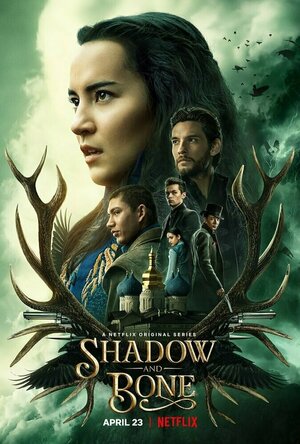

Shadow and Bone is based upon the popular Young Adult series, The Grisha Trilogy, which takes place in a steampunk-ish, Russian fantasy world at war. The story’s main character is Alina Starkov (Jessie Mei Li), an orphan who discovers she has some magical powers when she journeys into something called the Fold with her childhood friend Malyen, “Mal” (Archie Renaux), for short. The witches in this fantasy world are called Grisha and are trained to help with military operations for some king. The General of this witch army is Kirigan, played by Ben Barnes. There are also two other storylines, this group of kidnappers, and a Grisha that’s enslaved.
This series wasn’t really made for a general audience, it was made for the fans of the book trilogy. The series starts, and the watcher is immediately thrust into this fantasy world that doesn’t really make much sense with no prior knowledge. If you couldn’t tell from the series description, I wasn’t really into it. It took me two months to watch all eight of the episodes. I almost didn’t keep watching after the first two episodes, but my boss encouraged me to keep going.
The storyline is your standard YA novel, a girl who didn’t know her powers, some lame love triangle, and for some reason, the girl is the only one that can save the world. Nothing new to see here. My interest was only piqued by Barnes’ character Kirigan, and Barnes was the main reason I actually kept watching the show. The seventh episode, which features Kirigan’s backstory, was the most interesting.
The whole kidnapping crew storyline wasn’t really all that interesting. The leader, Kaz (Freddy Carter) is a kingpin-type character with an unexplained limp, or I missed the explanation. The crew also had an assassin-type character, Inej (Amita Suman), who might not really have been an assassin, again, missed that explanation. The best member of this crew was Jesper (Kit Young), who was the charmer, expert trick shooter, and the second most interesting character in the series.
The subplot with the whole kidnapping Alina thing was neither here nor there, I don’t even remember the characters’ names that were involved in this subplot. Maybe it meant something to the readers of the novels, or it’ll make sense in the next season, but it certainly didn’t mean anything to me. I think I fast-forwarded through those portions in the last episode.
I think I started liking it after the seventh episode, but two interesting episodes does not make an interesting series. It’s been about a week since I finished it, and I honestly had to look up all the characters’ names. I probably seem flippant about explaining the different plots, but it’s legitimately all I remember. This series also didn’t leave me with a hankering to read the book series, nor would I care to watch any further seasons. I’m sure if you’re a fan of the book series, you’d probably love this, but it was not for me.
This series wasn’t really made for a general audience, it was made for the fans of the book trilogy. The series starts, and the watcher is immediately thrust into this fantasy world that doesn’t really make much sense with no prior knowledge. If you couldn’t tell from the series description, I wasn’t really into it. It took me two months to watch all eight of the episodes. I almost didn’t keep watching after the first two episodes, but my boss encouraged me to keep going.
The storyline is your standard YA novel, a girl who didn’t know her powers, some lame love triangle, and for some reason, the girl is the only one that can save the world. Nothing new to see here. My interest was only piqued by Barnes’ character Kirigan, and Barnes was the main reason I actually kept watching the show. The seventh episode, which features Kirigan’s backstory, was the most interesting.
The whole kidnapping crew storyline wasn’t really all that interesting. The leader, Kaz (Freddy Carter) is a kingpin-type character with an unexplained limp, or I missed the explanation. The crew also had an assassin-type character, Inej (Amita Suman), who might not really have been an assassin, again, missed that explanation. The best member of this crew was Jesper (Kit Young), who was the charmer, expert trick shooter, and the second most interesting character in the series.
The subplot with the whole kidnapping Alina thing was neither here nor there, I don’t even remember the characters’ names that were involved in this subplot. Maybe it meant something to the readers of the novels, or it’ll make sense in the next season, but it certainly didn’t mean anything to me. I think I fast-forwarded through those portions in the last episode.
I think I started liking it after the seventh episode, but two interesting episodes does not make an interesting series. It’s been about a week since I finished it, and I honestly had to look up all the characters’ names. I probably seem flippant about explaining the different plots, but it’s legitimately all I remember. This series also didn’t leave me with a hankering to read the book series, nor would I care to watch any further seasons. I’m sure if you’re a fan of the book series, you’d probably love this, but it was not for me.
Night Reader Reviews (683 KP) rated Outland Exile: Book 1 of Old Men and Infidels in Books
Jan 9, 2020
Honest Review for Free Copy of Book
Contains spoilers, click to show
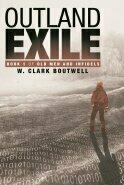
Outland Exile Book 1: Old Men and Infidels by W. Clark Boutwell was very enjoyable to read after I got into it a bit. The book was somewhat confusing to start out but the author unfolds the story layer by layer to slowly explain the world that the main character lives in. The vocabulary in this book made me consult a dictionary a few different times to check words that were strange to me, an unusual occurrence for someone who reads frequently.
The main reason that it was hard for me to initially enjoy the book was because of the authors use of short phrases. These phrases made the reading feel choppy and prevented a nice even flow. I believe this was mainly a problem because it frequently took the immersion away from the story, and jarringly forced me back into the real world as I re-read a section to see if it made more sense. I feel that many readers enjoy the immersion in a fictional world when reading a good book, so this may be a bit of an issue for some.
W. Clark Boutwell also appears to have a very good education, possibly with a large focus on the English language. The reason that I think this might be the case is because of the vocabulary found in the book, some of which seemed unnecessary. Words such as “metaphoric” “adroitly” and “remonstrations” were used, much to my initial confusion. Then there was also “pantomimed”, “sere”, and “realpolitik” that had me searching for a dictionary. On top of the strange wording at times the author also used terms such as “snakelike” and “warlike” with frequency. The amount these words were used make them almost feel overused or like errors.
The amazing plot-line of the story also offers a few different lessons that many people will have to learn in their lives. The first of these lessons is the fact that not everyone, including the government, is not always operating in your best interest. It shows that often the people who are considered to be higher-ups are more worried about themselves and their advancement than the ‘little people’ that they hurt along the way. The book also shows that a simple life is often happier than a technology-filled one, proving that the technology that is supposed to be bringing us together is also causing us to lose touch with other people at the same time. Finally, it brings to light an idea that some might find difficult to accept. That fact would be that not everything you grow up believing is necessarily the truth and that history is almost always written by the winners and the loser’s voice gets lost.
During the course of the story Malila, a Lieutenant for the Unity is sent out to Sunprairie Station with a group of bodyguards in order to repair the station. She then finds herself in the hands of Jesse Johnstone and making her way to Kentucky and stopping at a village across the Ohio River. It is here that she starts to learn just how lacking her life in the Unity was. She also learns just how much of a captive she was in her “free” Unity and how much of her supposed life there was all just an illusion.
What I liked best was watching Malila expand and grow as an individual. The author’s writing made me feel like I actually knew the characters. When tragedy struck I felt real worry and concern for them and did not want to stop reading until I knew what happened to them. On the other side, I least liked the fact that I almost gave up on reading the book early because of how slow and choppy the writing felt. The use of the obscure words made me believe there were multiple misspellings only to find that the words were just typically unused.
The target readers for this story would be young adults, starting at about high school aged and older. Concepts of pleasure sex and a few mentions of rape make this book unsuitable for most younger readers. With all of this being said I would give this book the rating 3 out of 4 because even with it being hard to get into the story was very enjoyable. The plot-line is strong and the life lessons the Malila learns are things that most people should probably learn at some point in their lives. I look forward to reading the rest of the series as it comes out.
The main reason that it was hard for me to initially enjoy the book was because of the authors use of short phrases. These phrases made the reading feel choppy and prevented a nice even flow. I believe this was mainly a problem because it frequently took the immersion away from the story, and jarringly forced me back into the real world as I re-read a section to see if it made more sense. I feel that many readers enjoy the immersion in a fictional world when reading a good book, so this may be a bit of an issue for some.
W. Clark Boutwell also appears to have a very good education, possibly with a large focus on the English language. The reason that I think this might be the case is because of the vocabulary found in the book, some of which seemed unnecessary. Words such as “metaphoric” “adroitly” and “remonstrations” were used, much to my initial confusion. Then there was also “pantomimed”, “sere”, and “realpolitik” that had me searching for a dictionary. On top of the strange wording at times the author also used terms such as “snakelike” and “warlike” with frequency. The amount these words were used make them almost feel overused or like errors.
The amazing plot-line of the story also offers a few different lessons that many people will have to learn in their lives. The first of these lessons is the fact that not everyone, including the government, is not always operating in your best interest. It shows that often the people who are considered to be higher-ups are more worried about themselves and their advancement than the ‘little people’ that they hurt along the way. The book also shows that a simple life is often happier than a technology-filled one, proving that the technology that is supposed to be bringing us together is also causing us to lose touch with other people at the same time. Finally, it brings to light an idea that some might find difficult to accept. That fact would be that not everything you grow up believing is necessarily the truth and that history is almost always written by the winners and the loser’s voice gets lost.
During the course of the story Malila, a Lieutenant for the Unity is sent out to Sunprairie Station with a group of bodyguards in order to repair the station. She then finds herself in the hands of Jesse Johnstone and making her way to Kentucky and stopping at a village across the Ohio River. It is here that she starts to learn just how lacking her life in the Unity was. She also learns just how much of a captive she was in her “free” Unity and how much of her supposed life there was all just an illusion.
What I liked best was watching Malila expand and grow as an individual. The author’s writing made me feel like I actually knew the characters. When tragedy struck I felt real worry and concern for them and did not want to stop reading until I knew what happened to them. On the other side, I least liked the fact that I almost gave up on reading the book early because of how slow and choppy the writing felt. The use of the obscure words made me believe there were multiple misspellings only to find that the words were just typically unused.
The target readers for this story would be young adults, starting at about high school aged and older. Concepts of pleasure sex and a few mentions of rape make this book unsuitable for most younger readers. With all of this being said I would give this book the rating 3 out of 4 because even with it being hard to get into the story was very enjoyable. The plot-line is strong and the life lessons the Malila learns are things that most people should probably learn at some point in their lives. I look forward to reading the rest of the series as it comes out.
Night Reader Reviews (683 KP) rated Emaji Nation Book 1 The Sparrow in Books
Jan 9, 2020
Honest Review for Free Copy of Book
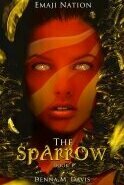
Emaji Nation Book 1: The Sparrow by Denna M. Davis is a book that I will not soon be forgetting about. In fact, I was very pleasantly surprised by just how much I enjoyed this book. The first chapter grabbed my attention instantly. Most books I have read don’t do that, they tend to need some time to build up a reader’s interest. Each chapter seems to leave the reader hanging with just enough anticipation that you might find yourself staying up hours past your intended stopping time to continue the story.
With little explanation as to why young Amanda finds herself walking through a portal at her grandparent’s house and transported to the planet Emaji. This is where she meets Solomon, who helps reunite her with her grandparents. Her grandmother tells her that there is a prophecy naming her the defeater of Zorn and savior of Emaji. With the help of the Emaji leaders, Amanda learns that Emaji was once much like Earth. That is until a nuclear world war forced the survivors into Mount Hanovi where their God (Ema) united them and blessed them with gifts. Peace cannot seem to last and Zorn grew arrogant with his gifts and betrayed the rest of the survivors.
Now, Amanda has to deal with being under attack by an unknown assassin controlled by Zorn. At the same time, she must begin her training. Amanda is only given two days to train and learn about the warrior classes of the Emaji before taking her own Journey of Discovery to receive her personal gift from Ema. At the very end of her Journey she must jump from a cliff to prove her belief in Ema. On top of all this, the prophecy also names the Emaji man she is supposed to marry and she isn’t even seventeen yet.
Denna M. Davis makes Amanda a very relatable character. Amanda shows her fear and her doubts from the moment she steps through the portal at her grandparent’s house and finds herself in Emaji. Unlike many books where a character is the main focus of a prophecy, Amanda does not jump right into her Destiny and instead takes her time deciding if that is what she really wants to do. She internally struggles with the idea of being this destined hero when she could always just go back to the safety of her home. Staying on Emaji means facing danger and possible death for people she just met.
There are so many things I liked about this book that it is hard to pinpoint what I liked best. I loved how relatable and real Amanda is. I also found the story to be gripping and so detailed that the action never slows down for a second. I did not want to stop reading. Being completely honest what I liked least about the book seems almost trivial to me. I did not really enjoy how every citizen of Emaji is described as having their own specific skin color. I understand how this may be a gift from Ema or possibly a result of the radiation from the war but, I just had a hard time picturing it. Frequently, I noticed I would mentally default back to thinking in the skin tones that are naturally found on Earth.
The target readers for this book are fantasy readers starting at mature middle school age and older. There are a few different times that Amanda hints at the fact that she may have been (or came close to being) raped while at a party, so readers would have to be mature enough to handle that concept. Although, nothing of a sexual nature is actually described with detail at any point in the book. I am fully confident in my decision to give this book a complete 4 out of 4 rating. It is extremely well edited to where I only noticed one error in the entire book. Also, I found myself enjoying this book right from the start. Denna M. Davis portrayed a world different from ours wonderfully. I felt like I was actually there at times and was sad when I finished the book. I can not wait to read the second one. I am hooked and I believe anyone who enjoys fantasy will be as well.
With little explanation as to why young Amanda finds herself walking through a portal at her grandparent’s house and transported to the planet Emaji. This is where she meets Solomon, who helps reunite her with her grandparents. Her grandmother tells her that there is a prophecy naming her the defeater of Zorn and savior of Emaji. With the help of the Emaji leaders, Amanda learns that Emaji was once much like Earth. That is until a nuclear world war forced the survivors into Mount Hanovi where their God (Ema) united them and blessed them with gifts. Peace cannot seem to last and Zorn grew arrogant with his gifts and betrayed the rest of the survivors.
Now, Amanda has to deal with being under attack by an unknown assassin controlled by Zorn. At the same time, she must begin her training. Amanda is only given two days to train and learn about the warrior classes of the Emaji before taking her own Journey of Discovery to receive her personal gift from Ema. At the very end of her Journey she must jump from a cliff to prove her belief in Ema. On top of all this, the prophecy also names the Emaji man she is supposed to marry and she isn’t even seventeen yet.
Denna M. Davis makes Amanda a very relatable character. Amanda shows her fear and her doubts from the moment she steps through the portal at her grandparent’s house and finds herself in Emaji. Unlike many books where a character is the main focus of a prophecy, Amanda does not jump right into her Destiny and instead takes her time deciding if that is what she really wants to do. She internally struggles with the idea of being this destined hero when she could always just go back to the safety of her home. Staying on Emaji means facing danger and possible death for people she just met.
There are so many things I liked about this book that it is hard to pinpoint what I liked best. I loved how relatable and real Amanda is. I also found the story to be gripping and so detailed that the action never slows down for a second. I did not want to stop reading. Being completely honest what I liked least about the book seems almost trivial to me. I did not really enjoy how every citizen of Emaji is described as having their own specific skin color. I understand how this may be a gift from Ema or possibly a result of the radiation from the war but, I just had a hard time picturing it. Frequently, I noticed I would mentally default back to thinking in the skin tones that are naturally found on Earth.
The target readers for this book are fantasy readers starting at mature middle school age and older. There are a few different times that Amanda hints at the fact that she may have been (or came close to being) raped while at a party, so readers would have to be mature enough to handle that concept. Although, nothing of a sexual nature is actually described with detail at any point in the book. I am fully confident in my decision to give this book a complete 4 out of 4 rating. It is extremely well edited to where I only noticed one error in the entire book. Also, I found myself enjoying this book right from the start. Denna M. Davis portrayed a world different from ours wonderfully. I felt like I was actually there at times and was sad when I finished the book. I can not wait to read the second one. I am hooked and I believe anyone who enjoys fantasy will be as well.

Haley Mathiot (9 KP) rated Ada: Legend of a Healer in Books
Apr 27, 2018
Ada has the unique ability of being able to heal anything she touches. Having lived in the foster care system her whole life, she finally gets the opportunity to live with her aunt, Jessie, who is also a healer, and explains her special ability. But Ada and Jessie have different viewpoints on a healer's responsibility, and Ada decides she's had enough. She takes off on her own heading to Paris with only an address and a photograph to attempt to find her mother, who she discovers isn't dead.
There's just one problem: There's a man who wants to find her and use her as his personal fountain of youth.
Reviewing self-published books is a tricky business. There's a wide range of them: the really crappy ones that make the editor inside me want to cry, the mediocre ones that are just missing a story, and then the occasional gem that I'm so glad I managed to get my hands on. I've had one or two other gems: Ada makes the list, and is pretty high up on it.
I loved Ada's story. I read it almost completely in one sitting. I liked Ada, and admired her will power and strength. We didn't see eye to eye on everything, and I thought she was immature and disrespectful at times, but I could still relate to her well enough that I couldn't hate her for it. About halfway through the book, some characters were introduced that I didn't expect to stay in the story, simply because of the way they were brought in. But isn't that the way our lives work? We meet someone and aren't sure if we'll ever really see them again, but they end up as our friends, and sometimes it's someone really special? That was Ada and Daniel. Daniel is going to have to be added to my list of literary crushes. Not only is he good looking, he's a "bad boy" and a sweetheart at the same time. And he's got a delicious smile. And he does Parkour. And he's French.
The writing was clear and descriptive and easy to understand. It wasn't perfect and there were a few irritating sections with poor grammar, but it didn't distract from the overall piece enough to bring down the star rating.
One of the things I really liked was the pacing. Sometimes a book has an interesting plot, but it takes way too long for things to actually happen that you fall asleep, or have to read an entire series just to get the same amount of plot you're looking for in a single novel (coughtwilightcough). The pacing was really fast in Ada, almost to the point where I wished it was just a little slower so I could really concentrate on what Ada was thinking and feeling.
There was one very tiny part that I didn't like. At one point, Ada tries to practice healing herself, so she takes a pair of scissors to her arm. I thought this was completely inappropriate and very risky, because through Ada's interior monologue, it almost seemed to show self-cutting in a good light. Yes she was practicing healing herself and learning to ignore pain, and trying to figure out her power, and Ada thought it through well enough that the reader would understand why she was doing it, but it just seemed bold and risky. Because of that, I wouldn't want young young adults to read it—I feel like it would make them uncomfortable. I also can't help but wonder what kind of influence that will have on young readers.
Scattered through the book were some truly beautiful illustrations. I found myself flipping through them and just staring at them. They have a pen-and-ink with watercolor sort of feel to them: very lose and impressionistic, almost dreamlike, but with wild pen and scratches thrown through to add definition. Here are two of my favorites (very poor quality photos, though, so I apologize ahead of time).
All in all, I was very pleased and excited about Ada: Legend of a Healer, and I can't wait for the next book in the series.
Content/Recommendation: Some swearing, small reference to self-abuse. Ages 16+
There's just one problem: There's a man who wants to find her and use her as his personal fountain of youth.
Reviewing self-published books is a tricky business. There's a wide range of them: the really crappy ones that make the editor inside me want to cry, the mediocre ones that are just missing a story, and then the occasional gem that I'm so glad I managed to get my hands on. I've had one or two other gems: Ada makes the list, and is pretty high up on it.
I loved Ada's story. I read it almost completely in one sitting. I liked Ada, and admired her will power and strength. We didn't see eye to eye on everything, and I thought she was immature and disrespectful at times, but I could still relate to her well enough that I couldn't hate her for it. About halfway through the book, some characters were introduced that I didn't expect to stay in the story, simply because of the way they were brought in. But isn't that the way our lives work? We meet someone and aren't sure if we'll ever really see them again, but they end up as our friends, and sometimes it's someone really special? That was Ada and Daniel. Daniel is going to have to be added to my list of literary crushes. Not only is he good looking, he's a "bad boy" and a sweetheart at the same time. And he's got a delicious smile. And he does Parkour. And he's French.
The writing was clear and descriptive and easy to understand. It wasn't perfect and there were a few irritating sections with poor grammar, but it didn't distract from the overall piece enough to bring down the star rating.
One of the things I really liked was the pacing. Sometimes a book has an interesting plot, but it takes way too long for things to actually happen that you fall asleep, or have to read an entire series just to get the same amount of plot you're looking for in a single novel (coughtwilightcough). The pacing was really fast in Ada, almost to the point where I wished it was just a little slower so I could really concentrate on what Ada was thinking and feeling.
There was one very tiny part that I didn't like. At one point, Ada tries to practice healing herself, so she takes a pair of scissors to her arm. I thought this was completely inappropriate and very risky, because through Ada's interior monologue, it almost seemed to show self-cutting in a good light. Yes she was practicing healing herself and learning to ignore pain, and trying to figure out her power, and Ada thought it through well enough that the reader would understand why she was doing it, but it just seemed bold and risky. Because of that, I wouldn't want young young adults to read it—I feel like it would make them uncomfortable. I also can't help but wonder what kind of influence that will have on young readers.
Scattered through the book were some truly beautiful illustrations. I found myself flipping through them and just staring at them. They have a pen-and-ink with watercolor sort of feel to them: very lose and impressionistic, almost dreamlike, but with wild pen and scratches thrown through to add definition. Here are two of my favorites (very poor quality photos, though, so I apologize ahead of time).
All in all, I was very pleased and excited about Ada: Legend of a Healer, and I can't wait for the next book in the series.
Content/Recommendation: Some swearing, small reference to self-abuse. Ages 16+
Heather Cranmer (2721 KP) rated The Encouragement Letters in Books
Oct 3, 2018

The plot (2 more)
The characters
The educational lesson
An Uplifting Read
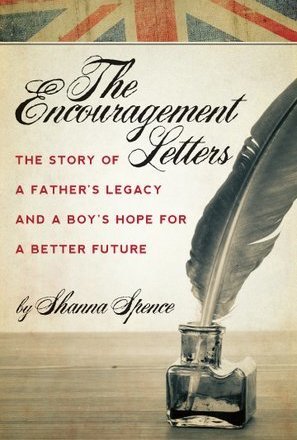
When I read the synopsis for The Encouragement Letters by Shanna Spence, I was intrigued. The cover also drew my attention. I lived in England for over 6 years which is another reason I wanted to read this book. I love all things England! When I got the opportunity to review it, I jumped at the chance!
I found the pacing to be perfect in The Encouragement Letters. This is a middle grade read, and Miss Spence sets the pacing perfectly for that age group. Never once did I feel like the book was too fast or too slow for young readers. I also feel the length of the book was perfect for the age group it targets.
I enjoyed the plot of The Encouragement Letters very much. It was interesting to read about Will's struggles and how he was overcoming them. I loved reading about how kind everyone was to each other. It was as if everyone was one big family. Everyone would help each other out, and that was very encouraging. It was interesting and uplifting to read about Will overcoming his challenges and not becoming a victim of circumstance even when that would have been the easiest thing to do. Reading about how Will was trying to lift everyone up in hard times with his encouragement letters truly was heartwarming. There are no plot twists in this book, but it doesn't need plot twists as it's not that kind of book. All of my questions were answered in the book. There are no cliff hangers whatsoever which was great.
The world building was done very well. Although written in third person, The Encouragement Letters is told through the eyes of 11 year old Will. I feel that Shanna Spence did a fantastic job making it seem as if a real 11 year old is telling the story. Miss Spence also does a great job making you feel as if you are involved with everything going on. Her use of language is profound. A few of the characters' accents were written exactly as they speak. I loved this! This made it that much more realistic. I also loved the Yorkshire dialect guide at the beginning of the book. Shanna Spence does a great job educating and making her readers feel like they are experiencing the Industrial Revolution in England first hand.
I loved every character in The Encouragement Letters. They all felt very real and fleshed out. Will was such a sweet boy as I mentioned earlier. I admired his work ethic and how empathetic he was even at such a young age. I loved all the shop workers and how caring they were towards Will always giving him extra food, scraps of leather, or whatever they had left over. Mary Beth was a character who also stood out to me. I enjoyed when she was mentioned. Maybe it's because I felt like I could relate to her. Like all of the characters in The Encouragement Letters, she had a strong work ethic and was so kind to Will. I thought it was cute how Will seemed to have a bit of a crush on her.
As this is a middle grade read, there aren't many trigger warnings. There is talk of death (Will's father had passed away a year prior when the novel starts) as well as sickness (Will's mother is sick throughout the book, and Will looks after her. There's one scene of violence (Will gets punched in the face), but it is not very graphic and is described in an age appropriate manner.
Overall, The Encouragement Letters is a very inspiring and uplifting novel. The characters are all so kind and have great work ethics, and the book is somewhat educational with describing how life was like during the Industrial Revolution in England. I would definitely recommend The Encouragement Letters by Shanna Spence to those 9+ who need some encouragement or who just love reading uplifting novels. Actually, I'd just recommend this to every and all people who are 9 years and older! This book gets a solid 5 out of 5 stars from me!
(Thank you to the author for providing me with a paperback of this title for a review on a blog tour I am doing in exchange for an honest and unbiased review.)
I found the pacing to be perfect in The Encouragement Letters. This is a middle grade read, and Miss Spence sets the pacing perfectly for that age group. Never once did I feel like the book was too fast or too slow for young readers. I also feel the length of the book was perfect for the age group it targets.
I enjoyed the plot of The Encouragement Letters very much. It was interesting to read about Will's struggles and how he was overcoming them. I loved reading about how kind everyone was to each other. It was as if everyone was one big family. Everyone would help each other out, and that was very encouraging. It was interesting and uplifting to read about Will overcoming his challenges and not becoming a victim of circumstance even when that would have been the easiest thing to do. Reading about how Will was trying to lift everyone up in hard times with his encouragement letters truly was heartwarming. There are no plot twists in this book, but it doesn't need plot twists as it's not that kind of book. All of my questions were answered in the book. There are no cliff hangers whatsoever which was great.
The world building was done very well. Although written in third person, The Encouragement Letters is told through the eyes of 11 year old Will. I feel that Shanna Spence did a fantastic job making it seem as if a real 11 year old is telling the story. Miss Spence also does a great job making you feel as if you are involved with everything going on. Her use of language is profound. A few of the characters' accents were written exactly as they speak. I loved this! This made it that much more realistic. I also loved the Yorkshire dialect guide at the beginning of the book. Shanna Spence does a great job educating and making her readers feel like they are experiencing the Industrial Revolution in England first hand.
I loved every character in The Encouragement Letters. They all felt very real and fleshed out. Will was such a sweet boy as I mentioned earlier. I admired his work ethic and how empathetic he was even at such a young age. I loved all the shop workers and how caring they were towards Will always giving him extra food, scraps of leather, or whatever they had left over. Mary Beth was a character who also stood out to me. I enjoyed when she was mentioned. Maybe it's because I felt like I could relate to her. Like all of the characters in The Encouragement Letters, she had a strong work ethic and was so kind to Will. I thought it was cute how Will seemed to have a bit of a crush on her.
As this is a middle grade read, there aren't many trigger warnings. There is talk of death (Will's father had passed away a year prior when the novel starts) as well as sickness (Will's mother is sick throughout the book, and Will looks after her. There's one scene of violence (Will gets punched in the face), but it is not very graphic and is described in an age appropriate manner.
Overall, The Encouragement Letters is a very inspiring and uplifting novel. The characters are all so kind and have great work ethics, and the book is somewhat educational with describing how life was like during the Industrial Revolution in England. I would definitely recommend The Encouragement Letters by Shanna Spence to those 9+ who need some encouragement or who just love reading uplifting novels. Actually, I'd just recommend this to every and all people who are 9 years and older! This book gets a solid 5 out of 5 stars from me!
(Thank you to the author for providing me with a paperback of this title for a review on a blog tour I am doing in exchange for an honest and unbiased review.)