
BookInspector (124 KP) rated The Snow Angel in Books
Sep 24, 2020
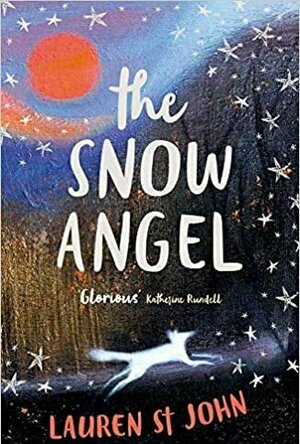

I really enjoyed this book and its complex characters. The protagonist in this novel is Makena. She is a very smart person for an eleven-year-old. Her thoughts about life, survival and friendship were so inspiring to me, that’s why, I think, this book is superb for young readers. Makena teaches so many great values and shows great appreciation for things that matter in life. I really loved that the author chose such unique and original characters. They all had very intriguing personalities and their input in the story was irreplaceable. The story was mostly told from Makena’s perspective, and it was fully sufficient for me.
The narrative was absolutely gorgeous. It has a lot to offer to the reader, it is serious, educational but at the same time playful and magical. I think the author has done a great research for this book, and her personal experience was very well utilized in this novel. There is plenty of surprises in this story, which kept me glued to this book. I really loved the topics which the author was discussing, such as Ebola and its effects on the families they left behind, poverty and fight for survival, charity workers and their lives, and many more. The setting and atmosphere always change in this book, from Mount Kenya to slums, to the Scottish Highlands, so, your imagination will not be bored and will be taking you to various places…
I really enjoyed the writing style of this novel, I think it was very well crafted and I found it easy, and pleasant to read. The chapters are not very short, but for me, they just flew by because I was absorbed by the story itself. It has absolutely stunning illustrations by Catherine Hyde, and it makes the whole reading experience even more pleasant. I did enjoy the ending of this book, I think it rounded the story very nicely and gave the closure which left me very satisfied.
So, to conclude, this is a very beautiful story, filled with inspiring and motivating characters, who made me smile and cry on multiple occasions, and I do strongly recommend this book not only to children but to adults as well. There are plenty of things to learn from little Makena.

Necole (36 KP) rated The Patient in Books
Nov 24, 2021
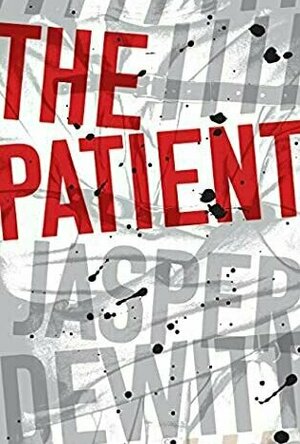

I just got done reading The Patient by Jasper Dewitt and was not expecting to get sucked into a one morning read-a-thon. I think I read it in maybe 2 ½ hours. With that being said, I gave this book a 3-star review, although it should be a 3 ½-star review. I will start with the good and end with the bad.
A young, overconfident psychiatrist gets a new job at a mental asylum and chronicles his attempts to treat a profoundly disturbed patient who has been in the hospital since early childhood through a series of online posts. Each chapter is a new day and a new post that Parker has shared with the readers. This manuscript writing style was a unique way to give us Parker’s perspective and account of what occurred with patient “Joe”. I also enjoyed the transcripts and the audio tapes added into the chapters. These few thing added more layers to the story, sucked you in deeper, and gave an unexpecting twist to the book. It was like you were really reading a true account from whom it occurred to.
After reading all the hype and the synopsis of the book, I was hooked and reeled in. A psychiatrist, a mental patient, an asylum set in my home state of Connecticut, strange occurrences to those who have treated patient “Joe”, misdiagnosis’, undiagnosis’, a 30 plus year mystery … The Patient seemed to have it all!!! Even dark, creepy, supernatural horror!!! A perfectly blended cocktail of psychological thriller and supernatural horror.
Unfortunately, it fell flat for me. I kept anticipating more twists, turns, gore and scare. I wanted this book to haunt me well after I finished. The ending felt rushed and not well thought out, I felt like I was cheated out of being scared out of my mind. There was enough horror, suspense, thrills and mystery to keep me reading but after completing The Patient, I just felt let down. I feel like even as the story unfolds, Jasper could have gotten more in depth with the creepy and horror factor but instead it was almost basic. I tried to let my imagination scare with the images the author tries to put in your mind but again I was disappointed.
If you want a quick read that will scare you a little but will keep the suspense up, then pick this up because one person’s opinion is not another’s and who knows, you might scare more easily than me.

Hadley (567 KP) rated The Turn of the Screw in Books
Mar 24, 2020 (Updated Mar 24, 2020)
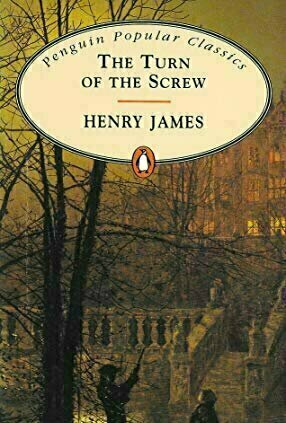

With only 93 pages and the viewpoint of a governess, the story is one that has been up for debate as to its meaning for over a century, a story that blends child abuse and ghostly possession way ahead of its time. But even with its great plot, the story falls short and becomes bland throughout most of its short pages.
So why is the meaning of the Turn of the Screw still being debated? There's only one thing that has caused that --- it's in the way that James wrote the story, nothing is explained and everything is vague, these being very important parts that can keep this book from being enjoyable to many readers. Here's a summary of the story: a woman becomes governess of two children, one of which is sent home from school (technically expelled, in today's terms), the entire book has this woman trying to figure out why the child was sent home, but with ghosts thrown into the mix.
The story starts off with a man telling this ghost story from letters he received from a woman (the governess). But, even at the end of the book, the story never turns back to the man finishing the letters, yet this was done so masterfully that when you are done with the book, you completely forget about the man at the beginning, something that isn't easily done today in most writing. The man is reading these letters to a small audience that is also never revealed why, something that will seem completely irrelevant for the reader.
Readers finally get their paranormal fix when our main character, the governess, sees her first ghost in the Turn of the Screw. Our governess goes on an isolated walk when she spots an older man staring at her from a tower on the estate. But not until after a second encounter with this man, she decides to tell a housemaid about it, who quickly knows whom she speaks of. The maid is very certain that the man the governess has spotted twice is a deceased man that used to work for the family, but the maid is terrified by this because this man seems to have been abusive towards the son of the family and now seems to be continuing to torment him even after death.
Our governess seems to go down a path of paranoia as she seems to believe that the children are seeing the ghosts, too, but refusing to tell her so, and she becomes convinced that the key to getting them to confess is to finding out why the boy was sent home from school in the first place. She tries many times to get him to tell her why, but lets him take control of the conversations where he is able to divert the attention to something else. When things seem to be too much for the governess and housemaid to handle, they decide to try to write the childrens' uncle, and ask him to visit - - - this being the uncle that hired the governess and asked to never be bothered by her again, and that he wants nothing to do with his niece and nephew ever again, and especially don't write to him about any problems.
James is considered one of the greatest authors of the English language, but although this novella did very well, he wasn't known for ghost stories. His most popular book is 'the Portrait of a Lady,' which is about a young woman who comes into a large amount of money only to have it stolen by two con-men. Being that he is a Victorian-era writer, you can expect the overly long paragraphs and descriptions that the time was known for in 'the Turn of the Screw.' I personally felt the story had too many interludes of the governess' thoughts and ideas, which border on rambling. There seemed no point in the governess obsessing over why the boy was sent home from school when there are ghosts tormenting them at home- - - how this mode was suppose to work has left me clueless.
It's a usual horror trope to have children being possessed as the core of a book because it's something that can shake adults to their core at the thought that their own children could be that vulnerable. But James was way ahead of his time in the Turn of the Screw. He was able to put together psychological standpoints that weren't even discussed in his time, bouncing between child abuse with those children acting out to the power that abusers can still hold over their victims, even after death.
I'm giving the story a high rating, although I really didn't enjoy it. Why? Because it was a great idea and it was well written. If James hadn't been so vague on key parts, and hadn't left readers with a shocking unexplained ending, then maybe I would have liked it more. I can only recommend this book to people who like Victorian ghost stories, but for paranormal lovers, I think it falls short.

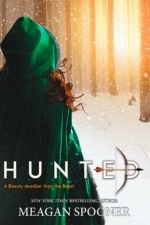

Like the classic tale, Beauty is the youngest of three sisters and daughter of a merchant. In some versions, she also has three brothers and her sisters are unkind - but that is not the case in this retelling. They live in a nice house until a shipping gamble costs them everything. They are forced to move to their father's old hunting cabin, which is a three-day walk from their current home. Her father used to be a hunter, but his wife believed that it was too dangerous and asked him to stop. Despite that, as a child Beauty was allowed to go hunting with her father and learned to love it. Unfortunately, as she grew her father decided that it was not the way a lady should purport herself and no longer allowed her to hunt.
After the loss of their fortune, Yeva and her family must learn to make due with less. Her father takes up hunting again and goes off to catch game for them to store for the winter. Unfortunately, when he returns he is distraught and swears that the Beast he saw when he was younger is stalking him. When he doesn't return from his second trip, Yeva sets out to find him and this is where the story adopts some significantly different elements from the original tale.
In the original, the father enters a castle and accepts his host's hospitality, but upon leaving takes a single rose for his daughter Beauty and is told he has a choice. He shall either be condemned to death for it or he must stay in the castle. While these are not the events that lead to Yeva's time in the castle, nevertheless she ends up imprisoned there. Over time, she and the Beast grow to know one another - but her treatment isn't as kind overall as the original.
I really enjoyed the tales that Yeva told while she was in captivity because they built the lore of the world and gave us a look into what the characters had grown up listening to. Although Yeva spent most of her time as the castle, I do wish that we were able to get to know the other characters like her sisters a little better. They seem very kind, but relatively one-dimensional. As a result of the Beast's curse, I don't feel like we got to know him as well as we could have. I would have loved to watch him grow and connect with him as Yeva does so that I could feel that </i>yes, they could fall in love.</i> I liked Yeva, but her dog Doe-Eyes was probably my favourite character. The dog was so cheerful and loyal that you couldn't help but love her.
The world that Yeva knows is not one we get to see very often in young adult literature. It is a melding of Russia, with its unique environment and folklore, with a more fantastical world. Yeva tells tales of the Firebird, sees a creature that is half dragon and half woman, and learns to listen to the music of that other world. The world itself reminds me a lot of the Grisha trilogy, although the plots and characters are nothing alike. I would love to experience more of the lore that built this enchanted world in the form of novellas.
I would highly recommend this to young adult/teen readers who enjoy fairytales and retellings, especially ones with a unique take on the tale that includes a lot of culture and lore.

Speakaboos - The Reading and Learning App for Kids
Education and Book
App
The only reading app designed to motivate kids to read! ** Over 200 interactive stories & songs that...

A Basket Full Of Toys - Reading Planet series, authored by Sheetal Sharma, is a genre of imaginative fiction whose vibrant and bubbly characters discover the essence of good behaviour in a fun way
Book and Education
App
‘Reading Planet’ series, authored by Sheetal Sharma, is a genre of imaginative fiction whose...

AAA+ Foundr - Entrepreneur Magazine for a Startup
Business and Magazines & Newspapers
App
FREE Download & FREE Trial! Foundr Magazine is leading a movement that reveals exactly what it...
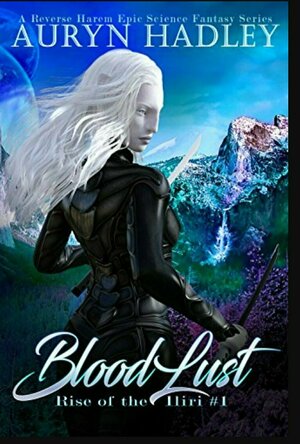
Bloodlust (The Rise Of Iliri #1)
5.0 Rate It
Book
"Bloodlust, and the Rise of the Iliri series as a whole, will blow you mind, break your heart, and...
Young adult Vampire Vampyre Ilirri Young adult Teen

Lottie disney bookworm (1056 KP) rated A Frozen Heart in Books
Sep 20, 2020
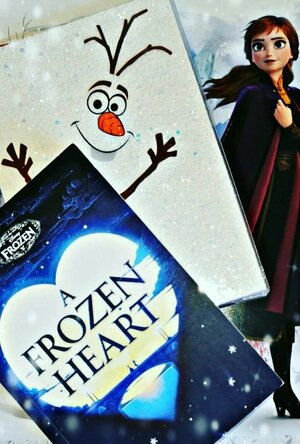
It is this, seemingly simple, difference that gives “A Frozen Heart” it’s edge. The inclusion of Hans’ viewpoint allows us to witness his upbringing as the 13th Prince of The Southern Isles: we visit looming, black, inhospitable castle with it’s stern, hard-to-please King; an absent-minded, weak but loving Queen and the youngest Prince who has been bullied for his entire life.
Rudnick’s characterisation of Hans is nothing less than pure genius. It is difficult to feel anything but pity for Hans during his childhood: he is constantly disappointing his father and being physically and emotionally bullied by his brothers. The only family member whom Hans truly seems to love is his mother but she is portrayed as somewhat absent in her mental state. (As a mother I can only assume this is from having 13 sons! I struggle with 2!)
Even when Hans “plots” his way to Arendelle, it is purely an evacuation plan. He is so desperate to leave the Southern Isles that he believes Elsa, a social enigma of a future queen, is his best chance for a new life. Then, when Hans realises Elsa is a lost cause and goes off singing and dancing into the night with Anna, at first, the reader genuinely believes his intentions are good. It even reminded me of the fan theory that Hans is the real deal until the trolls sing “get the fiancé out of the way”.
Hans is never completely trustworthy though: he is too acutely aware of how others view him and his actions, as well as the relative power those onlookers have and whether they will support him with his next, calculated move.
Hans also seems to be of the opinion that a Queen needs a King and the King will rule. Apart from being adoringly archaic(!), it is likely that this could be an effect of the relationship between his parents: the brief insight we have into the King and Queen of the Southern Isles suggest Hans has never had a strong female role model in his life. Again, Rudnick’s writing and characters implying that Hans is not 100% to blame: perhaps he is merely a product of the harsh environment he was brought up in?
Unfortunately, the deep-rooted power complex instilled from his father wins out in the end and Hans can see no alternative life but one where he is ruler. Thus, the villain in him rises; constantly calculating and predicting how his actions will be judged by others and the tale with which we are so familiar plays out.
Anna’s story runs along similar parallels to Hans, with neglect and isolation from her closest family. However, the way this pain manifests in Anna could not be further than that of the Prince of the Southern Isles.
‘A Frozen Heart’ reflects Anna’s vulnerability in every sentence. As a young girl Anna lost her freedom as well as her best friend and sister; as a teenager she loses her parents and this has formed an extremely fragile, trusting, naïve young woman. Anna has lived the definition of a sheltered childhood: is it any wonder she falls in love with the first man who pays her attention? Anna’s even confesses to herself: “That is all I ever wanted. For someone to love me”.
Despite this, Anna does not present as a weak character. Yes, she is a hopeless romantic: all the best people are in my opinion! However, she is also strong-willed and is willing to go to any lengths to bring back her sister. Rudnick’s first-person perspective only highlights this strength in Anna: she completely accepts her faults and can see the error in her actions, particularly when it comes to Hans, but she can not and will not give up.
I really enjoyed the insight into Hans and Anna’s thoughts and particularly into Hans’ background. However, once this initial thrill was over, I felt that ‘A Frozen Heart’ merely followed along with the plot of the movie and, dare I say, became a bit lazy?
Please don’t misunderstand me, I did enjoy the book and Rudnick did an amazing job bringing to life our favourite characters on the page but I just needed a little bit more: perhaps an insight into Kristoff’s backstory? How does a young boy with a reindeer find himself adopted by trolls? Is Kristoff even an orphan? What has he experienced in order to consider the trolls love doctors?
‘A Frozen Heart’: an interesting concept but maybe played it a little too safe? Please let me know your thoughts.
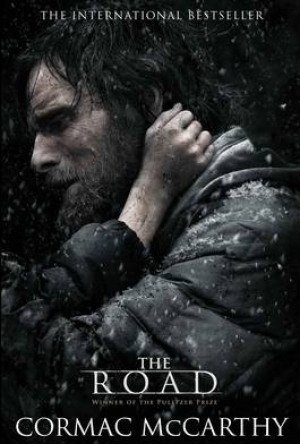
This is a scenario people may have to face one day, especially with the shape the world is in today. Even now people are faced with sticking with their morals and values, from helping our fellow man to the decision of holding a door open for a stranger. The Road, Cormac McCarthy's Pulitzer Prize winning novel, brings the very question of humanity to the forefront, as well as how hard it is to hold onto it.
The father, The Road's main character, takes us on a journey through the mountains in a burned-out America, but the fires that took over are never explained and they didn't need to be. Apparently having been on the move for a couple of years, he wants to take his young son South to survive the winter months that are very close by. Readers get glimpses of what happened the night the grid went down from the father's point-of-view, but so many years have passed that the memories are few, the facts aren't completely straight, and any type of life before the fires seems to have been just a dream. So the two begin the story heading South, dragging everything they have scavenged in their travels inside of a metal shopping cart, and the father isn't sure they'll make it out of the mountains before winter. He only has tattered pieces of a map that they have carried for a long time, having numbered each piece with a broken crayon they had found, making it hard to estimate how far they need to travel.
While traveling, they very rarely run into other people, at one point, when they run into a very bad man, the father realizes he hasn't spoken to another person (other than his son) in at least a year. This is mostly because the majority of people that are still alive are the type of people that would rather kill you and take whatever you have than speak to you. Even most of the houses they come upon are burned and abandoned, but the father sees these buildings as a chance to find food and supplies: "The roadside hedges were gone to rows of black and twisted brambles. No sign of life. He left the boy standing in the road holding the pistol while he climbed an old set of limestone steps and walked down the porch of the farmhouse shading his eyes and peering in the windows. He let himself in through the kitchen. Trash in the floor, old newsprint. China in a breakfront, cups hanging from their hooks. He went down the hallway and stood in the door to the parlor. There was an antique pumporgan in the corner. A television set. Cheap stuffed furniture together with an old handmade cherrywood chifforobe. He climbed the stairs and walked through the bedrooms. Everything covered with ash. A child's room with a stuffed dog on the windowsill looking out at the garden. He went through the closets. He stripped back the beds and came away with two good woolen blankets and went back down the stairs. In the pantry were three jars of homecanned tomatoes. He blew the dust from the lids and studied them. Someone before him had not trusted them and in the end neither did he and he walked out with the blankets over his shoulder and they set off along the road again. " The young son is usually left close by outside because he seems scared that either there will be bad people or dead people inside.
Throughout this incredible, heart wrenching novel, the father slowly becomes more ill with what seems to be a case of pneumonia, possibly caused by all of the ash that is in the air from the fires; this makes him cough uncontrollably. Yet, he doesn't focus on that he may not live too much longer, instead he tries everything to get his son as far South as possible without too much of a plan of what to do when they get there.
The horror of this book is brought to light by the realism of what could happen if the world were to end, when people lose their humanity and begin to kill and eat their fellow humans. It leaves us wondering if we could hold onto what we are today when the basic need for shelter and food become more important than another person's life. But the father and son are examples of the few individuals who are able to hold onto their humanity during the end of the world: they share supplies if they can, they don't kill humans or animals to feed themselves, and they live by one rule: if a person is still alive, they take nothing from them.
The struggle these two go through is very real and believable, and McCarthy's writing is so well done that this book is hard to put down. Even while reading, most won't notice that there is only one character in the entire story that is given a name; our two main characters are never addressed by anything other than Papa or son/boy. The father's worry about keeping his son alive and unharmed is heartbreaking, for instance, one scene where he believes that he and his son are going to be found by cannibals, he quickly goes over with his son on how to shoot himself with the pistol, so neither of them will be taken alive. As a parent, I choked up in quite a few scenes, including this one - - - and as with the film adaptation, I cried heartily at the end.
This emotional, dark novel is an amazing book to read. The Road is bound to leave readers questioning what they would do in the same circumstances as the father. I highly recommend this book to people who love dystopian novels, but beware, this is a story you won't be able to forget.