
Search
Search results
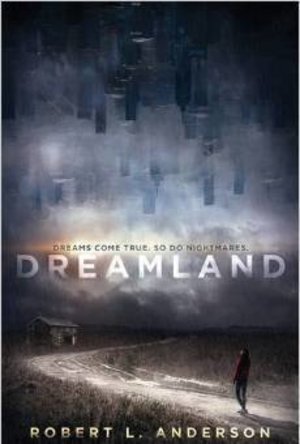

<i>I received this book for free through Goodreads First Reads.</i>
“Dreams come true. So do nightmares.” Dea Donahue has spent her entire life travelling from one state to another, starting school after school… and walking other people’s dreams in order to survive. Dea, like her mother, is a dream walker, but she must keep this a secret from everyone else. She must follow the rules: don’t walk a person’s dream more than once, don’t let the dreamer see you; otherwise the monsters will find you. Or so Dea’s eccentric mother says.
Dea’s mother is a very paranoid person, afraid of many things particularly mirrors, and has a strange obsession for clocks. At any moment she may decide they need to pack up and leave, but Dea has had enough. Especially now that she has met Connor, the first boy to ever treat her nicely, the first boy she could call a friend. But when Dea’s mother goes missing, Dea needs to take a closer look at her mother’s obscure fears in order to track her down. At the same time there are rumours going around suggesting that Connor may not be the nice guy Dea thinks he is.
<i>Dreamland</i> is both a fantasy novel and murder mystery. It is as though Robert L. Anderson has written two different stories and then seamlessly merged them together. The main narrative focuses on Dea’s predicament but Connor’s life is constantly present underneath it. The real life quality to the story line makes the incidents Dea experiences all the more creepy.
Part three of the book becomes more fantasy-like which is a little confusing and difficult to see the setting in the way the author perceives it, however the narrative soon returns to the real world and progresses on with Connor’s story. It is not until this point that the reader realizes that <i>Dreamland</i> is part murder mystery.
As a whole, <i>Dreamland</i> is a gripping read that is difficult to put down. Readers are plagued with questions and anticipations as they wait to find out why Dea can dream walk, what the significance of the mirrors and clocks are, and what happened to Dea’s mother. Once these are resolved a whole bunch of new questions crop up.
The ending is mostly satisfying although it is not completely clear what happens next. Although the reader knows where Dea and Connor both end up, it is largely up to our own interpretation as to what their lives are like once the story ends.
<i>Dreamland</i> is definitely a worthy young adult book to read. It is different to other novels in the genre and brings a whole new concept to the table. I expect this book to rise in popularity rather quickly – and if it does not? Well, lots of people are missing out!
“Dreams come true. So do nightmares.” Dea Donahue has spent her entire life travelling from one state to another, starting school after school… and walking other people’s dreams in order to survive. Dea, like her mother, is a dream walker, but she must keep this a secret from everyone else. She must follow the rules: don’t walk a person’s dream more than once, don’t let the dreamer see you; otherwise the monsters will find you. Or so Dea’s eccentric mother says.
Dea’s mother is a very paranoid person, afraid of many things particularly mirrors, and has a strange obsession for clocks. At any moment she may decide they need to pack up and leave, but Dea has had enough. Especially now that she has met Connor, the first boy to ever treat her nicely, the first boy she could call a friend. But when Dea’s mother goes missing, Dea needs to take a closer look at her mother’s obscure fears in order to track her down. At the same time there are rumours going around suggesting that Connor may not be the nice guy Dea thinks he is.
<i>Dreamland</i> is both a fantasy novel and murder mystery. It is as though Robert L. Anderson has written two different stories and then seamlessly merged them together. The main narrative focuses on Dea’s predicament but Connor’s life is constantly present underneath it. The real life quality to the story line makes the incidents Dea experiences all the more creepy.
Part three of the book becomes more fantasy-like which is a little confusing and difficult to see the setting in the way the author perceives it, however the narrative soon returns to the real world and progresses on with Connor’s story. It is not until this point that the reader realizes that <i>Dreamland</i> is part murder mystery.
As a whole, <i>Dreamland</i> is a gripping read that is difficult to put down. Readers are plagued with questions and anticipations as they wait to find out why Dea can dream walk, what the significance of the mirrors and clocks are, and what happened to Dea’s mother. Once these are resolved a whole bunch of new questions crop up.
The ending is mostly satisfying although it is not completely clear what happens next. Although the reader knows where Dea and Connor both end up, it is largely up to our own interpretation as to what their lives are like once the story ends.
<i>Dreamland</i> is definitely a worthy young adult book to read. It is different to other novels in the genre and brings a whole new concept to the table. I expect this book to rise in popularity rather quickly – and if it does not? Well, lots of people are missing out!
Deborah (162 KP) rated Richard III: The King in the Car Park in Books
Dec 21, 2018


I quote from the final page of this publication: "The writer of this book will face similar virulent criticism. It will be savaged in the book reviews on Amazon, mainly by non-readers, to take its ratings and thus popularity down." In fact, this is the last, but by no means the only rant by the author who appears to have a definite chip on his shoulder for some reason. Since he subjects Thomas Penn's work, 'The Winter King' to such virulent criticism, one can only suspect that he was turned down by Penn's publisher. One can hardly be surprised. I have read this book, despite wanting on a number of occasions to give up in disgust. It is full of errors of spelling (e.g. youngest for younger, now instead of not), so has evidently not had either a proof reader or an editor. There are also many factual errors with names and titles becoming hopelessly confused. On one page we're told that Sir James Tyrell was hanged and a couple of pages later we're told that Henry Tudor was so kind as to merely condescend to cut his head off!
I will admit that with pro-Ricardian sympathies I was probably never going to like this book, but it is a bit of a mess and feels like another case of jumping on the bandwagon. There is no index, no footnotes/endnotes and only a partial list of sources, which is enough to raise questions about academic rigour. If you are going to publish opinions, particular in The Great Debate, these really should be backed up by factual evidence. I think I am most irked by the hypocrisy of Mr Breverton telling us at one point that he is going to take a fresh impartial look at the subject and then immediately showing us exactly which colour he prefers his roses.
His list, near the back of the volume, of all the 'crimes' he thinks Richard III was guilty of really does teeter on the brink of blindness and absurdity. Apparently he is guilty in the case of the Earl of Warwick, son of Richard's older brother, George of Clarence, but whose claim to the throne was barred by his father's attainder (always reversible, but Warwick was then only a child of about 8 years). I'm pretty sure this Warwick was sent to Sheriff Hutton Castle to be brought up with other young persons, as befitted his status by Richard. Of course, as soon as Henry Tudor usurped the throne, this boy was locked up in the Tower only to be executed later on a trumped up charge. I think I know who the guilty party is in that case.
That is my frank opinion on this volume; I will now expect said author to savage me as he has everyone else on Amazon who has pointed out the self-evident shortcomings in this work.
I will admit that with pro-Ricardian sympathies I was probably never going to like this book, but it is a bit of a mess and feels like another case of jumping on the bandwagon. There is no index, no footnotes/endnotes and only a partial list of sources, which is enough to raise questions about academic rigour. If you are going to publish opinions, particular in The Great Debate, these really should be backed up by factual evidence. I think I am most irked by the hypocrisy of Mr Breverton telling us at one point that he is going to take a fresh impartial look at the subject and then immediately showing us exactly which colour he prefers his roses.
His list, near the back of the volume, of all the 'crimes' he thinks Richard III was guilty of really does teeter on the brink of blindness and absurdity. Apparently he is guilty in the case of the Earl of Warwick, son of Richard's older brother, George of Clarence, but whose claim to the throne was barred by his father's attainder (always reversible, but Warwick was then only a child of about 8 years). I'm pretty sure this Warwick was sent to Sheriff Hutton Castle to be brought up with other young persons, as befitted his status by Richard. Of course, as soon as Henry Tudor usurped the throne, this boy was locked up in the Tower only to be executed later on a trumped up charge. I think I know who the guilty party is in that case.
That is my frank opinion on this volume; I will now expect said author to savage me as he has everyone else on Amazon who has pointed out the self-evident shortcomings in this work.

Interactive Alphabet ABC's
Education and Games
App
Positively, the BEST Alphabet experience from crib to kindergarten! Baby - A guided A to Z touchable...

The Adventures of Captain Underpants
Book and Education
App
**Best Apps for Ages 6-8 – selected by Apple** **What’s Hot! – selected by Apple** **Featured...

BookInspector (124 KP) rated Turbulence (The Wanderer #1) in Books
Sep 24, 2020
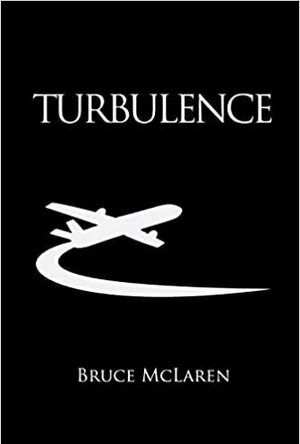
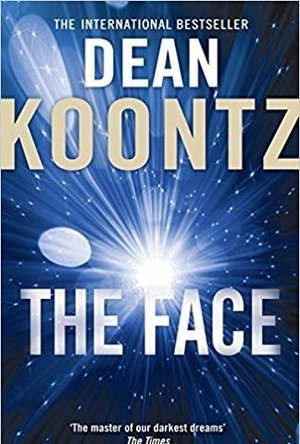
This book is really different from what I would normally read, and I think it’s one of those “either you love it or hate it” books and it definitely should not be judged by its cover. (I think it doesn’t really represent the book and it looks very cold) I read it in one day because to me it was awesome. This book is a collection of twelve trips between different destinations and every story talks about his encounters with women. The main character is an archaeologist and this journey starts when he was 22 years old. He doesn’t have a name or an obvious background story, but the reader can get a lot of snippets of his life through the stories. Everything, from appearance, careers even destinations suggests this book to be somehow directly related to the author himself. Was it real encounters or fictional? That’s what left me very intrigued.
I don’t normally like philosophical reads, but in this one, author disguised and blended in these parts very creatively. I do love to learn new things and facts, especially if it is related to history, and for me, all these parts were an absolute joy to read. I really loved different settings chosen for this novel as well, as I got a glimpse of different cultures and different countries. I really liked that author chose different story variations in this book, sometimes he used to get lucky with the women he met and sometimes he missed the chance or chose not to get involved. It was refreshing and very believable changes of course and I was very interested of what the next story will bring. My absolute favourite was the religious discussions. I think the author will make many Christians unhappy, but I loved all the supporting historical facts he mentioned in this book regarding religion. I don’t even have to mention any research for this book, the author has a PhD degree in history/archaeology so I trust all the information he provided. :)
The writing style of this novel is very poetic and absolutely beautiful. B. McLaren has an amazing way of portraying different topics and uniting them all in a wonderfully flowing story. I do have to throw in a disclaimer that there are some discussion and scenes regarding sex and alcohol, so this book is not suitable for young readers. The chapters were quite long for my liking, but they passed quite quickly because I used to get very absorbed in the story itself. I liked how the author decided to end this story and I think it rounded up this book well. So, to conclude, I had a great fun reading this funny, philosophical one man’s journey through life and his encounters with different women all over the world. I learned a lot, so if you like history, travelling and a little bit of philosophical discussion I think you will enjoy this book :)
I don’t normally like philosophical reads, but in this one, author disguised and blended in these parts very creatively. I do love to learn new things and facts, especially if it is related to history, and for me, all these parts were an absolute joy to read. I really loved different settings chosen for this novel as well, as I got a glimpse of different cultures and different countries. I really liked that author chose different story variations in this book, sometimes he used to get lucky with the women he met and sometimes he missed the chance or chose not to get involved. It was refreshing and very believable changes of course and I was very interested of what the next story will bring. My absolute favourite was the religious discussions. I think the author will make many Christians unhappy, but I loved all the supporting historical facts he mentioned in this book regarding religion. I don’t even have to mention any research for this book, the author has a PhD degree in history/archaeology so I trust all the information he provided. :)
The writing style of this novel is very poetic and absolutely beautiful. B. McLaren has an amazing way of portraying different topics and uniting them all in a wonderfully flowing story. I do have to throw in a disclaimer that there are some discussion and scenes regarding sex and alcohol, so this book is not suitable for young readers. The chapters were quite long for my liking, but they passed quite quickly because I used to get very absorbed in the story itself. I liked how the author decided to end this story and I think it rounded up this book well. So, to conclude, I had a great fun reading this funny, philosophical one man’s journey through life and his encounters with different women all over the world. I learned a lot, so if you like history, travelling and a little bit of philosophical discussion I think you will enjoy this book :)

David McK (3918 KP) rated The Shepherd's Crown in Books
Jan 28, 2019
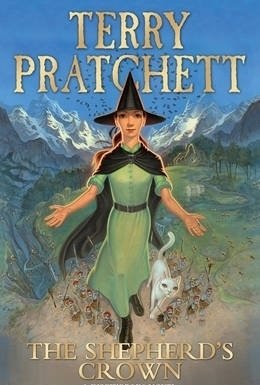

THE FINAL DISCWORLD BOOK
Those four words were always going to make a long-time Discworld reader feel quite emotional, making it hard to objectively review the novel itself: are you reviewing this last peek into Pratchett's mirror reality, or are you reviewing the entire 41-book series? I'm going to try both:
THE SERIES
The first Disworld book I read (I'm pretty sure it was [b: Pyramids|64217|Pyramids (Discworld, #7)|Terry Pratchett|https://images.gr-assets.com/books/1439098306s/64217.jpg|968512]) wasn't actually the first in the series (that would be [b: The Colour of Magic|833512|The Colour of Magic The Illustrated Screenplay|Vadim Jean|https://images.gr-assets.com/books/1347346368s/833512.jpg|17589693]), although I did later go back and read the earlier works. Reading them in order released (as opposed to one of the numerous Discworld Reading Order Guides: I'm quite partial to the 'Unofficial Discworld Reading Order Guide'), you can see how Terry Pratchett's writing style evolved, how he moved from outright satire to a more subtle comedy fantasy that holds a mirror up to real-world issues. Personally, I feel he was at his best at around the mid-way point of the series (say, [b: Maskerade|64305|Maskerade The Play|Terry Pratchett|https://images.gr-assets.com/books/1170622047s/64305.jpg|62427] or [b: Men at Arms|7557548|Men at Arms The Play|Terry Pratchett|https://images.gr-assets.com/books/1353573652s/7557548.jpg|9910828], after he'd found his feet (so-to-speak), but before the 'embuggerance' of his posterior cortical atrophy set in and the novels - perhaps understandably - started becoming almost too serious.
Throughout the series, there was a rich tapestry of characters introduced, from CMOT Dibbler through to the Patrician of Ankh-Morpork, with certain groups of characters (e.g. The City Watch) effectively becoming a sub-series in their own right. One of those groups - Granny Weatherwax (first introduced in [b: Equal Rites|34507|Equal Rites (Discworld, #3; Witches, #1)|Terry Pratchett|https://images.gr-assets.com/books/1407706800s/34507.jpg|583611] and The Witches of Lancre (first introduced in [b: Wyrd Sisters|233664|Wyrd Sisters The Play|Terry Pratchett|https://images.gr-assets.com/books/1388363090s/233664.jpg|17589683] - would later themselves have 'guest spots' in another group of such characters, ostensibly written for Young Adult Readers but still very enjoyable for older; the Nac Mac Feegles (Crivens!) and Tiffany Aching, both of who first appeared in [b: The Wee Free Men|7881001|The Wee Free Men The Beginning (Discworld, #30 & #32)|Terry Pratchett|https://images.gr-assets.com/books/1388181365s/7881001.jpg|22017239]. Which nicely brings me to:
THE NOVEL ITSELF
'The Shepherd's Crown' sees a return of both Tiffany Aching, now a young Witch setting out on her career path, and those Nac Mac Feegles. There's a strong sense of change throughout, kicked off by the surprising early exit of a previous major character in the entire series, leading to old foes - the Elves - to try to make their way back into the world. These Elves, remember, are *not* the dainty do-gooders of Tolkien: these are nasty, malicious, self-serving creatures who last attempted to invade in [b: Lords and Ladies|34529|Lords and Ladies (Discworld, #14; Witches #4)|Terry Pratchett|https://images.gr-assets.com/books/1469186110s/34529.jpg|1185086], before eventually being defeated by Granny Weatherwax, Nanny Ogg and Magrat Garlik. Those three characters make a return in this, as well as bit-parts for the Arch-Chancellor of Unseen University, Ponder Stibbons (and HEX) alongside King Verence and the Patrician. Despite all these, the novel, however, is really Tiffany's story, and of how she finds her feet in the circumstances into which she is rather abruptly thrown. There's also a plot element that recalls [b: Equal Rites|34507|Equal Rites (Discworld, #3; Witches, #1)|Terry Pratchett|https://images.gr-assets.com/books/1407706800s/34507.jpg|583611]: that of a person wanting to do a role that is generally considered to be that for a member of the opposite sex.
As always, footnotes are present and correct, with the novel even raising a few laugh-out-loud moments. While the story does finish with the words 'THE END', the world itself will continue on: all that has come to an end is our ability to peek into it.
In the words of the Nac Mac Feegle: "Waily waily waily ..."
Rating for the series: 5*
Rating for the novel: 4*
Those four words were always going to make a long-time Discworld reader feel quite emotional, making it hard to objectively review the novel itself: are you reviewing this last peek into Pratchett's mirror reality, or are you reviewing the entire 41-book series? I'm going to try both:
THE SERIES
The first Disworld book I read (I'm pretty sure it was [b: Pyramids|64217|Pyramids (Discworld, #7)|Terry Pratchett|https://images.gr-assets.com/books/1439098306s/64217.jpg|968512]) wasn't actually the first in the series (that would be [b: The Colour of Magic|833512|The Colour of Magic The Illustrated Screenplay|Vadim Jean|https://images.gr-assets.com/books/1347346368s/833512.jpg|17589693]), although I did later go back and read the earlier works. Reading them in order released (as opposed to one of the numerous Discworld Reading Order Guides: I'm quite partial to the 'Unofficial Discworld Reading Order Guide'), you can see how Terry Pratchett's writing style evolved, how he moved from outright satire to a more subtle comedy fantasy that holds a mirror up to real-world issues. Personally, I feel he was at his best at around the mid-way point of the series (say, [b: Maskerade|64305|Maskerade The Play|Terry Pratchett|https://images.gr-assets.com/books/1170622047s/64305.jpg|62427] or [b: Men at Arms|7557548|Men at Arms The Play|Terry Pratchett|https://images.gr-assets.com/books/1353573652s/7557548.jpg|9910828], after he'd found his feet (so-to-speak), but before the 'embuggerance' of his posterior cortical atrophy set in and the novels - perhaps understandably - started becoming almost too serious.
Throughout the series, there was a rich tapestry of characters introduced, from CMOT Dibbler through to the Patrician of Ankh-Morpork, with certain groups of characters (e.g. The City Watch) effectively becoming a sub-series in their own right. One of those groups - Granny Weatherwax (first introduced in [b: Equal Rites|34507|Equal Rites (Discworld, #3; Witches, #1)|Terry Pratchett|https://images.gr-assets.com/books/1407706800s/34507.jpg|583611] and The Witches of Lancre (first introduced in [b: Wyrd Sisters|233664|Wyrd Sisters The Play|Terry Pratchett|https://images.gr-assets.com/books/1388363090s/233664.jpg|17589683] - would later themselves have 'guest spots' in another group of such characters, ostensibly written for Young Adult Readers but still very enjoyable for older; the Nac Mac Feegles (Crivens!) and Tiffany Aching, both of who first appeared in [b: The Wee Free Men|7881001|The Wee Free Men The Beginning (Discworld, #30 & #32)|Terry Pratchett|https://images.gr-assets.com/books/1388181365s/7881001.jpg|22017239]. Which nicely brings me to:
THE NOVEL ITSELF
'The Shepherd's Crown' sees a return of both Tiffany Aching, now a young Witch setting out on her career path, and those Nac Mac Feegles. There's a strong sense of change throughout, kicked off by the surprising early exit of a previous major character in the entire series, leading to old foes - the Elves - to try to make their way back into the world. These Elves, remember, are *not* the dainty do-gooders of Tolkien: these are nasty, malicious, self-serving creatures who last attempted to invade in [b: Lords and Ladies|34529|Lords and Ladies (Discworld, #14; Witches #4)|Terry Pratchett|https://images.gr-assets.com/books/1469186110s/34529.jpg|1185086], before eventually being defeated by Granny Weatherwax, Nanny Ogg and Magrat Garlik. Those three characters make a return in this, as well as bit-parts for the Arch-Chancellor of Unseen University, Ponder Stibbons (and HEX) alongside King Verence and the Patrician. Despite all these, the novel, however, is really Tiffany's story, and of how she finds her feet in the circumstances into which she is rather abruptly thrown. There's also a plot element that recalls [b: Equal Rites|34507|Equal Rites (Discworld, #3; Witches, #1)|Terry Pratchett|https://images.gr-assets.com/books/1407706800s/34507.jpg|583611]: that of a person wanting to do a role that is generally considered to be that for a member of the opposite sex.
As always, footnotes are present and correct, with the novel even raising a few laugh-out-loud moments. While the story does finish with the words 'THE END', the world itself will continue on: all that has come to an end is our ability to peek into it.
In the words of the Nac Mac Feegle: "Waily waily waily ..."
Rating for the series: 5*
Rating for the novel: 4*

Becs (244 KP) rated The Crucible in Books
Oct 2, 2019
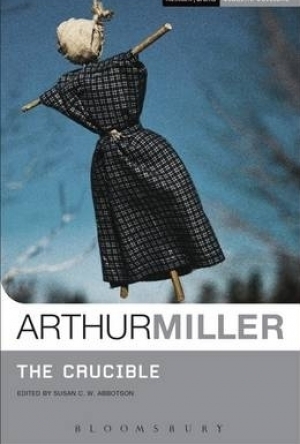

I absolutely love Arthur Miller and anything regarding witches/ the Salem Trials. So, the crucible for me is a five-star novel. Can we just take a moment to admire the writers of the 50’s and older as they don’t seem to be getting much hype lately? Like, literary classics are deemed school reads and not your typical everyday read. THIS NEEDS TO CHANGE.
Reading these in school and then giving them a reread five years after graduating, has shown a new light onto these novels. And has made me appreciate them more as a whole compared to when I read them in high school. If you haven’t read many literary classics, I recommend starting with something by Arthur Miller or George Orwell. Yes, they may be a bit hard to get into at first, but give it time. That’s the key when reading any book!
The Crucible by Arthur Miller
Genre: Literary Classic, Historical Fiction, Plays, Drama
Synopsis: “I believe that the reader will discover here the essential nature of one of the strangest and most awful chapters in human history,” Arthur Miller wrote of his classic play about the witch-hunts and trials in seventeenth-century Salem, Massachusetts. Based on historical people and real events, Miller’s drama is a searing portrait of a community engulfed by hysteria. In the rigid theocracy of Salem, rumors that women are practicing witchcraft galvanize the town’s most basic fears and suspicions; and when a young girl accuses Elizabeth Proctor of being a witch, self-righteous church leaders and townspeople insist that Elizabeth be brought to trial. The ruthlessness of the prosecutors and the eagerness of neighbor to testify against neighbor brilliantly illuminate the destructive power of socially sanctioned violence.
Written in 1953, The Crucible is a mirror Miller uses to reflect the anti-communist hysteria inspired by Senator Joseph McCarthy’s “witch-hunts” in the United States. Within the text itself, Miller contemplates the parallels, writing, “Political opposition… is given an inhumane overlay, which then justifies the abrogation of all normally applied customs of civilized behavior. A political policy is equated with moral right, and opposition to it with diabolical malevolence.”
WIth an introduction by Christopher Bigsby.
Audience/ Reading Level: High School +
Interests: Plays, Drama, Witches, the Salem Trials, Arthur Miller, Literary Classics.
Point of View: Third Person Omniscient
Difficulty Reading: With every literary classic, you run into the problem of the first 30% of the novel being a bore or hard to get into. The Crucible was only a bore in parts but taking the novel as a whole, it was a pretty easy read.
Promise: “I believe that the reader will discover here the essential nature of one of the strangest and most awful chapters in human history.”
Insights: The Crucible is based on true events and Arthur Miller has a way of explaining everything that was wrong with the way people lived. I.E. Woman did not have rights until the early 1920’s. This didn’t stop some countries/states to still not allow the woman to have rights. But taking The Crucible into perspective, the women that were charged with witchcraft were unable to explain themselves to the men. The men believed the accusers either because they were sleeping with them or because they were their family. Luckily, nowadays we don’t have this extreme of situations but it still does exist. The Crucible teaches all of its readers, young or old, many valuable lessons that are sometimes hard to witness. Plus, Miller correlates the events in the Crucible to the anti-communist McCarthyism of the 1950s.
Favorite Quotes: “I speak my own sins; I cannot judge another. I have no tongue for it.”
“Because it is my name! Because I cannot have another in my life! Because I lie and sign myself to lies! Because I am not worth the dust on the feet of them that hang! How may I live without my name? I have given you my soul; leave me my name!”
“You are pulling down heaven and raising up a whore”
What will you gain: A love for another literary classic and a love for Arthur Miller if you do not already love his writing. Plus, a great historical read.
Aesthetics: The witches, the trials, the way people take sides, I mean I can’t say much more without giving spoilers away. We wouldn’t want that, now would we?
“It is rare for people to be asked the question which puts them squarely in front of themselves”
Reading these in school and then giving them a reread five years after graduating, has shown a new light onto these novels. And has made me appreciate them more as a whole compared to when I read them in high school. If you haven’t read many literary classics, I recommend starting with something by Arthur Miller or George Orwell. Yes, they may be a bit hard to get into at first, but give it time. That’s the key when reading any book!
The Crucible by Arthur Miller
Genre: Literary Classic, Historical Fiction, Plays, Drama
Synopsis: “I believe that the reader will discover here the essential nature of one of the strangest and most awful chapters in human history,” Arthur Miller wrote of his classic play about the witch-hunts and trials in seventeenth-century Salem, Massachusetts. Based on historical people and real events, Miller’s drama is a searing portrait of a community engulfed by hysteria. In the rigid theocracy of Salem, rumors that women are practicing witchcraft galvanize the town’s most basic fears and suspicions; and when a young girl accuses Elizabeth Proctor of being a witch, self-righteous church leaders and townspeople insist that Elizabeth be brought to trial. The ruthlessness of the prosecutors and the eagerness of neighbor to testify against neighbor brilliantly illuminate the destructive power of socially sanctioned violence.
Written in 1953, The Crucible is a mirror Miller uses to reflect the anti-communist hysteria inspired by Senator Joseph McCarthy’s “witch-hunts” in the United States. Within the text itself, Miller contemplates the parallels, writing, “Political opposition… is given an inhumane overlay, which then justifies the abrogation of all normally applied customs of civilized behavior. A political policy is equated with moral right, and opposition to it with diabolical malevolence.”
WIth an introduction by Christopher Bigsby.
Audience/ Reading Level: High School +
Interests: Plays, Drama, Witches, the Salem Trials, Arthur Miller, Literary Classics.
Point of View: Third Person Omniscient
Difficulty Reading: With every literary classic, you run into the problem of the first 30% of the novel being a bore or hard to get into. The Crucible was only a bore in parts but taking the novel as a whole, it was a pretty easy read.
Promise: “I believe that the reader will discover here the essential nature of one of the strangest and most awful chapters in human history.”
Insights: The Crucible is based on true events and Arthur Miller has a way of explaining everything that was wrong with the way people lived. I.E. Woman did not have rights until the early 1920’s. This didn’t stop some countries/states to still not allow the woman to have rights. But taking The Crucible into perspective, the women that were charged with witchcraft were unable to explain themselves to the men. The men believed the accusers either because they were sleeping with them or because they were their family. Luckily, nowadays we don’t have this extreme of situations but it still does exist. The Crucible teaches all of its readers, young or old, many valuable lessons that are sometimes hard to witness. Plus, Miller correlates the events in the Crucible to the anti-communist McCarthyism of the 1950s.
Favorite Quotes: “I speak my own sins; I cannot judge another. I have no tongue for it.”
“Because it is my name! Because I cannot have another in my life! Because I lie and sign myself to lies! Because I am not worth the dust on the feet of them that hang! How may I live without my name? I have given you my soul; leave me my name!”
“You are pulling down heaven and raising up a whore”
What will you gain: A love for another literary classic and a love for Arthur Miller if you do not already love his writing. Plus, a great historical read.
Aesthetics: The witches, the trials, the way people take sides, I mean I can’t say much more without giving spoilers away. We wouldn’t want that, now would we?
“It is rare for people to be asked the question which puts them squarely in front of themselves”

Kristy H (1252 KP) rated Two Kinds of Truth (Harry Bosch #20) in Books
Jan 10, 2018
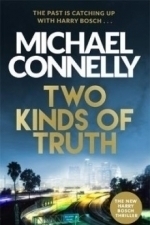
Another wonderful mystery novel featuring Connelly's excellently developed lead detective
Michael Connelly's iconic detective, Harry Bosch, is back again. Harry's basically a volunteer for the San Fernando police department, working cold cases for the tiny force and mentoring their three young detectives. When they are called out for a murder of a father and son at a local pharmacy, Harry assists the inexperienced team in trying to track down the killers. The case leads Harry and his detectives into the dark world of opiates--both the big money of pill mills and the sad, cold side of addiction. Meanwhile, Harry hears from his former employer, the LAPD, when one of his thirty-year-old cases is reopened based on new evidence. Even worse, the killer is claiming Harry framed him. The case threatens Harry's most prized possession: his reputation as a cop, and he knows that no one will fight to clear his name like himself. The two unrelated cases pull at different sides of Bosch as he works to discover all different facets of the truth.
I love Harry Bosch so much, and there will be a hole in my heart when Connelly no longer writes about him. I actually moved this book up in my rotation (something I rarely ever do!) so I could read it on a weekend trip to Chicago, and my only regret is that it meant I finished it in about 48 hours, and now it's over. Per usual, Connelly gives us yet another wonderful mystery novel featuring his excellently developed lead detective. This one covers the timely topic of the opiate crisis, which looms fairly large in America today. It's well-researched, as always.
Reading a Bosch novel is like picking up with an old friend, and this one is no different. Our Bosch is aging, which this book acknowledges well. We see Bosch still grappling with having left the LAPD--who can he trust, what can he do with his life now. We even get some appearances from previous characters in earlier novels. Perhaps the best thing is a fairly large role for Bosch's half brother Mickey Haller, the famed "Lincoln Lawyer." These two are still figuring out their own relationship, but it's a treat for us readers to get a glimpse of Mickey; we even get to see some of his enjoyable courtroom antics. There's even an appearance from Mickey's investigator, Cisco! (See, it's like being old friends!)
And, of course, we can't forget the actual story, which, in usual Connelly style is excellent and tracks along flawlessly along Bosch's own journey. The opiate tale is both fascinating and depressing, while Bosch's unraveling of the backstory behind the reopened cold case will certainly keep you reading. There's never really any crazy twists or turns, but the novel moves along steadily and easily. There's both growth and angst with Bosch--I have to admit, I worry about the end of his arc, but I will still enjoy every moment I get with him until them.
Another enjoyable one for the Bosch canon--certainly recommend!
I love Harry Bosch so much, and there will be a hole in my heart when Connelly no longer writes about him. I actually moved this book up in my rotation (something I rarely ever do!) so I could read it on a weekend trip to Chicago, and my only regret is that it meant I finished it in about 48 hours, and now it's over. Per usual, Connelly gives us yet another wonderful mystery novel featuring his excellently developed lead detective. This one covers the timely topic of the opiate crisis, which looms fairly large in America today. It's well-researched, as always.
Reading a Bosch novel is like picking up with an old friend, and this one is no different. Our Bosch is aging, which this book acknowledges well. We see Bosch still grappling with having left the LAPD--who can he trust, what can he do with his life now. We even get some appearances from previous characters in earlier novels. Perhaps the best thing is a fairly large role for Bosch's half brother Mickey Haller, the famed "Lincoln Lawyer." These two are still figuring out their own relationship, but it's a treat for us readers to get a glimpse of Mickey; we even get to see some of his enjoyable courtroom antics. There's even an appearance from Mickey's investigator, Cisco! (See, it's like being old friends!)
And, of course, we can't forget the actual story, which, in usual Connelly style is excellent and tracks along flawlessly along Bosch's own journey. The opiate tale is both fascinating and depressing, while Bosch's unraveling of the backstory behind the reopened cold case will certainly keep you reading. There's never really any crazy twists or turns, but the novel moves along steadily and easily. There's both growth and angst with Bosch--I have to admit, I worry about the end of his arc, but I will still enjoy every moment I get with him until them.
Another enjoyable one for the Bosch canon--certainly recommend!

Acanthea Grimscythe (300 KP) rated The Fall of Lisa Bellow in Books
May 16, 2018
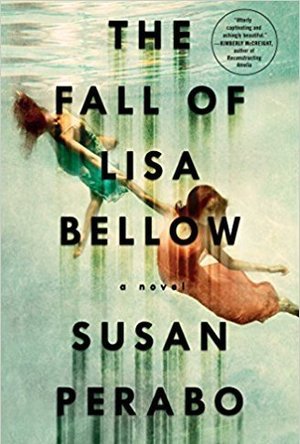
Though wonderfully written, <i>The Fall of Lisa Bellow</i> is not what I expected it to be. That isn't to say that it isn't a good read, -- it most definitely is -- but because it was not as I had envisioned it, it took me much longer to get through the book than I had anticipated.
After school one day, thirteen-year-old Meredith Oliver decides she is in dire need of a large root beer as a reward to herself for completing her test in Algebra II. While there, she encounters Lisa Bellow, a popular girl she's grown up with and cannot stand. Any interaction that might have occurred between the two is cut short when an armed and masked man comes into the sandwich shop to rob it. Then, as an afterthought, he kidnaps Lisa, leaving Meredith and her family to deal with the trauma.
The Oliver family is horrible, though. Possessing attitudes that are largely and entirely focused on themselves, the main characters from whose perspective we read, Meredith and her mother, Claire, are absolutely unlovable. While not on the level of Gone Girl bad, they do serve as stark reminders of how low humans can sink in their day to day interactions. I do feel that Perabo fairly accurately portrayed the mind of a thirteen-year-old girl, at least, from the mindset of what those my age may have experienced in school. I can't really speak for today's children, as, contrary to the belief of our own parents, that things never change, we all know they do. In that regard, the slut-shaming was almost unbearable. It seemed the only reason Meredith had to dislike Lisa was her good looks and poor attitude, to which she responded by constantly referring to her in derogatory terms. Personally, I cannot recall referring to girls in my eighth grade class as sluts: in fact, I don't even remember which girls were popular and pretty.
Given that a young girl has been kidnapped, as a reader, you might expect the story to also focus a bit on finding said victim. Instead, it takes a unique approach by focusing not on the victim and her family, but rather the girl that was not kidnapped and her own, which is far more dysfunctional than it might seem. Some of that can be attributed to the two tragedies they've faced back to back, while the rest likely has to do with how the characters simply are. The plot follows Meredith's changes through what she has experienced, providing readers with a coming-of-age story, rather than something that is suspenseful. There's really not a whole to guess, and even as the book comes to a conclusion, there are questions that are left unanswered, issues that are unaddressed, and ultimately, bridges that are not mended.
<i>The Fall of Lisa Bellow</i> is beautiful, even if it isn't really much of a suspense. If you're looking for something on the more tame side of abduction tales, it fits that bill. I would like to thank NetGalley, Simon & Schuster, and the author for providing me with an advanced copy in exchange for an honest, unbiased review.
After school one day, thirteen-year-old Meredith Oliver decides she is in dire need of a large root beer as a reward to herself for completing her test in Algebra II. While there, she encounters Lisa Bellow, a popular girl she's grown up with and cannot stand. Any interaction that might have occurred between the two is cut short when an armed and masked man comes into the sandwich shop to rob it. Then, as an afterthought, he kidnaps Lisa, leaving Meredith and her family to deal with the trauma.
The Oliver family is horrible, though. Possessing attitudes that are largely and entirely focused on themselves, the main characters from whose perspective we read, Meredith and her mother, Claire, are absolutely unlovable. While not on the level of Gone Girl bad, they do serve as stark reminders of how low humans can sink in their day to day interactions. I do feel that Perabo fairly accurately portrayed the mind of a thirteen-year-old girl, at least, from the mindset of what those my age may have experienced in school. I can't really speak for today's children, as, contrary to the belief of our own parents, that things never change, we all know they do. In that regard, the slut-shaming was almost unbearable. It seemed the only reason Meredith had to dislike Lisa was her good looks and poor attitude, to which she responded by constantly referring to her in derogatory terms. Personally, I cannot recall referring to girls in my eighth grade class as sluts: in fact, I don't even remember which girls were popular and pretty.
Given that a young girl has been kidnapped, as a reader, you might expect the story to also focus a bit on finding said victim. Instead, it takes a unique approach by focusing not on the victim and her family, but rather the girl that was not kidnapped and her own, which is far more dysfunctional than it might seem. Some of that can be attributed to the two tragedies they've faced back to back, while the rest likely has to do with how the characters simply are. The plot follows Meredith's changes through what she has experienced, providing readers with a coming-of-age story, rather than something that is suspenseful. There's really not a whole to guess, and even as the book comes to a conclusion, there are questions that are left unanswered, issues that are unaddressed, and ultimately, bridges that are not mended.
<i>The Fall of Lisa Bellow</i> is beautiful, even if it isn't really much of a suspense. If you're looking for something on the more tame side of abduction tales, it fits that bill. I would like to thank NetGalley, Simon & Schuster, and the author for providing me with an advanced copy in exchange for an honest, unbiased review.