
Search
Search results

Lottie disney bookworm (1056 KP) rated Frozen 2: Dangerous Secrets: The Story of Iduna and Agnarr in Books
Dec 29, 2020
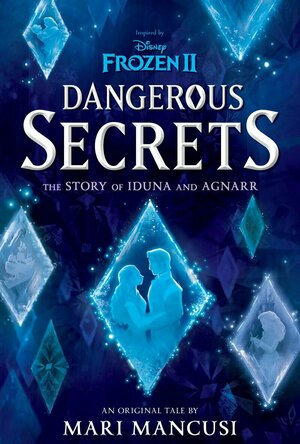

Dangerous Secrets is the greatly anticipated prequel to Frozen II which, for the first time in forever, shines the spotlight onto King Agnarr and Queen Iduna of Arendelle.
The 2019 film undoubtedly revealed some of these secrets, such as Iduna being Northuldra and saving Agnarr as a child as well as the two of them venturing to Ahtohallan to find the answers behind Elsa’s powers. Unfortunately, thanks to the film, we also know that they never completed their journey.
Cue Mari Mancusi who expertly bring the monarchs back to life through her writing and forms these little-known characters into best friends, young lovers and torn parents, always just trying to do the next right thing.
The back stories of Agnarr and Iduna are nothing short of brilliant: the reader meets both characters in the Enchanted Forest on the fateful day of the dam celebration and we experience the wonder of both worlds colliding, along with the following danger and confusion from a first-person perspective.
I thoroughly appreciated how Mari Mancusi didn’t have to explain what had happened between the Arendellian forces and the Northuldra: Mancusi knows that the reader already knows the true turn of events from the movie. All throughout Dangerous Secrets this “inside knowledge” is used beautifully: allowing us to experience events as our protagonists do, but without diluting the tension and excitement with explanations.
The reader grows up alongside the future King and Queen, seeing their friendship blossom and experiencing their respective heartbreaks and secrets. The Northuldra are widely believed to be enemies of Arendelle due to the King’s death and the rumours surrounding it. Iduna’s hardship of hiding her true identity is matched only by her grief of losing the only family she has ever known. Similarly, Agnarr has lost a father, his best friend General Matthias and now has to learn how to be a King. Even when they find solace in their friendship and the later romance that this grows into, Iduna is not royalty: their love is doomed from the start…isn’t it?
Regular readers of my reviews will know I loved Jen Calonita’s “Let it Go” but felt that towards the end the writing emulated the movie verbatim in places. I found Kamilla Benko’s “Forest of Shadows” interesting and unique but ultimately it tried too hard to insert different elements into the Frozen universe that we know and love.
In my opinion, Dangerous Secrets contains none of these criticisms.
Elements of the movie are included, of course they are! Agnarr and Iduna’s reading tree is taken straight out of Elsa’s/Ahtohallan’s ice memories; Oaken’s trading post and sauna is briefly mentioned as a rest stop during one of the couple’s adventures and the wonder of chocolate is something Elsa and Anna definitely inherited from their parents!
The difference with this novel is that any references to the movie are easter eggs: elements that we love to spot; they are not brash and in-your-face; they are subtle and add to the story rather than creating it entirely. For example, I loved the inclusion of Grand-Pabbie and the trolls. I also suspect we may have met Kristoff’s mother – perhaps opening the door to another book from Mari Mancusi?
Of course, Dangerous Secrets can only end with the fateful voyage made by the royal couple and, true to form, this made me cry my little heart out. I know from the author’s note that Mari Mancusi is a mother herself but I feel that I would have known this anyway through the sheer heartbreak she portrays through Iduna, and later Agnarr. From their first discovery of Elsa’s powers; to Anna’s accident; to acknowledging that they were endangering Elsa by asking her to “conceal, don’t feel” right up until the couple’s realisation that they will never see their daughters again: the writing is powerful, hard-hitting and, with Ahtohallan’s last gift, stunningly beautiful.
This is a five-star glimpse into the King and Queen of Arendelle and a must-read for any fan of Frozen.
Will Mancusi reveal the secret of the ice-gatherer woman’s identity next?
Only Ahtohallan knows.
The 2019 film undoubtedly revealed some of these secrets, such as Iduna being Northuldra and saving Agnarr as a child as well as the two of them venturing to Ahtohallan to find the answers behind Elsa’s powers. Unfortunately, thanks to the film, we also know that they never completed their journey.
Cue Mari Mancusi who expertly bring the monarchs back to life through her writing and forms these little-known characters into best friends, young lovers and torn parents, always just trying to do the next right thing.
The back stories of Agnarr and Iduna are nothing short of brilliant: the reader meets both characters in the Enchanted Forest on the fateful day of the dam celebration and we experience the wonder of both worlds colliding, along with the following danger and confusion from a first-person perspective.
I thoroughly appreciated how Mari Mancusi didn’t have to explain what had happened between the Arendellian forces and the Northuldra: Mancusi knows that the reader already knows the true turn of events from the movie. All throughout Dangerous Secrets this “inside knowledge” is used beautifully: allowing us to experience events as our protagonists do, but without diluting the tension and excitement with explanations.
The reader grows up alongside the future King and Queen, seeing their friendship blossom and experiencing their respective heartbreaks and secrets. The Northuldra are widely believed to be enemies of Arendelle due to the King’s death and the rumours surrounding it. Iduna’s hardship of hiding her true identity is matched only by her grief of losing the only family she has ever known. Similarly, Agnarr has lost a father, his best friend General Matthias and now has to learn how to be a King. Even when they find solace in their friendship and the later romance that this grows into, Iduna is not royalty: their love is doomed from the start…isn’t it?
Regular readers of my reviews will know I loved Jen Calonita’s “Let it Go” but felt that towards the end the writing emulated the movie verbatim in places. I found Kamilla Benko’s “Forest of Shadows” interesting and unique but ultimately it tried too hard to insert different elements into the Frozen universe that we know and love.
In my opinion, Dangerous Secrets contains none of these criticisms.
Elements of the movie are included, of course they are! Agnarr and Iduna’s reading tree is taken straight out of Elsa’s/Ahtohallan’s ice memories; Oaken’s trading post and sauna is briefly mentioned as a rest stop during one of the couple’s adventures and the wonder of chocolate is something Elsa and Anna definitely inherited from their parents!
The difference with this novel is that any references to the movie are easter eggs: elements that we love to spot; they are not brash and in-your-face; they are subtle and add to the story rather than creating it entirely. For example, I loved the inclusion of Grand-Pabbie and the trolls. I also suspect we may have met Kristoff’s mother – perhaps opening the door to another book from Mari Mancusi?
Of course, Dangerous Secrets can only end with the fateful voyage made by the royal couple and, true to form, this made me cry my little heart out. I know from the author’s note that Mari Mancusi is a mother herself but I feel that I would have known this anyway through the sheer heartbreak she portrays through Iduna, and later Agnarr. From their first discovery of Elsa’s powers; to Anna’s accident; to acknowledging that they were endangering Elsa by asking her to “conceal, don’t feel” right up until the couple’s realisation that they will never see their daughters again: the writing is powerful, hard-hitting and, with Ahtohallan’s last gift, stunningly beautiful.
This is a five-star glimpse into the King and Queen of Arendelle and a must-read for any fan of Frozen.
Will Mancusi reveal the secret of the ice-gatherer woman’s identity next?
Only Ahtohallan knows.
Lottie disney bookworm (1056 KP) rated Poor Unfortunate Soul: A Tale of the Sea Witch (Villains #3) in Books
Sep 7, 2019

Contains spoilers, click to show
A review by The Disney Bookworm:
The third instalment in Serena Valentino’s villain’s tales is the story of Ursula. I was really looking forward to this: after scaring the beejeeeesus out of me as a kid, Ursula has become my favourite villain as an adult. She definitely projects the body confidence I lack that’s for sure!
Regular readers will know I was left a little disappointed by The Beast Within and so it was with some trepidation that I ventured onto the next novel in the series. However, I was too tempted by the promise of a backstory to my favourite sassy octopus.
Poor Unfortunate Soul starts off really well, as is the case with all Valentino’s books. We meet Ursula as an orphaned human girl, raised by a loving adoptive father but never accepted by the villagers around her. She is acutely aware that she is different and is constantly drawn to the sea. However, when the villagers realise Ursula’s true form and start a literal witch hunt, her father tries to protect her and it ends tragically.
Vengeful and alone, Ursula returns to the sea and discovers her family isn’t lost to her after all: she has a brother, Triton.
Unfortunately, but not surprisingly, Triton and Ursula are not destined for an emotional reunion and a game of happy families. Instead, Triton wants Ursula to conform to his idea of beauty and live in his kingdom as a mermaid. He also refuses to share his throne with Ursula: something their parents aspired to.
The siblings also disagree over the treatment of humans. Although both despise the race, the sea king disapproves of his sister’s vengeful ways and eventually banishes her from his kingdom. This only adds fuel to Ursula’s rage, causing her to plot to destroy her tyrant brother by using his youngest daughter: Ariel.
We all know how that story goes!
I really enjoyed this backstory to Ursula and the twist that her and Triton were related but separated when they were young. In my opinion it gave me what I wanted from the villains series: empathy for the villain.
However, as was the case in The Beast Within, I was willing for this to be fleshed out more. How were Triton and Ursula separated? What was the kingdom like when the siblings attempted to cohabitate? Ariel’s mother is briefly mentioned as a friend to Ursula – was it her death that permanently severed Triton and Ursula’s relationship? In my opinion, Ursula’s brief relationship with her brother is the lynch pin in her demise but the details are glossed over as an almost appendix in the story. I wanted more of this and less of Tulip!
Ah yes, Tulip is back! Although for the life of me I’m not sure why!
Yes, she was in the last book and we know she made a deal with Ursula.
Yes, she links the books together, particularly with the references to Maleficent’s evil doings in a neighbouring kingdom.
Yes, she has a friendship with Circe and Pflanze: allowing the odd sisters to locate their beloved sister.
Yes, she has a weird nanny who feels like she should be someone but I’m not entirely sure whom.
But dear god she takes up too much of these books. She clearly regained her beauty for a reason and I’m sure her royal suitor has a future role but she just doesn’t interest me as a character. She’s an extra: popping up now and again to make some link in the storyline.
I can’t delve much further into this book without completely ruining the story for you so let me just say that I enjoyed the book more than The Beast Within. Poor Unfortunate Soul gave me the backstory of Ursula and allowed me to witness how her hate and thirst for power consumed her, as well as the consequences of this.
The novel was less heavily involved with the Odd Sisters than The Beast Within. It seemed that the villain was the main focus which was in keeping with Fairest of All and greatly appreciated. However, I was still left wanting more: these are thin books and a quick read; I just feel that the opportunities for developing real, complex villains are being missed.
The third instalment in Serena Valentino’s villain’s tales is the story of Ursula. I was really looking forward to this: after scaring the beejeeeesus out of me as a kid, Ursula has become my favourite villain as an adult. She definitely projects the body confidence I lack that’s for sure!
Regular readers will know I was left a little disappointed by The Beast Within and so it was with some trepidation that I ventured onto the next novel in the series. However, I was too tempted by the promise of a backstory to my favourite sassy octopus.
Poor Unfortunate Soul starts off really well, as is the case with all Valentino’s books. We meet Ursula as an orphaned human girl, raised by a loving adoptive father but never accepted by the villagers around her. She is acutely aware that she is different and is constantly drawn to the sea. However, when the villagers realise Ursula’s true form and start a literal witch hunt, her father tries to protect her and it ends tragically.
Vengeful and alone, Ursula returns to the sea and discovers her family isn’t lost to her after all: she has a brother, Triton.
Unfortunately, but not surprisingly, Triton and Ursula are not destined for an emotional reunion and a game of happy families. Instead, Triton wants Ursula to conform to his idea of beauty and live in his kingdom as a mermaid. He also refuses to share his throne with Ursula: something their parents aspired to.
The siblings also disagree over the treatment of humans. Although both despise the race, the sea king disapproves of his sister’s vengeful ways and eventually banishes her from his kingdom. This only adds fuel to Ursula’s rage, causing her to plot to destroy her tyrant brother by using his youngest daughter: Ariel.
We all know how that story goes!
I really enjoyed this backstory to Ursula and the twist that her and Triton were related but separated when they were young. In my opinion it gave me what I wanted from the villains series: empathy for the villain.
However, as was the case in The Beast Within, I was willing for this to be fleshed out more. How were Triton and Ursula separated? What was the kingdom like when the siblings attempted to cohabitate? Ariel’s mother is briefly mentioned as a friend to Ursula – was it her death that permanently severed Triton and Ursula’s relationship? In my opinion, Ursula’s brief relationship with her brother is the lynch pin in her demise but the details are glossed over as an almost appendix in the story. I wanted more of this and less of Tulip!
Ah yes, Tulip is back! Although for the life of me I’m not sure why!
Yes, she was in the last book and we know she made a deal with Ursula.
Yes, she links the books together, particularly with the references to Maleficent’s evil doings in a neighbouring kingdom.
Yes, she has a friendship with Circe and Pflanze: allowing the odd sisters to locate their beloved sister.
Yes, she has a weird nanny who feels like she should be someone but I’m not entirely sure whom.
But dear god she takes up too much of these books. She clearly regained her beauty for a reason and I’m sure her royal suitor has a future role but she just doesn’t interest me as a character. She’s an extra: popping up now and again to make some link in the storyline.
I can’t delve much further into this book without completely ruining the story for you so let me just say that I enjoyed the book more than The Beast Within. Poor Unfortunate Soul gave me the backstory of Ursula and allowed me to witness how her hate and thirst for power consumed her, as well as the consequences of this.
The novel was less heavily involved with the Odd Sisters than The Beast Within. It seemed that the villain was the main focus which was in keeping with Fairest of All and greatly appreciated. However, I was still left wanting more: these are thin books and a quick read; I just feel that the opportunities for developing real, complex villains are being missed.

Hadley (567 KP) rated The Amazing Crime and Trial of Leopold and Loeb in Books
Apr 13, 2019

"The crime itself was indefensible. The brilliant, spoiled and bored sons of two of Chicago's wealthiest families planned to commit the perfect crime both for the thrill of and to prove their perverse misunderstanding of Friedrich Nietzsche's philosophy of the 'superman,' who was above all law so long as he made no mistake. Their plan, worked out over several months, was to kidnap and immediately kill one of their younger neighbors and hide his body. They would then demand and collect a ransom. The body would never be discovered, the crime would never be solved and only they would know that they had prevailed over ordinary human beings and their simple-minded legal system. But far from being the 'perfect crime,' the murder of 14-year-old Bobby Franks turned out to be amateurishly botched. Before any ransom could be paid, the boy's body was discovered in a culvert near where Nathan Leopold often went bird-watching. A pair of telltale glasses were found adjacent to the body. They were easily traced to Leopold who first came up with a paper-thin alibi and soon thereafter confessed to the crime. His fellow murderer likewise confessed. Each of the 'superboys' placed blame for the actual killing on the other." - Alan M. Dershowitz
If you mentioned the names Leopold and Loeb today, many people wouldn't know who you were talking about, but if you had mentioned them just thirty years ago, many people would recall the 'murder of the century.'
If you are a fan of the True Crime genre, you'll come across the case of two wealthy Chicago boys who thought they could get away with murder. (The trial is probably the most talked about trial to-date because this is the first time that psychology was brought before a court room.)
For a good part of the late 1920's, Leopold and Loeb were household names for good reason: they came from millionaire families, they were college graduates before they were 18-years-old, and their trial was the first time in history that the world saw psychology put in front of a judge. The trial was even more unforgettable due to a closing speech given by famous defense attorney, Clarence Darrow, which is reprinted in its entirety,spanning a hefty 93 pages.
Nathan Leopold, Jr. and Richard Loeb were two people who should have never met, according to the courtroom. The two met at about the age of fifteen, soon after they began to embark on criminal acts together, ranging from theft to arson. It's stated in 'the Amazing Crime and Trial of Leopold and Loeb' that Loeb had created a fantasy world where he was a crime ringleader that was too smart for the police to catch. Readers get to judge for themselves whether or not they believe Loeb was the cause of their crimes, or if Leopold was the one really in charge.
After robbing Loeb's fraternity house together, Leopold and Loeb came up with a plan to kidnap a wealthy child that they could then ransom. "They began to devise elaborate plans for this kidnapping, and soon the planning became the all-important thing. They gave up the idea of kidnapping this particular person [a young man named William], and settled on the idea of kidnapping anyone who would fit in their kidnapping plans." Throughout the book, we find out that the boys were pretty desperate for a kidnapping victim, that they even thought about kidnapping one of their close friends:
"The plan of kidnaping Dick Rubel was given up because Dick Rubel's father was so tight we might not get any money from him."
Leopold and Loeb discussed everything from how they would receive the ransom, what weapons they would use, how they would get the victim inside a rented vehicle, and what they would do with the body afterwards. "In March, 1924, the patient [Loeb] conceived the idea of securing the money by having it thrown off a moving train. This idea was discussed in great detail, and gradually developed into a carefully systematized plan. As time wore on the plan became greatly modified from the original one. They discussed at considerable length the choice of a suitable subject for kidnapping. The patient's companion [Leopold] suggested that they kidnap a young girl instead of a boy, but the patient [Loeb] objected to this. His companion [Leopold] also suggested that they kidnap the patient's [Loeb] younger brother, but the patient apparently did not seriously consider doing this. They then considered half a dozen boys, any one of whom would do, for the following reasons: that they were physically small enough to be easily handled and their parents were extremely wealthy and would have no difficulty or disinclination to pay ransom money."
During the trial, Leopold and Loeb's psychological evaluations became the forefront of their guilty plea, stating that they were not responsible for their actions due to their upbringing and environment. "I submit the facts do not rest on the evidence of these boys alone. It is proven by the writings; it is proven by every act. It is proven by their companions, and there can by no question about it." Clarence Darrow explains in his famous closing statement. "We brought into this courtroom a number of their boy friends, whom they had known day by day, who had associated with them in the club house, were their constant companions, and they tell the same stories. They tell the story that neither of these two boys was responsible for his conduct."
'The Amazing Crime and Trial of Leopold and Loeb' contains the portions of the psychiatric evaluations that were submitted in court,but the testimony of character witnesses is omitted. For a factual telling of a real life trial, this book is okay. If the reader pays attention, they may notice that some of the book contradicts itself, such as one page states that the car robe used to wrap up Franks' body was found buried near Lake Michigan,but then pages later, the book states it had been burned at Loeb's home.
The psychiatric reports are very repetitive,just using different words to describe the same things. Yet, these reports are the backbone of the trial and well worth a read. The evaluations and Darrow's extensive speech were what saved Leopold and Loeb from a death sentence.
There are very few books written about the 'murder of the century,' and even less about the 'lawyer of the century.' Leopold and Loeb, as well as Darrow, have faded into the obscurity of the True Crime genre, but because the boys' mental state was brought into question, we now accept forensic science/psychology in the court room today. I feel that only people who are truly interested in True Crime, or even have a fascination for the court room are the only ones who will enjoy 'The Amazing Crime and Trial of Leopold and Loeb.'
If you mentioned the names Leopold and Loeb today, many people wouldn't know who you were talking about, but if you had mentioned them just thirty years ago, many people would recall the 'murder of the century.'
If you are a fan of the True Crime genre, you'll come across the case of two wealthy Chicago boys who thought they could get away with murder. (The trial is probably the most talked about trial to-date because this is the first time that psychology was brought before a court room.)
For a good part of the late 1920's, Leopold and Loeb were household names for good reason: they came from millionaire families, they were college graduates before they were 18-years-old, and their trial was the first time in history that the world saw psychology put in front of a judge. The trial was even more unforgettable due to a closing speech given by famous defense attorney, Clarence Darrow, which is reprinted in its entirety,spanning a hefty 93 pages.
Nathan Leopold, Jr. and Richard Loeb were two people who should have never met, according to the courtroom. The two met at about the age of fifteen, soon after they began to embark on criminal acts together, ranging from theft to arson. It's stated in 'the Amazing Crime and Trial of Leopold and Loeb' that Loeb had created a fantasy world where he was a crime ringleader that was too smart for the police to catch. Readers get to judge for themselves whether or not they believe Loeb was the cause of their crimes, or if Leopold was the one really in charge.
After robbing Loeb's fraternity house together, Leopold and Loeb came up with a plan to kidnap a wealthy child that they could then ransom. "They began to devise elaborate plans for this kidnapping, and soon the planning became the all-important thing. They gave up the idea of kidnapping this particular person [a young man named William], and settled on the idea of kidnapping anyone who would fit in their kidnapping plans." Throughout the book, we find out that the boys were pretty desperate for a kidnapping victim, that they even thought about kidnapping one of their close friends:
"The plan of kidnaping Dick Rubel was given up because Dick Rubel's father was so tight we might not get any money from him."
Leopold and Loeb discussed everything from how they would receive the ransom, what weapons they would use, how they would get the victim inside a rented vehicle, and what they would do with the body afterwards. "In March, 1924, the patient [Loeb] conceived the idea of securing the money by having it thrown off a moving train. This idea was discussed in great detail, and gradually developed into a carefully systematized plan. As time wore on the plan became greatly modified from the original one. They discussed at considerable length the choice of a suitable subject for kidnapping. The patient's companion [Leopold] suggested that they kidnap a young girl instead of a boy, but the patient [Loeb] objected to this. His companion [Leopold] also suggested that they kidnap the patient's [Loeb] younger brother, but the patient apparently did not seriously consider doing this. They then considered half a dozen boys, any one of whom would do, for the following reasons: that they were physically small enough to be easily handled and their parents were extremely wealthy and would have no difficulty or disinclination to pay ransom money."
During the trial, Leopold and Loeb's psychological evaluations became the forefront of their guilty plea, stating that they were not responsible for their actions due to their upbringing and environment. "I submit the facts do not rest on the evidence of these boys alone. It is proven by the writings; it is proven by every act. It is proven by their companions, and there can by no question about it." Clarence Darrow explains in his famous closing statement. "We brought into this courtroom a number of their boy friends, whom they had known day by day, who had associated with them in the club house, were their constant companions, and they tell the same stories. They tell the story that neither of these two boys was responsible for his conduct."
'The Amazing Crime and Trial of Leopold and Loeb' contains the portions of the psychiatric evaluations that were submitted in court,but the testimony of character witnesses is omitted. For a factual telling of a real life trial, this book is okay. If the reader pays attention, they may notice that some of the book contradicts itself, such as one page states that the car robe used to wrap up Franks' body was found buried near Lake Michigan,but then pages later, the book states it had been burned at Loeb's home.
The psychiatric reports are very repetitive,just using different words to describe the same things. Yet, these reports are the backbone of the trial and well worth a read. The evaluations and Darrow's extensive speech were what saved Leopold and Loeb from a death sentence.
There are very few books written about the 'murder of the century,' and even less about the 'lawyer of the century.' Leopold and Loeb, as well as Darrow, have faded into the obscurity of the True Crime genre, but because the boys' mental state was brought into question, we now accept forensic science/psychology in the court room today. I feel that only people who are truly interested in True Crime, or even have a fascination for the court room are the only ones who will enjoy 'The Amazing Crime and Trial of Leopold and Loeb.'

Gareth von Kallenbach (980 KP) rated The Words (2012) in Movies
Aug 7, 2019
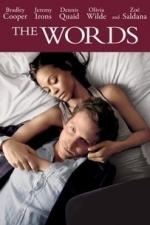

On paper, The Words is a film that is better suited as a literary novella. In print, we, as readers, are often granted insight to our characters thoughts and motivation that is frequently lost on film or delivered in a lackluster voiceover that most critics deem as lazy film making. Furthermore, the story within a story, within a story approach in film often leaves the audience with uninteresting shells of characters and can make a story forgettable at best.
Given these reasons, it is easy to see why many would choose to undertake a less ambitious story for their directorial debut. That group does not include co-writer-directors Brian Klugman and Lee Sternthal. This duo is actually successful at tackling this dangerous story-within-a-story film device by keeping it simple. Focusing on the main characters of each story and their motivation, while tying each together with some common themes like love, what it means to write something great, and how far the need for success will drive the characters.
The movie begins with highly successful author Clay Hammond (Dennis Quaid) conducting a reading of his latest novel The Words. Among his audience is literary grad student and adoring fan, Daniella (Olivia Wilde), who has aspirations of picking the brain of the man that authored her favorite stories and perhaps getting involved romantically. As Hammond begins to read his story we are introduced to the tale of starving writer Rory Jensen (Bradley Cooper) and his wife Dora (Zoe Saldana). The two are a young couple in love, trying to get on their feet while Rory struggles with multiple rejections of his novels, until he is finally forced to come to grips with his own limitations as an artist and a writer.
As he settles into life and a job as a mail clerk at a publishing firm, he finds a lost manuscript in a vintage leather briefcase that Dora had purchased for him during their honeymoon in Paris. That story turns out to be something that moves him to tears. It is the final thing in his realization that he will never be the great writer that he thought he was, the great writer that wrote this anonymous story. In an effort to feel and try to understand what it is like to create something great, Rory decides to retype the novel word for word on his laptop if only to admire the beautiful story that he had instantly fallen in love with. When Dora mistakenly reads the novel, she encourages him to submit it to a publisher. Before he can tell her the truth, his world is transformed into the life he had always imagined he would have for himself and Dora as the novel gains him both great literary and commercial success. And finally, now that his star has risen he can get his own novel published.
Enter Jeremy Irons as the old man who reveals himself to Rory as the true author of his story. The old man feels compelled to explain to Rory the tragic origin of the story that has become the young author’s success. Irons steals every second he is on screen as his delivery of the old man oozes with the intellectual style that has been his trademark over the years. Like Rory, we are helpless to do nothing but listen and get lost in the words of his story as if he was sitting next to us and telling the story in real life.
The old man reveals that the novel is the result of great love and pain that his younger self (Ben Barnes) and the love of his life Celia (Nora Arnezeder) endured. While I am not familiar with Barnes’ and Arnezeder’s work, their performance as the younger couple in Irons’ story had a genuine connection. And while this love story does not seem to be anything new when it comes to film, it served its purpose by strengthening the other stories, showing how a great story can be mused from someplace unexpected, even if only once.
With Rory now confronted with his deceitful success, he struggles to decide how to make things right and live with himself as a fraud. It’s at this point the film subtly suggest that Hammond’s story of Rory may actually be a disguised autobiography.
As Rory, Bradley Cooper gives perhaps his best performance to date. I feel that despite his poor and deceitful decision, at no point does he lose the audience. With the help of a strong and emotionally charged performance by Zoe Saldana, we experience Cooper’s honest plight and can understand the events that unfold around him. He is effective as a man who genuinely believes he does not deserve the success that he stole. Without a doubt, this will be a surprising role for those fans who only know Cooper from the humorous characters he plays in The Hangover and most recently Hit and Run. I hope this is the beginning of growth in his craft beyond the charming, confident character we have seen in Limitless and perhaps into a deeper emotional actor.
The weakest part of this film is the story of Clay Hammond and Daniella. Dennis Quaid is quite unlikable as Hammond. He is monotone in his readings and the prose of his story is mediocre at best. While the film drops hints that Hammond’s story of Rory is autobiographical it makes sense that Quaid’s character is played this way. He succeeds in helping create the notion that Hammond is unworthy of the success his character has enjoyed. But something about his performance is so unlikable that even when his character has a redeeming moment, it is lost on an audience that may not care enough about him for it to work.
To add to this dislike of Quaid, Olivia Wilde seems out of place as the character Daniella. It is not that her performance is bad, it is just that every time they showed her as the starry-eyed fan who is love struck for Hammond, she just seemed out of place. Additionally there did not seem to be any connection between Daniella and Hammond in the way the other characters’ connections helped strengthen their performances.
In the end, I enjoyed this movie more than I expected. Visually the Montreal backdrop does an excellent job as both New York and Paris. And the continual piano score helps blend the stories. The simple focus on the main characters helped maintain the three different stories and keep the overall pacing of the movie in order. In addition, the solid to exceptional performances also helped to keep the film focused and avoided the empty shell of characters that most movies of this nature create. That being said, this movie is not for everyone, but those looking for a change of pace from the summer blockbusters season should consider this film.
Given these reasons, it is easy to see why many would choose to undertake a less ambitious story for their directorial debut. That group does not include co-writer-directors Brian Klugman and Lee Sternthal. This duo is actually successful at tackling this dangerous story-within-a-story film device by keeping it simple. Focusing on the main characters of each story and their motivation, while tying each together with some common themes like love, what it means to write something great, and how far the need for success will drive the characters.
The movie begins with highly successful author Clay Hammond (Dennis Quaid) conducting a reading of his latest novel The Words. Among his audience is literary grad student and adoring fan, Daniella (Olivia Wilde), who has aspirations of picking the brain of the man that authored her favorite stories and perhaps getting involved romantically. As Hammond begins to read his story we are introduced to the tale of starving writer Rory Jensen (Bradley Cooper) and his wife Dora (Zoe Saldana). The two are a young couple in love, trying to get on their feet while Rory struggles with multiple rejections of his novels, until he is finally forced to come to grips with his own limitations as an artist and a writer.
As he settles into life and a job as a mail clerk at a publishing firm, he finds a lost manuscript in a vintage leather briefcase that Dora had purchased for him during their honeymoon in Paris. That story turns out to be something that moves him to tears. It is the final thing in his realization that he will never be the great writer that he thought he was, the great writer that wrote this anonymous story. In an effort to feel and try to understand what it is like to create something great, Rory decides to retype the novel word for word on his laptop if only to admire the beautiful story that he had instantly fallen in love with. When Dora mistakenly reads the novel, she encourages him to submit it to a publisher. Before he can tell her the truth, his world is transformed into the life he had always imagined he would have for himself and Dora as the novel gains him both great literary and commercial success. And finally, now that his star has risen he can get his own novel published.
Enter Jeremy Irons as the old man who reveals himself to Rory as the true author of his story. The old man feels compelled to explain to Rory the tragic origin of the story that has become the young author’s success. Irons steals every second he is on screen as his delivery of the old man oozes with the intellectual style that has been his trademark over the years. Like Rory, we are helpless to do nothing but listen and get lost in the words of his story as if he was sitting next to us and telling the story in real life.
The old man reveals that the novel is the result of great love and pain that his younger self (Ben Barnes) and the love of his life Celia (Nora Arnezeder) endured. While I am not familiar with Barnes’ and Arnezeder’s work, their performance as the younger couple in Irons’ story had a genuine connection. And while this love story does not seem to be anything new when it comes to film, it served its purpose by strengthening the other stories, showing how a great story can be mused from someplace unexpected, even if only once.
With Rory now confronted with his deceitful success, he struggles to decide how to make things right and live with himself as a fraud. It’s at this point the film subtly suggest that Hammond’s story of Rory may actually be a disguised autobiography.
As Rory, Bradley Cooper gives perhaps his best performance to date. I feel that despite his poor and deceitful decision, at no point does he lose the audience. With the help of a strong and emotionally charged performance by Zoe Saldana, we experience Cooper’s honest plight and can understand the events that unfold around him. He is effective as a man who genuinely believes he does not deserve the success that he stole. Without a doubt, this will be a surprising role for those fans who only know Cooper from the humorous characters he plays in The Hangover and most recently Hit and Run. I hope this is the beginning of growth in his craft beyond the charming, confident character we have seen in Limitless and perhaps into a deeper emotional actor.
The weakest part of this film is the story of Clay Hammond and Daniella. Dennis Quaid is quite unlikable as Hammond. He is monotone in his readings and the prose of his story is mediocre at best. While the film drops hints that Hammond’s story of Rory is autobiographical it makes sense that Quaid’s character is played this way. He succeeds in helping create the notion that Hammond is unworthy of the success his character has enjoyed. But something about his performance is so unlikable that even when his character has a redeeming moment, it is lost on an audience that may not care enough about him for it to work.
To add to this dislike of Quaid, Olivia Wilde seems out of place as the character Daniella. It is not that her performance is bad, it is just that every time they showed her as the starry-eyed fan who is love struck for Hammond, she just seemed out of place. Additionally there did not seem to be any connection between Daniella and Hammond in the way the other characters’ connections helped strengthen their performances.
In the end, I enjoyed this movie more than I expected. Visually the Montreal backdrop does an excellent job as both New York and Paris. And the continual piano score helps blend the stories. The simple focus on the main characters helped maintain the three different stories and keep the overall pacing of the movie in order. In addition, the solid to exceptional performances also helped to keep the film focused and avoided the empty shell of characters that most movies of this nature create. That being said, this movie is not for everyone, but those looking for a change of pace from the summer blockbusters season should consider this film.
Hadley (567 KP) rated The Ghost of Villa Winter in Books
Mar 12, 2021

A cult (1 more)
Description of environment
All of the characters (1 more)
Amateur writing mistakes
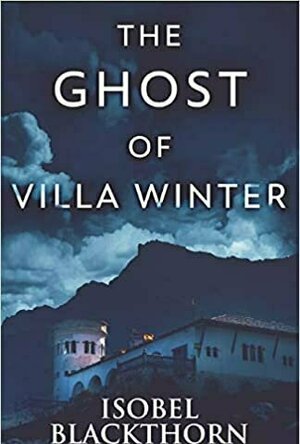
Little does the reader know when they pick up a copy of The Ghost of Villa Winter by Isobel Blackthorn that a cult is lurking about inside the pages.
We begin our journey with Clarissa ,our main character, boarding a tour bus where she lets her personality shine through, which turns out to be extremely judgmental of anyone who isn't like her, or doesn't fit into the categories she places them in. For example, the driver of the tour bus is automatically labeled by Clarissa as a bad man because he has an uneven face and a French accent, and much of the same is said about the other seven passengers, as well. When she finally manages to stop judging the passengers, readers find out that Clarissa is somewhat of a psychic: "Ghosts spoke a language of their own and if a member of the spirit world inhabited the abandoned abode, she was sure to pick up on it. She was never wrong in these matters. Only three of the thirty or more premises she'd investigated on so-called ghost tours had contained a legitimate ghost. She prided herself on her mediumistic prowess. She was apt to pick up on preternatural inhabitants of places said not to be haunted. Sometimes she thought she could singlehandedly re-write history based on information she had gleaned, but that was being arrogant. She followed her dreams and her visions and her intuition, that was all. A natural psychic and a cynic to boot. "
It turns out that Clarissa is on the tour to see if she can encounter any spirits that may be at the infamous Villa Winter; a place that is believed to have been a secret Nazi base, as well as a place for human experiments - - - the tower was also believed to have been used as a lighthouse for German U-boats - - - which, in reality, Villa Winter is an actual place that exists on the Canary Islands in Spain.
The Ghost of Villa Winter is the fourth book in Blackthorn's Canary Islands Mysteries series, but it can be easily read as an introduction to it because you don't need any background information to understand what is going on. The novel takes on the usual tropes of a murder-mystery plot (a body is found, people are stranded and trying to figure out who among them is the murderer). Agatha Christie is one of the best authors of the murder-mystery genre who loved using her knowledge of poisons in her stories - - - Blackthorn treats the tropes with the right amount of respect which makes The Ghost of Villa Winter a pretty good story.
My major complaint for the Ghost of Villa Winter are the characters, which I found every single one quite unlikable, and even by the end, I couldn't bring myself to care at all for Clarissa. The way that she judged everyone so harshly, and her viewpoint that if no one acted the way she wanted them to, she would believe something was wrong with them that needed to be addressed in a rude manner: "He was the most anxious man she had come across in a long time. Anxious, unsure of himself and preoccupied. Far too self-conscious. The way he'd aligned his plate at lunch. That was obsessive-compulsive. And he certainly couldn't handle Fred Spice. She was sure he could be charming with pretty young ladies, patronizing even, but around her he was awkward. It was clear, too, that he was broken. It wouldn't be easy being an author knowing as you aged that all of your success was behind you and your future held nothing but diminishment. Writing was one of those activities you could pursue until you dropped and many successful authors did just that. As irritating as he could be, she felt sorry for him. "
The other characters are all seen from Clarissa's viewpoint, so they come off quite annoying, but at one point it seemed like Blackthorn was trying to redeem Clarissa's negative qualities by making her an advocate for a possibly wrongly convicted man. This story line didn't come off as redemption for me, but rather to fuel Clarissa's need to be important and in the right. Blackthorn failed to make any of the characters grow above pettiness. If a reader doesn't have a character to root for, the story becomes unenjoyable - - - which is the main reason I gave the book such a low rating; the murder-mystery was interesting, but the characters were not.
The murder, a woman who may have been part of a cult, is found inside a nailed-up crate with a tattoo of a number on her body being one of the only clues that puts Clarissa into sleuth-mode. After believing that one of the tourists is the killer, she decides to keep the discovery of the murder between her and Richard - - - a crime author who came to Villa Winter in hopes of a book inspiration. The two slowly begin to investigate their fellow tourists to figure out who had the mind and motive to kill the young woman, but this doesn't seem to be as easy as it is in Richard's books. I did have a problem though with the ending which ends up being very reminiscent of a majority of short stories: the ending came abruptly and the pieces fell into a place that was unbelievable.
I had never read any of Blackthorn's books before, so I didn't have much of an expectation reading the Ghost of Villa Winter. Unfortunately, I came away from this one pretty dissatisfied because all of the interesting points in the story (such as the cult) are rarely shown/explored further. Also, the fact that 'ghost' is in the title, I was pretty let down with only a couple of scenes where a ghost actually shows up, one such short-lived scene: "She [Clarissa] was about to carry on when a figure appeared in one of the uppermost tower windows. Appeared, and then was gone. At least, what she thought to be a figure. Could have been a ghost. " The scenes are so short that I believe 'ghost' shouldn't be in the title because it's misleading.
With quite a few amateur writing mistakes, and unlikable characters, I don't think I will read anymore of the books in this series. I loved the idea of a cult murder and a haunting in a possible Nazi base, but too much of the focus in the story was on Clarissa's judgmental outlook on everything that it ended up not being the story it could have been. I can only recommend this book to people who want a quick murder-mystery (what most call the genre 'cozy mystery'), but for paranormal lovers, the ghosts practically disappeared within a few pages.
We begin our journey with Clarissa ,our main character, boarding a tour bus where she lets her personality shine through, which turns out to be extremely judgmental of anyone who isn't like her, or doesn't fit into the categories she places them in. For example, the driver of the tour bus is automatically labeled by Clarissa as a bad man because he has an uneven face and a French accent, and much of the same is said about the other seven passengers, as well. When she finally manages to stop judging the passengers, readers find out that Clarissa is somewhat of a psychic: "Ghosts spoke a language of their own and if a member of the spirit world inhabited the abandoned abode, she was sure to pick up on it. She was never wrong in these matters. Only three of the thirty or more premises she'd investigated on so-called ghost tours had contained a legitimate ghost. She prided herself on her mediumistic prowess. She was apt to pick up on preternatural inhabitants of places said not to be haunted. Sometimes she thought she could singlehandedly re-write history based on information she had gleaned, but that was being arrogant. She followed her dreams and her visions and her intuition, that was all. A natural psychic and a cynic to boot. "
It turns out that Clarissa is on the tour to see if she can encounter any spirits that may be at the infamous Villa Winter; a place that is believed to have been a secret Nazi base, as well as a place for human experiments - - - the tower was also believed to have been used as a lighthouse for German U-boats - - - which, in reality, Villa Winter is an actual place that exists on the Canary Islands in Spain.
The Ghost of Villa Winter is the fourth book in Blackthorn's Canary Islands Mysteries series, but it can be easily read as an introduction to it because you don't need any background information to understand what is going on. The novel takes on the usual tropes of a murder-mystery plot (a body is found, people are stranded and trying to figure out who among them is the murderer). Agatha Christie is one of the best authors of the murder-mystery genre who loved using her knowledge of poisons in her stories - - - Blackthorn treats the tropes with the right amount of respect which makes The Ghost of Villa Winter a pretty good story.
My major complaint for the Ghost of Villa Winter are the characters, which I found every single one quite unlikable, and even by the end, I couldn't bring myself to care at all for Clarissa. The way that she judged everyone so harshly, and her viewpoint that if no one acted the way she wanted them to, she would believe something was wrong with them that needed to be addressed in a rude manner: "He was the most anxious man she had come across in a long time. Anxious, unsure of himself and preoccupied. Far too self-conscious. The way he'd aligned his plate at lunch. That was obsessive-compulsive. And he certainly couldn't handle Fred Spice. She was sure he could be charming with pretty young ladies, patronizing even, but around her he was awkward. It was clear, too, that he was broken. It wouldn't be easy being an author knowing as you aged that all of your success was behind you and your future held nothing but diminishment. Writing was one of those activities you could pursue until you dropped and many successful authors did just that. As irritating as he could be, she felt sorry for him. "
The other characters are all seen from Clarissa's viewpoint, so they come off quite annoying, but at one point it seemed like Blackthorn was trying to redeem Clarissa's negative qualities by making her an advocate for a possibly wrongly convicted man. This story line didn't come off as redemption for me, but rather to fuel Clarissa's need to be important and in the right. Blackthorn failed to make any of the characters grow above pettiness. If a reader doesn't have a character to root for, the story becomes unenjoyable - - - which is the main reason I gave the book such a low rating; the murder-mystery was interesting, but the characters were not.
The murder, a woman who may have been part of a cult, is found inside a nailed-up crate with a tattoo of a number on her body being one of the only clues that puts Clarissa into sleuth-mode. After believing that one of the tourists is the killer, she decides to keep the discovery of the murder between her and Richard - - - a crime author who came to Villa Winter in hopes of a book inspiration. The two slowly begin to investigate their fellow tourists to figure out who had the mind and motive to kill the young woman, but this doesn't seem to be as easy as it is in Richard's books. I did have a problem though with the ending which ends up being very reminiscent of a majority of short stories: the ending came abruptly and the pieces fell into a place that was unbelievable.
I had never read any of Blackthorn's books before, so I didn't have much of an expectation reading the Ghost of Villa Winter. Unfortunately, I came away from this one pretty dissatisfied because all of the interesting points in the story (such as the cult) are rarely shown/explored further. Also, the fact that 'ghost' is in the title, I was pretty let down with only a couple of scenes where a ghost actually shows up, one such short-lived scene: "She [Clarissa] was about to carry on when a figure appeared in one of the uppermost tower windows. Appeared, and then was gone. At least, what she thought to be a figure. Could have been a ghost. " The scenes are so short that I believe 'ghost' shouldn't be in the title because it's misleading.
With quite a few amateur writing mistakes, and unlikable characters, I don't think I will read anymore of the books in this series. I loved the idea of a cult murder and a haunting in a possible Nazi base, but too much of the focus in the story was on Clarissa's judgmental outlook on everything that it ended up not being the story it could have been. I can only recommend this book to people who want a quick murder-mystery (what most call the genre 'cozy mystery'), but for paranormal lovers, the ghosts practically disappeared within a few pages.
5 Minute Movie Guy (379 KP) rated Scary Stories to Tell in the Dark (2019) in Movies
Sep 16, 2019
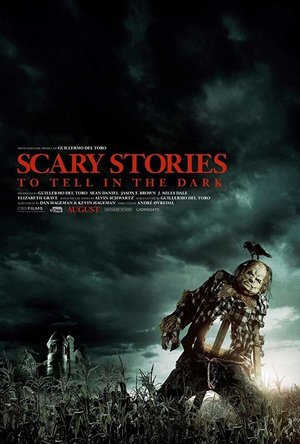
In the early 1980s, author Alvin Schwartz created a book of short horror stories titled Scary Stories to Tell in the Dark that would go on to terrorize a whole generation of curious young readers. Combined with its morbid and ghastly illustrations by artist Stephen Gammell, the book would serve as an introduction to horror for many. Over the next ten years, Schwartz wrote two more books in the Scary Stories series, and now, nearly forty years later, it has finally been adapted into a major motion picture. Produced by Academy Award-winning director Guillermo Del Toro and directed by André Øvredal, the Scary Stories to Tell in the Dark film constructs a new narrative around several of the iconic short stories from the book series, and brings them to life to haunt the movie’s teenage characters.
In Mill Valley, Pennsylvania in 1968, a group of teenage friends fleeing from a band of bullies hide out in an abandoned haunted house on Halloween night. They know the story of this house well, whose folklore is rooted in the origins of their own small town. It was once owned by the wealthy Bellows Family, who according to urban legend, locked away their own daughter, Sarah Bellows, inside the cellar of their home. Sarah had been accused of killing the town’s children, and so her family kept her hidden away and attempted to erase her from existence, even removing her from their own family portraits. According to legend, Sarah wrote a book of horror stories and would read them aloud through the walls of her room to frighten the local townspeople.
While inside this haunted house, our group of protagonists; Stella (Zoe Colletti), Ramón (Michael Garza), Auggie (Gabriel Rush), and Chuck (Austin Zajur), discover the room Sarah had spent her life trapped in. Stella, an amateur horror writer herself, finds the rumored book that was written by Sarah. Upon opening it she sees that a new page is somehow being written in blood right before her very eyes, and it happens to be about the bully that chased them into the house. The next day, they realize that it seems as though the story actually came true, and that the book itself may be haunted. This establishes the basic premise of the film, in which new stories are being written in the book and they appear to be targeting Stella and everyone else that entered the Bellows’ house that night.
It’s an interesting set-up that cleverly mixes horror with mystery, as the characters are not only trying to survive these stories as they come to life, but are also trying to figure out how to stop them from happening. The film features five different stories from the series, most of which come from the third and final book, and a sixth story centered around Stella and Sarah Bellows that is at least in part inspired by one of the original tales. To give an example without giving too much away, one story for instance, involves a haunted scarecrow, whereas another is about a walking corpse in search of its severed big toe. The stories themselves are much more dark and grotesque than I had anticipated. I was expecting something more along the lines of Goosebumps, which was a series of children’s horror books that I personally loved and grew up with as a child, but these are much more disturbing than that. While I only found the first story of the film, “Harold”, to actually be scary, I do imagine this movie might be a little too frightening for some teenagers.
I should clarify that I’m not familiar with the original written source material of Scary Stories to Tell in the Dark, and I had truthfully never even heard of the books prior to the movie’s announcement. I don’t have any personal stake in these stories, but I do admire the thoughtfulness and creativity that went into building the film around them. I thought the film started out really strong with a likable cast of characters, and with most of its best moments featured early on. I loved the introduction to the haunted house and the legend of the Bellows Family. I enjoyed the playful nature of our group of young protagonists, who in the beginning felt reminiscent of the fun and crazy kids you might find in an 80s movie like The Goonies. Additionally, I liked the mystery of Sarah Bellows that the kids were trying to uncover, all the while struggling to survive the dangers of her haunting stories that had come to life.
Unfortunately, as the movie went on, I found myself less and less invested in it with each passing story, all of which I would argue are weaker than the previous one before it. The Pale Lady storyline was particularly dull and underwhelming. The final act itself, although smartly designed with its use of parallels, wound up feeling poorly executed and unsatisfying overall.
Similarly, in regards to the acting, I liked the performances even less by the end as well. Early on I had been impressed with Zoe Colletti as Stella, but I found her to be annoying in the later parts of the movie. The same goes for Austin Zajur as Chuck. The cast for the most part was decent, but everything about the movie began to drop in quality as it dragged on, which is especially unfortunate given how well it starts out.
The special effects are mostly quite good and adequately disturbing, but on the same token, I wish they were more clearly visible at times. A lot of the horror settings take place in dark rooms, so at times it can be hard to see the monsters with much clarity. Still, I love the design of Harold the Scarecrow, as well as The Jangly Man, who is played by contortionist Troy James whose extreme flexibility allows the character to move in unnatural and disturbing looking ways.
To conclude, I’m left with some mixed feelings on Scary Stories to Tell in the Dark. For me, it almost hits the mark, but unfortunately it isn’t a movie that I think I’d bother to watch again. It made a solid first impression with its rich atmosphere and creepy first act, but it failed to maintain its momentum and level of quality. In the end, my favorite thing about the whole movie is actually the excellent cover song of “Season of the Witch” by Lana Del Rey that plays during the credits. However that’s not in any way to say the movie is so bad that the credits were my favorite part. It’s just a great song by an artist I very much enjoy. If you grew up with the Scary Stories to Tell in the Dark series, then by all means, I recommend that you at least check it out. If you like horror and have any troublesome teenaged kids, this may be a perfect opportunity to have some fun scaring the heck out of them.
In Mill Valley, Pennsylvania in 1968, a group of teenage friends fleeing from a band of bullies hide out in an abandoned haunted house on Halloween night. They know the story of this house well, whose folklore is rooted in the origins of their own small town. It was once owned by the wealthy Bellows Family, who according to urban legend, locked away their own daughter, Sarah Bellows, inside the cellar of their home. Sarah had been accused of killing the town’s children, and so her family kept her hidden away and attempted to erase her from existence, even removing her from their own family portraits. According to legend, Sarah wrote a book of horror stories and would read them aloud through the walls of her room to frighten the local townspeople.
While inside this haunted house, our group of protagonists; Stella (Zoe Colletti), Ramón (Michael Garza), Auggie (Gabriel Rush), and Chuck (Austin Zajur), discover the room Sarah had spent her life trapped in. Stella, an amateur horror writer herself, finds the rumored book that was written by Sarah. Upon opening it she sees that a new page is somehow being written in blood right before her very eyes, and it happens to be about the bully that chased them into the house. The next day, they realize that it seems as though the story actually came true, and that the book itself may be haunted. This establishes the basic premise of the film, in which new stories are being written in the book and they appear to be targeting Stella and everyone else that entered the Bellows’ house that night.
It’s an interesting set-up that cleverly mixes horror with mystery, as the characters are not only trying to survive these stories as they come to life, but are also trying to figure out how to stop them from happening. The film features five different stories from the series, most of which come from the third and final book, and a sixth story centered around Stella and Sarah Bellows that is at least in part inspired by one of the original tales. To give an example without giving too much away, one story for instance, involves a haunted scarecrow, whereas another is about a walking corpse in search of its severed big toe. The stories themselves are much more dark and grotesque than I had anticipated. I was expecting something more along the lines of Goosebumps, which was a series of children’s horror books that I personally loved and grew up with as a child, but these are much more disturbing than that. While I only found the first story of the film, “Harold”, to actually be scary, I do imagine this movie might be a little too frightening for some teenagers.
I should clarify that I’m not familiar with the original written source material of Scary Stories to Tell in the Dark, and I had truthfully never even heard of the books prior to the movie’s announcement. I don’t have any personal stake in these stories, but I do admire the thoughtfulness and creativity that went into building the film around them. I thought the film started out really strong with a likable cast of characters, and with most of its best moments featured early on. I loved the introduction to the haunted house and the legend of the Bellows Family. I enjoyed the playful nature of our group of young protagonists, who in the beginning felt reminiscent of the fun and crazy kids you might find in an 80s movie like The Goonies. Additionally, I liked the mystery of Sarah Bellows that the kids were trying to uncover, all the while struggling to survive the dangers of her haunting stories that had come to life.
Unfortunately, as the movie went on, I found myself less and less invested in it with each passing story, all of which I would argue are weaker than the previous one before it. The Pale Lady storyline was particularly dull and underwhelming. The final act itself, although smartly designed with its use of parallels, wound up feeling poorly executed and unsatisfying overall.
Similarly, in regards to the acting, I liked the performances even less by the end as well. Early on I had been impressed with Zoe Colletti as Stella, but I found her to be annoying in the later parts of the movie. The same goes for Austin Zajur as Chuck. The cast for the most part was decent, but everything about the movie began to drop in quality as it dragged on, which is especially unfortunate given how well it starts out.
The special effects are mostly quite good and adequately disturbing, but on the same token, I wish they were more clearly visible at times. A lot of the horror settings take place in dark rooms, so at times it can be hard to see the monsters with much clarity. Still, I love the design of Harold the Scarecrow, as well as The Jangly Man, who is played by contortionist Troy James whose extreme flexibility allows the character to move in unnatural and disturbing looking ways.
To conclude, I’m left with some mixed feelings on Scary Stories to Tell in the Dark. For me, it almost hits the mark, but unfortunately it isn’t a movie that I think I’d bother to watch again. It made a solid first impression with its rich atmosphere and creepy first act, but it failed to maintain its momentum and level of quality. In the end, my favorite thing about the whole movie is actually the excellent cover song of “Season of the Witch” by Lana Del Rey that plays during the credits. However that’s not in any way to say the movie is so bad that the credits were my favorite part. It’s just a great song by an artist I very much enjoy. If you grew up with the Scary Stories to Tell in the Dark series, then by all means, I recommend that you at least check it out. If you like horror and have any troublesome teenaged kids, this may be a perfect opportunity to have some fun scaring the heck out of them.

graveyardgremlin (7194 KP) rated Zombies Vs. Unicorns in Books
Feb 15, 2019
<b>Book Review</b>
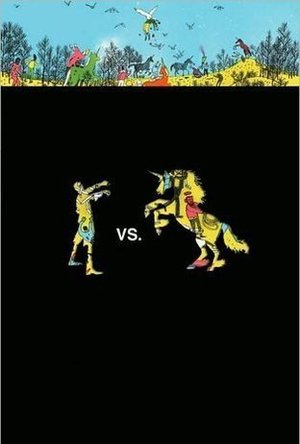
I had heard about this feud soon after it started, so when news that a book was coming out I had to read it. C'mon, zombies and unicorns, this is a combination I couldn't miss out on. After a lackluster and disappointing start, with many stories I didn't like at all, I was starting to think I'd have a hard time finishing the book, even with the different authors. It wasn't until The Children of the Revolution by Maureen Johnson on page 147 that the stories picked up and I ended up enjoying the rest, though my enjoyment deviated from okay to great. The "arguments" between editors Holly Black (Team Unicorn) and Justine Larbalestier (Team Zombie) were usually quite amusing, though they themselves don't contribute to the book. I, for one, would have liked to have read their takes on their chosen teams.
I'm not going to review each story individually, but list them with my (very) basic impression of the story. The book has varying degrees of gore, cursing, sexual innuendo and references, bestiality (you read that right, but it's more referred to than shown, thank goodness), suicide, and other violent acts.
<u>Stories</u> (in order of appearance):
*The Highest Justice by Garth Nix (Marked as a unicorn story, this is actually both unicorn and zombie. A decent story.)
*Love Will Tear Us Apart by Alaya Dawn Johnson (Zombie. Did not care for this at all)
*Purity Test by Naomi Novik (Unicorn. Didn't hate this story, but wasn't fond of it either)
*Bougainvillea by Carrie Ryan (Zombie. Didn't like.)
*A Thousand Flowers by Margo Lanagan (Unicorn. Also wasn't fond of.)
*The Children of the Revolution by Maureen Johnson (Zombie. Rather twisted, but so am I, so I enjoyed it.)
*The Care and Feeding of Your Baby Killer Unicorn by Diana Peterfreund (Unicorn. My favorite story in the anthology.)
*Inoculata by Scott Westerfield (Zombie. Pretty good.)
*Princess Prettypants by Meg Cabot (Unicorn. Very tongue-in-cheek, I liked this story a lot.)
*Cold Hands by Cassandra Clare (Zombie. Interesting world created here. Definitely passed my likability test.)
*The Third Virgin by Kathleen Duey (Unicorn. An okay story.)
*Prom Night by Libba Bray (Zombie. Second favorite of the book and very close to a tie with Peterfreund's tale.)
The unicorn stories went in many different directions, with all sorts of unicorns, while most of the zombie stories stayed where you would expect them and had typical zombies, though there were a few surprises still in store. I went into this as Team Zombie, and while my favorite was a unicorn story, I still firmly remain with the shamblers. Overall, I ended up enjoying the majority of the book, so if you're interested in zombies, unicorns, or especially both, pick this up for an interesting assortment of stories.
3.5 stars for the print version
<b>Audio Review</b>
This unabridged CD set includes ten discs, which average a little over one story each, though generally there is one whole story bookended by the end of one preceding it and the start of another afterward that will continue onto the next disc. They have very short chapters, generally less than a minute and I could tell when each chapter ended and the next began, which didn't make for totally smooth listening but it also wasn't too bad either. I would have rather have had longer chapters that had a clearer starting and stopping point to make it easier to find my place again. Most of the readers, both male and female, sound fairly young, which makes sense since this is a YA anthology, but the majority also sounded as if they were reading to school children, which makes for annoying listening. I found most of the voices grating and unfortunately none of them are named for me to be more specific. However, the one male was fine and the woman who did Diana Peterfreund was good and I believe she also narrated one or two others in the book. The use of sound effects break up stories, a groan that also says "brains" for zombies and trumpets and a horse whinny for unicorns. Immediately after is the intro from the editors with their ongoing debate that became increasingly irritating as I read on; this may have to do with how they performed those discussions. As written word, these exchanges are far more entertaining. For the most part, I really didn't enjoy listening to this and much prefer reading it in print.
2 stars for audio
I had heard about this feud soon after it started, so when news that a book was coming out I had to read it. C'mon, zombies and unicorns, this is a combination I couldn't miss out on. After a lackluster and disappointing start, with many stories I didn't like at all, I was starting to think I'd have a hard time finishing the book, even with the different authors. It wasn't until The Children of the Revolution by Maureen Johnson on page 147 that the stories picked up and I ended up enjoying the rest, though my enjoyment deviated from okay to great. The "arguments" between editors Holly Black (Team Unicorn) and Justine Larbalestier (Team Zombie) were usually quite amusing, though they themselves don't contribute to the book. I, for one, would have liked to have read their takes on their chosen teams.
I'm not going to review each story individually, but list them with my (very) basic impression of the story. The book has varying degrees of gore, cursing, sexual innuendo and references, bestiality (you read that right, but it's more referred to than shown, thank goodness), suicide, and other violent acts.
<u>Stories</u> (in order of appearance):
*The Highest Justice by Garth Nix (Marked as a unicorn story, this is actually both unicorn and zombie. A decent story.)
*Love Will Tear Us Apart by Alaya Dawn Johnson (Zombie. Did not care for this at all)
*Purity Test by Naomi Novik (Unicorn. Didn't hate this story, but wasn't fond of it either)
*Bougainvillea by Carrie Ryan (Zombie. Didn't like.)
*A Thousand Flowers by Margo Lanagan (Unicorn. Also wasn't fond of.)
*The Children of the Revolution by Maureen Johnson (Zombie. Rather twisted, but so am I, so I enjoyed it.)
*The Care and Feeding of Your Baby Killer Unicorn by Diana Peterfreund (Unicorn. My favorite story in the anthology.)
*Inoculata by Scott Westerfield (Zombie. Pretty good.)
*Princess Prettypants by Meg Cabot (Unicorn. Very tongue-in-cheek, I liked this story a lot.)
*Cold Hands by Cassandra Clare (Zombie. Interesting world created here. Definitely passed my likability test.)
*The Third Virgin by Kathleen Duey (Unicorn. An okay story.)
*Prom Night by Libba Bray (Zombie. Second favorite of the book and very close to a tie with Peterfreund's tale.)
The unicorn stories went in many different directions, with all sorts of unicorns, while most of the zombie stories stayed where you would expect them and had typical zombies, though there were a few surprises still in store. I went into this as Team Zombie, and while my favorite was a unicorn story, I still firmly remain with the shamblers. Overall, I ended up enjoying the majority of the book, so if you're interested in zombies, unicorns, or especially both, pick this up for an interesting assortment of stories.
3.5 stars for the print version
<b>Audio Review</b>
This unabridged CD set includes ten discs, which average a little over one story each, though generally there is one whole story bookended by the end of one preceding it and the start of another afterward that will continue onto the next disc. They have very short chapters, generally less than a minute and I could tell when each chapter ended and the next began, which didn't make for totally smooth listening but it also wasn't too bad either. I would have rather have had longer chapters that had a clearer starting and stopping point to make it easier to find my place again. Most of the readers, both male and female, sound fairly young, which makes sense since this is a YA anthology, but the majority also sounded as if they were reading to school children, which makes for annoying listening. I found most of the voices grating and unfortunately none of them are named for me to be more specific. However, the one male was fine and the woman who did Diana Peterfreund was good and I believe she also narrated one or two others in the book. The use of sound effects break up stories, a groan that also says "brains" for zombies and trumpets and a horse whinny for unicorns. Immediately after is the intro from the editors with their ongoing debate that became increasingly irritating as I read on; this may have to do with how they performed those discussions. As written word, these exchanges are far more entertaining. For the most part, I really didn't enjoy listening to this and much prefer reading it in print.
2 stars for audio

What can I say about <i>Revenger</i>?
It was my first ever Space Opera and it has opened my eyes to a whole new genre.
It was my first ever Space Opera and it has primed my taste-buds for more.
It was my first ever Alastair Reynolds and now I want more.
Revenger itself was amazingly well written. As mentioned above this was my first book from Alastair Reynolds and it was just the kind of book I could get into again and again; the writing style flowed with a shocking ease and the plot line was very Firefly-esque with a hint more action and a smidge more ‘oh-shit’ factor.
Revenger follows the story of Adrana and Arafura Ness – two sisters from Mazarile whose sick father had made some very poor choices in business – as they embark on a journey into space to end all journeys.
It begins with Adrana convincing her younger sister Arafura to escape into Neural Alley for a reading by Madam Granity. There’s aliens, robots and weird looking men with bad attitudes and then there’s Captain Rackamore. Pol Rackamore is the captain of the Monetta’s Mourn – a sunjammer spaceship – and he’s in need of a new Boney on his ship as his current one is getting too old to ‘read the bones’ and I mean that in the literal sense of the word.
Adrana convinces Cap’n Rack to take both her and Arafura on board the Monetta in the position of new Bone Readers (with the aide of Cazaray the current Boney) and that is where the story really begins. We’re introduced to the rest of the crew and the Monetta sails off into the Empty in search of baubles. As they sail towards their first bauble Arafura becomes a lot closer to the rest of the crew while I feel that Adrana is doing her best to stay away from them all even though she’s front and center.
Story progresses and little hints are dropped about Bosa Sennen and Cap’n Rack’s long lost daughter. There’s several shocking deaths, a mad woman, a kidnapping or two and a young girl bent on revenge.
Around the mid way mark Arafura changes, subtly at first and then a lot more drastic and she becomes Just Fura. This is where the story becomes a lot darker and a lot less like Firefly and a lot more like the Firefly from hell; the second half of this book is based around Fura getting Revenger on Bosa Sennen for what she did and the things that Fura puts herself through to get where she needs to be? She started off as a little timid and shy but after the 50% mark she changed completely and became hard and unyielding.
You know how they say that the future is bright? That brightness is swallowed by the Empty and the future is dark and full of terrors (oh yeah I went there) there’s a doctor with a God complex, a father with a total lack of regard for his daughters, a totally bad ass soldier robot with logic barricades and all sorts of other people.
I think I loved the world building the most about Revenger it was such a smooth transition from place to place and from time to time that it was almost seamless; my second favourite thing was the characters – hands down they were some of the best characters I’ve ever read and I’d love to see if AR takes this book any further as it was seemingly left open for another book but we shall see.
The book gave off a distinctly pirate feeling but with the space element it felt more like Firefly than it did Pirates of the Caribbean which as a fan of both was saying something. Pirates sailing the high skies rather than the high seas! Some of the characters left much to be desired – Bosa, Adrana and Dr Moonface I’m looking at y’all – but the likes of Rack, Prozor and Paladin more than made up for them.
The dialogue was great and the story wasn’t overly scientific which sometimes can be an issue for me, I like my books to be a little less science fact and a bit more science fiction but with Revenger, I felt like AR was giving us regular folk an explanation without going overboard on the description.
It was my first ever Space Opera and it has opened my eyes to a whole new genre.
It was my first ever Space Opera and it has primed my taste-buds for more.
It was my first ever Alastair Reynolds and now I want more.
Revenger itself was amazingly well written. As mentioned above this was my first book from Alastair Reynolds and it was just the kind of book I could get into again and again; the writing style flowed with a shocking ease and the plot line was very Firefly-esque with a hint more action and a smidge more ‘oh-shit’ factor.
Revenger follows the story of Adrana and Arafura Ness – two sisters from Mazarile whose sick father had made some very poor choices in business – as they embark on a journey into space to end all journeys.
It begins with Adrana convincing her younger sister Arafura to escape into Neural Alley for a reading by Madam Granity. There’s aliens, robots and weird looking men with bad attitudes and then there’s Captain Rackamore. Pol Rackamore is the captain of the Monetta’s Mourn – a sunjammer spaceship – and he’s in need of a new Boney on his ship as his current one is getting too old to ‘read the bones’ and I mean that in the literal sense of the word.
Adrana convinces Cap’n Rack to take both her and Arafura on board the Monetta in the position of new Bone Readers (with the aide of Cazaray the current Boney) and that is where the story really begins. We’re introduced to the rest of the crew and the Monetta sails off into the Empty in search of baubles. As they sail towards their first bauble Arafura becomes a lot closer to the rest of the crew while I feel that Adrana is doing her best to stay away from them all even though she’s front and center.
Story progresses and little hints are dropped about Bosa Sennen and Cap’n Rack’s long lost daughter. There’s several shocking deaths, a mad woman, a kidnapping or two and a young girl bent on revenge.
Around the mid way mark Arafura changes, subtly at first and then a lot more drastic and she becomes Just Fura. This is where the story becomes a lot darker and a lot less like Firefly and a lot more like the Firefly from hell; the second half of this book is based around Fura getting Revenger on Bosa Sennen for what she did and the things that Fura puts herself through to get where she needs to be? She started off as a little timid and shy but after the 50% mark she changed completely and became hard and unyielding.
You know how they say that the future is bright? That brightness is swallowed by the Empty and the future is dark and full of terrors (oh yeah I went there) there’s a doctor with a God complex, a father with a total lack of regard for his daughters, a totally bad ass soldier robot with logic barricades and all sorts of other people.
I think I loved the world building the most about Revenger it was such a smooth transition from place to place and from time to time that it was almost seamless; my second favourite thing was the characters – hands down they were some of the best characters I’ve ever read and I’d love to see if AR takes this book any further as it was seemingly left open for another book but we shall see.
The book gave off a distinctly pirate feeling but with the space element it felt more like Firefly than it did Pirates of the Caribbean which as a fan of both was saying something. Pirates sailing the high skies rather than the high seas! Some of the characters left much to be desired – Bosa, Adrana and Dr Moonface I’m looking at y’all – but the likes of Rack, Prozor and Paladin more than made up for them.
The dialogue was great and the story wasn’t overly scientific which sometimes can be an issue for me, I like my books to be a little less science fact and a bit more science fiction but with Revenger, I felt like AR was giving us regular folk an explanation without going overboard on the description.
Ivana A. | Diary of Difference (1171 KP) rated Circe in Books
Aug 21, 2018
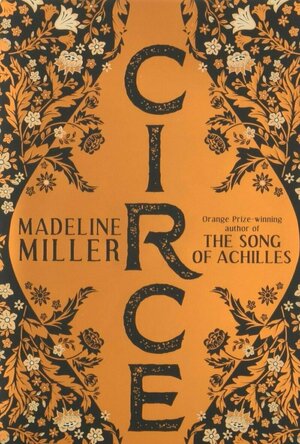

<a href="https://diaryofdifference.com/">Blog</a>; | <a href="https://www.facebook.com/diaryofdifference/">Facebook</a>; | <a href="https://twitter.com/DiaryDifference">Twitter</a>; | <a href="http://innahcrazy.tumblr.com/">Tumblr</a>; | <a href="https://www.instagram.com/diaryofdifference/">Instagram</a>; | <a href="https://www.pinterest.co.uk/diaryofdifference/pins/">Pinterest</a>; |
<b><i>WHEN I WAS BORN, the name for what I was did not exist.<i/></b>
<img src="https://gipostcards.files.wordpress.com/2018/07/maxresdefault.jpg?w=636"/>;
I was waiting for two whole months to get this book from the library. And I finally had a chance to read Circe from Madeline Miller. A book that everyone was talking about. The only thing you were gonna see on Instagram. Well, here I am – sitting with the cool kids now, I’ve read this book.
The reason I wanted to read this book wasn’t because I wanted to be part of the cool kids. Actually, it was because Greek Mythology has a special place in my heart. See, I was born in Macedonia, a country full of history, and so very close to Greece, where histories and cultures and traditions match and mix.
When I was in school, our teachers focused hard on history. Especially Roman and Greek Mythology. So yes, I grew up with Homer’s Iliad and Odyssey and yes, I know all the gods out there, what they do, who they married, who their children are.
I have read about Circe, but I have never given her any meaning, as she is not mentioned a lot in Homer’s works, as you might already know. And then suddenly, there is a book about her life. I had to read it!!!
<b><i>AND I ABSOLUTELY LOVED IT! FROM THE BOTTOM OF MY HEART!</i></b>
This might be my favorite book of 2018!
<img src="https://gipostcards.files.wordpress.com/2018/07/img_20180625_200755_238.jpg?w=636"/>;
I enjoyed Madeline’s writing style. It was so explanatory and calm, and soothing, like swimming in nice calm waters. You would just gulp her words as you read, and before you know it, you have read 200 pages.
Circe, oh Circe! Her character was so well described – such a strong powerful woman. We start with her childhood, to her growing up, and we follow the process of how she learned things the hard way, how she is naive, and then suddenly isn’t, how she discovers the power she holds within, despite everyone else mocking her and saying otherwise. We see how she decides to say no, how she is not afraid to be a rebel, and how she suffers, and loves, and protects, and cares, and survives, and lives!
You will read a story about the love a mother has toward her child, the love a woman has toward her man, the love a son has towards her mother, the love for freedom, the love for glory…
If you love Greek Mythology, you will get the chance to say hi to some of your favourite gods, nymphs, titans, monsters – Zeus, Athena, Poseidon, Prometheus, Odysseus and many more which I will fail to reveal.
I hardly believe that this is a great book for introducing Greek Mythology to new young readers. I also hardly believe that this book will change the thoughts of many people, the way they see things, the way they live, the way they think.
It was one of my favorite things about him: how he always fought for his chance.
There are a lot of side characters that give their own meaning to the story as well, and there is also Odysseus, and at times it feels as this is his story, but in the end you realized that this story belongs to Circe only.
<b><i>Do not listen to your enemy, Odysseus had once told me. Look at them. It will tell you everything.
I looked. Armed and armored, she was (Athena), from head to foot, helmet, spear, aegis, greaves. A terrifying vision: the goddess of war, ready for battle. But why had she assembled such a panoply against me, who knew nothing of combat? Unless there was something else she feared, something that made her feel somehow stripped and weak.
Instinct carried me forward, the thousand hours I had spent in my father’s halls, and with Odysseus polymetis, man of so many wiles.</i></b>
To all of you out there – please take your time to read this book! It will leave you breathless, inspired, motivated and it will change your life forever. It changed my life – that’s for certain!
<b><i>WHEN I WAS BORN, the name for what I was did not exist.<i/></b>
<img src="https://gipostcards.files.wordpress.com/2018/07/maxresdefault.jpg?w=636"/>;
I was waiting for two whole months to get this book from the library. And I finally had a chance to read Circe from Madeline Miller. A book that everyone was talking about. The only thing you were gonna see on Instagram. Well, here I am – sitting with the cool kids now, I’ve read this book.
The reason I wanted to read this book wasn’t because I wanted to be part of the cool kids. Actually, it was because Greek Mythology has a special place in my heart. See, I was born in Macedonia, a country full of history, and so very close to Greece, where histories and cultures and traditions match and mix.
When I was in school, our teachers focused hard on history. Especially Roman and Greek Mythology. So yes, I grew up with Homer’s Iliad and Odyssey and yes, I know all the gods out there, what they do, who they married, who their children are.
I have read about Circe, but I have never given her any meaning, as she is not mentioned a lot in Homer’s works, as you might already know. And then suddenly, there is a book about her life. I had to read it!!!
<b><i>AND I ABSOLUTELY LOVED IT! FROM THE BOTTOM OF MY HEART!</i></b>
This might be my favorite book of 2018!
<img src="https://gipostcards.files.wordpress.com/2018/07/img_20180625_200755_238.jpg?w=636"/>;
I enjoyed Madeline’s writing style. It was so explanatory and calm, and soothing, like swimming in nice calm waters. You would just gulp her words as you read, and before you know it, you have read 200 pages.
Circe, oh Circe! Her character was so well described – such a strong powerful woman. We start with her childhood, to her growing up, and we follow the process of how she learned things the hard way, how she is naive, and then suddenly isn’t, how she discovers the power she holds within, despite everyone else mocking her and saying otherwise. We see how she decides to say no, how she is not afraid to be a rebel, and how she suffers, and loves, and protects, and cares, and survives, and lives!
You will read a story about the love a mother has toward her child, the love a woman has toward her man, the love a son has towards her mother, the love for freedom, the love for glory…
If you love Greek Mythology, you will get the chance to say hi to some of your favourite gods, nymphs, titans, monsters – Zeus, Athena, Poseidon, Prometheus, Odysseus and many more which I will fail to reveal.
I hardly believe that this is a great book for introducing Greek Mythology to new young readers. I also hardly believe that this book will change the thoughts of many people, the way they see things, the way they live, the way they think.
It was one of my favorite things about him: how he always fought for his chance.
There are a lot of side characters that give their own meaning to the story as well, and there is also Odysseus, and at times it feels as this is his story, but in the end you realized that this story belongs to Circe only.
<b><i>Do not listen to your enemy, Odysseus had once told me. Look at them. It will tell you everything.
I looked. Armed and armored, she was (Athena), from head to foot, helmet, spear, aegis, greaves. A terrifying vision: the goddess of war, ready for battle. But why had she assembled such a panoply against me, who knew nothing of combat? Unless there was something else she feared, something that made her feel somehow stripped and weak.
Instinct carried me forward, the thousand hours I had spent in my father’s halls, and with Odysseus polymetis, man of so many wiles.</i></b>
To all of you out there – please take your time to read this book! It will leave you breathless, inspired, motivated and it will change your life forever. It changed my life – that’s for certain!
Hazel (1853 KP) rated He Walks Among Us: Encounters with Christ in a Broken World in Books
Dec 17, 2018

<b>Synopsis</b>
Richard Stearns is the president of World Vision United States who, along with his wife Reneé, regularly visits the poorer countries of our world to see the ways the charity is helping to change people's lives. <i>He Walks Among Us</i> is a compilation of short thoughts and observations (two-to-three pages, including photographs) they have both had while conducting their work. As they alternate the writing, we are given opinions and experiences that we may be able to relate to our own. As Richard is the president of the organisation, he can give an insight into the way World Vision works, however, he can also express his opinions as a father, grandfather and believer in Christ. Reneé is also a World Vision worker, but due to her nature, gives a more maternal impression of the scenes she witnesses.
The individuals written about in this book come from all over the world. Most are located in Africa, but there are also similar stories in Asia, South and North America, and even Eastern Europe. The terrors these people have faced are shocking (AIDs, war, sexual abuse, natural disasters etc), but each family has been aided in some way by World Vision and their donors.
The purpose of <i>He Walks Among Us</i> is not to promote World Vision, but to encourage us to let God and Jesus into our lives. Richard and Reneé assume their readers are Christians, however, they realise that being a Christian does not equate to fully accepting God's plans. The victims of war, rape, and poverty mentioned have also been touched by Jesus. Many did not know him before World Vision came into their lives, but they have now been transformed through the power of his love - although their situation may not have significantly improved.
The actual stories used to illustrate the work of World Vision are only brief mentions, providing the bare bones of the situations. What Richard and Reneé have focused on is linking these lives, their lives and our lives to passages from the Bible. Either taken literally or metaphorically, the pair manage to relate everything to the actions and fates of a number of key Biblical characters. This emphasises that Our Lord is walking among us, giving life, peace, hope and steadfast faith.
<b>Ideas</b>
Giving someone new hope or purpose in their life can be related to Jesus raising Lazarus from the dead. Whether people are literally dying, or on the edge of hopelessness and despair, improving their situation can turn their lives around.
The donors and workers at World Vision are like the Good Samaritan in Jesus' parable. We do not know these people, know their religion or circumstances, yet we send money and aid. To do nothing would make us the Priest or Levite in the story.
David was only a young boy when he had to face Goliath, yet, against all odds, he defeated him. The children mentioned in this book are similar to David. They each have their metaphorical Goliath's: poverty, illness, loss of parents, war, hunger etc, but with God working through us, these can be overcome.
<b>Noteworthy Bible Verses</b>
Each chapter of the book begins with a Bible verse, and often more are included within the text. Here are a few that really relate to the work of World Vision and the ways in which we can involve ourselves:
Philippians 4:12-13
Luke 21:3-4
Luke 6:20-21
Psalm 23:4
<b>Statistics</b>
23 million people in sub-Sahara Africa are suffering from HIV.
In Soviet-controlled Georgia, churches were banned. Some villages are only just seeing their first church in over 400 years.
20 thousand children under the age of 5 die every day.
Every 4 seconds a child under 5 dies.
Over 2 billion people in the world are living on $2 or less a day.
1 billion people have no access to clean drinking water.
41% of the population in Niger have no clean water.
<b>Citations</b>
Helen Keller: "So much has been given to me, I have no time to ponder over that which is denied."
Oswald Chambers: "The great hindrance in spiritual life is that we will look for big things to do. Jesus took a towel ... and began to wash the disciples' feet."
Mother Theresa: "I am a pencil in the hand of a writing God who is sending a love letter to the world."
C.S. Lewis: "Humility is not thinking less of yourself but thinking of yourself less."
<b>Other Mentions</b>
Hymn - Frances R. Havergal, <i>Take my Life and let it be.</i>
Film - <i>Pushing the Elephant</i>
Richard Stearns is the president of World Vision United States who, along with his wife Reneé, regularly visits the poorer countries of our world to see the ways the charity is helping to change people's lives. <i>He Walks Among Us</i> is a compilation of short thoughts and observations (two-to-three pages, including photographs) they have both had while conducting their work. As they alternate the writing, we are given opinions and experiences that we may be able to relate to our own. As Richard is the president of the organisation, he can give an insight into the way World Vision works, however, he can also express his opinions as a father, grandfather and believer in Christ. Reneé is also a World Vision worker, but due to her nature, gives a more maternal impression of the scenes she witnesses.
The individuals written about in this book come from all over the world. Most are located in Africa, but there are also similar stories in Asia, South and North America, and even Eastern Europe. The terrors these people have faced are shocking (AIDs, war, sexual abuse, natural disasters etc), but each family has been aided in some way by World Vision and their donors.
The purpose of <i>He Walks Among Us</i> is not to promote World Vision, but to encourage us to let God and Jesus into our lives. Richard and Reneé assume their readers are Christians, however, they realise that being a Christian does not equate to fully accepting God's plans. The victims of war, rape, and poverty mentioned have also been touched by Jesus. Many did not know him before World Vision came into their lives, but they have now been transformed through the power of his love - although their situation may not have significantly improved.
The actual stories used to illustrate the work of World Vision are only brief mentions, providing the bare bones of the situations. What Richard and Reneé have focused on is linking these lives, their lives and our lives to passages from the Bible. Either taken literally or metaphorically, the pair manage to relate everything to the actions and fates of a number of key Biblical characters. This emphasises that Our Lord is walking among us, giving life, peace, hope and steadfast faith.
<b>Ideas</b>
Giving someone new hope or purpose in their life can be related to Jesus raising Lazarus from the dead. Whether people are literally dying, or on the edge of hopelessness and despair, improving their situation can turn their lives around.
The donors and workers at World Vision are like the Good Samaritan in Jesus' parable. We do not know these people, know their religion or circumstances, yet we send money and aid. To do nothing would make us the Priest or Levite in the story.
David was only a young boy when he had to face Goliath, yet, against all odds, he defeated him. The children mentioned in this book are similar to David. They each have their metaphorical Goliath's: poverty, illness, loss of parents, war, hunger etc, but with God working through us, these can be overcome.
<b>Noteworthy Bible Verses</b>
Each chapter of the book begins with a Bible verse, and often more are included within the text. Here are a few that really relate to the work of World Vision and the ways in which we can involve ourselves:
Philippians 4:12-13
Luke 21:3-4
Luke 6:20-21
Psalm 23:4
<b>Statistics</b>
23 million people in sub-Sahara Africa are suffering from HIV.
In Soviet-controlled Georgia, churches were banned. Some villages are only just seeing their first church in over 400 years.
20 thousand children under the age of 5 die every day.
Every 4 seconds a child under 5 dies.
Over 2 billion people in the world are living on $2 or less a day.
1 billion people have no access to clean drinking water.
41% of the population in Niger have no clean water.
<b>Citations</b>
Helen Keller: "So much has been given to me, I have no time to ponder over that which is denied."
Oswald Chambers: "The great hindrance in spiritual life is that we will look for big things to do. Jesus took a towel ... and began to wash the disciples' feet."
Mother Theresa: "I am a pencil in the hand of a writing God who is sending a love letter to the world."
C.S. Lewis: "Humility is not thinking less of yourself but thinking of yourself less."
<b>Other Mentions</b>
Hymn - Frances R. Havergal, <i>Take my Life and let it be.</i>
Film - <i>Pushing the Elephant</i>