
Search
Search results
LeftSideCut (3776 KP) rated Captain America: The Winter Soldier (2014) in Movies
Oct 15, 2020


This first sequel to Captain America: The First Avenger is everything a sequel should be. It has bigger and better set pieces, it has a bigger emotional centre, it brings in already established MCU characters and introduces new ones, and is arguably one of the best entries into the MCU to date.
Chris Evans does nothing more than tighten his grip around his most famous role. He joins Robert Downey Jr. in the category of irreplaceable actors for these characters.
Scarlett Johansson is once again great as Black Widow, and newcomer Anthony Mackie as Sam Wilson/Falcon provides Cap with a likeable new ally. The three of them as a sort of mini Avengers in this movie are fantastic.
Sebastian Stan plays The Winter Soldier with aplomb, and gives us a truly dangerous antagonist. The dude is fucking terrifying, yet his relationship with Steve Rogers gives us the heart of this movie. It's a tragic story which of course will be further explored in Civil War further down the line.
The cast is rounded off with Samuel L. Jackson returning as Nick Fury, Robert Redford as Alexander Pierce, Emily VanCamp as Agent 13, Frank Grillo as Brock Rumlow, and some smaller roles for Cobie Smulders and Hayley Atwell.
It's a really solid cast all in all, an area that Marvel Studios rarely missteps.
The set pieces are hugely high octane and thrilling. The opening scene on the barge is a highlight, as well as the teams fight with the Winter Soldier midway through. Even Nick Fury gets a banger of an action sequence. Also, this film boasts probably the biggest plot twist gut punch in the whole MCU with the SHIELD/Hydra reveal. It's an extremely well crafted, ballsy narrative that impacts the shape of the MCU going forward.
There's honestly nothing bad to say about this one. It's top tier comic book cinema.
Chris Evans does nothing more than tighten his grip around his most famous role. He joins Robert Downey Jr. in the category of irreplaceable actors for these characters.
Scarlett Johansson is once again great as Black Widow, and newcomer Anthony Mackie as Sam Wilson/Falcon provides Cap with a likeable new ally. The three of them as a sort of mini Avengers in this movie are fantastic.
Sebastian Stan plays The Winter Soldier with aplomb, and gives us a truly dangerous antagonist. The dude is fucking terrifying, yet his relationship with Steve Rogers gives us the heart of this movie. It's a tragic story which of course will be further explored in Civil War further down the line.
The cast is rounded off with Samuel L. Jackson returning as Nick Fury, Robert Redford as Alexander Pierce, Emily VanCamp as Agent 13, Frank Grillo as Brock Rumlow, and some smaller roles for Cobie Smulders and Hayley Atwell.
It's a really solid cast all in all, an area that Marvel Studios rarely missteps.
The set pieces are hugely high octane and thrilling. The opening scene on the barge is a highlight, as well as the teams fight with the Winter Soldier midway through. Even Nick Fury gets a banger of an action sequence. Also, this film boasts probably the biggest plot twist gut punch in the whole MCU with the SHIELD/Hydra reveal. It's an extremely well crafted, ballsy narrative that impacts the shape of the MCU going forward.
There's honestly nothing bad to say about this one. It's top tier comic book cinema.

Phillip McSween (751 KP) rated Hercules (1997) in Movies
Sep 5, 2020
Great Combo of Action and Hilarity
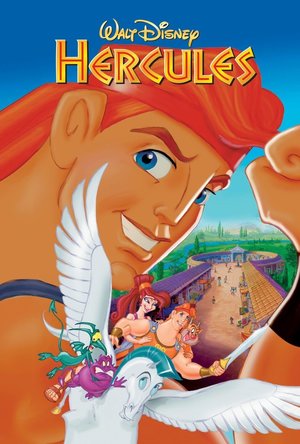
Disney’s animated retelling of the classic story of the Greek demi-god. The fun spin that was put on it just happens to make it my favorite. You can’t help but have a good time while watching Disney’s Hercules.
Acting: 10
Beginning: 10
Characters: 10
Cinematography/Visuals: 10
Hercules is beautiful from a visual standpoint. I love the contrast of bright colors against dark backgrounds. My favorite scene is when Hercules is battling the hydra in the rain while flying on his pegasus. It’s so grand in scale as he soars in and out of the dozens of heads. Oh, and I haven’t even touched on the beauty of Hades. It’s gorgeous even in its weird creepiness. So much attention to detail that it’s hard not to appreciate.
Conflict: 9
Entertainment Value: 9
From the opening scene where the awesome divas are singing the setup, I knew I was going to be watching something original and new. With a combo of action-packed sequences and a number of hilarious moments from a great cast, I was invested in the movie from beginning to end. It’s a damn good ride.
Memorability: 8
Pace: 10
Hercules moves extremely efficiently through its story which I find some stories hard to do when singing is involved. There is very little lingering if any as scenes get their point across and you’re off to the next thing. I respect films that can do that as I know a number of movies that overstay their welcome.
Plot: 8
Resolution: 8
Overall: 92
Not only does it have action and comedy, but there is also a love story in true Disney fashion within Hercules. And it all works. I do wish that they would have jumped into Hercules’ hero aspect a smidge earlier, but overall I think the movie is fantastic. Great job yet again by Disney.
Acting: 10
Beginning: 10
Characters: 10
Cinematography/Visuals: 10
Hercules is beautiful from a visual standpoint. I love the contrast of bright colors against dark backgrounds. My favorite scene is when Hercules is battling the hydra in the rain while flying on his pegasus. It’s so grand in scale as he soars in and out of the dozens of heads. Oh, and I haven’t even touched on the beauty of Hades. It’s gorgeous even in its weird creepiness. So much attention to detail that it’s hard not to appreciate.
Conflict: 9
Entertainment Value: 9
From the opening scene where the awesome divas are singing the setup, I knew I was going to be watching something original and new. With a combo of action-packed sequences and a number of hilarious moments from a great cast, I was invested in the movie from beginning to end. It’s a damn good ride.
Memorability: 8
Pace: 10
Hercules moves extremely efficiently through its story which I find some stories hard to do when singing is involved. There is very little lingering if any as scenes get their point across and you’re off to the next thing. I respect films that can do that as I know a number of movies that overstay their welcome.
Plot: 8
Resolution: 8
Overall: 92
Not only does it have action and comedy, but there is also a love story in true Disney fashion within Hercules. And it all works. I do wish that they would have jumped into Hercules’ hero aspect a smidge earlier, but overall I think the movie is fantastic. Great job yet again by Disney.

Goddess in the Stacks (553 KP) rated Mortal Engines (The Hungry City Chronicles, #1) in Books
Dec 25, 2018

Through this entire book, I kept thinking "this feels like Valerian and the City of a Thousand Planets." It's a completely different setting, and a different plot, but it had the same atmosphere. Rollicking action, fantastical premise, crazy setting, huge machines with entire worlds within them. I loved Valerian - it may not have been a critically great movie, and I don't think the leads had much chemistry, but the movie was just FUN. And that's how Mortal Engines is, too.
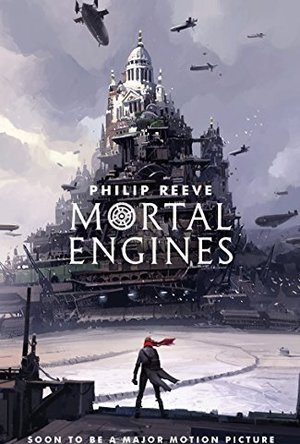
It's a crazy world, where cities have become mobile - think Howl's Moving Castle - and they chase each other across a barren world, devouring each other for resources in a social order they call Municipal Darwinism. Some cities, like London, are huge, with six main levels, not really counting the Gut, or the center of the machinery. Other towns are small, one or two levels crawling along trying to avoid the notice of the larger, faster cities. The peoples of the Traction Cities think people who live in statics (stationary cities, or, horror of horrors, right on the ground!) or people who are part of the Anti-Traction League, are crazy barbarians. And then there are the airship captains and crews, based out of the one floating city.
It is a crazy steampunk world, and Tom Natsworthy stumbles into a conspiracy plot by being in the wrong place at the wrong time. But as he travels with Hester across the wasteland, trying to survive their pursuers and avert catastrophe, he learns more about her, and more about how the world actually works.
I absolutely adore the last two sentences of the book, and I'm going to post those here because they aren't terribly spoilery. And they're fantastic.
"You aren't a hero, and I'm not beautiful, and we probably won't live happily ever after," she said. "But we're alive, and together, and we're going to be all right."
This book is the first of a quartet, and Reeve also wrote a prequel trilogy, so there's actually three books before AND after this book. I'll probably check my library for them, because I REALLY enjoyed this book.
You can find all my reviews at http://goddessinthestacks.com
It's a crazy world, where cities have become mobile - think Howl's Moving Castle - and they chase each other across a barren world, devouring each other for resources in a social order they call Municipal Darwinism. Some cities, like London, are huge, with six main levels, not really counting the Gut, or the center of the machinery. Other towns are small, one or two levels crawling along trying to avoid the notice of the larger, faster cities. The peoples of the Traction Cities think people who live in statics (stationary cities, or, horror of horrors, right on the ground!) or people who are part of the Anti-Traction League, are crazy barbarians. And then there are the airship captains and crews, based out of the one floating city.
It is a crazy steampunk world, and Tom Natsworthy stumbles into a conspiracy plot by being in the wrong place at the wrong time. But as he travels with Hester across the wasteland, trying to survive their pursuers and avert catastrophe, he learns more about her, and more about how the world actually works.
I absolutely adore the last two sentences of the book, and I'm going to post those here because they aren't terribly spoilery. And they're fantastic.
"You aren't a hero, and I'm not beautiful, and we probably won't live happily ever after," she said. "But we're alive, and together, and we're going to be all right."
This book is the first of a quartet, and Reeve also wrote a prequel trilogy, so there's actually three books before AND after this book. I'll probably check my library for them, because I REALLY enjoyed this book.
You can find all my reviews at http://goddessinthestacks.com
Dave Eggers recommended The Landlord (1970) in Movies (curated)

Bob Mann (459 KP) rated The Light Between Oceans (2016) in Movies
Sep 29, 2021
“You only have to forgive once. To resent, you have to do it all day, every day”.
In my review of “The Two Faces of January” I described it as a film that “will be particularly enjoyed by older viewers who remember when story and location were put far ahead of CGI-based special effects”. In watching this film I was again linking in my mind to that earlier film… and that was before the lead character suddenly brought up the two faces of Janus!
For this is a good old-fashioned weepy melodrama: leisurely, character based and guaranteed to give the tear ducts a good old cleaning out.
It’s 1918 and Michael Fassbender plays Tom Sherbourne, a damaged man seeking solitude and reflection after four years of hell in the trenches. As a short-term job he takes the post of lighthouse keeper on the isolated slab of rock called Janus – sat between two oceans (presumably as this is Western Australia, the Indian and the Southern Oceans). The isolation of the job previously sent his predecessor off his trolley.
En route to his workplace he is immediately attracted to headmaster’s daughter Isabel (Alicia Vikander) who practically THROWS herself at Tom (the hussy), given that they only have snatches of a day at a time to be together during shore leave. Tom falls for her (as a hot blooded man, and with Vikander’s performance, this is entirely believable!) and the two marry to retire to their ‘fortress of solitude’ together to raise a family and live happily ever after…. or not… For the path of true motherhood runs not smoothly for poor Isabel, and a baby in a drifting boat spells both joy and despair for the couple as the story unwinds.
(I’ll stop my synopsis there, since I think the trailer – and other reviews I’ve read – give too much away).
While Fassbender again demonstrates what a mesmerising actor he is, the acting kudos in this one really goes again to Vikander, who pulls out all the stops in a role that demands fragility, naivety, resentment, anger and despair across its course. While I don’t think the film in general will trouble the Oscars, this is a leading actress performance that I could well see nominated. In a supporting role, with less screen-time, is Rachel Weisz who again needs to demonstrate her acting stripes in a demanding role. (Also a shout-out to young Florence Clery who is wonderfully naturalistic as the 4 year old Lucy-Grace.)
So this is a film with a stellar class, but it doesn’t really all gel together satisfyingly into a stellar – or at least particularly memorable – movie. After a slow start, director Derek Cianfrance (“The Place Beyond the Pines”) ladles on the melodrama interminably, and over a two hour running time the word overwrought comes to mind.
The script (also by Cianfrance, from the novel by M.L.Stedman) could have been tightened up, particularly in the first reel, and the audience given a bit more time to reflect and absorb in the second half.
The film is also curiously ‘place-less’. I assumed this was somewhere off Ireland until someone suddenly starting singing “Waltzing Matilda” (badly) and random people started talking in Aussie accents: most strange.
Cinematography by Adam Arkapaw (“Macbeth”) is also frustratingly inconsistent. The landscapes of the island, steam trains, sunsets and the multiple boatings in between is just beautiful (assisted by a delicate score by the great Alexandre Desplat which is well used) but get close up (and the camera does often get VERY close up) and a lack of ‘steadicam’ becomes infuriating, with faces dancing about the screen and – in one particular scene early on – wandering off on either side with the camera apparently unsure which one to follow!
A memorable cinema experience only for Vikander’s outstanding performance. Now where are those tissues…
For this is a good old-fashioned weepy melodrama: leisurely, character based and guaranteed to give the tear ducts a good old cleaning out.
It’s 1918 and Michael Fassbender plays Tom Sherbourne, a damaged man seeking solitude and reflection after four years of hell in the trenches. As a short-term job he takes the post of lighthouse keeper on the isolated slab of rock called Janus – sat between two oceans (presumably as this is Western Australia, the Indian and the Southern Oceans). The isolation of the job previously sent his predecessor off his trolley.
En route to his workplace he is immediately attracted to headmaster’s daughter Isabel (Alicia Vikander) who practically THROWS herself at Tom (the hussy), given that they only have snatches of a day at a time to be together during shore leave. Tom falls for her (as a hot blooded man, and with Vikander’s performance, this is entirely believable!) and the two marry to retire to their ‘fortress of solitude’ together to raise a family and live happily ever after…. or not… For the path of true motherhood runs not smoothly for poor Isabel, and a baby in a drifting boat spells both joy and despair for the couple as the story unwinds.
(I’ll stop my synopsis there, since I think the trailer – and other reviews I’ve read – give too much away).
While Fassbender again demonstrates what a mesmerising actor he is, the acting kudos in this one really goes again to Vikander, who pulls out all the stops in a role that demands fragility, naivety, resentment, anger and despair across its course. While I don’t think the film in general will trouble the Oscars, this is a leading actress performance that I could well see nominated. In a supporting role, with less screen-time, is Rachel Weisz who again needs to demonstrate her acting stripes in a demanding role. (Also a shout-out to young Florence Clery who is wonderfully naturalistic as the 4 year old Lucy-Grace.)
So this is a film with a stellar class, but it doesn’t really all gel together satisfyingly into a stellar – or at least particularly memorable – movie. After a slow start, director Derek Cianfrance (“The Place Beyond the Pines”) ladles on the melodrama interminably, and over a two hour running time the word overwrought comes to mind.
The script (also by Cianfrance, from the novel by M.L.Stedman) could have been tightened up, particularly in the first reel, and the audience given a bit more time to reflect and absorb in the second half.
The film is also curiously ‘place-less’. I assumed this was somewhere off Ireland until someone suddenly starting singing “Waltzing Matilda” (badly) and random people started talking in Aussie accents: most strange.
Cinematography by Adam Arkapaw (“Macbeth”) is also frustratingly inconsistent. The landscapes of the island, steam trains, sunsets and the multiple boatings in between is just beautiful (assisted by a delicate score by the great Alexandre Desplat which is well used) but get close up (and the camera does often get VERY close up) and a lack of ‘steadicam’ becomes infuriating, with faces dancing about the screen and – in one particular scene early on – wandering off on either side with the camera apparently unsure which one to follow!
A memorable cinema experience only for Vikander’s outstanding performance. Now where are those tissues…

ELLDBRY (0 KP) rated The Godfather (1972) in Movies
Apr 16, 2020

10/10
Contains spoilers, click to show
"I believe in America…."
What is it about someone you care about that sets them apart? Are they family, a friend, or someone you feel just needs help? What causes you to go the extra mile to put someone else ahead of yourself? You may find the answers in your religion, your upbringing, or in movies. For example, say your daughter goes out on a date with a guy and she is violently beaten by him and one of his friends. You go see her in the hospital and she cannot even weep because of the pain. So trying to keep your cool you press charges and try by the legal means to bring the young men to justice. It doesn't happen, their sentences are suspended. That may make you lose faith in the system that is supposed to protect you. So now you go to someone else who could help. This person is a bigshot, a pezzonovante in his own way but outside the system. You explain what happened and what you did, and all he says is 'why didn't you come to me first?' How many times in your life have some of us gone to others that don't care and asked for help instead of going to the ones that actually care. And the problem is solved. Imagine for another example that your father is in the hospital and men are coming to kill him. And you are the only one there that can help him. Imagine that you had your own dreams and your own goals that were different to what your father wanted. But in this moment you put all that aside to help your father survive. You assure him that everything will be ok and you are with him now. You bluff out the men trying to kill him and your father is saved. Most of us may never have to defend our dads from someone trying to kill him. But seeing someone laying helpless in a hospital bed in need of help we can all relate to. Every son, every daughter, every parent, every sibling, every friend. You see everybody wants to talk about the gangster mafia element of The Godfather, and say that is what it is all about. But family plays an even bigger role in the story by being the driving force behind the main characters. Family, love, loyalty, sacrifice all these elements are used in the movie to bring a standard boring mafia shootout movie to the level of greatest movie of all time. Francis Ford Coppola used as much he could to bring this point home. The wedding scene was not made up by any means but instead taken from other weddings witnessed by every Italian who has ever been to a wedding. Bringing envelopes filled with money to the bride, nieces dancing on the feet of uncle's, people waiting in line to see the father of the bride, sandwiches in white paper being tossed around. 'two gabagool, one proshootoh!' Then go to the kitchen to make spaghetti. Need a recipe? Try 'a little of oil then fry some garlic, throw in some tomatoes and tomato paste, fry it, make sure it does not stick, get it to boil, put in all your sausage and meatballs, add some wine and a little bit of sugar and that's the trick.' That recipe has been in Italian kitchens long before the cameras rolled. Need an idea for some quality time with the kids, well go to work do what you have to do and pick up some cannolis before you get home. Just remember to leave the gun and take the cannolis. Coppola always said he had to be good or no cannolis when his dad got home to share with the family. Coppola also put in his own family to work, his dad scored the movie, his sister Talia was Connie, and his daughter played the baby in the baptism scene. The family was on both sides of the family. But for me the movie revolves around Don Vito Corleone and Marlon Brando. Mario Puzo based the character of Don Corleone on his mother, everytime the Don opened his mouth all that came out was the passion of his mother, her wisdom, her ruthlessness, and her unconquerable love for her family and for life itself. Therefore only the greatest actor of the day will do to play the part. Coppola agreed and suggested either Brando or Laurence Olivier. Olivier was considered and it would have been interesting but he eventually passed on the role. Only two men wanted Brando, Coppola and Puzo. Brando had a history of being difficult and the studio executives nearly vetoed his casting. Coppola was able to make a deal with in order to cast Brando. Brando had to agree to do the movie for nothing, he had to put up a bond in order to cover cost overruns, and he had to do a screen test. They only got to the screen test because Brando transformed himself from a forty year old man into a sixty year old mafia don before their eyes in a matter of minutes. When the executives saw the footage they said ‘no no no, WOW THAT'S INCREDIBLE!’ Brando would be The Godfather. But Brando still needed a little extra help. If you watch the movie, everytime Don Corleone is speaking and stops and looks off in the distance he is reading from a card with his lines on it. He still won an oscar though. Two scenes are my favorite in the movie. One is the scene in the restaurant, I feel like I don’t need to explain it, because it is the most famous scene. Just know that without that scene the movie would not have existed. When you shoot a movie, the scenes are viewed day by day by the studio decision makers. They were hating what they were seeing, everything shot before the restaurant scene was met with cruel criticism by everyone on the outside not working on the movie. All Coppola could do was show them this scene and the movie was not only saved but validated. There are moments in the movie that other scenes build to, the restaurant was one of those scenes. You know of it’s importance because of everything that preceded it. The other scene is the meeting. Don Corleone stands before the other mafia dons and surrenders to them and their wishes. He reasons with them in order to come to a peaceful solution. But there is a catch: if you mess with my other son or if ‘he’s struck by a bolt of lightning. Then I’m going to blame some of the people in this room and that I do not forgive. So with that aside let me say that I swear, on the souls of my grandchildren, that I will not be the one that breaks the peace that we’ve made here today.’ There is a time for peace and a time for reckoning. This scene is my favorite because you believe him, you go along with his plea for peace. But the other dons do not realize it is not a surrender but a tactical retreat.
So the movie went on to make a lot of money, win a bunch of awards, and won it’s way on a bunch of lists that say it’s great. I was lucky enough to not know that when I first saw the movie. I saw it for what it was: a father and three sons. One son was intense and savage, another was sweet and innocent, another was conviving and calculating, the father was all those combined. But the father was the steadying force in all their lives. That is why when they all find out he was shot they react in ways we all would react. When you see the father lying in the street his second son is there to help but can’t, all he can do is cry and yell ‘papa.’ The first son nearly strong arms one of his father’s closest associates because he wants someone to beat up. The third son panics and tries to do whatever he can to help. That is for the audience, and that that’s how everyone relates. Finally, I’ll quote Martin Sheen: ‘The Godfather is the best filmmaking ever in the history of American cinema. There is nothing that speaks more to who we are, where we came from, what we stand for, and where we’re gonna go. That’s the work of a true genius.’ I agree. It is my favorite, of what I’ve seen of course.
".... Don Corleone."
What is it about someone you care about that sets them apart? Are they family, a friend, or someone you feel just needs help? What causes you to go the extra mile to put someone else ahead of yourself? You may find the answers in your religion, your upbringing, or in movies. For example, say your daughter goes out on a date with a guy and she is violently beaten by him and one of his friends. You go see her in the hospital and she cannot even weep because of the pain. So trying to keep your cool you press charges and try by the legal means to bring the young men to justice. It doesn't happen, their sentences are suspended. That may make you lose faith in the system that is supposed to protect you. So now you go to someone else who could help. This person is a bigshot, a pezzonovante in his own way but outside the system. You explain what happened and what you did, and all he says is 'why didn't you come to me first?' How many times in your life have some of us gone to others that don't care and asked for help instead of going to the ones that actually care. And the problem is solved. Imagine for another example that your father is in the hospital and men are coming to kill him. And you are the only one there that can help him. Imagine that you had your own dreams and your own goals that were different to what your father wanted. But in this moment you put all that aside to help your father survive. You assure him that everything will be ok and you are with him now. You bluff out the men trying to kill him and your father is saved. Most of us may never have to defend our dads from someone trying to kill him. But seeing someone laying helpless in a hospital bed in need of help we can all relate to. Every son, every daughter, every parent, every sibling, every friend. You see everybody wants to talk about the gangster mafia element of The Godfather, and say that is what it is all about. But family plays an even bigger role in the story by being the driving force behind the main characters. Family, love, loyalty, sacrifice all these elements are used in the movie to bring a standard boring mafia shootout movie to the level of greatest movie of all time. Francis Ford Coppola used as much he could to bring this point home. The wedding scene was not made up by any means but instead taken from other weddings witnessed by every Italian who has ever been to a wedding. Bringing envelopes filled with money to the bride, nieces dancing on the feet of uncle's, people waiting in line to see the father of the bride, sandwiches in white paper being tossed around. 'two gabagool, one proshootoh!' Then go to the kitchen to make spaghetti. Need a recipe? Try 'a little of oil then fry some garlic, throw in some tomatoes and tomato paste, fry it, make sure it does not stick, get it to boil, put in all your sausage and meatballs, add some wine and a little bit of sugar and that's the trick.' That recipe has been in Italian kitchens long before the cameras rolled. Need an idea for some quality time with the kids, well go to work do what you have to do and pick up some cannolis before you get home. Just remember to leave the gun and take the cannolis. Coppola always said he had to be good or no cannolis when his dad got home to share with the family. Coppola also put in his own family to work, his dad scored the movie, his sister Talia was Connie, and his daughter played the baby in the baptism scene. The family was on both sides of the family. But for me the movie revolves around Don Vito Corleone and Marlon Brando. Mario Puzo based the character of Don Corleone on his mother, everytime the Don opened his mouth all that came out was the passion of his mother, her wisdom, her ruthlessness, and her unconquerable love for her family and for life itself. Therefore only the greatest actor of the day will do to play the part. Coppola agreed and suggested either Brando or Laurence Olivier. Olivier was considered and it would have been interesting but he eventually passed on the role. Only two men wanted Brando, Coppola and Puzo. Brando had a history of being difficult and the studio executives nearly vetoed his casting. Coppola was able to make a deal with in order to cast Brando. Brando had to agree to do the movie for nothing, he had to put up a bond in order to cover cost overruns, and he had to do a screen test. They only got to the screen test because Brando transformed himself from a forty year old man into a sixty year old mafia don before their eyes in a matter of minutes. When the executives saw the footage they said ‘no no no, WOW THAT'S INCREDIBLE!’ Brando would be The Godfather. But Brando still needed a little extra help. If you watch the movie, everytime Don Corleone is speaking and stops and looks off in the distance he is reading from a card with his lines on it. He still won an oscar though. Two scenes are my favorite in the movie. One is the scene in the restaurant, I feel like I don’t need to explain it, because it is the most famous scene. Just know that without that scene the movie would not have existed. When you shoot a movie, the scenes are viewed day by day by the studio decision makers. They were hating what they were seeing, everything shot before the restaurant scene was met with cruel criticism by everyone on the outside not working on the movie. All Coppola could do was show them this scene and the movie was not only saved but validated. There are moments in the movie that other scenes build to, the restaurant was one of those scenes. You know of it’s importance because of everything that preceded it. The other scene is the meeting. Don Corleone stands before the other mafia dons and surrenders to them and their wishes. He reasons with them in order to come to a peaceful solution. But there is a catch: if you mess with my other son or if ‘he’s struck by a bolt of lightning. Then I’m going to blame some of the people in this room and that I do not forgive. So with that aside let me say that I swear, on the souls of my grandchildren, that I will not be the one that breaks the peace that we’ve made here today.’ There is a time for peace and a time for reckoning. This scene is my favorite because you believe him, you go along with his plea for peace. But the other dons do not realize it is not a surrender but a tactical retreat.
So the movie went on to make a lot of money, win a bunch of awards, and won it’s way on a bunch of lists that say it’s great. I was lucky enough to not know that when I first saw the movie. I saw it for what it was: a father and three sons. One son was intense and savage, another was sweet and innocent, another was conviving and calculating, the father was all those combined. But the father was the steadying force in all their lives. That is why when they all find out he was shot they react in ways we all would react. When you see the father lying in the street his second son is there to help but can’t, all he can do is cry and yell ‘papa.’ The first son nearly strong arms one of his father’s closest associates because he wants someone to beat up. The third son panics and tries to do whatever he can to help. That is for the audience, and that that’s how everyone relates. Finally, I’ll quote Martin Sheen: ‘The Godfather is the best filmmaking ever in the history of American cinema. There is nothing that speaks more to who we are, where we came from, what we stand for, and where we’re gonna go. That’s the work of a true genius.’ I agree. It is my favorite, of what I’ve seen of course.
".... Don Corleone."

Matthew Krueger (10051 KP) rated Drag Me to Hell (2009) in Movies
Oct 28, 2020
Sam Raimi (1 more)
Alison Lohman
PG-13 (1 more)
Justin Long
Old Lady Curse
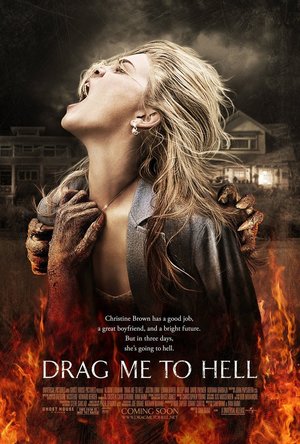
Drag me to Hell- is a anethor movie that ive wanted to see for couple years now and it was not disappointed. Its gory, horrorfying, terrorfying, scary, gory and overall a excellent movie.
The plot: Christine Brown (Alison Lohman) has a loving boyfriend (Justin Long) and a great job at a Los Angeles bank. But her heavenly life becomes hellish when, in an effort to impress her boss, she denies an old woman's request for an extension on her home loan. In retaliation, the crone places a curse on Christine, threatening her soul with eternal damnation. Christine seeks a psychic's help to break the curse, but the price to save her soul may be more than she can pay.
Raimi wrote Drag Me to Hell with his brother, Ivan, before working on the Spider-Man trilogy.
The original story for Drag Me to Hell was written ten years before the film went into production and was written by Sam Raimi and his brother Ivan Raimi. The film went into production under the name The Curse. The Raimis wrote the script as a morality tale, desiring to write a story about a character who wants to be a good person, but makes a sinful choice out of greed for her own betterment and pays the price for it. The Raimis tried to make the character of Christine the main focal point in the film, and tried to have Christine in almost all the scenes in the film.
The most significant parallel is that both stories involve the passing of a cursed object, which has to be passed to someone else, or its possessor will be devoured by one or more demons. Unlike his past horror films, Raimi wanted the film to be rated PG-13 and not strictly driven by gore, stating, "I didn't want to do exactly the same thing I had done before."
After finishing the script, Raimi desired to make the picture after the first draft of the script was completed, but other projects such as the Spider-Man film series became a nearly decade-long endeavor, pushing opportunities to continue work on Drag Me to Hell to late 2007. Raimi offered director Edgar Wright to direct Drag Me to Hell which Wright turned down as he was filming Hot Fuzz and felt that "If I did it, it would just feel like karaoke." After the previous three Spider-Man films, Raimi came back to the script of Drag Me to Hell, wanting to make a simpler and lower-budget film.
Raimi said he set out to create “a horror film with lots of wild moments and lots of suspense and big shocks that’ll hopefully make audiences jump. But I also wanted to have a lot of dark humor sprinkled throughout. I spent the last decade doing Spider-Man and you come to rely on a lot of people doing things for you and a lot of help, but it’s refreshing and wonderful to be reminded that, as with most filmmakers, the best way to do it is yourself, with a tight team doing the main jobs."
Its a excellent movie.
The plot: Christine Brown (Alison Lohman) has a loving boyfriend (Justin Long) and a great job at a Los Angeles bank. But her heavenly life becomes hellish when, in an effort to impress her boss, she denies an old woman's request for an extension on her home loan. In retaliation, the crone places a curse on Christine, threatening her soul with eternal damnation. Christine seeks a psychic's help to break the curse, but the price to save her soul may be more than she can pay.
Raimi wrote Drag Me to Hell with his brother, Ivan, before working on the Spider-Man trilogy.
The original story for Drag Me to Hell was written ten years before the film went into production and was written by Sam Raimi and his brother Ivan Raimi. The film went into production under the name The Curse. The Raimis wrote the script as a morality tale, desiring to write a story about a character who wants to be a good person, but makes a sinful choice out of greed for her own betterment and pays the price for it. The Raimis tried to make the character of Christine the main focal point in the film, and tried to have Christine in almost all the scenes in the film.
The most significant parallel is that both stories involve the passing of a cursed object, which has to be passed to someone else, or its possessor will be devoured by one or more demons. Unlike his past horror films, Raimi wanted the film to be rated PG-13 and not strictly driven by gore, stating, "I didn't want to do exactly the same thing I had done before."
After finishing the script, Raimi desired to make the picture after the first draft of the script was completed, but other projects such as the Spider-Man film series became a nearly decade-long endeavor, pushing opportunities to continue work on Drag Me to Hell to late 2007. Raimi offered director Edgar Wright to direct Drag Me to Hell which Wright turned down as he was filming Hot Fuzz and felt that "If I did it, it would just feel like karaoke." After the previous three Spider-Man films, Raimi came back to the script of Drag Me to Hell, wanting to make a simpler and lower-budget film.
Raimi said he set out to create “a horror film with lots of wild moments and lots of suspense and big shocks that’ll hopefully make audiences jump. But I also wanted to have a lot of dark humor sprinkled throughout. I spent the last decade doing Spider-Man and you come to rely on a lot of people doing things for you and a lot of help, but it’s refreshing and wonderful to be reminded that, as with most filmmakers, the best way to do it is yourself, with a tight team doing the main jobs."
Its a excellent movie.

Andy K (10827 KP) rated The Babadook (2014) in Movies
Dec 11, 2019

Minimalist Creep
Wow was I surprised by this. My daughters have been after me for a while to watch, but I have to not being a big fan of modern CGI horror like The Conjuring, Insidious, etc. I made the mistake of including this film in that group and I was wrong.
Modern audiences have grown short attention spans even having film studios get rid of opening film credits, so it is refreshing these days when a film takes its time and leaves something to our imagination. I have written in several reviews the last few years that just because modern filmmakers can do something, doesn't mean they should. Modern CGI effects leave virtually nothing a movie maker can accomplish with enough imagination are computer work done to it; however, I still maintain the "Jaws" theory of the less you show the audience the more they have to used their own imaginations and therefore the film's "Babadook" becomes even more scary.
I loved the way the creature was shown mostly in shadow and not really given a good glimpse most of the way through. Even when it presents itself, you don't really get a good look at it and a lot of the scare is also through creepy, haunting sound effects.
I guess I will have to listen to my daughters from now on!
Modern audiences have grown short attention spans even having film studios get rid of opening film credits, so it is refreshing these days when a film takes its time and leaves something to our imagination. I have written in several reviews the last few years that just because modern filmmakers can do something, doesn't mean they should. Modern CGI effects leave virtually nothing a movie maker can accomplish with enough imagination are computer work done to it; however, I still maintain the "Jaws" theory of the less you show the audience the more they have to used their own imaginations and therefore the film's "Babadook" becomes even more scary.
I loved the way the creature was shown mostly in shadow and not really given a good glimpse most of the way through. Even when it presents itself, you don't really get a good look at it and a lot of the scare is also through creepy, haunting sound effects.
I guess I will have to listen to my daughters from now on!

David McK (3921 KP) rated Black Widow (2021) in Movies
Aug 8, 2021
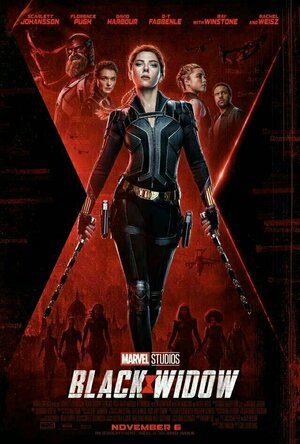
The first Marvel movie out of the stables since the start of the Worldwide Covid-19 pandemic; I believe this was originally to be released before the likes of even WandaVision (shown on Disney+).
This was alos released concurrently on Disney+ (behind a paywall) and in the cinema: indeed, this is the very reason for ScarJo's lawsuit against Disney (she says she was told it would be theatres first, then Disney+ and that she only gets a percentage of box office takings).
Anyway, all that aside: this is actually set pre-snap; the majority of it back just after the events of 'Captain America: Civil War' (and thus before 'Avengers: Infinty War'), with Natasha on the run from the US government having broken the Sokovia Accords. It's not long, however, before she receives a package from a previous safe-house (Budapest. Yes, the Budapest mentioned before with Hawkeye: 'remember Budapest?') that leads her into a further adventure, this time involving her surrogate 'family' from when she was undercover in America as a kid in the mid 1990s.
Her 'dad' (David Harbour) 'Red Guardian' steals the show, while Florence Pugh (as her younger 'sister') and Rachel Weisz (as her 'mum') also provide sterling back-up.
Plenty of action, but the film does, perhaps, fall into the common Marvel trap of having a CGI-heavy ending ...
This was alos released concurrently on Disney+ (behind a paywall) and in the cinema: indeed, this is the very reason for ScarJo's lawsuit against Disney (she says she was told it would be theatres first, then Disney+ and that she only gets a percentage of box office takings).
Anyway, all that aside: this is actually set pre-snap; the majority of it back just after the events of 'Captain America: Civil War' (and thus before 'Avengers: Infinty War'), with Natasha on the run from the US government having broken the Sokovia Accords. It's not long, however, before she receives a package from a previous safe-house (Budapest. Yes, the Budapest mentioned before with Hawkeye: 'remember Budapest?') that leads her into a further adventure, this time involving her surrogate 'family' from when she was undercover in America as a kid in the mid 1990s.
Her 'dad' (David Harbour) 'Red Guardian' steals the show, while Florence Pugh (as her younger 'sister') and Rachel Weisz (as her 'mum') also provide sterling back-up.
Plenty of action, but the film does, perhaps, fall into the common Marvel trap of having a CGI-heavy ending ...
Bob Mann (459 KP) rated Apollo 11 (2019) in Movies
Jul 10, 2019
Brilliant documentary footage (1 more)
(Still) nail-biting landing scenes
A giant leap for mankind?
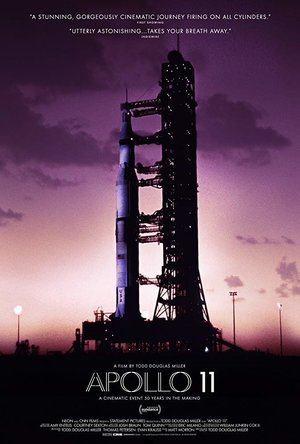
It's the Apollo 11 mission. That's it. No annoying voiceover from Clooney or Gosling spouting truisms (provided you ignore Walter Kronkite's occasional excellent and sonorous TV commentary). Just extraordinary footage from July 1969 of the 8 day mission and the days immediately preceeding (and in the end titles, following) that historic event.
A brilliant documentary that deserves to be seen at the cinema, and on as big a screen as you can manage to find. It only seems to have a limited UK release (I saw it at our local Picturehouse cinema), but it is really worth going out of your way to catch if you can. A film that properly provides you with a view of our blue oasis of a world from afar: and critically what we might be doing to it.
I also thought it should make humanity feel rather ashamed of itself: if man took those great leaps in the 10 years after JFK's famous speech, what has really been achieved in manned space travel in the 50 years since? On Earth's report card it should say "C- .... could do better".
For the full review, see here - https://bob-the-movie-man.com/2019/07/10/one-manns-movies-film-review-apollo-11-2019/
A brilliant documentary that deserves to be seen at the cinema, and on as big a screen as you can manage to find. It only seems to have a limited UK release (I saw it at our local Picturehouse cinema), but it is really worth going out of your way to catch if you can. A film that properly provides you with a view of our blue oasis of a world from afar: and critically what we might be doing to it.
I also thought it should make humanity feel rather ashamed of itself: if man took those great leaps in the 10 years after JFK's famous speech, what has really been achieved in manned space travel in the 50 years since? On Earth's report card it should say "C- .... could do better".
For the full review, see here - https://bob-the-movie-man.com/2019/07/10/one-manns-movies-film-review-apollo-11-2019/