
Search
Search results

Gareth von Kallenbach (980 KP) rated Pitch Perfect (2012) in Movies
Aug 7, 2019

I have to admit, I am a sucker for movies with singing and dancing. And when there’s competition involved, even better! When I saw the trailer for Pitch Perfect, my first thought was it looked like “Bring It On” but for a capella groups. My second thought was, “Where do I line up?”
Sure, such movies are usually trite and predictable. But who cares? There’s singing and dancing! I don’t care that I’m expected to buy 27 year old Anna Kendrick as a rebellious, aspiring DJ named Beca, starting her freshman year at Barden College. She and Bella just graduated from high school in the Twilight series, so, sure, why not? Bribed by her dad with a promise to help her move to L.A. if she gave college a chance for one year, Becca considers what Barden has to offer. Unfortunately for her, the college’s “D.J. Club” is more about Semitic sign language than mixing beats.
Enter The Bellas, the college’s recently disgraced female a capella group lead by Aubrey (Anna Camp) and Chloe (Brittany Snow). Because of the uptight Aubrey’s shocking performance at a recent competition, they need to rebuild a group that can sing in saccharine-sweet, vanilla harmony. The pickings are slim (mostly) and what comes together is a motley crew of questionable talent. There’s Fat Amy played hilariously by Rebel Wilson, who can mermaid dance like no other. (Mainly because who else would?) There’s sexy Stacie (Alexis Knapp) who may be more comfortable with a stripper pole than singing soprano, and butch Cynthia who can’t keep her eyes of Stacie. Also in the group is Lilly (Hanna Mae Lee) who is borderline mute. So it’s no wonder Chloe aggressively recruits Beca whom she ambushes in the shower after overhearing Beca singing David Guetta’s “Titanium”.
The Bellas arch rivals are the Treble Makers and of course, Beca’s love interest in the movie is Treble Maker, Jesse (Skylar Astin) who somehow gets cuter with every scene. But he’s got to work pretty hard to impress Beca who’s more interested in her headphones than listening to Jesse wax on about the “Breakfast Club” which he believes has the best movie ending ever. Personally, I was a little disconcerted by the fact that college-age kids spoke of “Breakfast Club” with a reverance usually reserved for classics like Casablanca. Even my guest leaned over and said, “But that’s so before their time.” Then I realized, to kids who weren’t even alive when Breakfast Club was made, it would be a classic.
But Jesse’s pursuit of her isn’t Beca’s only problem. The songs Aubrey is dead set on the Bellas perfecting are yawn-worthy at best, which was grating on the music mixologist. The Bellas simply can’t win against the Treble Makers with tired arrangements of Ace of Base, Bangles and Gloria Estefan songs. But Aubrey is resistant to Beca’s attempts to bring the Bellas into the current decade. Therein lies the movie’s requisite conflicts.
Pitch Perfect in a word is fun. Simply fun. There were plenty of laughs, mainly thanks to Rebel Wilson’s scene-stealing lines and some outrageous repartee between competition commentators played by Elizabeth Banks and John Michael Higgins. The highlights, of course, were the singing performances. All of the actors have great pipes and the harmonies will please any choir geek who attends. But lest you think it’s only a teen flick, in an audience of mixed generations, the loudest laughter was from the older audience.
Sure, such movies are usually trite and predictable. But who cares? There’s singing and dancing! I don’t care that I’m expected to buy 27 year old Anna Kendrick as a rebellious, aspiring DJ named Beca, starting her freshman year at Barden College. She and Bella just graduated from high school in the Twilight series, so, sure, why not? Bribed by her dad with a promise to help her move to L.A. if she gave college a chance for one year, Becca considers what Barden has to offer. Unfortunately for her, the college’s “D.J. Club” is more about Semitic sign language than mixing beats.
Enter The Bellas, the college’s recently disgraced female a capella group lead by Aubrey (Anna Camp) and Chloe (Brittany Snow). Because of the uptight Aubrey’s shocking performance at a recent competition, they need to rebuild a group that can sing in saccharine-sweet, vanilla harmony. The pickings are slim (mostly) and what comes together is a motley crew of questionable talent. There’s Fat Amy played hilariously by Rebel Wilson, who can mermaid dance like no other. (Mainly because who else would?) There’s sexy Stacie (Alexis Knapp) who may be more comfortable with a stripper pole than singing soprano, and butch Cynthia who can’t keep her eyes of Stacie. Also in the group is Lilly (Hanna Mae Lee) who is borderline mute. So it’s no wonder Chloe aggressively recruits Beca whom she ambushes in the shower after overhearing Beca singing David Guetta’s “Titanium”.
The Bellas arch rivals are the Treble Makers and of course, Beca’s love interest in the movie is Treble Maker, Jesse (Skylar Astin) who somehow gets cuter with every scene. But he’s got to work pretty hard to impress Beca who’s more interested in her headphones than listening to Jesse wax on about the “Breakfast Club” which he believes has the best movie ending ever. Personally, I was a little disconcerted by the fact that college-age kids spoke of “Breakfast Club” with a reverance usually reserved for classics like Casablanca. Even my guest leaned over and said, “But that’s so before their time.” Then I realized, to kids who weren’t even alive when Breakfast Club was made, it would be a classic.
But Jesse’s pursuit of her isn’t Beca’s only problem. The songs Aubrey is dead set on the Bellas perfecting are yawn-worthy at best, which was grating on the music mixologist. The Bellas simply can’t win against the Treble Makers with tired arrangements of Ace of Base, Bangles and Gloria Estefan songs. But Aubrey is resistant to Beca’s attempts to bring the Bellas into the current decade. Therein lies the movie’s requisite conflicts.
Pitch Perfect in a word is fun. Simply fun. There were plenty of laughs, mainly thanks to Rebel Wilson’s scene-stealing lines and some outrageous repartee between competition commentators played by Elizabeth Banks and John Michael Higgins. The highlights, of course, were the singing performances. All of the actors have great pipes and the harmonies will please any choir geek who attends. But lest you think it’s only a teen flick, in an audience of mixed generations, the loudest laughter was from the older audience.

BankofMarquis (1832 KP) rated Marnie (1964) in Movies
Nov 6, 2020

Mediocre Hitchcock - but still pretty good
Heading into 1964, Alfred Hitchcock was on quite a roll. He had just rolled out - in order, VERTIGO (1958), NORTH BY NORTHWEST (1959), PSYCHO (1960) and THE BIRDS (1963) and his anthology series ALFRED HITCHCOCK PRESENTS had made him into a household name throughout the world. So it was with great anticipation/expectation that the world awaited his next major motion picture.
And while this film, MARNIE was not the critical or commercial success of his previous outings, it still has enough good in it that makes it a worthwhile film to watch.
Starring Tippi Hedren (THE BIRDS) and Sean Connery (fresh off his James Bond success in DR. NO and FROM RUSSIA WITH LOVE), MARNIE is, basically, a "two-hander" (a film that is primarily focused on conversation between 2 people) about an habitual thief, Marnie, with deep psychological troubles who is loved (and handled) by a man who is seeking to get to the root of what makes her tick.
And..in someone else's hands..this film could have been overly melodramatic, but in Hitchcock's adroit hands, it is a deep and disturbing psychological thriller that succeeds more often than it doesn't.
Starting with what works, Hitchcock's Direction (obviously) is at the fore. He knows how to play out a moment - especially a scene where Marnie steals from a safe. Hitchcock locks the camera in place and plays the scene with no music and just letting the events play out. It is a typical suspenseful Hitchcock scene and very well done.
The other thing that works is the performance of Connery. His charm and screen charisma shines brightly. making a problematic character like the one Connery portrays seemingly benign. Also...Tippi Hedren's performance at the end of this movie almost rescues her character...almost.
What doesn't work? Well...let's start with the title character, Marnie, as played by Hedren. She just doesn't have the charisma and charm of Connery and never really brings her character to life. She overacts at times when she has one of her "episodes" (I would think that both Hitchcock and Hedren share the blame for this) it is almost laughable in it's over-acting and she just seems in over her head with this role. It is said that Hitchcock had the film and role of Marnie written specifically as a comeback vehicle for Grace Kelly. It is too bad that this didn't come to pass, as I would have LOVED to see what an actress of her caliber would have done with this role.
The other thing that doesn't really work for me is the 2 characters at the forefront of this film. Both Hedren's Marnie and Connery's Mark Rutland are not likeable (though, as I said earlier, Connery's charm and charisma rescue's the Rutland character), but neither of these characters are ones that us, the audience, particularly care for - and that is a problem with a film that is pretty much focused on these characters.
Not one of Hitchcock's best...but still good...and the ending almost makes up for the weaknesses of the earlier parts of the movie.
Letter Grade: B
7 stars (out of 10) - even mediocre Hitchcock is till pretty good.
And...you can take that to the Bank(ofMarquis)
And while this film, MARNIE was not the critical or commercial success of his previous outings, it still has enough good in it that makes it a worthwhile film to watch.
Starring Tippi Hedren (THE BIRDS) and Sean Connery (fresh off his James Bond success in DR. NO and FROM RUSSIA WITH LOVE), MARNIE is, basically, a "two-hander" (a film that is primarily focused on conversation between 2 people) about an habitual thief, Marnie, with deep psychological troubles who is loved (and handled) by a man who is seeking to get to the root of what makes her tick.
And..in someone else's hands..this film could have been overly melodramatic, but in Hitchcock's adroit hands, it is a deep and disturbing psychological thriller that succeeds more often than it doesn't.
Starting with what works, Hitchcock's Direction (obviously) is at the fore. He knows how to play out a moment - especially a scene where Marnie steals from a safe. Hitchcock locks the camera in place and plays the scene with no music and just letting the events play out. It is a typical suspenseful Hitchcock scene and very well done.
The other thing that works is the performance of Connery. His charm and screen charisma shines brightly. making a problematic character like the one Connery portrays seemingly benign. Also...Tippi Hedren's performance at the end of this movie almost rescues her character...almost.
What doesn't work? Well...let's start with the title character, Marnie, as played by Hedren. She just doesn't have the charisma and charm of Connery and never really brings her character to life. She overacts at times when she has one of her "episodes" (I would think that both Hitchcock and Hedren share the blame for this) it is almost laughable in it's over-acting and she just seems in over her head with this role. It is said that Hitchcock had the film and role of Marnie written specifically as a comeback vehicle for Grace Kelly. It is too bad that this didn't come to pass, as I would have LOVED to see what an actress of her caliber would have done with this role.
The other thing that doesn't really work for me is the 2 characters at the forefront of this film. Both Hedren's Marnie and Connery's Mark Rutland are not likeable (though, as I said earlier, Connery's charm and charisma rescue's the Rutland character), but neither of these characters are ones that us, the audience, particularly care for - and that is a problem with a film that is pretty much focused on these characters.
Not one of Hitchcock's best...but still good...and the ending almost makes up for the weaknesses of the earlier parts of the movie.
Letter Grade: B
7 stars (out of 10) - even mediocre Hitchcock is till pretty good.
And...you can take that to the Bank(ofMarquis)

Sarah (7800 KP) rated Memento (2000) in Movies
Nov 29, 2020

One of my favourite films
Film #5 on the 100 Movies Bucket List: Memento
I have to admit, I may be a little biased when it comes to Memento. Christopher Nolan is my favourite director and Memento is both one of my favourite films of his and one of my favourite films of all time. For me, this undoubtedly deserves its place on this bucket list.
Memento is a 2000 psychological thriller starring Guy Pearce as Leonard Shelby, a man suffering from anterograde amnesia searching for the person responsible for the death of his wife, using notes and tattoos to organise his thoughts.
One of the most noticeable features of Memento is the fact that half of the narrative is told backwards. The movie begins at the end, focusing on a rather gruesome Polaroid photograph that fades rather than develops and a victim of a shooting coming back to life. The rest of the film jumps backwards a few minutes at a time, each scene ending where the last one started. For a film about memory loss and amnesia, this mechanism of telling the story really helps put us in Leonard’s shoes. It makes you feel as confused as he is. On the original dvd release, there was a hidden feature that allowed you to play the film in chronological order and this just didn’t have the same impact. These reverse scenes are interspersed with black and white flashbacks of Leonard earlier in his wife’s murder investigation and his life as an insurance investigator, which really help with the exposition. These paired together alongside a haunting score make for an intriguing and not your run of the mill murder mystery.
There are some great performances in this that also help increase the intrigue. Carrie-Anne Moss as the apparently helpful Natalie and Joe Pantoliano as the questionable sidekick appear new to Leonard every time they meet yet their loyalties and motives waver for us as the viewers throughout the film. And Guy Pearce manages to portray the frustrated and not as innocent as he first appears Leonard incredibly well, and holds this film on his own for most of the run time. They’re helped by a clever and smart script that flawlessly blends the sinister and rather dark criminal aspects of this with some surprisingly funny lines.
This story starts at the end so you don’t have to worry about how it turns out, but despite this Memento still comes up with a rather cracking twist and denouement. This entire film is about time and memory and how unreliable it is, and the lies we tell ourselves about our own identities. Even during this, what we thought we knew about Leonard as the black and white flashback meets the backwards story, is revealed to be completely unreliable and quite shocking. Without revealing too much, the outcome of this film is both surprising, sinister and rather emotional, and features some of the best dialogue of the entire movie. Leonard’s actions and motives revealed here and the final voiceover as he drives off makes for a hugely satisfying ending.
I first watched Memento in a psychology class at college around 17 years ago. I loved it then and in the years since, it hasn’t lost its appeal. Watching it back now still evokes the same emotion and feelings when the credits roll as it did all those years ago and will always be one of my favourite films, even possibly my all time favourite.
I have to admit, I may be a little biased when it comes to Memento. Christopher Nolan is my favourite director and Memento is both one of my favourite films of his and one of my favourite films of all time. For me, this undoubtedly deserves its place on this bucket list.
Memento is a 2000 psychological thriller starring Guy Pearce as Leonard Shelby, a man suffering from anterograde amnesia searching for the person responsible for the death of his wife, using notes and tattoos to organise his thoughts.
One of the most noticeable features of Memento is the fact that half of the narrative is told backwards. The movie begins at the end, focusing on a rather gruesome Polaroid photograph that fades rather than develops and a victim of a shooting coming back to life. The rest of the film jumps backwards a few minutes at a time, each scene ending where the last one started. For a film about memory loss and amnesia, this mechanism of telling the story really helps put us in Leonard’s shoes. It makes you feel as confused as he is. On the original dvd release, there was a hidden feature that allowed you to play the film in chronological order and this just didn’t have the same impact. These reverse scenes are interspersed with black and white flashbacks of Leonard earlier in his wife’s murder investigation and his life as an insurance investigator, which really help with the exposition. These paired together alongside a haunting score make for an intriguing and not your run of the mill murder mystery.
There are some great performances in this that also help increase the intrigue. Carrie-Anne Moss as the apparently helpful Natalie and Joe Pantoliano as the questionable sidekick appear new to Leonard every time they meet yet their loyalties and motives waver for us as the viewers throughout the film. And Guy Pearce manages to portray the frustrated and not as innocent as he first appears Leonard incredibly well, and holds this film on his own for most of the run time. They’re helped by a clever and smart script that flawlessly blends the sinister and rather dark criminal aspects of this with some surprisingly funny lines.
This story starts at the end so you don’t have to worry about how it turns out, but despite this Memento still comes up with a rather cracking twist and denouement. This entire film is about time and memory and how unreliable it is, and the lies we tell ourselves about our own identities. Even during this, what we thought we knew about Leonard as the black and white flashback meets the backwards story, is revealed to be completely unreliable and quite shocking. Without revealing too much, the outcome of this film is both surprising, sinister and rather emotional, and features some of the best dialogue of the entire movie. Leonard’s actions and motives revealed here and the final voiceover as he drives off makes for a hugely satisfying ending.
I first watched Memento in a psychology class at college around 17 years ago. I loved it then and in the years since, it hasn’t lost its appeal. Watching it back now still evokes the same emotion and feelings when the credits roll as it did all those years ago and will always be one of my favourite films, even possibly my all time favourite.

Emma @ The Movies (1786 KP) rated Scream (2022) in Movies
Feb 5, 2022
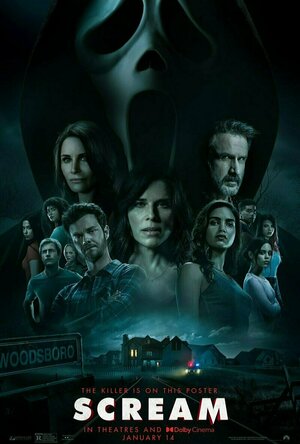


The much anticipated new release, I was amazed that I managed to avoid seeing the trailer or spoilers (I even only vaguely saw the poster), and after seeing the film... I'm not sure that was entirely sensible, I should probably have knocked down my anticipation a bit by looking at all of it.
The Scream franchise has long been one of my favourites, the lighter kind of horror that isn't actually that horrific. (Maybe I'm just a little jaded.) Controversially, my favourite is Scream 4, I enjoyed the slightly updated concepts, and that's what gave me some hopes for this fifth instalment.
Woodsboro once again feels the weight of its history when Ghostface comes back to torment the locals, bringing home its most famous residents.
A young girl, Tara, has the typical Scream opener, setting off the latest spree. With all this happening it draws her estranged sister back to town, and she feels the need to investigate the recent incidents. But she needs help, so she enlists one of Woodsboro's experts who has seen his fair share of Ghostface. As the killer gets closer to their end game, Sydney and Gale are drawn back to try and end his legacy.
That's a tried and tested formula, so it's a reasonable decision to go with it, but the execution didn't hit right for me. There were too many points that just weren't believable, even with the suspension of belief for this type of film, and this was yet another film that really overegged the fact that it was trying to be clever.
While all four of the previous films we have some different aspect to them to set them apart from each other, here, while they do have a new twist, the rest is just a rehash. Which I get, that's the point, but that only works if it's executed well.
Our returning cast were as you would expect, great repeat performances for their characters. The new additions... well, I felt like they would have been better suited to a spoof than a "serious" horror movie. While I wasn't keen on their performances, the script also didn't help them much. The prospect of seeing any of them again in the next one (yes, Scream 6 has been greenlit) doesn't appeal.
Sam is our lead character, and she's no Sidney Prescott. While her backstory has potential, it's definitely not realised in this film. There's little chemistry on screen and a distinct lack of terror befitting someone in this role.
I did go and see it twice, I genuinely thought I must have missed something. This was a similar feeling to when I saw Endgame, initially I was not a happy bunny, but the second watch was a definite improvement. Here that sadly wasn't the case. There was that same feeling as the first time, no excitement to come back and see it again, and absolutely no love for the way the storyline unfolded.
The score for this is a little upsetting, it puts it at my least favourite of the franchise. The few bits I found enjoyable had no chance of outweighing the bad, this definitely won't make it out of fifth place in the series ranking. Will I watch it again? Sure. When it's streaming, and in a rewatch before 6... but apart from that, I will have to relegate it to the pit I threw Die Hard 5 into.
For added spoilers, check out the full review on my website: https://emmaatthemovies.blogspot.com/2022/02/scream-2022-spoiler-movie-review.html
The Scream franchise has long been one of my favourites, the lighter kind of horror that isn't actually that horrific. (Maybe I'm just a little jaded.) Controversially, my favourite is Scream 4, I enjoyed the slightly updated concepts, and that's what gave me some hopes for this fifth instalment.
Woodsboro once again feels the weight of its history when Ghostface comes back to torment the locals, bringing home its most famous residents.
A young girl, Tara, has the typical Scream opener, setting off the latest spree. With all this happening it draws her estranged sister back to town, and she feels the need to investigate the recent incidents. But she needs help, so she enlists one of Woodsboro's experts who has seen his fair share of Ghostface. As the killer gets closer to their end game, Sydney and Gale are drawn back to try and end his legacy.
That's a tried and tested formula, so it's a reasonable decision to go with it, but the execution didn't hit right for me. There were too many points that just weren't believable, even with the suspension of belief for this type of film, and this was yet another film that really overegged the fact that it was trying to be clever.
While all four of the previous films we have some different aspect to them to set them apart from each other, here, while they do have a new twist, the rest is just a rehash. Which I get, that's the point, but that only works if it's executed well.
Our returning cast were as you would expect, great repeat performances for their characters. The new additions... well, I felt like they would have been better suited to a spoof than a "serious" horror movie. While I wasn't keen on their performances, the script also didn't help them much. The prospect of seeing any of them again in the next one (yes, Scream 6 has been greenlit) doesn't appeal.
Sam is our lead character, and she's no Sidney Prescott. While her backstory has potential, it's definitely not realised in this film. There's little chemistry on screen and a distinct lack of terror befitting someone in this role.
I did go and see it twice, I genuinely thought I must have missed something. This was a similar feeling to when I saw Endgame, initially I was not a happy bunny, but the second watch was a definite improvement. Here that sadly wasn't the case. There was that same feeling as the first time, no excitement to come back and see it again, and absolutely no love for the way the storyline unfolded.
The score for this is a little upsetting, it puts it at my least favourite of the franchise. The few bits I found enjoyable had no chance of outweighing the bad, this definitely won't make it out of fifth place in the series ranking. Will I watch it again? Sure. When it's streaming, and in a rewatch before 6... but apart from that, I will have to relegate it to the pit I threw Die Hard 5 into.
For added spoilers, check out the full review on my website: https://emmaatthemovies.blogspot.com/2022/02/scream-2022-spoiler-movie-review.html

Kristy H (1252 KP) rated The Sunshine Sisters in Books
Jan 21, 2018
Good beach read
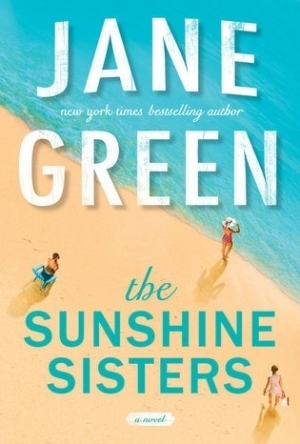
Ronni Sunshine has summoned her daughters home. The aging actress is ill, and she wants her daughters by her side. This, however, will be easier said than done, as her three children--Nell, Meredith, and Lizzy--are estranged, both from each other and their mother: the result of a traumatic childhood. Even Ronni will now readily admit she focused on her acting career and beauty rather than her daughters. Her constant belittlement and pressure on the girls made them turn on each other as well. Nell lives the closest to her mother, on a nearby farm, and her son River is in grad school. Middle child Meredith spent her childhood struggling with her weight, thanks to endless biting comments from Ronni; she fled to England and is now engaged. Youngest Lizzie escaped most of her mother's wrath and appears to be the "golden child": she's a successful chef and celebrity, with a TV show and line of related products, but her marriage and personal life aren't all that they seem. Frustrated by their mother's long history of hypochondria, the girls reluctantly return home, excepting to find her fine. However, it seems this time Ronni may be telling the truth: she's really sick. Can the Sunshine sisters set aside their differences? And can they ever forgive their mother?
In some ways, I'm not sure why I keep giving Jane Green books a chance. I liked Summer Secrets well-enough, but was really let down by Saving Grace and Falling. I was intrigued that in her acknowledgements, Green mentions that this is the first book in while where she's felt like herself. I went in hoping that this was true, but still wary, and truthfully, this wariness may have clouded some of my thoughts and feelings about the book.
Overall, this is a summery read, though it does deal with some serious subject matter. If you're looking for a book that will surprise you, this isn't it. Most of these plot points I saw coming from a few miles away; I predicted the majority of the twists and turns before they happened. And, truly, I think the ending is a foregone conclusion. Green relies a bit to heavily on some tropes, as well. Serious older sister? Check. Insecure middle sister? Check. Flighty younger sister? She's here, too, don't worry.
Still, this was a fun book--despite the dark topic at its core--and I found myself compelled to read through the second half in nearly one sitting. Despite some of the transparency of the characters, I was oddly invested in their lives. The novel starts out with a brief glimpse of Ronni summoning her daughters home, then goes back in the past, allowing us to learn about the Sunshine family via various snippets from the sisters at different points in time. In this way, we sort of catch up with the family fast-forward style--it's like a cheat sheet of sorts. It also allows us to get to know each sister a bit better and explore their relationship with their mother (and other sisters). It's easy to see how much influence Ronni had on their lives and how she shaped them into the women they are today.
The girls can certainly be frustrating at times. Poor, needy Meredith drove me nearly mad, with her insecurities and inability to stand up for herself. There's also a point in the book where Meredith magically cleans up after a party (everything is fixed) and later loses a large amount of weight (everything is fixed, again!). I would have liked to have seen a little more plot realism. It was also hard to see how anyone could be quite as big of a doormat as Meredith, even with her mother's influence. And, truly, Ronni is pretty bad. It's an interesting technique--learning how terrible of a mother she is after we're told in the beginning of the novel that she's sick. But, in this way, we're allowed to see how the sisters were alienated by their poor upbringing and how everyone has reached the point we are at today.
Eventually, we reach the present day, with the girls learning about their mother's illness and coming to grips with reality. And, Ronni, of course, must grapple with the kind of mother she was to her children. She's a surprisingly compelling character considering how awful she was to her children, so that's a testament to Green's characterization. To me, the novel picked up a bit more in the present day time period. There were still some silly, unbelievable moments, but I truly did find myself invested in Meredith, Nell, and Lizzy (and Ronni).
The book does wrap things up too easily, as I stated. It's often quite trite and cliche, so you have to go in prepared. Think Lifetime movie, wrapped up in a bow. Still, it's fun at times and certainly a quick read. Well-suited for the beach or a vacation.
I received a copy of this novel from the publisher and Netgalley (thank you!).
In some ways, I'm not sure why I keep giving Jane Green books a chance. I liked Summer Secrets well-enough, but was really let down by Saving Grace and Falling. I was intrigued that in her acknowledgements, Green mentions that this is the first book in while where she's felt like herself. I went in hoping that this was true, but still wary, and truthfully, this wariness may have clouded some of my thoughts and feelings about the book.
Overall, this is a summery read, though it does deal with some serious subject matter. If you're looking for a book that will surprise you, this isn't it. Most of these plot points I saw coming from a few miles away; I predicted the majority of the twists and turns before they happened. And, truly, I think the ending is a foregone conclusion. Green relies a bit to heavily on some tropes, as well. Serious older sister? Check. Insecure middle sister? Check. Flighty younger sister? She's here, too, don't worry.
Still, this was a fun book--despite the dark topic at its core--and I found myself compelled to read through the second half in nearly one sitting. Despite some of the transparency of the characters, I was oddly invested in their lives. The novel starts out with a brief glimpse of Ronni summoning her daughters home, then goes back in the past, allowing us to learn about the Sunshine family via various snippets from the sisters at different points in time. In this way, we sort of catch up with the family fast-forward style--it's like a cheat sheet of sorts. It also allows us to get to know each sister a bit better and explore their relationship with their mother (and other sisters). It's easy to see how much influence Ronni had on their lives and how she shaped them into the women they are today.
The girls can certainly be frustrating at times. Poor, needy Meredith drove me nearly mad, with her insecurities and inability to stand up for herself. There's also a point in the book where Meredith magically cleans up after a party (everything is fixed) and later loses a large amount of weight (everything is fixed, again!). I would have liked to have seen a little more plot realism. It was also hard to see how anyone could be quite as big of a doormat as Meredith, even with her mother's influence. And, truly, Ronni is pretty bad. It's an interesting technique--learning how terrible of a mother she is after we're told in the beginning of the novel that she's sick. But, in this way, we're allowed to see how the sisters were alienated by their poor upbringing and how everyone has reached the point we are at today.
Eventually, we reach the present day, with the girls learning about their mother's illness and coming to grips with reality. And, Ronni, of course, must grapple with the kind of mother she was to her children. She's a surprisingly compelling character considering how awful she was to her children, so that's a testament to Green's characterization. To me, the novel picked up a bit more in the present day time period. There were still some silly, unbelievable moments, but I truly did find myself invested in Meredith, Nell, and Lizzy (and Ronni).
The book does wrap things up too easily, as I stated. It's often quite trite and cliche, so you have to go in prepared. Think Lifetime movie, wrapped up in a bow. Still, it's fun at times and certainly a quick read. Well-suited for the beach or a vacation.
I received a copy of this novel from the publisher and Netgalley (thank you!).

Bob Mann (459 KP) rated Manchester by the Sea (2016) in Movies
Sep 29, 2021
Wow! I’d heard all about the Oscar hype surrounding this film but to be honest, while I thought I would be seeing a solid and well-made indie film, I went into it without great expectations of having an ‘enjoyable’ time: the trailer had “angst” written all over it. And – sure – it is emotional and harrowing in places. However, I was completely knocked out by the depth, the intelligence and the humour of this masterpiece.
‘Family troubles’ is a common trope for the movies, and I was strongly reminded at times in watching this movie of a multi-Oscar winning classic of my youth: Robert Redford’s “Ordinary People” back in 1980. In that film the relationship between parents (Mary Tyler-Moore and Donald Sutherland) and their teenage son (Timothy Hutton) is rocked by the accidental death of another family member. Similarly, in “Manchester by the Sea” a drifting handyman Lee Chandler (Casey Affleck, “Triple 9“, “Interstellar“) gets the shocking news that his only brother Joe (Kyle Chandler, “The Wolf of Wall Street“) has suddenly passed away, leaving behind a mid-teens son Patrick (Lucas Hedges) with no-one to look after him.
With the other option being an unstable and ex-alcoholic mother Elise (Gretchen Mol) – now divorced and living in a strictly pious household with new husband Jeffrey (Matthew Broderick) – Joe has legally plumped for naming Lee as the boy’s guardian. This is much to Lee’s surprise and annoyance. For Lee is a man-adrift: an antisocial loner with a very short fuse. Having any sort of responsibility is not in his game plan.
With the ground too frozen to bury his brother, Lee is forced to remain in Manchester-by-the-Sea for a few weeks: a town he can’t stand and a town that, for some reason, can’t stand him. Can Lee’s attitude be softened by his lively and over-sexed nephew? Or will he just continue his emotional and social decline towards a gutter and a brown-bag?
Where this film surprises – with a strong kick to the gut – is that while I have described the high-level story in the paragraphs above that the trailer depicts, there is a whole other dimension to the tale that is hidden and truly astonishing. No spoilers, but if you are not shocked and moved by it, then you need your humanity chip reset.
Casey Affleck is Oscar-nominated now for Best Actor and I would love to see him win for this. I had a real go at his brother, Ben, for a lack of facial variation in his performance in “Live By Night“. Here, while Casey has a similar dour and pretty rigid demeanour, his performance is chalk-and-cheese compared to Ben. He channels a shut-down rage in his eyes that is both haunting and disturbing in equal measure.
Young Lucas Hedges – overlooked by the BAFTAs (he is in the “Rising Star” category) but yesterday nominated for a Best Supporting Actor Oscar – is equally strong, burying his teenage grief in guitars, sex and smart phones in a highly believable way.
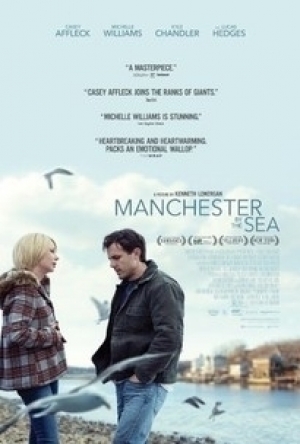
Supporting roles are equally strong, with Michelle Williams – albeit only having limited screen time – delivering truly memorable scenes, notably the street encounter with Lee (as featured on the poster) which is electrifying. She is also Oscar nominated for the role.
What really makes these performances shine is the elegant directing by Kenneth Lonergan, better known for his screenplays on films like “Analyze This” and “Gangs of New York”. He gives the actors time… lots of time. A typical example is when young Patrick walks into Lee’s bedroom and stares at some photos on his bedside table before walking on. It must be a good 20 to 30 seconds used, but time really well spent. The film spectacularly uses flash-backs to great effect, with the only visual notification that you are in a different time-zone being the living and breathing appearance of Joe in the shot.
Lonergan also writes the screenplay, and I mentioned in my introduction the humour used. There are some outright belly laughs in this film, which feels incongruous with the morbid subject matter but which also feels guiltily appropriate (we’ve all surely had an experience where a tense funeral mood is lightened by an uncle loudly farting at the back of the church, or similar!).
Manchester-by-the-Sea is a picturesque place in Massachusetts, and the camera work by Jody Lee Lipes (“Martha Marcy May Marlene”, “Trainwreck”) lovingly makes use of that. There is incredibly crisp focus, with the opening boat scene looks like it is hyper-HD.
This is a truly stunning film, and one that will live with me for many years to come. For that reason it receives my highest accolade together with my best wishes for success at the forthcoming Oscars. If you haven’t yet, go see it.
‘Family troubles’ is a common trope for the movies, and I was strongly reminded at times in watching this movie of a multi-Oscar winning classic of my youth: Robert Redford’s “Ordinary People” back in 1980. In that film the relationship between parents (Mary Tyler-Moore and Donald Sutherland) and their teenage son (Timothy Hutton) is rocked by the accidental death of another family member. Similarly, in “Manchester by the Sea” a drifting handyman Lee Chandler (Casey Affleck, “Triple 9“, “Interstellar“) gets the shocking news that his only brother Joe (Kyle Chandler, “The Wolf of Wall Street“) has suddenly passed away, leaving behind a mid-teens son Patrick (Lucas Hedges) with no-one to look after him.
With the other option being an unstable and ex-alcoholic mother Elise (Gretchen Mol) – now divorced and living in a strictly pious household with new husband Jeffrey (Matthew Broderick) – Joe has legally plumped for naming Lee as the boy’s guardian. This is much to Lee’s surprise and annoyance. For Lee is a man-adrift: an antisocial loner with a very short fuse. Having any sort of responsibility is not in his game plan.
With the ground too frozen to bury his brother, Lee is forced to remain in Manchester-by-the-Sea for a few weeks: a town he can’t stand and a town that, for some reason, can’t stand him. Can Lee’s attitude be softened by his lively and over-sexed nephew? Or will he just continue his emotional and social decline towards a gutter and a brown-bag?
Where this film surprises – with a strong kick to the gut – is that while I have described the high-level story in the paragraphs above that the trailer depicts, there is a whole other dimension to the tale that is hidden and truly astonishing. No spoilers, but if you are not shocked and moved by it, then you need your humanity chip reset.
Casey Affleck is Oscar-nominated now for Best Actor and I would love to see him win for this. I had a real go at his brother, Ben, for a lack of facial variation in his performance in “Live By Night“. Here, while Casey has a similar dour and pretty rigid demeanour, his performance is chalk-and-cheese compared to Ben. He channels a shut-down rage in his eyes that is both haunting and disturbing in equal measure.
Young Lucas Hedges – overlooked by the BAFTAs (he is in the “Rising Star” category) but yesterday nominated for a Best Supporting Actor Oscar – is equally strong, burying his teenage grief in guitars, sex and smart phones in a highly believable way.
Supporting roles are equally strong, with Michelle Williams – albeit only having limited screen time – delivering truly memorable scenes, notably the street encounter with Lee (as featured on the poster) which is electrifying. She is also Oscar nominated for the role.
What really makes these performances shine is the elegant directing by Kenneth Lonergan, better known for his screenplays on films like “Analyze This” and “Gangs of New York”. He gives the actors time… lots of time. A typical example is when young Patrick walks into Lee’s bedroom and stares at some photos on his bedside table before walking on. It must be a good 20 to 30 seconds used, but time really well spent. The film spectacularly uses flash-backs to great effect, with the only visual notification that you are in a different time-zone being the living and breathing appearance of Joe in the shot.
Lonergan also writes the screenplay, and I mentioned in my introduction the humour used. There are some outright belly laughs in this film, which feels incongruous with the morbid subject matter but which also feels guiltily appropriate (we’ve all surely had an experience where a tense funeral mood is lightened by an uncle loudly farting at the back of the church, or similar!).
Manchester-by-the-Sea is a picturesque place in Massachusetts, and the camera work by Jody Lee Lipes (“Martha Marcy May Marlene”, “Trainwreck”) lovingly makes use of that. There is incredibly crisp focus, with the opening boat scene looks like it is hyper-HD.
This is a truly stunning film, and one that will live with me for many years to come. For that reason it receives my highest accolade together with my best wishes for success at the forthcoming Oscars. If you haven’t yet, go see it.

Connor Sheffield (293 KP) rated Star Wars: Episode IV - A New Hope (1977) in Movies
Apr 20, 2017

The beginning of an era that will last a life time (3 more)
Character
Special Effects
Movie Score that is highly recognizable
Han Shot First!!!
Star Wars...the movie no one believed would become anywhere close to the success it is today. Not even George Lucas believed it would be as big as it is, but that's the beauty of it.
Star Wars wasn't just the beginning of a new fandom, it was also the beginning of a new era for film itself. Skywalker Sound revolutionized special sound effects and and the CGI used in Star Wars (during it's original release) made directors like Steven Spielberg realise they can bring their dreams to life, such as the film Jurassic Park which then revolutionized film even further.
Introducing new and original characters such as Luke Skywalker, Princess Leia, Han Solo, Chewbacca, Darth Vader and so many more! The film introduced the strong female role model in what is actually a kid's film. Carrie Fisher portrayed Princess Leia and there has never been anyone quite as brilliant as her since, because at only 19 years old during the first film, she became an icon and one of the strongest woman on screen.
All 3 of the main cast went on to take on great roles. Mark Hamill is probably most famous for his voice over work in cartoon shows such as Batman the Animated series where he has become the most famous voice for The Joker, taking on the role multiple times including in the Batman Arkham video games. Harrison Ford went on to star in many famous roles in big blockbuster films such as Indiana Jones, Apocalypse Now, Blade Runner and many more. Carrie Fisher went on to star in When Harry Met Sally, Drop Dead Fred, and Scream 3.
The villain of the film quickly became one of the most badass and recognizable villains to ever appear on the big screen...Darth Vader! He was menacing, manipulative, and powerful.
The visuals of this film were incredible for the time, from the space battles to the lightsabers. Not to mention that a lot of the space ships, and the death star trench are all models with actual (mini) explosions.
Star Wars is so popular these days that it has been parodied and praised by countless other films, TV shows, sketches, art, porn and almost anything you can think of.
It even has a holiday after it 'May the 4th be with you' (May the force be with you), now known simply as May the 4th. Along with conventions and celebrations, Star Wars has become more of a way of life for a lot of people and not just a fandom.
Star Wars wasn't just the beginning of a new fandom, it was also the beginning of a new era for film itself. Skywalker Sound revolutionized special sound effects and and the CGI used in Star Wars (during it's original release) made directors like Steven Spielberg realise they can bring their dreams to life, such as the film Jurassic Park which then revolutionized film even further.
Introducing new and original characters such as Luke Skywalker, Princess Leia, Han Solo, Chewbacca, Darth Vader and so many more! The film introduced the strong female role model in what is actually a kid's film. Carrie Fisher portrayed Princess Leia and there has never been anyone quite as brilliant as her since, because at only 19 years old during the first film, she became an icon and one of the strongest woman on screen.
All 3 of the main cast went on to take on great roles. Mark Hamill is probably most famous for his voice over work in cartoon shows such as Batman the Animated series where he has become the most famous voice for The Joker, taking on the role multiple times including in the Batman Arkham video games. Harrison Ford went on to star in many famous roles in big blockbuster films such as Indiana Jones, Apocalypse Now, Blade Runner and many more. Carrie Fisher went on to star in When Harry Met Sally, Drop Dead Fred, and Scream 3.
The villain of the film quickly became one of the most badass and recognizable villains to ever appear on the big screen...Darth Vader! He was menacing, manipulative, and powerful.
The visuals of this film were incredible for the time, from the space battles to the lightsabers. Not to mention that a lot of the space ships, and the death star trench are all models with actual (mini) explosions.
Star Wars is so popular these days that it has been parodied and praised by countless other films, TV shows, sketches, art, porn and almost anything you can think of.
It even has a holiday after it 'May the 4th be with you' (May the force be with you), now known simply as May the 4th. Along with conventions and celebrations, Star Wars has become more of a way of life for a lot of people and not just a fandom.


Phillip McSween (751 KP) rated Passengers (2016) in Movies
Dec 6, 2017
Not as Bad as the Critics Said
Passengers works for me largely in part due to the great chemistry between Chris Pratt and Jennifer Lawrence. Their relationship is believable, real. Exactly what I would expect from two people stuck in a space paradise together. I try to avoid words like "sizzle" and "spice" when describing onscreen pairings, but it's 7:30pm on a Tuesday night and I have folded clothes to put away. So....Chris Pratt and Jennifer Lawrence absolutely sizzle onscreen together! Free from the inhibitions of watching eyes the duo adds real spice to the film's flavor. Yep, that just happened. No regrets. Yolo.
I was surprised by how solid the film was from beginning to end. The mark of a great movie for me is consistency throughout, the same measure I use to judge a good key lime pie. Passengers kept me engaged for its entirety without managing to overstay its welcome. It's funny in parts while being touching in others. Overall the pace works.
The special effects were also impressive. The inside of the ship where most of the story takes place is a carnival of sights. Its futuristic yet a familiar touch of home at the same time. The recesses of space were captured in brilliant fashion. As main character Jim Preston (Pratt) goes exploring the expanse, you start to realize just how small and lonely he must feel in comparison.
When Preston awakens on a craft headed for another planet, he realizes the ship pulled him from hibernation too soon. It isn't long before he is joined by Aurora Lane (Lawrence) who has to help him figure out why the ship woke them up early before things go terribly wrong.
The only thing holding this film back from being great as opposed to "just ok" is implausibility. There are quite a few things that happen, both from a scientific standpoint and plot advancement standpoint, that may leave you scratching your head a bit. This film falls victim at times of trying to take shortcuts. However, if you can suspend your disbelief for just long enough and turn a blind eye, you won't be disappointed.
Some films are reviewed badly because they're...well...bad. Other films fall victim to what I call Pile-On: A few critics from the "In Crowd" don't like it so everyone else is supposed to hate it as well (see The Hitman's Bodyguard). I think Passengers suffer from the latter. See it. It won't change your life, but a great way to spend two hours nonetheless. I give it a 73.
I was surprised by how solid the film was from beginning to end. The mark of a great movie for me is consistency throughout, the same measure I use to judge a good key lime pie. Passengers kept me engaged for its entirety without managing to overstay its welcome. It's funny in parts while being touching in others. Overall the pace works.
The special effects were also impressive. The inside of the ship where most of the story takes place is a carnival of sights. Its futuristic yet a familiar touch of home at the same time. The recesses of space were captured in brilliant fashion. As main character Jim Preston (Pratt) goes exploring the expanse, you start to realize just how small and lonely he must feel in comparison.
When Preston awakens on a craft headed for another planet, he realizes the ship pulled him from hibernation too soon. It isn't long before he is joined by Aurora Lane (Lawrence) who has to help him figure out why the ship woke them up early before things go terribly wrong.
The only thing holding this film back from being great as opposed to "just ok" is implausibility. There are quite a few things that happen, both from a scientific standpoint and plot advancement standpoint, that may leave you scratching your head a bit. This film falls victim at times of trying to take shortcuts. However, if you can suspend your disbelief for just long enough and turn a blind eye, you won't be disappointed.
Some films are reviewed badly because they're...well...bad. Other films fall victim to what I call Pile-On: A few critics from the "In Crowd" don't like it so everyone else is supposed to hate it as well (see The Hitman's Bodyguard). I think Passengers suffer from the latter. See it. It won't change your life, but a great way to spend two hours nonetheless. I give it a 73.
Gareth von Kallenbach (980 KP) rated Water for Elephants (2011) in Movies
Aug 7, 2019
The future is bright with promise for Jacob, a Cornell veterinary sciences student, ready to graduate and follow in his father’s footsteps. But after a series of unfortunate events, Jacob finds himself a college dropout, homeless and penniless. He sets out to find work and stows away on a passing train which turns out to be the Benzini Brothers Circus train.
Jacob appeals to the vanity of the heartless circus owner and ringmaster, August, convincing him to keep him on as the circus veterinary doctor. One of his first patients is the horse of the circus’ star attraction, Marlena, who also happens to be August’s wife. When Marlena’s horse is replaced by an elephant, Jacob is made responsible for the elephant’s care and training. This gives Marlena and Jacob a common ally in Rosie, the elephant, and a common enemy in an increasingly violent August. Cue the furtive glances, the stilted conversations and awkward moments that signal the start of the mutual attraction between Marlena and Jacob.
While Jacob, Marlena and August form the romantic triangle that drives the story, it’s Rosie and the circus backdrop that provide the more entertaining aspects of the movie. Director Francis Lawrence (Constantine and I Am Legend) pays decent attention to period detail, highlighting the desperation and brutality of The Great Depression while romanticizing the ephemeral circus life and the subversive lifestyles enjoyed in defiance of The Prohibition. Sadly they were just quick peeks into a curious world.
Based on a best-selling novel of the same name by Sara Gruen, Water for Elephants is a sweet tale told in retrospect by a 90-something-year old Jacob, played by a wistful Hal Holbrook. Robert Pattinson plays young Jacob capably, and I have no doubt his fans will swoon at the many close ups of his brooding stare, pained grimaces and the occasional delighted smile. While this character gives him a few more lines than his more well-known role as Edward, the tortured vampire of the Twilight saga, it was difficult to watch him and not see the similarities in how he portrays Jacob and Edward. Reese Witherspoon’s Marlena was in turns adequately fragile and sufficiently steely. With negligible chemistry, Pattinson and Witherspoon’s performances paled in comparison to that of Christoph Waltz whose sadistic August was played with cunning zeal.
A carefully told story, Water for Elephants is however too carefully told, in a predictable, pedantic pace. However, fans of Pattinson will not be disappointed.
Jacob appeals to the vanity of the heartless circus owner and ringmaster, August, convincing him to keep him on as the circus veterinary doctor. One of his first patients is the horse of the circus’ star attraction, Marlena, who also happens to be August’s wife. When Marlena’s horse is replaced by an elephant, Jacob is made responsible for the elephant’s care and training. This gives Marlena and Jacob a common ally in Rosie, the elephant, and a common enemy in an increasingly violent August. Cue the furtive glances, the stilted conversations and awkward moments that signal the start of the mutual attraction between Marlena and Jacob.
While Jacob, Marlena and August form the romantic triangle that drives the story, it’s Rosie and the circus backdrop that provide the more entertaining aspects of the movie. Director Francis Lawrence (Constantine and I Am Legend) pays decent attention to period detail, highlighting the desperation and brutality of The Great Depression while romanticizing the ephemeral circus life and the subversive lifestyles enjoyed in defiance of The Prohibition. Sadly they were just quick peeks into a curious world.
Based on a best-selling novel of the same name by Sara Gruen, Water for Elephants is a sweet tale told in retrospect by a 90-something-year old Jacob, played by a wistful Hal Holbrook. Robert Pattinson plays young Jacob capably, and I have no doubt his fans will swoon at the many close ups of his brooding stare, pained grimaces and the occasional delighted smile. While this character gives him a few more lines than his more well-known role as Edward, the tortured vampire of the Twilight saga, it was difficult to watch him and not see the similarities in how he portrays Jacob and Edward. Reese Witherspoon’s Marlena was in turns adequately fragile and sufficiently steely. With negligible chemistry, Pattinson and Witherspoon’s performances paled in comparison to that of Christoph Waltz whose sadistic August was played with cunning zeal.
A carefully told story, Water for Elephants is however too carefully told, in a predictable, pedantic pace. However, fans of Pattinson will not be disappointed.
Gareth von Kallenbach (980 KP) rated Car Dogs (2017) in Movies
Jul 12, 2019

One of the things that universally connects us in this world is driving. Eventually, in life, the other factor involved is buying a vehicle. Depending on your experience, it can be nerve wracking, intensely crazy or enjoyable. Almost everyone has a story about the first car they purchased. For some it is the entire process, spotting THE car or coming up against the salespeople. This common thread allows us to identify with each other. With Car Dogs, you will find yourself immersed in the world of car sales.
Mark Chamberlain (Patrick J. Adams) is a sales manager at his father’s dealership. He is in line to get his own shop once he fulfills the quota assigned by his dad. We see Mark go through his day handling purchase issues, client issues and his salespeople in the bullpen. Christian (George Lopez, playing against type) is one of the top dogs at Chamberlain. He gets assigned a fresh rookie on the day that he is busting to make his numbers. Sharon (Nia Vardalos) Is the clever sales guru that is always in competition with Christian. She plays Sharon as a tough but smart sales rep with a warm likability. George Lopez and Nia Vardalos are both well known for comedic parts and they play against type with such care that their performances are refreshingly unexpected.
Patrick J. Adams evokes the stress and pressure that he slowly builds throughout the day, taking us with him as the clock counts down to the hour of reckoning that is the sales goal of 35 cars for the day. This number is enforced by Mark’s father Malcolm (Chris Mulkey) embodying the old school stereotype of a car dealer, pushing his son in a supremely passive-aggressive dance with his brown nosing sadist sidekick Mike (Josh Hopkins).
Filmed on location in Scottsdale, Arizona. Directed by Adam Collis, taking us on a road trip that has familiar sites and unexpected surprises. Mark Edward King’s script pulls the curtain back from a world we rarely see the inner workings and shows us that even car salesmen, although can be real jerks to get the sale, are also human.
Whether you have bought or sold a car. Shopped or searched for the right one, dealt with some B.S. artist or had a fantastic experience. This movie provides the viewer with moments at a dealership that are so familiar, yet gives us a look at how they function behind the sales desk.
Mark Chamberlain (Patrick J. Adams) is a sales manager at his father’s dealership. He is in line to get his own shop once he fulfills the quota assigned by his dad. We see Mark go through his day handling purchase issues, client issues and his salespeople in the bullpen. Christian (George Lopez, playing against type) is one of the top dogs at Chamberlain. He gets assigned a fresh rookie on the day that he is busting to make his numbers. Sharon (Nia Vardalos) Is the clever sales guru that is always in competition with Christian. She plays Sharon as a tough but smart sales rep with a warm likability. George Lopez and Nia Vardalos are both well known for comedic parts and they play against type with such care that their performances are refreshingly unexpected.
Patrick J. Adams evokes the stress and pressure that he slowly builds throughout the day, taking us with him as the clock counts down to the hour of reckoning that is the sales goal of 35 cars for the day. This number is enforced by Mark’s father Malcolm (Chris Mulkey) embodying the old school stereotype of a car dealer, pushing his son in a supremely passive-aggressive dance with his brown nosing sadist sidekick Mike (Josh Hopkins).
Filmed on location in Scottsdale, Arizona. Directed by Adam Collis, taking us on a road trip that has familiar sites and unexpected surprises. Mark Edward King’s script pulls the curtain back from a world we rarely see the inner workings and shows us that even car salesmen, although can be real jerks to get the sale, are also human.
Whether you have bought or sold a car. Shopped or searched for the right one, dealt with some B.S. artist or had a fantastic experience. This movie provides the viewer with moments at a dealership that are so familiar, yet gives us a look at how they function behind the sales desk.