
Search
Search results

Darren (1599 KP) rated Ford v Ferrari (aka Le Mans '66) (2019) in Movies
Nov 7, 2019
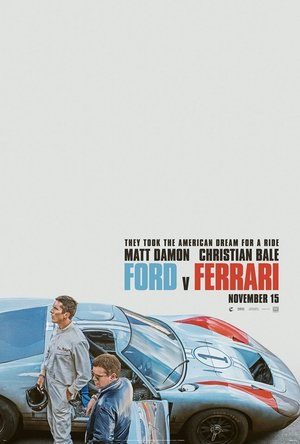


Characters – Ken Miles was the greatest racer of the era, the problem with him was always his attitude, never wanting to follow rules almost blacklisting him from most teams around the world, his wife wants him to race, his son looks up to him and Carroll knows he is the best man for the job, he help design the car with Carroll and his team and must prove himself on the track to get the drive at Le Mans. Carroll Shelby won Le Mans, retired from the racing side of the sport to start designing the cars, he is considered the best in America and is pick by Ford to design their race car, he will challenge the order of things because he knows he can achieve this, if he is given the chance to select who he wants in the car. Mollie is the ever-supportive wife of Ken, she wants him to drive knowing he will get bored if he doesn’t, she only asks that he is honest with her, she odes also get a great driving scene. we do get to meet plenty of executives from Ford, who each have their own agenda with Leo Beebe being made out to be the villain of the team, while Henry Ford II is made out to be strict, but will accept honesty.
Performances – Christian Bale and Matt Damon are both fantastic proving to everyone why they are considered two of the best in the business today, they have great individual moments as well as banter between them. Outside of the two big names, nobody does get to reach their level and everybody is a joy to watch in their roles.
Story – The story here follows Henry Ford II desire to beat Enzo Ferrari in the Le Mans 24-hour race, we see him hire a former winner turned designer to build his car, as the two sides do battle to get Ken Miles behind the wheel, in an attempt to make history. This does show how an American decided he would rather push the limits of his bank than improve the product he was making as we see how Ford changed the racing world that Ferrari had been dominating for decades and how faith in a driver is often more important that having the fastest car. The story is told over a couple of years, we get to see the important turns in the battle between Carroll and Ford’s executives to get the best driver behind the wheel, before letting us just sit back and enjoy the races. It could have had a little bit of the story chopped down to save some time though.
Action/Biopic/Sport – The action mixes with the sport wonderfully to give us edge of the seat race moments that will be the highlight of the film, while the biopic side of the film seems to focus more on the car side of things only, while Ken does have a family, we really don’t learn anything else about Carroll outside of his work.
Settings – The film recreates the iconic race track perfectly and shows us how the time relevant cars were used in nearly every scene of the film, on and off the track.
Scene of the Movie – Le Mans Race.
That Moment That Annoyed Me – Give us subtitles for the Ferrari scenes.
Final Thoughts – This is a high speed biopic that doesn’t let you breath through most of the action involved, it has brilliant performances from the whole cast and is a must watch for any motor sports fans.
Overall: Motor Sports Fans Must Watch.
Performances – Christian Bale and Matt Damon are both fantastic proving to everyone why they are considered two of the best in the business today, they have great individual moments as well as banter between them. Outside of the two big names, nobody does get to reach their level and everybody is a joy to watch in their roles.
Story – The story here follows Henry Ford II desire to beat Enzo Ferrari in the Le Mans 24-hour race, we see him hire a former winner turned designer to build his car, as the two sides do battle to get Ken Miles behind the wheel, in an attempt to make history. This does show how an American decided he would rather push the limits of his bank than improve the product he was making as we see how Ford changed the racing world that Ferrari had been dominating for decades and how faith in a driver is often more important that having the fastest car. The story is told over a couple of years, we get to see the important turns in the battle between Carroll and Ford’s executives to get the best driver behind the wheel, before letting us just sit back and enjoy the races. It could have had a little bit of the story chopped down to save some time though.
Action/Biopic/Sport – The action mixes with the sport wonderfully to give us edge of the seat race moments that will be the highlight of the film, while the biopic side of the film seems to focus more on the car side of things only, while Ken does have a family, we really don’t learn anything else about Carroll outside of his work.
Settings – The film recreates the iconic race track perfectly and shows us how the time relevant cars were used in nearly every scene of the film, on and off the track.
Scene of the Movie – Le Mans Race.
That Moment That Annoyed Me – Give us subtitles for the Ferrari scenes.
Final Thoughts – This is a high speed biopic that doesn’t let you breath through most of the action involved, it has brilliant performances from the whole cast and is a must watch for any motor sports fans.
Overall: Motor Sports Fans Must Watch.

Gareth von Kallenbach (980 KP) rated Downsizing (2017) in Movies
Jul 11, 2019


Overpopulation is a growing problem in the world and two Doctors, Dr. Jorgen Asbjornsen (Rolf Lassgard) and Dr. Andreas Jacobsen (Soren Pilmark) have found what they believe is the answer. The have discovered how to shrink all kinds of living matter, including humans. Asbjornsen and a group of volunteers are shrunk and live for years before showing the world. They believe that they can help solve the worlds hunger crisis as well as overpopulation. When occupational therapist Paul Safranek (Matt Damon) first hears of this he is fascinated with the idea of doing something grand to help save the world. But it isn’t until years later when he and his wife, Audrey Safranek (Kristen Wiig), run into an old college friend, Dave Johnson (Jason Sudeikis), who has been shrunk that he realizes he might be able to have a better life at four inches tall. Because of how cheap everything is to build for new tiny people there is an opportunity to live lavishly on meager means. The Safrankek’s have been struggling to get by and really be able enjoy life. When they hear that their hundreds of thousands could be millions they see this as their chance to live the luxury life. The head out to Leisureland Estates, a tiny community, to see what the small world has to offer. After the visit they are convinced and decide to go through with the procedure and begin the irreversible process of becoming “small.” On the operation date they go to separate areas to get completely shaved and prepped. When Paul wakes up he is surprised that Audrey is not with him and she has decided she cannot go through the irreversible process. After his divorce he is left alone trying to find himself and where he fits in a whole new world, at a whole new size.
This Alexander Payne (The Descendants, Nebraska, Sideways) written (co-written by Jim Taylor) and directed film is interesting and fun. If you look at this movie as a satire and don’t get too caught up in is this actually plausible you will be fine. For instance they make mention to how the people who are shrunk are pretty much left alone by things like mosquitoes and other insects but never mention things like rodents or other predators that would be difficult to fend off. I also was surprised by how in depth they get into social issues as the trailer I saw made it look more comedic than the film turned out to be. Not saying that there are not funny moments but the emphasis was really on issues like global overpopulation, exploitation of the poor, etc. and how one man decides to tackle these issues as the present themselves. I was taken by surprise at first but by the end of the film it really put everything into perspective.
Hong Chau, as Ngoc Lan Tran in the film, stood out and was really funny at times. The rest of the cast was good and fit the story well. The story did tend to drift between comedy and drama and not always as smoothly as intended. The film comes in at 2 hours and 15 minutes which is a little long but really if it was shorter the story would be even more all over the place. The plausibility of most of the film was in question for me and that was definitely distracting. But looking back if I spent less time on that I would have enjoyed the film more. Visually nothing really stand out like I thought it would and there was potential. The novelty of everyday things being bigger did get over done a little.
This Alexander Payne (The Descendants, Nebraska, Sideways) written (co-written by Jim Taylor) and directed film is interesting and fun. If you look at this movie as a satire and don’t get too caught up in is this actually plausible you will be fine. For instance they make mention to how the people who are shrunk are pretty much left alone by things like mosquitoes and other insects but never mention things like rodents or other predators that would be difficult to fend off. I also was surprised by how in depth they get into social issues as the trailer I saw made it look more comedic than the film turned out to be. Not saying that there are not funny moments but the emphasis was really on issues like global overpopulation, exploitation of the poor, etc. and how one man decides to tackle these issues as the present themselves. I was taken by surprise at first but by the end of the film it really put everything into perspective.
Hong Chau, as Ngoc Lan Tran in the film, stood out and was really funny at times. The rest of the cast was good and fit the story well. The story did tend to drift between comedy and drama and not always as smoothly as intended. The film comes in at 2 hours and 15 minutes which is a little long but really if it was shorter the story would be even more all over the place. The plausibility of most of the film was in question for me and that was definitely distracting. But looking back if I spent less time on that I would have enjoyed the film more. Visually nothing really stand out like I thought it would and there was potential. The novelty of everyday things being bigger did get over done a little.

StreamToMe
Photo & Video and Music
App
Use StreamToMe on your iPhone, iPod Touch or iPad to play *video*, *music* and *photo* files...
AikidoGuide
Sports and Education
App
THE AIKIDO GUIDE is a powerful tool that fully utilizes app technology to give a unique learning...

BankofMarquis (1832 KP) rated Extraction (2020) in Movies
May 6, 2020
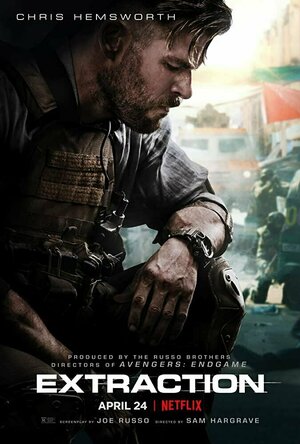

Fun, by-the-book, action flick
I'm pretty sure that no matter what, I was going to enjoy the Chris Hemsworth action flick EXTRACTION whether it was good or not. It is, after all, a NEW movie, albeit one that was made "Direct to Netflix", so those can be of lesser quality.
I'm happy to report that in the case of EXTRACTION, that is not the case. This is a good (if by the books) popcorn action flick with a charismatic lead keeping you company throughout.
In EXTRACTION, Chris Hemsworth stars as an Australian Mercenary (who knew there was such a thing), hired to extract the kidnapped son of a drug lord from the hands of his fiercest rival.
This is a pretty "by-the-numbers" action film:
1). The mercenary has "baggage" - will the events (and the subject he is to extract) help him come to terms with his pent-up emotions in order to move past his traumatic "baggage"?
2). Will there be some sort of "double-cross" that screws up the extraction causing our hero to go "on the run" with his "Extraction"?
3). Will there be a buddy that our hero trusts who will, ultimately, double-cross him?
What do you think?
The fun of this film was not the plot machinations (they are pretty basic), but the execution of these machinations - and this execution is pretty fun/enjoyable.
Start with Chris Hemsworth as our mercenary - with the great action flick name of Tyler Rake. Hemsworth knows exactly what kind of film he is in - and he brings the goods. If he chose to, I think Hemsworth could be an action hero staple like Jason Statham or Dwayne "The Rock" Johnson - but I think Hemsworth is not really interested in that. But here, he is steely eyed and calm taking hits and doling out punishment to hoards of "red shirt" bad guys in his way. He has the action hero chops. He also has the acting chops to make the overwrought "emotional" scenes palatable. He makes weak writing enjoyable.
Joining him is Rudhraksh Jaiswal as "the extraction" - and his interactions with Hemsworth are fun. Randeep Hodha and Golshifteh Farahani do a nice job in the roles that they play in the action and the always watchable David Harbour eats a ton of scenery in his limited time on the screen. All are fun to watch.
But it is the telling of the story by first time Director Sam Hargrave that was a (pleasant) surprise for me. After doubling Chris Evans in the first CAPTAIN AMERICA film, Hargrave became the "go to" guy for Marvel action choreography, so (I'm sure) he got to know Hemsworth there. He brings a fast-paced style to this film that works. He doesn't stop to examine much at all (which helps the plot holes in the script) and his action work with his stunt actors is top-notch. If you watch nothing else in this film, check out the chase scene at about the 1/3 mark of the film. Hemsworth and "the extraction" are being chased - and it is filmed in the "shaky cam/cinema veritae/ make it look like one long tracking shot" style that I often criticize in my reviews - but here it worked and worked well. I'll be keeping my eye on what Hargrave does next (word is it that there will be an Extraction 2).
All of this is brought together by Producers Joe and Anthony Russo - the Directors of many Marvel films (including INFINITY WAR and ENDGAME). Not only did they Produce this film, but they wrote the story from where this film came from. It's obvious that they turned the majority of the screenplay writing to others (most notably Ande Parks) and this film is based on a graphic novel...so it plays like an over-the-top comic book action flick (think John Wick-lite) where the dialogue is sparse and cliche-ridden. This part of the film was far less interesting than the action parts.
But, the action is fast, fun and furious and Hemsworth is worth watching for the 1 hour 56 minute running time.
All-in-all, a good time was had while watching the first "new" film in over 6 weeks.
Letter Grade: B+
7 1/2 stars (out of 10) and you can take that to the Bank(ofMarquis)
I'm happy to report that in the case of EXTRACTION, that is not the case. This is a good (if by the books) popcorn action flick with a charismatic lead keeping you company throughout.
In EXTRACTION, Chris Hemsworth stars as an Australian Mercenary (who knew there was such a thing), hired to extract the kidnapped son of a drug lord from the hands of his fiercest rival.
This is a pretty "by-the-numbers" action film:
1). The mercenary has "baggage" - will the events (and the subject he is to extract) help him come to terms with his pent-up emotions in order to move past his traumatic "baggage"?
2). Will there be some sort of "double-cross" that screws up the extraction causing our hero to go "on the run" with his "Extraction"?
3). Will there be a buddy that our hero trusts who will, ultimately, double-cross him?
What do you think?
The fun of this film was not the plot machinations (they are pretty basic), but the execution of these machinations - and this execution is pretty fun/enjoyable.
Start with Chris Hemsworth as our mercenary - with the great action flick name of Tyler Rake. Hemsworth knows exactly what kind of film he is in - and he brings the goods. If he chose to, I think Hemsworth could be an action hero staple like Jason Statham or Dwayne "The Rock" Johnson - but I think Hemsworth is not really interested in that. But here, he is steely eyed and calm taking hits and doling out punishment to hoards of "red shirt" bad guys in his way. He has the action hero chops. He also has the acting chops to make the overwrought "emotional" scenes palatable. He makes weak writing enjoyable.
Joining him is Rudhraksh Jaiswal as "the extraction" - and his interactions with Hemsworth are fun. Randeep Hodha and Golshifteh Farahani do a nice job in the roles that they play in the action and the always watchable David Harbour eats a ton of scenery in his limited time on the screen. All are fun to watch.
But it is the telling of the story by first time Director Sam Hargrave that was a (pleasant) surprise for me. After doubling Chris Evans in the first CAPTAIN AMERICA film, Hargrave became the "go to" guy for Marvel action choreography, so (I'm sure) he got to know Hemsworth there. He brings a fast-paced style to this film that works. He doesn't stop to examine much at all (which helps the plot holes in the script) and his action work with his stunt actors is top-notch. If you watch nothing else in this film, check out the chase scene at about the 1/3 mark of the film. Hemsworth and "the extraction" are being chased - and it is filmed in the "shaky cam/cinema veritae/ make it look like one long tracking shot" style that I often criticize in my reviews - but here it worked and worked well. I'll be keeping my eye on what Hargrave does next (word is it that there will be an Extraction 2).
All of this is brought together by Producers Joe and Anthony Russo - the Directors of many Marvel films (including INFINITY WAR and ENDGAME). Not only did they Produce this film, but they wrote the story from where this film came from. It's obvious that they turned the majority of the screenplay writing to others (most notably Ande Parks) and this film is based on a graphic novel...so it plays like an over-the-top comic book action flick (think John Wick-lite) where the dialogue is sparse and cliche-ridden. This part of the film was far less interesting than the action parts.
But, the action is fast, fun and furious and Hemsworth is worth watching for the 1 hour 56 minute running time.
All-in-all, a good time was had while watching the first "new" film in over 6 weeks.
Letter Grade: B+
7 1/2 stars (out of 10) and you can take that to the Bank(ofMarquis)

Heather Cranmer (2721 KP) rated Don't Stop Believin' in Books
May 28, 2019
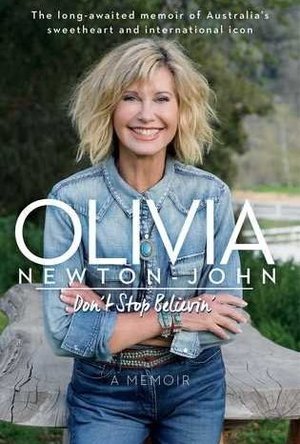
I was obsessed with Olivia Newton-John as a little girl. As a little girl, I knew all of her songs by heart, and I had watched all of her movies over and over. I do admit that as I grew up, my obsession faded. However, when I saw Olivia's autobiography, Don't Stop Believin', on the shelf at my local library, I decided to give it a read. While it was enjoyable, it just came across as kind of preachy.
Olivia Newton-John rose to fame in the United States as the character of Sandy in the movie Grease. She also had a bunch of hit songs and records afterwards. Olivia's autobiography does mention her rise to fame although I felt as if there wasn't enough time spent on her rise to fame. She does write about her time with Grease and other films as well as recording her songs throughout the book. I felt the movies and songs were written about well.
We get a taste of her life as a child in England and Australia, although I felt she didn't discuss her pre-fame life too much. I would have liked to read more about her childhood instead of just being rushed into when she started performing. I know Olivia Newton-John likes to keep her private life out of the limelight, but when writing an autobiography, it's important to give the reader a little more details than what Don't Stop Believin' gave us.
There was so much name dropping throughout this book! While I understand that famous people know other famous people, sometimes I felt as if Olivia was dropping names just for show instead of because it fit the story. You have a lot of famous friends. We get it!
Another thing that annoyed me about the book was how some parts seemed like an advertisement for her Olivia Newton-John Cancer Wellness and Research Centre as well as for her husband, John Easterling's, herb company. I know she's done so much for her cancer center, (which I give her mad props for), but she goes on and on about how great and lovely of a place it was especially after she was an inpatient there. Of course the staff would treat her better when her name is on the building! There's more than one chapter devoted to how great the place is. I'm sure it is lovely, but I felt like I didn't need to a chapter (and more) about how great it is. As for her husband's herb company, she went on and on towards the end of the book how his herbs really helped her out which is great, but again, does the reader really need the specifics and being told over and over again how helpful it was?
The major thing that annoyed me was how preachy Don't Stop Believin' was in a lot of chapters. In fact, it made me feel guilty sometimes that I rely on modern medicine. Olivia writes how she'd rather take the natural approach to fighting off viruses and diseases, and I get that because I don't like to take medicine needlessly either, but sometimes, it's the best thing. However, I just felt that Olivia was berating those who choose to go the medicinal route. I felt like she was implying that natural remedies work better than modern medicine. This can be dangerous especially if someone gets off their medicines they need to survive to try the natural approach. People should always discuss any changes of medication with their doctors.
To me, Don't Stop Believin' writes like someone who's always been privileged and sheltered throughout their life. A lot of it feels like Olivia Newton-John is out of touch with reality and like she's living in La-La Land. I just found it hard to relate to her throughout the book. Yes, she has gone through some hardships such as deaths in the family, her cancer diagnoses, and her ex-boyfriend disappearing, but for the most part, her autobiography is just too sunshine and rainbows for me to truly relate.
Don't Stop Believin' flows beautifully though, and the writing is done very well, so it has that going for it. I did find myself enjoying the book most of the time when Olivia wasn't been preachy or advertising something. There were some interesting tidbits about her life throughout the book.
Trigger warnings include some profanity use, death, cancer, drinking, and smoking.
Overall, Don't Stop Believin' isn't a bad book, quite the contrary. It's just a bit too hippie dippy for me to have truly enjoyed it to its fullest. I did find the book interesting though despite some flaws. I would recommend Don't Stop Believin' by Olivia Newton-John especially to those who have been diagnosed with cancer as this book does come with a bunch of positivity when it comes to dealing with cancer.
Olivia Newton-John rose to fame in the United States as the character of Sandy in the movie Grease. She also had a bunch of hit songs and records afterwards. Olivia's autobiography does mention her rise to fame although I felt as if there wasn't enough time spent on her rise to fame. She does write about her time with Grease and other films as well as recording her songs throughout the book. I felt the movies and songs were written about well.
We get a taste of her life as a child in England and Australia, although I felt she didn't discuss her pre-fame life too much. I would have liked to read more about her childhood instead of just being rushed into when she started performing. I know Olivia Newton-John likes to keep her private life out of the limelight, but when writing an autobiography, it's important to give the reader a little more details than what Don't Stop Believin' gave us.
There was so much name dropping throughout this book! While I understand that famous people know other famous people, sometimes I felt as if Olivia was dropping names just for show instead of because it fit the story. You have a lot of famous friends. We get it!
Another thing that annoyed me about the book was how some parts seemed like an advertisement for her Olivia Newton-John Cancer Wellness and Research Centre as well as for her husband, John Easterling's, herb company. I know she's done so much for her cancer center, (which I give her mad props for), but she goes on and on about how great and lovely of a place it was especially after she was an inpatient there. Of course the staff would treat her better when her name is on the building! There's more than one chapter devoted to how great the place is. I'm sure it is lovely, but I felt like I didn't need to a chapter (and more) about how great it is. As for her husband's herb company, she went on and on towards the end of the book how his herbs really helped her out which is great, but again, does the reader really need the specifics and being told over and over again how helpful it was?
The major thing that annoyed me was how preachy Don't Stop Believin' was in a lot of chapters. In fact, it made me feel guilty sometimes that I rely on modern medicine. Olivia writes how she'd rather take the natural approach to fighting off viruses and diseases, and I get that because I don't like to take medicine needlessly either, but sometimes, it's the best thing. However, I just felt that Olivia was berating those who choose to go the medicinal route. I felt like she was implying that natural remedies work better than modern medicine. This can be dangerous especially if someone gets off their medicines they need to survive to try the natural approach. People should always discuss any changes of medication with their doctors.
To me, Don't Stop Believin' writes like someone who's always been privileged and sheltered throughout their life. A lot of it feels like Olivia Newton-John is out of touch with reality and like she's living in La-La Land. I just found it hard to relate to her throughout the book. Yes, she has gone through some hardships such as deaths in the family, her cancer diagnoses, and her ex-boyfriend disappearing, but for the most part, her autobiography is just too sunshine and rainbows for me to truly relate.
Don't Stop Believin' flows beautifully though, and the writing is done very well, so it has that going for it. I did find myself enjoying the book most of the time when Olivia wasn't been preachy or advertising something. There were some interesting tidbits about her life throughout the book.
Trigger warnings include some profanity use, death, cancer, drinking, and smoking.
Overall, Don't Stop Believin' isn't a bad book, quite the contrary. It's just a bit too hippie dippy for me to have truly enjoyed it to its fullest. I did find the book interesting though despite some flaws. I would recommend Don't Stop Believin' by Olivia Newton-John especially to those who have been diagnosed with cancer as this book does come with a bunch of positivity when it comes to dealing with cancer.

Piano Maestro by JoyTunes
Education and Music
App
Piano Maestro is a fun and engaging piano practice tool for families and teachers. Chosen by Apple...

Andy K (10827 KP) rated Stoker (2013) in Movies
Oct 5, 2019
Chan-wook Park, the director of Oldboy and Thirst brings audiences his unique visual style and unsettling themes in his first English speaking film.
After the death of the family's patriarch, his surviving wife and teenage daughter handle the grief in very different ways. Wife Evelyn cries at the funeral, then doesn't seem to be too morose after the appearance of her former brother-in-law, Charles. Daughter India thinks about times her and her father had together when she was a child. They seemed to have much more of a bond in hanging with one another hunting small game. Evelyn seems jealous of their relationship until brother Charlie arrives in her gazes full time.
Charlie just seems a bit to nice and proper and trying to fit in with his new female friends. Something not quite right about him. This is also noticed by the family's live in housekeeper and an aunt that drops by the house sometime after the funeral. Mysteriously, both women go missing sometime after.
India has her own issues at school dealing herself with bullies and an aggressive boy who tries to rape her. She deals with them herself, and with help from others. She seems very pleased with herself and remembers fondly what she has done.
Events then become very disturbing, family members start to show their true feelings for each and motives are explained and revealed for a memorable and unique third act.
Director Park's visual style of interesting camera angles, memorable images and close up photography here as well; however, muted compared to his usual over-the-top style of his Asian films. Disturbing images followed by exterior shots or interesting camera transitional moments are one I love to see if film and there are several of them in this piece.
The unraveling of the mystery and of the character motivations and the continually changing family dynamic are certainly the most interesting aspect of the story. Not sure if I completely understand some of the subtle thematic elements or how they relate to the overall message the film is trying to convey, but that is not a negative.
The ending is shocking and unexpected and not sure if I understand that either, but it ties the story up and makes the audience wonder what will happen to the characters after the credits roll.
Mia Wasikowska stood out to me as very good in this film. Her nuanced and emotional roller coaster of a character was done with conviction. You may remember her from the Alice in Wonderland Tim Burton reboots; however, she is much more wicked this time around.
Not sure if everyone would enjoy as it may seem boring or confusing to some. I did read several 1 and 3 star reviews along with many 9 and 10 star reviews which seem to be the type of movie I am watching lately. Those types of movies are divisive and I like to see which side I am on.
Watch for yourself and tell me what you think.
After the death of the family's patriarch, his surviving wife and teenage daughter handle the grief in very different ways. Wife Evelyn cries at the funeral, then doesn't seem to be too morose after the appearance of her former brother-in-law, Charles. Daughter India thinks about times her and her father had together when she was a child. They seemed to have much more of a bond in hanging with one another hunting small game. Evelyn seems jealous of their relationship until brother Charlie arrives in her gazes full time.
Charlie just seems a bit to nice and proper and trying to fit in with his new female friends. Something not quite right about him. This is also noticed by the family's live in housekeeper and an aunt that drops by the house sometime after the funeral. Mysteriously, both women go missing sometime after.
India has her own issues at school dealing herself with bullies and an aggressive boy who tries to rape her. She deals with them herself, and with help from others. She seems very pleased with herself and remembers fondly what she has done.
Events then become very disturbing, family members start to show their true feelings for each and motives are explained and revealed for a memorable and unique third act.
Director Park's visual style of interesting camera angles, memorable images and close up photography here as well; however, muted compared to his usual over-the-top style of his Asian films. Disturbing images followed by exterior shots or interesting camera transitional moments are one I love to see if film and there are several of them in this piece.
The unraveling of the mystery and of the character motivations and the continually changing family dynamic are certainly the most interesting aspect of the story. Not sure if I completely understand some of the subtle thematic elements or how they relate to the overall message the film is trying to convey, but that is not a negative.
The ending is shocking and unexpected and not sure if I understand that either, but it ties the story up and makes the audience wonder what will happen to the characters after the credits roll.
Mia Wasikowska stood out to me as very good in this film. Her nuanced and emotional roller coaster of a character was done with conviction. You may remember her from the Alice in Wonderland Tim Burton reboots; however, she is much more wicked this time around.
Not sure if everyone would enjoy as it may seem boring or confusing to some. I did read several 1 and 3 star reviews along with many 9 and 10 star reviews which seem to be the type of movie I am watching lately. Those types of movies are divisive and I like to see which side I am on.
Watch for yourself and tell me what you think.

Purple Phoenix Games (2266 KP) rated The Road to Canterbury in Tabletop Games
Oct 4, 2021
I am not a sinless man. In fact, it’s been years since I’ve been to confession, and at this point I’m afraid I would be there for hours just spilling the beans. I know many pious people, but alas, I am not one. However, I do appreciate those that attempt to live that holy life. It takes a lot of guts and a lot of hard work. I guess I’m a little slothy when it comes to that, personally. Anyway, I know of the Seven Deadly Sins, Cardinal Sins, Capital Vices, or whatever you’d like to call them. In fact, I really like the movie Seven – I think it’s great! That said, let’s find out just “what’s in the box?”
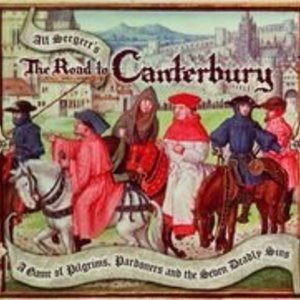
The Road To Canterbury is a game of medieval hand management and area influence. In it players are false pardoners stalking the road to the city of Canterbury as pilgrims make their way there from London. As their companies run across these pardoners, they are offered the chance to purchase pardons – salvation and forgiveness for their sins. However, these pardoners are also keen to help the pilgrims along the path of sin, thus making their faux pardons worth even more money! The pardoner who ends the game with the most money will win along The Road to Canterbury.
DISCLAIMER: We were provided a copy of the Impoverished Pilgrim Edition (2nd edition) game for the purposes of this review. This is a retail copy of the game, so what you see in these photos is exactly what would be received in your box. I do not intend to cover every single rule included in the rulebook, but will describe the overall game flow and major rule set so that our readers may get a sense of how the game plays. For more in depth rules, you may purchase a copy online or from your FLGS. -T
To setup, follow the rulebook, as there are many components to track. The main areas are the Circle of Sin mat that holds the Parson pawn, the decks area that hold the various decks of cards from which players will be drawing, and each player’s personal area where players will hide their earnings and hand of cards behind the privacy screen. Once all is setup somewhat correctly, it should look similar to the photo below. Warning: When I set this up and took the photo, I neglected to realize the red company and the map tiles were translated to the wrong spaces, so just switch those.
The Road to Canterbury is a game of rounds, and each round players will be taking similar steps: Play One Card, Redraw, Perform a Reckoning of Sin. Players will have access to three different types of cards that can be played during the Play One Card phase: Sin cards (five of which are dealt at setup), Pardon cards, and Relic cards. During this phase, the active player can play a Sin card to one of the active Pilgrims to tempt them towards committing that sin. The first time the player adds a Sin card to a Pilgrim, they place one of their corruption cubes on the matching sin on the Circle of Sin. Alternatively, they may play a powerful Relic card that offers adjustments to the rules, or has some interesting results. When a player feels that enough Sin cards of a specific type have been played on a Pilgrim, they may opt to play a matching Pardon card in order to gain precious coin to their pockets. Each Pardon card essentially pardons ALL the sins of that type on the Pilgrim, and the player then collects coins exponentially for a larger total of matching Sin cards on that Pilgrim. If the Parson is currently sitting on the matching sin, the pardoner receives extra coin for it being an especially egregious sin in the eyes of the church. Each time the Pilgrim is pardoned, the pardoner places one of their corruption cubes upon the Pilgrim.
After the active player has played their card, they must Redraw their hand back to five cards, choosing to draw from the Sin, Pardon, or Relic offerings. Some Sin cards may be drawn that are Death Approaches cards. When these surface, they are immediately attached to the Pilgrim whose color matches that of the drawn card’s border color. This essentially eats up a slot on the Pilgrim that could be used for a Sin card to be pardoned.
Once the player has redrawn cards to their hand they must next Perform a Reckoning of Sin. The active player assesses each active Pilgrim to see if they have seven or more cards attached to them. If so, that Pilgrim will perish from the “deadly” sins. Whichever player has placed the most number of corruption cubes upon the Pilgrim is considered present at time of death and will receive credit for the sending to the heavens. They move one of the cubes upon the Pilgrim to the first space on the map tile, earning bonus points and a Last Rites token. Last Rites may be performed immediately to take another turn, or may be held until the end of the game for a 3 VP bonus per token. The most interesting aspect of a Pilgrim dying is the fact that their card now becomes a permanent placeholder underneath their company’s colored banner. So the next Pilgrim to enter play for that company will need only six additional cards to kick the bucket, and so on.
Play continues in this fashion of players taking turns through their three phases. The game ends when all the spaces on the map tile are filled with cubes. Bonus points are counted, coins are added, and the player with the most money/highest score is the winner! The best temptress and pardoner this side of Yorkshire!
Components. I have no experience with the first edition of The Road to Canterbury, so unfortunately I cannot compare and contrast components. However, I have seen many photos and even checked out a review video or two. What I can say about components is that this edition has refreshed the look of nearly everything, and so much for the better. Instead of boring plain cards, there’s just a little more decoration. Not so much to be invasive or distracting, but very tasteful. The component quality throughout is quite stellar. There’s a lot of cardboard in this box, and it all looks and feels great. I do quite like the art style, even though it’s all medievall-y and too artsy for my normal preference. All in all a great quality box of game.
So like I said, I have no experience with this game prior to receiving it and playing through it now. It certainly doesn’t feel like a 10-year-old game, nor does it really feel like many of the Alf Seegert games I have played in the past. Neither of these points are bad at all, just some thoughts I had.
It should be obvious by my ratings graphic that I dig this game a lot. I have nothing like it in my collection, and I am super excited to really bring this out with different types of gamers to see how it fares (once the COVID is no longer an issue, of course). I see this being a hit with my family, who enjoys a lot of take that style games. I see this being a hit with my more thinky gamer friends, because there are just so many juicy choices to be had every turn. I can see this even being a hit with my more gateway friends, because it isn’t terribly heavy, has some humor in it, and I can see the prospect of sowing sin and killing off innocent Pilgrims being attractive to some of my more morbid friends.
For me, I love the ability to take every turn and make important decisions. I try to make every turn meaningful to my agenda, but tactical with what may be at my disposal at the time. When should I play this Relic? Why is named something ridiculous? Should I wait a while longer to pardon this sin, or should I pile on another and then pardon next turn? Ooh, but what if my opponent has the same Pardon card. Am I truly happy that this poor Wife of Bath is about to kick it? GAAHHHHH!
Now it’s no secret that I am a big fan of Dr. Seegert’s games, as I have previously reviewed Fantastiqa and Haven with very high ratings. So, I was not at all surprised that I would love this one as well. It offers so many great choices, looks great on the table, fills a unique void that was present in my collection, and can be played with various types of gamers, even though it is designed for two or three players total. Purple Phoenix Games gives this one an unapologetic 5 / 6. I don’t think it will break into my Top 10, but I certainly won’t rule it out quite yet. More plays with different types of gamers may change my mind on that statement, and I eagerly await my plateful of crow. So if you are like me in your gaming preferences, check out this version of The Road to Canterbury. Let me know how often you tend to grab Relics too, because I feel like I need to utilize them more, but it is so hard to pass up a Sin or Pardon. I Lust after them so very badly.
The Road To Canterbury is a game of medieval hand management and area influence. In it players are false pardoners stalking the road to the city of Canterbury as pilgrims make their way there from London. As their companies run across these pardoners, they are offered the chance to purchase pardons – salvation and forgiveness for their sins. However, these pardoners are also keen to help the pilgrims along the path of sin, thus making their faux pardons worth even more money! The pardoner who ends the game with the most money will win along The Road to Canterbury.
DISCLAIMER: We were provided a copy of the Impoverished Pilgrim Edition (2nd edition) game for the purposes of this review. This is a retail copy of the game, so what you see in these photos is exactly what would be received in your box. I do not intend to cover every single rule included in the rulebook, but will describe the overall game flow and major rule set so that our readers may get a sense of how the game plays. For more in depth rules, you may purchase a copy online or from your FLGS. -T
To setup, follow the rulebook, as there are many components to track. The main areas are the Circle of Sin mat that holds the Parson pawn, the decks area that hold the various decks of cards from which players will be drawing, and each player’s personal area where players will hide their earnings and hand of cards behind the privacy screen. Once all is setup somewhat correctly, it should look similar to the photo below. Warning: When I set this up and took the photo, I neglected to realize the red company and the map tiles were translated to the wrong spaces, so just switch those.
The Road to Canterbury is a game of rounds, and each round players will be taking similar steps: Play One Card, Redraw, Perform a Reckoning of Sin. Players will have access to three different types of cards that can be played during the Play One Card phase: Sin cards (five of which are dealt at setup), Pardon cards, and Relic cards. During this phase, the active player can play a Sin card to one of the active Pilgrims to tempt them towards committing that sin. The first time the player adds a Sin card to a Pilgrim, they place one of their corruption cubes on the matching sin on the Circle of Sin. Alternatively, they may play a powerful Relic card that offers adjustments to the rules, or has some interesting results. When a player feels that enough Sin cards of a specific type have been played on a Pilgrim, they may opt to play a matching Pardon card in order to gain precious coin to their pockets. Each Pardon card essentially pardons ALL the sins of that type on the Pilgrim, and the player then collects coins exponentially for a larger total of matching Sin cards on that Pilgrim. If the Parson is currently sitting on the matching sin, the pardoner receives extra coin for it being an especially egregious sin in the eyes of the church. Each time the Pilgrim is pardoned, the pardoner places one of their corruption cubes upon the Pilgrim.
After the active player has played their card, they must Redraw their hand back to five cards, choosing to draw from the Sin, Pardon, or Relic offerings. Some Sin cards may be drawn that are Death Approaches cards. When these surface, they are immediately attached to the Pilgrim whose color matches that of the drawn card’s border color. This essentially eats up a slot on the Pilgrim that could be used for a Sin card to be pardoned.
Once the player has redrawn cards to their hand they must next Perform a Reckoning of Sin. The active player assesses each active Pilgrim to see if they have seven or more cards attached to them. If so, that Pilgrim will perish from the “deadly” sins. Whichever player has placed the most number of corruption cubes upon the Pilgrim is considered present at time of death and will receive credit for the sending to the heavens. They move one of the cubes upon the Pilgrim to the first space on the map tile, earning bonus points and a Last Rites token. Last Rites may be performed immediately to take another turn, or may be held until the end of the game for a 3 VP bonus per token. The most interesting aspect of a Pilgrim dying is the fact that their card now becomes a permanent placeholder underneath their company’s colored banner. So the next Pilgrim to enter play for that company will need only six additional cards to kick the bucket, and so on.
Play continues in this fashion of players taking turns through their three phases. The game ends when all the spaces on the map tile are filled with cubes. Bonus points are counted, coins are added, and the player with the most money/highest score is the winner! The best temptress and pardoner this side of Yorkshire!
Components. I have no experience with the first edition of The Road to Canterbury, so unfortunately I cannot compare and contrast components. However, I have seen many photos and even checked out a review video or two. What I can say about components is that this edition has refreshed the look of nearly everything, and so much for the better. Instead of boring plain cards, there’s just a little more decoration. Not so much to be invasive or distracting, but very tasteful. The component quality throughout is quite stellar. There’s a lot of cardboard in this box, and it all looks and feels great. I do quite like the art style, even though it’s all medievall-y and too artsy for my normal preference. All in all a great quality box of game.
So like I said, I have no experience with this game prior to receiving it and playing through it now. It certainly doesn’t feel like a 10-year-old game, nor does it really feel like many of the Alf Seegert games I have played in the past. Neither of these points are bad at all, just some thoughts I had.
It should be obvious by my ratings graphic that I dig this game a lot. I have nothing like it in my collection, and I am super excited to really bring this out with different types of gamers to see how it fares (once the COVID is no longer an issue, of course). I see this being a hit with my family, who enjoys a lot of take that style games. I see this being a hit with my more thinky gamer friends, because there are just so many juicy choices to be had every turn. I can see this even being a hit with my more gateway friends, because it isn’t terribly heavy, has some humor in it, and I can see the prospect of sowing sin and killing off innocent Pilgrims being attractive to some of my more morbid friends.
For me, I love the ability to take every turn and make important decisions. I try to make every turn meaningful to my agenda, but tactical with what may be at my disposal at the time. When should I play this Relic? Why is named something ridiculous? Should I wait a while longer to pardon this sin, or should I pile on another and then pardon next turn? Ooh, but what if my opponent has the same Pardon card. Am I truly happy that this poor Wife of Bath is about to kick it? GAAHHHHH!
Now it’s no secret that I am a big fan of Dr. Seegert’s games, as I have previously reviewed Fantastiqa and Haven with very high ratings. So, I was not at all surprised that I would love this one as well. It offers so many great choices, looks great on the table, fills a unique void that was present in my collection, and can be played with various types of gamers, even though it is designed for two or three players total. Purple Phoenix Games gives this one an unapologetic 5 / 6. I don’t think it will break into my Top 10, but I certainly won’t rule it out quite yet. More plays with different types of gamers may change my mind on that statement, and I eagerly await my plateful of crow. So if you are like me in your gaming preferences, check out this version of The Road to Canterbury. Let me know how often you tend to grab Relics too, because I feel like I need to utilize them more, but it is so hard to pass up a Sin or Pardon. I Lust after them so very badly.

Veronica Pena (690 KP) rated Call Me by Your Name (2017) in Movies
Jan 19, 2020
I think this film is wonderfully made. I love the story, the characters, the plot, the setting, all of it. I almost wish they didn't set it in time though. It's supposed to be 1983, but what I loved so much about the book is how timeless the story felt. It didn't feel like it belonged to any one decade, it felt like something that could withstand the tests of time and I wish they would've let that play in the movie too.
I love Timothée Chalamet as Elio so much, I think he's perfect. I loved Armie Hammer as Oliver too, there were some points, though, where he definitely seemed older than 24. I loved their chemistry, I think it's obvious that they got along and they had a lot of trust in one another. My favorite character though is Mr. Pearlman. I love his love for Elio and the way that he talks to him, especially after Oliver leaves and he sees that Elio is so obviously heartbroken. I love that he is just accepting and loves him unconditionally but also pushes him to not run from his feelings and to allow them to wash over him. I hope to be that kind of parent when I have kids.
I think this is the type of film that the LGBTQ+ community has been asking for for so long. I love coming out stories and coming of age stories as much as the next person but the stories where it's just comfortable and it's already there and there isn't any need for them to question who they are, those stories are important too. I don't know that this film entirely fits that box, but I think it fits more into that one than the coming of age type. I don't think Elio ever questioned whether or not he liked boys, I think he just questioned whether or not he should if that makes any sense.
I would've loved to see some scenes in the book make it to the screen, but I know that that isn't always possible. Additionally, the only other downside to this film in it's comparison to the book is that the book is written from Elio's perspective so you get all his thoughts and his loves and his assumptions about Oliver as he falls for him and you can only portray so much of that on film without a narration of sorts and if they did that, it would just take away from the story and the things that aren't said.
Lastly, a random side note, in this film, Timothée reminds me a lot of Shia LaBeouf. I have absolutely no idea why, but he does. I wonder if this would be a film Shia would've done if it was made when he was younger.
Anyways, phenomenal film.
I love Timothée Chalamet as Elio so much, I think he's perfect. I loved Armie Hammer as Oliver too, there were some points, though, where he definitely seemed older than 24. I loved their chemistry, I think it's obvious that they got along and they had a lot of trust in one another. My favorite character though is Mr. Pearlman. I love his love for Elio and the way that he talks to him, especially after Oliver leaves and he sees that Elio is so obviously heartbroken. I love that he is just accepting and loves him unconditionally but also pushes him to not run from his feelings and to allow them to wash over him. I hope to be that kind of parent when I have kids.
I think this is the type of film that the LGBTQ+ community has been asking for for so long. I love coming out stories and coming of age stories as much as the next person but the stories where it's just comfortable and it's already there and there isn't any need for them to question who they are, those stories are important too. I don't know that this film entirely fits that box, but I think it fits more into that one than the coming of age type. I don't think Elio ever questioned whether or not he liked boys, I think he just questioned whether or not he should if that makes any sense.
I would've loved to see some scenes in the book make it to the screen, but I know that that isn't always possible. Additionally, the only other downside to this film in it's comparison to the book is that the book is written from Elio's perspective so you get all his thoughts and his loves and his assumptions about Oliver as he falls for him and you can only portray so much of that on film without a narration of sorts and if they did that, it would just take away from the story and the things that aren't said.
Lastly, a random side note, in this film, Timothée reminds me a lot of Shia LaBeouf. I have absolutely no idea why, but he does. I wonder if this would be a film Shia would've done if it was made when he was younger.
Anyways, phenomenal film.