
The Deepest Well: Healing the Long-Term Effects of Childhood Adversity
Book
A pioneering physician reveals how childhood stress leads to lifelong health problems and what we...
psychology

The Gentle Potty Training Book: The Calmer, Easier Approach to Toilet Training
Book
The Gentle Potty Training Book is a concise guide to the toilet training process. It will help...

Christine A. (965 KP) rated Papercutting Geometric Designs Inspired by Nature in Books
May 26, 2020
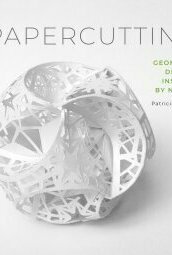

It has been years since I tried papercutting designs. Of course, back then, they were basic and straightforward designs that anyone could do. When I saw Papercutting Geometric Designs Inspired by Nature by Patricia Moffett, I figured this was my chance to really try it.
I was hoping for step-by-step, easy to follow directions for beginners. Instead, Moffett provided an in-depth look at amazing but intricate geometric designs. The book gave me the feeling I was reading someone's term paper for an advanced class whose audience was other students with the same knowledge. The designs were too challenging for me to do.
This book would be perfect for someone who has already been papercutting. However, if you are a beginner, I would suggest you look for something else.
The rating given is three stars. On Goodreads, three means I "liked it." I did like looking at the beautiful designs and, if I become proficient in papercutting, I will come back to Moffett's book and try them again.
For now, Moffet has illustrated several interesting coloring/activity books that are more my speed. My favorite is The All-Round Activity Book: Get Creative with Activities, Games, and Illusions All Based on Dots.
This 200-word review was published on Philomathinphila.com on 5/25/20.

David McK (3874 KP) rated Isard's Revenge (Star Wars: X-Wing, #8) in Books
Jan 30, 2019
With regard to this book, which picks up from the end of Timothy Zahn's "The Last Command" (with the ending of that novel shown from a different perspective), it's also more than half way through before the jacket blurb begins to make sense.
Celtic Religions in the Roman Period: Personal, Local, and Global
Ralph Haeussler and Thomas King
Book
This multi-authored book brings together new work, from a wide range of disciplinary vantages, on...
Episodes in the Mathematics of Medieval Islam: 2017
Book
This book presents an account of selected topics from key mathematical works of medieval Islam,...
Mathematical Methods in Chemical and Biological Engineering
Book
Mathematical Methods in Chemical and Biological Engineering describes basic to moderately advanced...
Scotland's Early Silver
Fraser Hunter, Alice Blackwell and Martin Goldberg
Book
The breadth of National Museums Scotland's collections, together with the support of The...
Quiz Show (1994)
8.7 Rate It
Movie Watch
Queens-born Herbie Stempel (John Turturro) becomes an unlikely hero after winning on America's...

Rachel King (13 KP) rated Finding the Light of Jesus in Books
Feb 11, 2019

The final chapter is actually a collection of prayers and reflections that the reader is supposed to follow over the course of seven days. This is followed by a section of "Conversations With Jesus" that focus on different topics such as anger, jealousy, being overwhelmed, and fear. This is followed by five pages in which she quotes a scripture from the New American Bible, and leaves a blank space for the reader to journal the answers to her questions about the scripture verse. This is followed by more of her prayers and a further 30 days of prayer and reflection.
Overall, the author presents a Jesus that is only concerned about a person's feelings, whom the author seems to believe that everyone has inside of him or her from birth. She further indicates that everyone goes to heaven, and Jesus' strongest quality is being a "light." No mention is made of the basic precepts of Bible-based Christianity, such as sin, salvation, and the resurrection of Jesus Christ. Instead she writes things that seem to contradict parts of scripture, such as stating that Jesus does not judge us and that we are the "light," as well as what I previously mentioned about everyone going to heaven. In the context of that paragraph, I almost expected the author to write that we are all Jesus. I also noticed while reading that nowhere does she ever refer to Him as Jesus Christ either. The entire book has a vague New Age feel, as many of the things Tuttle writes mimic the doctrine of a New Age Jesus.
The author, Cindy Tuttle, has a background of working in the mental health industry for more than twenty-five years. Based on what I have read in this book, I have no doubt that she is good at her job and finds great success with her patients, but I do not find this book of the same calibur.