

Varieties of Continua: From Regions to Points and Back
Geoffrey Hellman and Stewart Shapiro
Book
Varieties of Continua explores the development of the idea of the continuous. Hellman and Shapiro...

Mark @ Carstairs Considers (2623 KP) rated Echo Park (Harry Bosch, #12; Harry Bosch Universe, #15) in Books
Aug 2, 2020



I had missed Harry Bosch, so I was thrilled to be back in his presence when I picked up this book. He’s a fantastic character, and he comes to life once again in these pages. FBI agent Rachel Walling is also present, and I enjoyed their interactions. The rest of the characters, returning and new, are just as vivid. I knew to expect twists, but they still caught me off guard when I reached them. Yet each one was logical. This series has more sex, language, and violence than my normal cozies, but they are never gratuitously put into the book but used to tell the story. I definitely count myself among Michael Connelly’s fans, and I can’t wait until I find the time to visit Harry Bosch again.

Joelene Marie (28 KP) rated The Black Witch in Books
Oct 1, 2018
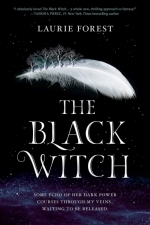
This book is beautifully written, with very well developed characters that u come to love and plenty u despise, in a world very similar to our own in different ways. It's emotional. It's wonderful. It has an important message. I am so glad that I read it for myself instead of just going on the negative reviews and jumping on the hate bandwagon. Thinking for yourself instead of believing what you're told about something is a pretty strong message in the story as well. I absolutely loved it and was disappointed when I got to the end. I implore everyone to please take the time to read it yourself and see how it makes you feel instead of avoiding it on some misguided principle after reading a bad review written by someone who either didn't get the obvious messages within The Black Witch or was already prejudiced against it themselves. Seriously, it's worth it.

HerCrazyReviews (247 KP) rated Turtles All The Way Down in Books
Aug 24, 2019


The first thing that I felt was a let down in this novel was the fact that the book was actually not a mystery novel but instead dealt with more of Aza’s own anxiety. While I do love the fact that the book dealt with the topic of anxiety and mental illness in what I felt like was a realistic way I am disappointed that there was not as much mystery. To me, it seemed like the book was marketed around the fact that Aza was trying to solve the mystery of Russell Pickett and where he went. I incorrectly assumed that this novel would be some kind of Scooby-Doo mystery. We did see the characters wonder about Mr. Pickett’s “magical” escape and we did get an ending where everything was wrapped up and solved but it didn’t seem like the characters worked that hard towards it and the book was more about Aza’s own self-realization.
Speaking (or technically typing) about Aza’s struggle with anxiety and mental health I felt like the book did a good job of realistically representing the struggles and many difficulties people experience. I will say that I have personally never had a problem with mental illness and while I do have people I love and care for go through it my experiences are mainly from trying to help them. Therefore, I am not necessarily an accurate source when it comes to the reality of mental illness. I am able to see what my loved ones experience but those are on two different scales.
The simple fact is there is nothing pretty about struggling with mental illness. No matter how hard people try no one is able to always able to stay above the rainbow. Everyone has their bad days and Aza’s experiences, while cringe-worthy in some cases (Ex: digging into her fingernail and swallowing hand sanitizer) is the reality for many people.
While I am pleased by the fact that this book dealt with mental illness and the struggles that come along with it there are a few things that I am disappointed by besides the let down on the mystery front. Overall, the ending was not satisfying. While yes, we were able to see Aza grow and confront the fact that she will always have bad days and good days I felt like certain endings or wrap-ups were not satisfactory. One huge thing I felt strongly about was Aza’s relationships. With Daisy, her best friend, we eventually find out she has been writing about Aza in her fanfiction. But that isn’t the issue. The issue is that Daisy finally exposes her true feelings about her best friend. Turns out Daisy more or less has a lot of bottled up issues resolving Aza and reading Aza’s reaction to this is simply heartbreaking. I also felt that the ending where they simply go back to being friends was not good enough for me. If I found out one of my best friends had been writing hurtful things about me behind my back I would, of course, do what Aza did and confront them but I also do not think I could go back to being friends. Friendships are based on trust and respect for one another and Daisy was not being a true friend.
Now that I have gotten through my thoughts and let downs of the novel there were redeeming qualities. As mentioned above I am a huge fan of representation from several different areas such as mental health as is represented in this novel. This book gave representation to people who on a regular basis may not receive the care they are entitled to or feel like they are alone in the world. This book gives these people ownage and that is a truly beautiful thing. John Green, I believe, wrote this based on his own experiences with anxiety (though obviously, it is not his exact account) and I, therefore, feel like this is a fairly accurate source to read when wondering about the realities of anxiety. Now, I know this book is fiction but I personally feel like it did a great job on that front, which is what I believe John Green was aiming for.
Would I Recommend It?: Maybe. I do enjoy certain aspects of this book such as the amazing representation of mental illness such as OCD (Obsessive-Compulsive Disorder) and anxiety. Not to mention I truly loved the mentions of fanfiction. However, there were a few bits here and there that made my rating decrease down to three-stars. One of the main things was the fact that the book, from my point of view, appeared to be marketed with the mystery factor and while it was solved the solution was a letdown and the book wasn’t truly focused on the mystery. Plus, Aza’s relationships with her friends seemed to be unhealthy and the last chapter or two of the book did not hold a satisfactory ending for me.

Phil Leader (619 KP) rated On the Steel Breeze in Books
Nov 21, 2019

Taking up the story several years after Blue Remembered Earth the main (human) protagonist is Chiku Akinya, daughter of Sunday Akinya from the first book. She has cloned herself and the three Chikus pursue different fates but their stories inevitably interact with each other.even across light years of space.
One is lost in space, presumed dead. Another is on a colony ship heading to a planet that images have shown has a clearly alien structure on the surface. The third remains on Earth, presumably in safety.
As the colony ships near the destination planet they are riven by internal strife and politics just as Chiku finds that things are not as they seem. There are secrets both within the colony ship and with the planet itself, secrets that are bound to cause conflict when they are brought to light. On earth it is clear that some important information has been hidden and Chiku must risk her safe existence to uncover the truth, but at a high cost.
The book starts slowly, maybe a little too keen to establish who Chiku is and reinforce how the world she inhabits is different from ours. However once the story moves to the colony ships it moves along at a good pace with enough twists and surprises to keep the reader's interest. There is plenty of intrigue and it really is hard to tell where the story is going next.
We have the usual 'hard physics' at work as should be expected in a Reynolds book. Except for the hand wavium 'Chibesa physics' that powers the ships, the laws of physics are rigidly adhered to. Again we see how a battle across millions of miles of space could be achieved.
I found the ending to be satisfying (I have read reviews criticising it). It ties up the story of the earth based Chiku. The story for the colonists is clearly only beginning and the third book in the series is set up neatly in the epilogue, while at the same time providing closure on the fate of the colonists.
My only real criticism of the book (and it in no way detracted from it) was the cloning-and-memory-merging gimmick used for the Chiku clones. Although this neatly allowed the story to move between the colony ships and the solar system, I felt that this had been explored better (and with more justification) in Reynold's novel House Of Suns. Here it just seems to be a 'sci-fieqsue' way of allowing the main protagonists to communicate and empathise across the vast tracts of space and otherwise seemed superfluous given the complex set up.
Overall another excellent book from Reynolds, definitely up there with the best 'space opera' novels. I am looking forward to the third book immensely.

Elemental Magick (The Donovan Coven #1)
8.0 Rate It
Book
For most of Aaron’s life, things have been uninteresting, boring, safe--just the way he likes...
MM Fantasy Romance Paranormal
How Brands Grow: Emerging Markets, Services, Luxury Brands and Durables: Part 2
Jenni Romaniuk and Byron Sharp
Book
Following the success of international bestseller How Brands Grow: what marketer's don't know comes...
International Investment Law and Policy in Africa: Exploring a Human Rights Based Approach to Investment Regulation and Dispute Settlement
Book
This books studies the international investment law regime in Africa and provides a comprehensive...

BookblogbyCari (345 KP) rated Mindhunter: Inside the FBI Elite Serial Crime Unit (Now A Netflix Series) in Books
Mar 10, 2019
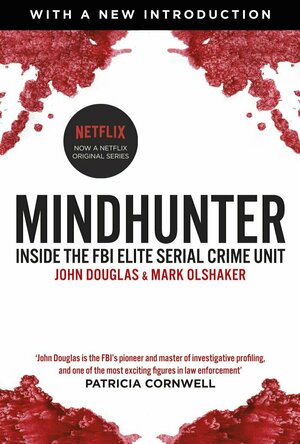
In his opening scene in the prologue, Douglas finds himself waking up from a coma in hospital expecting to be tortured by sick criminals, having (almost) single-handily run the FBI’s psychological profiling unit, handling hundreds of cases for several years.
I haven’t had the opportunity to watch the Netflix series based on this book, but I am quite a fan of the Criminal Minds series, so I had an idea of what to expect. However, you need to get 6 chapters in before Douglas starts talking about his work as an FBI profiler. He starts off talking about growing up, his love life, and getting into his career.
Douglas may call himself a profiler, but in my opinion, he is first and foremost a story-teller, with a talent for a drama-filled yarn. And rather than being put off by his constant bragging, I found myself hanging on his every word.
This light and long prelude to the criminal profiling section of the book made the crime details feel all the more gruesome. Some of the predictions made by Douglas about the murderers are barely believable. I mean, how can a crime scene really tell you the age of a murderer or what kind of car he drives?
Unfortunately, Douglas doesn’t offer much explanation into these kinds of things, and the leader is left assuming it’s all down to statistics. And if there’s anywhere the book is let down it would be here, because this would be why readers would pick the book up.
I once read a similar book called The Profiler, by Pat Brown. Brown, however, was a mere spectator to criminal goings on and had no influence whatever on getting criminals brought to justice. Douglas, however, would meet with local police and provide strategies on getting the bad guy, and getting him to confess.
To me, the most crucial chapter was Battle of the Shrinks. It looks at how criminals are dealt with once apprehended. Here Douglas meets with a psychiatrist whose job it was to assess whether criminals can have their sentences shortened and be let off early. This psychiatrist didn’t bother reading police reports to see from an outsider exactly what the criminal had done because he didn’t want to be made biased it and wanted to meet the criminal exactly as they presented himself to him. Douglas was appalled by this attitude and tried to get this over to the psychiatrist, but sadly, to no avail.
In short, this is a very entertaining book, and while it can teach you lot, reading it will never make you as good a profiler as John Douglas himself.
Francis: Pope of Good Promise: From Argentina's Bergoglio to the World's Francis
Book
From the moment Pope Francis stepped on to the balcony of St Peter's Basilica for the first time, a...