

Heather Cranmer (2721 KP) rated Benevolent in Books
Aug 25, 2019
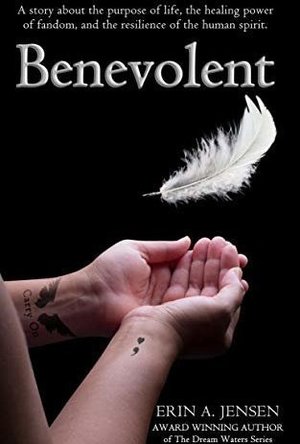

The plot of Benevolent was a truly interesting one that really tugged at my heartstrings throughout. Benevolent begins with a teenage girl, Abigail (or Abbie as she's sometimes called) losing her best and only friend to cancer. She is comforted by an angel who appears in the form of Castiel from the television show Supernatural (her and her best friend's favorite). The reader is then taken through a journey throughout Abbie's life including all the ups and downs. Her angel, Castiel, plays a big role in her life's journey, and Abbie's left wondering if Castiel is real or if he's just a figment of her imagination. Benevolent is more than just that though. It's a gripping and emotional love story, but not in the romantic sense.
I could not put Benevolent down! In fact, I pretty much read this book in one sitting. It's a fairly short story, but the pacing was absolutely perfect throughout. I love how each chapter title was a song title. In fact, it makes for a great playlist whilst reading the chapter that features it or before and/or after that chapter. I was pulled into Abigail's world as soon as I started reading the first page. I loved how every loose end is tied up before Benevolent ends, and every question I had was answered. The world building is fantastic, and I can't fault anything about it. Erin A. Jensen is such a talented writer based on Benevolent!
I absolutely enjoyed every character in Benevolent. Abigail felt like an old friend. In fact, I felt like I was reading a true life biography about Abigail instead of just a work of fiction. Everything about Abigail's character was just laid bare for everyone to read about, and I think that's what made me love her so much. She had been through a lot, and I could relate to her on so many levels. The character of Castiel was written perfectly too. Like I said, I had only watched a few episodes of Supernatural before they introduced the character of Castiel, so I can't comment on how much Benevolent's character of Castiel was like the one on Supernatural. However, it is mentioned in the beginning of Benevolent that Abigail's angel took on the form of Castiel and his name and mannerisms to make Abbie feel more comfortable. It is said that he isn't the actual Castiel from Supernatural. We also get to know Danny, Abbie's childhood best friend, through Abbie's memories. Danny seemed like such an awesome person, and even I was saddened by his death.
Trigger warnings for Benevolent include death, cancer, attempted suicide, overdosing, drug use, alcohol, and some profanity but nothing too bad.
Overall, Benevolent is one of those books that will stick with you long after you've stopped reading. It's a book that tugs on your heart strings and won't let go until the very end. Benevolent has such a fantastic plot with such a relatable main character that it just makes for an awesome read. What makes Benevolent even more awesome (which is saying something since Benevolent is highly awesome already) is that 100 percent of the profits from its sales will be donated to Random Acts charity. I would wholeheartedly recommend Benevolent by Erin A. Jensen to everyone aged 15+ no matter what genre of book they like. I feel like this book will touch everyone who gives it a read.
--
(A special thank you to Erin A. Jensen for providing me with a paperback of Benevolent in exchange for an honest and unbiased review.)

Innovative Bridge Design Handbook: Construction, Rehabilitation and Maintenance
Book
As known, each bridge presents a unique set of design, construction, and maintenance challenges. The...

Who Cleans the Park?: Public Work and Urban Governance in New York City
Book
America's public parks are in a golden age. Hundreds of millions of dollars both public and private...
Saving the Oceans Through Law: The International Legal Framework for the Protection of the Marine Environment
Book
The oceans cover more than seventy per cent of the surface of the planet and they provide many vital...

Goddess in the Stacks (553 KP) rated Children of Blood and Bone: Book 1 in Books
Feb 18, 2018
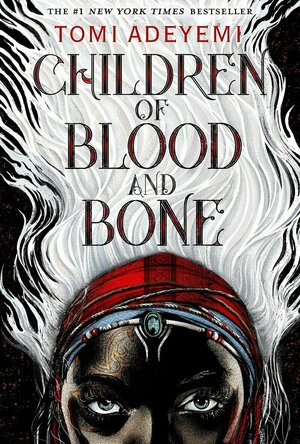


That massive frustration aside, I LOVED THIS BOOK. African-inspired fantasy novels are starting to crop up, along with other non-European based fantasy, and I'm loving it. (You can find Russian inspired fantasy that I've read previously here and here, and Jewish/Arab fantasy here.) Adeyemi is a Nigerian-American author, and this is her debut novel. It definitely shows some hallmarks of a debut novel - the dialogue is a bit stilted in places, and it's a little bit formulaic - but the world building is excellent.
Children of Blood and Bone is a story of oppression, and the sparks of a rebellion. I assume the rest of the trilogy will deal with the actual rebellion, but given the cliffhanger it ends on, I'm not actually sure of that. When Zélie, the main character, was very young, magic failed, and the king, who was afraid of maji, took the opportunity to kill every maji in his kingdom before they could find a way to regain their powers. Since then, every person who could have become a maji as they grew (they're marked by their white hair) has been treated as a second-class citizen. They're forced into slums, used as slave labor, kicked around by nobility and guards, made to pay higher taxes, and forbidden to breed with the other classes. They don't have magic - and they have no way to get it - but they're treated as trash by the king that hates them, and accordingly by the rest of his subjects.
At the beginning of the book, a magical artifact resurfaces that restores magic to any diviner (potential maji) that touches it. This, of course, is not okay with the king, and most of the book is about the race to use the magical artifact while being chased by the king's son and his guards who are trying to destroy it. The conflicted prince has secrets of his own, though, and as the book weaves through jungles, mountains, and seas, he wavers in his mission.
It's always difficult to review books without giving too much away about the plot, so I won't say much more about the events. I really enjoyed that they rode giant cats - leopanaires. Zélie and her allies ride a lion leopanaire, which is apparently somewhat unusual. Most of the guards ride leopards or cheetahs, while the royal family rides snow leopanaires. The magic is unique, the gods and religion are beautifully fleshed out, and overall I just really loved this world, and I'm very sad it will be so long before I can dive back into it.
You can find all my reviews at http://goddessinthestacks.wordpress.com

Amanda (96 KP) rated The Tattooist of Auschwitz in Books
May 29, 2019
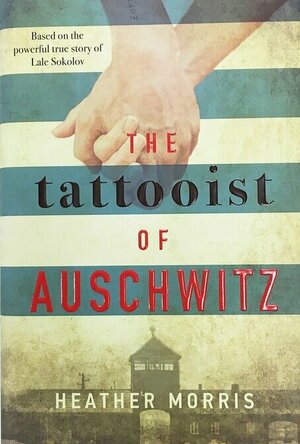

So I thought about it, and I’ve decided to write my review for this book. I’ve never read books that center around The Holocaust. I never thought I would, because I’ve seen several movies and just the sheer graphics of it alone made me sad. I know this was supposed to be based on a true story, but I went into it with the mindset that it wasn’t true, because most times, some of those stories are fabricated for drama purposes. I’ve read that even Heather Morris added some things to the story for that reason, so again, I saw it as just another story.
The story centers around Lale who is transferred to Auschwitz, but is given the job as a tattooist. From the descriptions, he has to use a really awful needle and has to press down hard enough for the numbers to be seen and never removed – a highly painful process that he has to perform even on children. Then one day, he tattoos a lady that catches his eye, Gita, and from then on he plans to love her and marry her WHEN they get out of Auschwitz.
Off the bat, something about the writing kind of bothered. I couldn’t quite pin point what it was. I read somewhere that this book was originally written as a screen play and I think that was it. To me, the style had a vagueness to it that made it feel like some parts I was reading something from an old story book from when I was in high school. I’m not saying that style was terrible. This particular writing style is not my favorite to read.
I liked the premise of the story. I can’t begin to imagine what it was truly like in those camps. I can’t comment on it either, but like I said, I also didn’t go into this book thinking it was all a true story about these two people. So, there were some bits of the story that I had a hard time believing, but then again, I’m not sure if it was a true part or a fabrication part.
All in all, the story wasn’t bad. I felt so horribly for Lale having to have that job, but he survived, and Gita. The remembering of their families and wondering if they are alive or dead struck me a bit. I know I’ve said this, but I can’t imagine that kind of pain. I feel horrible whenever Lale thought of his mother.
“His mother he can see perfectly. But how do you say goodbye to your mother? The person who gave you breath, who taught you how to live?”
You can’t, that’s the answer.
The book didn’t live up to the hype, in my opinion, but Morris wrote a nice and moving story in the end. I know there are some other stories like this. One of my Twitter friends recommend the Librarian of Auschwitz, so perhaps I will see about that book.
I don’t believe I’ll be seeking out the sequel to this book. I do hope it’s better than the first, but the story is still good.

Kaz (232 KP) rated 'Impression of a Dilemma' in Books
Jun 30, 2019 (Updated Jun 30, 2019)
This is a book which revolves around several diverse, quirky, but believable characters and their take on the same, shocking event. This book really gets into the minds of these characters and is very well written. I liked the almost poetic flow of the writing and the gentle humour.
In some novels which have multiple characters, in the end, they all become indistinguishable. However with this novel, everyone is completely different.
There was one character in particular, who at first, took some time for me to connect with. In reflection, I think this was good, because not many books include characters with such a quirky way of expressing themselves. So for this reason, I wouldn't say that this was a negative, but a change from having 'conventional' characters.
The pace of the novel was very good, at no point did it drag, I wanted to know what was going to happen next.
In fact, when I reached the end of the book, although I felt that it's ending was satisfactory, I couldn't help feeling like I wanted to know more about what the characters were going to do next. I'm not sure whether there will be any more books containing these characters or whether it's a stand alone novel, but I would be quite happy to read more about them, because they are so diverse and interesting.
I would definitely recommend this novel, if you like something quirky.
Macroeconomics: Institutions, Instability, and the Financial System
Wendy Carlin and David Soskice
Book
This authoritative new textbook integrates the modern monetary framework, based on the 3-equation...
A Schoolboy's Wartime Letters: An Evacuee's Life in WWII - A Personal Memoir
Book
This funny, fascinating journal follows the development of a boy and his changing attitudes during...
Plato, Derrida, and Writing
Book
Achieving the remarkable feat of linking composition theory, deconstruction, and classical rhetoric,...