

Kristy H (1252 KP) rated The Favorite Daughter in Books
Jun 21, 2019
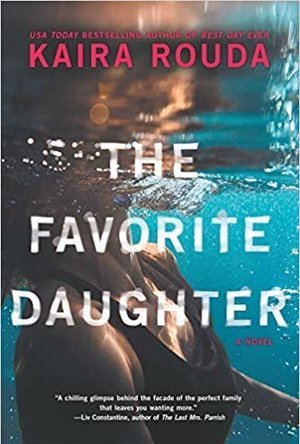

"After a year of grieving, it's time to step back into my family, or what remains of it and that's precisely my plan."
So this review is going to be a little unpopular, perhaps, based on others I've seen. I'd like to point out that it's not a negative review, per se, just not a gushing review as so many others seem to be. I just felt a little let down by this one; it left me a little flat. I found a lot of the twists predictable and while I found the book a very compelling read, there was just something "off" that didn't make it a "wow" read.
Still, as mentioned, this is a very readable book, and it will keep you engaged. Jane is an interesting character, to say the least, even if I sometimes found her more clueless than diabolical. She is, of course, an unreliable narrator, and we are only allowed to learn things as Jane reveals them to us. As a result, we're left a little confused, never quite sure where we stand. One of the things I liked most about this book was how easy it is to get sucked into Jane's delusional world as the novel is told in a very conversational style, with her sometimes speaking directly to the reader. She's also a pretty terrible person and yet oddly fascinating.
"Without Mary to place my biggest hopes and dreams on, I'm left with Betsy."
Her relationship with her daughters is pretty messed up, to say the least, and as a result, the book can be pretty creepy and bizarre. It's definitely quite a wild ride. Still, I was a little disappointed at how much I figured out ahead of time; I would have liked to have been more surprised.
Overall, this is a quick read and it's pretty intriguing. You'll get caught up in Jane's delusions pretty easily, even if some of them are fairly easily telegraphed. Others really rave about this one, so hopefully you'll enjoy it even more than me. I still recommend it; it's an interesting read. 3 stars.

A Place Called Winter
9.0 Rate It
Book
Read our exclusive interview with Patrick Gale here Picked for the BBC Radio 2 Simon Mayo Book...

Mark @ Carstairs Considers (2621 KP) rated Q is for Quarry (Kinsey Millhone, #17) in Books
Jul 21, 2020
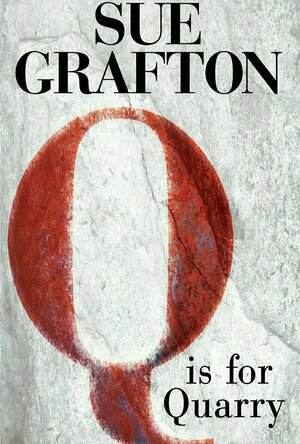


I’m sure it’s no surprise to say they do indeed begin to make some headway as they go back over the case. I enjoyed being along for the unpredictable ride. I thought I had things figured out a few times before we reached the real climax. The characters are as strong as ever. I loved seeing the growth in Kinsey, especially with a recurring sub-plot popping back up. There are a couple of other fun sub-plots with the regulars. Dolan and Oliphant could be a bit annoying at times, but that never lasted for very long. This book is based on a real-life Jane Doe, and there is information in the back on how Sue Grafton became interested in that case, which is still unsolved best I can tell. It’s always a pleasure to see a long running series that is still this strong and entertaining after so many volumes.

It was my first ever Space Opera and it has opened my eyes to a whole new genre.
It was my first ever Space Opera and it has primed my taste-buds for more.
It was my first ever Alastair Reynolds and now I want more.
Revenger itself was amazingly well written. As mentioned above this was my first book from Alastair Reynolds and it was just the kind of book I could get into again and again; the writing style flowed with a shocking ease and the plot line was very Firefly-esque with a hint more action and a smidge more ‘oh-shit’ factor.
Revenger follows the story of Adrana and Arafura Ness – two sisters from Mazarile whose sick father had made some very poor choices in business – as they embark on a journey into space to end all journeys.
It begins with Adrana convincing her younger sister Arafura to escape into Neural Alley for a reading by Madam Granity. There’s aliens, robots and weird looking men with bad attitudes and then there’s Captain Rackamore. Pol Rackamore is the captain of the Monetta’s Mourn – a sunjammer spaceship – and he’s in need of a new Boney on his ship as his current one is getting too old to ‘read the bones’ and I mean that in the literal sense of the word.
Adrana convinces Cap’n Rack to take both her and Arafura on board the Monetta in the position of new Bone Readers (with the aide of Cazaray the current Boney) and that is where the story really begins. We’re introduced to the rest of the crew and the Monetta sails off into the Empty in search of baubles. As they sail towards their first bauble Arafura becomes a lot closer to the rest of the crew while I feel that Adrana is doing her best to stay away from them all even though she’s front and center.
Story progresses and little hints are dropped about Bosa Sennen and Cap’n Rack’s long lost daughter. There’s several shocking deaths, a mad woman, a kidnapping or two and a young girl bent on revenge.
Around the mid way mark Arafura changes, subtly at first and then a lot more drastic and she becomes Just Fura. This is where the story becomes a lot darker and a lot less like Firefly and a lot more like the Firefly from hell; the second half of this book is based around Fura getting Revenger on Bosa Sennen for what she did and the things that Fura puts herself through to get where she needs to be? She started off as a little timid and shy but after the 50% mark she changed completely and became hard and unyielding.
You know how they say that the future is bright? That brightness is swallowed by the Empty and the future is dark and full of terrors (oh yeah I went there) there’s a doctor with a God complex, a father with a total lack of regard for his daughters, a totally bad ass soldier robot with logic barricades and all sorts of other people.
I think I loved the world building the most about Revenger it was such a smooth transition from place to place and from time to time that it was almost seamless; my second favourite thing was the characters – hands down they were some of the best characters I’ve ever read and I’d love to see if AR takes this book any further as it was seemingly left open for another book but we shall see.
The book gave off a distinctly pirate feeling but with the space element it felt more like Firefly than it did Pirates of the Caribbean which as a fan of both was saying something. Pirates sailing the high skies rather than the high seas! Some of the characters left much to be desired – Bosa, Adrana and Dr Moonface I’m looking at y’all – but the likes of Rack, Prozor and Paladin more than made up for them.
The dialogue was great and the story wasn’t overly scientific which sometimes can be an issue for me, I like my books to be a little less science fact and a bit more science fiction but with Revenger, I felt like AR was giving us regular folk an explanation without going overboard on the description.

Advanced Data Analysis in Neuroscience: Integrating Statistical and Computational Models
Book
This book is intended for use in advanced graduate courses in statistics/ machine learning for...

ClareR (6256 KP) rated The Familiars in Books
Jul 14, 2019 (Updated Jul 14, 2019)
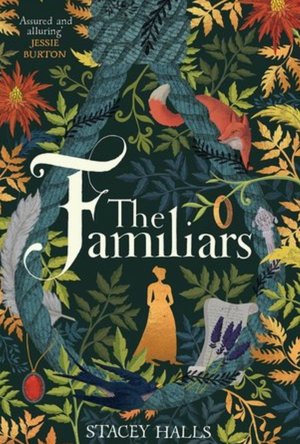
Fleetwood is seventeen years old and pregnant for the fourth time. Her three previous pregnancies have all resulted in stillbirth or miscarriage, and she has found letters from a doctor to her husband, saying that she will not survive another. She meets Alice Grey, who is a midwife, by chance. Alice promises to help her give birth to a living child, and assures her that she will survive the birth.
The fact that Alice is a midwife leaves her vulnerable to accusations of witchcraft, and accused she is. Fleetwood is adamant that she will save her as she is her friend and the only person who will be able to save hers and her baby’s lives. No one takes Fleetwood seriously though; when they do take her seriously, they expect her to go home and knuckle down to the more womanly pursuits of child bearing and being a wife.
Fleetwoods frustration is described so well - no one will listen, and no one will help. It’s such a tense atmosphere - Fleetwood just wants to help,her friend, and there are so many obstacles in the way. Even her social standing is no deterrent if someone were to accuse her of witchcraft if she becomes too troublesome (there’s the example of Margaret Pearson in the story, whose maid accused her of having a toad as a familiar, and spent time in the stocks before being imprisoned)
I really enjoyed this book, and I’ll be waiting for whatever the author writes next (I’m on the mailing list!).
Many thanks to Readers First for my copy of this book.

Trotskyists on Trial: Free Speech and Political Persecution Since the Age of FDR
Book
Passed in June 1940, the Smith Act was a peacetime anti-sedition law that marked a dramatic shift in...

Game Play: Paratextuality in Contemporary Board Games
Book
The 21st century has seen a board game renaissance. At a time when streaming television finds...

Terri Wiltshire (21 KP) rated The Lord of the Rings in Books
Sep 1, 2019
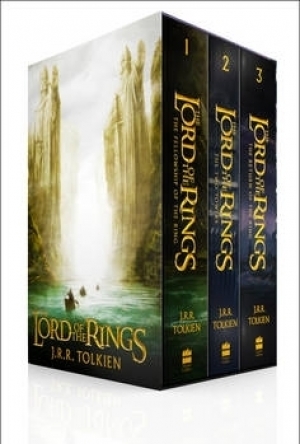
This book and the subsequent movies based on the world have been well quoted and are almost inbedded in British culture.
I envy those who haven't read them yet..you have a fantastic journey ahead. It will not be easy (this is not light reading) but it will be more than worth it. Enjoy, and give the elves my love.

What's the Use of Economics?: Teaching the Dismal Science After the Crisis
Book
With the financial crisis continuing after five years, people are questioning why economics failed...