
Real Deceptions: The Contemporary Reinvention of Realism
Book
Real Deceptions develops a new theory of realism through close consideration of myriad contemporary...

State Bank Anywhere
Finance
App
State Bank Anywhere is now SBI Anywhere Personal Mobile Banking Smart Phone application for SBI...

BankofMarquis (1832 KP) rated Dune (2021) in Movies
Oct 24, 2021
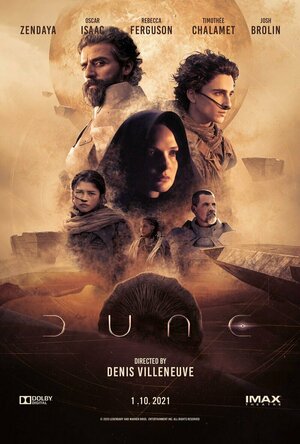

Lush, dense, rich, well cast and acted with eye-popping visuals that should be seen on the big screen, Directer Denis Villaneuve’s DUNE is everything that a fan of the book (that would include me) has been waiting for in a film version. It IS the “Peter Jackson LORD OF THE RINGS” version of this book - finally!
The question is, how does this film work for casual fans of the book - or for the myriad moviegoers that have never read the novel it is based on.
And, I’m afraid, the answer there is “not as well”. For Dune is a dense novel, filled with mythology that does go somewhat deep in the movie. This makes the pacing of this film problematic - especially at the beginning, for the novice - but is “deep enough” for those that have read the books.
Let’s start with what works - and that is the visuals that Director Denis Villeneuve (Blade Runner 2049) and his crew put on the screen. They are incredible. Unfortunately, most casual on-lookers to this film will decide to check out this 2 hour and 35 minute epic at home for free on HBO MAX, and that would be too bad. This film needs to be seen on the biggest screen possible to totally immerse you in this world.
Villeneuve perfectly cast this film from top to bottom starting with Timothy Chalamet as the hero of this book (and series) Paul Atreides. He brings the right balance of cockiness and unease to Paul who grows into something more than the “perfect prince” as the story progresses.
He is joined by some of the finest performers working today. Rebecca Ferguson and Josh Brolin bring their star power to the roles of Paul’s Mother (who is something more than Paul’s mother) and the head of the military (who is something more than the head of the military). Both of these roles needed to be played by a strong force - and both fill this need admirably.
The always good Oscar Isaac is the right choice for the role of Paul’s father, Duke Leto Atreides, who - by story necessity - is underwritten and, therefore, this film/role does not showcase his talents.
However, Jason Mamoa SHINES as Warrior Duncan Idaho. This is one of my favorite characters from the book and Mamoa brings his “A” game to this charismatic warrior/mentor to Paul. It was the largest pleasant surprise of the performances for me.
Alas, the villains of this piece - Baron Vladimir Harkonnen (Stellan Skarsgard) and his nephew, Beast Rabban Harkonnen (Dave Bautista) are relegated to background “mustache twirling” villains, they were not able to showcase their talents in this film. But, at least, we did not get the “golden speedo” that Sting wore in the 1984 David Lynch film version.
Also, not being able to showcase their talents is Javier Bardem and Zendaya as members of the Freman (the subjugated native people of the “Dune” planet). They are both in this film, briefly, as their characters rise and shine in the 2nd half of the book - so, hopefully, we’ll get to see more of them, then.
Which is the other part of this film that will turn off the casual viewer - it only covers (by necessity) the first half of the book, so only tells half a story with no real emotional payoff. For me, a fan of the books, I was fine with this as I am eagerly anticipating the 2nd film - but as a viewer who is just gonna “check this one out”, I’m not so sure that the visuals of this film will be enough to satisfy them.
Come for the visuals, stay for the performances and the dense story and prepare for Dune: Part 2.
Letter Grade: A-
8 stars (out of 10) and you can take that to the Bank(ofMarquis)

Gareth von Kallenbach (980 KP) rated Bullet to the Head (2013) in Movies
Aug 7, 2019


Stallone plays James Bonomo, a.k.a. Jimmy Bobo, a thug with a long rap sheet and few friends. After celebrating a successful contract hit, his partner is brutally killed and an attempt is made on Jimmy’s life as well. Suspecting that they’d been setup, James reluctantly meets with a D.C. detective named Taylor Kwon (Sung Kang), who is in town to investigate the murder of his former partner. Fate forces the duo to work with one another despite Kwon’s by-the-book nature and utter disdain for James and his choice of profession. The two soon uncover a large conspiracy that threatens not only their lives but the cities very powerful and elite, making the duo the prime targets for those who will stop at nothing.
Despite having a fairly formulaic plot, the film works very well, thanks in large part to the cast. The two leads work very well with one another, and the fine supporting work by Jason Momoa and Adewale Akinnuoye-Agbaje really set the tone. The action in the film is intense and at times brutal but does not seem gratuitous, making it clear that the characters live in a violent world where accepting death is second nature to the urge to kill.
Stallone gives a very physical performance as the world weary James and you can tell that he went all out for the films action sequences despite the toll his body had to take. The film is based on the graphic novel “Du Plomb dans la Tête” and captures the elements of a classic film noir, with the action of a buddy cop film without pandering to many of the genre stereotypes.
While I enjoyed Schwarzenegger’s “The Last Stand” a bit more, I was very surprised at how enjoyable the film was after being underwhelmed by the trailer. In the end, if you’re a fan of Stallone, and love a good action film, then this is one you will not want to miss.
Four War Boer: The Century and Life of Pieter Arnoldus Krueler
Book
The amazing life of Pieter Krueler (1885-1986) provides a window into a full century of conflict...

The Complete Adventures of Pan (Books 1-7)
Book, Education and Stickers
1.0 Rate It
App
Includes ALL 7 BOOKS of Complete Series The Adventures of Pan (#1 Best Seller in App Store Kids &...
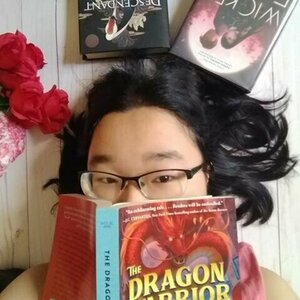
Sophia (Bookwyrming Thoughts) (530 KP) rated Independent Study (The Testing, #2) in Books
Jan 23, 2020

Malencia (Cia) Vale begins to realize failing isn't allowed, because failing means inevitable fate (but of course, that's been drilled since the first book – this time it's more along the lines of, "So much for relief. I still can't fail or I'm toast.") that she really doesn't want to find out. With the inability to remember to her Testing aside from what she recorded and beginning to question the University's selection process, Cia tries to find ways to take down the Testing peacefully without an all out "let's take down the entire government" rebellion.
At this point in the series, I'm not exactly a huge fan of the overly brilliant main character of the series. I adore Cia's brilliance, and while I think this might actually be Charbonneau's motive (because the series is based off the ACT/SAT), I feel Cia's been over-brillianted – Is that a word? No? I don't care. It is in this sense. – in the series. Cia is basically the only one excelling compared to the rest of her classmates – the average number of classes is six, Cia gets a whopping nine (and that's not counting internships). It's like Cia is set apart deliberately and from all of her classmates, which, of course, would no doubt attract the attention of Villain Squad (yes, <em>squad</em>).
Okay, I don't mind brilliant characters. It means more cruising for me and less of calling the character shallow, innocent, naïve, stupid – anything along those lines. Except...
Cia is a little whiny in <em>Independent Study</em>. She <em>wants</em> to take down the Testing and stop a rebellion, but at the same time, she doesn't want to (mainly because she doesn't want to get caught – she's already sticking out like a weed in a pretty flower garden). She's beginning to rely on Tomas a little too much – "I need to know Tomas's thoughts, I need his advice, I need his opinion on this...."
I don't like it. Even if I completely understand why Cia would do so in a place where every move and word is monitored and tracked by a group of people who can end lives within any reason.
I intend to read <em>Graduation Day</em> for the purposes of closure.
Maybe then I'll have a better understanding of Cia's excelled brilliance and a better understanding of why Cia is becoming reliant on Tomas (aside from the fact they grew up together in the same colony).
<a href="https://bookwyrmingthoughts.com/review-independent-study-by-joelle-charbonneau/"; target="_blank">This review was originally posted on Bookwyrming Thoughts</a>
Archives: Principles and Practices
Book
With a foreword by Geoffrey Yeo, University College London. This new and extensively revised second...

Kelly (279 KP) rated Year One: Chronicles of The One in Books
Jan 8, 2019
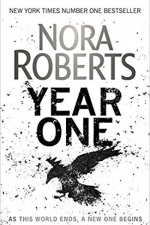

Year One is the first in the three novel series - The Chronicles of The One. The novel itself definitely has undertones of Stephen Kings ‘The Stand’, and follows a similar format with the bulk of the worlds population being wiped out by a mysterious infection, leaving behind the survivors, who quickly divide into a good/ light side or bad/dark side. Unlike The Stand, which to me had slight biblical undertones, the unique selling point of Year One, is the addition of the uncanny’s, magical beings who have been living amongst us, some knowingly different, others benign until the doom releases their powers. I felt this added a new twist to the common post apocalyptic format.
I felt that the characters were varied and relatable within the story. Nora Toberts clearly spent a lot of time creating a varied population for cast, which helped their reactions within the story become more believable.
There is a lot going on within the story,which jumps between places and people as well as over the course of months, but as a reader I found this was necessary for the plot to develop. Surprisingly, despite all of the jumps, the story is still a relatively easy read. Throughout the narrative, I also find that Roberts gives very clear clues as to the direction that the next books will take, through the dreams/ visions of the characters.
The weakest part of the novel for me was the start, which is why I have only scored this a 9, rather than 10. It is probably me being picky, but I would have preferred another 50-100 pages giving me a little bit more background to some of the characters prior to the doom. I felt the background for some of the characters was there, but for others was a little sketchy, although ultimately this did not stop me engaging with them in the long term.
Overall, I highly recommend this book for anyone who enjoys fantasy and, or post apocalyptic novels. It is an interesting, enjoyable and easy read.
Journalists Under Fire: The Psychological Hazards of Covering War
Chris Hedges and Anthony Feinstein
Book
As journalists in Iraq and other hot spots around the world continue to face harrowing dangers and...