

The New Power Eating: More Muslce, More Energy, Less Fat
7.0 Rate It
Book
Transform your body as you build muscle, lose fat, and maximize performance with The New Power...
My Little Town: Toddler's Seek & Find
Education and Entertainment
App
++ The only interactive activity book with over 80 animations ++ wonderkind wishes to thank for...

Pecan: America's Native Nut Tree
Book
Written in a manner suitable for a popular audience and including color photographs and recipes for...

Hazel (1853 KP) rated Clover Moon in Books
Dec 7, 2018
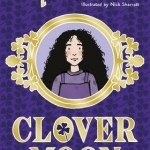

Although now in her seventies, the Nation’s favourite children’s author, Dame Jacqueline Wilson, is continuing to write after surpassing one hundred novels. Many children (mostly girls) grow up reading her stories, myself being amongst that number. Even my sister, who hated reading, purchased a number of her books. It has been well over a decade since I last read a Jacqueline Wilson, however after seeing her latest novel was available for review, I thought I would give it a go.
<i>Clover Moon</i> is set in poverty-stricken Victorian London, where eleven-year-old Clover, the eldest of six siblings, lives with her father and stepmother. Like many stepmother’s in children’s literature, Clover’s treats her like a slave – a position she is destined to stay in unless she gets a job in a factory. With no school to attend, Clover becomes a second mother to her younger brother’s and sisters, yet nothing can prepare her for the devastating impact a wave of Scarlet Fever brings. With only an old doll maker who cares about her, Clover is desperate to get out of her situation; so after a chance meeting with an artist who tells her about a home for destitute girls, Clover decides to seek out the help and life she deserves.
Although only eleven, Clover has the responsibilities of someone of a more mature age. It is hard to imagine sending a child out to work, or trusting them to look after a newborn baby. Children reading this book will learn the difference between their lives and the life of a child in the 1800s.
As always, Jacqueline Wilson gives her main character a happy ending – although in this instance it still remains a bit uncertain. Despite the horrible circumstances, Wilson manages to pump her story full of enthusiastic optimism, thus portraying Clover as a strong, determined heroine.
Most of Jacqueline Wilson’s earlier books were set in the present day; there were still unhappy situations, but the settings were based on ideas the reader would be familiar with. In the case of <i>Clover Moon</i>, unless children have been educated about the poor in Victorian England, it is unlikely that they will be able to fully comprehend Clover’s predicament. As a result, the book is more suitable for young teenagers than the usual target audience of eight to twelve year olds.
Comparing my memories of Jacqueline Wilson books I read as a child with her latest publication, <i>Clover Moon</i> felt like something different; a new direction. As I have not read any of her work between the early 2000s and now, I am not sure when this change occurred, but it feels as though Wilson is delving deeper into her main character’s thoughts and feelings, and creating a more insightful storyline. On the other hand, I may simply be more intuitive as an adult than I was a child.
Although <i>Clover Moon</i> did not turn out to be the style of writing I was expecting I thoroughly enjoyed it. In fact, this difference made it possible to distance myself from the author’s renown, and treat it as an individual story. Clover is an admirable character who, through her narration, provides both an entertaining story and brief historical education. Fans of Jacqueline Wilson will not be disappointed with this latest publication; and if you are a new reader, <i>Clover Moon</i> is a great place to start.

BankofMarquis (1832 KP) rated The Dark Knight (2008) in Movies
Apr 16, 2018
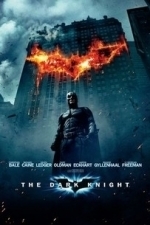
THE DARK KNIGHT continues the "dark, realistic" Batman story line (based on the Frank Miller Graphic Novels of the same name) that Nolan started with BATMAN BEGINS. This film starts off simply enough - a "James Bond" type of opening action sequence that has Batman tying up some loose ends (specifically regarding the villain Scarecrow), but Nolan (and his brother, the Screenwriter Jonathan Nolan) do a clever thing, they interweave the introduction of a new villain, The Joker, into this universe.
While The Joker commits crime after crime, his real purpose is to bring chaos and anarchy to Gotham City - and he succeeds wonderfully well, despite the attempts of Batman, Alfred, Lucious Fox and Detective Jim Gordon to stop him.
As is befitting a criminal such as The Joker - and also, as befitting a big budget summer tent pole blockbuster film - the stunts of this film are amazing, over-the-top, explosive and LOUD. There are death defying stunts, breathlessly captured, long, screeching car chases (that's a good thing) and fight scenes that are well choreographed and are, by the most part, done "practically" (not with the aid of CGI), including a wonderful stunt of flipping a semi-truck and trailer up in the air and onto it's back by the nose of the truck.
These stunts would mean nothing if there wasn't some folks to root for and get behind - and this film has those characters - and performances - in spades with continued good work from Nolan "Dark Knight Trilogy" regulars Christian Bale (Batman/Bruce Wayne), Detective Jim Gordon (Gary Oldman), Alfred the Butler (Michael Caine, really shining here) and Lucious Fox (Morgan Freeman - a nice character add to this universe for this trilogy). This core really brings the goods, which is good, for the newcomers to this series - Aaron Eckhart's District Attorney Harvey Dent and Maggie Gillenhall taking over the role of Rachel Dawes (from Katie Holmes) are pretty bland in comparison.
But...all of them pale in comparison to the once-in-a-lifetime performance and character of Heath Ledger as The Joker. Ledger, as most of you know, rightfully won the Oscar for Best Supporting Actor for this role - a rare feat for a "comic book" movie. This is not only the Best Supporting Actor turn for 2008, but I would argue it is one of the best Supporting Actor turns of all-time. Anytime that Ledger is on the screen, your eye goes to him and you lose all sense of anything else that is going on. His look, his tics, his pauses, his vocal patterns, his mannerisms, his walk, ALL convey a sense of the character and added all up, it is quite something to behold.
Many, many have called this their favorite "comic book" film of all time, but I don't think I share that idea. While Nolan spent much of his time on the characters, the "look" of the film and the effects and stunts, he left the story a little too thin and the length of this film is a bit too long, for my tastes. I was most certainly looking at my watch during the "thrilling conclusion" of this film waiting for it to be done.
Now...to be fair...most of the reason for that is that I was exhausted watching Ledger's performance. He wore me out. But...that's a compliment, not a complaint.
Letter Grade: A-
8 (out of 10) stars and you can take that to the Bank(ofMarquis)
BankofMarquis (1832 KP) rated Green Book (2018) in Movies
Dec 14, 2018

Yes, it's that good.
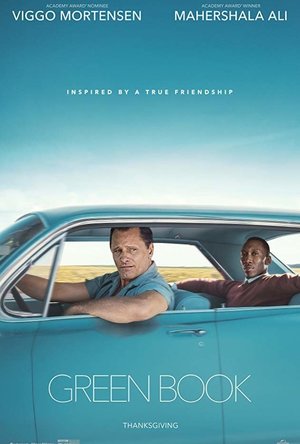
"Based on a true story", GREEN BOOK stars Viggo Mortenson (Aragon in the LOTR films) as "Tony Lip" a bouncer at the Copacabana in the early 1960's who is tapped by African American concert pianist Dr. Don Shirley (Academy Award winner Mahershala Ali) to be his driver/escort/security on a tour of a very prejudicial Southern part of the United States in the early 1960's. Both Tony and Dr. Don look down their noses at the other one, but during the course of this film, the two develop mutual respect and a friendship that lasted until the both passed away in 2013.
That is, in essence, the entire plot of this film. But it is not the destination, but rather, the journey that is the core of this film - and what a journey it is.
We, the audience, probably spend 70% of the film in a car with the 2 stars of this film, so they better be interesting to look at and listen to (for nothing much else happens) and both characters - and both actors- are up to the task.
Ali won a Best Supporting Actor Oscar for his brief turn in Barry Jenkins MOONLIGHT - and he is even better here as Dr. Don Shirley, an elitist virtuoso piano player, with strong pride and hidden secrets of his own. Ali brings a humanity and vulnerability to this character that acts as a softening of the hard shell of this character that allows us, the audience, a glimpse into this character's heart. This person could easily have been a one-note caricature, but in Ali's hands, it is much, much more.
The biggest surprise to me is two-time Oscar Nominee Mortenson as "Tony Lip". While the character starts as a typical early 1960's Italian-mob type, Mortenson brings humor, humanity and (yes) heart to a matter-of-fact character and continues to evolve the rough edges of Tony as Tony, himself, develops throughout the course of the film. I have always "liked but not loved" Mortenson, but, I LOVE HIM in this film and will be rooting for him come Oscars time.
The other big surprise of this film is the strong, subtle and human way that Director Peter Farrelly brings events to the screen. Prior to this, Farrelly (along with his brother Bobby) Directed such over-the-top comedies as THERE'S SOMETHING ABOUT MARY and KINGPIN, so I was a bit concerned that the Direction would be over-the-top. But...it wasn't...and I wouldn't be surprised if Farelly's name is called when Oscar nominations are announced.
I was charmed and moved by these characters - and this story - and was glad to spend 2 hours with them.
Letter Grade: A
9 stars (out of 10) and you can take that to the Bank (ofMarquis)
The MBA Handbook: Academic and Professional Skills for Mastering Management
Book
'An absolutely vital resource for anyone doing an MBA. It will help you at every stage: before,...

Adhan Time Plus
Utilities
App
***NEW PERFORMANCE TRACKING NOTEBOOK ** Tracking the performance of Quran reading and adherence to...

Mandy and G.D. Burkhead (26 KP) rated Sir Apropos of Nothing in Books
May 20, 2018
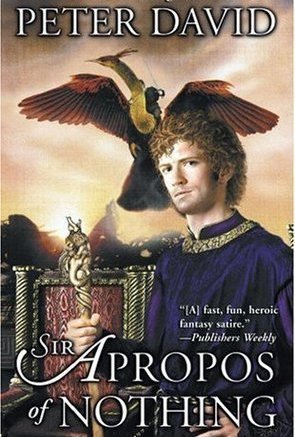

So when I picked up Sir Apropos of Nothing, I did so based on the title pun and the back-of-the-book synopsis that promised “a berserk phoenix, murderous unicorns, mutated harpies, homicidal warrior kings, and – most problematic of all – a princess who may or may not be a psychotic arsonist.” I expected another lighthearted riff on the familiar archetypes. Murderous unicorns? Unicorns are not typically described as such! Oh teehee, how unexpectedly humorous!
Sir Apropos of Nothing is a satirical fantasy, just like it promised, though at times it’s hard to tell how much of the story is played for laughs and how much is played straight. See, the thing about satire that’s easy to forget at times is that it’s not synonymous with buffoonery. Make no mistake – Apropos is a funny book, full of witty dialogue and groan-inducing puns. It’s a book that takes great delight in lampshading traditional fantasy tropes and archetypes, as well as the entirety of Joseph Campbell’s Hero’s Journey idea. But it is not always a silly lampshade; sometimes a cliche or trope is pointed out to have its inherit ridiculousness laughed at, and sometimes it is pointed out because it is causing real and lasting pain or damage, either to the society in which it is set or, more often, to the titular Apropos himself and his ever-degrading esteem of both the people around him and himself.
The tone, at first, is hard to pin down. The story starts in media res with the main character being caught by a knight while in mid-coitus with that knight’s wife and escalates from there. The second chapter opens with a fourth wall-breaking narrative admission by Apropos himself that this was done with the express purpose of catching your attention, and now we’re going back to cover Apropos’s childhood, which ends up being equal parts dark, tragic, punny, and conveniently trope-filled – all of which Apropos, as narrator, approaches with the same resigned, blasé outlook.
If this sounds a bit jarring, well, it kind of is. Early on, I wasn’t sure what to think of where the story was trying to go or what I was expected to feel about it. After the first turn from cliché to dark and visceral to light and punny, all within a few pages, I caught myself thinking, “Crap, is this book gonna try and mix goofy jokes with serious drama and thoughtful moral quandary?”
The answer is yes. And it pulls it off fantastically.
This is due in large part to the interesting depths of the antihero, Apropos, who seems to be so named purely for the joke in the title. In Apropos we see a deep sense of justice and rightness that is entirely eclipsed by an even deeper cynicism and an unshakeable instinct for self-preservation. His life is objectively terrible, but rather than brood and lament, he adjusts. He keeps his head down when he can, weathers abuse when he can’t, and learns to deal with the constant shit storm, all the while bottling his growing anger and resentment at a world that would allow such amounts of suffering and hypocrisy to go unchecked. The fact that he himself becomes a selfish, hypocritical, and generally awful person is not lost on him, and the result is a flawed, unheroic, pathetic coward of a protagonist, a magnificently multifaceted bastard who doesn’t spare even himself from his vast and withering contempt.
And it’s a blast. It really is. Apropos is refreshingly pragmatic and unabashedly pessimistic, a welcome change from the typical righteous-yet-humble heroes of traditional fantasy, or even the loveable and untalented everyman in over his head of traditional fantasy spoofs. Despite a portentous birthmark (on his ass, no less) and beginnings that are not “humble” so much as “poverty of the dirtiest kind,” Apropos is everything a hero should not be short of outright evil.
And this, as it turns out, is entirely the point. This is where the satire, funny or otherwise, really shines through. This is the crux that elevates Sir Apropos of Nothing from a generically self-aware fantasy story to an original and memorable subversion of storytelling as a whole.
Without giving too much away, there comes a point in the plot where Apropos realizes that the events surrounding his miserable life are part of a heroic tale that has been preordained by Fate and is now being epically written out by Destiny. And despite his birthmark, his tragic past, and his mother’s constant reassurances that he has some sort of great destiny hovering over him, he is not the hero. He is only a minor character. A walk-on role on the hero’s stage. A brief pit-stop along the hero’s journey. An NPC whose dreams, desires, and continued existence are so far below importance to the story as to be utterly negligible.
And once this finally clicks with him, he violently, brazenly rebels against it. He gives an emphatic middle finger to Fate’s ideas and sets about making Destiny sit up and take notice of him again. He momentarily and violently overcomes his own abject cowardice just long enough to find a way to completely wreck the traditional heroic ballad in which he lives, all on the basis that, dammit, the world owes him more than this, and nobody should be so miserably cursed as to live their entire life as a foil character.
At this point in my own reading, I didn’t know whether to cheer him on or worry about the repercussions of his actions, because he doesn’t suddenly become heroic when this happens. He’s exactly as much of a selfish, lying bastard as before, and however bad you feel for him, you can completely understand why he was never cast for this role in the first place. Add to this the complete disregard of the author for following what seems to be the obvious progression of events in favor of twists that take you completely by surprise, but still make complete sense and arise organically from the story itself, and you eventually give up thinking that you have any sense of where the story’s going or how any event is going to play out. From beginning to end, it feeds you familiar ideas and then completely subverts them, introduces clichés and then proceeds to tear them apart, and you laugh and pity and feel something the entire way through.
In short, Sir Apropos of Nothing is a book that will keep you turning page after page – not necessarily because of the gripping drama (although it has that) or because of any breezy humor (although it has that too), or because the narration itself oozes suspense (although it often does), but because, with the rapid infusion of new and creative ideas and the hidden depths of character constantly bubbling to the surface in everyone involved, you honestly never know what’s going to happen next. If you like fantasy and can stand to have your expectations messed with, Apropos is certainly apropos.

Emma @ The Movies (1786 KP) rated Artemis Fowl (2020) in Movies
Jun 13, 2020
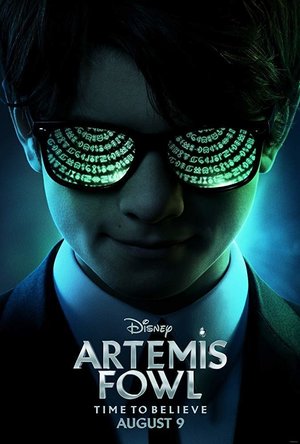


Me: *wildly switches from happiness to devastation about the possibilities*
Artemis Fowl's father, Artemis Fowl Snr., has gone missing, the media is portraying him as a criminal and calling for answers. Shocked and confused by what's happening Artemis Jnr. receives a phone call from his father's kidnapper and must hand over an item to secure his release. But he's no idea what the item is, or where, he's about to learn a great deal about fantastical things in a very short space of time and meet an odd selection of new friends.
So... I'm going to break this down into two parts, the first bit will be just about the film and the second will be me ranting about the film in conjunction with the book... *calm thoughts* Let us begin.
From the very beginning I was thrown, the opening in no way seems like a family film and I was wondering if by avoiding reading about it all beforehand that I'd got the wrong idea about what to expect.
With such a good cast backing up our newcomers I had medium hopes for what was going to hit our screens...
Ferdia Shaw takes on the part of Artemis Fowl Jnr., putting aside the comparison between the two versions until later, the performance isn't bad but it's quite forgettable. The same sadly goes for Lara McDonnell as Holly Short. Neither one has much of a presence on screen and I think that's mostly to do with the fact that Artemis and Holly are both rather bland in the whole story.
There's something oddly appealing about Josh Gad as Mulch but I'm not sure that giving him such a large role as narrator worked. It's never really clear why he's given that role and the scene's where we cut back to him talking are given a strange noir look that doesn't match with the rest of the film. Even so, I'm willing to concede that he's my favourite character as he has just enough humour to carry it.
Judi Dench as Commander Root was a little bit of a challenge to see. Root is a gruff but caring character, the trouble come in the fact that the change comes quite unnaturally at times.
One of the main failings is that there are times when the script feels poor, the dialogue is a little forced and doesn't fit with the characters, couple that with a variety of scenes that don't fit with the style of everything else and the fact that some pieces could be removed without really affecting anything around it and I'm left less than inspired by the film.
I did like the look of Haven City, the animation of the overhead view looked really promising. As we got into the city though I couldn't help but think it looked a little cheap and the aesthetic wasn't great. Effects, in general, were not good if I'm honest, particularly when you get to the siege on Fowl manor, when the siege is ending it comes with some chaos that is a perfect example of this coupled with another example of how the story glosses over an explanation of what's happening that could have offered some extra development for characters. (Specifically in this instance, Foley, who was woefully underused. He might not have been as majestic as a Brosnan centaur but he deserved better than the film gave him.)
By the end a lot of things get resolved seemingly by fairy magic because it's not clear how any of it happens. Potentially it's something that I wouldn't have noticed as there's a certain amount of this kind of wrapping up that you can forgive, but by this point I was so frustrated by everything that I was spotting everything.
I'm aware I'm waffling more than I intended so let me "briefly" mention things regarding the book...
The film is, in my opinion, only vaguely based on the book. It has kept ideas and pieces of story while removing and adding characters to varying degrees. Notably Artemis' mother is gone and his father is there instead. Removing mum makes Juliet's inclusion surplus to requirements, I can understand wanting to keep her for a young female character for viewers to identify with, but the role she ends up with is bland and in no way lives up to the book's version. The blandness also extends to her brother, Butler, and that's partly because of the major change they made...
Artemis. He is barely recognisable in comparison. He's a jeans-wearing, surfing, tween? He's much more casual than the original and this fluffier version doesn't have the same edge that book Artemis does. In their revamp they have changed his story and I very quickly felt like it could have been a sequel to the books, Artemis Snr. felt more like the Artemis from the books grown up and he was teaching his son about all the things he learnt. Part of the thing I enjoyed about the books is that Artemis was always an anti-hero of sorts, he was very difficult to like at times because of his actions, film Artemis is a little bit jumbled in this respect as they give him a very clear reason for the things he does so when he tries to show that tough side it doesn't have any impact.
There are a lot of differences, but I will leave that analysis for someone who is much more thorough at scouring the books and film than I am. I'll be keeping my eye out for other reviews with the comparisons in, if you spot any then please leave a link in the comments below.
When it came to scoring this I thought about it on two levels.
As a film from such a big company I was quite shocked by the quality of script and effects, there was a baddie that didn't really participate in anything and there were scenes and characters which weren't needed... and to finish it off in such an obvious set up for a sequel... I was done. I had marked it down for a generous score of 2 stars, that's normally my "I didn't like it but I can see why other people might" score, but I can't quite see what would appeal to people in it if I'm honest.
As an adaptation of the book I was too frustrated by the changes they made to Artemis, they essentially changed the fundamentals of the character and that had a knock-on effect to other characters as well. No one came out unscathed, but even though Mulch was heavily adapted I was glad that some of his humour was still there. Scoring on this basis I would have given it 1 star, but again, that felt generous to me.
In the end I will always score something on my enjoyment, in this instance it seems fair to even out the two scores. They've taken a great book and removed most of its personality, the final product was not exciting to watch and I don't think I could bring myself to watch a sequel.
Originally posted on: https://emmaatthemovies.blogspot.com/2020/06/artemis-fowl-movie-review.html