Search
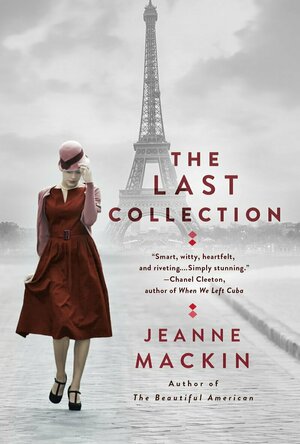
The Last Collection
Book
An American woman becomes entangled in the intense rivalry between iconic fashion designers Coco...
Historical Romance
Zuky the BookBum (15 KP) rated In a Cottage In a Wood in Books
Mar 15, 2018
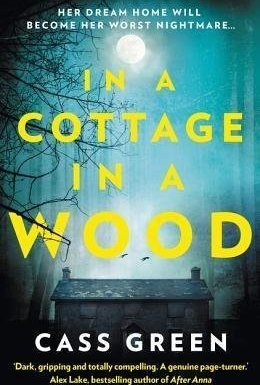
It didnt take me very long to get into this book, but unfortunately, a mix of irritating characters and clunky writing found me not loving this book in the end.
This book is definitely one that gets straight into the mystery and piques your intrigue quickly. From the moment we met Isabelle on the bridge and the strange encounter she had with Neve, I couldnt wait to find out why and what was happening! The plot for this one definitely drew me in straight away, and thats something I really loved about this book. The plot was presented to us so suddenly and so mysteriously, you really wanted to know what was happening and it so it keeps you reading!
I did find that some of this story was really drawn out and I felt there were parts that could have been missed out. For example, when Never first arrives at the cottage and goes for a walk, she stops of at a clearing on the beach and the writing makes it in to a really big deal. I thought look out for this same spot later on in the story then!, yes nothing comes of it! It was just extra fluff to add to the word count.
To begin with, I didnt mind the characters in this novel. The fiestiness of Neve felt sassy and fun, but after a while a character that doesnt grow in personality can become really irritating and laborious to read about. There werent really many other big characters in this one, we mainly focused on Neve and her daily potterings-about. With the other characters that did feature in this novel, it was easy to spot what their motives were, or if they were placed in the novel for the purpose of being a scapegoat. Its not fun when you can see through the characters this easily!
I liked the descriptions and scenery in this one, but the writing became repetitive in terms of phrases or things said by characters, which is always a negative in my eyes! Theres no need to repeat things over and over again throughout a book, it just feels like a waste of time to read.
Despite all my whinging, I did enjoy this book more than not, and I think other less fussy readers would love this! Im am a super picky reader, I know this, and I know I pick faults in books that are really niche, but thats just the kind of reader I am!
<i>Thanks to HarperCollins for sending me a copy of this book in exchange for an honest review!</i>

This book is definitely one that gets straight into the mystery and piques your intrigue quickly. From the moment we met Isabelle on the bridge and the strange encounter she had with Neve, I couldnt wait to find out why and what was happening! The plot for this one definitely drew me in straight away, and thats something I really loved about this book. The plot was presented to us so suddenly and so mysteriously, you really wanted to know what was happening and it so it keeps you reading!
I did find that some of this story was really drawn out and I felt there were parts that could have been missed out. For example, when Never first arrives at the cottage and goes for a walk, she stops of at a clearing on the beach and the writing makes it in to a really big deal. I thought look out for this same spot later on in the story then!, yes nothing comes of it! It was just extra fluff to add to the word count.
To begin with, I didnt mind the characters in this novel. The fiestiness of Neve felt sassy and fun, but after a while a character that doesnt grow in personality can become really irritating and laborious to read about. There werent really many other big characters in this one, we mainly focused on Neve and her daily potterings-about. With the other characters that did feature in this novel, it was easy to spot what their motives were, or if they were placed in the novel for the purpose of being a scapegoat. Its not fun when you can see through the characters this easily!
I liked the descriptions and scenery in this one, but the writing became repetitive in terms of phrases or things said by characters, which is always a negative in my eyes! Theres no need to repeat things over and over again throughout a book, it just feels like a waste of time to read.
Despite all my whinging, I did enjoy this book more than not, and I think other less fussy readers would love this! Im am a super picky reader, I know this, and I know I pick faults in books that are really niche, but thats just the kind of reader I am!
<i>Thanks to HarperCollins for sending me a copy of this book in exchange for an honest review!</i>
Night Reader Reviews (683 KP) rated The Mandore Rose in Books
Jan 9, 2020
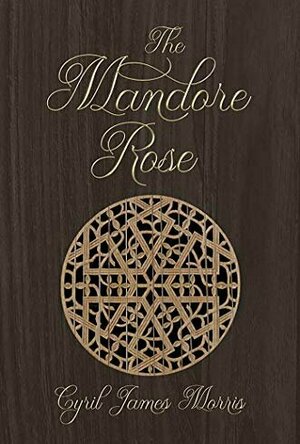
The Mandore Rose by Cyril James Morris is set in the early 1950s yet, for the most part, it feels like it could be set in modern-day. It also has a prologue from the 1700s but it takes a while for the connection to be made. This book can easily be read in a day or two.
Just Riley is a young Romany girl who is ordered by her elder to take her caravan and run away. This is not because of anything she has done. She must run in order to protect herself from the man pretending to be her uncle after her mother died just so he can steal from her. Just Riley now has to survive on her own with her horse Pixe and her spirit guide, The Bangled Lady for companions. That is until an accident at the beach puts her in contact with Big Pierre and Rhys.
Rhys teaches her how to hunt for crabs and they quickly become friends. Big Pierre owns and works on a crabbing boat and gives Just Riley some work. When Pierre takes Riley with him one day she meets the Monks and Lady Caldey on their island. The Lady agrees to have an instrument repaired for Just Riley and the two feel a bond right away. After learning to trust one another Just Riley learns that they each have a ring identical to the other. It is with these rings and a little bit of luck that they start on an adventure that may lead them to the truth about who Just Riley really is.
What I liked most was how the main character is called Just Riley. At first, I found this to be annoying and awkward, but after the reason is explained I fund it to be cute, if not a little sad as well. What I did not like was that I wish the book would have explained the difference between Romany and Gypsey. This is because on multiple occasions people in the book confuse the two and Riley seems to be insulted by that. I feel like many people (myself included) do not know the difference and would benefit from the explanation.
People who enjoy historical mysteries would enjoy this book the most. This book is appropriate for just about all readers even those in middle school. It is not too heavily historical that it is not enjoyable. I give this book a 3 out of 4 ratings. While there is not anything wrong with this book I could not give it a perfect score. The book just was not compelling to read. While it is classified as a mystery it really doesn't have a quality that made me curious about what was happening.
https://nightreaderreviews.blogspot.com
https://www.facebook.com/nightreaderreviews/
https://www.austinmacauley.com/book/mandore-rose
Just Riley is a young Romany girl who is ordered by her elder to take her caravan and run away. This is not because of anything she has done. She must run in order to protect herself from the man pretending to be her uncle after her mother died just so he can steal from her. Just Riley now has to survive on her own with her horse Pixe and her spirit guide, The Bangled Lady for companions. That is until an accident at the beach puts her in contact with Big Pierre and Rhys.
Rhys teaches her how to hunt for crabs and they quickly become friends. Big Pierre owns and works on a crabbing boat and gives Just Riley some work. When Pierre takes Riley with him one day she meets the Monks and Lady Caldey on their island. The Lady agrees to have an instrument repaired for Just Riley and the two feel a bond right away. After learning to trust one another Just Riley learns that they each have a ring identical to the other. It is with these rings and a little bit of luck that they start on an adventure that may lead them to the truth about who Just Riley really is.
What I liked most was how the main character is called Just Riley. At first, I found this to be annoying and awkward, but after the reason is explained I fund it to be cute, if not a little sad as well. What I did not like was that I wish the book would have explained the difference between Romany and Gypsey. This is because on multiple occasions people in the book confuse the two and Riley seems to be insulted by that. I feel like many people (myself included) do not know the difference and would benefit from the explanation.
People who enjoy historical mysteries would enjoy this book the most. This book is appropriate for just about all readers even those in middle school. It is not too heavily historical that it is not enjoyable. I give this book a 3 out of 4 ratings. While there is not anything wrong with this book I could not give it a perfect score. The book just was not compelling to read. While it is classified as a mystery it really doesn't have a quality that made me curious about what was happening.
https://nightreaderreviews.blogspot.com
https://www.facebook.com/nightreaderreviews/
https://www.austinmacauley.com/book/mandore-rose
Kristy H (1252 KP) rated Mr. Nobody in Books
Mar 19, 2020
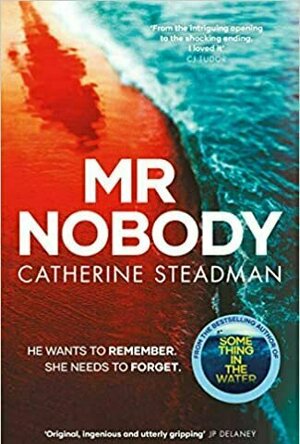
Emma Lewis is neuropsychiatrist, who is surprised when she's asked to work on a case for a newsworthy patient. Dubbed "Mr. Nobody," he's a man found on a British beach, in wet clothes and without any identification. He won't speak and the hospital staff are all drawn to him. But for Emma to take the case, it means returning to a place that she left fourteen years ago in disgrace--a place she's worked to leave behind and erase any signs of herself from.
"Why can't I remember? Why can't I remember my name? The weight of what this means bears down on him with each cold snatched breath he takes. Fear pumping through him, primal and quickening. Oh God. It's all gone. His world shrinks to a pinhead and then dilates so wide, suddenly terrifyingly borderless."
This book started out like gangbusters. Alternating between Emma and Mr. Nobody, whom the hospital staff quickly dubs Matthew, I was drawn in immediately. Who on earth is Matthew, why can't he remember who he is, and what is his deal? But there were a few issues. Emma clearly has a backstory. Yes, something happened to her fourteen years ago. To me, this is the equivalent of "vaguebooking"--you know when someone posts something on Facebook or social media: "Something horrible has happened. Oh woe is me." And then all their friends have to either guess, or say "Oh I'm so sorry," but the poster never actually tells you what happened? I'm sorry, but in books, after a while, dragging this all out is too much. Just freaking tell us what happened to you, Emma, or stop alluding to it!
So Emma and Matthew, of course, surpass patient/doctor boundaries, finding each other fascinating. There are, accordingly, twists in the book. Some, I will hand it to Steadman, are pretty darn good. Much of the book is quite readable and moves at a good pace--Emma's allusions to her past not withstanding. It's certainly intriguing. There are some interesting side characters: a local police officer and his nosy reporter wife; a benevolent nurse, etc. Emma's kind and patient brother.
But then the ending and biggest reveal comes along and eh. I found it a little anticlimactic. After all we've been through together, Emma?! I don't know. I was hoping for more, especially after all the fuss about Something in the Water, which I still haven't read. (I know, I know. It's on my TBR.)
So, in the end, this is an intriguing one. The plot is definitely original, I'll give you that. But throw in a slightly irritating main character and a somewhat disappointing ending and it was a 3.5 star read for me-just barely.

"Why can't I remember? Why can't I remember my name? The weight of what this means bears down on him with each cold snatched breath he takes. Fear pumping through him, primal and quickening. Oh God. It's all gone. His world shrinks to a pinhead and then dilates so wide, suddenly terrifyingly borderless."
This book started out like gangbusters. Alternating between Emma and Mr. Nobody, whom the hospital staff quickly dubs Matthew, I was drawn in immediately. Who on earth is Matthew, why can't he remember who he is, and what is his deal? But there were a few issues. Emma clearly has a backstory. Yes, something happened to her fourteen years ago. To me, this is the equivalent of "vaguebooking"--you know when someone posts something on Facebook or social media: "Something horrible has happened. Oh woe is me." And then all their friends have to either guess, or say "Oh I'm so sorry," but the poster never actually tells you what happened? I'm sorry, but in books, after a while, dragging this all out is too much. Just freaking tell us what happened to you, Emma, or stop alluding to it!
So Emma and Matthew, of course, surpass patient/doctor boundaries, finding each other fascinating. There are, accordingly, twists in the book. Some, I will hand it to Steadman, are pretty darn good. Much of the book is quite readable and moves at a good pace--Emma's allusions to her past not withstanding. It's certainly intriguing. There are some interesting side characters: a local police officer and his nosy reporter wife; a benevolent nurse, etc. Emma's kind and patient brother.
But then the ending and biggest reveal comes along and eh. I found it a little anticlimactic. After all we've been through together, Emma?! I don't know. I was hoping for more, especially after all the fuss about Something in the Water, which I still haven't read. (I know, I know. It's on my TBR.)
So, in the end, this is an intriguing one. The plot is definitely original, I'll give you that. But throw in a slightly irritating main character and a somewhat disappointing ending and it was a 3.5 star read for me-just barely.
Movie Metropolis (309 KP) rated Dunkirk (2017) in Movies
Jun 10, 2019

A Triumph
Brutal. Spectacular. Emotional. These are just some of the adjectives you could use to describe Christopher Nolan’s latest film, Dunkirk. The director of Inception, The Dark Knight, Memento and Interstellar is one of the greatest film-makers working today and he raises the bar once again with this bleak tale from World War II.
With war, you have to respect the past whilst allowing modern-day film-goers to truly understand the brutality that ordinary people like you and I went through on a daily basis.
In May 1940, Germany had advanced into France, trapping Allied troops on the beaches of Dunkirk. Under air and ground cover from British and French forces, troops were slowly and methodically evacuated from the beach using not only military ships but civilian boats too. At the end of this incredible story of courage, 330,000 French, British, Belgian and Dutch soldiers were safely evacuated.
I found a quote the other day that said “Christopher Nolan is like Michael Bay for people who have ever read a book” and in Dunkirk that seems more apt than ever. Of course there are explosions, many of them, but they are interweaved with some incredible storytelling.
Split into three separate timelines, Dunkirk follows fisherman Mark Rylance as he sails to the beaches as part of the civilian rescue effort. On land we shadow a group of young soldiers desperately trying to get back home. Finally, the film flies alongside Tom Hardy’s brave Spitfire pilot as he tries his best to keep the beaches safe.
Each of the stories has something to offer but Mark Rylance’s performance is definitely the best, making his timeline the most interesting and often the most emotional. Addressing the elephant in the room, Harry Styles, is probably best at this part of the review – he’s excellent and in a much larger part than I had imagined.
In fact, all the performances are excellent, helped in part by Christopher Nolan’s incredible use of close-ups. This is a living, breathing war and as the audience, you feel as claustrophobic as the 400,000 men did waiting on that beach in 1940.
Moreover, the sound is just astonishing. I have never known a film use sound to such an extent to convey sheer terror. The score by Hans Zimmer, coupled with the deafening aircraft flying overhead and the rapid gunfire is incredibly harrowing and makes Dunkirk very hard to watch at times – despite its 12A certification.
Dunkirk is also a masterclass in practical effects. Nearly everything you see on screen was shot without the use of CGI and my goodness you can tell. We’re so used to seeing blockbusters filled to the brim with computer generated imagery that it’s easy to forget just how good practical effects can be.
Overall, Christopher Nolan has created a tasteful homage to a day that has been etched into the minds of generations of people. It would’ve been easy to create a film that focused on the action rather than the human details of this incredible story, but Nolan has managed to craft an absolute triumph. It’s one of the best films of the year and an absolute must-watch.
https://moviemetropolis.net/2017/07/23/dunkirk-review-a-triumph/

With war, you have to respect the past whilst allowing modern-day film-goers to truly understand the brutality that ordinary people like you and I went through on a daily basis.
In May 1940, Germany had advanced into France, trapping Allied troops on the beaches of Dunkirk. Under air and ground cover from British and French forces, troops were slowly and methodically evacuated from the beach using not only military ships but civilian boats too. At the end of this incredible story of courage, 330,000 French, British, Belgian and Dutch soldiers were safely evacuated.
I found a quote the other day that said “Christopher Nolan is like Michael Bay for people who have ever read a book” and in Dunkirk that seems more apt than ever. Of course there are explosions, many of them, but they are interweaved with some incredible storytelling.
Split into three separate timelines, Dunkirk follows fisherman Mark Rylance as he sails to the beaches as part of the civilian rescue effort. On land we shadow a group of young soldiers desperately trying to get back home. Finally, the film flies alongside Tom Hardy’s brave Spitfire pilot as he tries his best to keep the beaches safe.
Each of the stories has something to offer but Mark Rylance’s performance is definitely the best, making his timeline the most interesting and often the most emotional. Addressing the elephant in the room, Harry Styles, is probably best at this part of the review – he’s excellent and in a much larger part than I had imagined.
In fact, all the performances are excellent, helped in part by Christopher Nolan’s incredible use of close-ups. This is a living, breathing war and as the audience, you feel as claustrophobic as the 400,000 men did waiting on that beach in 1940.
Moreover, the sound is just astonishing. I have never known a film use sound to such an extent to convey sheer terror. The score by Hans Zimmer, coupled with the deafening aircraft flying overhead and the rapid gunfire is incredibly harrowing and makes Dunkirk very hard to watch at times – despite its 12A certification.
Dunkirk is also a masterclass in practical effects. Nearly everything you see on screen was shot without the use of CGI and my goodness you can tell. We’re so used to seeing blockbusters filled to the brim with computer generated imagery that it’s easy to forget just how good practical effects can be.
Overall, Christopher Nolan has created a tasteful homage to a day that has been etched into the minds of generations of people. It would’ve been easy to create a film that focused on the action rather than the human details of this incredible story, but Nolan has managed to craft an absolute triumph. It’s one of the best films of the year and an absolute must-watch.
https://moviemetropolis.net/2017/07/23/dunkirk-review-a-triumph/
Haley Mathiot (9 KP) rated They Almost Always Come Home in Books
Apr 27, 2018

They Almost Always Come Home by Cynthia Ruchti
Genre: Christian Fiction
ISBN: 9781426702389
Rating: DNF, 3
Greg goes on a trip into the Canadian wilderness—and never comes home. But Libby was thinking about leaving him anyway… so should she care that he's missing? Should she find him? Libby sets off with her best friend and her step-dad on a journey to find Greg. But for Libby, the journey is more than to find her husband. It's a journey of faith.
They Almost Always Come Home had potential to be amazing. Maybe the ending was amazing… but I didn't get that far. The plot was great—there were a lot of different things woven together to make it complex. It was more than "husband is gone, wife isn't sure if she wants him back but she goes to find him anyway." There is a lot of complexity to the situation, and a lot of background to see how Libby got to where she is now. It was good, and I liked it. It didn't move fast enough for me, but it was still good and I liked it.
However, other aspects of the book took away from the story line, and the main one was the writing. I feel like I have more to say about the writing than anything when it comes to They Almost Always Come Home.
This book reads rather depressing. As I read it, I can hear the voice of the character in my head, feeling tired and broken and uncaring and bitter, and it's very emotionally demanding to read. Since the character is going through so much, I can understand why that is: that's how she feels, that's how you are supposed to feel. It certainly isn't a sit-by-the-beach-with-sweet-tea kind of book.
Also, occasionally (as in the case with every Meg Cabot book I've ever read) an individual has a great original idea for a novel. What they should have done, would be to find someone who could write well and let them write the story, and co-author it. But no, they insist on writing it themselves, even though they can't write. Sadly, this is the case with They Almost Always Come Home. In some cases the mediocrity of the writing doesn't take away from the enjoyment of the book, but in this case, it got to the point where it wore me out and aggravated me, and I had to put it down. After this happened several times, I never ended up picking it back up. The writing was made up of poor sentence structure, and the sentences that were actually sentences weren't organized very well. The interior monologue of Libby's thought-life was even less organized. Yes, I understand that our thoughts are not perfectly organized like Dostoevsky's dialogue, but Libby's mind was just hard to follow.
The other thing that took away from the book was the main character, Libby. I didn't like her. Maybe if I'd gotten to the end and seen her change (because I just know she's got to change—why else would Ruchti write a story like this?) then I 'd like her. But as it were, I was rooting for Greg. Poor Greg who was stuck with her for twenty-five years, and who got out easy (at least that's the way it looked from where I stopped). I know that isn't the way I'm supposed to feel, but I kept thinking "Libby… honestly…(mutters to herself)…" how can you read a book about a character that you don't like?
Again, this book had a lot of potential. Sadly I didn't enjoy it enough to finish it. I give it three-stars for the good pacing at the beginning, and the tangible emotions of the character (who I didn't like…?).
Check out amazon (as of today, 17 five-star reviews) and goodreads for reviews of They Almost Always Come Home. You will see that I am in the minority.
Genre: Christian Fiction
ISBN: 9781426702389
Rating: DNF, 3
Greg goes on a trip into the Canadian wilderness—and never comes home. But Libby was thinking about leaving him anyway… so should she care that he's missing? Should she find him? Libby sets off with her best friend and her step-dad on a journey to find Greg. But for Libby, the journey is more than to find her husband. It's a journey of faith.
They Almost Always Come Home had potential to be amazing. Maybe the ending was amazing… but I didn't get that far. The plot was great—there were a lot of different things woven together to make it complex. It was more than "husband is gone, wife isn't sure if she wants him back but she goes to find him anyway." There is a lot of complexity to the situation, and a lot of background to see how Libby got to where she is now. It was good, and I liked it. It didn't move fast enough for me, but it was still good and I liked it.
However, other aspects of the book took away from the story line, and the main one was the writing. I feel like I have more to say about the writing than anything when it comes to They Almost Always Come Home.
This book reads rather depressing. As I read it, I can hear the voice of the character in my head, feeling tired and broken and uncaring and bitter, and it's very emotionally demanding to read. Since the character is going through so much, I can understand why that is: that's how she feels, that's how you are supposed to feel. It certainly isn't a sit-by-the-beach-with-sweet-tea kind of book.
Also, occasionally (as in the case with every Meg Cabot book I've ever read) an individual has a great original idea for a novel. What they should have done, would be to find someone who could write well and let them write the story, and co-author it. But no, they insist on writing it themselves, even though they can't write. Sadly, this is the case with They Almost Always Come Home. In some cases the mediocrity of the writing doesn't take away from the enjoyment of the book, but in this case, it got to the point where it wore me out and aggravated me, and I had to put it down. After this happened several times, I never ended up picking it back up. The writing was made up of poor sentence structure, and the sentences that were actually sentences weren't organized very well. The interior monologue of Libby's thought-life was even less organized. Yes, I understand that our thoughts are not perfectly organized like Dostoevsky's dialogue, but Libby's mind was just hard to follow.
The other thing that took away from the book was the main character, Libby. I didn't like her. Maybe if I'd gotten to the end and seen her change (because I just know she's got to change—why else would Ruchti write a story like this?) then I 'd like her. But as it were, I was rooting for Greg. Poor Greg who was stuck with her for twenty-five years, and who got out easy (at least that's the way it looked from where I stopped). I know that isn't the way I'm supposed to feel, but I kept thinking "Libby… honestly…(mutters to herself)…" how can you read a book about a character that you don't like?
Again, this book had a lot of potential. Sadly I didn't enjoy it enough to finish it. I give it three-stars for the good pacing at the beginning, and the tangible emotions of the character (who I didn't like…?).
Check out amazon (as of today, 17 five-star reviews) and goodreads for reviews of They Almost Always Come Home. You will see that I am in the minority.
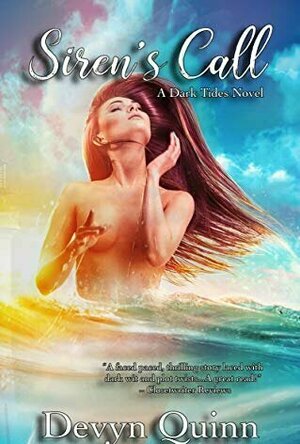
Siren's Call (Dark Tides #1)
Book
Between desire and love there are some things that can’t stay buried, even in the deep of the...

SeaConditions
Weather
App
SeaConditions is a unique and fully integrated access point to the meteorological and oceanographic...

Low Carb Diet - Recipes to Lose Weight
Food & Drink and Health & Fitness
App
New year, new you! Low Carb Diet provides hundreds of low carbohydrate recipes to help you lose...
Merissa (13952 KP) rated Down to the Sea (Mystic Beach, #1.5) by Aislinn Archer in Books
Jun 17, 2022 (Updated Jun 19, 2023)
DOWN TO THE SEA is an overlap story in the Mystic Beach series. It tells the story of Aedan and Brighid - how they meet, how they become lovers and friends (and I use that order specifically), and how they both have trials to face.
Events that happened in Once Upon a Dream from Hunter's perspective, we now see from Brighid or Aedan's. This definitely helped fill the gaps and you see the reasons now for things Brighid did or said.
Aedan has his own love who hasn't 'woken up' yet and he and Brighid decide to pass the time with each other. He is a priest for a Manx Sea God - Manannán mac Lir. This means he has his own insights but he certainly doesn't see everything.
Apart from Brighid's visions, there isn't much paranormal here yet, although I'm sure that's coming in future books. I am loving this story and how the characters change and grow throughout the story.
One thing I have to say - and I know I will be in the minority here - but I got bored with the sex scenes between Aedan and Brighid. It says in the blurb the steam factors are high, and they are. It's just... I discovered I wanted more of the connection, the mysticism, between the two of them, rather than the sex. I found myself skipping over the sex scenes (unlike me) to get the visions or OoB experiences at the end. I loved it when the author changed it slightly near the end so we knew what they were doing but didn't need everything laid out.
As I say, this is my opinion, and it certainly didn't stop me from enjoying the rest of the story! I am now waiting (im)patiently for the continuation of Hunter and Brighid's story, content with waiting for Aedan's simply because I know it's coming.
If you love Ireland and the Irish Gods, I definitely recommend this book and series.
** same worded review will appear elsewhere **
* A copy of this book was provided to me with no requirements for a review. I voluntarily read this book; the comments here are my honest opinion. *
Merissa
Archaeolibrarian - I Dig Good Books!
Jun 12, 2022
Events that happened in Once Upon a Dream from Hunter's perspective, we now see from Brighid or Aedan's. This definitely helped fill the gaps and you see the reasons now for things Brighid did or said.
Aedan has his own love who hasn't 'woken up' yet and he and Brighid decide to pass the time with each other. He is a priest for a Manx Sea God - Manannán mac Lir. This means he has his own insights but he certainly doesn't see everything.
Apart from Brighid's visions, there isn't much paranormal here yet, although I'm sure that's coming in future books. I am loving this story and how the characters change and grow throughout the story.
One thing I have to say - and I know I will be in the minority here - but I got bored with the sex scenes between Aedan and Brighid. It says in the blurb the steam factors are high, and they are. It's just... I discovered I wanted more of the connection, the mysticism, between the two of them, rather than the sex. I found myself skipping over the sex scenes (unlike me) to get the visions or OoB experiences at the end. I loved it when the author changed it slightly near the end so we knew what they were doing but didn't need everything laid out.
As I say, this is my opinion, and it certainly didn't stop me from enjoying the rest of the story! I am now waiting (im)patiently for the continuation of Hunter and Brighid's story, content with waiting for Aedan's simply because I know it's coming.
If you love Ireland and the Irish Gods, I definitely recommend this book and series.
** same worded review will appear elsewhere **
* A copy of this book was provided to me with no requirements for a review. I voluntarily read this book; the comments here are my honest opinion. *
Merissa
Archaeolibrarian - I Dig Good Books!
Jun 12, 2022