
Search

Gareth von Kallenbach (980 KP) rated Electric Slide (2015) in Movies
Aug 6, 2019
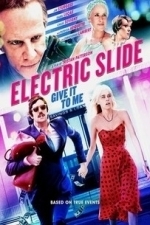

Today’s choice for your consideration is the 2014 film ‘Electric Slide’. A biographical crime film based on the life of antique/furniture salesman turned bank robber Eddie Dodson.
Starring Jim Sturgess, Isabel Lucas, Chloe Sevigny, Patricia Arquette, and Christopher Lambert, ‘Electric Slide’ opens in 1983 Los Angeles. Disco is nearly dead and Rock-n-Roll is putting the final nails in its coffin. By day, Eddie Dodson (Jim Sturgess) is a hip antique furniture salesman (there’s a contradiction in terms) catering to the rich and famous while in engaging in some petty thievering from his customers on the side. By night, he moves with the drug-fueled parties from one mansion to the next. A chance encounter at one of these parties introduces him to the beautiful and aloof Pauline (Isabel Lucas). Eddie and Pauline are immediately smitten with one another as though destined by fate. At about the same time, Eddie’s carefree lifestyle is coming back to haunt him as loan sharks finally catch up to him and his former benefactor Roy Fortune (Christopher Lambert) comes calling demanding the return of his money. With no other way to repay his debt, Eddie resorts to robbing banks. With Pauline in tow, Eddie uses his charm to talk the tellers at over 60 banks in the L.A. Area into handing over their cash. However, instead of paying off his debts Eddie and Pauline simply continue their life of excess with the police and the loan sharks in hot pursuit.
This film did an excellent job of depicting the ‘L.A. Lifestyle’ of the early 1980s that didn’t involve celebrities, but the folks who you would imagine would be latching on to those said celebrities.
The groupies if you will. The main character Eddie Dodson seems like he was a born con artist … a greasy slime ball who will take you for every thing you have if you let him. He is a bizarrely likable character though and his devotion to Pauline makes the viewer all the more want him to get away with just about any scheme he tries to pull. This is the first time I’ve seen Isabel Lucas in film since ‘Transformers:Revenge Of The Fallen’ or the ‘Red Dawn’ remake and I must say her performance as Pauline was brilliant. To quote another reviewer who screened this film I found myself asking ‘Who is that girl?’ From her first appearance on screen, it’s like you’re immediately drawn to her quiet/mysterious presence. It was also awesome to see Christopher Lambert in a movie once again. Although he’s portrayed a villain previously, I had personally never seen anything where he was the villain. His appearance in this film although brief had me convinced. In my opinion he should pursue more roles as the villain if they present themselves.
One of the movie’s aspects that bugged me though was the soundtrack. The only way I could describe it would be ‘hipsters trying to sound retro’ and they didn’t succeed. The music didn’t sound like it belonged in the timeframe which the movie took place in. There were also far too many clips and scenes where they kicked in the slow motion or decided to have the camera pan or zoom out in some attempt to capture more of the surroundings. They could’ve used this wasted time to include more dialogue and interaction between the main characters in my opinion. Besides the A-List actors they managed to enlist for this film the only thing that saved it in the end was the knowledge that the film was based on a true story. It kinda of fizzled about halfway though and then kicked back in 3/4s of the way through. The film is worth watching visually but the thing that killed it was that it could’ve used more dialogue. I’d give it 2.5 out of 5 stars. It’s worth watching once or twice. Nothing to write home about though.
A Bibliophagist (113 KP) rated Wuthering Heights in Books
Feb 12, 2020


Stands up (2 more)
Enthralling
Unique
Dislikable characters (1 more)
Difficult accents without translations
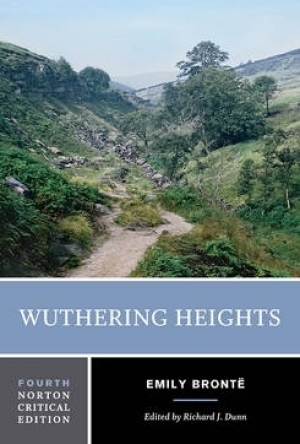
I will do my best to review this, however, I didn't heed the intro, this tour de force really does leave you as quickly as it comes, and reading another book before reviewing this one was a mistake.
In reading reviews prior to reading this book, I learned three major things; 1, people either love or hate this book, 2. I had no idea what I was actually in for, and 3. this may have not been the romantic pick for February I was expecting it to be.
So yes, PSA for anyone out there considering going into this thinking it's a romance. It is NOT. There are love stories in this, absolutely, powerful love stories that made me read quotes to my boyfriend with snarky statements like "if you don't say this at my funeral, did you ever really love me?". But it is NOT a romance. If anything this has more in common with "The Count of Monte Cristo" than it does "Pride and Prejudice". Honestly, the only thing it has in common with other, romantic books of this time, is the time period. But beware, no balls and high society and Mr. Darcy's await you in this novel. I feel a number of the reviews decrying the book, calling the characters "monstrous" both were the orchestrators of their own disappointment by assuming it to be like an Austin, and really need to look in the mirror and reflect on if they are really as perfect as they think they are. Especially if they were in the circumstances that surround this tale.
I find that Heathcliff himself addresses this mistake many readers had going into this book.
"picturing in me a hero of romance, and expecting unlimited indulgences from my chivalrous devotion. I can hardly regard her in the light of a rational creature, so obstinately has she persisted in forming a fabulous notion of my character and actin gon false impressions she cherished."
SO many readers went into this expecting Heathcliff to be some misunderstood brute or one harsh but salvaged by the purity of his love of Catherine. But this isn't the case.
Wuthering Heights tells the story of (I guess technically 3) but really 2 generations of families. Living in the Yorkshire Moors, isolated from high society. We have the Liptons, primmer and properer and more in touch with society, and the Earnshaws which become a little rough around the edges in their isolation and loss. Papa Earnshaw has two children, Catherine and Hindley, and adopts a small boy of unknown heritage but is implied to be Romani or of mixed race (sorry Tom Hardy and nearly every portrayal of Heathcliff), that he names, simply, Heathcliff. He loves Heathcliff, and dotes on him greatly, much to the chagrin of Hindly who grows to resent Heathcliff, treating him terribly until Hindly leaves for school. Catherine and Heathcliff become great playmates, their care is given primarily to a maid scarcely older than them, as Papa Earnshaw is a single daddy. They are wild things, as children I would assume would be, in such isolation as the Yorkshire Moors in a time before the creature comforts and entertainment we have. They grow very close, obsessively close. Upon Papa Earnshaw's death, Hindley returns (at around the age of 23) to run the household, and take over the care of these two youngsters, one of which, he hates. So, Cinderella-style, Heathcliff gets treated worse and worse and treated like a servant rather than the adoptive child that Papa Earnshaw loved so dearly. Suddenly Heathcliff is nothing, treated terribly, and has the most important thing in his life banned from him, Catherine. Meanwhile, the Liptons also have two children, not wild, but spoilt in their own ways, Edgar and Isabella, close in age to Heathcliff and Catherine. When H and C run off on a camping adventure and find themselves at the Lipton's house, Catherine is injured and stays with the Liptons, in their higher society for 5 weeks. Leaving Heathcliff to the abuse of her brother and further isolation. She returns much more a lady and with her connection to Heathcliff slightly burned. In an attempt to protect Heathcliff, and because Heathcliff is now no more than a servant and not an option to marry, Catherine intends to marry Edgar. Causing our resident bad boy to run off for a number of years. Only to return a proper, but still broody gentleman, and confuse Catherine's affection much to the displeasure of Edgar.
Now, this is where a number of shows and movies end things. With a focus on Catherine and Heathcliff's whirlwind romance, obsession. It has some of the most to the point and beautiful lines regarding love, not all flowery, not "I love you most ardently" but rather cries of "I am Heathcliff" by Catherine. Absolutely heart-rending, even though I didn't like Catherine. But this is not where the book ends. The book goes on to follow Heathcliff's obsession with revenge, with his treatment as a child, his rage against Hindley, and against losing Catherine to Edgar. He spends years slowly ruining everyone's lives. Not that you could really ruin Hindley's life, he was a mean drunk. But he even goes as far as to meddle with the next generation, Hindley's son Hareton is raised terribly and is a bit of a wild thing (those his redemption and love story is quite beautiful), Catherine's daughter Cathy and Heathcliff's son Lipton are whisked up into a big scheme by Heathcliff to take everything. Heathcliff even marry's out of pure spite.
Love does not redeem this man, he's barely an antihero without his youth story. He is angry and passionate and obsessed. Which for the first half of the book I didn't fault him for, but he does do some damnable things in the second half that you cannot argue away. No matter how romantic and beautiful and heartrending his lamentations can be. I was quite the character arc, quite the tale of revenge and loss. He was unredeemable because of his big sprawling schemes and harsh intentions. Catherine for me was unredeemable because she was an obnoxious, selfish thing, that honestly if Heathcliff had stopped thinking about two minutes would have found a better woman in every town. She whined and treated Edgar (who was honestly super sweet) so terribly, she had an anger problem and would work herself up until she was sick. But it is in this imperfection that I fell in love more with the book. Here is something unique and real, this is no Elizabeth Bennett. The isolation and hermetic lifestyle created very different characters than what we see in Jane Austin or even in Emily's sister's novel.
It's no wonder this book was harshly critiqued upon release, here is a woman, writing a revenge story, with love stories in it. That based on the biographical intro had some parallels to her own life. She lived an isolated existence, surrounded by the death of the majority of her family young. She was in her late 20s when she wrote this and died a year after publication. She made humans of monsters and monsters of humans and wrote something unexpected and truly unique.
It's hard for me to explain, amongst the harshness and bleakness of this novel, why I loved it so much. But I did, I loved every bit. The anger, the passion, the love, the scheming, I loved it all.
I also feel it's important to note that this whole story is told by a maid to a new tenant. So the narrator is unreliable. Were these people truly this way? Or is it clouded by this maid's opinions of them? How much is omitted due to the maid not being privy to an event?
Truly a fantastic read, that punched me in my chest and gut, grabbed and twisted my insides and refuses to let go. I would argue it's a cult classic rather than a classic. So please, shed all preconceived notions of what this book is, shake that Austin out of your mind and read this tale of obsession and revenge. It's well worth it.