

Joe Goodhart (27 KP) rated Ultimate Comics Spider-Man by Brian Michael Bendis, Volume 1 in Books
Nov 30, 2020
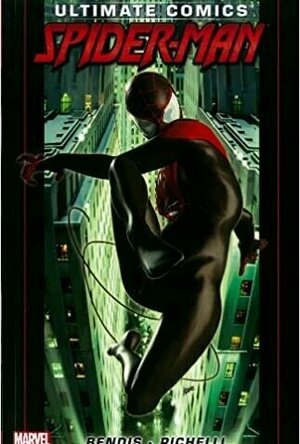
Since that time, I have experienced what I can think of no word to better describe it other than an <I>awakening</I>. Much of it was the ignorance I was raised in - a racist father, a mother who followed his ideals because she was co-dependent, lacking any autonomy. It's like a veil was lifted from my eyes and I can see/think a lot more clearly. Far more acceptance and understanding now in my life, and I quite like me much more.
Now, that said, since my <I>awakening</I>, I went and checked out the first volume, as it was on sale on Comixology. Can't think of a better reason to check out what was previously, for me, a much overlooked tpb!
Man, I just want to say that I share many of the others' feelings: this was a fun series! The 616 Spider-Man hasn't been that much fun in far too long a time! He captured the youthful innocence of the character, but also exhibiting maturity and sense of honor that was not common for his age.
Those who have known me are aware that I am not a fan of Brian Michael Bendis. I felt he excelled more with his own characters (like SCARLETT, which I loved immensely) than taking on the task of writing for existing characters. However, here, I felt that he was top of his game, offering us a Spider-Man that this world truly needs!
I don't really want to do this, as 95% of the book was beyond awesome, but the inclusion of ULTIMATE FALLOUT #4 (of 6) was the only negative thing I can offer about this book. The story is awkward as it shows us Miles already in costume, already testing out his newfound powers and abilities. I felt that it made reading Miles' story after it confusing at first. It really brought nothing to the story.
Other than that, the book was solid! Bendis' writing was hot as heck, fun yet not as overly wordy as he can be known for. And assigning Sara Pichelli the task of illustrating Miles' adventures was gold! Her pencils are always tight, giving each character their own distinct visual persona! All across the board, this book was so much win!
Don't be like I used to be: read this book, because you, too, will believe in Heroes again!
Joe Goodhart (27 KP) rated X-Force, Volume 1: Angels And Demons in Books
Nov 30, 2020
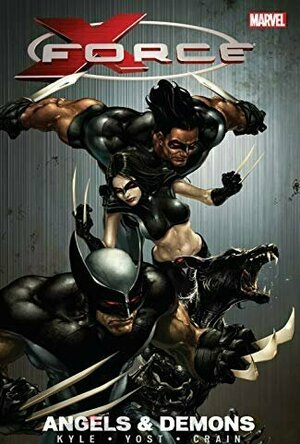
Unfortunately, I was trying to read X-FORCE at a darker point (no pun intended) in my life. Long story short, I dropped the series after the third issue.
Fast forward to now.. I am at a better place mentally/emotionally (for the most part. Some days are better/worse than others). In I went, gobbling it up at a brisker pace than I could have imagined, bearing witness to a hitherto unheard of trail of carnage in an X-related book!
Craig Kyle and Christopher Yost were responsible for the creation of the character of X-23, where she first appeared in the animated series X-MEN: EVOLUTION back in the early 2000's, so I had an inkling of what to expect. However, the animated series was tame as heck compared what went down. If you have had the opportunity to see the movie LOGAN, it was that kind of intensity that was going on in these pages!
From the start, it was a team that Logan did not believe in, and he told Cyclops that in so many words (and a punch to the jaw!). However, as Cyclops told him, these are dark times, and to combat what is about to come, a "no rules" team, one that would be off-the-books is necessary! Logan does not agree with the team as whole, but he goes along with their first mission, as he feels the need to keep an eye on them, as well as watching out for Laura (Cyclops' assigning her to the team earns him the sock on the jaw!).
A lot of blood, a boatload of hurt, and a whole lot of things you mostly likely will not be able to unseen. All in the name of making it safe to be a mutant!
Kyle and Yost's characterizations are spot on, never wavering or disappointing. The characterization for Logan is particularly good, as are that of the Purifiers, the series', and mutantkind's, Big Bad. From the art to the writing, everything about this book, and clearly the series as a whole, is one hundred percent!
I won't lie, this is probably one of the darkest X-books you will ever read! The only one darker that I can think of is OLD MAN LOGAN. However, if you can handle angst-heavy, zero happy endings, then this is definitely for you! I can't recommend it enough!

BankofMarquis (1832 KP) rated Enola Holmes (2020) in Movies
Oct 18, 2020



So...I eagerly awaited the Netflix treatment of the "younger" sister of Sherlock Holmes in ENOLA HOLMES -and, I gotta say, I wasn't disappointed.
Based on the Young Adult series of novels by Nancy Springer, ENOLA HOLMES introduces us to the (heretofore unknown) younger sister of Sherlock and Mycroft Holmes. Raised by a fiercely independent mother in the late 1880's, Enola goes searching for her when she goes missing and gets mixed up in the "The Case of the Missing Marquess" along the way.
Millie Bobbie Brown (STRANGER THINGS) is a winning, charismatic (enough) performer as Enola. She is a steady and sure hand at the helm of this ship throughout the course of this 2 hour and 3 minute adventure. While I would have liked her to command the screen more with her presence, she does enough to make it a good, solid, effort.
The supporting cast is just as good. Helena Bonham Carter (FIGHT CLUB) is perfectly cast as Enola's (and Sherlock's and Mycroft's) mother - she has that fierce streak of independence and "don't mess with me" energy while carving her own path. She is the type of character that one would go looking for if she went missing. Sam Claflin (HUNGER GAMES: CATCHING FIRE) is finely unrecognizable (at least to me) as Mycroft - written in this piece as the more "traditional" of the Holmes family and Henry Cavill (MAN OF STEEL) brings a strong arrogance to his portrayal of Sherlock. He also brings something else - heart - to this character, a character trait that has "traditional" fans of this character up in arms. For me, it works well in the context of this film.
As for the film itself - it is good (enough). I found myself enjoying the mystery and the characters and enjoyed my time in this world. It's not anything new, but it's like putting on a pair of old shoes - comforting to wear.
This is an adaptation of the first book of the series, and I, for one, hope that there are more. It's a winning combination that was pleasant to watch.
Letter Grade: B+
7 1/2 stars (out of 10) and you can take that to the Bank(ofMarquis)

Sea Weather Professional
Weather and Education
App
Sea Weather Professional provides nautical Information for the Atlantic, Pacific, North Sea, Baltic...

Hello Kitty Lunchbox
Games and Entertainment
App
Budge Studios™ presents Hello Kitty Lunchbox! Join Hello Kitty in the school cafeteria to choose...

Whoowasit? - Children's game of the year 2008
Games and Entertainment
App
Whoowasit? has been nominated in the categories „Bestes Kinderspiel“ (best game for kids) and...

Colt Express
Games
8.5 Rate It
App
The game officially transposed from Colt Express, the famous train robbery boardgame. Plot your...
BoardgameApp

Emoji Emoticons Text Pic Art & New Stickers 2017
Productivity
App
WOW - HOW AWESOME IS THIS - HOT - HOT - HOT - 7 APPS IN 1! The possibilities are endless - GET IT...

V LIVE - Broadcasting App
Entertainment
App
"V" is an app that lets you watch the personal broadcasting videos of celebs on your phone. You can...

Munchkin Match
Games
App
Unique gameplay around every corner with many different strategies to win. Start your fantastic...