
Search
Diffords Cocktails #8 HD
Lifestyle and Entertainment
App
Cocktails #8 is the top drinks app according to 'The Sunday Times App list', their definitive guide...
Sophia (Bookwyrming Thoughts) (530 KP) rated Telling Christina Goodbye in Books
Jan 23, 2020


Original Review posted at <a href="http://bookwyrming-thoughts.blogspot.com/2013/02/review-telling-christina-goodbye-by-lurlene-mcdaniel.html">Bookwyrming Thoughts</a>
Original Rating: 3.5
*Formatting and image(s) have been lost due to copy and pasting.
I hate commenting about how much the synopsis gives away. I don't find much joy in reading the book when the synopsis gives spoilers away. And I hate giving it a lower rating because of that synopsis. But as much as I want to like this book, I'm gonna have to give it a facepalm. The synopsis practically gave away EVERYTHING. From the synopsis, cover AND title, the book already gives these things away (I don't think this counts as spoilers since the synopsis already says it):
~Trisha, Christina, Cody, and Tucker are Seniors.
~Best friends, Trisha and Christina are having a great year.
~Trisha is dating Cody. Christina is dating Tucker.
~Trisha doesn't get along with Tucker.
~Christina receives a scholarship from University of Vermont.
~Tucker is controlling of Christina and wants her to stay.
~They get into a car crash after a basketball game. Trisha is injured, Cody's in a coma and Christina's dead. Yet Tucker is all injure-less.
Not to mean it in a bad way, but that gives practically the entire plot and some other stuff. Maybe even the entire book. Besides some things, such as (those who read it would know the answers already, but I'm speaking from the reader's perspective of just examining the book at the bookstore and reading the synopsis and such):
~Does Cody wake up from the coma?
~Do those effected by Christina's death find the courage to move on and heal?
~Do Trisha and Tucker get along later?
~Etc, etc. One can only know the answers to their many questions when fully reading a book.
But despite the synopsis giving so much away, Ms. McDaniel still leaves the reader, regardless of whether just staring at it at the bookstore or anyplace or have to read it due to required reading, with many questions. Props for not giving the full story away, especially the ending. And while some of us may love spoilers to the point of actually spilling beans, some of us just like to keep things detailed yet vague on what's happening because we just love the suspense building up. It would've been a triple facepalm if the synopsis gave any more away (kinda explains the meme).
If you're still thinking I'm being a bit negative, the only part I found pretty bad was how the synopsis gave it all away (I'm that person who hates too much spoilers and end up predicting and being right majority of the time. I kinda like my dose of keeping me guessing...).
In many good parts (of the pie or something good), Ms McDaniel manages to narrow in with an emotional story while weaving in the meaning of losing a cared one and to not take life fully for granted, because you never know when it will all end and it may be someone or something very close to you. (Kinda reminds me of a sad song...)

Heather Cranmer (2721 KP) rated Miss Peregrine's Home for Peculiar Children in Books
Jun 7, 2018

This review can also be found on my blog <a href="themisadventuresofatwentysomething.blogspot.co.uk">The (Mis)Adventures of a Twenty-Something Year Old Girl</a>.
I feel the synopsis of what the book is about makes it sound a lot better than what it is. I wanted to like this book, I really did. I had high hopes for it. Unfortunately, it didn't do much for me. I was expecting more of a ghost story. Instead I got more of a sci-fi story, and one that wasn't very good.
Jacob's grandfather tells him of a magical island of which he spent his childhood. He shows him photos and tells him stories about the peculiar children he grew up with. As Jacob becomes a teenager, he stops believing in his grandfather's ridiculous stories until something awful happens. Jacob travels to the mysterious island to find out about his grandfather. Little does he know that by going to that island he's put himself and many others in danger.
First off, I thought the word building/setting were fantastic. The author made me feel as if I was on the island. I'll give him props there. The description of the world was beautifully described.
I couldn't relate very much to the characters. I can't really place why that is. I just couldn't connect. I found myself not caring what happened to any of them. Perhaps the author should've spent a bit more time character building to make me relate to at least one the characters. The characters just felt a bit one dimensional. There wasn't even one that I could remotely say that I favourited. Okay, that's a lie. I liked Fiona, the Irish girl, but I only liked her because she was Irish, and I love all things Irish. That's it.
I found the pacing to be a bit slow. I'd read a chapter, then I'd get bored with it and go off to do something else. I really struggled with this book. There are a couple of chapters that the pacing is great in, but it's not until the last two chapters that the pacing definitely picks up.
The dialogue was easy to understand although some Americans may not get all the slang British terms. There was one scene where a character says "I was taking a piss" where he meant that he was joking around. The phrase he meant was "taking the piss" which is a British slang phrase for joking. "Taking a piss" isn't a typo either as it's mentioned a few more times. This annoyed me because taking a piss, is just that, it means urinating. "Taking the piss" means to be joking around. Other than that, the dialogue was good.
The best part of the book was the photographs found within the book. I loved that little touch! I found myself studying the photos and enjoying them a million times better than the actual book.
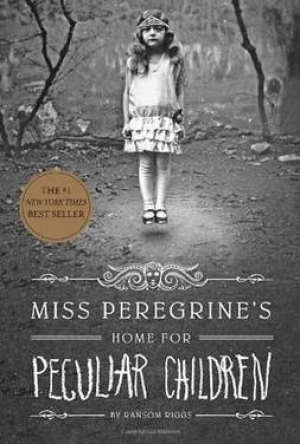
The cover is also something I loved about the book. How freaky does that little girl look??? The German cover looks even better. It's the same photo, just with a green hue. If I was marking the book based on the cover alone, it'd get 5 out of 5 for me.
The title of the book doesn't really leave anything to make you wonder what the books about. It says exactly what the book is about - a home for peculiar children.
All in all, this book left me feeling empty. I didn't really feel much of anything reading it until I got to the last two chapters where it got exciting. However, I will not put myself through the torture of reading the second book in the series especially as I don't care about the characters or what happens to them. I'm just glad I won this book in a competition and didn't buy it.
I was going to give this book a 2 - 2.5 star rating but the ending saved it a bit.
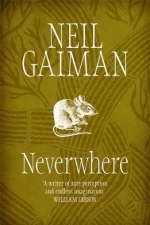
BobbiesDustyPages (1259 KP) rated Neverwhere in Books
Jul 23, 2017


Setting (4 more)
Plot
Characters
World building
Gaiman's writing.
wonderland-esque and oh so good.
This was my first real venture in to the Urban Fantasy genre and I was so surprised I'd never really read anything from it before.
Neverwhere was an amazing book that had my imagination going on a rampage just trying to visualize London below, Gaiman did a wonderful job with combining a wonderland-esque world with modern London and living up to the old saying "No good deed goes unpunished."
The characters from London Below were all so detailed and took on a life of their own even as well as the magic of London Below it all just came off as being so real. My favorite characters hands down was Marquis De Carabas he was just so crafty and I really did not know if he was to be trusted or not, and Mr. Croup and Mr. Vandemar were some of the best villains I've seen in awhile.
The only thing I had a problem with and the reason even though I loved this book couldn't give it a full five star rating was I just didn't care for Richard Mayhew at all through out the whole book I made no attachment to him in the least bit, I know he was supposed to be this average every man type of person that got thrown into this crazy world but he either really annoyed me or was just kind of forgettable and fell into the background...I honestly forgot he was suppose to be the Protagonist.

Tools for Project Management, Workshops and Consulting
Book
"This book is of the kind you always wanted but didn't think would or could ever exist: the...
Leanne Crabtree (480 KP) rated #Rev (GearShark, #2) in Books
Jan 6, 2021

I got this from the Kindle Unlimited Library after having it on my Amazon wish list for several years after finishing book 1. I'll admit now that I've forgotten a lot of what happened with it being so long ago (2016.)
It starts with Drew trying to get himself under control after being dumped by Trent in an effort to stop any abuse they may face in the future for being gay, especially since Trent is nursing some bruises and cracked ribs after being jumped by four members of his own fraternity. They argue for a while before it becomes obvious that they're stronger and better together and figure out how to tell everyone that they're a couple.
I think the fact that it's been 4 years since i finished the first book ruined this one for me. I didn't remember a lot of what went on but my 4.5 star rating tells me I fell in love with these two. They are pretty great separately but together? They're super cute.
As for their parents, what is up with them? They are your children! You're supposed to love them regardless of their sexuality. Why does who they fall in love with have to change how you feel about them? I really don't get it. They're still the same person you raised for the last however many years.
This is most likely to be my last book of 2020 and I'm glad it's been a good one - I still wish I'd come back to this sooner.
#TrewLove
Merissa (14224 KP) rated M.M. Scrooge (Monsters & Mayhem) in Books
Nov 9, 2022

M.M. SCROOGE is part of the Monsters & Mayhem series, and as you can figure out from the title, is a retelling of A Christmas Carol.
Max is a trainer at a gym and thinks that if he makes enough money, he will be happy. He's not bothered if his making enough money means he poaches clients from his fellow trainers. In fact, he's not bothered by how anyone feels at all. Daniel is a sweetie who is reeling from his father's death of a heart attack at only 50. As a professor, Daniel is worried about being too sedentary and following in his father's footsteps. After a quick but steamy time in the shower together, Max and Daniel separate for about half the book, as it follows them on their own paths.
Luckily for me, the horror rating on this is quite low, although that Bogeyman showing up as he did gave me the chills! The kink is high and I love how everything was something Max could use with Daniel.
The pacing was very fast and, being 100% honest, I don't believe Max would have completely learnt his lessons that fast. Perhaps the threat of the Bogeyman returning was threat enough to keep him honest?!
A short and kinky story that I thoroughly enjoyed and have no hesitation in recommending.
** same worded review will appear elsewhere **
* A copy of this book was provided to me with no requirements for a review. I voluntarily read this book, and the comments here are my honest opinion. *
Merissa
Archaeolibrarian - I Dig Good Books!
<b>First Time Rating:</b> 5 out of 5 (Give me a break, I was a kid.)
<b>Second Time Rating:</b> Ya girl is debating between a 2 or a 3, but I'm feeling nice, so 3 it is.
Adapted from the novel by Rick Riordan, The Lightning Thief: The Graphic Novel by Robert Venditti follows Percy Jackson as he journeys with Annabeth Chase and Grover Underwood across the US to retrieve Zeus lightning bolt before the summer solstice.
As an avid fan of the novels in middle school when the movie was in production, I was curious about the graphic novel version. When I first read The Lightning Thief: The Graphic Novel shortly after it came out, I just enjoyed myself. Reading it now with a more critical eye, I still enjoyed the adaptation, considering how poor the movies were. The graphic novel remains faithful to Riordans book and while most of the main storyline is still included, it does cut out some scenes and the story would have been better if it were longer.
In addition to the briefness of the graphic novel, I also noticed during my second read that the characters appear to be much older than they really are. There were moments in the story where if I didnt read the original novels or knew the plot really well, I would have forgotten that Percy and many of the other characters are around 12 years old.
Overall, The Lightning Thief: The Graphic Novel is perfect for those who are avid fans of Riordans original series and want a recap, but not the greatest intro for those who want to read the graphic version before the novels.
<a href="https://60secondsmag.com/the-lightning-thief-review/">This review is originally posted on 60 Seconds Online Magazine</a>

Shredder Chess for iPad
Games and Education
App
Shredder, the most successful chess program ever, is also available for the iPad. You can play...
BookblogbyCari (345 KP) rated Sapiens: A Brief History of Humankind in Books
Aug 5, 2018
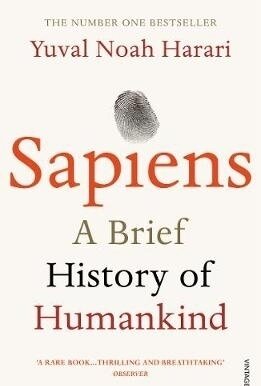
This book was chosen to be the first book read and discussed in an online non-fiction book club I recently joined – and I’m glad we did choose this one!
The book is an overview of homo-sapiens as a species, and how we have changed over the ages, and what we have done, before finally touching on where we are going. As such the book is a cross-pollination of history, sociology, and economics.
As you may expect from a book with such a broad scope, there are some sweeping statements, and rather than being a neutral dispassionate account, Harari makes his opinions very evident. However rather than being irritating, I feel this makes for a more entertaining read.
The book begins by introducing the theme of homo-sapiens in the context of the presence of the other human species that used to exist. He then goes on to describe the cognitive and agricultural revolutions. Then it’s the establishment of patriarchal social hierarchies across the world, largely based on historical conventions. Next Harari states that the purpose of religion is to unify fragile societies with superhuman legitimacy.
Harari then moves on to the scientific revolution, describing how an admission of ignorance by Europeans, along with a desire to discover and conquer new lands was key to the movement.
The conversation moves swiftly then to economics, using the fact that a bank can loan £10 for every £1 it has, to argue that our economics is based on trust in the future. Harari states that a country’s credit rating is more important than its actual resources. Harari describes capitalism and consumerism as being 2 sides of the same coin with two commandments: rich must invest, rest of us must buy. Consumerism, he says, aims to convince people that indulgence is good and frugality is self-oppression.
Harari also argues that, now, instead of relying on local communities the individual relies on the market or the state. Parental authority no longer sacred, he says, and state intervenes. And so when Harari asks if we are any happier now than when we were hunter-gatherers, he argues that our rise of wealth is offset by the disintegration of community life.
Harari also speaks of ecological degradation and our tendency to treat other species as a means to an end, for example, the farming of cow's and chickens has cut years off the lives of both, since they are killed as soon as they reach their maximum weight.
In the final chapter, Harari speculates on the future of mankind. With improvements in medical knowledge comes new ethical conundrums, he says. How will we handle the options of genetic engineering? What will the advent of artificial intelligence mean for humanity?
In my book club, we found that the book generated a lot of talking points. What would the world be like now, had the other species of humans survived? Why have so many cultures across history and the world had patriarchal hierarchies? Can societies improve over time, or is one style better than another? Can communism be considered a religion? Are human rights really just a figment of our collective imagination?
Whilst not everyone in my book club enjoyed the book equally, I would say that it’s as enlightening as it is thought provoking. By the end, it was hard to argue with the author's conclusion that homo-sapiens are like dissatisfied and irresponsible gods.