
Search
BookblogbyCari (345 KP) rated The Naked Future in Books
Aug 5, 2018
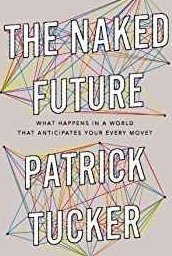

Book Review by Cari Mayhew. Rating 7.5/10
This is a book about how the digital footprint we leave behind us can be used to make predictions about our future in all aspects of our lives. But are we seeing the coming to being of a dystopian science fiction, or are we tapping into a new superpower?
Every app on every device we use leaves a digital trail about us, and this has implications in the fields of medicine and the spread of infections, education and learning, and crime prediction, through to movie preference and dating.
The book predominantly examines the value to society in general but also looks at the benefits to the individual. Of course, these benefits come at a cost to our privacy, which the book also briefly addresses. Each chapter is centered on its own topic. I will mention each but in the interests of brevity won’t go into detail on each topic.
Chapter 1 begins by describing how certain apps can be extremely useful warning providers, but by the end of the chapter, we are looking at how your smartphone apps can be used to locate you, even when your GPS is turned off and you’re not geo-tagging posts or tweets. With modern statistical models and enough data points, it’s possible to predict where you will be down to the hour and within a square block one and a half years from now. Turning off your GPS doesn't actually make you less predictable, it just makes your predictability level harder to detect - your future remains naked.
Similarly, in Chapter 2 which examines deliberate self-tracking, Tucker notes that Fitbit users who are confused or ignorant of the device’s privacy settings are inadvertently sharing the data details of their sexual activity.
This seems like frightening stuff, but then the conversation turns to more benevolent uses of such technology. Chapter 3, by way of an imagined story, examines how such technology can be used to predict the spread of dangerous infections, including the identification of new strains of virus as new mutations occur.
Chapter 4 looks at the use of such technology in weather forecasting, and how it’s been used to make way for insurance against the effects of the weather for affected businesses. Chapter 5 explores how movie/book choice and ratings can be used to predict what makes a good movie/book.
We go back to the frightening stuff in Chapter 6. Here Tucker talks about how the smartphone has become the ultimate shopping accessory. Knowing what habitual time an individual wants a coffee, cig, or beer, is ideal for online advertisers, who will be able to send you a voucher/coupon or a mere suggestion right there on the spot. There could also be surveillance systems examining what you pick up and consider buying but don't put into basket /trolley. Tucker goes on to describe how data brokers such as Acxiom have begun selling on to advertisers access to not only your data to also to your future decisions.
Chapter 7 looks at education and learning, and makes the following good points: “What telemetric education offers is the chance for all students to raise their hands and be heard, without fear of confirming some unflattering, broadly held perception about their social group.” And “Imagine for a moment the power of knowing beforehand how well you would perform on a test but how disempowered you would feel if that same future was naked to your competition, or to your future potential employers.”
I like the title of chapter 8 “When Your Phone Says You’re In Love”. Here Tucker tells how online dating sites have become a living social science lab. Again here your personal details can be sold on. In the future, you could be rating your actual get-togethers on the app. Already invented is a “sociometer” which detects unconscious biological signals which show what role you’re taking in a conversation, and can then produce predictions on how the rest of the conversation will go.
Chapters 9 and 10 look at predictions in the where, when and who of acts of crime. He discusses where it has worked so far. But on this Tucker says “Predictive policing in the wrong hands looks less like a boon to public safety and more like a totalitarian hammer.”
The book concludes with Chapter 11, titled “The World That Anticipates Your Every Move”. Here one interviewee said as “Privacy is a blip on the radar of history.” Indeed the chapter ends with an obituary to privacy, where Tucker says “we will feel increasingly powerless against the tide of transparency rendering this planet in a new form as surely as the movement of glaciers carved our canyons and valleys.”
I’ve highlighted here the more worrisome aspects of the topics, but it’s important to note that Tucker does aim to offer a prescription for the situation, though it’s spread out in occasional paragraphs here and there rather than as a useful reference at the end. That said I found the actionable advice was rather brief and unoriginal.
Tucker presents a fair and balanced view of this important and highly relevant topic of our times, and the book is clearly well-researched. Some chapters show a little humor which was fun, but although the book is aimed at the layman, I often felt like I was reading a science textbook. The book is a real eye-opener, especially if it’s something you hadn’t given much thought to. The overall message of the book is clear: our data is already out there, but it’s ours first and foremost, and we can be savvy and use it to our advantage.
Sophia (Bookwyrming Thoughts) (530 KP) rated Ever After (The Faded Trilogy, Book 3) in Books
Jan 23, 2020


One thing I was excited for in Ever After was the final battle between The Chosen Ones and The Forces. Ever After is the sequel to Faded and See No Evil, and is the final book in Chloe Miles' Faded Trilogy. An entire year passes between books 2 and 3.
I have a new book boyfriend. It's Ryan Landon, who we actually get to meet briefly in book 2. He plays a pretty major role in book 3, and is FULL of puns. Unfortunately, it's so sad with what happens to him in the end (how could you? O_o), but I do like how <spoiler>gives Hunter and Savannah a chance for a happy ending.</spoiler>
Throughout Ever After, we get a deeper view on Gwen as a character and how she came to be what she is instead of what we, as readers, know her to currently be. Not only that, but we also get flashbacks regarding Rose's and Oliver's demise as well, which gives them a greater depth as characters. In my opinion, this is more like a book of confessions in a way.
But the final battle between Gwen and Savannah was oh so VERY disappointing. Here's a breakdown of what goes on in that particular part of the book, and I make warning that there may or may not be spoilers lingering about:
1. Party! Everyone's happy and dancing and happy dancing! That goes on for a big part of that scene.
2. Cake time! Savannah makes a wish and blows out candles. Oh, and Gwen enters, pulling off her facade as a Blondie and has Momma Fraser as hostage. Everyone else? OMG!!! I have the perfect comic scene for this. I, as in, this reviewer. Not everyone else.
Here's what goes on afterward: they talk. And talk. And talk. And talk. Throwing threats around, and basically trying to negotiate Momma Fraser safely out. Really, the only thing interesting out of the ENTIRE scuffle was Hunter. He does something that he hasn't done before. But I call it a scuffle because the "battle" lasted for what? 30 seconds tops? Basically a ball of glowy appears in both Gwen's and Savannah's hands, and it grows brighter. And brighter. And brighter. And then they let go at the same time, there's a blinding flash, and a furious roar of NOOOOOOOOOOOOOOOO!!! Then it's over. <i><b>At approximately 67% of the Kindle edition.</i></b>
<img src="http://4.bp.blogspot.com/-dDmenRrorS8/U7tBs38qCiI/AAAAAAAADk0/w3mTLSXlQXk/s1600/I+can't+-+Stitch.gif"; border="0">
You guys have no clue how much I was so disappointed. I was expecting something absolutely spectacular, spellbinding, unforgettable battle finale. But I get something... unsurprising. I'm all, "She's dead? FABULOUS!" *swishes away in party dress* I've seen better final battles.
<img src="http://4.bp.blogspot.com/-vNtPY-9X_d4/U7tBtg7O_WI/AAAAAAAADlA/o664aLvTcPo/s1600/Not+Good+Enough.gif"; border="0" height="180" width="320">
Now, the rest of the book didn't do too much disappointing, but Ever After seems like a very lighthearted read. It's a very happy, cheerful read very much like flying on cloud nine.
I even have a song it's called Happy.
--------------------
Review copy provided by the author for review
original rating: 3.5 out of 5
original review posted at <a href="http://bookwyrming-thoughts.blogspot.com/2014/08/review-ever-after-by-chloe-miles.html">Bookwyrming Thoughts</a>
<a href="http://bookwyrming-thoughts.blogspot.com/"><img src="http://3.bp.blogspot.com/-cG5gfBqJVzk/VA5BIojjZ9I/AAAAAAAAD1g/7srLUfpAGEU/s1600/banner.png"; /></a>
Night Reader Reviews (683 KP) rated I Will Find You in Books
Jan 9, 2020
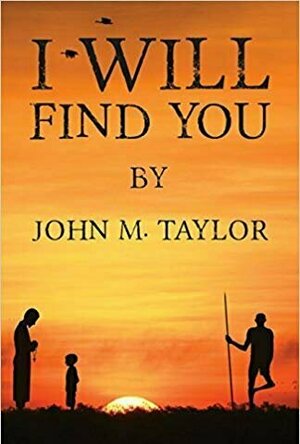

I Will Find You by John M. Taylor is a painfully beautiful story of one boys love for his mother and his journey to be reunited with her. He travels from England to Australia and spends some time in the outback as well as aboard ships before returning home.
Nick Thorne, once Robbie Spalding lived in England where his father was part of the Airforce during the war. When his fathers plane is shot down his mother joins the Land Army but she falls and suffers a major injurer. Nick is taken to an orphanage temporarily and only learns of his mothers death when he is told he is being sent to a family in Australia. When he gets to Australia he finds no family is waiting, instead, he is taken to Clontarf where the Brothers beat, neglect, and abuse the boys. When Nick turned thirteen he was sent to a Church Farm to work but it was just like Clontarf, it was here that he managed to escape.
With the help of an Aboriginal boy, Gidga, Nick survives the Australian outback and makes his way to the Aboriginals village. Even though Nick likes the Aboriginal people he still believes his mother is alive and leaves to go find her. His journey is not an easy one as he signs on with fishing ships, understanding that he wont be able to do anything without money. Most of the time it appears that he will never find anything out about his parents or his past because it seems that none of the departments he is directed to can help him. To make matters worse no one wants to take responsibility for his old records. In a final attempt to find anything out Nick goes back to his old hometown in England.
I enjoyed all the twists and surprises in Nicks life. I wanted to keep reading to find out where Nick would find himself and who he would meet there. Nick is also the type of character where the reader is emotionally connected to his story right away. What I did not care for was the fact that there was a joke on page two hundred and eighty that I did not understand at all. While that does not affect my overall opinion of the book I feel I am not the only one confused. Also when Nick starts trying to track down his records things get very repetitive. I can only imagine the frustration he felt as I was frustrated by just reading it over again multiple times.
The book is designed with adult readers in mind. There were numerous events in the book such as boys having to share a bed with one of their caretakers or being beaten to the point of passing out that was hard to read. With that in mind, this book is more suited for mature readers. Overall I give this book a rating of 4 out of 4. This book offers tragedy and hope at the same time. The back of the book even offers some factual information about what happened to other children like Nick who were sent to Australia.
https://nightreaderreviews.blogspot.com

**✿❀ Maki ❀✿** (7 KP) rated The Warrior Heir (The Heir Chronicles, #1) in Books
May 3, 2018
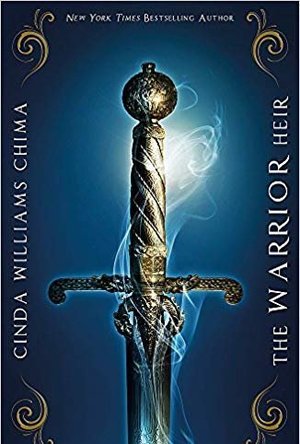

[a:Cinda Williams Chima|125308|Cinda Williams Chima|https://d.gr-assets.com/authors/1291420167p2/125308.jpg] was my biggest takeaway from [b:The Way of the Wizard|8121665|The Way of the Wizard|John Joseph Adams|https://d.gr-assets.com/books/1297656860s/8121665.jpg|12917149]. I absolutely adored the short story of how Linda and Hastings met, and knew that I had to read the actual series.
You can definitely tell that this was written a few years before the short story in The Way of the Wizard. The writing isn't quite on the same level - all of the key elements are still there, but in a rawer form.
That's not a bad thing. I'm not insulting the quality of the writing, at all. It was still a very enjoyable story, and the writing and the editing were solid. And I'm happy to watch the progression of the narrative, as it gets stronger over time.
...but. If I had read The Warrior Heir before I read "The Trader and the Slave", I probably would have enjoyed this book more than I did. Part of me kept waiting for the dark, grittiness that the short story had, and it never really showed up.
Were parts of The Warrior Heir heavy? Sure. There's a lot of double-crossing, morality, and self-sacrifice in there. But it wasn't quite the same.
Sorry for that slight detour there. I felt that, before I started talking about the book itself, I should explain the factors that went towards my final rating.
Because, in general, I loved this book. It was a lot of fun to read. I loved the "world" and the magic system, I loved the history and explanations of why magic works, and where it came from. The dedication to the magic system was very nice, and much appreciated in such an action-based fantasy book.
The main characters all managed to keep me interested in what was going on (even though there wasn't nearly enough Linda and Hastings in there for me), and the antagonists walked a delicate balance of being evil, and just doing what they thought would be best for themselves, or for those around them. Even some of the protagonists walked that line, which was <i>really</i> nice to see.
Morality - it's pretty important to the story.
There weren't really any surprises in the plot department. It was incredibly easy to guess the various "twists" the book had to offer. <spoiler>Especially anything having to do with Ellen.</spoiler> But personally, I was too distracted by the world-building to overly care about how predictable things were.
Because in Maki-land, well-established magic system > plot.
Night Reader Reviews (683 KP) rated Outland Exile: Book 1 of Old Men and Infidels in Books
Jan 9, 2020
Honest Review for Free Copy of Book
Contains spoilers, click to show
Outland Exile Book 1: Old Men and Infidels by W. Clark Boutwell was very enjoyable to read after I got into it a bit. The book was somewhat confusing to start out but the author unfolds the story layer by layer to slowly explain the world that the main character lives in. The vocabulary in this book made me consult a dictionary a few different times to check words that were strange to me, an unusual occurrence for someone who reads frequently.
The main reason that it was hard for me to initially enjoy the book was because of the authors use of short phrases. These phrases made the reading feel choppy and prevented a nice even flow. I believe this was mainly a problem because it frequently took the immersion away from the story, and jarringly forced me back into the real world as I re-read a section to see if it made more sense. I feel that many readers enjoy the immersion in a fictional world when reading a good book, so this may be a bit of an issue for some.
W. Clark Boutwell also appears to have a very good education, possibly with a large focus on the English language. The reason that I think this might be the case is because of the vocabulary found in the book, some of which seemed unnecessary. Words such as “metaphoric” “adroitly” and “remonstrations” were used, much to my initial confusion. Then there was also “pantomimed”, “sere”, and “realpolitik” that had me searching for a dictionary. On top of the strange wording at times the author also used terms such as “snakelike” and “warlike” with frequency. The amount these words were used make them almost feel overused or like errors.
The amazing plot-line of the story also offers a few different lessons that many people will have to learn in their lives. The first of these lessons is the fact that not everyone, including the government, is not always operating in your best interest. It shows that often the people who are considered to be higher-ups are more worried about themselves and their advancement than the ‘little people’ that they hurt along the way. The book also shows that a simple life is often happier than a technology-filled one, proving that the technology that is supposed to be bringing us together is also causing us to lose touch with other people at the same time. Finally, it brings to light an idea that some might find difficult to accept. That fact would be that not everything you grow up believing is necessarily the truth and that history is almost always written by the winners and the loser’s voice gets lost.
During the course of the story Malila, a Lieutenant for the Unity is sent out to Sunprairie Station with a group of bodyguards in order to repair the station. She then finds herself in the hands of Jesse Johnstone and making her way to Kentucky and stopping at a village across the Ohio River. It is here that she starts to learn just how lacking her life in the Unity was. She also learns just how much of a captive she was in her “free” Unity and how much of her supposed life there was all just an illusion.
What I liked best was watching Malila expand and grow as an individual. The author’s writing made me feel like I actually knew the characters. When tragedy struck I felt real worry and concern for them and did not want to stop reading until I knew what happened to them. On the other side, I least liked the fact that I almost gave up on reading the book early because of how slow and choppy the writing felt. The use of the obscure words made me believe there were multiple misspellings only to find that the words were just typically unused.
The target readers for this story would be young adults, starting at about high school aged and older. Concepts of pleasure sex and a few mentions of rape make this book unsuitable for most younger readers. With all of this being said I would give this book the rating 3 out of 4 because even with it being hard to get into the story was very enjoyable. The plot-line is strong and the life lessons the Malila learns are things that most people should probably learn at some point in their lives. I look forward to reading the rest of the series as it comes out.
Kara Skinner (332 KP) rated Note to Self in Books
Sep 10, 2019
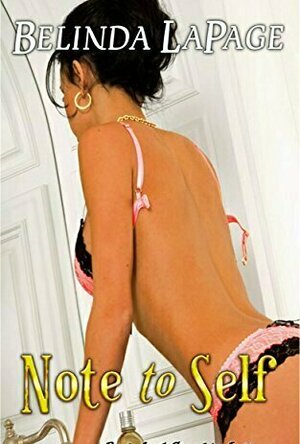
Genre: Contemporary, LGBTQ
Goodreads rating: 3.73 out of 5 stars
My rating: 3.5 out of 5 stars
Anna never considered herself bisexual or a lesbian. She’s totally in love with her husband and happy with her life as a wife, mother, and cop. But that all changes when she meets Susan, a pretty, feminine doctor, who turns Anna’s world upside down. Confused and full of guilt from thinking erotic thoughts about Susan while married to Nick, Anna turns to her journal to sort it all out.
Okay, once this story gets going, it’s great. But in the beginning it is so damn boring. Journal or not, Anna does not get to the frigging point for like four or five pages! I was tempted to go wash the dishes at least twice in the beginning of the book. When the dishes are pulling me away from a book, and not the other way around, something is very wrong.
However, it does read like a real diary, so kudos on that.
Once Anna gets her shit together and actually starts telling what happened, the story gets a lot better. Her inner turmoil is relatable and realistic and makes me like her alot. Susan’s character is also great. Being very girly, Susan has a nice contrast with Anna, and that makes their time together that much sweeter. I always love it when characters are developed, even for short erotica pieces like this one.
I do have a problem with Anna being married, though. Her husband is a great guy who is very supportive of her and their son. He showed up to their son’s kindergarten barbecue, doesn’t mind his wife being “one of the guys”, and doesn’t even get jealous from other men’s stares at her.
It’s really clear that they are still very much in love and unless it becomes clear in the sequel that he’s a serial cheater or hiding huge secrets, (like, “I killed my boss and embezzled five million dollars” type of secret. Not “that purple dress really did make you look like Barney and I didn’t tell you even though I knew pictures were going on Facebook” type of secret) then I’m never going to like Anna’s and Susan’s relationship as much as I could.
Lesbian relationship? No problem. More power to ya. Cheating on a very sweet person? Huge problem. Shouldn’t happen. Burn in hell.
You can read Note to Self on Smashwords for free. I recommend you check it out if it sounds like your cup of tea. Speaking of tea, take some time to read with a cup of it. The holidays are coming up, and you need some relaxation before your life dissolves into chaos. Take care!

Kristy H (1252 KP) rated Heard It in a Love Song in Books
Oct 28, 2021

Layla is recently divorced after a ten-year marriage to a man who never truly appreciated her and subjected her to constant financial and emotional stress. Once a lead singer in a rock band, Layla is now an elementary music teacher struggling to find her place in the world. One thing that brightens her day is her interactions with Josh, the father of one of her students. A single father, Josh was married to his high school sweetheart, Kimmy, for nearly twenty years. He too is trying to find his way now that he's single. Both wary about getting back into the dating grind, Layla and Josh decide to be "friends with potential." But with all their baggage, are they destined for heartbreak?
"And she wasn't lonely, not really. Layla had been lonely for years while she was married, and she'd take being alone over lonely any day."
I didn't dislike this book, but it wasn't the sweeping romance I was hoping for. This one redefined slow burner, as Josh and Layla sloowly made their way toward one another. Most of this is the format--told from both Layla and Josh's point of view, each chapter breaks off to delve into how that particular's character's marriage fell apart. So we may get a few moments of them in the present and then--boom--it quickly flashes back to Josh and Kimmy in high school or Layla and her ex-husband, Liam, meeting when Layla is singing in her band. Each piece is just a snippet, slowly parsed out per chapter and building up to the end of the marriage, so both the past and the present is a build-up. I admire the style, but wow... everything takes time. A lot of time! It made the story feel quite plodding at times.
And, I just couldn't quite find the spark between Layla and Josh. Individually, they were great people, and I liked and rooted for their characters to move on from their past relationships. Together, I just didn't feel that they had "it"--that special something that really makes you want a particular couple to succeed. I certainly desired for each to find themselves again, but I didn't necessarily need it to be with one another. I did, however, have great fondness for Norton, the older dog Josh adopts, and whom Layla often dog-sits. So there you go.
This isn't a bad book, and I know lots of people who enjoyed it. It received a 3-star rating from me, which is *not* a poor rating. It just wasn't what I was hoping for, and I had wanted more passion. But if you enjoy a character-driven read, especially one that really delves into the characters' pasts, you'll find a lot to love here. (Also the cover is simply gorgeous.)

HerCrazyReviews (247 KP) rated Turtles All The Way Down in Books
Aug 24, 2019

Marketed As A Mystery But It Isn't (2 more)
Unhealthy Friendships
Unsatisfactory Ending
Mental Illness Representation But No Mystery
Contains spoilers, click to show
As a casual fan who has watched a few of John Green’s YouTube videos and read a few books of his, I can honestly say he seems like such a genuinely honest and funny person. Plus, I have read a book or two of his in the past (Example: Paper Towns) and while I did enjoy this book there were quite a few things that made me stray away from a five or even four-star review.
The first thing that I felt was a let down in this novel was the fact that the book was actually not a mystery novel but instead dealt with more of Aza’s own anxiety. While I do love the fact that the book dealt with the topic of anxiety and mental illness in what I felt like was a realistic way I am disappointed that there was not as much mystery. To me, it seemed like the book was marketed around the fact that Aza was trying to solve the mystery of Russell Pickett and where he went. I incorrectly assumed that this novel would be some kind of Scooby-Doo mystery. We did see the characters wonder about Mr. Pickett’s “magical” escape and we did get an ending where everything was wrapped up and solved but it didn’t seem like the characters worked that hard towards it and the book was more about Aza’s own self-realization.
Speaking (or technically typing) about Aza’s struggle with anxiety and mental health I felt like the book did a good job of realistically representing the struggles and many difficulties people experience. I will say that I have personally never had a problem with mental illness and while I do have people I love and care for go through it my experiences are mainly from trying to help them. Therefore, I am not necessarily an accurate source when it comes to the reality of mental illness. I am able to see what my loved ones experience but those are on two different scales.
The simple fact is there is nothing pretty about struggling with mental illness. No matter how hard people try no one is able to always able to stay above the rainbow. Everyone has their bad days and Aza’s experiences, while cringe-worthy in some cases (Ex: digging into her fingernail and swallowing hand sanitizer) is the reality for many people.
While I am pleased by the fact that this book dealt with mental illness and the struggles that come along with it there are a few things that I am disappointed by besides the let down on the mystery front. Overall, the ending was not satisfying. While yes, we were able to see Aza grow and confront the fact that she will always have bad days and good days I felt like certain endings or wrap-ups were not satisfactory. One huge thing I felt strongly about was Aza’s relationships. With Daisy, her best friend, we eventually find out she has been writing about Aza in her fanfiction. But that isn’t the issue. The issue is that Daisy finally exposes her true feelings about her best friend. Turns out Daisy more or less has a lot of bottled up issues resolving Aza and reading Aza’s reaction to this is simply heartbreaking. I also felt that the ending where they simply go back to being friends was not good enough for me. If I found out one of my best friends had been writing hurtful things about me behind my back I would, of course, do what Aza did and confront them but I also do not think I could go back to being friends. Friendships are based on trust and respect for one another and Daisy was not being a true friend.
Now that I have gotten through my thoughts and let downs of the novel there were redeeming qualities. As mentioned above I am a huge fan of representation from several different areas such as mental health as is represented in this novel. This book gave representation to people who on a regular basis may not receive the care they are entitled to or feel like they are alone in the world. This book gives these people ownage and that is a truly beautiful thing. John Green, I believe, wrote this based on his own experiences with anxiety (though obviously, it is not his exact account) and I, therefore, feel like this is a fairly accurate source to read when wondering about the realities of anxiety. Now, I know this book is fiction but I personally feel like it did a great job on that front, which is what I believe John Green was aiming for.
Would I Recommend It?: Maybe. I do enjoy certain aspects of this book such as the amazing representation of mental illness such as OCD (Obsessive-Compulsive Disorder) and anxiety. Not to mention I truly loved the mentions of fanfiction. However, there were a few bits here and there that made my rating decrease down to three-stars. One of the main things was the fact that the book, from my point of view, appeared to be marketed with the mystery factor and while it was solved the solution was a letdown and the book wasn’t truly focused on the mystery. Plus, Aza’s relationships with her friends seemed to be unhealthy and the last chapter or two of the book did not hold a satisfactory ending for me.

Haley Mathiot (9 KP) rated The Prophet in Books
Apr 27, 2018
It's been a long time since I've been so excited about a book. The Prophet was thrilling in every sense of the word, and combined everything good about a novel: excitement, tension, good writing, complex plot, and twists. I'm not going to tell you a lot about the plot, because I don't want to give anything away: I didn't know a lot going in, and I'm glad, because I may not have picked it up. In fact I almost stopped listening after the first chapter because it felt a little distant… but I'm so glad now that I stuck with it. By the third track I was hooked, and it was all I could think about for days! This is an audiobook I will definitely recommend to people, and absolutely re-listen to.
I loved the ending. I loved the tension. I loved how it all transpired. Even though the ending wasn't perfect, it was right, and it made me do a little happy dance at the end. On top of that, the reader was great. Listening to The Prophet was an all around excellent experience.
Here's the one thing I think might deter people from really getting into The Prophet: There's a lot of football talk. I am not a football fan. Not at all. I don't care for it, I don't understand it, it doesn't matter to me. Suffice to say by the end of the book, not only did I understand a little more (though not all) of what was being said about the games, but I was excited by it. It wasn't written so you had NO clue what was going on, just not a HUGE clue what was going on.
Rating: 5
Content/Recommendation: Some language, violence, graphic imagery. Sexual reference but no erotic scenes. Ages 18+

Acanthea Grimscythe (300 KP) rated Knock and You Will See Me in Books
May 15, 2018

Knock and You Will See Me by Andrew Cull is a fun, action-packed read that left me on the edge of my seat. In fact, I read it in one sitting which, even with novellas, is a rare thing for me. I am easily distracted and easily bored, especially so lately. This novella, on the other hand, had my heart pumping.
The story encompasses the life of a single mother that is sensitive to the supernatural. Raising three boys on her own, Ellie Ray finds herself taking care of her elderly father. Soon, he passes away. After his funeral, strange things begin happening. Strange things that quickly begin to escalate into things far more terrifying. As the story continues, it quickly becomes a matter of life or death not just for Ellie, but for her young boys as well. As someone who wants to be a mother, this went straight to my heart.
Despite its short length, Cull manages to perfectly recreate the small town feel. Not only that, he perfectly fleshes out several characters in ways I’ve found authors incapable of doing in full length works. For this, I’ve got to give him props. For the most part, I really enjoyed reading this book.
I do have to dock a skull from the final rating due to various typos I encountered throughout the story. That and the cliched ending were a little bit too much for me. It was, however, a pretty solid story and I highly recommend it for fans of the macabre. With vivid, at times stomach curdling descriptions, Cull has a way of making his reader’s skin crawl.
I would like to thank the author for providing me with a copy for this book for free in exchange for an honest review.