


<i>I received this book for free through Goodreads First Reads.</i>
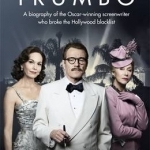
Nominated for an Oscar, BAFTA and Golden Globe, <i>Trumbo</i> is a recent film based on the original biography <i>Dalton Trumbo</i> written by Bruce Cook in 1977. Its adaptation to film provided the perfect opportunity to republish this extremely well researched book. With a forward written by John McNamara, the screenwriter of the motion picture, the story of Dalton Trumbo’s life is just as intriguing as it was almost forty years ago. But who is Trumbo?
If, like me, you have never heard of Trumbo or even the infamous “Hollywood Ten,” it may take a while for it to become clear as to why it was worth Cook’s time to produce a book about the man. Dalton Trumbo was a well-known screenwriter of films such as <i>Papillon, Lonely Are The Brave</i> and <i>Roman Holiday</i> as well as author of the novel <i>Johnny Got His Gun</i>. However these are not all he is famous for. During his life, Trumbo became a member of the Communist Party, which Hollywood branded as an Un-American Activity and thus blacklisted him, as well as other screenwriters, directors and actors. Ten of these men, Trumbo included, were imprisoned for their political beliefs – yet nothing prevented Trumbo from continuing his fairly successful career.
Interestingly, Cook begins the book with the final stages of Trumbo’s life. At time of writing Trumbo was still alive, although rather poorly. After contracting lung cancer, having a lung removed, and suffering a heart attack, Trumbo was a very sick man; nonetheless he was still enthusiastic about being interviewed and telling his personal story.
From his childhood, to his evening shifts at a bakery, Cook details Trumbo’s early life, emphasizing the hard upbringing he had before he found himself in the world of Hollywood. Although roughly 75% of the book focuses on Trumbo’s career, Cook highlights Trumbo as a family man, with both a wife and three children who he absolutely adores.
Cook constantly refers to the Hollywood Ten as a concept that the reader should already be familiar with. Granted, someone who picks up this book is more likely to do so having a prior interest in the central figure, and thus already know about his background; however those ignorant on the topic eventually gather a better understanding on the topic once reaching the relevant chapters. It also becomes clearer why Trumbo is worth reading/writing about – he may have been blacklisted, but he managed to break through all the barriers and reinstate his name and many others.
Reading this half a century after the event, it seems strange that Trumbo was imprisoned. He had not done anything intrinsically wrong, it was purely prejudice against his political beliefs that got him into the mess he found himself. But when you consider the events of the time: World War Two, the Cold War, the Korean War, and Vietnam; it is understandable why many feared those who claimed to be Communists.
Cook’s narrative does not flow as a story, and much of it is broken up with quotes from various people he interviewed. The timeline jumps about between past and present (1970s), which occasionally gets a bit confusing. A large part of the book is spent analyzing many of Trumbo’s works – both for screen and written formats – which, unless you have a particular interest, can be a little tedious.
It has got to be said that Bruce Cook was an exemplary writer with a great eye for detail. He did not jump to conclusions or only talk about things from his point of view. Instead he interviewed, what seems like, everyone who ever met Trumbo, and based his writing on fact backed up with numerous quotes and citations.
This edition of <i>Trumbo</i> contains a selection of photographs taken on the set of the movie. Disappointingly it does not contain any of Trumbo himself – you would think that some photos could have been tracked down!
<i>Trumbo</i> is not a book that will interest everyone. Most people today – particularly in England – will probably be unaware of who Dalton Trumbo was, and thus would only seek out this publication due to a fascination with film production. I have not seen the film, but after reading this and discovering how books go from novels, to screenplays to moving image, it would be interesting to find out which parts of Trumbo’s life made it onto the big screen.
Sophia (Bookwyrming Thoughts) (530 KP) rated Parrot in the Oven: Mi Vida in Books
Jan 23, 2020


Note: Formatting is lost due to copy and paste.
Oh. Another required reading. Yay. After Dreamland's disaster, I was going to call it quits here and go hide in a cubicle for awhile. Not that it's bad idea... but I'm pretty sure I would've failed high school already with that many absences (so not happening).
Parrot in the Oven: Mi Vida is about a fourteen-year-old boy named Manny who lives with his abusive father and just wants to fit in with the others around his neighborhood.
I had hoped that Parrot in the Oven was going to be majorly better than our last reading in English. I guess it went out okay in the end, but I ended up flipping back and forth to find a certain something.
A glossary, which I didn't find to my misfortune. With the Spanish terms and translations that were used in the book at the least. It would've have helped me so much since I haven't taken Spanish. Okay, there were a few translations in English after the Spanish throughout the book, but not all of them. I still say that a glossary would have been majorly helpful (and not just to me... I hope). In fact, I have no clue what the title says. Besides the Parrot in the Oven part. I
guess it's time to stroll on over to Google Translator.
Parrot in the Oven, is a bit different, but similar when compared to other realistic fiction. It might just be me and realistic fiction (because I'm definitely not it's biggest fan, considering the fact I rarely give realistic fiction a high rating...), but there tends to be not so much going on, besides a typical Mexican American teenager with family problems typically contained in realistic fiction and wanting/trying to fit in with others (also typically found in realistic fiction). I might be wrong with that view.
*holds up warning sign* ATTENTION: MINI-SPOILER ALERT!
You have been warned of the next paragraph containing tiny mini-spoilers that may give away a tad bit too much information about the book. Continue at your own risk.
The end tends to be rushed into 2-3 chapters. Manny was going on with his typical life, until a disaster at a party, and then boop. He decides to join a gang. Shortly after, boop. Someone gets in trouble, he realizes something within just hours/a day and boop. Goes home and "happily ever after," the end.
Leanne Crabtree (480 KP) rated In the Arms of the Elite (Rich Boys of Burberry Prep, #4) in Books
Jan 9, 2020
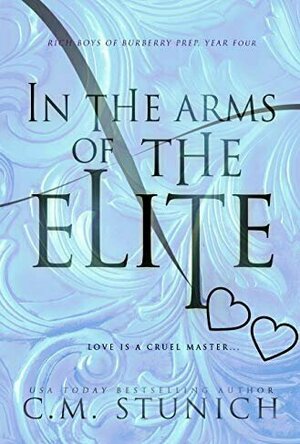
Marnye is entering her final year of Burberry Prep. She wants to graduate the top of her class and head off to her dream university, Bornstead. If the five boys she's torn between follow her there then that's a bonus for her. Her mission is to bring down the remaining Bluebloods and to stop bullying at the school and the Infinity Clubs influence. Nothing is ever easy, though. I'm also not going to go into any more detail as it will totally spoil the story for you.
I'll hold my hand up and say that the two Z's - Zach and Zayd have always been my favourites but we see a softer side to all of them in this and I truly - FINALLY! - believe that the boys care for her. Even Tristan, who's cold and stiff most of the time, had a really nice scene in this with Marnye and I actually softened a lot towards him. Creed is still the "look bored while totally caring" one but he did have a few cute scenes with Maryne, too. And then finally Windsor, the Prince. I'd liked him all along but I never quite understood his fascination with Marnye when he finally arrived at the school so he was never going to be top of my list. Above is probably my preferred order of the boys, which is a little strange BUT at the end of the book there's an Author's Note where she mentions being interested in doing an older series following this group as they head off to University as there little group of six and I have to say I am interested in that!
So, yeah. The series has grown on me a lot since that first one where when I started the second book it was all about Marnye getting her revenge on the Idols for the crap they'd pulled.
My rating is only a 3.5 for this as I do feel a bit like the ending wasn't entirely finished, though Harper du Pont did get what she deserved.
This is a little messed up initially but if you like bully romances and reverse harem books then you should totally give this a go and stick it out after the slightly cringe-worthy sex scenes and evil plots.
Green Building Illustrated
Francis D. K. Ching and Ian Shapiro
Book
Green Building Illustrated is a must-read for students and professionals in the building industry....

Shelle Perry (66 KP) rated Zombies for Everyone: A Jenna Sutton Supernatural Cozy Mystery in Books
Aug 10, 2021

In this book we are introduced to Jenna and her partner Kieron, high school students with a little something extra. She is a Hunter. Her job is to investigate and hunt down things that go bump in the night. Kind of a cross between Dean Winchester and Buffy Summers. Kieron provides moral, tech, and info support. They are asked to track down the source of a zombie bite before it leads to a full-on outbreak. It becomes apparent that there is more going on than a simple zombie attack and with several great suspects, it moves at a fair clip.
Despite the extracurriculars they really are just typical seventeen-year-old kids worrying about dating, homework, and mean girls. That is a fun contrast to the uber adult nature of the work they do. Jenna’s mother is missing, presumed dead (a story point that I am certain will be prominent in upcoming books) Leaving Jenna with the job of caring for herself while staying under the radar of adults who would put her in the system.
The magic world built for this story is sound, though it will need some bolstering ahead as it went up fairly quickly. I think another 50 pages of story could have easily softened the info dump feel. There is a lot of information to process about magic and recurring characters, as well as The Consortium and The Covens, but at some point in this series, things are going to get really interesting and my sixth sense is tingling in anticipation. This is a great story for age 12-18 readers and really for anyone who enjoys YA and/or paranormal cozy.
⭐⭐⭐⭐
Rating: 4 out of 5.
I received an advance review copy for free through Great Escapes Virtual Book Tours, and I am leaving this review voluntarily

<i>I received this book for free through Goodreads First Reads.</i>
Written by the English Pen Award winner Laia Jufresa (and excellently translated by Sophie Hughes) <i>Umami</i> is a story of the troubled lives of a small community in Mexico as they go through various stages of grief. What this story reveals is that everyone deals with heartache in his or her own personal way, however the things they do can affect everyone around them.
Set in Belldrop Mews, Mexico City, five characters give an account of their own experiences over a five-year period, which when combined together produce an overview of life within the mews. Firstly there is Ana (2004), a preteen determined to plant her own garden in the depressing back yard of her family home. Despite her steps to do something positive, she and her family are still mourning the death of her little sister Luz who drowned a few years ago. The second perspective comes from Marina Mendoza (2003), a young adult artist suffering from an eating disorder whilst dealing with memories of her childhood.
Alfonso, the aging owner of the mews, begins his story in 2002 a couple of years after the death of his wife. Previously he was an anthropologist obsessed with the concept of <i>umami</i>, a Japanese word meaning <i>“a savory taste; one of the five basic tastes.”</i> He is an old soul that has fallen into depression, feeling, like Ana, a misfit. The final two narrators are young girls: Pina (2001) who is Ana’s best friend, and Luz (2000), Ana’s five year old sister shortly before she died. Both speak of loneliness as they look at the world through childishly naïve eyes. Pina is suffering the effects of her parents’ constant fighting, whereas Luz is crying out for attention from her family who will not let her join in the “big girl” activities.
<i>Umami</i> may not be a happy book but it has a very powerful voice. None of the characters have yet completely recovered from their experiences however they are all (barring Luz) making positive progress. Without knowing it, each member of the Belldrop Mews community is encouraging the rest as they drag themselves out from the depths of their despair – some by aspiring to be like another, and others listening to what their neighbours are telling them.
The message of this story is about the benefits of a community. Whether big or small, being within a group of people can prevent you from wallowing in your dark feelings and begin to continue with your life instead. This is something that the world at large would profit from.
The unconventional style of <i>Umami</i> may not be agreeable with some readers due to its lack of a clear beginning, middle and end. In fact it does not have a conclusion at all, leaving nothing fully resolved. Yet Jufresa did not intend it to end “happily ever after,” real life is not like that; but what is true is that with time and exposure to positive relationships things can get better.
The aspect preventing a higher rating is the occasional allusion to sexual content, especially from the mouths of girls too young to fully understand the concept. This was uncomfortable to read, however thankfully the majority of the novel was free of unpleasant imagery. <i>Umami</i> is down to earth, relatable and moving; Laia Jufresa is definitely an author to watch.
YoungMuslim Yasin, Tahlil & Ayat Al-Kursi
Reference and Book
App
#Top 10 Singapore! #Top 10 Malaysia! -------------------------------------- Excellent - 5 stars! ...

Beijing (China) Guide, Map, Weather, Hotels.
Travel and Navigation
App
Best Mobile Guide 2012 - ACS Award Winner! smart.GUIDE is a mobile app that helps you find nearby...

SoleCool-Online Sale Sport Shoes,Running Shoes
Catalogs
App
Save precious time & money with the SoleCool app. Our powerful in-store app makes it easy for you to...
graveyardgremlin (7194 KP) rated The Blood Confession in Books
Feb 15, 2019
After reading THE BLOOD CONFESSION, I find it a bit surprising that this is specifically targeted to young adults. Not that they wouldn't appreciate or like it, although I don't know how much the appeal would be to that age range unless they're especially morbid (as I was and still am), but because of the subtle nuances and intricate study of character, morality, and belief system, which is well suited for adult readers as well. The book is mainly a character study and the author does a fantastic job bringing Erzebet to life, while slowly and believably evolving her into a mentally ill woman. I never could quite figure out if she was narcissistic, schizophrenic, suffering from some sort of body dysmorphic disorder, something altogether different, or all previously mentioned.
The writing is solid and I found myself sinking into the world Ms. Libby created, with it's brilliant Gothic atmosphere. The pacing had a few slow spots, but nothing that made the book come to a screeching halt. I confess to a few queasy moments thanks to an overactive imagination, but the gore is minimal and the author doesn't romanticize blood letting or murder for vanity.
What I should warn readers is that comparing this Erzebet Bizecka to the real Erzsebet Bathory would be a mistake. This fictional Countess doesn't have much in common with the legendary figure and is only (very) loosely based on her. That Erzsebet Bathory bathed in blood is an unfounded rumor and no one really knows why she killed these girls or how many. Some even say she was framed. Unfortunately the truth is lost to history and we'll never really know.
Only a few quibbles keep me from giving it a perfect rating, but all in all, it was an absorbing read. A couple of lingering questions remained, such as how exactly did Erzebet's mother go insane? I can guess what could have helped it along, but I don't really believe that's all it would have taken. What happened to Snow at the end?