
Search

Ross (3284 KP) rated Perfect Death in Books
Sep 28, 2018

Contains spoilers, click to show
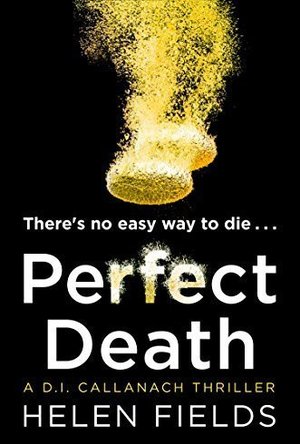
I have debated with myself over a rating for this, the third in the "DI Luc Callanach" series of Edinburgh police procedurals. While the overall story is definitely a 4 star, verging on 5, certain aspects of the dialogue in this one were a little jarring at times, and the plot hinged on a couple of very out of character decisions on the part of the murderer.
As with the previous two books, we join the story at the start of two independent investigations, which inevitably expand and take up the whole team's efforts (it's almost as if there was no crime in the city before these came along as no other cases seem to be mentioned or worked on!). We have the apparent death by misadventure of a young girl on the hills around Arthur's Seat, and the apparent suicide of former DCI Begbie.
Both cases are interesting and very different, the former being a more typical murder investigation, the latter being more focused on police corruption and the Glasgow gangland (I do enjoy the fact that any nasty gangsters in these Edinburgh-based stories have to be based in Glasgow, almost like they are sponsored by the Edinburgh tourist board, or someone with an anti-East Coast agenda).
While the murder investigation is decent, a number of clangers really spoiled it for me. We have a young man who appears to be poisoning people after having ingratiated themselves into their lives and the lives of their loved ones under different false names. However, as is so often the case in these stories, the killer is made too clever to be caught (at least too clever to be caught in under 300 pages!), and so the slightest mistake or piece of luck is what the investigation hinges on. Here it transpires that, while the killer has used false names in every interaction, in one of them he seems to have for some reason used the name of someone who leads the police directly to his backstory and hence uncovering his real identity. This piece of Batman vs Superman ("Your Mom was called Martha?!") level plot pivot was just so jarring and so out of character for this supposedly clever murderer. And yet without it there was pretty much no way of the murderer being found. For a secret poisoner to then start waving a gun around was also a bit hard to accept.
And also, all characters seem to be very well spoken. We have a young man who grew up in care homes from the age of 5, a Glasgow gangster and his henchmen and numerous bad sorts along the way and all are very well spoken, to the point that none of them have a voice and are just ... there. And, of course everyone refers to the police in the same way as the police refer to themselves - I cannot imagine anyone referring to a policeman as "DI something" or ""your DCI said this". It just totally jars and again comes across as the author simply inserting their voice into the mouths of characters that they could not be bothered to properly consider.
This brings me on to the dialogue gripe. I have always struggled to accept the formality in the way fictional detectives speak to members of the public. I get that interviews etc have to be carried out in a certain way, but at one point DCI Turner is speaking to a 17 year old boy about the death of his mother and she says "I cannot leave someone who might be a danger to themselves without establishing first-hand contact". This just struck me as the author inserting a piece of research into dialogue rather than considering how that point would be addressed in a human conversation. Similarly, at one point a DC refers to one of the victims as "she" and Callanach snapped at her "We use victims' names not pronouns", which just struck me as an odd thing to say, and at several times throughout the book he himself refers to victims with pronouns.
And finally, while there was never a great deal of swearing in the first two books, it was believable swearing. Here we have the occasional use of "frigging" instead of the other "f" word, which I cannot think I have ever heard a Scottish person say, unless singing along to the Sex Pistols sea shanty.
Overall, I give this book 4 stars for the plot, 3 stars for the writing, then averaged out and rounded down for the annoying little things.
A definite step down from the second book, and a more slapdash feel to it.
As with the previous two books, we join the story at the start of two independent investigations, which inevitably expand and take up the whole team's efforts (it's almost as if there was no crime in the city before these came along as no other cases seem to be mentioned or worked on!). We have the apparent death by misadventure of a young girl on the hills around Arthur's Seat, and the apparent suicide of former DCI Begbie.
Both cases are interesting and very different, the former being a more typical murder investigation, the latter being more focused on police corruption and the Glasgow gangland (I do enjoy the fact that any nasty gangsters in these Edinburgh-based stories have to be based in Glasgow, almost like they are sponsored by the Edinburgh tourist board, or someone with an anti-East Coast agenda).
While the murder investigation is decent, a number of clangers really spoiled it for me. We have a young man who appears to be poisoning people after having ingratiated themselves into their lives and the lives of their loved ones under different false names. However, as is so often the case in these stories, the killer is made too clever to be caught (at least too clever to be caught in under 300 pages!), and so the slightest mistake or piece of luck is what the investigation hinges on. Here it transpires that, while the killer has used false names in every interaction, in one of them he seems to have for some reason used the name of someone who leads the police directly to his backstory and hence uncovering his real identity. This piece of Batman vs Superman ("Your Mom was called Martha?!") level plot pivot was just so jarring and so out of character for this supposedly clever murderer. And yet without it there was pretty much no way of the murderer being found. For a secret poisoner to then start waving a gun around was also a bit hard to accept.
And also, all characters seem to be very well spoken. We have a young man who grew up in care homes from the age of 5, a Glasgow gangster and his henchmen and numerous bad sorts along the way and all are very well spoken, to the point that none of them have a voice and are just ... there. And, of course everyone refers to the police in the same way as the police refer to themselves - I cannot imagine anyone referring to a policeman as "DI something" or ""your DCI said this". It just totally jars and again comes across as the author simply inserting their voice into the mouths of characters that they could not be bothered to properly consider.
This brings me on to the dialogue gripe. I have always struggled to accept the formality in the way fictional detectives speak to members of the public. I get that interviews etc have to be carried out in a certain way, but at one point DCI Turner is speaking to a 17 year old boy about the death of his mother and she says "I cannot leave someone who might be a danger to themselves without establishing first-hand contact". This just struck me as the author inserting a piece of research into dialogue rather than considering how that point would be addressed in a human conversation. Similarly, at one point a DC refers to one of the victims as "she" and Callanach snapped at her "We use victims' names not pronouns", which just struck me as an odd thing to say, and at several times throughout the book he himself refers to victims with pronouns.
And finally, while there was never a great deal of swearing in the first two books, it was believable swearing. Here we have the occasional use of "frigging" instead of the other "f" word, which I cannot think I have ever heard a Scottish person say, unless singing along to the Sex Pistols sea shanty.
Overall, I give this book 4 stars for the plot, 3 stars for the writing, then averaged out and rounded down for the annoying little things.
A definite step down from the second book, and a more slapdash feel to it.

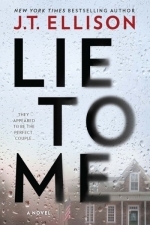

Sutton and Ethan Montclair had the ideal life--a beautiful marriage, a gorgeous house, successful writing careers, and a beautiful baby son. But with the death of their baby, Dashiell, things started to crumble. Peering into the cracks, it was clear that Ethan's career isn't going well and Sutton was depressed and broken after Dashiell's death. So when Ethan wakes up and finds a note from Sutton telling him that she's left and not to look for her, he doesn't know what to think. Did she really run off, leaving her phone, laptop, credit cards, and ID behind? Or did something more sinister happen? As for Ethan and Sutton's friends--and the police--they quickly start to wonder if the something sinister is Ethan.
So in the years since [b:Gone Girl|19288043|Gone Girl|Gillian Flynn|https://images.gr-assets.com/books/1397056917s/19288043.jpg|13306276] has come out, I've seen so many books compared to that juggernaut and felt that so little truly were similar (and keep in mind that I wasn't one of those that *adored* the novel). However, reading LIE TO ME, I felt like this book really deserved the plot comparison to GONE GIRL -- wife missing, volatile marriage, husband under suspicion, unreliable narrators, etc. For a while, I was curious how [a:J.T. Ellison|1311949|J.T. Ellison|https://images.gr-assets.com/authors/1450824118p2/1311949.jpg] would differentiate her novel from GONE GIRL, but she pulled it off (more on that later).
<i>This novel was compulsively readable</i>; I read it basically in two sittings. I stayed up until midnight to finish it, which is no small feat considering my small children don't care how late I stay up! It slowly builds suspense with the unknown, dropping little hints as to bits and pieces of the story. We start with Ethan's piece of the story, eventually switch to Sutton, and then finish with both of them. Interspersed are various portions where an unknown "narrator" speaks directly to us, the reader, as well as the police. All of this <i>creates suspicion and tension</i> and lets us know that we certainly have unreliable narrators in both Ethan and Sutton. Who do we believe? Even the police--called in to investigate Sutton's disappearance--are confused. <i>I was completely hooked and, honestly, madly flipping the pages. </i>
The Sutton portion slowed things down slightly, but things rapidly picked back up. I won't lie (ha), I worked out some of the plot, but it certainly didn't diminish my enjoyment of the novel, and I definitely didn't figure out everything. <i>The book's a little crazy, with a slightly wild plot, but it's a fun and thrilling read.</i> The supporting cast is interesting--especially a policewoman itching to become a detective, and some of Sutton and Ethan's friends. As I mentioned, the plot is a little insane, but fun crazy, and Ellison weaves together all the pieces quite effectively.
This is my second novel by Ellison and I'm finding that I just enjoy the suspense and escapism of her novels. (You can read my review of her novel, NO ONE KNOWS, <a href="https://www.goodreads.com/review/show/1460145588?book_show_action=false&from_review_page=1">here</a>;). The book isn't always perfect, but it's a really enjoyable thriller, hence the 4-star rating--which makes it higher than GONE GIRL for me. Sacrilege for some, but I just enjoyed this one more.
I received a copy of this novel from the publisher and Netgalley (thank you!); it is available everywhere as of 09/05/2017.
<center><a href="http://justacatandabookatherside.blogspot.com/">Blog</a>; ~ <a href="https://twitter.com/mwcmoto">Twitter</a>; ~ <a href="https://www.facebook.com/justacatandabook/">Facebook</a>; ~ <a href="https://plus.google.com/u/0/+KristyHamiltonbooks">Google+</a>; ~ <a href="https://www.instagram.com/justacatandabook/">Instagram</a>; </center>
So in the years since [b:Gone Girl|19288043|Gone Girl|Gillian Flynn|https://images.gr-assets.com/books/1397056917s/19288043.jpg|13306276] has come out, I've seen so many books compared to that juggernaut and felt that so little truly were similar (and keep in mind that I wasn't one of those that *adored* the novel). However, reading LIE TO ME, I felt like this book really deserved the plot comparison to GONE GIRL -- wife missing, volatile marriage, husband under suspicion, unreliable narrators, etc. For a while, I was curious how [a:J.T. Ellison|1311949|J.T. Ellison|https://images.gr-assets.com/authors/1450824118p2/1311949.jpg] would differentiate her novel from GONE GIRL, but she pulled it off (more on that later).
<i>This novel was compulsively readable</i>; I read it basically in two sittings. I stayed up until midnight to finish it, which is no small feat considering my small children don't care how late I stay up! It slowly builds suspense with the unknown, dropping little hints as to bits and pieces of the story. We start with Ethan's piece of the story, eventually switch to Sutton, and then finish with both of them. Interspersed are various portions where an unknown "narrator" speaks directly to us, the reader, as well as the police. All of this <i>creates suspicion and tension</i> and lets us know that we certainly have unreliable narrators in both Ethan and Sutton. Who do we believe? Even the police--called in to investigate Sutton's disappearance--are confused. <i>I was completely hooked and, honestly, madly flipping the pages. </i>
The Sutton portion slowed things down slightly, but things rapidly picked back up. I won't lie (ha), I worked out some of the plot, but it certainly didn't diminish my enjoyment of the novel, and I definitely didn't figure out everything. <i>The book's a little crazy, with a slightly wild plot, but it's a fun and thrilling read.</i> The supporting cast is interesting--especially a policewoman itching to become a detective, and some of Sutton and Ethan's friends. As I mentioned, the plot is a little insane, but fun crazy, and Ellison weaves together all the pieces quite effectively.
This is my second novel by Ellison and I'm finding that I just enjoy the suspense and escapism of her novels. (You can read my review of her novel, NO ONE KNOWS, <a href="https://www.goodreads.com/review/show/1460145588?book_show_action=false&from_review_page=1">here</a>;). The book isn't always perfect, but it's a really enjoyable thriller, hence the 4-star rating--which makes it higher than GONE GIRL for me. Sacrilege for some, but I just enjoyed this one more.
I received a copy of this novel from the publisher and Netgalley (thank you!); it is available everywhere as of 09/05/2017.
<center><a href="http://justacatandabookatherside.blogspot.com/">Blog</a>; ~ <a href="https://twitter.com/mwcmoto">Twitter</a>; ~ <a href="https://www.facebook.com/justacatandabook/">Facebook</a>; ~ <a href="https://plus.google.com/u/0/+KristyHamiltonbooks">Google+</a>; ~ <a href="https://www.instagram.com/justacatandabook/">Instagram</a>; </center>

Fiete Puzzle - Kids Games with Animals
Education and Games
10.0 Rate It
App
The game Fiete Puzzle lets children discover cute animated animals in beautiful picture book...
Hazel (1853 KP) rated Summer Days and Summer Nights: Twelve Summer Romances in Books
May 25, 2017
A mixed bag
This ARC was provided by the publisher via NetGalley in exchange for an honest review
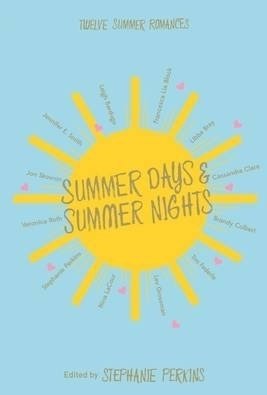
Stephanie Perkins, the best selling author of Anna and the French Kiss has compiled a second anthology of short stories. Twelve selected tales have been included from a variety of young adult authors including: Libba Bray, Veronica Roth, Cassandra Clare and Jennifer E. Smith. For those that have read Perkins’ previous anthology, My True Love Gave To Me, the concept is the same. Twelve love stories set in, as the title, Summer Days and Summer Nights, strongly suggests, the summer.
What can be expected from all the stories in this collection is that they fit snuggly into the Romance genre of young adult fiction. The way the authors decided to tackle this, however, was up to their own interpretations. Thus, the final outcome is a selection of works that fall into a variety of categories: fantasy, contemporary, LGBT, horror, sci-fi etc.
As a result there are a number of different character types and storylines, suggesting that there is bound to be something for everyone. There are lovey-dovey stories, heart-wrenching stories, exciting action stories, implying that there will be at least one you will favour, and hopefully make purchase worthwhile.
It is not merely love that can be found between these pages, so if you are, like me, not overly impressed with teenage love stories, there are other themes to focus on. Many of the main characters are nearing the end of their schooling and thinking about the future: college, perhaps. Readers discover, and possibly relate to, their hopes, doubts and fears of what is to come. Yet while these thoughts are buzzing in their heads they are also trying to enjoy their summers, some with summer jobs, others hanging out with friends. Alongside all of this are darker issues of depression, cancer and parents divorcing; events that many teenagers unfortunately have to deal with. So, throughout all the make-ups and break-ups, there is so much more going on under the surface.
It is always difficult to decide what age range “Young Adult” refers to. Some may assume it is anyone in their teens, however in the case of Summer Days and Summer Nights I would label it a book for older teenagers, those of similar ages to the characters depicted: sixteen to nineteen. This is due to the slightly adult themes of a few of the stories and the amount of swearing many of the authors resort to.
Unfortunately for me, I did not find a perfect story within this collection. There were some I enjoyed more than others; likewise there were some I was not keen on at all. It is for this reason I have only given a rating of three stars. I do not want to put prospective readers off however as this is merely a case of personal preferences and not a true reflection of the authors’ exceptional writing skills.
Stephanie Perkins, the best selling author of Anna and the French Kiss has compiled a second anthology of short stories. Twelve selected tales have been included from a variety of young adult authors including: Libba Bray, Veronica Roth, Cassandra Clare and Jennifer E. Smith. For those that have read Perkins’ previous anthology, My True Love Gave To Me, the concept is the same. Twelve love stories set in, as the title, Summer Days and Summer Nights, strongly suggests, the summer.
What can be expected from all the stories in this collection is that they fit snuggly into the Romance genre of young adult fiction. The way the authors decided to tackle this, however, was up to their own interpretations. Thus, the final outcome is a selection of works that fall into a variety of categories: fantasy, contemporary, LGBT, horror, sci-fi etc.
As a result there are a number of different character types and storylines, suggesting that there is bound to be something for everyone. There are lovey-dovey stories, heart-wrenching stories, exciting action stories, implying that there will be at least one you will favour, and hopefully make purchase worthwhile.
It is not merely love that can be found between these pages, so if you are, like me, not overly impressed with teenage love stories, there are other themes to focus on. Many of the main characters are nearing the end of their schooling and thinking about the future: college, perhaps. Readers discover, and possibly relate to, their hopes, doubts and fears of what is to come. Yet while these thoughts are buzzing in their heads they are also trying to enjoy their summers, some with summer jobs, others hanging out with friends. Alongside all of this are darker issues of depression, cancer and parents divorcing; events that many teenagers unfortunately have to deal with. So, throughout all the make-ups and break-ups, there is so much more going on under the surface.
It is always difficult to decide what age range “Young Adult” refers to. Some may assume it is anyone in their teens, however in the case of Summer Days and Summer Nights I would label it a book for older teenagers, those of similar ages to the characters depicted: sixteen to nineteen. This is due to the slightly adult themes of a few of the stories and the amount of swearing many of the authors resort to.
Unfortunately for me, I did not find a perfect story within this collection. There were some I enjoyed more than others; likewise there were some I was not keen on at all. It is for this reason I have only given a rating of three stars. I do not want to put prospective readers off however as this is merely a case of personal preferences and not a true reflection of the authors’ exceptional writing skills.

My rating: 3.5
<i>This eBook was provided by the publisher via NetGalley in exchange for an honest review</i>
Erin Eveland is known for her short horror stories but she has moved onto writing novels with <i>Darkness</i> being her first of a series. It was not scary in the way that horror books are generally perceived to be but it did contain a good deal of paranormal ideas.
It begins when the main character, Catherine, is six years old and living with her grandmother. She is constantly haunted by an unseen presence, a nameless terror, which worries her grandmother immensely. Very suddenly, Catherine’s grandmother suffers a fatal heart attack and Catherine ends up being removed from her well looked after home to a dirty trailer park to live with her alcoholic mother. The novel then fast-forwards ten years to a time when Catherine is mostly fending for herself and her mother never goes a day sober. The terrors of her childhood have all but been forgotten but Catherine is beginning to remember and have similar experiences all over again. These incidents increase with the mysterious appearance of a man named Jorgen who insists he wants to protect Catherine. Meanwhile, Nathan, a friend of Catherine, comes into contact with an intriguing man in black who begins to teach him about colours and Darkness – something which could have done with a little more detail. Unbeknownst to Nathan, his dealings with this man may result in harming Catherine, especially as the two friends begin to see odd moving shapes – shadow creatures.
For a while there appeared to be a very thin line between heroes and villains as it took some time to work out the intentions of Jorgen and Artros (the man in black). The novel would have benefitted with more description about these characters: who they are or more importantly, what they are, as well as the significance of the shadow creatures.
Although it was good to be introduced to the paranormal aspects right at the start, this resulted in lessening the amount of foreboding and dread throughout the main bulk of the novel. Even though <i>Darkness</i> is the first in a series, it did not feel that it was properly starting until nearer the end. On finishing, the reader still does not know much about the shadow creatures or what the Darkness is. Presumably the sequel will be more enlightening.
<i>Darkness</i> is sub-titled “An Interactive Novel” and includes Quick Response codes at the beginning of each chapter to heighten the reading experience with the interactive addition of art and music. Of course to benefit from this a smart phone is required (I do not have one therefore cannot comment further on this feature).
Overall, <i>Darkness</i> is a well-written book full of originality that has the potential to become an exciting young adult series.
<i>This eBook was provided by the publisher via NetGalley in exchange for an honest review</i>
Erin Eveland is known for her short horror stories but she has moved onto writing novels with <i>Darkness</i> being her first of a series. It was not scary in the way that horror books are generally perceived to be but it did contain a good deal of paranormal ideas.
It begins when the main character, Catherine, is six years old and living with her grandmother. She is constantly haunted by an unseen presence, a nameless terror, which worries her grandmother immensely. Very suddenly, Catherine’s grandmother suffers a fatal heart attack and Catherine ends up being removed from her well looked after home to a dirty trailer park to live with her alcoholic mother. The novel then fast-forwards ten years to a time when Catherine is mostly fending for herself and her mother never goes a day sober. The terrors of her childhood have all but been forgotten but Catherine is beginning to remember and have similar experiences all over again. These incidents increase with the mysterious appearance of a man named Jorgen who insists he wants to protect Catherine. Meanwhile, Nathan, a friend of Catherine, comes into contact with an intriguing man in black who begins to teach him about colours and Darkness – something which could have done with a little more detail. Unbeknownst to Nathan, his dealings with this man may result in harming Catherine, especially as the two friends begin to see odd moving shapes – shadow creatures.
For a while there appeared to be a very thin line between heroes and villains as it took some time to work out the intentions of Jorgen and Artros (the man in black). The novel would have benefitted with more description about these characters: who they are or more importantly, what they are, as well as the significance of the shadow creatures.
Although it was good to be introduced to the paranormal aspects right at the start, this resulted in lessening the amount of foreboding and dread throughout the main bulk of the novel. Even though <i>Darkness</i> is the first in a series, it did not feel that it was properly starting until nearer the end. On finishing, the reader still does not know much about the shadow creatures or what the Darkness is. Presumably the sequel will be more enlightening.
<i>Darkness</i> is sub-titled “An Interactive Novel” and includes Quick Response codes at the beginning of each chapter to heighten the reading experience with the interactive addition of art and music. Of course to benefit from this a smart phone is required (I do not have one therefore cannot comment further on this feature).
Overall, <i>Darkness</i> is a well-written book full of originality that has the potential to become an exciting young adult series.
Hazel (1853 KP) rated The Road to Reckoning in Books
Dec 17, 2018

My rating: 2.5.
<i>I received this book for free through Goodreads First Reads.</i>
<i>The Road to Reckoning</i> is British author Robert Lautner’s debut western-style novel. Set in the 1830s it follows a young boy’s long journey home through the open lands of America.
Tom Walker, now an elderly (or so it suggests) man, is giving an account of what happened to him during the year 1837 when “my life began” at the age of twelve. Tom’s father was a salesman who often let his son accompany him on his trips to sell spectacles. So when he receives the opportunity to pitch a new type of pistol known as a revolving gun for Samuel Colt at the <i>Patent Arms Manufacturing Company</i>, he brings Tom with him on the road. Originally living in New York they set out on a journey of many miles over several days demonstrating and taking orders for the pistol. However a dangerous encounter with a man, Thomas, Heywood, and his gang leaves Tom alone and orphaned.
There are two main characters to this story with Tom naturally being one of them. The other is an aging ranger named Henry Stands who Tom insists on following as he is travelling in the direction of New York and Tom’s home. To begin with Stands is very reluctant to have Tom tailing him on his journey especially as it becomes evident that he would have to provide for the boy. Stands ends up abandoning him but has a change of heart and returns in time to prevent Tom from being sent to St John’s Orphan Asylum.
And so their journey continues with Stands becoming kinder and even fatherly towards Tom, saving his life on more than one occasion; and Tom becoming all the more bolder. However the entire time is the fear and knowledge that Thomas Heywood is searching for Tom with the intention of leaving him in the same situation as his father – dead.
I have not read many western-style novels, and those that I have read I did not enjoy much, but <i>The Road to Reckoning</i> was better than I was anticipating. The main character being only twelve years old made the storyline more emotional especially when taking into account the death of his father and his growing attachment to Henry Stands.
The novel was well written and, although fictional, had an essence of factual truth about it. Samuel Colt was a real life American inventor who founded the <i>Colt’s Patent Fire-Arms Manufacturing Company</i>, which produced the revolver for commercial use. The blurb claims that fans of <i>Cold Mountain</i> and <i>True Grit</i>, neither of which I have read, would enjoy this story. Obviously I cannot give my opinion on that but I would say that to get the most out of reading <i>The Road to Reckoning</i> having an interest in western-style literature would be beneficial.
<i>I received this book for free through Goodreads First Reads.</i>
<i>The Road to Reckoning</i> is British author Robert Lautner’s debut western-style novel. Set in the 1830s it follows a young boy’s long journey home through the open lands of America.
Tom Walker, now an elderly (or so it suggests) man, is giving an account of what happened to him during the year 1837 when “my life began” at the age of twelve. Tom’s father was a salesman who often let his son accompany him on his trips to sell spectacles. So when he receives the opportunity to pitch a new type of pistol known as a revolving gun for Samuel Colt at the <i>Patent Arms Manufacturing Company</i>, he brings Tom with him on the road. Originally living in New York they set out on a journey of many miles over several days demonstrating and taking orders for the pistol. However a dangerous encounter with a man, Thomas, Heywood, and his gang leaves Tom alone and orphaned.
There are two main characters to this story with Tom naturally being one of them. The other is an aging ranger named Henry Stands who Tom insists on following as he is travelling in the direction of New York and Tom’s home. To begin with Stands is very reluctant to have Tom tailing him on his journey especially as it becomes evident that he would have to provide for the boy. Stands ends up abandoning him but has a change of heart and returns in time to prevent Tom from being sent to St John’s Orphan Asylum.
And so their journey continues with Stands becoming kinder and even fatherly towards Tom, saving his life on more than one occasion; and Tom becoming all the more bolder. However the entire time is the fear and knowledge that Thomas Heywood is searching for Tom with the intention of leaving him in the same situation as his father – dead.
I have not read many western-style novels, and those that I have read I did not enjoy much, but <i>The Road to Reckoning</i> was better than I was anticipating. The main character being only twelve years old made the storyline more emotional especially when taking into account the death of his father and his growing attachment to Henry Stands.
The novel was well written and, although fictional, had an essence of factual truth about it. Samuel Colt was a real life American inventor who founded the <i>Colt’s Patent Fire-Arms Manufacturing Company</i>, which produced the revolver for commercial use. The blurb claims that fans of <i>Cold Mountain</i> and <i>True Grit</i>, neither of which I have read, would enjoy this story. Obviously I cannot give my opinion on that but I would say that to get the most out of reading <i>The Road to Reckoning</i> having an interest in western-style literature would be beneficial.
Sophia (Bookwyrming Thoughts) (530 KP) rated These Broken Stars (Starbound, #1) in Books
Jan 23, 2020
Original Review posted on <a title="These Broken Stars by Amie Kaufman and Megan Spooner" href="http://bookwyrming-thoughts.blogspot.com/2013/12/arc-review-these-broken-stars-by-amie-kaufman.html">Bookwyrming Thoughts</a>
Original Rating: 4.5 out of 5 owls
Note: Formatting may be lost due to copy and paste.
<i><b>Disclaimer:</b> Review copy provided by Disney Hyperion via Netgalley for review (thanks!)</i>
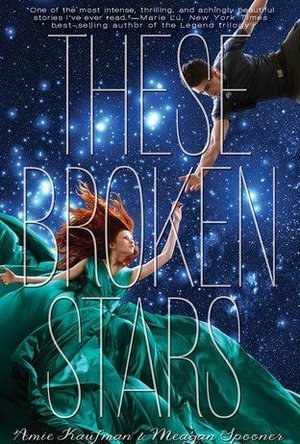
These Broken Stars follows two very different people, Lilac and Tarver, from a futuristic galaxy as they try to survive in the wilderness of an unknown planet after a ship crash in space.
I really love the way how These Broken Stars is set up and formatted. I didn't exactly understand it at first, but the beginning of each chapter is in the present (in terms of the book's timeline – not 2013), giving a very brief synopsis in a sort-of interview/interrogation style with Tarver. Then the chapter gives an elaboration, telling the story behind the interview/interrogation in Lilac's and Tarver's point of views. It sort of reminds me of If I Stay with its many flashbacks, but not as depressing (thankfully).
The romance between Lilac and Tarver is probably a little fast, but I can't really tell. In other words, compared to a lot of books I've come across that have romance, These Broken Stars is one of the ones not written in such a way that the reader may cringe. *phew*
What I didn't like though, is Tarver's personality. Usually I love it when a main character is sassy and has an attitude. Tarver's though... it just didn't bounce out really well. I mean, yes, he's sarcastic, and yes he has an attitude, but I just didn't really like it. It didn't really seem to go in with Lilac's personality.
I'm not being sexist. Otherwise, I would never have said that I liked Augustus Waters' personality from The Fault in Our Stars. In fact, I probably would have said that I hated Gus's personality.
(Oh no. With that being said, I'm bound to be the target of tomatoes for a while. *gives a very innocent look and ducks*)
It's not because it's John Green either. I can't always say an author is my favorite when it's my first time reading their work(s).
Of course, everyone's opinions, likes and dislikes of a character's attitude in a book is completely different from someone else.
For a debut novel, Kaufman writes an astronomically intriguing story. The situations Lilac and Tarver are put in aren't too exaggerated or unrealistic, and in a way, the story keeps the reader guessing until the author smoothly reveals what's really going on. I had to wonder a few times why a few horror elements were doing there, lurking about.
For anyone who likes science fiction/fantasy with a hint of romance, you might want to try out These Broken Stars. Maybe someone else will have a much better time with Tarver's personality. No guarantees, though. And no rollbacks in the process.
Original Rating: 4.5 out of 5 owls
Note: Formatting may be lost due to copy and paste.
<i><b>Disclaimer:</b> Review copy provided by Disney Hyperion via Netgalley for review (thanks!)</i>
These Broken Stars follows two very different people, Lilac and Tarver, from a futuristic galaxy as they try to survive in the wilderness of an unknown planet after a ship crash in space.
I really love the way how These Broken Stars is set up and formatted. I didn't exactly understand it at first, but the beginning of each chapter is in the present (in terms of the book's timeline – not 2013), giving a very brief synopsis in a sort-of interview/interrogation style with Tarver. Then the chapter gives an elaboration, telling the story behind the interview/interrogation in Lilac's and Tarver's point of views. It sort of reminds me of If I Stay with its many flashbacks, but not as depressing (thankfully).
The romance between Lilac and Tarver is probably a little fast, but I can't really tell. In other words, compared to a lot of books I've come across that have romance, These Broken Stars is one of the ones not written in such a way that the reader may cringe. *phew*
What I didn't like though, is Tarver's personality. Usually I love it when a main character is sassy and has an attitude. Tarver's though... it just didn't bounce out really well. I mean, yes, he's sarcastic, and yes he has an attitude, but I just didn't really like it. It didn't really seem to go in with Lilac's personality.
I'm not being sexist. Otherwise, I would never have said that I liked Augustus Waters' personality from The Fault in Our Stars. In fact, I probably would have said that I hated Gus's personality.
(Oh no. With that being said, I'm bound to be the target of tomatoes for a while. *gives a very innocent look and ducks*)
It's not because it's John Green either. I can't always say an author is my favorite when it's my first time reading their work(s).
Of course, everyone's opinions, likes and dislikes of a character's attitude in a book is completely different from someone else.
For a debut novel, Kaufman writes an astronomically intriguing story. The situations Lilac and Tarver are put in aren't too exaggerated or unrealistic, and in a way, the story keeps the reader guessing until the author smoothly reveals what's really going on. I had to wonder a few times why a few horror elements were doing there, lurking about.
For anyone who likes science fiction/fantasy with a hint of romance, you might want to try out These Broken Stars. Maybe someone else will have a much better time with Tarver's personality. No guarantees, though. And no rollbacks in the process.
Gareth von Kallenbach (980 KP) rated The LEGO Ninjango Movie (2017) in Movies
Jul 11, 2019
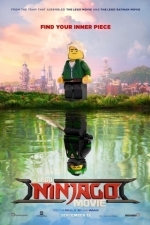

The newest Lego movie, ‘The Lego Ninjago Movie’ is being released by Warner Brothers and stars Jackie Chan as Master Wu; Dave Franco as Lloyd Garmadon; Michael Pena as Kai;Fred Armisen asCole; Abbi Jacobsen as Nya; Kumail Nanjiani as Jay; Zach Woods as Zane; Olivia Munn as Koko (Lloyds mother); and Justin Theroux as Garmadon.
The film is rated PG and is about 90 minutes.
The story follows the main character Lloyd and his troubled (almost nonexistent) relationship with his father, Garmadon. We begin the movie believing Lloyd has no friends, but quickly discover he DOES have a small handful of friends, and that he, as well as his friends Kai, Cole, Nya and Zane are all leading a secret life as Ninjas. The rest of the kids at school all dislike Lloyd because his father Garmadon is forever attacking the city and destroying everything.
As we see Garmadon repeatedly try to conquer Ninjago city, we see that the Ninjas, along with their “Mech”, and the help of Master Wu, keep beating him back.
Frustrated that his father won’t acknowledge his pain at being abandoned, Lloyd defies Master Wu and attacks Garmadon with ‘the ultimate weapon’.
The Ultimate Weapon ends up doing more harm than good and destroys a large portion of Ninjago city, leaving Garnadon in control of Ninjago city. Master Wu instructs Lloyd and his fellow Ninjas to find their inner strength and ‘the missing piece’ in order to defeat Garmadon.
The Ninjagos then start off on a journey to find what Master Wu has instructed. During one important scene, we discover that Gamadon is Master Wu’s brother!
Apparently, this movie is a spin off of a popular kids TV series, but I was unaware of that. My son does have some Lego Ninjago books and Lego sets, so I knew they existed, but not to what extent.
I was not a fan of the breaks in the middle of the movie to ‘non animated’ pieces, they seemed cheesy to me, and ‘comic-book-ish’. I found them annoying. I did like the tie in at the beginning and end however, of the live action sequences. I felt it tied the story together.
I thought the Ninjago Lego movie was pretty decent, I liked it somewhat better than the Lego Batman Movie. I did find the hot / cold attitude of the Garmadon character a bit hard to follow, but the existence of that same attitude did give that character some of the best lines of the movie.
The PG rating was fair and at no point did I feel uncomfortable having my 9 year old there to see it, and he loved the movie. He said his favorite part was “the action packed fight scene between the brothers in the woods.”
The 9 year old gives the movie 4 out of 5 stars, and
The film is rated PG and is about 90 minutes.
The story follows the main character Lloyd and his troubled (almost nonexistent) relationship with his father, Garmadon. We begin the movie believing Lloyd has no friends, but quickly discover he DOES have a small handful of friends, and that he, as well as his friends Kai, Cole, Nya and Zane are all leading a secret life as Ninjas. The rest of the kids at school all dislike Lloyd because his father Garmadon is forever attacking the city and destroying everything.
As we see Garmadon repeatedly try to conquer Ninjago city, we see that the Ninjas, along with their “Mech”, and the help of Master Wu, keep beating him back.
Frustrated that his father won’t acknowledge his pain at being abandoned, Lloyd defies Master Wu and attacks Garmadon with ‘the ultimate weapon’.
The Ultimate Weapon ends up doing more harm than good and destroys a large portion of Ninjago city, leaving Garnadon in control of Ninjago city. Master Wu instructs Lloyd and his fellow Ninjas to find their inner strength and ‘the missing piece’ in order to defeat Garmadon.
The Ninjagos then start off on a journey to find what Master Wu has instructed. During one important scene, we discover that Gamadon is Master Wu’s brother!
Apparently, this movie is a spin off of a popular kids TV series, but I was unaware of that. My son does have some Lego Ninjago books and Lego sets, so I knew they existed, but not to what extent.
I was not a fan of the breaks in the middle of the movie to ‘non animated’ pieces, they seemed cheesy to me, and ‘comic-book-ish’. I found them annoying. I did like the tie in at the beginning and end however, of the live action sequences. I felt it tied the story together.
I thought the Ninjago Lego movie was pretty decent, I liked it somewhat better than the Lego Batman Movie. I did find the hot / cold attitude of the Garmadon character a bit hard to follow, but the existence of that same attitude did give that character some of the best lines of the movie.
The PG rating was fair and at no point did I feel uncomfortable having my 9 year old there to see it, and he loved the movie. He said his favorite part was “the action packed fight scene between the brothers in the woods.”
The 9 year old gives the movie 4 out of 5 stars, and

Darren (1599 KP) rated 6 Below: Miracle on the Mountain (2017) in Movies
Oct 2, 2019
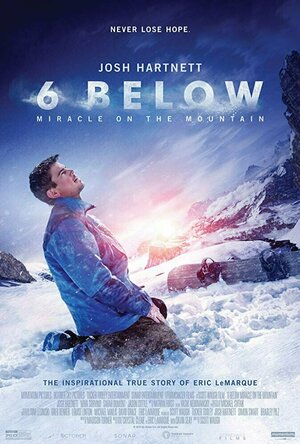
Characters – Eric LeMarque had a future as one of the top ice hockey players, he threw this away with hiss reckless behaviour which has seen his career all but gone. With his addiction taking over his life, he finds himself hitting rock bottom and needing to find some hope. Heading for a snowboard away from the world he ends up lost in the harsh wilderness doing everything he can to survive in the conditions which will test his desire to get over his addictions and rebuild his life. Susan is his mother, she has always supported her son and will do anything to help him put his life back on track and is the first to notice he hasn’t been heard from for days. Sarah is one of the rescue team on the mountain, she leads the search once they learn that Eric is missing.
Performances – Josh Hartnett in the leading role does a good job, even if it feels slightly mis-cast because you get the feeling Eric was a lot younger than Hartnett. Mira Sorvino and Sarah Dumont are both solid in the supporting roles as we see them both needing to make difficult decisions.
Story – The story here follows the incredible survival story of Eric LeMarque as he faces days lost in the snow-covered mountain range without anyone searching for him for days, while also battling his own demons of addiction. The story itself is based on the real events that happened to the man who needed to rebuild his life. This does show us just how hard the survival was, though it just doesn’t become the truly engrossing story it could have been, because anything that happens is something we have seen before, be it wolves or injuries. Eric isn’t the most likely guy either because anyone that throws away a sporting career for drugs frustrates the audience. The rescue side of the film either needed to be a bigger involvement or not involved at all, we simply don’t get enough focus on what is happening on this side of the film.
Adventure/Biopic – The adventure side of the film shows us just what could go wrong for an ambitious rush can turn into a battle to survive. The biopic side of the film shows us the days which Eric is lost in the harsh snowy mountain conditions as he battles to survive and his own demons.
Settings – The film puts us in the mountain range covered in snow, showing us how easy it could be to become lost and how hard it would be to survive.
Scene of the Movie – The climb.
That Moment That Annoyed Me – Hartnett feels too old for this role.
Final Thoughts – This is a by the book survival story, it does show an incredible fight to survive and does give us a form of redemption for a young man who was throwing his life away.
Overall: By the books survival film.
Rating
Performances – Josh Hartnett in the leading role does a good job, even if it feels slightly mis-cast because you get the feeling Eric was a lot younger than Hartnett. Mira Sorvino and Sarah Dumont are both solid in the supporting roles as we see them both needing to make difficult decisions.
Story – The story here follows the incredible survival story of Eric LeMarque as he faces days lost in the snow-covered mountain range without anyone searching for him for days, while also battling his own demons of addiction. The story itself is based on the real events that happened to the man who needed to rebuild his life. This does show us just how hard the survival was, though it just doesn’t become the truly engrossing story it could have been, because anything that happens is something we have seen before, be it wolves or injuries. Eric isn’t the most likely guy either because anyone that throws away a sporting career for drugs frustrates the audience. The rescue side of the film either needed to be a bigger involvement or not involved at all, we simply don’t get enough focus on what is happening on this side of the film.
Adventure/Biopic – The adventure side of the film shows us just what could go wrong for an ambitious rush can turn into a battle to survive. The biopic side of the film shows us the days which Eric is lost in the harsh snowy mountain conditions as he battles to survive and his own demons.
Settings – The film puts us in the mountain range covered in snow, showing us how easy it could be to become lost and how hard it would be to survive.
Scene of the Movie – The climb.
That Moment That Annoyed Me – Hartnett feels too old for this role.
Final Thoughts – This is a by the book survival story, it does show an incredible fight to survive and does give us a form of redemption for a young man who was throwing his life away.
Overall: By the books survival film.
Rating

FreePrints - Photos Delivered
Photo & Video and Lifestyle
6.0 Rate It
App
Print photos quickly, easily and for FREE... No subscriptions. No commitments. Just free prints! ...