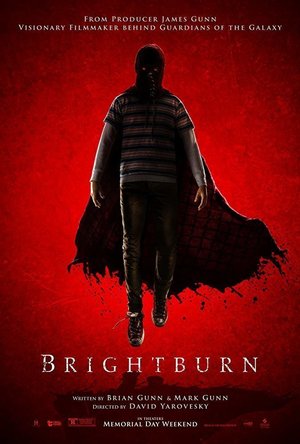
Madbatdan82 (341 KP) rated Brightburn (2019) in Movies
Jul 6, 2019


Queer European Cinema: Queering Cinematic Time and Space
Book
Queer European Cinema commences with an overview of LGBTQ representation throughout cinematic...

Darren (1599 KP) rated A Walk In The Woods (2015) in Movies
Jul 8, 2019
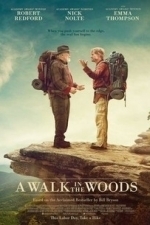

Writer: Michael Arndt, Bill Holderman (Screenplay) Bill Bryson (Book)
Starring: Robert Redford, Nick Nolte, Emma Thompson, Mary Steenburgen, Nick Offerman, Kristen Schaal, R. Keith Harris
Plot: After spending two decades in England, Bill Bryson returns to the U.S., where he decides the best way to connect with his homeland is to hike the Appalachian Trail with one of his oldest friends.
Tagline – When you push yourself to the edge, the real fun begins.
Runtime: 1 Hour 44 Minutes
There may be spoilers in the rest of the review
Verdict: Never Captures the Sense of Adventure
Story: A Walk in the Woods starts when author Bill Bryson (Redford) returns to America after years of travel books, where he has never written about his homeland. Bill wants to walk the Appalachian Trail, over 2000miles, his wife Catherine (Thompson) isn’t happy with this decision forcing him to go with somebody, which sees him reconnect with an old friend Stephen Katz (Nolte).
Even though Stephen isn’t in the best shape for this hike, he is the only person that accepts the offer and the two set out on the 6-month long hike, hoping to create his next best seller, while reconnecting with an old friend.
Thoughts on A Walk in the Woods
Characters – Bill Bryson is a travel author that has been writing about hiking trails all over the world, only he has never written about America, he wants to change this, hoping to give himself a chance to experience the American walking trail of the Appalachian Trail, one of the most challenging hikes in the country. Stephen Katz is the only person that is willing to join Bill on his adventure, the two have had their differences in the past, he isn’t in the best shape for this adventure and sees it as a chance to reconnect with an old friend. Catherine is the wife of Bill that doesn’t want Bill to go on this hike, she is worried about everything that could happen, forcing him to go with somebody on the trip. Jeannie is one of the ladies that they guys meet on the journey, she is one of the many people they meet along the way.
Performances – Robert Redford and Nick Nolte are wonderful together in the leading role, you get to believe their friendship has been through the ups and downs life has to offer, only to let them get their solo moments when needed for the film. when we get to the supporting cast Emma Thompson does get her chance to shine without getting too much screen time.
Story – The story here follows an author who sets out on a new adventure travelling the Appalachian Trail, first for himself and secondly for his latest book, he reconnects with an old friend to join him on this adventure. This story does have a big difference from the book which sees a big age change, which does change the story, which is more focused on the older generation that are seeing their friends die and wanting to do another adventure before it is too late. The trip itself never gets shown in distance scale either, we know how far it is, but we don’t seem to learn where it starts and finishes or what locations we go through.
Adventure/Biopic/Comedy – The adventure side of the film does take the men on with a location that will be one of the highlights of the film, the biopic side of the film does use the real names, but not the real ages which does change the dynamic of the story completely. The comedy will give you a couple of laughs along the way, without it being a full-blown comedy.
Settings – The settings in the film do give us a couple of beautiful shots, though we don’t get to feel the distance being travelled.
Scene of the Movie – Mary Ellen.
That Moment That Annoyed Me – We never feel the distance they are traveling through the film.
Final Thoughts – This is an adventure film that doesn’t give us the sense of adventure that it could have, we do get great performances, but the story never draws us in the way it could.
Overall: Disappointing adventure.
Rating

Chris Sawin (602 KP) rated Black Widow (2021) in Movies
Oct 6, 2021
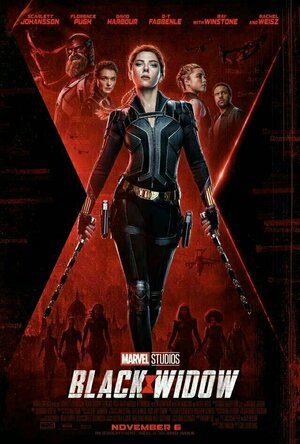
Marketed as a superhero film, Black Widow is also a spy thriller. Johansson has stated that films such as Logan, Harrison Ford’s The Fugitive, and Terminator 2: Judgment Day were influences. After Civil War, Thaddeus Ross (William Hurt) is on the hunt for Natasha Romanoff. Women like Natasha who have had similar training in a torturous training facility known as The Red Room are victims to brainwashing by a man named Dreykov (Ray Winstone), but a serum ends up in Natasha’s hands that can break Dreykov’s brainwashing. Natasha begins searching for The Red Room and Dreykov, which also has her crossing paths with other spies that posed as her family members; her “sister” Yelena Belova (Florence Pugh), her “father” Alexai Shostakov (David Harbour), and her “mother” Melina Vostokoff (Rachel Weisz).
The biggest selling point for Black Widow is that it’s a mostly female cast in front of and behind the camera. The film is directed by Cate Shortland and Black Widow is her first big budget feature. It’s also co-written by female screenwriter Jac Schaeffer (uncredited co-screenwriter of Captain Marvel) and Ned Benson (director of The Disappearance of Eleanor Rigby).
Taskmaster is cool in the film until you realize the character has been altered from his comic book origins. This isn’t uncommon in the MCU or even other live-action superhero adaptations, but what the character has become in the film will be received with mixed results. In the comics, Taskmaster’s real identity is Anthony Masters and he’s a mercenary not unlike Deadpool (the two have fought together and against each other). Copying fighting styles and weapon techniques is similar to the film, but it’s all thanks to his incredible memory and photographic reflexes.
The character is altered to fit the story in the Black Widow film. It’s not necessarily a bad thing as it gives a bigger purpose for the character since it suddenly becomes a major part of Natasha’s storyline, but how the character evolves over the course of the film seems to almost relieve Natasha of her past sins rather than continue to serve as a catalyst. Taskmaster is generally involved in some of the best hand-to-hand combat sequences, but seems to be left hanging by the end of the film. We could see the character again, but whether or not the desire is there to see Taskmaster return is debatable.
The free-fall sequence that has been teased in the trailers is Black Widow’s most unique source of action. There’s exploding elements and falling debris, Natasha trying to save someone’s life, and Taskmaster thrown in attempting to mess up whatever she has planned; plus a bunch of goons bringing up the rear that will obviously be taken out in peak fashion. The sequence is like a duel to the death taking place on the edge of a volcano that’s about to erupt. It’s on the verge of being overkill, but is just awesome enough to trigger all of the adrenaline in your body.
Kevin Feige apparently wanted an equal amount of screen time for both Natasha and Yelena. With the after-credits sequence, Natasha being very dead after the events of Infinity War, and the reports that Yelena may be the new Black Widow, she’s essentially the star of the film and for good reason. The character begins as an individual with a chip on her shoulder from someone from her past, but Florence Pugh is able to add humor and empathy with her performance. Yelena has the best one-liners in the film (“That would be a cool way to die,”) and is essentially the best source of comedic relief (i.e. her hysterectomy rant), as well. She is the one character in the film you’d want to see more of after Black Widow ends.
The storyline of Black Widow doesn’t feel like anything you haven’t experienced cinematically before, especially within the confines of the MCU. An evil man is responsible for pulling the strings of a bunch of women that would kick his ass otherwise. Unfortunately, Ray Winstone doesn’t feel all that intimidating as Dreykov since he doesn’t do much besides talk in Black Widow. The point is made in the film that is all there’s really needed of the character, but Dreykov’s biggest weapon is his mouth. However, his verbal skills don’t seem advantageous enough to make him such a threat let alone keep him alive for over 20 years.
It also feels like every MCU film has its on-screen characters competing over who can get the most laughs; this is something that only got worse after Thor: Ragnarok proved to be a success. Marvel films are already so formulaic with most villains being introduced and killed within the confines of a single film. Natasha’s spy family all feel like minor extensions of herself. Rachel Weisz, despite not aging a day in nearly 30 years, is forgettable as Melina. David Harbour is essentially his character from Stranger things cosplaying as Mr. Incredible with a Russian accent. Even Florence Pugh’s Yelena Belova character is basically a blonde younger version of Natasha even though they’re not related by blood.
Black Widow clocks in at over two hours and it feels like a film that could have been edited down. Witnessing the events of a dysfunctional spy family who then spend good chunks of the film reminiscing about those moments the audience has already seen is redundant storytelling that feels like nothing more than filler.
Black Widow is worth seeing for Florence Pugh, the free-fall action sequence, and anything involving Taskmaster before it’s revealed who is under the mask. Everything else about Black Widow feels like it was done better by the films it was supposedly influenced by and mostly feels like a diluted imitation of Captain America: The Winter Soldier. It’s fantastic that women are getting more opportunities in big summer blockbusters like this one, but it’s also disheartening since their filmmaking skills are shackled to formulaic superfluity that obviously stands in the way of creating extraordinary cinema.
Marc Karlin: Look Again
Book
This book provides almost the only published material on the work of Marc Karlin. On his death in...

Elli H Burton (1288 KP) rated Midnight Sun (Twilight, #5) in Books
Jan 3, 2021
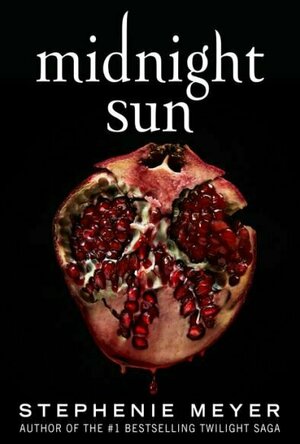

So - lets start with the obvious, I really enjoyed it. I learnt things I didn't know from the first book, it was fascinating to watch the stories unfold from Edwards mind, it made the whole book feel so much different. For example, Despite Twilight being a relatively dark book (the fear, the mystery etc) I always had this sense of light in it, the excitement, love and hope Bella felt. This one is darker with the feeling of Edwards constant seesaw of emotions, his internal arguement as to whether or not he was doing the right thing being with Bella and fighting his natural instinct to kill her and want for her to have a normal human life. I also didn't know he had planned to leave her before New Moon, he was jist biding his time for it to come almost naturally rather than out of the blue.
Even though I know how the story ends, it was definitely an interesting read, learning something knew.
SPOILER sort of.
The way Edwards mind works in this is something you never see in the other books, he can tune into someones mind (other than Bella obvs) and hear the current thoughts but can also see what they see as they process it. This never occured to me before and was really cool to discover.
Which Lie Did I Tell?
Book
Following the bestselling "Adventures in the Screen" Trade Goldman has even more secrets to tell. He...
Waste Matters: Urban Margins in Contemporary Literature
Book
How do those pushed to the margins survive in contemporary cities? What role do they play in today's...
Of Walking in Ice: Munich - Paris: 23 November - 14 December, 1974
Book
This is a poetic meditation on life and death, by one of the most renowned and respected film-makers...