
The Queer Greek Weird Wave: Ethics, Politics and the Crisis of Meaning: 2017
Book
Cinema might not be able to help heal a broken nation but it can definitely help revisit a nation's...
A Brief History of Gangsters
Book
The romanticised American gangster of the Prohibition era has proved an enduringly popular figure....
The Beating of his Wings
Book
The Beating of his Wings by Paul Hoffman is the final instalment in his epic Cale and the Sanctuary...
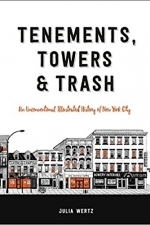
Tenements, Towers & Trash: An Unconventional Illustrated History of New York City
Book
Here is New York as you've never seen it before; the New York behind the New York that you think you...
comedy history
Gareth von Kallenbach (980 KP) rated Scary Stories to Tell in the Dark (2019) in Movies
Aug 9, 2019
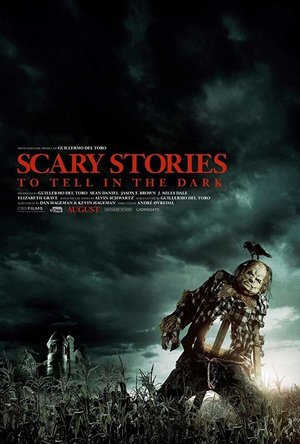

The 80’s was a decade obsessed with the occult and works of fiction that parents thought were written to corrupt the minds of the youth of the age. Before video games were blamed for all the evil in the world there was Heavy Metal music, the fantastical role-playing games such as Dungeons and Dragons and books such as these that parents rallied around and attempted to ban from schools and after school functions. Looking back now at the hysteria that this caused is almost laughable, but for those of us growing up in that time it was a very real threat to the imaginations of youth around the globe. Outside of this brief history lesson however, I wondered how the books would translate into a movie.
Our story begins on Halloween night, the year is 1968 and the Vietnam War and the upcoming presidential elections are on everyone’s mind. Stella (Zoe Colletti) and her nerd friends Chuck (Austin Zajur) and Auggie (Gabriel Rush) decide that this will be the year that they get revenge on the local bully Tommy (Austin Abrams) for all his years of stealing candy from them on Halloween. After things go predictably wrong, the young group of kids are pursued to a drive-in theater where they seek refuge in a car that is owned by another out-of-town youngster named Ramon (Michael Garza). As thanks for “saving” them from a certain beating, Stella and the group decide to take Ramon to a real-life haunted house. A place where a young Sarah Bellows would tell stories to frighten children only for them to end up dead days later. While exploring the house the young group discover the hidden room of young Sarah Bellows and come across her book of “Scary Stories”. Unable to contain her own curiosity, Stella takes the book home with her and watches as the words on the pages turn into living nightmares of their own darkest fears.
Produced by Guillermo del Toro, Patrick Melton and Marcus Dunstan, Scary Stories takes a handful of fan favorites and weaves them into a “scary” story of their very own. Instead of simply being a collection of haunting tales, each one serves a purpose, whether it’s the “Red Dot” or “Harold”, each one is used to drive the story even further along. While at first, I was hoping that it would be a collection of short stories featuring these timeless classics, the way in which each individual story progresses the plot leads to a far more interesting experience overall.
Those looking for a movie filled with frightening tales that will have you reaching for the closest shoulder (whether you know who it belongs to or not) will be in for a bit of disappointment. That’s not to take away from the incredible amount of vision needed to bring these classic stories to life, but it takes on a far more contemporary feel, then the dark stories and supernatural visions of the books that came before it. The film comes away feeling more like Goosebumps and less like Freakshow which makes sense given its PG-13 rating and its obvious pre-teen to teen demographic. The movie is still fun however, particularly for those who fondly remember the stories from their youth and is one that will proudly sit beside the likes of Hocus Pocus when it comes to network television down the road as part of its likely Halloween line-up.
4 out of 5 stars
http://sknr.net/2019/08/08/scary-stories-to-tell-in-the-dark/

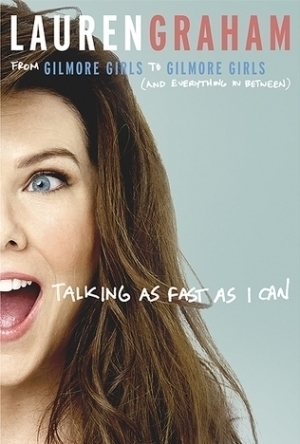

I've read a spate of celebrity memoirs over the years and always felt a tad let down. Of late, I've read Anna Kendrick's and Carrie Fisher's latest. I enjoyed them, but they just didn't completely fit the bill for me. (Is that the phrase? I don't know. This is why I'll never get my own memoir.) But Graham's book was really fun and a step above. I know it won't be that way for everyone. And I'm not just completely swayed by my absolute love for both Lauren and her characters (both Lorelai and Sarah Braverman), because I also love Anna Kendrick, Tina Fey, etc, and didn't adore their memoirs.
Graham's book is filled with fun observations about her work over the years, particularly on Gilmore Girls. I could have read about 100,000 more of her perceptions. Some of them are so unfathomable because they counteract the completely realistic portrayal of the characters on the show. But they are insightful and intriguing. Graham reminisces about her time on the actual show -- a lot of it reinforced by going back and watching the episodes (something she does reluctantly, as she hates watching herself on film). She admits that she doesn't remember a lot about that time without the help of watching the show. I've read a lot of reviews that her insights about that time on the show are slim, and it's true, but I still found them delightful and entertaining. Since she doesn't remember much otherwise, I'd rather have these tidbits than nothing. Plus, there's more to the book than just those memories. (Still, can we all just petition Lauren Graham to keep a diary for the rest of her life going forward?)
While reading the book, it's kind of crazy to realize how much can change in eight years -- between the end of Gilmore Girls and the start of the reunion show on Netflix. Graham points that out too, in the humorous way that only she can pull off. The layout of her book works, and I liked all the pictures she interspersed throughout. She's a strong writer, and the little life lessons at the end of each chapter do not seem too forced. We hear about her childhood, her relationship with Peter Krause, and Graham's aversion to technology. What I enjoyed is that Graham comes across as both believable and appreciative of her fame (unlike some memoirs I've read lately).
Finally, Graham kept a journal during her time on the Netflix revival of Gilmore Girls, so we get a little more insight into that show. My favorites were some of the guest characters, how she had no idea about the four words controversy all these years, and her actual thoughts on those infamous four words. Overall, sure, this book is a little light. But it still spans a lot of Graham's life and I felt like a learned a decent amount about her, considering she's such a private person (something she repeatedly mentions). She's a fun and humorous woman, and I gained some insights about all the various versions of Gilmore Girls I would have never had before. I read this book in basically one day and thoroughly loved it. This book may not have the same impact on someone who isn't a Graham/Gilmore Girls/Parenthood fan, but if you are, it's a fun, quick read.
The Silver Age of DC Comics
Book
With super heroes nearly extinct at the start of the 1950s, DC Comics reignited the fire that would...
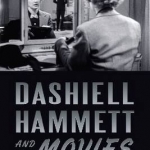
Dashiell Hammett and the Movies
Book
As the father of the hardboiled detective genre, Dashiell Hammett had a huge influence on Hollywood....
On Anger: Race, Cognition, Narrative
Book
Anger is an emotion that affects everyone regardless of culture, class, race, or gender-but at the...
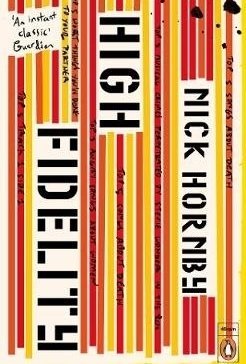
High Fidelity
8.8 Rate It
Book
Nick Hornby's internationally bestselling first novel, available as a Penguin Essential for the...