Search
Search results
Hazel (2934 KP) rated The Polish Wife (The Secret Resistance Series) in Books
Apr 4, 2023
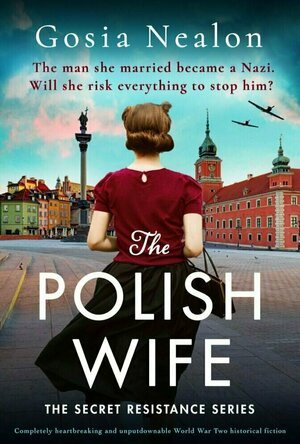
I am gradually getting into reading historical fiction and it is through excellent writers like Gosia Nealon that has kept me seeking out something I wouldn't normally consider.
The Polish Wife is part of The Secret Resistance series but the first I have read; I will say that I think it worked as a standalone very successfully.
Although this is a work of fiction, it feels realistic and I can imagine many of the experiences and events written about in this book are similar to what actually happened at various times throughout World War II. What I do know is that any member of the resistance, be they Polish, French, British, etc., were extremely brave individuals and I think Gosia captured that courage very well.
The Polish Wife is, however, more than a story about the fight against the Nazi regime, it's also about love, honour, freedom, survival and hope. The characters Gosia has created are strong and believable and the story if easy to follow but with twists that will have you holding your breath waiting for the outcome which was definitely not a foregone conclusion.
The Polish Wife is one of the top books of this genre I have read so far; I became totally invested and engrossed from the start and I wouldn't hesitate to recommend it and my thanks must go to Bookouture and NetGalley for enabling me to read and share my thoughts of this great read.
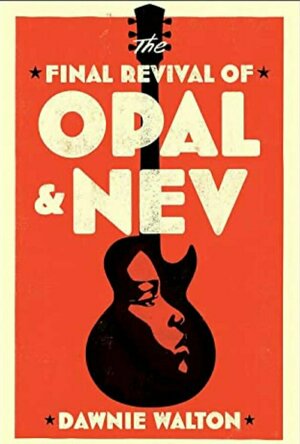
The Polish Wife is part of The Secret Resistance series but the first I have read; I will say that I think it worked as a standalone very successfully.
Although this is a work of fiction, it feels realistic and I can imagine many of the experiences and events written about in this book are similar to what actually happened at various times throughout World War II. What I do know is that any member of the resistance, be they Polish, French, British, etc., were extremely brave individuals and I think Gosia captured that courage very well.
The Polish Wife is, however, more than a story about the fight against the Nazi regime, it's also about love, honour, freedom, survival and hope. The characters Gosia has created are strong and believable and the story if easy to follow but with twists that will have you holding your breath waiting for the outcome which was definitely not a foregone conclusion.
The Polish Wife is one of the top books of this genre I have read so far; I became totally invested and engrossed from the start and I wouldn't hesitate to recommend it and my thanks must go to Bookouture and NetGalley for enabling me to read and share my thoughts of this great read.
The Final Revival of Opal and Nev
Book
A queen of punk before her time. A duo on the brink of stardom. A night that will define their story...
Historical Fiction Music Feminism Race USA
Death in a Blackout
Book
The first in a brand-new WWII historical mystery series introduces WPC Billie Harkness - a female...
Mark @ Carstairs Considers (2560 KP) rated Poirot: Hallowe'en Party in Books
Feb 2, 2023
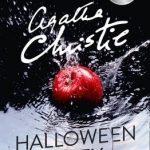
Drowned in the Apple Bobbing Tub
Poirot is called to a small British village after a tragedy at a Hallowe’en party takes place. Someone used the tub that the guests had bobbed for apples in to drown Joyce, a thirteen year old girl who was helping with the event. Earlier in the evening, she had bragged that she had witnessed a murder, however the residents of the village didn’t take her seriously since she was always embellishing if not outright lying about things. If that wasn’t the motive, what happened to her?
Yes, I picked this particular book to read this year because of the upcoming movie “inspired” by it. I suspect the movie will be vastly different, but we will see. The book originally came out in 1969, and you can tell with some of the theories that Poirot hears about what happened. It was interesting to see how society was thinking about some of these issues back then. My biggest issue was the victim’s age, it’s just not something I’m used to. However, I was drawn into the story, interested in finding out exactly what happened. The characters could have been a little sharper, but they did help make me care about the story. I was on the right track, but didn’t have everything pieced together when we reached the climax, which was pretty thrilling. It’s easy to see why this is a lesser-known book from Agatha Christie, but it is definitely enjoyable.
Mark @ Carstairs Considers (2560 KP) rated Union Jacked in Books
Sep 3, 2022
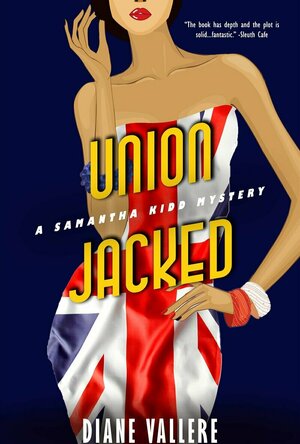
Retirement Parties, Strikes, and Murder
A British investment firm has bought out Travada, the local department store were Samantha Kidd works as a buyer. She’s struggling to match what she thinks the store should be selling with her new directives. Meanwhile, many of the employees are on strike, and Samantha is planning a retirement party for Detective Loncar. When Detective Loncar stops by the store on day, he’s on sight when someone shoots a gun. He and the leader of the strike are both shot. Who was the target? Can Samantha figure out what is going on?
Parts of the premise of this book stretch credibility a bit, but I was quickly caught up in the story and didn’t care. With everything happening, the story was fast paced and kept me engaged right up to the ending. The ending took a bit of thinking on my end, but it does make sense. What doesn’t make the sense is the timelines. It’s not anything that impacts the story, but Samantha can’t keep the days of the story straight or when some of her last adventures happened in relation to each other. On the other hand, I still enjoyed my time in the characters, new and old, and appreciated the growth we saw in Samantha. The humor is still sharp as well; I was grinning when I wasn’t laughing. Fans of the series will enjoy this adventure for sure.
Hazel (1853 KP) rated How Not to Fall in Love, Actually: A Laugh-Out-Loud Romantic Comedy in Books
Dec 7, 2018
<i>I received this book for free through Goodreads First Reads.</i>
“Life, as any chancer knows, is 10% planning, 10% design and 80% totally winging it …” and Catherine Bennetto’s debut novel <i>How Not to Fall in Love, Actually</i> provides a perfect example. The protagonist, Emma George, does not have the most stable of lives: a job she is not that great at, a disappointing boyfriend, and not much hope for the future. Clinging on to dreams of working in the film industry in New York, Emma plods on in her frustrating London job, however, things are due to get a lot worse.
A quick succession of events leaves Emma boyfriend-less, homeless, penniless, grandmother-less, and, to top it off, pregnant. Although letting off a woe-is-me aura, Emma does not realise how fortunate she is. A series of serendipitous incidents, a fashion-obsessed mother, and a sister on the other side of the world make Emma’s life more bearable. Moving into her late grandmother’s Wimbledon cottage and acquiring a handsome lodger, with a loving family just around the corner, Emma’s life has the potential to be happier than it has ever been before – if only she could see that.
<i>How Not to Fall in Love, Actually</i> (a title presumably inspired by the film Love Actually) is a typical British romantic comedy that provides light-hearted relief with its jovial narrative. Full of eccentric characters – a foul-mouthed four-year-old, a felony-obsessed octogenarian, and a harried mother of four – this novel is certain to entertain, although whether it deserves the “laugh-out-loud” status it promises is questionable (but then I am more of a laugh-inside type of reader).
One of the best things about this book – and many British chick-lit – is the authenticity of the characters and settings. Although a few of the scenarios may be toward the extreme end of the scale, none of the occurrences are too far-fetched, and all the characters are relatable in some way, despite their idiosyncrasies.
Personally, I tend to avoid chick-lit, finding them rather lowbrow and written for the sake of writing. Books that have love or sexual encounters as their key theme are not something I enjoy. Therefore, I was pleasantly surprised when <i>How Not to Fall in Love, Actually</i> exceeded these rather low expectations. Admittedly, there are one too many sexual references and far too much swearing, particularly from a four-year-old character – although that does add to the overall humour - but the general storyline was enjoyable. Despite the title hinting at a love-focused story, there were so many other elements to the plot, resulting in a much more interesting novel.
<i>How Not to Fall in Love, Actually</i> is obviously targeted at women, but can be enjoyed by adults of all ages. Those in their twenties and thirties may be able to relate to the struggles Emma is dealing with, whereas older generations may be able to reminisce about their past dilemmas. Whatever the reader’s situation, this book brings laughter, relaxation and the realisation that life is not so bad.
“Life, as any chancer knows, is 10% planning, 10% design and 80% totally winging it …” and Catherine Bennetto’s debut novel <i>How Not to Fall in Love, Actually</i> provides a perfect example. The protagonist, Emma George, does not have the most stable of lives: a job she is not that great at, a disappointing boyfriend, and not much hope for the future. Clinging on to dreams of working in the film industry in New York, Emma plods on in her frustrating London job, however, things are due to get a lot worse.
A quick succession of events leaves Emma boyfriend-less, homeless, penniless, grandmother-less, and, to top it off, pregnant. Although letting off a woe-is-me aura, Emma does not realise how fortunate she is. A series of serendipitous incidents, a fashion-obsessed mother, and a sister on the other side of the world make Emma’s life more bearable. Moving into her late grandmother’s Wimbledon cottage and acquiring a handsome lodger, with a loving family just around the corner, Emma’s life has the potential to be happier than it has ever been before – if only she could see that.
<i>How Not to Fall in Love, Actually</i> (a title presumably inspired by the film Love Actually) is a typical British romantic comedy that provides light-hearted relief with its jovial narrative. Full of eccentric characters – a foul-mouthed four-year-old, a felony-obsessed octogenarian, and a harried mother of four – this novel is certain to entertain, although whether it deserves the “laugh-out-loud” status it promises is questionable (but then I am more of a laugh-inside type of reader).
One of the best things about this book – and many British chick-lit – is the authenticity of the characters and settings. Although a few of the scenarios may be toward the extreme end of the scale, none of the occurrences are too far-fetched, and all the characters are relatable in some way, despite their idiosyncrasies.
Personally, I tend to avoid chick-lit, finding them rather lowbrow and written for the sake of writing. Books that have love or sexual encounters as their key theme are not something I enjoy. Therefore, I was pleasantly surprised when <i>How Not to Fall in Love, Actually</i> exceeded these rather low expectations. Admittedly, there are one too many sexual references and far too much swearing, particularly from a four-year-old character – although that does add to the overall humour - but the general storyline was enjoyable. Despite the title hinting at a love-focused story, there were so many other elements to the plot, resulting in a much more interesting novel.
<i>How Not to Fall in Love, Actually</i> is obviously targeted at women, but can be enjoyed by adults of all ages. Those in their twenties and thirties may be able to relate to the struggles Emma is dealing with, whereas older generations may be able to reminisce about their past dilemmas. Whatever the reader’s situation, this book brings laughter, relaxation and the realisation that life is not so bad.
BookblogbyCari (345 KP) rated The News: A User's Manual in Books
Aug 5, 2018
I believe this book has the wrong title. Let me explain.
Despite having the title “The News: A User’s Manual”, the book reads like a wish-list of how de Botton wants news journalists and media editors to present and publish the news. Furthermore, if it was intended to be read by the layperson, de Botton must have had the dual intention of increasing the lay reader’s vocabulary. Several of the words I looked up in my offline dictionary app weren’t to be found.
I liked how his views were presented though - this short book is split into 8 main topics: politics, world news, economics, celebrity, disaster, consumption and a conclusion. Each topic is split into further sub-topics, and each of the points being made in these sub-topics is numbered and lasts about a page. This organization doesn’t disrupt the fluidity, however, and the way that points are made in such small sections provides the perfect opportunity to pause and reflect on each point made.
It presents the author’s views on what the news should ideally be and how it can enrich us. He made numerous valid points, but for the purposes of this review, I will concentrate on those I consider to be the most important. The book is written for a British audience, using several British news story excerpts to highlight de Botton’s points. His points are all well put and I didn’t really want to have to paraphrase them for this review for that very reason.
Firstly, the perception that political news is boring is not a minor issue. Often there is an important matter which fails to engage us, and we can react more strongly to matters which affect very few people.
Another valid point is how the process of the reader developing views on serious issues on which so little information is actually conveyed, makes us feel like we are being ruled by crooks and idiots who seem to be ignoring logical solutions. The news fails to explain why difficult decisions are so difficult.
On celebrity news, de Botton portrays hero worship as childish and demeaning, a sign that we find ourselves inadequate. He argues that celebrity news should be used as a self-improvement tool, focusing on what we can learn from the individual.
De Botton believes that the purpose of dramatic tragedies should be so we can compare ourselves to the villain, that the stories read like fables and imparted a moral statement. We are a hideously flawed species, he says, and the criminals need to be humanized if we are to learn anything from these kinds of stories.
And on that note, I shall say I have learned something from this book. The contrast de Botton demonstrates between how the news is portrayed and how it ought to be to best enrich us, will ensure I will take his comments into consideration when I read/watch the news or am deciding on my personalization of news received on news apps. The purpose of the editors may be to sell advertising space, but my intention in perceiving the news is to obtain a fair and accurate perspective of the world around me.
Despite having the title “The News: A User’s Manual”, the book reads like a wish-list of how de Botton wants news journalists and media editors to present and publish the news. Furthermore, if it was intended to be read by the layperson, de Botton must have had the dual intention of increasing the lay reader’s vocabulary. Several of the words I looked up in my offline dictionary app weren’t to be found.
I liked how his views were presented though - this short book is split into 8 main topics: politics, world news, economics, celebrity, disaster, consumption and a conclusion. Each topic is split into further sub-topics, and each of the points being made in these sub-topics is numbered and lasts about a page. This organization doesn’t disrupt the fluidity, however, and the way that points are made in such small sections provides the perfect opportunity to pause and reflect on each point made.
It presents the author’s views on what the news should ideally be and how it can enrich us. He made numerous valid points, but for the purposes of this review, I will concentrate on those I consider to be the most important. The book is written for a British audience, using several British news story excerpts to highlight de Botton’s points. His points are all well put and I didn’t really want to have to paraphrase them for this review for that very reason.
Firstly, the perception that political news is boring is not a minor issue. Often there is an important matter which fails to engage us, and we can react more strongly to matters which affect very few people.
Another valid point is how the process of the reader developing views on serious issues on which so little information is actually conveyed, makes us feel like we are being ruled by crooks and idiots who seem to be ignoring logical solutions. The news fails to explain why difficult decisions are so difficult.
On celebrity news, de Botton portrays hero worship as childish and demeaning, a sign that we find ourselves inadequate. He argues that celebrity news should be used as a self-improvement tool, focusing on what we can learn from the individual.
De Botton believes that the purpose of dramatic tragedies should be so we can compare ourselves to the villain, that the stories read like fables and imparted a moral statement. We are a hideously flawed species, he says, and the criminals need to be humanized if we are to learn anything from these kinds of stories.
And on that note, I shall say I have learned something from this book. The contrast de Botton demonstrates between how the news is portrayed and how it ought to be to best enrich us, will ensure I will take his comments into consideration when I read/watch the news or am deciding on my personalization of news received on news apps. The purpose of the editors may be to sell advertising space, but my intention in perceiving the news is to obtain a fair and accurate perspective of the world around me.
Darren (1599 KP) rated Villain (1971) in Movies
Jul 25, 2019
Story: Villain starts as we see how gangster Vic Dakin (Burton) controls London, he has people that will grass on him to the cops with Inspector Bob Matthews (Davenport) trying to bring down the criminal.
Vic continues to use his business connections to stay ahead of the police, with Wolfe Lissner (McShane) being the latest person the inspectors are turning to try and give up Vic’s secrets.
Thoughts on Villain
Characters – Vic Dakin runs London with his criminal activities, he is feared by most people and if you cross him, you will get hurt if not killed. He has become over confident that he can get away with anything, making him one of the prime targets for everyone involved in law. Wolf Lissner works for Vic, he is one of the youngster members of the crew and the one that the police are trying to use to turn on him, even if he the one person that Vic will always turn to. Bob Matthews is the inspector that has been trying to bring down Vic for years, he has risen up the ranks, got the people in the gang, but never been able to get the conviction. Gerald Draycott is the politician that is being blackmailed to keep the business under wraps for Vic.
Performances – We do have two big names in his film, first Richard Burton that doesn’t get to show the skill he could bring to a film, while a younger Ian McShane shows us that he could be set for a career in this sidekick gangster role. The rest of the cast are doing all they need to without being in anyway stand out through the film.
Story – The story follows a gangster that has the power over London, the police have been hunting him for years, but he always finds a way to get out of trouble. This time they get closer than ever before and could finally take down one of the biggest gangsters in London. When it comes to the gangster genre, we don’t really ever get much different when it comes to where the story goes, this one is based loosely on the Kray brother, but for some reason only one of the twins. It does feel like we have seen everything before, we don’t get drawn into support either side of the battle and end up feeling like it is just another gangster film.
Crime – The crime world we enter shows us just where the criminals operate and just where the police will need to turn to, in any hope of bringing him down.
Settings – The film is mostly set in London which see just how the criminals operate, where they can get away from crime.
Scene of the Movie – The opening scene as we see just how Vic can operate.
That Moment That Annoyed Me – The final shot.
Final Thoughts – This is a typical British gangster film that starts with an intense opening, only to become a drag as the film unfolds.
Overall: British Gangster 101.
Vic continues to use his business connections to stay ahead of the police, with Wolfe Lissner (McShane) being the latest person the inspectors are turning to try and give up Vic’s secrets.
Thoughts on Villain
Characters – Vic Dakin runs London with his criminal activities, he is feared by most people and if you cross him, you will get hurt if not killed. He has become over confident that he can get away with anything, making him one of the prime targets for everyone involved in law. Wolf Lissner works for Vic, he is one of the youngster members of the crew and the one that the police are trying to use to turn on him, even if he the one person that Vic will always turn to. Bob Matthews is the inspector that has been trying to bring down Vic for years, he has risen up the ranks, got the people in the gang, but never been able to get the conviction. Gerald Draycott is the politician that is being blackmailed to keep the business under wraps for Vic.
Performances – We do have two big names in his film, first Richard Burton that doesn’t get to show the skill he could bring to a film, while a younger Ian McShane shows us that he could be set for a career in this sidekick gangster role. The rest of the cast are doing all they need to without being in anyway stand out through the film.
Story – The story follows a gangster that has the power over London, the police have been hunting him for years, but he always finds a way to get out of trouble. This time they get closer than ever before and could finally take down one of the biggest gangsters in London. When it comes to the gangster genre, we don’t really ever get much different when it comes to where the story goes, this one is based loosely on the Kray brother, but for some reason only one of the twins. It does feel like we have seen everything before, we don’t get drawn into support either side of the battle and end up feeling like it is just another gangster film.
Crime – The crime world we enter shows us just where the criminals operate and just where the police will need to turn to, in any hope of bringing him down.
Settings – The film is mostly set in London which see just how the criminals operate, where they can get away from crime.
Scene of the Movie – The opening scene as we see just how Vic can operate.
That Moment That Annoyed Me – The final shot.
Final Thoughts – This is a typical British gangster film that starts with an intense opening, only to become a drag as the film unfolds.
Overall: British Gangster 101.
Oxford Handbook of Clinical Pharmacy
Medical and Book
App
By downloading this “frame” app you will be given the opportunity to PURCHASE the latest version...
World Prayer Time
Reference and Travel
App
600,000+ downloads !!!!!! App Features ------------ - Imsak, Fajr, Sunrise, Dhuhr, Asr, Maghrib...