Search
Search results
Mekkin B. (122 KP) rated His Majesty's Dragon in Books
Sep 14, 2017
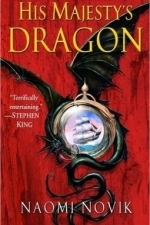
Set during the Napoleonic War, British officer and gentleman Captain William Laurence has his life turned upside down after seizing a rare dragon egg from a captured French vessel. Led by an unwavering sense of duty and a growing affection for his new dragonet, Temeraire, he must leave behind everything he knows to join the mysterious and disreputable Aerial Corps.
Naomi Novik knows her stuff. This book is chock full of amazing worldbuilding. Her mastery of naval maneuvers, English society, and the history of the Napoleonic wars is immersive in its completeness. She wastes no time coddling the reader with infodumps or explanations, although the drawback is that it is occasionally so detailed and alien to me that my eyes would glaze over and slide completely past a paragraph filled with information about where Napoleon's forces were and what they were doing.
Laurence himself gets flack as a character for being stiff and "unprogressive", but I feel this is somewhat unwarranted. He's compelling precisely because he exhibits a mindset that would be entirely normal for a man of his station in his time, and slowly has to adjust everything he thinks about class, gender, and duty. His stiffness and reserve can seem alien at times, but we empathize completely with his love of the bright and lovely Temeraire.
This book does have some pacing problems. It is slow in places, particularly during their training and Loch Laggan, and in others cuts chapters far too early, leaving one feeling a bit of whiplash as the next chapter starts up.
Still, the premise is amazing, the dragons are glorious, and I spent an entire night reading this book cover to cover. If you like Bloody Jack, or wondered what How To Train Your Dragon would look like if it were set during the Napoleonic war, you'll definitely enjoy this one.
Naomi Novik knows her stuff. This book is chock full of amazing worldbuilding. Her mastery of naval maneuvers, English society, and the history of the Napoleonic wars is immersive in its completeness. She wastes no time coddling the reader with infodumps or explanations, although the drawback is that it is occasionally so detailed and alien to me that my eyes would glaze over and slide completely past a paragraph filled with information about where Napoleon's forces were and what they were doing.
Laurence himself gets flack as a character for being stiff and "unprogressive", but I feel this is somewhat unwarranted. He's compelling precisely because he exhibits a mindset that would be entirely normal for a man of his station in his time, and slowly has to adjust everything he thinks about class, gender, and duty. His stiffness and reserve can seem alien at times, but we empathize completely with his love of the bright and lovely Temeraire.
This book does have some pacing problems. It is slow in places, particularly during their training and Loch Laggan, and in others cuts chapters far too early, leaving one feeling a bit of whiplash as the next chapter starts up.
Still, the premise is amazing, the dragons are glorious, and I spent an entire night reading this book cover to cover. If you like Bloody Jack, or wondered what How To Train Your Dragon would look like if it were set during the Napoleonic war, you'll definitely enjoy this one.
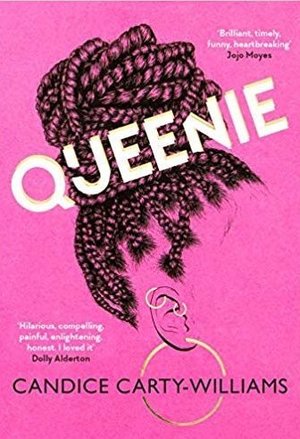
It’s not often that we’re given the chance to read a book set in the UK from a black protagonists perspective, and here is a great book to do just that. I’d also like to say though, that although this book was lauded as a cross between Bridget Jones and Americanah, I’m relieved that I’ve read a book that was wholly it’s own story. It’s not a comedy, although there are parts that were funny, and it’s not a story of immigration, because Queenie is second generation British-Jamaican. However, it does hold up to us issues surrounding race - how when a white person thinks they’re being accepting of other cultures, many of them aren’t - and mental health.
Queenie has a breakdown after she splits up with her (white) boyfriend, and suffers so badly with anxiety. Her family believe that the ‘cure’ is to pull herself together, and can’t understand the need for counselling. I’m glad she does it though, because her actions after the split had involved risky sexual behaviour, and her life (personal and work) was unravelling. This is just what happens to some people with anxiety. And Queenie’s childhood has been far from ideal.
Queenie is a great character though: she’s funny, intelligent, outspoken, sensitive and independent. She has some great friends, and her family, even though they have their faults (and whose family doesn’t?!), are there for her - and they’re all fascinating characters.
I really, really enjoyed this. It’s not some cute and fluffy read, and it can be quite raw at times.
For those who appreciate trigger warnings, there may well be some in this book, but it’s a book that reflects Queenie’s life.
Candice Carty-Williams will definitely be a name that I watch out for in future!
Many thanks to NetGalley and the publisher for my copy of this book.
Queenie has a breakdown after she splits up with her (white) boyfriend, and suffers so badly with anxiety. Her family believe that the ‘cure’ is to pull herself together, and can’t understand the need for counselling. I’m glad she does it though, because her actions after the split had involved risky sexual behaviour, and her life (personal and work) was unravelling. This is just what happens to some people with anxiety. And Queenie’s childhood has been far from ideal.
Queenie is a great character though: she’s funny, intelligent, outspoken, sensitive and independent. She has some great friends, and her family, even though they have their faults (and whose family doesn’t?!), are there for her - and they’re all fascinating characters.
I really, really enjoyed this. It’s not some cute and fluffy read, and it can be quite raw at times.
For those who appreciate trigger warnings, there may well be some in this book, but it’s a book that reflects Queenie’s life.
Candice Carty-Williams will definitely be a name that I watch out for in future!
Many thanks to NetGalley and the publisher for my copy of this book.
Mark @ Carstairs Considers (2510 KP) rated Spy School British Invasion in Books
May 18, 2019
Can Ben Track SPYDER Without Causing an International Incident?
Ben Ripley and his team of fellow spies think they have been handed the key to finally taking down the evil organization SPYDER. As it so happens, the key is a literal key. Ben’s friends piece together that it most likely belongs to a storage space under the British Museum. Since no one knows who in the CIA is really a SPYDER double agent, only Ben and his friends from Spy School can be trusted to go and retrieve whatever the item might be. And so Ben, Mike, Zoe, Erica, and Erica’s parents make their way to London. What will they find when they land?
This book picks up moments after the previous book in the series ended, so it does discuss some of what happened in that book. As a result, if you want to go into that book completely surprised, you’ll want to read the books in order. But that’s no problem since the entire series is so fun. Once again, we get a wild ride filled with twists, turns, and extremely narrow escapes. Yet in the quieter moments, we get to see some depth and growth in the characters, which I loved. The action can be a bit over the top, but that plays into the comedy of the book and series perfectly. I might not have laughed quite as much as I did while reading the previous book, but I was chuckling before I finished the first page, and I did grin and laugh the entire way through. Middle Graders will love this book, and anyone looking for a fun read will be glad they picked it up as well.
Mayhawke (97 KP) rated The Strange Disappearance of a Bollywood Star in Books
Feb 13, 2018
Kahn is establishing himself as a solid and reliable voice in cosy crime
Vaseem Khan is still a relatively new voice in cozy crime fiction, but I have been with him since the start, and on current showing I shall be with him long into the future.
One of the great pleasures for crime fiction readers of the last decade has been the influx of new voices as - in the search for something new and different - the British market has been opened up to translations from abroad (Camilleri, Akunin, Vargas) and English-language fiction set in different cultural environments (No.1 Ladies Detective Agency, Aurelio Zen, Dr. Siri Paboun). Khan has proven himself a skillful and delightful contributor to the latter category, lifting the vibrant sounds, colours, smells and characters of India (good and bad) from the page as he weaves remarkably clever and entertaining stories of brutal thefts, murder and abduction for the protagonist, Inspector Chopra (Retd) & and his mystical and cheeky four-legged sidekick, Ganesha, to unravel.
His latest book sees a young and arrogant Bollywood star abducted on the eve of his most important film shoot to date. As the biggest and most expensive film in Bollywood history grinds to a halt money, reputations and lives are on the line and Chopra is employed to quietly find and return the prodigal starlet to his duties. It quickly becomes apparent, though, that the boy has not just had a Bieberesque tantrum, and that the funding for, and personalities behind the movie may be a lot murkier and more complex than they seem.
Already on his third book in two years he promises to be as prolific as he is enjoyable.
One of the great pleasures for crime fiction readers of the last decade has been the influx of new voices as - in the search for something new and different - the British market has been opened up to translations from abroad (Camilleri, Akunin, Vargas) and English-language fiction set in different cultural environments (No.1 Ladies Detective Agency, Aurelio Zen, Dr. Siri Paboun). Khan has proven himself a skillful and delightful contributor to the latter category, lifting the vibrant sounds, colours, smells and characters of India (good and bad) from the page as he weaves remarkably clever and entertaining stories of brutal thefts, murder and abduction for the protagonist, Inspector Chopra (Retd) & and his mystical and cheeky four-legged sidekick, Ganesha, to unravel.
His latest book sees a young and arrogant Bollywood star abducted on the eve of his most important film shoot to date. As the biggest and most expensive film in Bollywood history grinds to a halt money, reputations and lives are on the line and Chopra is employed to quietly find and return the prodigal starlet to his duties. It quickly becomes apparent, though, that the boy has not just had a Bieberesque tantrum, and that the funding for, and personalities behind the movie may be a lot murkier and more complex than they seem.
Already on his third book in two years he promises to be as prolific as he is enjoyable.
ClareR (6106 KP) rated Not That Bad: Dispatches from Rape Culture in Books
Nov 23, 2018
This is an important book.
This is such an important book. Most of the contributions are from women who have experienced sexual assault, but there are contributions from men, and trans women as well. Some are terrible, life changing stories, some are stories of numerous occurrences that chip away at the writers self confidence and feelings of safety. Actually, the upshot is that a vast majority of women do not feel safe anymore.
As I began reading this, I thought that I was one of the lucky that had never experienced any of these things, but as I read on, I realised that I actually had. I think that the cat-calling, touching and looks are something that we don't so much expect as that we are just used to them. The fact that in my younger years I was very outspoken and told someone who touched me to keep their hands to themselves, or told a commenter to keep their mouths shut, probably meant that I was more lucky than effective when they backed down or apologised. And I also think that British culture was very different 20 years ago, as was I.
What saddens me, is that the people who should really read this probably won't. And if they do, they'll probably brush it off as women who exaggerate or are out to attack men, are men haters. But these are all genuine experiences. This isn't fiction. It's heart breaking, raw and something that shouldn't have any place in our modern world. I've never understood the need of some people to control, manipulate and hurt others, but I think I'm probably naive. Or hopeful, perhaps. Somehow, we need to stop this cycle of abuse and hurt, and until then, stories like this will continue.
As I began reading this, I thought that I was one of the lucky that had never experienced any of these things, but as I read on, I realised that I actually had. I think that the cat-calling, touching and looks are something that we don't so much expect as that we are just used to them. The fact that in my younger years I was very outspoken and told someone who touched me to keep their hands to themselves, or told a commenter to keep their mouths shut, probably meant that I was more lucky than effective when they backed down or apologised. And I also think that British culture was very different 20 years ago, as was I.
What saddens me, is that the people who should really read this probably won't. And if they do, they'll probably brush it off as women who exaggerate or are out to attack men, are men haters. But these are all genuine experiences. This isn't fiction. It's heart breaking, raw and something that shouldn't have any place in our modern world. I've never understood the need of some people to control, manipulate and hurt others, but I think I'm probably naive. Or hopeful, perhaps. Somehow, we need to stop this cycle of abuse and hurt, and until then, stories like this will continue.
<i>This ARC was provided by the publisher via NetGalley in exchange for an honest review</i>
<i>Captive</i> is the debut young adult thriller by British author A. J. Grainger. Set in contemporary Britain, sixteen-year-old Robyn, the daughter of the Prime Minister, is kidnapped and held hostage by three animal rights activists. Until the government agrees to release the person accused of the attempted assassination of the PM four month previously, they refuse to free Robyn from captivity. It soon becomes clear that a lot of lies and cover-ups have been occurring and it is difficult to know whom to trust.
The novel gets off to a great start with a lot of action as Robyn and her family is ambushed on their way to visit grandparents. The first half of the book is really exciting as the reader slowly gets to grips with what is going on.
Grainger writes really well with great use of descriptive words and phrases. To keep the reader engaged and to lengthen the story she includes other interesting details that are educational in a way – for example, knowledge about birds.
Unfortunately the second half of the book is not as exciting as the first. A relationship starts developing between Robyn and one of the captors, which is rather unoriginal and predictable.
One thing that I particularly liked about this novel was Robyn’s character. Naturally people may expect daughters of prime ministers to be snobbish and spoilt but Robyn was the complete opposite. She did not care about where her clothes came from or whether or not she went to parties. Robyn was the representation of the average teenage girl preparing for her GCSEs.
Despite the clichéd captor/hostage situation <i>Captive</i> is a very enjoyable novel with a few exhilarating twists in the plot.
<i>Captive</i> is the debut young adult thriller by British author A. J. Grainger. Set in contemporary Britain, sixteen-year-old Robyn, the daughter of the Prime Minister, is kidnapped and held hostage by three animal rights activists. Until the government agrees to release the person accused of the attempted assassination of the PM four month previously, they refuse to free Robyn from captivity. It soon becomes clear that a lot of lies and cover-ups have been occurring and it is difficult to know whom to trust.
The novel gets off to a great start with a lot of action as Robyn and her family is ambushed on their way to visit grandparents. The first half of the book is really exciting as the reader slowly gets to grips with what is going on.
Grainger writes really well with great use of descriptive words and phrases. To keep the reader engaged and to lengthen the story she includes other interesting details that are educational in a way – for example, knowledge about birds.
Unfortunately the second half of the book is not as exciting as the first. A relationship starts developing between Robyn and one of the captors, which is rather unoriginal and predictable.
One thing that I particularly liked about this novel was Robyn’s character. Naturally people may expect daughters of prime ministers to be snobbish and spoilt but Robyn was the complete opposite. She did not care about where her clothes came from or whether or not she went to parties. Robyn was the representation of the average teenage girl preparing for her GCSEs.
Despite the clichéd captor/hostage situation <i>Captive</i> is a very enjoyable novel with a few exhilarating twists in the plot.
David McK (3731 KP) rated Excavation in Books
Jan 28, 2019
I normally quite like James Rollins' novels, but this one? Not so much.
Although it is in his usual pseudo sci-fi style of writing which I have no problem with, I don't know whether the reason I wasn't really that sold on this one is due to the rather ridiculous (even for him) plot devices used, that fact that it's not one of his Sigma Force novels (best described as scientists with guns) and so lacks that over-reaching plot strands that connects all those novels, or (more likely) that he seems to share the common American misconception of my home town of Belfast as being (almost) a bombed out Beirout. Choice lines include:
"Surviving among the constant gunfire and bombings between the warring Irish factions and the British military had taught Maggie O'Donnell the vlaue of a good hiding place"
"Maggie knew that expression. A childhood friend ... had worn that same shocked face when caught by a stray bullet during a firefight back in Belfast"
"Henry crossed in front of the man and knocked the rifle towards Maggie. 'You know how to use that?' / 'I'm from Belfast' she said, retreiving the gun"
I mean, really? I could understand it a bit better if the book was set during the 70s, or if she was described as being older, but for somebody who I got the impression was meant to be in her 30s?
If this had been the first James Rollins book I had read I don't think I would have bothered with any others! Thankfully, I had the good fortune to read one of his far-superior Sigma Force novels first instead and hope that this is just a momentary blip on his track record - I also read somewhere that this is one of his earlier novels which, perhaps, excuses some of the flimsy plot devices used.
Although it is in his usual pseudo sci-fi style of writing which I have no problem with, I don't know whether the reason I wasn't really that sold on this one is due to the rather ridiculous (even for him) plot devices used, that fact that it's not one of his Sigma Force novels (best described as scientists with guns) and so lacks that over-reaching plot strands that connects all those novels, or (more likely) that he seems to share the common American misconception of my home town of Belfast as being (almost) a bombed out Beirout. Choice lines include:
"Surviving among the constant gunfire and bombings between the warring Irish factions and the British military had taught Maggie O'Donnell the vlaue of a good hiding place"
"Maggie knew that expression. A childhood friend ... had worn that same shocked face when caught by a stray bullet during a firefight back in Belfast"
"Henry crossed in front of the man and knocked the rifle towards Maggie. 'You know how to use that?' / 'I'm from Belfast' she said, retreiving the gun"
I mean, really? I could understand it a bit better if the book was set during the 70s, or if she was described as being older, but for somebody who I got the impression was meant to be in her 30s?
If this had been the first James Rollins book I had read I don't think I would have bothered with any others! Thankfully, I had the good fortune to read one of his far-superior Sigma Force novels first instead and hope that this is just a momentary blip on his track record - I also read somewhere that this is one of his earlier novels which, perhaps, excuses some of the flimsy plot devices used.
ClareR (6106 KP) rated Valkyrie (2008) in Movies
Jun 23, 2019
Surprisingly good!
I will hold my hands up and admit that I can be very critical of films set in Germany and particularly during the Second World War. I’m a bit of a germanophile - I studied German language, literature and history at university. I read into the furore that surrounded the making of this film: the Germans didn’t want Tom Cruise to play the main part because of his affiliation with Scientology (Germans believe it’s a cult, and therefore want nothing to do with it), and Claus von Stauffenberg’s eldest son even asked Cruise to stand down from the role. They all had a rethink though, and decided that it was more important that this story was actually told. And I have to agree with them. There’s a belief that all Germans were complicit in the actions of Hitler and his National Socialists, but this isn’t true. What might be true, is that people were terrified that they would be killed for any opposing thoughts or actions - and they were right.
I was really surprised (pleasantly!) by Cruises acting in this. After my initial horror at the opening sequence where he was talking in German (my children asked if he would be speaking German throughout, and were fully prepared to go to bed early - they didn’t want to read subtitles for a whole movie, I didn’t want to hear the shocking pronunciation!😆), it really picked up! The British actors really made it for me (I could well be accused of bias, but well, I don’t care 🤷🏼♀️), and Eddie Izzard was the most surprising - I really need to stop being surprised that he can act well!
It’s a good film! We had a good family film night anyway, and I think it’s worth watching.
I was really surprised (pleasantly!) by Cruises acting in this. After my initial horror at the opening sequence where he was talking in German (my children asked if he would be speaking German throughout, and were fully prepared to go to bed early - they didn’t want to read subtitles for a whole movie, I didn’t want to hear the shocking pronunciation!😆), it really picked up! The British actors really made it for me (I could well be accused of bias, but well, I don’t care 🤷🏼♀️), and Eddie Izzard was the most surprising - I really need to stop being surprised that he can act well!
It’s a good film! We had a good family film night anyway, and I think it’s worth watching.
Gareth von Kallenbach (980 KP) rated Ninja Assassin (2009) in Movies
Aug 8, 2019
The Ozunu Clan has long been secretly kidnapping and training children to become ninjas. But when a set of Europol agents get a little too close to discovering the secret, it is up to a former student of the Clan, Raizo (Rain), to defend the agents against the brutal ninjas’ attacks.
The film is loosely plotted at best, but it does manage to keep the viewer interested. Maybe it is the consistent comedy mixed with undeniable bloodshed. And there is bloodshed. “Ninja Assassin” is absolutely splattered with gore, weapons, and the unexpected attack that only ninjas can bring.
Joel Silver, of “Lethal Weapon”, “Die Hard”, and “Predator” fame, and the renowned Wachowski brothers, creators of “the Matrix”, are the producers behind “Ninja Assassin”. Therefore it should come as no surprise that the fight scenes are also engrossing in this ninja-tacular flick.
The international cast includes Korean superstar Rain as Raizo and martial arts regular Sho Kosugi, as the ninja master. The appearance of Ben Miles (from the hit British TV show “Coupling”) as Ryan Maslow, superior to the Europol officer and lead Mika Coretti (Naomie Harris), also enhances the casting of this one of kind film.
And it is one of a kind. What is most appealing about “Ninja Assassin” is that it truly displays ninjas in the way every child thinks about them; cunning, violent, and awesome. Somehow in a world full of films that feel like a new version of the same old thing, “Ninja Assassin” has… dare I write… a freshness.
Keeping you on the edge of your seat, focused on the nonstop 360 degree fight sequences and funny one-liners, “Ninja Assassin” brings more than expected to the big screen.
The film is loosely plotted at best, but it does manage to keep the viewer interested. Maybe it is the consistent comedy mixed with undeniable bloodshed. And there is bloodshed. “Ninja Assassin” is absolutely splattered with gore, weapons, and the unexpected attack that only ninjas can bring.
Joel Silver, of “Lethal Weapon”, “Die Hard”, and “Predator” fame, and the renowned Wachowski brothers, creators of “the Matrix”, are the producers behind “Ninja Assassin”. Therefore it should come as no surprise that the fight scenes are also engrossing in this ninja-tacular flick.
The international cast includes Korean superstar Rain as Raizo and martial arts regular Sho Kosugi, as the ninja master. The appearance of Ben Miles (from the hit British TV show “Coupling”) as Ryan Maslow, superior to the Europol officer and lead Mika Coretti (Naomie Harris), also enhances the casting of this one of kind film.
And it is one of a kind. What is most appealing about “Ninja Assassin” is that it truly displays ninjas in the way every child thinks about them; cunning, violent, and awesome. Somehow in a world full of films that feel like a new version of the same old thing, “Ninja Assassin” has… dare I write… a freshness.
Keeping you on the edge of your seat, focused on the nonstop 360 degree fight sequences and funny one-liners, “Ninja Assassin” brings more than expected to the big screen.
Awix (3310 KP) rated War of the Worlds: Global Dispatches in Books
Feb 3, 2020
Diverse collection of short stories all revisiting the Martian invasion of 1898 (as originally detailed by H.G. Wells). Most (but not all) of the stories are narrated by notables from the period, most (but not all) of these are famous writers: Henry James, Samuel Clemens, Rudyard Kipling, and so on. The collection kind of overlooks the implication that the Martians only actually invade southern England in Wells' novel, but then most adaptations do the same thing, and the stories here aren't even consistent with each other (the fate of Paris varies significantly in the Jules Verne and Pablo Picasso entries).
A bit of a mixed bag, to be honest: some of the stories just restage elements of Wells with a different backdrop, others treat the Martians as a backdrop for more introspective tales, still others indulge in literary pastiche. Unlikely juxtapositions and in-jokes abound - Rudyard Kipling meets Gandhi, Tolstoy meets Stalin, Samuel Clemens (d. 1910) makes reference to John Christopher (b. 1922). The best stories are mostly the ones which recognise the political/satirical subtext powering the Wells novel and attempt to do something similar - so Barbara Hambly's story concerns British imperialism in India, and the effect of the Martians on the situation there, while another looks at the consequences for pre-revolutionary Russia. That said, Connie Willis' Hugo-winning contribution sends the whole conceit of the novel up with a predictable mixture of tongue-in-cheek drollery and sheer absurd silliness, as the unlikely effect of a Martian encounter on the poetry of Emily Dickinson is revealed (especially considering Dickinson died twelve years before the coming of the Martians). The good stories are very good indeed, the less good ones merely a bit tedious. A worthy and worthwhile tribute to the original novel.