
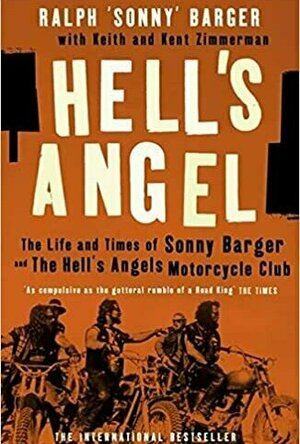
The Life and Times of Sonny Barger and the Hell's Angels Motorcycle Club
Book
The autobiography – the dangerous life and wild times – of Sonny Barger, the legendary leader of...
Healing Visualizations: Creating Health Through Imagery
Book
The comprehensive guide to imagery therapy for: the common cold, bone fractures, arthritis,...
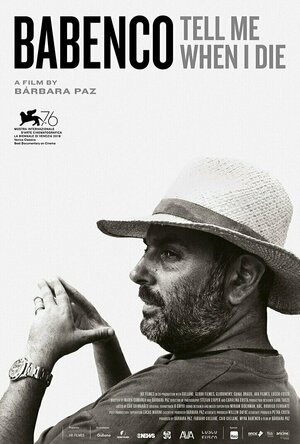
Babenco: Alguém Tem que Ouvir o Coração e Dizer Parou (2019)
10.0 Rate It
Movie
"I have already lived my death and now all that is left is to make a film about it." So said the...
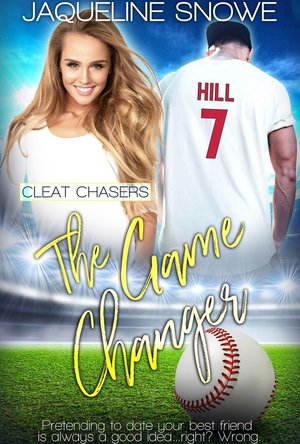
The Game Changer (The Cleat Chasers #2)
Book
Pretending to date your best friend is always a good idea…right? Wrong. Greta Aske has a lot on...
New Adult Contemporary Romance

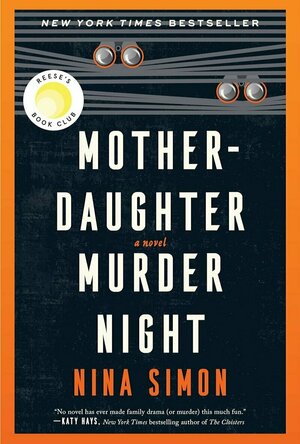
Mother-Daughter Murder Night
5.0 Rate It
Book
High-powered businesswoman Lana Rubicon has a lot to be proud of: her keen intelligence, impeccable...
ClareR (6256 KP) rated The Wren, The Wren in Books
Jul 20, 2024
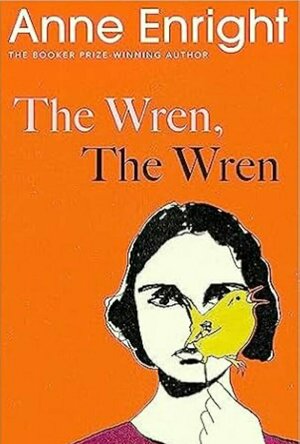
Carmel’s daughter Nell, a Trinity College graduate, discovers just how difficult life is without her mothers help when she strikes out on her own. She meets a man who is abusive towards her.
This is a story that highlights multi-generational family trauma, and probably why both Carmel and Nell have such poor relationships with men. Running alongside this, is the love these women have for one another.
I get that not everyone will like this novel, but I’ve read two of Enright’s novels now and really enjoyed both of them. I read this as a part of the Women’s Prize shortlist, and whilst I realise they can’t all win, The Wren, The Wren really did deserve to be on that list.
Recommended.
5 Minute Movie Guy (379 KP) rated The Fault In Our Stars (2014) in Movies
Jun 26, 2019 (Updated Jun 26, 2019)
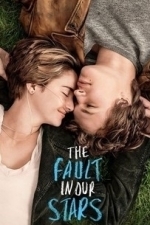

On the surface, it’s easy to dismiss The Fault in Our Stars as being a sappy teenage love affair. I’ll confess that I went into the theater expecting to be fully surrounded by crying teenage girls, while I would be quietly laughing to myself at their heartache. What I surely didn’t anticipate, however, was to be so deeply drawn into the film. Even more surprising is the fact that The Fault in Our Stars has actually turned out to be my favorite movie of the year so far. This is a film that is sincerely heartfelt and unflinchingly genuine. It brings truth to the romantic fantasies we have, and teaches us that we can’t let the fear of possible heartache hold us back from the endless potential of love.
Make no mistake about it, The Fault in Our Stars is a tear-jerker. It’s difficult to watch these lovable characters endure such unjustifiable hardship. Hazel and Augustus are each forced to face a formidable fate that they shouldn’t have to. I really felt a strong attachment to both of them, and found them to be remarkably identifiable. This connection makes it all the more unsettling when their situations turn dire. The reason that The Fault in Our Stars manages to be so effective is because of its authenticity and accessibility. The characters are not only admirable, but relatable. They’re not simply reduced to being unfortunate young cancer patients that we’re meant to feel sorry for. While of course we can sympathize with their condition, it is their compassion and the content of their characters that make them so compelling.
While the film features its fair share of tragedy, I should make it clear that it’s not heart-wrenchingly malicious in the way it deals with its ensuing sadness. This is not a film that is deliberately trying to make anyone feel bad. It is merely being honest in its depiction of the unfairness that often exists in life. While you very well might cry when watching the film, it’s not entirely depressing and hopeless. In fact, I would argue that The Fault in Our Stars is more pleasant than painful. The sadness it makes you feel ends up all being worthwhile because of the joyous, unforgettable memories the movie creates along the way. This is a film that will stay with you long after seeing it. To answer the question you’re all wondering: no, the movie didn’t make me cry. Though my lack of tears is not a particularly good indicator of the emotional quality of the film. I don’t really allow myself to cry during movies, but I certainly came close, and it undeniably left me deeply touched and forever grateful that I watched it.
Being that this is a romance, I must warn you that this isn’t a movie for everyone. Truth be told, I’m a sucker for a good romance, but I’m aware not everyone has the patience for these kind of movies. The Fault in Our Stars is a slow-burning journey that takes its time to relish in the moments. It does this skillfully, maintaining a steady, balanced pace while building up to a powerful climax. Some may find the film to be a little too cutesy, but I think anyone who approaches it with an open-mind will find that it’s legitimately a really great film. My only real criticism of the movie involves the awkward return of a particular character towards the end of the movie. It makes for a rather unwelcome and perplexing intrusion, although it does at least help to set up the film’s wonderful ending.
John Green’s story is refreshing, witty, and modern. It is not only insightful in its depiction of love and life, but also offers an amazing attention to detail. It nails the feelings of love, and perfectly captures the life of being a teenager. The characters created by Green truly come to life in this film. Divergent star Shailene Woodley shines as Hazel, a young woman suffering from terminal thyroid cancer. Additionally, Ansel Elgort is incredibly charming as Augustus, a high school basketball star whose career ended short when cancer turned him into an amputee. The two of them are a perfect complementary match. Laura Dern also puts in a commendable performance as Hazel’s mom, a selfless, loving parent and companion. The film’s soundtrack is sensational. It’s appropriately fitting and delightful, featuring great work by artists such as Ed Sheeran, Birdy, and Ray LaMontagne. Every aspect of the movie comes together to produce a thoroughly poignant and relevant package.
The Fault in Our Stars is a film that speaks to our generation. It stares boldly into our fears of the eminent death that haunts us all, and makes no attempt to glamorize it. Even though it’s about a pair of teenagers, it’s not afraid to deal with mature content. It’s actually all the more engrossing and troubling because these two characters are young. They’re already facing a pivotal time in their lives and are learning to experience the world on their own accord, and yet their journeys are plagued by the callous complications of cancer. Their age gives the film a stronger emotional impact, emphasizing the preciousness of life and the importance of living it to the fullest. The Fault in Our Stars is a smart and stimulating movie, and just like its star characters, it is wholly worthy of remembrance.
(This review was originally posted at 5mmg.com on 7.12.14.)

Hadley (567 KP) rated Handbook of Paranormal Powers in Books
Jun 2, 2019

But this book seems to have been written by a skeptic that disguised it as a book from a believer in the paranormal, which to say is a pretty clever way to sell a book when the belief in the paranormal is at an all time high. The author spends much of the book detailing people who have exhibited paranormal abilities just to quickly tear them down. I will say that Brian Haughton did a wonderful job on researching for this book, bringing up not only the history of paranormal abilities, but also self proclaimed psychics that readers may not have even heard of, such as Florence Cook, who had her abilities tested by none other than William Crookes( the discoverer of the element thallium).
Haughton's 'Handbook of Paranormal Powers' should have been titled something else, mostly because it's a history lesson in ESP and also, obviously, from the point-of-view of a skeptic. Yet, it doesn't lack for reading by believers; one such part I found interesting was a part on dowsing- the supernatural ability to find hidden objects, substances, geographic features, or sometimes even people- which you may have seen someone doing by holding two rods to find underground water. This part was about when dowsing became popular in the seventeenth-century France, and was being considered 'evil': ". . .with the dowser Baroness de Beausoleil and her husband, a mining expert, journeying across Europe and allegedly locating ore deposits of iron, gold, and silver. The couple established a thriving mineral company, but when their methods of locating metal ores became known they were accused of practicing the 'black arts' and imprisoned for the rest of their lives. " Readers learn that it wasn't until the nineteenth century, with the rise of spiritualism, that dowsing was no longer considered 'evil.'
Another one that interested me concerned the comedian Andy Kaufman, and his pursuit to rid himself of a rare lung cancer with psychic healing: "In March 1984, US comedian Andy Kaufman traveled to the Philippines for a six- week course of psychic surgery after being diagnosed with a rare lung cancer. The surgeon, Jun Labo, performed the operation, and claimed that he had removed large cancerous tumors from Kaufman's body. On May 16, 1984, Kaufman died from renal failure as a consequence of a metastatic lung cancer. "
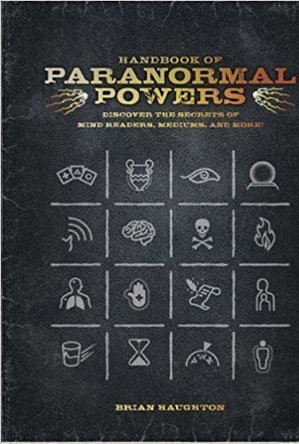
I hate, but also love this book, not because Haughton backs up all of the skeptic claims with scientific research and tests, but because he claimed this to be a handbook or paranormal powers. If you glance at the cover, just below the title is: 'discover the secrets of mind readers, mediums, and more' - this can be taken that it's written by someone who believes in the paranormal, as well as someone who may have had personal experiences with the unknown, but with that said, I did learn a lot about the history of paranormal powers as well as people I had never heard of.
To prove the skepticism in Haughton's writing, we can turn to page 173, where he writes about how to test whether or not a self-proclaimed psychic surgeon is real. But even before this page and throughout this book, Haughton explains someone doing an extraordinary thing only to quickly explain away why it was fake to begin with. The 'Handbook of Paranormal Powers' reads a lot like a college thesis, that I found myself getting bored with the matter-of-fact tone. Some readers may enjoy reading essay-type books, but for me, it becomes repetitive enough that I don't remember much of the information I had just read.
Also, readers may come away with the feeling that Haughton doesn't care about the slight chance that some paranormal powers may be real, but instead he'd rather read about the scientific facts. I would only recommend this book to people who want to do a light reading on paranormal history, meaning mostly what made headlines in the news. For believers, I would suggest you go elsewhere.