
Search
Search results
Purple Phoenix Games (2266 KP) rated Monster Stomping: Heroes in Tabletop Games
Dec 15, 2020

Godzilla. King Kong. Goldar. Large monsters that terrorize cities. We’ve all seen ’em. They’ve kicked in our schools, workplaces, and neighborhood parks. Luckily, even greater heroes are around to save the day and protect our livelihoods with their amazing superpowers. What, just my neighborhood? Oh. Well, get ready to play a game based on my neighborhood superhero and the kaijus that wreak havoc and bring devastation everywhere they tread.
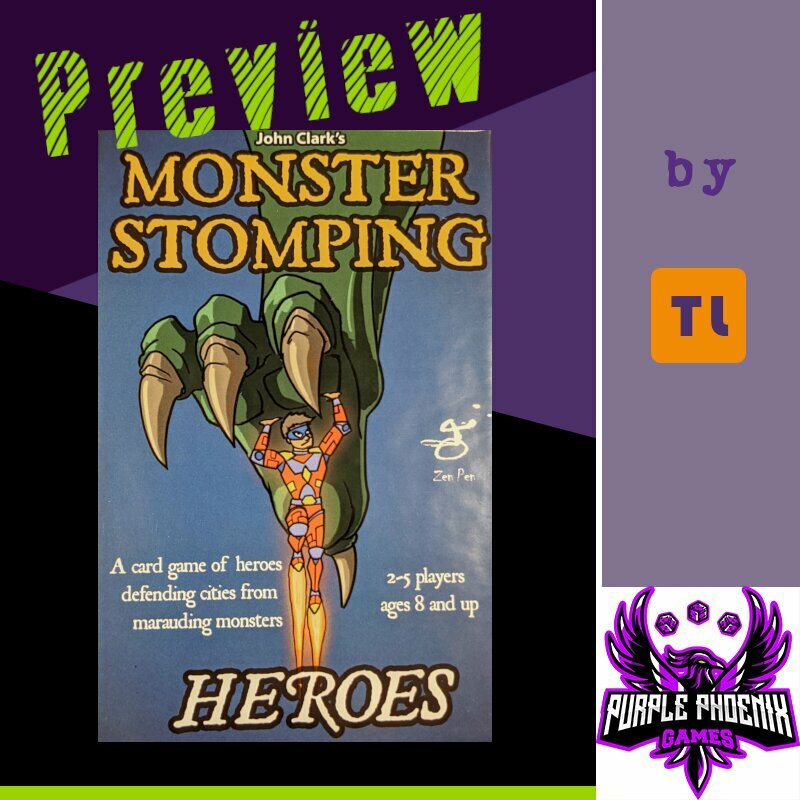
Ok, so I don’t have these monsters and superheroes in my area. I wish we did. In any case, Monster Stomping: Heroes is a card game of building heroes to protect your city and also building monsters to attack other cities. The first player to have six City Defense cards in their tableau will win!
DISCLAIMER: We were provided a prototype copy of this game for the purposes of this review. These are preview copy components, and I do not know for sure if the final components will be any different from these shown. Also, it is not my intention to detail every rule in the game, as there are just too many. You are invited to download the rulebook, back the game through the Kickstarter campaign, or through any retailers stocking it after fulfillment. -T
To setup, each player will receive one monster body card, one hero body card, and one city card to be placed in front of them on the table. The remaining setup cards can be placed back in the box. The remaining cards will be shuffled to create the large draw deck. Each player is dealt five cards from this deck to create their hand and the game may now begin!
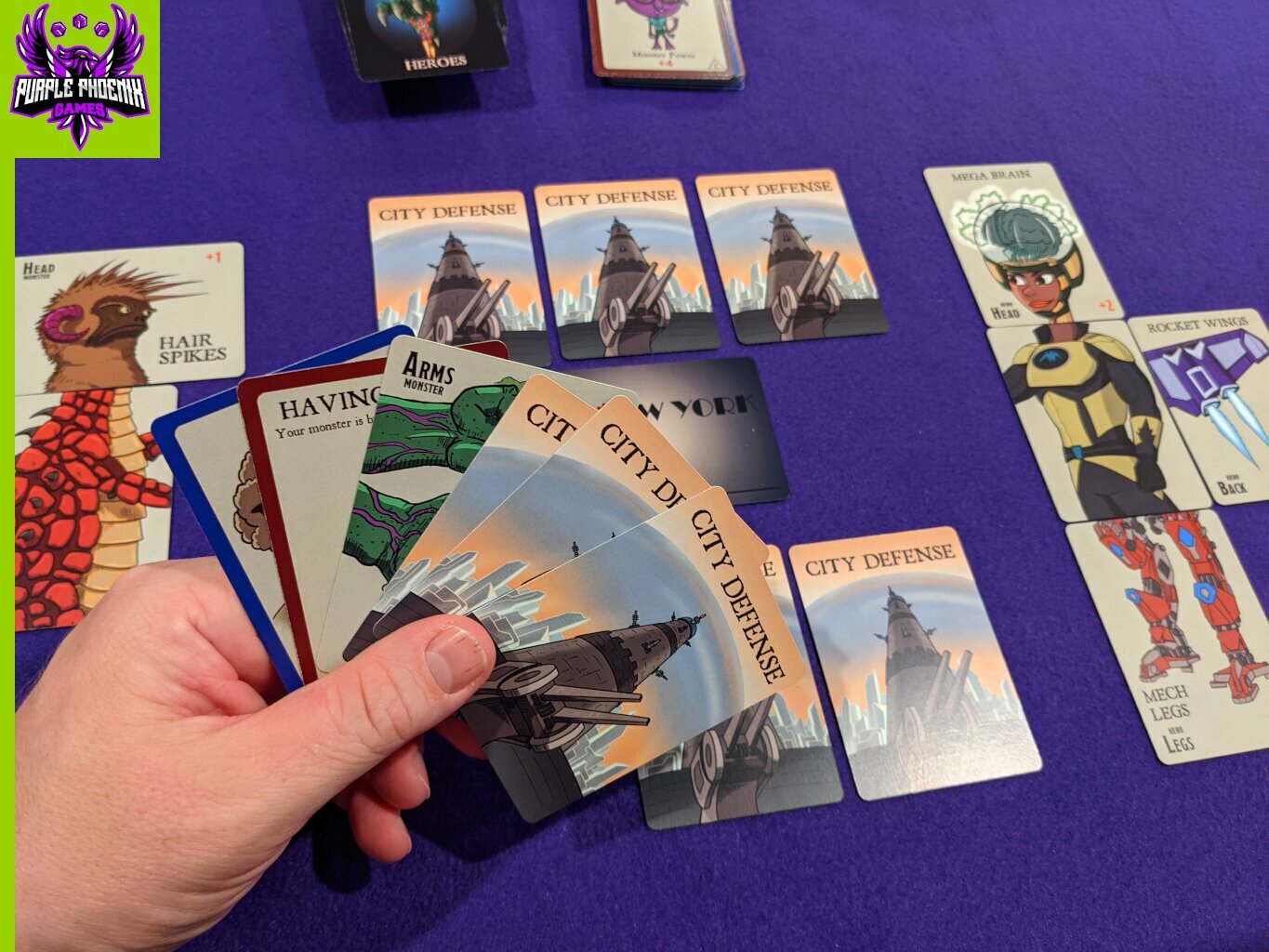
On a player’s turn they will have a choice of three actions to take: Play, Discard Your Hand, or Attack! When the active player decides to Play they will first draw cards to increase their hand to six cards. Next they may play a card face-up on the table. These cards are Monster Powers, Hero Powers, or City Defense cards. Both Monster and Hero Powers are mix-and-match body parts that add value to the Attack phase. City Defense cards are placed around the city card. Six of these are needed to win. After one of these three card types are played to the table the player may also play a blue-bordered Special Card. The Special Cards could allow players to view the contents of an opponent’s hand, or skip a player’s turn, or even discard a City Defense card.
A player may dislike their hand of cards and wish to Discard Your Hand any number of cards. Once done the player will draw back up to six cards and then discard one to return to the hand limit of five cards.
If the active player is feeling lucky or particularly surly they may Attack! another player’s city. During an Attack! the attacking player and defending player will both roll 1d6. The result of the die roll is then added to any bonuses afforded them from their built Monster (attacker) or Hero (defender). At this time any involved player may play a Combat card from their hand to tip the scales of battle. These will either add or subtract values from the Monster or Hero, or block the Monster altogether, or even switch a player’s Hero and Monster values during the battle. The winning attacker then steals one of the defender’s City Defense cards and places it in their own city. The winning defender will receive the Morale Boost meeple to earn a +1 to their hero the next time they are attacked.
Once the active player has completed their turn play continues to the next player until a sixth City Defense card has been placed. When this happens the next player is allowed one more turn to either earn their sixth City Defense card or thwart the previous player by causing them to lose their sixth card. Play continues in this fashion until one player is the ultimate winner and completely defends their city!
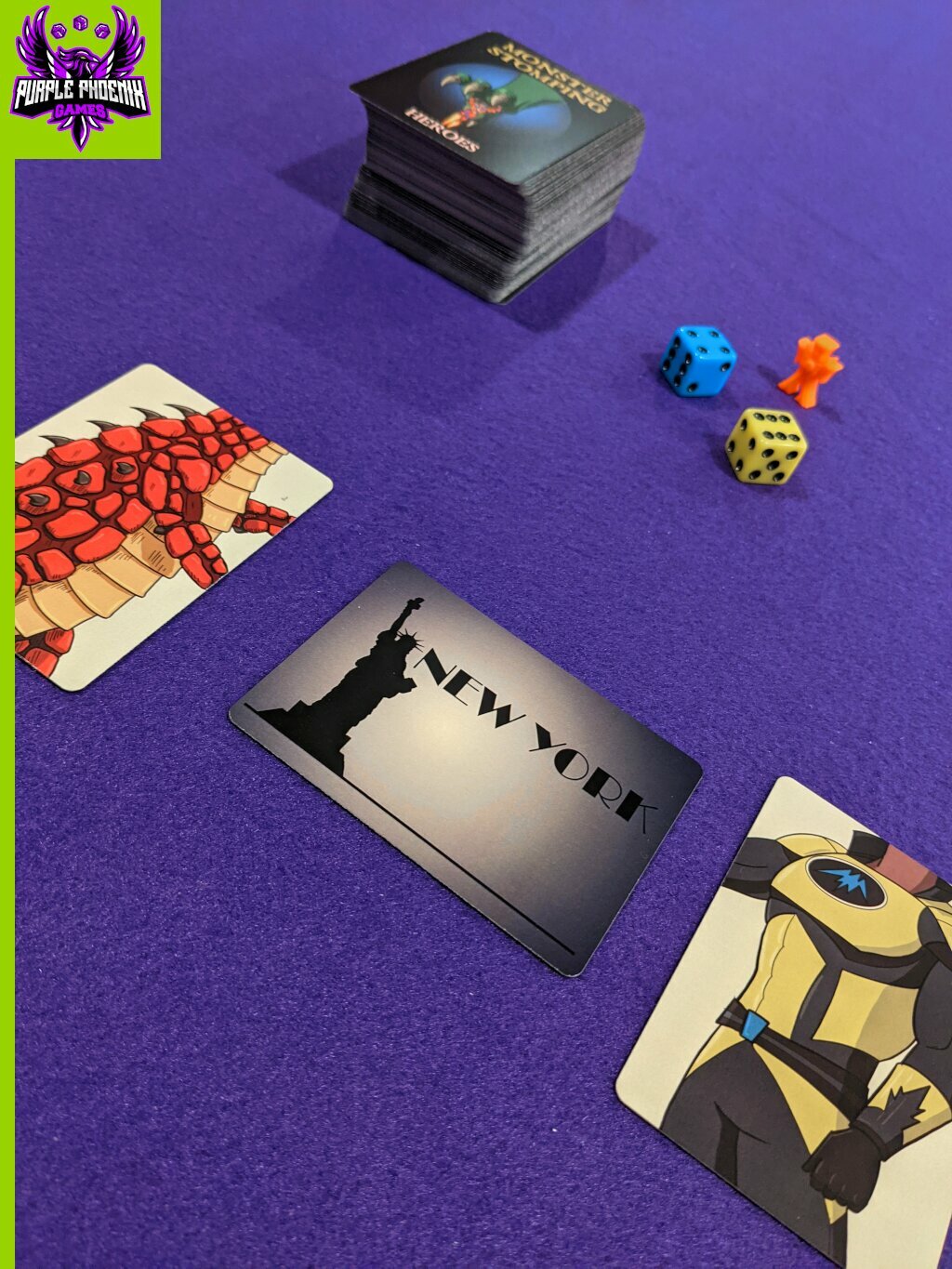
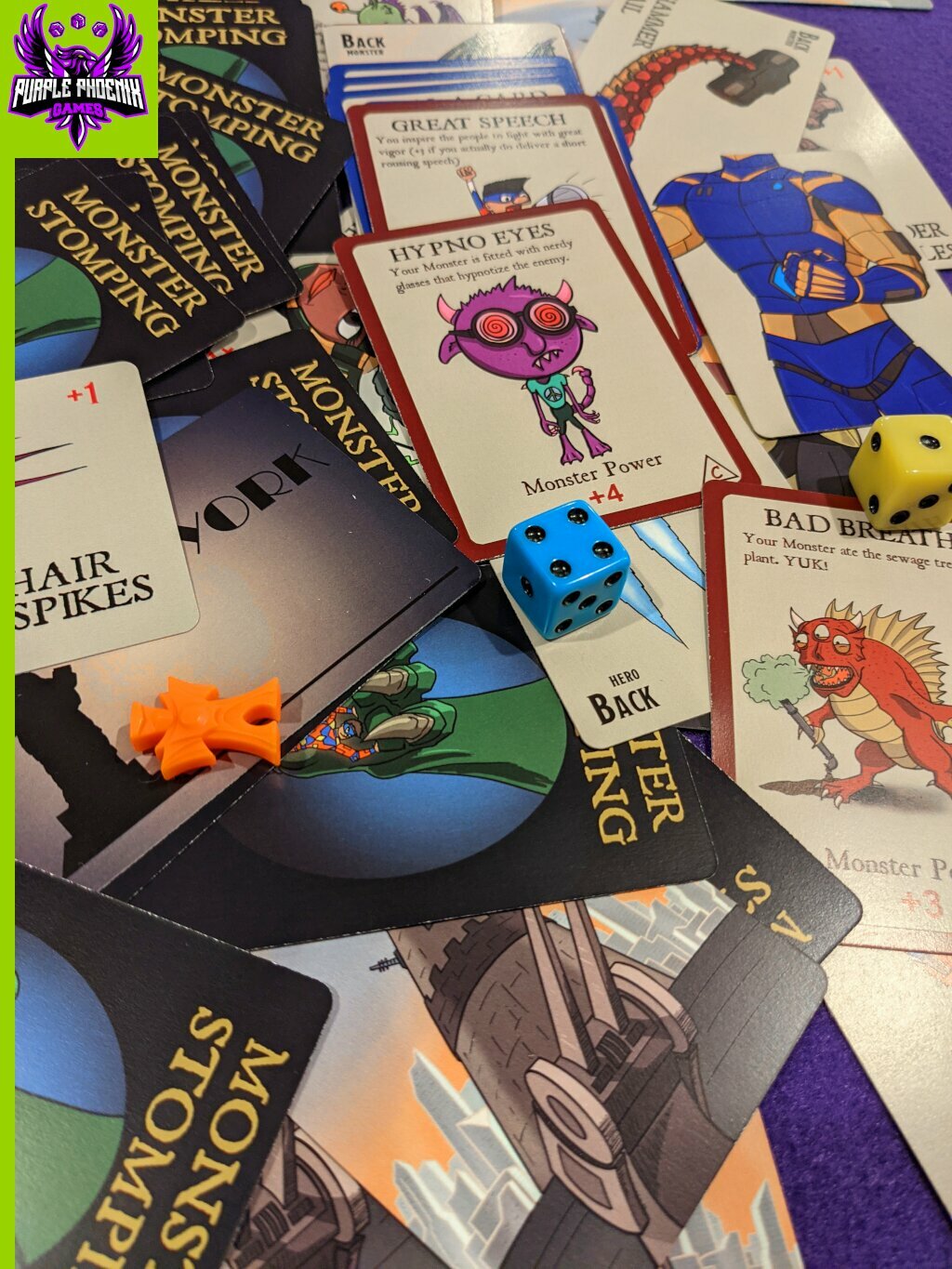
Components. Again, this is a prototype copy of the game and I do not know if these will be updated in any fashion in the final copy. That said, we were provided a box with 2d6, a Morale Boost meeple, and a bunch of cards. The dice are fine and can be switched out with prettier ones if you prefer (I might), and the meeple is an interesting shape and excellent orange color. The cards are matte finished and the art on them is pretty good. The layout of the cards is easy to use. In fact, the layout of the cards (especially the Special and Combat cards) are incredibly reminiscent of the cards in Munchkin.
Actually, the entire time I was playing Monster Stomping: Heroes I could not help but feel like I was playing a better version of Munchkin. It is essentially the same game: the winner has to get to six City Defense cards (10th level in Munchkin), uses cards to debilitate opponents (same in Munchkin), creates better toons in front of themselves (same in Munchkin), and has the additional ability of a helper to aid in battle (same in Munchkin). Let me reiterate that this game is a BETTER version of Munchkin, even though it is extremely similar.
What I really like about this one is the quick play that can be had and the ability to be played by two players. Since I’m comparing it to Munchkin now, a game of Munchkin can easily take a frustrating two or more hours to complete. I say frustrating because all players end up simply ganging up on their opponents at the end just trying to prevent them from winning. While the same is partially true in Monster Stomping, there are only six cards to be collected before becoming the winner and some players may become untouchable at times due to their impressive Monster or Hero-building skills. Another aspect I truly appreciate and enjoy here is that the game can be played with only two players, while Munchkin requires at least three. That may not seem like a huge difference, but if I can play a game at home with my wife without having to add house rules or other ways to doctor up the rules, then I am a much happier man.
I enjoy building the different characters in the game and seeing what kind of abomination I end up with at game’s end. This is much more personal preference for me because building a character in Munchkin is handled much the same way, but differently. For those who have played Munchkin, I am sure you understand.
So all in all, if you are a closet fan of Munchkin and want to protect your gamer cred, you certainly need to check out Monster Stomping: Heroes. It will give you all the good parts of Munchkin but filter out the underwhelming or over-stuffed feelings. It plays quickly, and gives players lots of options to build their characters. The game is easy to teach and learn, and you may even wish to play several games in a row. While I have compared this to Munchkin quite a bit, Monster Stomping: Heroes is its own game and offers several differences to players. If you have been looking for a Munchkin replacement, I may have found it for you. You’re welcome.
Ok, so I don’t have these monsters and superheroes in my area. I wish we did. In any case, Monster Stomping: Heroes is a card game of building heroes to protect your city and also building monsters to attack other cities. The first player to have six City Defense cards in their tableau will win!
DISCLAIMER: We were provided a prototype copy of this game for the purposes of this review. These are preview copy components, and I do not know for sure if the final components will be any different from these shown. Also, it is not my intention to detail every rule in the game, as there are just too many. You are invited to download the rulebook, back the game through the Kickstarter campaign, or through any retailers stocking it after fulfillment. -T
To setup, each player will receive one monster body card, one hero body card, and one city card to be placed in front of them on the table. The remaining setup cards can be placed back in the box. The remaining cards will be shuffled to create the large draw deck. Each player is dealt five cards from this deck to create their hand and the game may now begin!
On a player’s turn they will have a choice of three actions to take: Play, Discard Your Hand, or Attack! When the active player decides to Play they will first draw cards to increase their hand to six cards. Next they may play a card face-up on the table. These cards are Monster Powers, Hero Powers, or City Defense cards. Both Monster and Hero Powers are mix-and-match body parts that add value to the Attack phase. City Defense cards are placed around the city card. Six of these are needed to win. After one of these three card types are played to the table the player may also play a blue-bordered Special Card. The Special Cards could allow players to view the contents of an opponent’s hand, or skip a player’s turn, or even discard a City Defense card.
A player may dislike their hand of cards and wish to Discard Your Hand any number of cards. Once done the player will draw back up to six cards and then discard one to return to the hand limit of five cards.
If the active player is feeling lucky or particularly surly they may Attack! another player’s city. During an Attack! the attacking player and defending player will both roll 1d6. The result of the die roll is then added to any bonuses afforded them from their built Monster (attacker) or Hero (defender). At this time any involved player may play a Combat card from their hand to tip the scales of battle. These will either add or subtract values from the Monster or Hero, or block the Monster altogether, or even switch a player’s Hero and Monster values during the battle. The winning attacker then steals one of the defender’s City Defense cards and places it in their own city. The winning defender will receive the Morale Boost meeple to earn a +1 to their hero the next time they are attacked.
Once the active player has completed their turn play continues to the next player until a sixth City Defense card has been placed. When this happens the next player is allowed one more turn to either earn their sixth City Defense card or thwart the previous player by causing them to lose their sixth card. Play continues in this fashion until one player is the ultimate winner and completely defends their city!
Components. Again, this is a prototype copy of the game and I do not know if these will be updated in any fashion in the final copy. That said, we were provided a box with 2d6, a Morale Boost meeple, and a bunch of cards. The dice are fine and can be switched out with prettier ones if you prefer (I might), and the meeple is an interesting shape and excellent orange color. The cards are matte finished and the art on them is pretty good. The layout of the cards is easy to use. In fact, the layout of the cards (especially the Special and Combat cards) are incredibly reminiscent of the cards in Munchkin.
Actually, the entire time I was playing Monster Stomping: Heroes I could not help but feel like I was playing a better version of Munchkin. It is essentially the same game: the winner has to get to six City Defense cards (10th level in Munchkin), uses cards to debilitate opponents (same in Munchkin), creates better toons in front of themselves (same in Munchkin), and has the additional ability of a helper to aid in battle (same in Munchkin). Let me reiterate that this game is a BETTER version of Munchkin, even though it is extremely similar.
What I really like about this one is the quick play that can be had and the ability to be played by two players. Since I’m comparing it to Munchkin now, a game of Munchkin can easily take a frustrating two or more hours to complete. I say frustrating because all players end up simply ganging up on their opponents at the end just trying to prevent them from winning. While the same is partially true in Monster Stomping, there are only six cards to be collected before becoming the winner and some players may become untouchable at times due to their impressive Monster or Hero-building skills. Another aspect I truly appreciate and enjoy here is that the game can be played with only two players, while Munchkin requires at least three. That may not seem like a huge difference, but if I can play a game at home with my wife without having to add house rules or other ways to doctor up the rules, then I am a much happier man.
I enjoy building the different characters in the game and seeing what kind of abomination I end up with at game’s end. This is much more personal preference for me because building a character in Munchkin is handled much the same way, but differently. For those who have played Munchkin, I am sure you understand.
So all in all, if you are a closet fan of Munchkin and want to protect your gamer cred, you certainly need to check out Monster Stomping: Heroes. It will give you all the good parts of Munchkin but filter out the underwhelming or over-stuffed feelings. It plays quickly, and gives players lots of options to build their characters. The game is easy to teach and learn, and you may even wish to play several games in a row. While I have compared this to Munchkin quite a bit, Monster Stomping: Heroes is its own game and offers several differences to players. If you have been looking for a Munchkin replacement, I may have found it for you. You’re welcome.
Purple Phoenix Games (2266 KP) rated Hunters of the Lost Creatures in Tabletop Games
May 8, 2022

If you are reading this, then we can agree on a few things: board games are cool and interesting, silly themes are usually fun, and we are all kids at heart. I appreciate other gamers so much because we all share a common bond of experiencing good and bad games, good and bad rules, as well as good and bad explanations of these rules. I would spoil it up top here if I let on which of these categories our featured game falls into, right? So keep reading.
Hunters of the Lost Creatures is a silly set collection card game for three to four players. In it, players assume the roles of zoological park curators charged with collecting unique creatures for their parks. They do this by bidding on and drafting creature cards, playing take-that style cards on their opponents, and blocking their cards from being manipulated by others.
DISCLAIMER: We were provided a prototype copy of this game for the purposes of this review. These are preview copy components, and I do not know for sure if the final components will be any different from these shown. Also, it is not my intention to detail every rule in the game, as there are just too many. You are invited to download the rulebook, back the game through the Kickstarter campaign, or through any retailers stocking it after fulfillment. -T
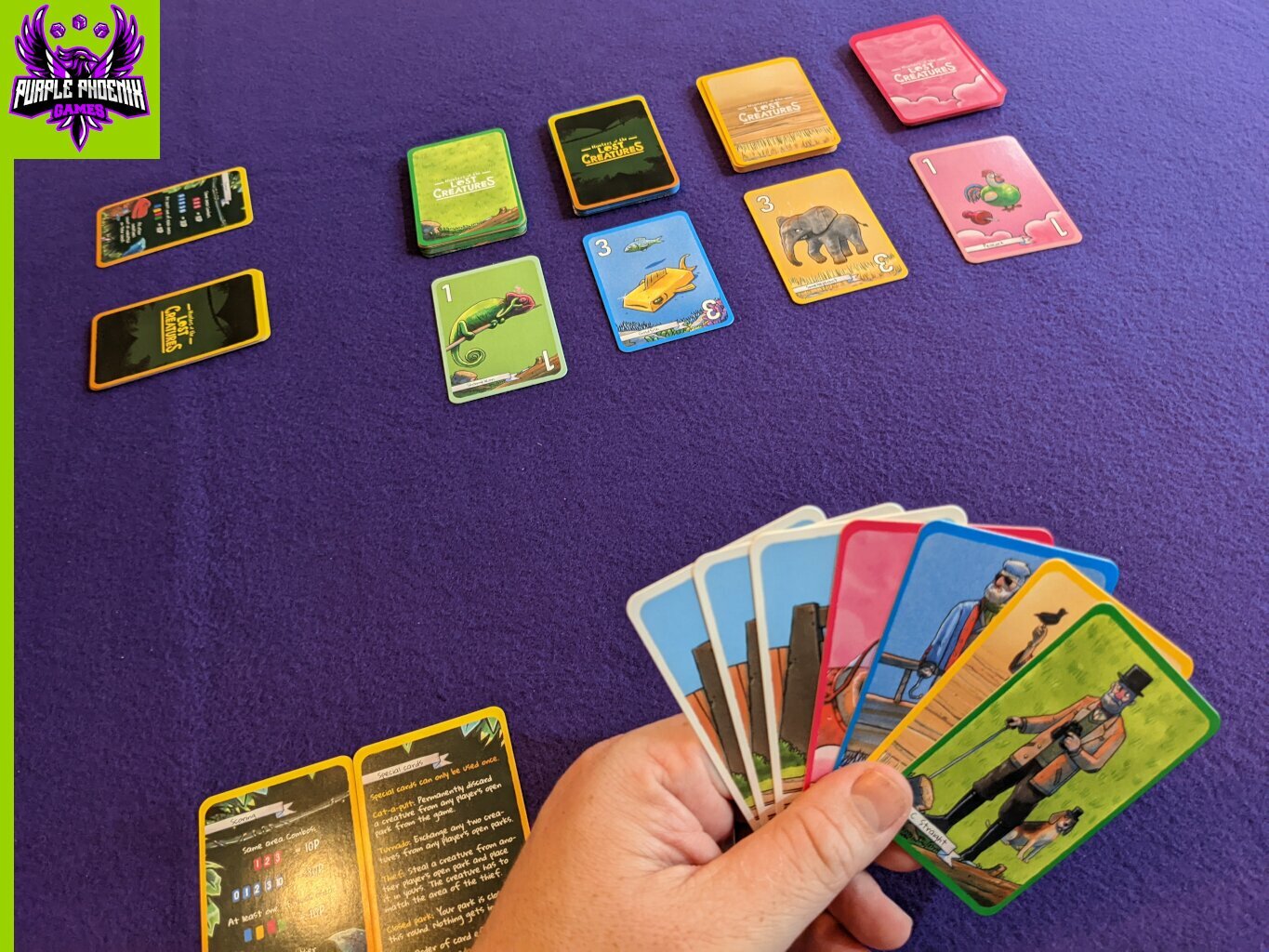
To setup, players choose one hunter card from each of the four hunting zones: Sea, Forest, Plains, and Air, as well as three “Park Closed” cards. The creature cards are to be split by zone and shuffled, with one special card (Turnado and Cat-a-Pult) added. These shuffled decks are then placed on the table and the top card revealed from each deck. Players decide turn order and the game may begin!
Hands are mostly played simultaneously, with players choosing either a hunter or special card from their hand and placing it face-down in front of themselves. All cards are revealed simultaneously and the card effects are applied. If a player has revealed a hunter, and no other players have the same-colored background/terrain type, that player receives the matching card from those on offer and places it in their park (tableau), or ANY OTHER PLAYER’S park. If ALL players have chosen the same terrain type hunters, the card on offer is removed from the game entirely. However, if not all hunters match, but at least one matches, the matching hunters’ players receive no cards.
Should a player choose to play a special card, their effects are triggered once per game. These include Turnado (switch any two creatures in any two parks), Cat-a-Pult (discards any creature from any player’s park), Thieves (steal any one terrain-matching creature and places it in the Thieves player’s park) and Closed Park (protects the player from the effects of aforementioned special cards). Again, these special cards may only be played once per game, so special consideration is needed as part of their strategy.
The game continues in this fashion of players throwing cards, messing with each other using special cards, and protecting themselves from said special cards until only one stack of creature cards remains. The game ends and points are tallied per the scoring table in the rulebook. The winner is promoted to Head Creature Park Guy and is carried around by the other players. Okay, that’s not at all true. They just win the game.
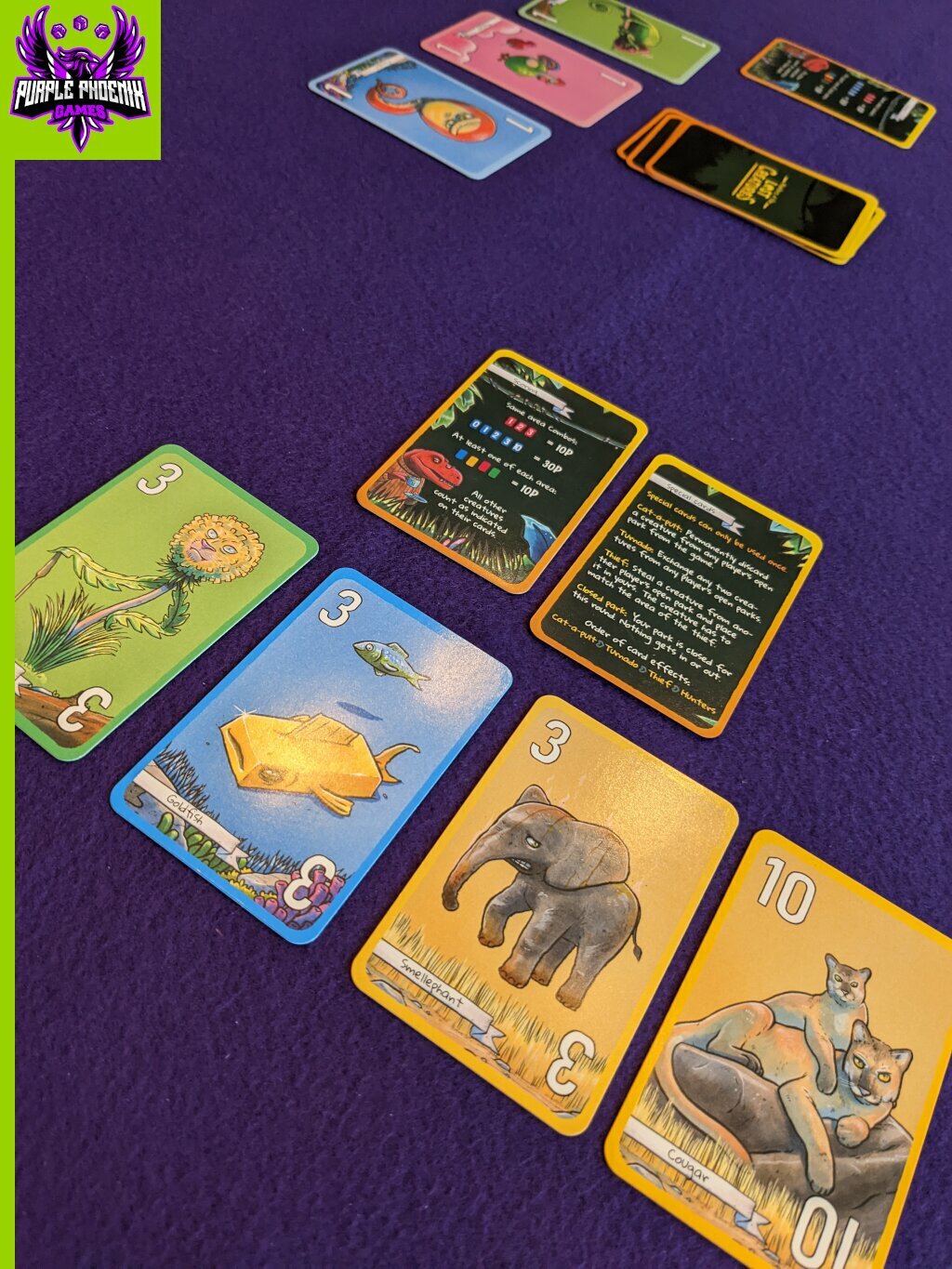
Components. Again, this is a prototype copy of Hunters of the Lost Creatures, so all components shown here are subject to change at any time. That said, I received a huge deck of cards in a cute black cloth bag. The cards are all decent quality, and not super glossy, which I appreciate. The art on these cards are all whimsical and silly, which match the silly and punny titles for each. Some of these punny titles can be seen in our photos, with my favorites being the Dandylion (a well-“dressed” weed with a cane and lion face) and the Cougar (which is subtle, but portrays an adult apex big cat with a smaller and younger cat hanging on it). If you enjoy these somewhat intellectual, and sometimes visual, puns you will enjoy these cards.
What I have found in playing through this several times is that it is best when all players are taught the game backwards…ly. I mean to say that players need to know the premise, but most importantly, the scoring system before even the setup. Points are scored for having a run of 1-2-3, a straight of 0-1-2-3-10, at least one card from each terrain type, and for the printed value on the cards. It is more than simply collecting all the favorite cards or even highest value 10 cards. So there is strategy in collecting the best assortment of creatures for scoring purposes, which is great because otherwise this game is not really a game at all.
As players play their hunters to draft creatures, I have found that many players choose to chase the same cards over and over. It becomes obvious that most players will be vying for the value 10 cards, so the players who figure this out and grab the second best card is usually happier with the hand. Of course, more strategy is employed once the special cards are played, as they each mess with opponents in different ways. So even though I may not have acquired that 10 of Forest, I might grab the Turnado and switch out a value 0 or -10 card for that sparkling value 10. Wait, negative 10? Yep. Sometimes life just smacks you around and you get stuck with a -10 card to really punish your great play. Not that it ever happened to me, and not that I would be bitter about it.
The real game hinges on the usage of the special cards. When do you play them? Whom do you target? Turnabout is fair play, after all, and no alliances can be formed whilst playing Hunters of the Lost Creatures. Now, it is hinted at in the rulebook that preview copies ship with entry-level rules, which mean (to me) that more advanced rules may be coming in the final game, or at least some variants to spice up the gameplay. If true, then this game becomes much more interesting to me. Don’t get me wrong. I have enjoyed almost all of my plays, but be warned that playing with spiteful gamers may end poorly for a fun-filled game night.
All in all, I am excited to see how the campaign for Hunters of the Lost Creatures fares, as I believe many gamers and non-gamers alike will enjoy it. I would be super jazzed to grab a final copy if it does in fact ship with alternate or advanced rules, or if the creatures of the same value had unique names and art. That would really satisfy. Keep the bag or go traditional cardboard box, it matters not to me. Just beef up the card quality, add even more uniqueness and fanciful art and you’ve got a fan in me. Grab your copy during the Kickstarter campaign launching May 10, 2022!
Hunters of the Lost Creatures is a silly set collection card game for three to four players. In it, players assume the roles of zoological park curators charged with collecting unique creatures for their parks. They do this by bidding on and drafting creature cards, playing take-that style cards on their opponents, and blocking their cards from being manipulated by others.
DISCLAIMER: We were provided a prototype copy of this game for the purposes of this review. These are preview copy components, and I do not know for sure if the final components will be any different from these shown. Also, it is not my intention to detail every rule in the game, as there are just too many. You are invited to download the rulebook, back the game through the Kickstarter campaign, or through any retailers stocking it after fulfillment. -T
To setup, players choose one hunter card from each of the four hunting zones: Sea, Forest, Plains, and Air, as well as three “Park Closed” cards. The creature cards are to be split by zone and shuffled, with one special card (Turnado and Cat-a-Pult) added. These shuffled decks are then placed on the table and the top card revealed from each deck. Players decide turn order and the game may begin!
Hands are mostly played simultaneously, with players choosing either a hunter or special card from their hand and placing it face-down in front of themselves. All cards are revealed simultaneously and the card effects are applied. If a player has revealed a hunter, and no other players have the same-colored background/terrain type, that player receives the matching card from those on offer and places it in their park (tableau), or ANY OTHER PLAYER’S park. If ALL players have chosen the same terrain type hunters, the card on offer is removed from the game entirely. However, if not all hunters match, but at least one matches, the matching hunters’ players receive no cards.
Should a player choose to play a special card, their effects are triggered once per game. These include Turnado (switch any two creatures in any two parks), Cat-a-Pult (discards any creature from any player’s park), Thieves (steal any one terrain-matching creature and places it in the Thieves player’s park) and Closed Park (protects the player from the effects of aforementioned special cards). Again, these special cards may only be played once per game, so special consideration is needed as part of their strategy.
The game continues in this fashion of players throwing cards, messing with each other using special cards, and protecting themselves from said special cards until only one stack of creature cards remains. The game ends and points are tallied per the scoring table in the rulebook. The winner is promoted to Head Creature Park Guy and is carried around by the other players. Okay, that’s not at all true. They just win the game.
Components. Again, this is a prototype copy of Hunters of the Lost Creatures, so all components shown here are subject to change at any time. That said, I received a huge deck of cards in a cute black cloth bag. The cards are all decent quality, and not super glossy, which I appreciate. The art on these cards are all whimsical and silly, which match the silly and punny titles for each. Some of these punny titles can be seen in our photos, with my favorites being the Dandylion (a well-“dressed” weed with a cane and lion face) and the Cougar (which is subtle, but portrays an adult apex big cat with a smaller and younger cat hanging on it). If you enjoy these somewhat intellectual, and sometimes visual, puns you will enjoy these cards.
What I have found in playing through this several times is that it is best when all players are taught the game backwards…ly. I mean to say that players need to know the premise, but most importantly, the scoring system before even the setup. Points are scored for having a run of 1-2-3, a straight of 0-1-2-3-10, at least one card from each terrain type, and for the printed value on the cards. It is more than simply collecting all the favorite cards or even highest value 10 cards. So there is strategy in collecting the best assortment of creatures for scoring purposes, which is great because otherwise this game is not really a game at all.
As players play their hunters to draft creatures, I have found that many players choose to chase the same cards over and over. It becomes obvious that most players will be vying for the value 10 cards, so the players who figure this out and grab the second best card is usually happier with the hand. Of course, more strategy is employed once the special cards are played, as they each mess with opponents in different ways. So even though I may not have acquired that 10 of Forest, I might grab the Turnado and switch out a value 0 or -10 card for that sparkling value 10. Wait, negative 10? Yep. Sometimes life just smacks you around and you get stuck with a -10 card to really punish your great play. Not that it ever happened to me, and not that I would be bitter about it.
The real game hinges on the usage of the special cards. When do you play them? Whom do you target? Turnabout is fair play, after all, and no alliances can be formed whilst playing Hunters of the Lost Creatures. Now, it is hinted at in the rulebook that preview copies ship with entry-level rules, which mean (to me) that more advanced rules may be coming in the final game, or at least some variants to spice up the gameplay. If true, then this game becomes much more interesting to me. Don’t get me wrong. I have enjoyed almost all of my plays, but be warned that playing with spiteful gamers may end poorly for a fun-filled game night.
All in all, I am excited to see how the campaign for Hunters of the Lost Creatures fares, as I believe many gamers and non-gamers alike will enjoy it. I would be super jazzed to grab a final copy if it does in fact ship with alternate or advanced rules, or if the creatures of the same value had unique names and art. That would really satisfy. Keep the bag or go traditional cardboard box, it matters not to me. Just beef up the card quality, add even more uniqueness and fanciful art and you’ve got a fan in me. Grab your copy during the Kickstarter campaign launching May 10, 2022!

Purple Phoenix Games (2266 KP) rated The Druid Master in Tabletop Games
Jun 2, 2021
When it comes to fantasy worlds, I often think of powerful parties going on epic adventures – fighting monsters, delving through dungeons, and saving the world! But what about when the adventure is over and the party comes home? What do they do in their day-to-day lives? Well, The Druid Master helps give us a glimpse into the regular life of a Druid. Being the local healer might not always be glamorous, but hey, it’s a living!
Disclaimer: We were provided a PnP of The Druid Master for the purposes of this preview. The artwork and design of the cards is not yet finalized, so what you see pictured below is not necessarily what the production copies will look like. It is also important to note that although the game is about natural medicines/remedies, it does not replace professional medical advice and treatments. -L
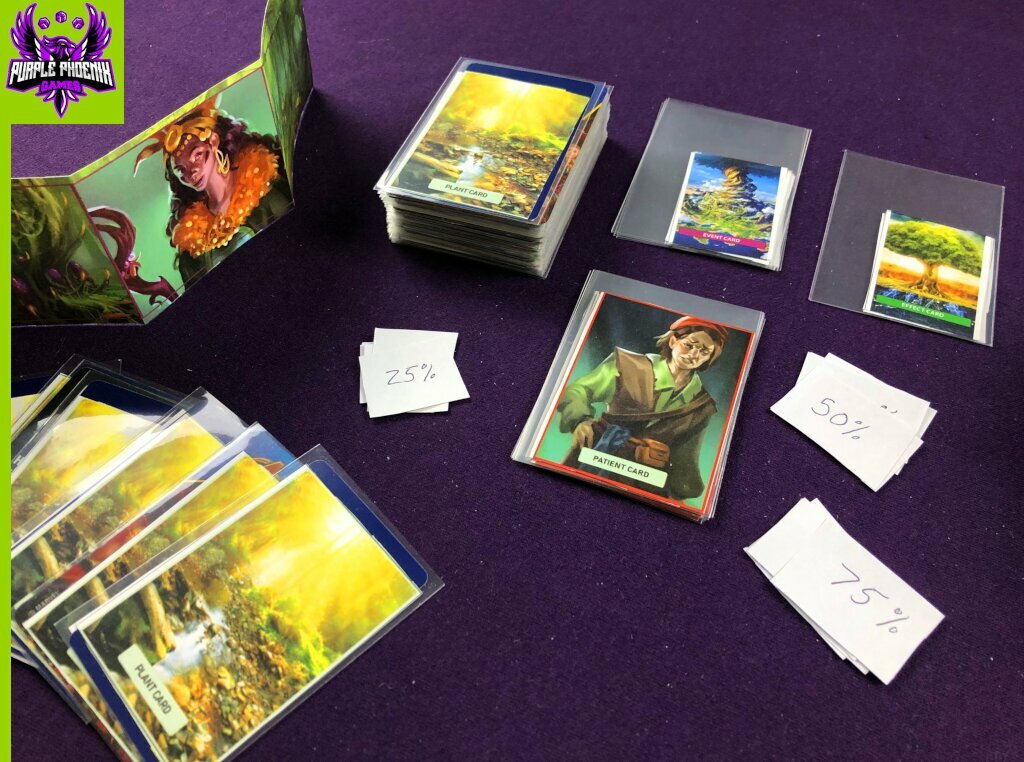
In The Druid Master, players will take on the roles of (you guessed it) Druids who have mastered the ancient arts of healing, through use of plants, herbs, and other natural elements. Ailing patients will come to you (and your rivals) for help, so you must work quickly to concoct the most effective remedy to heal them back to normal! To setup for a game, each player receives a Player Screen, 1 Effect card, and 7 Plant cards. The remaining Effect and Plant cards are shuffled to form draw decks, and the Event deck is placed nearby as well. Place the deck of Patient cards facedown within reach of all players, and set the Cure tokens to the side. The game is now ready to begin!
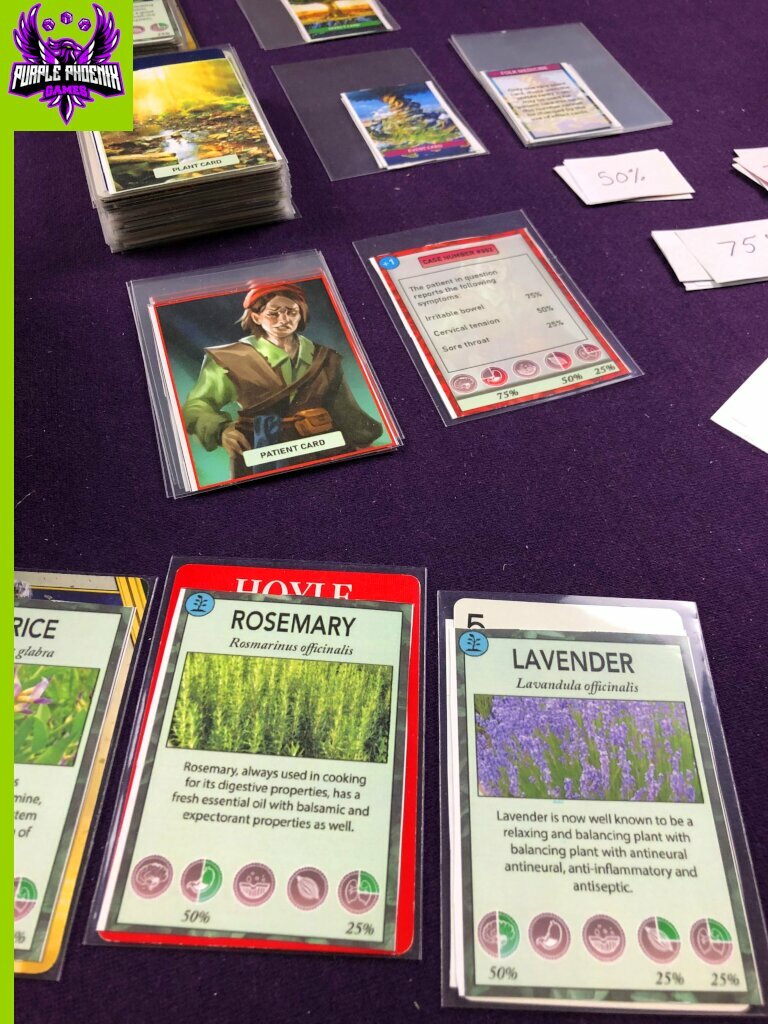
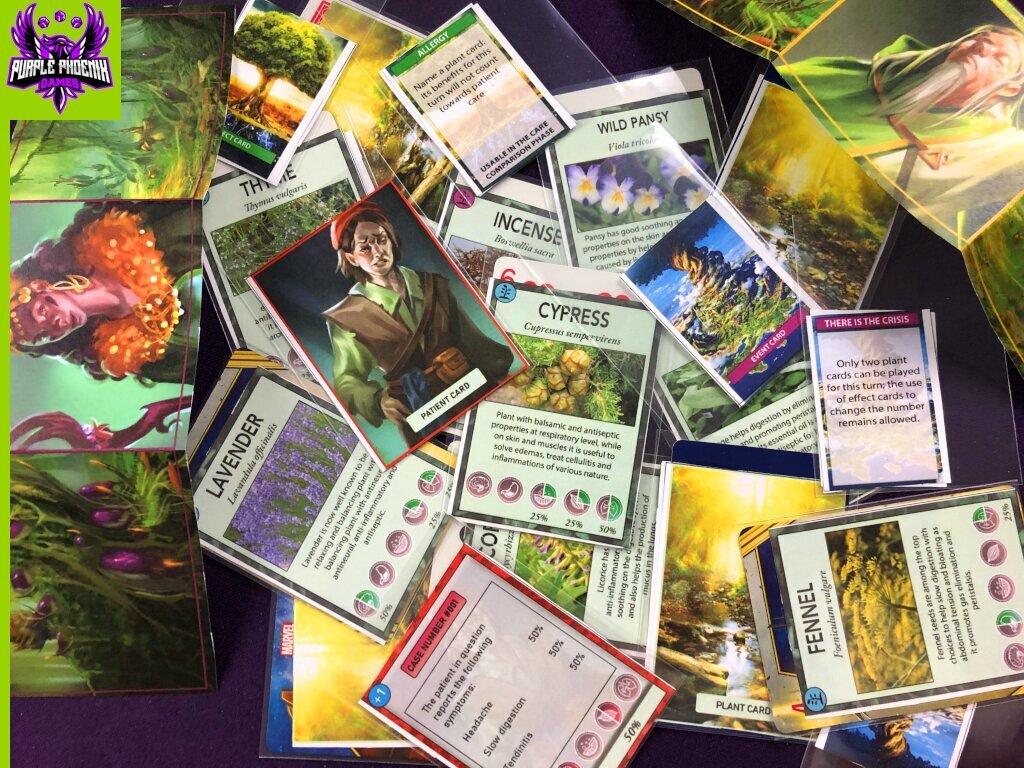
Over the course of 8 rounds, players will be using Plant and Effect cards to best help the ailing Patient for each given round. Once the 8th and final Patient card has been resolved, points will be counted to determine the ultimate Druid Master! To start a round, an Event card will be revealed. These Events will alter the round in some way, putting your strategic thinking to the test. For example, an Event card might limit the number of cards you can play this round. After the Event is resolved, the Patient card will be revealed for all players to see. The Patient will have a list of symptoms/ailments, with a percentage corresponding to the severity of the issue. Each player will then secretly select 1-3 Plant cards from their hand to be used to heal the Patient. The different Plant cards offer remedies for the various symptoms/ailments, and also list a corresponding percentage as to how much it will help. Effect cards can also be used during this phase of the game to obtain bonuses/negatively affect opponents. Use them wisely!
Once everyone is ready, all Plant cards will be revealed, and players will determine who has best cured the Patient. Compare the percentages on your Plant cards against those of the Patient – if you have failed to completely cure a symptom, take a Cure token that represents the missing percentages from your played cure. When all Plant cards have been checked, the player that was able to Cure the Patient completely (was able to match all Patient percentages with their played Plant cards) is the winner of the round. They will take the Patient card for end-game scoring. If nobody completely Cured the Patient, the player who accumulated the least number of Cure tokens (thus curing the most Patient percentages of the group) wins the round and collects the Patient card. All Plant and Effect cards used this round are discarded, and each player will draw 2 new Plant cards for the next round. Play continues in this fashion until the 8th Patient has been Cured. Players will count up their points earned from Cured Patients, and the player with the highest score is named the winning Druid Master!
I should say right off the bat that I’m not really a person who is into natural medicine. But my personal preferences do not stop me from playing and enjoying The Druid Master. If you think about it, natural medicine is very thematically appropriate for fantasy worlds, so it makes sense in this setting. Ok, so what about the gameplay? It is very straight-forward, which lends itself to fast teaching, learning, and playing. Ultimately, you are trying to match your Plant cards as best you can to the Patient card in play. And since you can only play a maximum of 3 cards each round, you really have to consider your options. If you aren’t able to completely Cure the Patient, can you play your Plant cards in such a way that you will collect the fewest Cure tokens? It’s all about how you strategize. Another thing that I really like about the gameplay is that all Plant cards are selected secretly and revealed simultaneously. So nobody is at an advantage by being able to see that an opponent was not 100% successful. It adds a little element of risk and hidden information to the game that makes it more engaging.
As I mentioned earlier, this is a PnP version of the game, so these components are not what will be received in a production copy. Also, the card layouts and artwork are not completely finalized either. But going on what I have, I do like the simplicity of the components. The symbolism is clear, the percentages are easy to read, and the text/pictures are informational as well. Once this game is printed on real cards and with cardboard tokens, I know it will be a decent quality production.
So overall, how does The Druid Master fare? I’d say fairly well. The rules and gameplay are straight-forward, it is fast and easy to teach and play, and it keeps all players engaged throughout the entire game. This is certainly not the most complicated or heavy game in existence, but it does offer hints of strategy that will keep the gameplay fresh and players invested. If you are looking for a nice little filler-type game set in a fantasy realm, I would recommend checking out The Druid Master. It is coming to Kickstarter soon, so be on the lookout!
Disclaimer: We were provided a PnP of The Druid Master for the purposes of this preview. The artwork and design of the cards is not yet finalized, so what you see pictured below is not necessarily what the production copies will look like. It is also important to note that although the game is about natural medicines/remedies, it does not replace professional medical advice and treatments. -L
In The Druid Master, players will take on the roles of (you guessed it) Druids who have mastered the ancient arts of healing, through use of plants, herbs, and other natural elements. Ailing patients will come to you (and your rivals) for help, so you must work quickly to concoct the most effective remedy to heal them back to normal! To setup for a game, each player receives a Player Screen, 1 Effect card, and 7 Plant cards. The remaining Effect and Plant cards are shuffled to form draw decks, and the Event deck is placed nearby as well. Place the deck of Patient cards facedown within reach of all players, and set the Cure tokens to the side. The game is now ready to begin!
Over the course of 8 rounds, players will be using Plant and Effect cards to best help the ailing Patient for each given round. Once the 8th and final Patient card has been resolved, points will be counted to determine the ultimate Druid Master! To start a round, an Event card will be revealed. These Events will alter the round in some way, putting your strategic thinking to the test. For example, an Event card might limit the number of cards you can play this round. After the Event is resolved, the Patient card will be revealed for all players to see. The Patient will have a list of symptoms/ailments, with a percentage corresponding to the severity of the issue. Each player will then secretly select 1-3 Plant cards from their hand to be used to heal the Patient. The different Plant cards offer remedies for the various symptoms/ailments, and also list a corresponding percentage as to how much it will help. Effect cards can also be used during this phase of the game to obtain bonuses/negatively affect opponents. Use them wisely!
Once everyone is ready, all Plant cards will be revealed, and players will determine who has best cured the Patient. Compare the percentages on your Plant cards against those of the Patient – if you have failed to completely cure a symptom, take a Cure token that represents the missing percentages from your played cure. When all Plant cards have been checked, the player that was able to Cure the Patient completely (was able to match all Patient percentages with their played Plant cards) is the winner of the round. They will take the Patient card for end-game scoring. If nobody completely Cured the Patient, the player who accumulated the least number of Cure tokens (thus curing the most Patient percentages of the group) wins the round and collects the Patient card. All Plant and Effect cards used this round are discarded, and each player will draw 2 new Plant cards for the next round. Play continues in this fashion until the 8th Patient has been Cured. Players will count up their points earned from Cured Patients, and the player with the highest score is named the winning Druid Master!
I should say right off the bat that I’m not really a person who is into natural medicine. But my personal preferences do not stop me from playing and enjoying The Druid Master. If you think about it, natural medicine is very thematically appropriate for fantasy worlds, so it makes sense in this setting. Ok, so what about the gameplay? It is very straight-forward, which lends itself to fast teaching, learning, and playing. Ultimately, you are trying to match your Plant cards as best you can to the Patient card in play. And since you can only play a maximum of 3 cards each round, you really have to consider your options. If you aren’t able to completely Cure the Patient, can you play your Plant cards in such a way that you will collect the fewest Cure tokens? It’s all about how you strategize. Another thing that I really like about the gameplay is that all Plant cards are selected secretly and revealed simultaneously. So nobody is at an advantage by being able to see that an opponent was not 100% successful. It adds a little element of risk and hidden information to the game that makes it more engaging.
As I mentioned earlier, this is a PnP version of the game, so these components are not what will be received in a production copy. Also, the card layouts and artwork are not completely finalized either. But going on what I have, I do like the simplicity of the components. The symbolism is clear, the percentages are easy to read, and the text/pictures are informational as well. Once this game is printed on real cards and with cardboard tokens, I know it will be a decent quality production.
So overall, how does The Druid Master fare? I’d say fairly well. The rules and gameplay are straight-forward, it is fast and easy to teach and play, and it keeps all players engaged throughout the entire game. This is certainly not the most complicated or heavy game in existence, but it does offer hints of strategy that will keep the gameplay fresh and players invested. If you are looking for a nice little filler-type game set in a fantasy realm, I would recommend checking out The Druid Master. It is coming to Kickstarter soon, so be on the lookout!


Leah (: (569 KP) rated What Do You Meme? in Tabletop Games
Jan 1, 2019
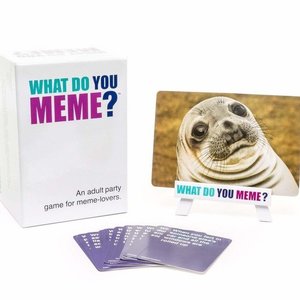
The concept is very similar to cards against humanity. You have to caption the meme and the best/ funniest wins.
It is super easy to play, one person selects a common meme and the rest have to pick a card in their hand to caption it, whoever selected the meme then picks the winner, the aim is to collect as many of the big meme cards by the end.
It’s a fun party game to play as it is really easy to understand and some of the results are hilarious.
It is super easy to play, one person selects a common meme and the rest have to pick a card in their hand to caption it, whoever selected the meme then picks the winner, the aim is to collect as many of the big meme cards by the end.
It’s a fun party game to play as it is really easy to understand and some of the results are hilarious.

Coleman Balogh (21 KP) rated Tides of Madness in Tabletop Games
Dec 17, 2018
Ease and length (1 more)
Artwork
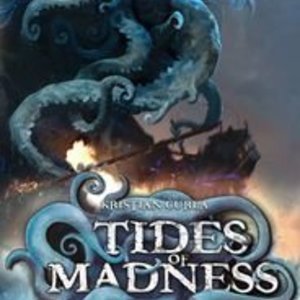
Great quick two player card game
The game is played over three rounds of card hands. Its a pretty simple game of cards but getting used to the goal of each card and the ease of each goal takes some time. The madness element can also become confusing/overlooked. Technically you use every card so for me I wish there were some extra to lend some variety to the play. Not a long game so it can be a short fun way to fill some time.
The Jolly Postman or Other People's Letters
Allan Ahlberg and Janet Ahlberg
10.0 Rate It
Book
New, large-size edition of top-selling title - over 5 million copies of POSTMAN titles sold. The...

Ducklady (1174 KP) rated Magic The Gathering Arena in Video Games
Aug 26, 2019
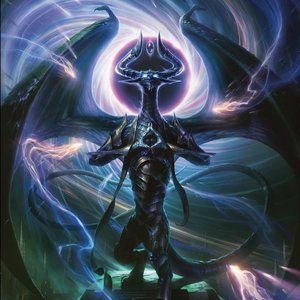
Great game but it has problems
I love playing this game to the point I play it more than the physical MTG card game.
The cards look great and it's fairly easy to get packs without having to pay real money. It also has a good amount of events on every week to earn rewards.
The problem is that it crashes a lot and disconnects. Kind of fed up of it just disconnecting and then missing my turn loads. Sick of having to restart it.
The cards look great and it's fairly easy to get packs without having to pay real money. It also has a good amount of events on every week to earn rewards.
The problem is that it crashes a lot and disconnects. Kind of fed up of it just disconnecting and then missing my turn loads. Sick of having to restart it.
Pocket Paragons
8.0 Rate It
Tabletop Game
Intense 3-minute duel. Deeply Asymmetrical. Player pick a paragon's deck of 7 cards and choose to...