Search
Search results
Carbs & Cals Salads: 80 Healthy Salad Recipes & 350 Photos of Ingredients to Create Your Own!
Chris Cheyette and Yello Balolia
Book
The brains behind the #1 bestselling Carbs & Cals are back with the ideal salad book for the...
Samueljhague (1250 KP) rated Quests of Valeria in Tabletop Games
Sep 30, 2020
7 Wonders: Armada
Tabletop Game
This 7 Wonders expansion allows you to build fleets of ships to conquer the seas. New Armada and...
Onitama: Sensei's Path
Tabletop Game
The Onitama: Sensei's Path expansion consists of sixteen new movement cards that can be shuffled...
Cult Following
Tabletop Game
In cult following players choose ideas from a hand of cards and bond them together into ridiculous...

Purple Phoenix Games (2266 KP) rated Abstract Academy in Tabletop Games
Feb 25, 2022
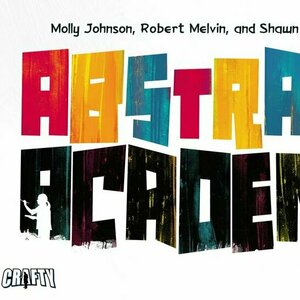
There’s just something about a well-thought out and appealing box cover to really get you into it, am I right? Look at that graphic. The negative space used for the A and Y in AcademY is just sublime! Wait, I recognize those names on the box. Didn’t they also design some other games I enjoy? (1 minute later after consulting BGG) IT’S THE TEAM BEHIND TRUFFLE SHUFFLE, POINT SALAD, AND DOLLARS TO DONUTS?? I love those games! Oh, this is going to be good! AND it’s from Crafty Games? Boom. Gotta be a hit, I just know it. But where is all the food?
Abstract Academy is a card laying, hand management, pattern building game for two to four players. In it, players become art school students trying to impress their teachers. The only problem is that they must share a canvas, as the costs of school allow them very few luxuries. The player who can most effectively build masterpieces and satisfy all tested requirements over three rounds will ace the class and claim victory over the other starving artists.
DISCLAIMER 1: We were provided a copy of this game for the purposes of this review. This is a retail copy of the game, so what you see in these photos is exactly what would be received in your box. I do not intend to cover every single rule included in the rulebook, but will describe the overall game flow and major rule set so that our readers may get a sense of how the game plays. For more in depth rules, you may purchase a copy online or from your FLGS. -T
DISCLAIMER 2: My current temporary housing did not want me to have great lighting for photos in this review. Please try to ignore the yellow tint; I do not enjoy over-editing game photos.
To setup, shuffle each deck type and place the decks on the table. The rulebook does not specify where, so just throw them wherever. This is a game about art, so be creative. Each player draws a hand of three Canvas cards (with the whitish back and colors on the faces). The starting Teacher’s Pet player will then reveal cards according to the round from the respective decks, per the rules and provided reference cards. Each round will reveal different sets of Assignment and Professor cards. Players also draw one Inspiration card and the game is ready to begin! Paintbrushes at the ready!
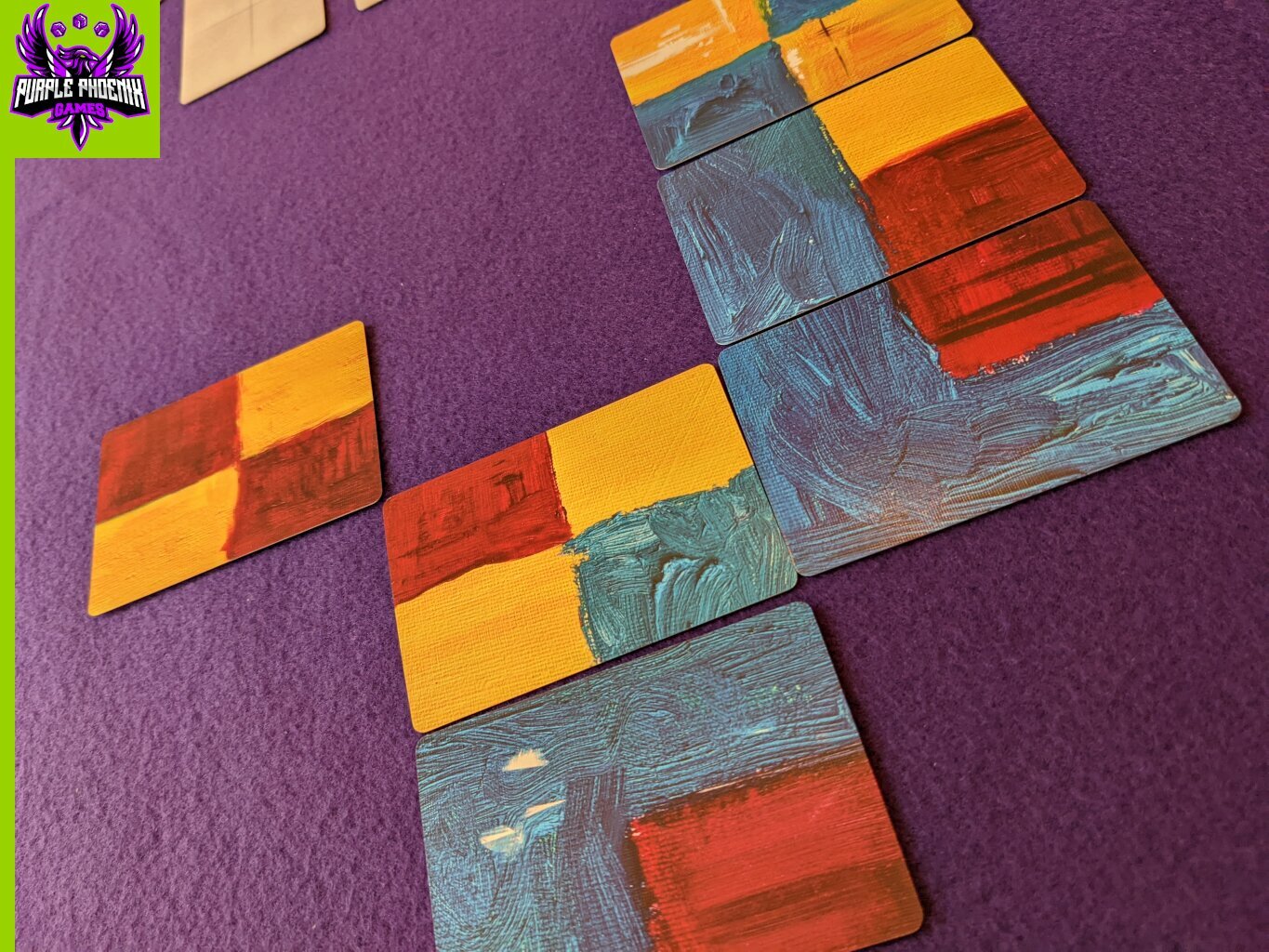
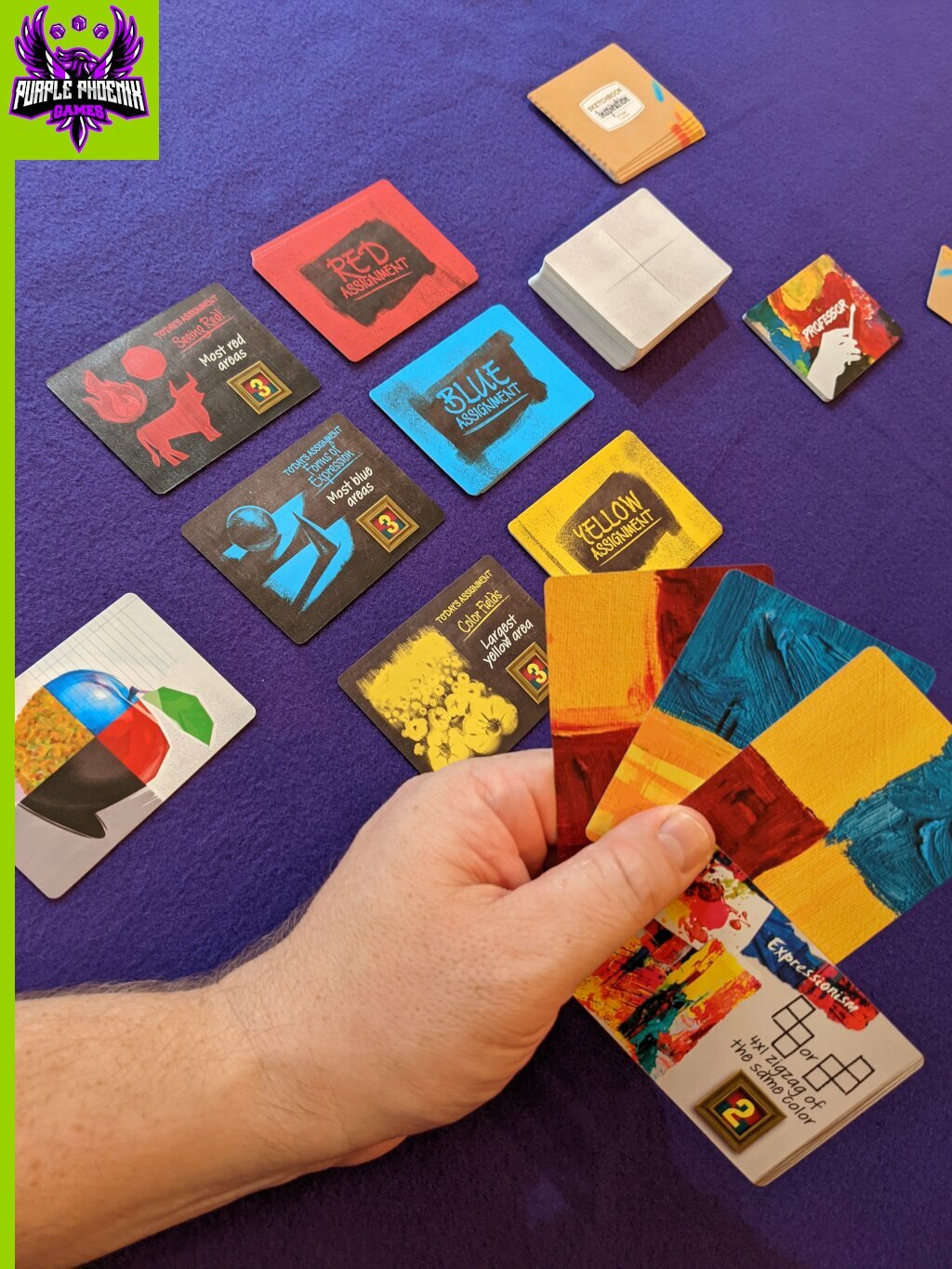
Turns could not be simpler: Play a Canvas card, and then Draw a Canvas card. Both of these actions are self-explanatory, but let me expound on this a bit. Once the first Canvas card has been played by the current Teacher’s Pet, each subsequent card must be played orthogonally adjacent to another card on the table. To define the size of the entire project’s canvas, players will be confined to a 4 x 4 grid of cards. Once a column (the cards that would lead a path to the opponent) has been completed with four cards, the rows gain special rules. Firstly, the row closest to each player becomes the “Home Row.” Players may only play cards into their own Home Row, unless the only legal place to play a card is in the opponent’s Home Row. Secondly, the Home Row and the row above it is now consider the Scoring Zone, and will dictate which cards are able to be used to satisfy Inspiration, Professor, and Assignment requirements for VP. Therefore, until the 4 x 4 grid has been solidified, players are unaware which cards may end up in their Home Rows or Scoring Zones!
Victory Points are earned by scoring the special requirements of Inspiration, Professor, and Assignment cards once the entire 4 x 4 grid of Canvas cards is complete. Oftentimes players will need to compare scores to determine which player earns the points. For example, the Moret Professor card states that five VP are earned when the player controls the “most color areas with four or more quadrants.” Each Canvas card is divided into four quadrants, and quadrants are colored with one of the primary colors. A “color area” is simply a connected network of the same color within the player’s Scoring Zone. So, to satisfy Professor Moret, the player who controls the most amount of color areas that are four quadrants or larger.
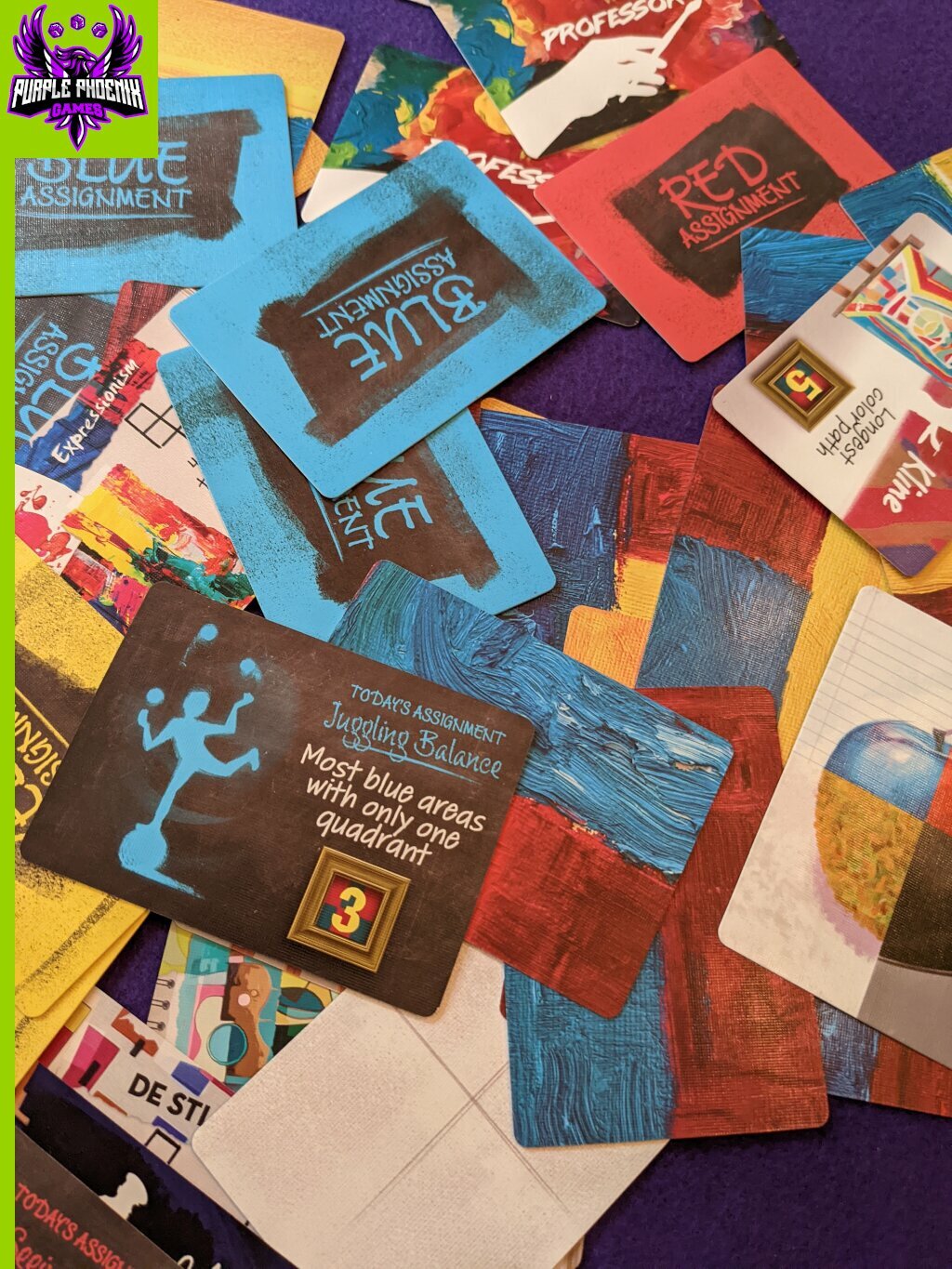
Assignment cards come in Red, Blue, and Yellow, and pertain to those colors. For example, the red “Get to the Point!” Assignment requires the “most red areas with only one quadrant.” So the assignment is asking players to dapple their canvas with unconnected red quadrants.
In stark contrast, the Inspiration card requirements resemble shapes of quadrants, as opposed to colors or numbers of quadrants. Most of the shapes on these cards are reminiscent of Tetris-style shapes, where players will score their Inspiration cards by building the correct shape of connected quadrants of the same color within their Scoring Zone.
Once these cards are all scored for the round, the Teacher’s Pet sets up for the next round per the rulebook/reference cards. The subsequent rounds will require alternate decks to reveal cards, or choice of decks. When the third and final round has been scored, the points are tallied and the victor is crowned! With a construction paper and macaroni crown, most likely. They ARE starving artists, after all.
Components. This game is a double-card-deck box with 90+ cards and a rulebook. The cards are great quality, but the true hero here is, and appropriately so, the artwork. Every card is very stylish, the Professors are all nods to real artists (well, except maybe not the promo), and it has just a really great look overall. While being played, it just has an amazing table presence. I like that a lot.
I struggled with assigning a score to this one for a few reasons. First, I like so much about this game, and I dislike a few things. I very much enjoy having so many ways to score points each round, as it keeps my mind busy with trying to put the puzzle together. The monkey wrench, though, is that when you start a round, you play cards that may not even end up in your Scoring Zone. As your hand is always three cards, it is difficult to really plan too far in advance to create a perfect Scoring Zone. Is that a bad thing? Maybe, but I think it is also quite necessary to add a little chaos to this specific game. I will explain what I mean in a bit. Perhaps a few points docked for that.
Playing Canvas cards effectively is absolutely the crux of this game, because if a pattern or shape is being built to your benefit, your opponent can easily (and definitely accidentally) ruin your best laid plans with an ill-placed card to wonkify the grid. I think that is both delicious and very very frustrating. You know what? I will decide to give a few points back for this.
The ability for the Teacher’s Pet, a title that can be passed to the other player throughout the game, to choose which two of the three Assignment decks to reveal during Round 3 just adds to the replayability factor of Abstract Academy. True, there are only five cards in each Assignments deck, and there are mathematical or statistical formulae that can calculate the exact number of possible different unique games, the ever-changing grid of cards is what makes this nearly infinitely replayable. Okay, more points earned here.
I guess I judged too harshly, and my true rating is a little lower than perhaps this little game deserves. I absolutely know that I will be playing this a whole lot more – with gamers of all ages and weight preferences. It is easy to teach, keeps the brain engaged throughout, and forces players to step back and truly appreciate that which they have equally built together. I can completely foresee my score for Abstract Academy increasing with more and more plays, so please do not regard a 4 / 6 from Purple Phoenix Games as an absolute and inflexible score.
If you are a gamer who enjoys just a little chaos added to their careful planning, light and quick card games that pack more punch than expected, and some truly awesome table presence, then you most certainly need to grab a copy of Abstract Academy. I am soon to be culling my collection and curating it to only include games I thoroughly enjoy. I have a feeling Abstract Academy is going to make the cut. It checks off so many boxes for me and how I game, and I cannot wait to introduce my kiddos to it when they can grasp the concepts.

Abstract Academy is a card laying, hand management, pattern building game for two to four players. In it, players become art school students trying to impress their teachers. The only problem is that they must share a canvas, as the costs of school allow them very few luxuries. The player who can most effectively build masterpieces and satisfy all tested requirements over three rounds will ace the class and claim victory over the other starving artists.
DISCLAIMER 1: We were provided a copy of this game for the purposes of this review. This is a retail copy of the game, so what you see in these photos is exactly what would be received in your box. I do not intend to cover every single rule included in the rulebook, but will describe the overall game flow and major rule set so that our readers may get a sense of how the game plays. For more in depth rules, you may purchase a copy online or from your FLGS. -T
DISCLAIMER 2: My current temporary housing did not want me to have great lighting for photos in this review. Please try to ignore the yellow tint; I do not enjoy over-editing game photos.
To setup, shuffle each deck type and place the decks on the table. The rulebook does not specify where, so just throw them wherever. This is a game about art, so be creative. Each player draws a hand of three Canvas cards (with the whitish back and colors on the faces). The starting Teacher’s Pet player will then reveal cards according to the round from the respective decks, per the rules and provided reference cards. Each round will reveal different sets of Assignment and Professor cards. Players also draw one Inspiration card and the game is ready to begin! Paintbrushes at the ready!
Turns could not be simpler: Play a Canvas card, and then Draw a Canvas card. Both of these actions are self-explanatory, but let me expound on this a bit. Once the first Canvas card has been played by the current Teacher’s Pet, each subsequent card must be played orthogonally adjacent to another card on the table. To define the size of the entire project’s canvas, players will be confined to a 4 x 4 grid of cards. Once a column (the cards that would lead a path to the opponent) has been completed with four cards, the rows gain special rules. Firstly, the row closest to each player becomes the “Home Row.” Players may only play cards into their own Home Row, unless the only legal place to play a card is in the opponent’s Home Row. Secondly, the Home Row and the row above it is now consider the Scoring Zone, and will dictate which cards are able to be used to satisfy Inspiration, Professor, and Assignment requirements for VP. Therefore, until the 4 x 4 grid has been solidified, players are unaware which cards may end up in their Home Rows or Scoring Zones!
Victory Points are earned by scoring the special requirements of Inspiration, Professor, and Assignment cards once the entire 4 x 4 grid of Canvas cards is complete. Oftentimes players will need to compare scores to determine which player earns the points. For example, the Moret Professor card states that five VP are earned when the player controls the “most color areas with four or more quadrants.” Each Canvas card is divided into four quadrants, and quadrants are colored with one of the primary colors. A “color area” is simply a connected network of the same color within the player’s Scoring Zone. So, to satisfy Professor Moret, the player who controls the most amount of color areas that are four quadrants or larger.
Assignment cards come in Red, Blue, and Yellow, and pertain to those colors. For example, the red “Get to the Point!” Assignment requires the “most red areas with only one quadrant.” So the assignment is asking players to dapple their canvas with unconnected red quadrants.
In stark contrast, the Inspiration card requirements resemble shapes of quadrants, as opposed to colors or numbers of quadrants. Most of the shapes on these cards are reminiscent of Tetris-style shapes, where players will score their Inspiration cards by building the correct shape of connected quadrants of the same color within their Scoring Zone.
Once these cards are all scored for the round, the Teacher’s Pet sets up for the next round per the rulebook/reference cards. The subsequent rounds will require alternate decks to reveal cards, or choice of decks. When the third and final round has been scored, the points are tallied and the victor is crowned! With a construction paper and macaroni crown, most likely. They ARE starving artists, after all.
Components. This game is a double-card-deck box with 90+ cards and a rulebook. The cards are great quality, but the true hero here is, and appropriately so, the artwork. Every card is very stylish, the Professors are all nods to real artists (well, except maybe not the promo), and it has just a really great look overall. While being played, it just has an amazing table presence. I like that a lot.
I struggled with assigning a score to this one for a few reasons. First, I like so much about this game, and I dislike a few things. I very much enjoy having so many ways to score points each round, as it keeps my mind busy with trying to put the puzzle together. The monkey wrench, though, is that when you start a round, you play cards that may not even end up in your Scoring Zone. As your hand is always three cards, it is difficult to really plan too far in advance to create a perfect Scoring Zone. Is that a bad thing? Maybe, but I think it is also quite necessary to add a little chaos to this specific game. I will explain what I mean in a bit. Perhaps a few points docked for that.
Playing Canvas cards effectively is absolutely the crux of this game, because if a pattern or shape is being built to your benefit, your opponent can easily (and definitely accidentally) ruin your best laid plans with an ill-placed card to wonkify the grid. I think that is both delicious and very very frustrating. You know what? I will decide to give a few points back for this.
The ability for the Teacher’s Pet, a title that can be passed to the other player throughout the game, to choose which two of the three Assignment decks to reveal during Round 3 just adds to the replayability factor of Abstract Academy. True, there are only five cards in each Assignments deck, and there are mathematical or statistical formulae that can calculate the exact number of possible different unique games, the ever-changing grid of cards is what makes this nearly infinitely replayable. Okay, more points earned here.
I guess I judged too harshly, and my true rating is a little lower than perhaps this little game deserves. I absolutely know that I will be playing this a whole lot more – with gamers of all ages and weight preferences. It is easy to teach, keeps the brain engaged throughout, and forces players to step back and truly appreciate that which they have equally built together. I can completely foresee my score for Abstract Academy increasing with more and more plays, so please do not regard a 4 / 6 from Purple Phoenix Games as an absolute and inflexible score.
If you are a gamer who enjoys just a little chaos added to their careful planning, light and quick card games that pack more punch than expected, and some truly awesome table presence, then you most certainly need to grab a copy of Abstract Academy. I am soon to be culling my collection and curating it to only include games I thoroughly enjoy. I have a feeling Abstract Academy is going to make the cut. It checks off so many boxes for me and how I game, and I cannot wait to introduce my kiddos to it when they can grasp the concepts.
Purple Phoenix Games (2266 KP) rated Port Royal in Tabletop Games
Jun 12, 2019
Port Royal looks and sounds like a pirate-y game, but be warned – it’s not. It’s more about what gets done behind the scenes, in the port as you prepare to cast off on an adventure! You’ve got to hire a crew and trade with others to gather necesssry supplies. Put your bookkeeping to the test, and SEA if you’ve got what it takes. (See what I did there?)
Port Royal is the central hub for trading and commerce in the kingdom. Ships from distant countries come in to trade, and crew-members-for-hire wander the docks looking for work. Do you have what it takes to make a name for yourself in this bustling port? Put your bargaining skills to the test to find out!
DISCLAIMER: There are several expansions to this game, but we are not reviewing them at this time. Should we review them in the future we will either update this review or post a link to the new material here. -T
Port Royal is a card drafting game of press-your-luck in which players are trying to amass 12 or more Influence Points. Each turn is played in two phases: the Discovery Phase and the Trade and Hire Phase. During the Discovery Phase, the active player draws cards one at a time to create the Harbor for that turn. The cards revealed will either be Characters, Ships, Missions, or Tax cards. The active player can draw as many or as few cards as they would like, with one catch – if you reveal a ship with a flag matching one already in the Harbor, the turn is a bust and all cards are discarded! Think wisely before trying to push your luck when creating the Harbor! If you’re too risky, you could bust, but if you play it too safe, you won’t have many card choices for the next phase. During the Trade and Hire Phase, players interact with cards in the harbor. The number of cards players can take depends on the number of different ships in the Harbor. Players can hire characters by paying their hiring cost in gold, can discard ship cards and collect gold for performing a “trade,” or can complete Mission cards if they have the required symbols on their hired cards. The Discovery Phase is performed by the active player alone, but the Trade and Hire Phase can be performed by each player, in order, after the active player. If you decide to act on another player’s turn, you must pay them one gold coin. The game ends at the end of a round in which one player has amassed 12 or more Influence Points, collected from Character and Mission cards. The player with the most points wins!
One thing that I really like about Port Royal is that it’s a competitive game, but not a confrontational game. Besides paying to act on another player’s turn, there’s not a lot of player interaction, and as someone who can get pretty competitive, I really appreciate that. Yes, we are competing against each other, but with so little interaction, I’m more focused on my own strategy and cards than I am in trying to sabotage my fellow players. Another thing I like about Port Royal is the push-your-luck aspect of the Discovery Phase. I like it more than other push-your-luck games because all decisions are made by the active player – you’re not having to bluff or directly compete with another player when drawing your Harbor cards. It’s still a game of chicken, but against yourself. There’s still the element of push-your-luck, but it feels a little more safe than nerve-wracking.
All that being said, what I don’t like about Port Royal is the actual gameplay. Since there’s so little player interaction and the entire Discovery Phase is performed by one player alone, it feels like there’s a bit of downtime. Unless you’re the active player, you only get to act during half of every turn, so time is spent just sitting and watching other players. It ultimately all comes down to how quickly everyone performs their turns, but there’s just not a ton of engagement in my opinion. Don’t get me wrong – it’s a neat game. It just feels a little boring to play sometimes. It also takes some time to build up momentum to successfully execute a strategy. Everyone starts with 3 gold coins, but most cards cost more, and depending on when you get to act in the Trade and Hire Phase, any cards you could have afforded may already have been taken. So it might take several rounds before you’re able to really begin implementing a solid strategy, with the first few rounds just being a card-grab.
For the most part, I enjoy playing Port Royal. It’s mildly strategic, but the lack of interaction can make it feel a little stale sometimes. It’s not a game I pull out every single game night, but it’s one that I would most likely play if someone suggested it. Purple Phoenix Games gives Port Royal a buccaneer’s 7 / 12.
https://purplephoenixgames.wordpress.com/2019/04/16/port-royal-review/
Purple Phoenix Games (2266 KP) rated Ticket to Ride in Tabletop Games
Jan 9, 2020
I am one of the remaining few who reviewers who haven’t put in their two cents on Ticket to Ride. Why? Is it bad? No. Am I lazy? No. It’s really because I don’t think I have anything new to say about it that hasn’t already been said a hundred times. So this review on this game will be a little different from me. Instead of going over the rules and such (however truncated they typically are from me) I will question how well this game has aged for me.
Ticket to Ride is one of those games that has really hit it big in the mass market. You can find it all over in big box stores, in FLGS, online, secondary market, just everywhere. But why? And for this long? Ticket to Ride (TTR) came out in 2004. A mere 15 years ago. While that doesn’t really sound like a long time, in contrast to today’s game industry it is an eternity. With thousands upon thousands of games being released into the market through direct publish, Kickstarter/crowd funding, and big releases at conventions it’s hard to believe that you can still find this hanging with the exciting, fresh new games.
What I truly believe is magical about this game is its simplicity. “You have two main options: take some cards or play some cards.” When you can start a teach of a game by saying that, your players are invested right away because they know you aren’t going to bog them down with rules upon rules. “If you decide to take cards you can take these colored train cards or you can take new route ticket cards.” So now players have two choices from gaining cards. “If you decide to play cards you need to play cards of a color and number matching whichever route between two connecting cities on the map you like.” Done. The game is explained. Yeah, you can fight me about the endgame scoring stuff like longest route and whatnot, but for new gamers, you have explained this classic in three sentences. It’s so beautiful when a game allows you to teach it so quickly.
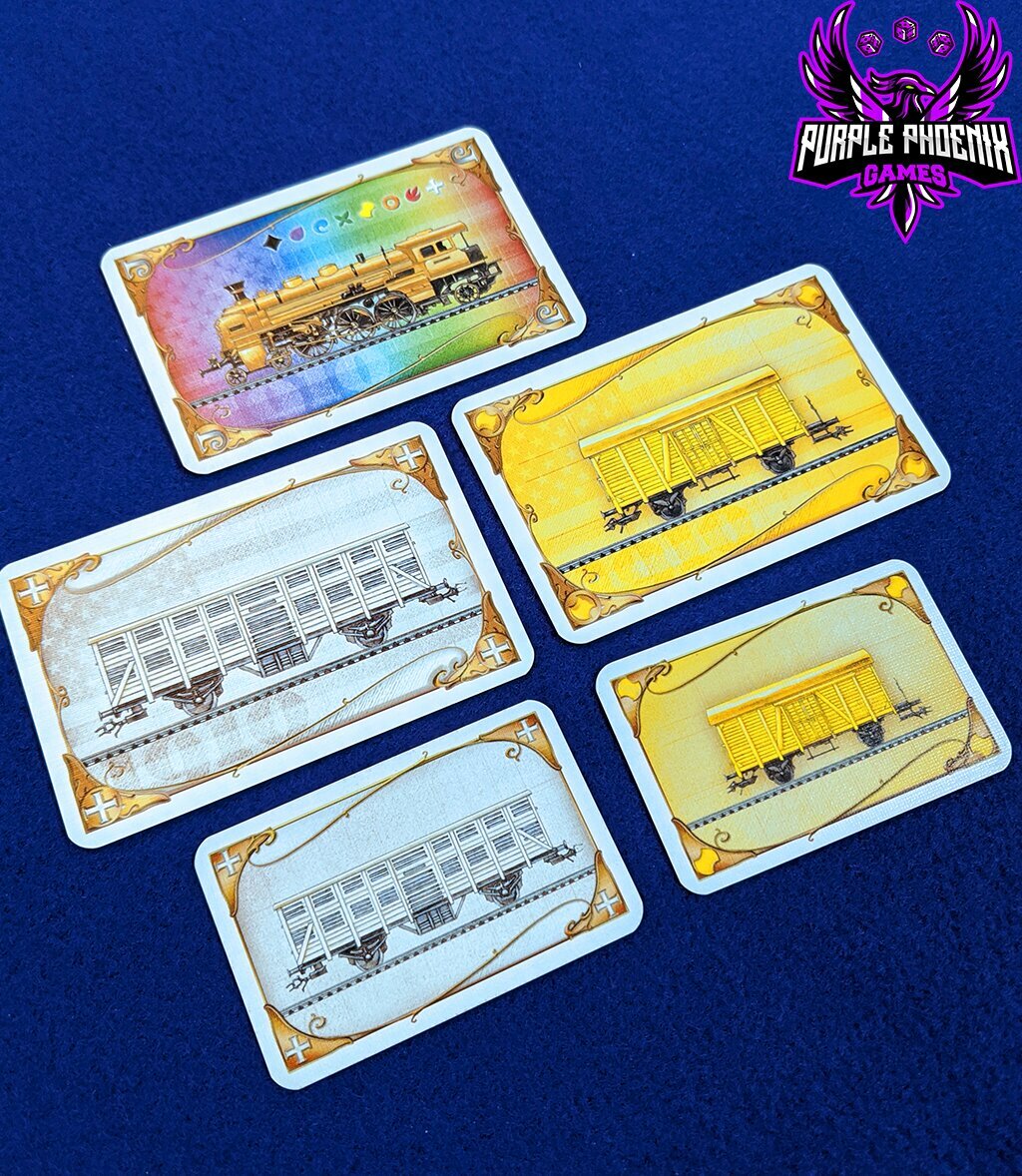
But that surely means that this is an easy game, right? With so few rules and such. Well, no. It’s not really “easy” at all. While your main rules are light, the strategy and tactics during play can cause feelings of joy and delight as well as frustration and concern as you see someone claim the route you need to connect to two cities on the map. Of course, you can’t explain that to your new players right away. You want them to experience these feelings organically and fully. It’s what makes TTR a really great game: having your well-laid plans just shot to smithereens by the guy who can’t tell the difference between the white train cars and the wild rainbow train cars.
DISCLAIMER: I play with the 1910 expansion, which is a MUST. The larger cards are way easier to play with. See photo below with comparisons from base game on bottom with the larger 1910 cards above. YMMV, but I will always play using this expansion. -T
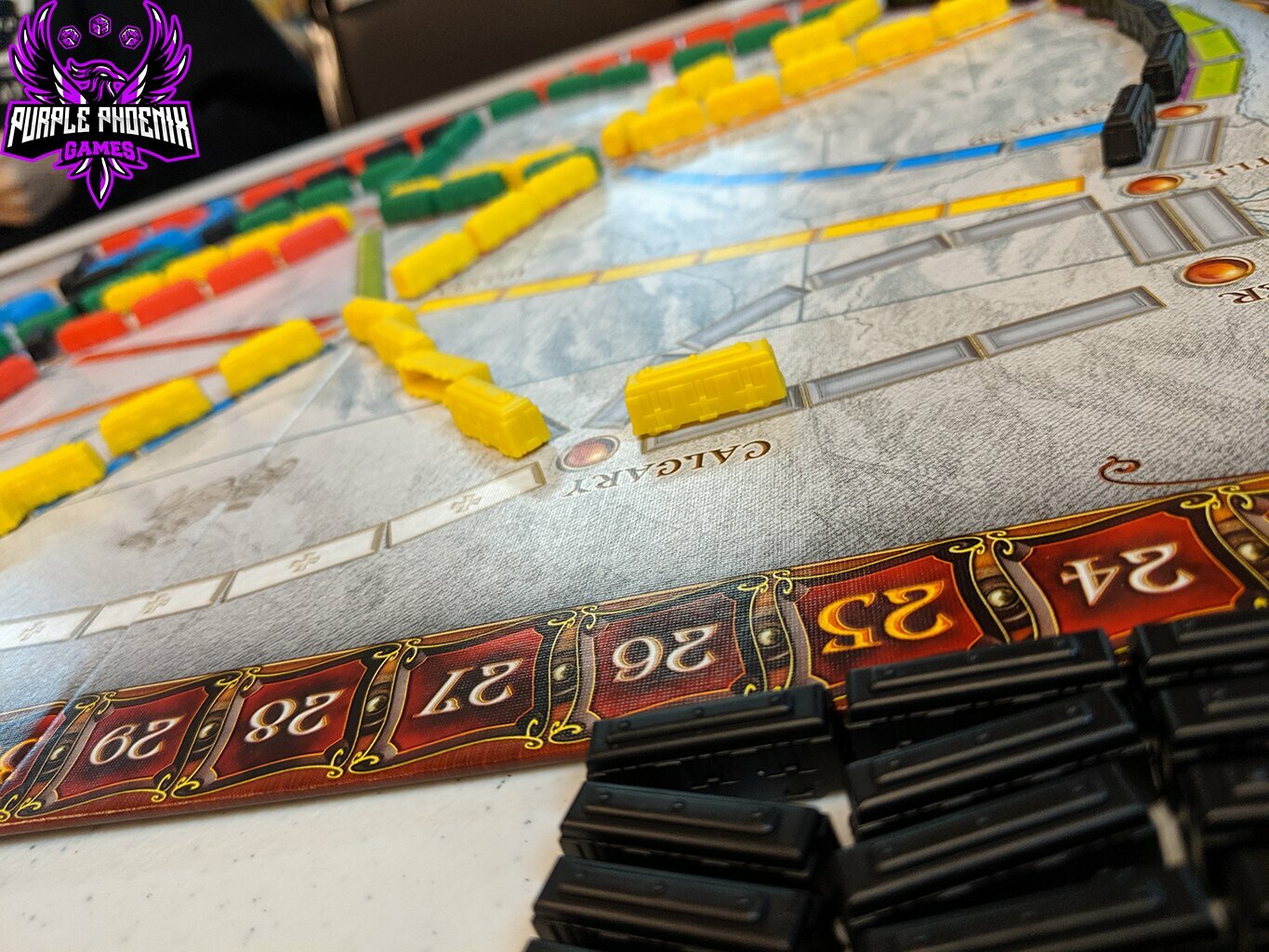
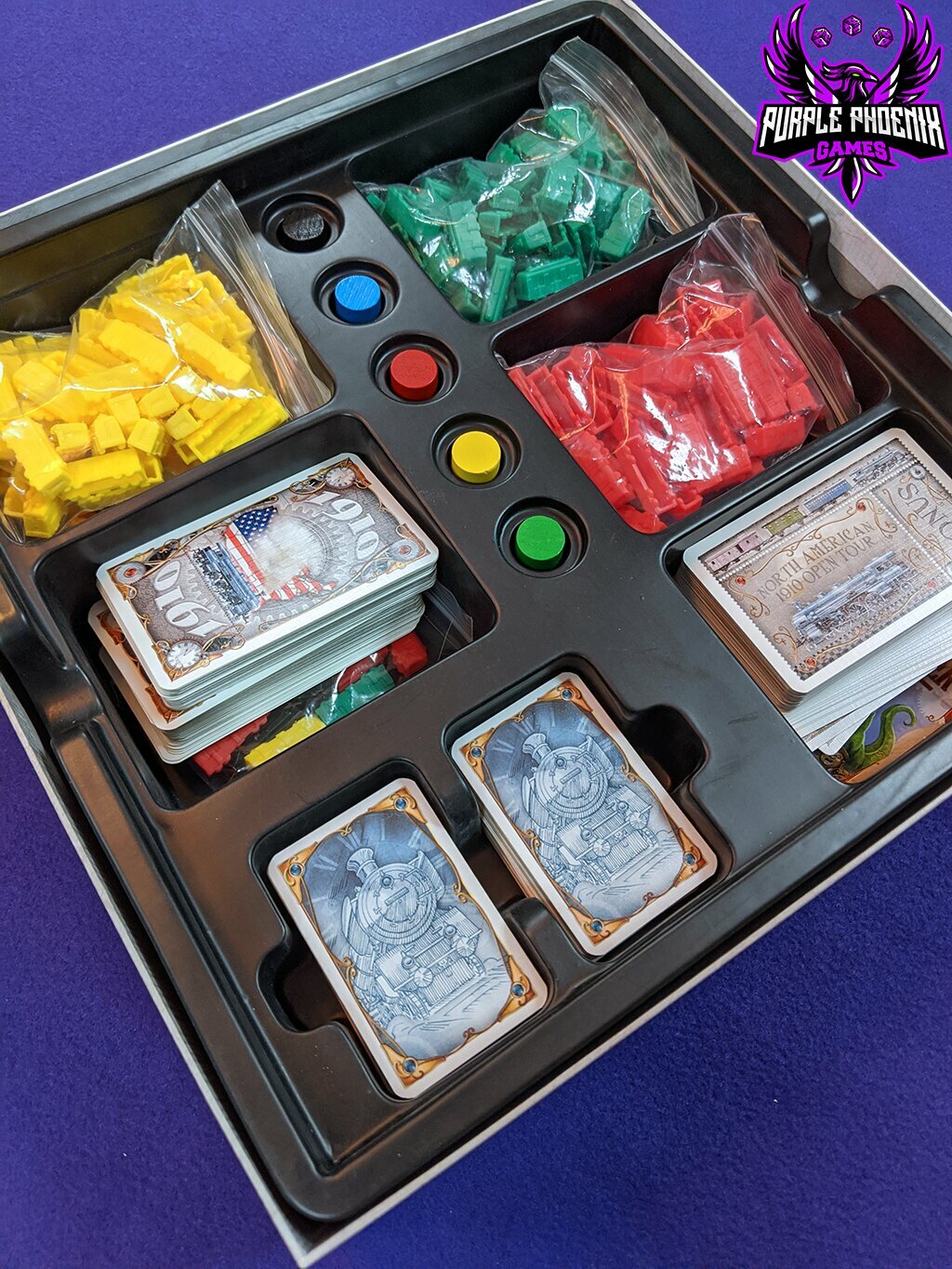
Components. Let’s compare components to some current or newer games. The game board is laid out really well, and the artwork is sparse and not over-busy on the board. This is a HUGE plus for me. I like nothing more than for the board to offer thematic elements and feeling without pelting my eyes with too much distraction. The cards were a bad choice. Not because the art or the quality on them is bad – because that’s not what I am saying. The size of the cards was a poor choice. I did purchase the 1910 expansion and simply will not play my copy without it. I recently played TTR for GenCan’t 2019 at my FLGS with OG base cards and found myself dreaming of the 1910 cards. The score tracker discs are of industry-standard quality for scoring discs. The plastic train car pieces are still just as wonderful to handle and play with as are many other more modern components. Seriously just as good. TTR components (and really, most of the time Days of Wonder components in general) are really great.
So do I still enjoy playing it? You betcha, don’tcha know. I still love seeing the board in front of me, agonizing over the route tickets I am dealt, and trying to decide if I should go for the New York to Los Angeles, or keep it simple with multiple routes along the Mississippi River. I still love the panic that ensues when I see people hoarding train cards, just knowing that they will soon be on the attack and their train car collection will dwindle to almost endgame levels in too few rounds for me to complete my masterpiece. I guess I still really love it.
Is Ticket to Ride my favorite game? No. But I’ll tell you what. I hadn’t played it in a couple years, and after this weekend’s play, it has moved up on my list by several spaces. It still holds a special place in my heart, and also the hearts of my team. That’s why Purple Phoenix Games gives Ticket to Ride a retrospective 20 / 24. It’s still great!
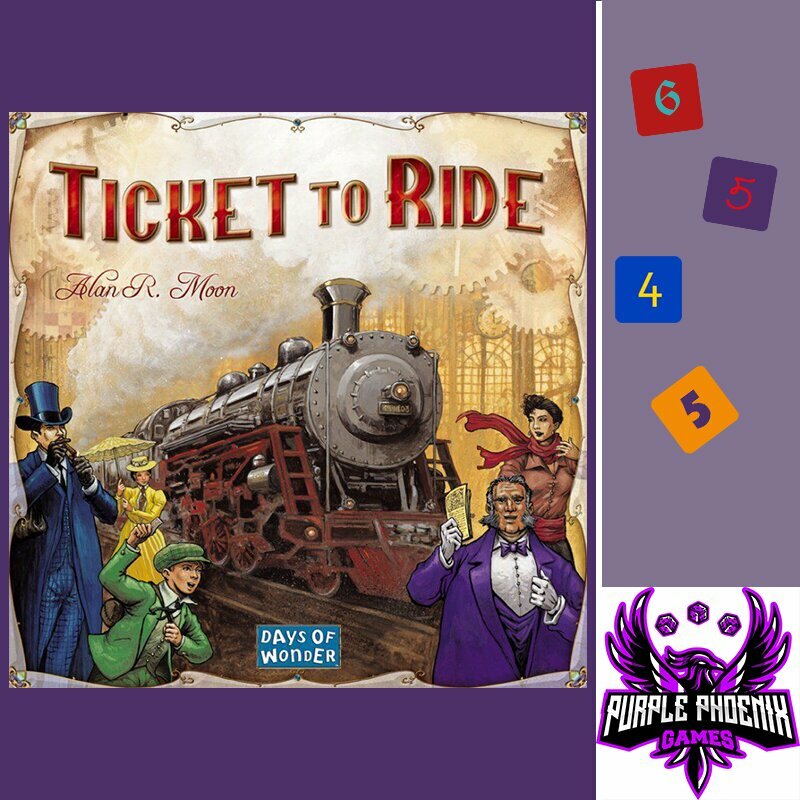
Ticket to Ride is one of those games that has really hit it big in the mass market. You can find it all over in big box stores, in FLGS, online, secondary market, just everywhere. But why? And for this long? Ticket to Ride (TTR) came out in 2004. A mere 15 years ago. While that doesn’t really sound like a long time, in contrast to today’s game industry it is an eternity. With thousands upon thousands of games being released into the market through direct publish, Kickstarter/crowd funding, and big releases at conventions it’s hard to believe that you can still find this hanging with the exciting, fresh new games.
What I truly believe is magical about this game is its simplicity. “You have two main options: take some cards or play some cards.” When you can start a teach of a game by saying that, your players are invested right away because they know you aren’t going to bog them down with rules upon rules. “If you decide to take cards you can take these colored train cards or you can take new route ticket cards.” So now players have two choices from gaining cards. “If you decide to play cards you need to play cards of a color and number matching whichever route between two connecting cities on the map you like.” Done. The game is explained. Yeah, you can fight me about the endgame scoring stuff like longest route and whatnot, but for new gamers, you have explained this classic in three sentences. It’s so beautiful when a game allows you to teach it so quickly.
But that surely means that this is an easy game, right? With so few rules and such. Well, no. It’s not really “easy” at all. While your main rules are light, the strategy and tactics during play can cause feelings of joy and delight as well as frustration and concern as you see someone claim the route you need to connect to two cities on the map. Of course, you can’t explain that to your new players right away. You want them to experience these feelings organically and fully. It’s what makes TTR a really great game: having your well-laid plans just shot to smithereens by the guy who can’t tell the difference between the white train cars and the wild rainbow train cars.
DISCLAIMER: I play with the 1910 expansion, which is a MUST. The larger cards are way easier to play with. See photo below with comparisons from base game on bottom with the larger 1910 cards above. YMMV, but I will always play using this expansion. -T
Components. Let’s compare components to some current or newer games. The game board is laid out really well, and the artwork is sparse and not over-busy on the board. This is a HUGE plus for me. I like nothing more than for the board to offer thematic elements and feeling without pelting my eyes with too much distraction. The cards were a bad choice. Not because the art or the quality on them is bad – because that’s not what I am saying. The size of the cards was a poor choice. I did purchase the 1910 expansion and simply will not play my copy without it. I recently played TTR for GenCan’t 2019 at my FLGS with OG base cards and found myself dreaming of the 1910 cards. The score tracker discs are of industry-standard quality for scoring discs. The plastic train car pieces are still just as wonderful to handle and play with as are many other more modern components. Seriously just as good. TTR components (and really, most of the time Days of Wonder components in general) are really great.
So do I still enjoy playing it? You betcha, don’tcha know. I still love seeing the board in front of me, agonizing over the route tickets I am dealt, and trying to decide if I should go for the New York to Los Angeles, or keep it simple with multiple routes along the Mississippi River. I still love the panic that ensues when I see people hoarding train cards, just knowing that they will soon be on the attack and their train car collection will dwindle to almost endgame levels in too few rounds for me to complete my masterpiece. I guess I still really love it.
Is Ticket to Ride my favorite game? No. But I’ll tell you what. I hadn’t played it in a couple years, and after this weekend’s play, it has moved up on my list by several spaces. It still holds a special place in my heart, and also the hearts of my team. That’s why Purple Phoenix Games gives Ticket to Ride a retrospective 20 / 24. It’s still great!