
Scopa: la Sfida
Games
App
Challenge your friends now at Scopa: La Sfida, the only one with SCOPONE SCIENTIFICO mode! Download...

Fun Run 3: Arena Running Race
Games and Sports
App
Join our community of more than 100 million Fun Run players from all around the world in one of the...

Every Witch Way But Wicked
7.7 Rate It
Book
Take twelve paranormal authors. Toss them together in one anthology. Add a dash of romance, a pinch...
Witches
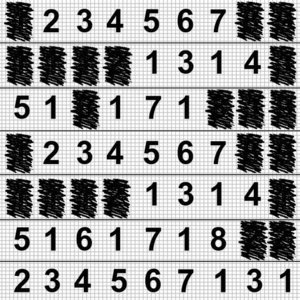
Numbers Game - Numberama
Games
8.0 Rate It
App
A casual/addictive/puzzle game for everybody. Numbers Game is a fun and addictive mobile version...

Tiny Epic Quest
7.0
Rate It
Tabletop Game
A world of peace has been torn asunder by the opening of a vile portal from the goblin kingdom....

Samurai Spirit
4.0 Rate It
Tabletop Game
You and your fellow samurai companions are the only standing obstacle between one frightened village...


Purple Phoenix Games (2266 KP) rated Deception: Murder in Hong Kong in Tabletop Games
Jun 12, 2019

MURDER! As an Investigator, that’s just another day on the job for you. This time feels different, though. Something about this case is off… After the initial evidence is gathered, the team’s Forensic Scientist has disclosed to the team that the killer is one of the Investigators! Everyone is on edge, accusing every other Investigator of being the murderer. Everyone had potential means and motive, and it is up to you to figure it out! As the Forensic Scientist uncovers more evidence, the details of the crime will come to light, and the killer will be revealed. Put your investigative and deductive skills to the test as you try to unmask the killer, or throw the team off your scent if you are the culprit!
DISCLAIMER!! This review is for vanilla Deception: Murder in Hong Kong. We have plans to add in the expansion once one of us purchases it and learns it and teaches it to the rest of us. Should that happen and our review change, we will add that information to this review or to a new review and link to it from here. -T
Deception: Murder in Hong Kong is a game of bluffing, deduction, and hidden identity. All players (except for the Forensic Scientist) have a secret role in the game – Investigator, Witness, Murderer, or Accomplice. The Forensic Scientist knows who the killer is, and how they did it. It is their job to guide the Investigators to the killer by providing clues about the uncovered evidence. The Investigators are trying to interpret the clues and uncover the killer’s identity. The Witness knows who the killer is, but has not yet figured out how they did it. The Murderer and Accomplice are looking to pin the murder on one of the other innocent members of the team! As clues are revealed, each player gets a chance to make a case against the player whom they think is the murderer. You must convince everyone of your logic, or else the killer could get away! In a game where everyone is a suspect, who can you trust? Gather clues, present your case, and put your poker face to the test in this ultimate game of deception! (See what I did there?)
I thoroughly enjoy games of deduction. Anything where you have to think and solve puzzles/riddles/etc. is fun for me. In Deception, it’s a race to see who can find the solution first. Not only do you have to deduce the correct answer from the provided clues, but you also have to put your persuasive skills to the test! Unless you can convince everyone that a specific player is the killer, they might turn their accusations towards someone else, or even worse, towards YOU! You really have to think outside of the box to interpret the Forensic Scientist’s clues, and I like to challenge myself to find the solution in as few turns as possible. The faster I can solve the murder, the smarter I feel. Don’t lie, it makes you feel smart too when you figure it out before anyone else!
The only part of Deception that I don’t really enjoy is the bluffing aspect, which is one of the most integral parts of the game, I know. I am just a horrible liar with a questionable poker face. If we play and I am the Murderer, I am almost always found out. Whenever anyone accuses me, my mind blanks and I cannot think of a single convincing way to get everyone off my scent! That is a personal problem, though, because when I get to be just a regular ol’ Investigator, I have a blast! I can still be accused, but I always feel like I have an easier time getting people off my case if I am actually innocent. I know some people really enjoy being the Murderer because they like the challenge of deceiving the entire team. I am not one of those people though. If I was guaranteed to be just a plain Investigator (or the Forensic Scientist) every time, I would probably pull this game out more!
Deception: Murder in Hong Kong is a ‘party’ game, but with the right group, it can still be a challenging game. A higher player count, in this case, does not necessarily equate to a chaotic game either. So give Deception a try. It’ll be worth it! Purple Phoenix Games gives it a 17 / 24.
https://purplephoenixgames.wordpress.com/2018/12/26/deception-murder-in-hong-kong-review/
Purple Phoenix Games (2266 KP) rated Agropolis in Tabletop Games
Sep 24, 2020
Disclaimer: We were provided a copy of Agropolis for the purposes of this preview. The components are not yet finalized, and will probably change from what you see here to the finished Kickstarter campaign. Agropolis is a stand-alone expansion to the popular ButtonShy title, Sprawlopolis. We have reviewed Sprawlopolis (as both a Solo Chronicles, as well as Multiplayer) in the past, so I do not intend to rehash the entire ruleset in this preview. -L
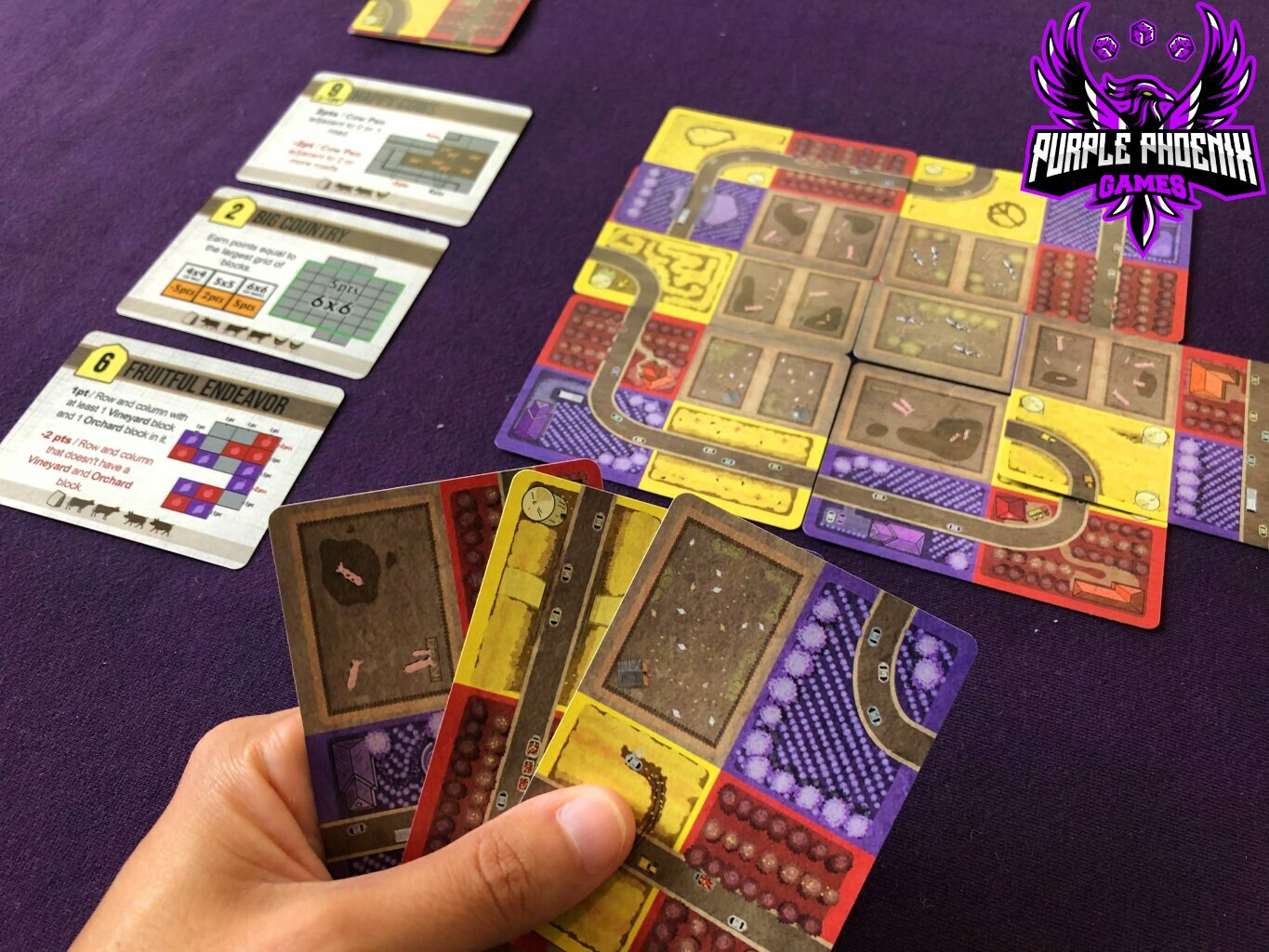
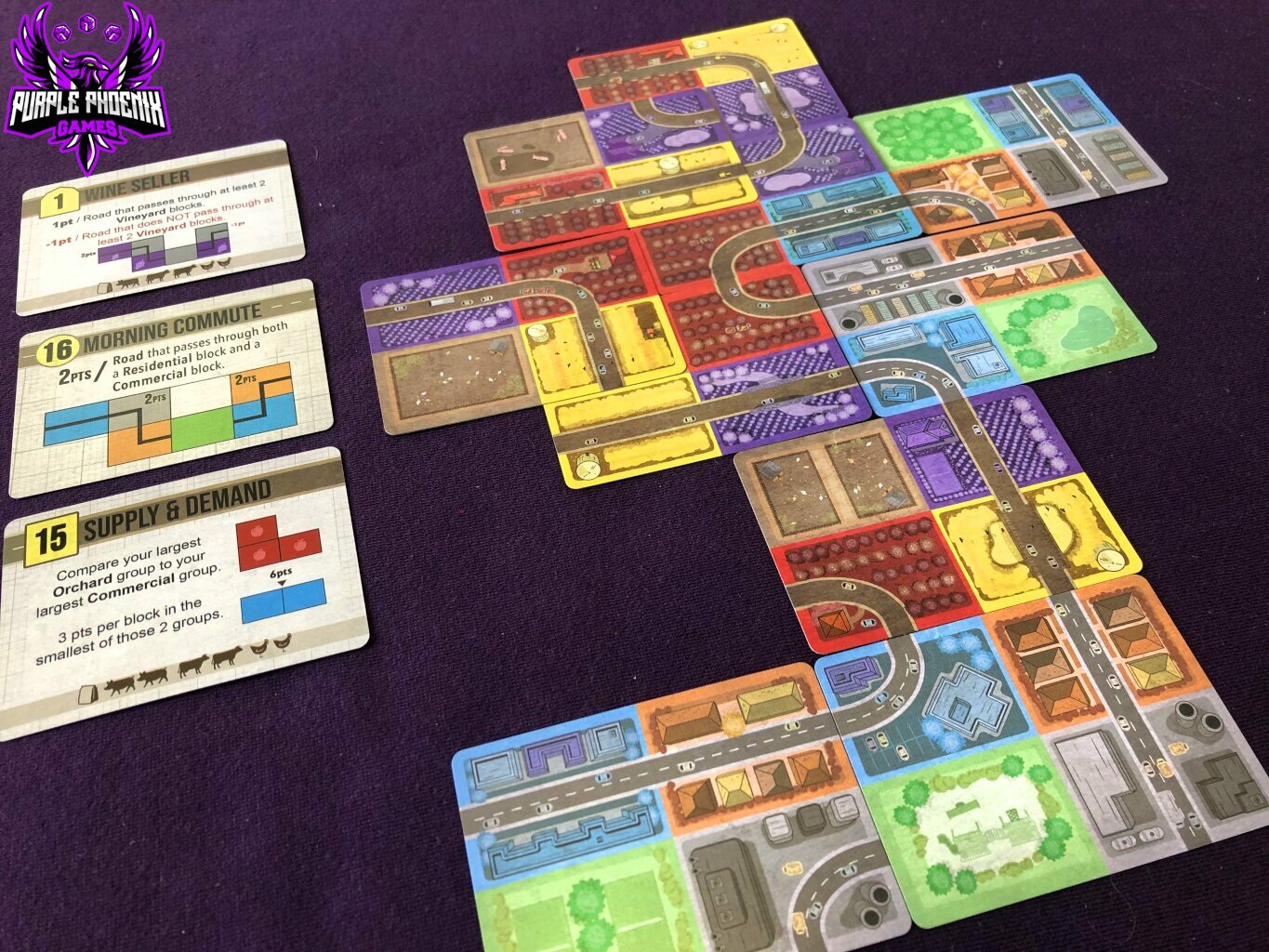
In Agropolis, players are working cooperatively to create a cohesive and thriving rural community. The overall gameplay is the same as Sprawlopolis, with a few thematic differences. To begin the game, randomly select 3 cards to dictate the scoring conditions for your specific game. Deal 1 card to each player (3 to the starting player), and place one card face-up in the center of the table. On your turn, you will draw a card, play a card into the communal countryside, pass your remaining cards to the next player, and then draw a new card. The goal is to create a countryside that scores enough points to surpass the combined total of the 3 scoring condition cards.
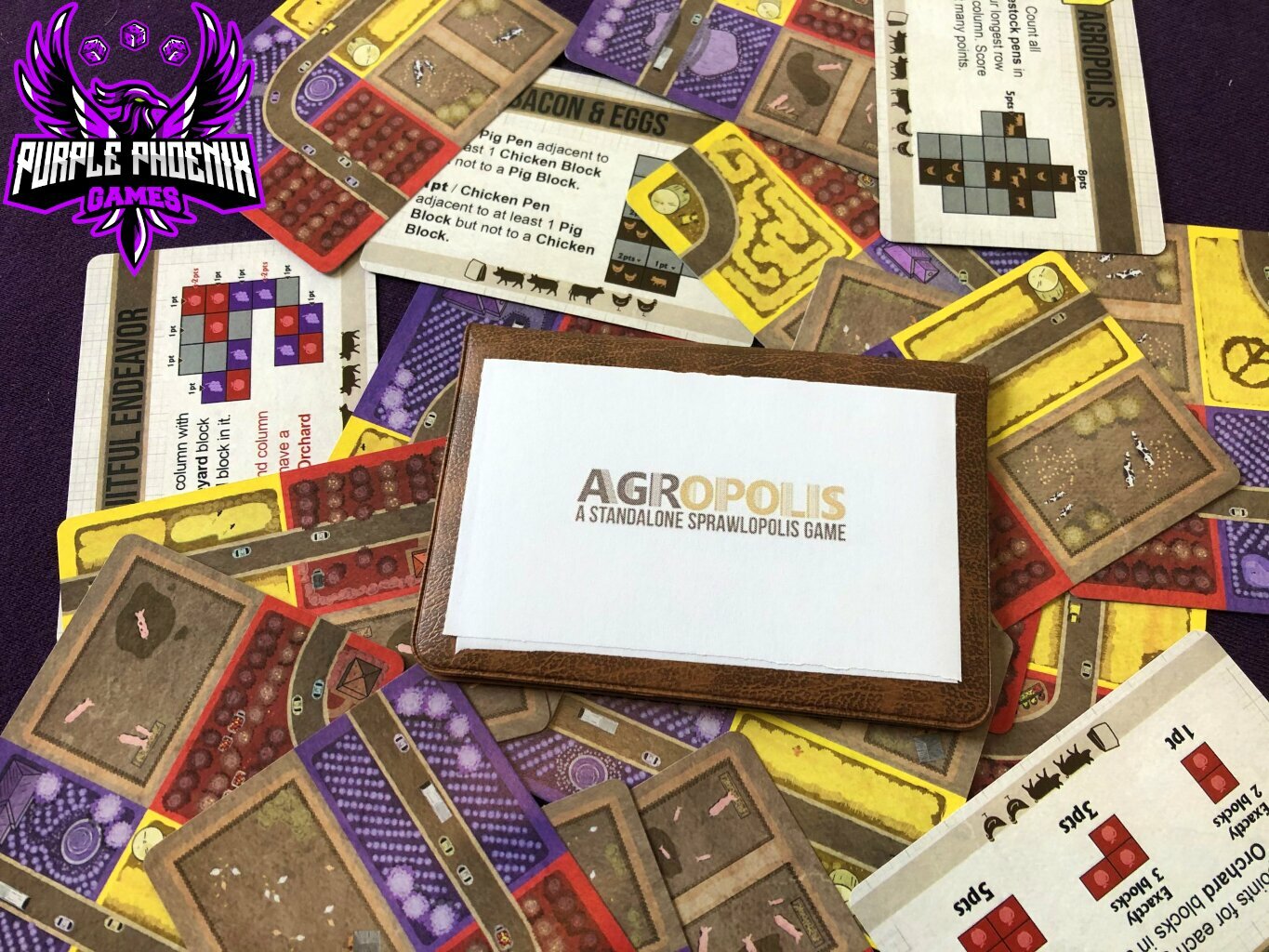
Each card is divided into four zones: cornfields, livestock pens, orchards, and vineyards. The selected scoring condition cards determine how you can earn and lose points for your card/zone placements in the countryside. That’s where strategy comes into play – you can’t just place your cards wherever you want! There has to be a method to the madness, and each placement must be carefully selected for maximum end-game points. When all cards have been played, tally up your points – earning points for each zone, gaining/losing points for scoring conditions, and deducting points for roads. If your final score is higher than the total of the 3 scoring conditions combined, then you have won!
As a big fan of Sprawlopolis, I am happy to report that ButtonShy has done it again with Agropolis. The overall gameplay and atmosphere is the same between both games, which adds a comfort and familiarity to the game, but the thematic differences and scoring conditions make the game feel subtly unique. Aside from a country theme, Agropolis has an optional challenge known as the Feed Fee. Certain cards have a feedbag and livestock symbol underneath the card’s score, and all cards have a combination of livestock symbols at the bottom of the scoring description. To play with the Feed Fee, simply count the number of that specific type of livestock across all 3 scoring condition cards and add that to your scoring total. You might even have multiple Feed Fees in play for a single game! That is a new added challenge unique to Agropolis, and can really up the ante of the gameplay.
Our preview copy of Agropolis also came with a 6-card combo pack expansion that allows you to combine both Agropolis and Sprawlopolis into one big game. To play with the combo pack, randomly select one scoring condition card from the three decks: Agropolis, Sprawlopolis, and the combo pack. Randomly select another combo pack card to be the starting card of your city/country blended community. On your turn, you will draw 1 Agropolis card and 1 Sprawlopolis card. Play only one of those cards to the tableau, and the other is discarded. When both draw decks run out, the game is over and points are tallied. This combo game is uniquely challenging because you have scoring conditions from both games. You can’t focus on the city-side and let the country peter out, because at least one of the scoring condition cards calls for a country-specific goal. This combo pack takes the simplicity of both games and really ups the amount of strategy required for success. Definitely a combo I will be playing a lot!
All in all, how is Agropolis? The gameplay itself is simple, strategic, and satisfying to play. Although nearly identical to Sprawlopolis, the thematic differences and country-specific scoring conditions make the game feel new and refreshing. I absolutely love the 6-card combo pack to combine both games together. It just heightens the gameplay and strategic considerations, and takes it from a smaller game to something with a little more heft. Some people are all about that city life, but I think Agropolis will show you the beauty of the rural community. Be sure to check out the Kickstarter campaign, going live on Tuesday, September 29th!



From there on each group goes on its own journey, but at times I found it hard to remember where they were going or why. Most of the original PoV characters return with some extras.
Maquin was a good addition as he tries to cope with losing his lord in the depths of the giant stronghold and battles on without a purpose, and ends up going on a really exciting journey.
Having Veradis no longer following Nathair, acting both as his first-sword and also as his conscience, was a bit of a challenge for me. I love the character of Veradis, and the shield wall method of battle he has developed, but struggle to see the point in him away from Nathair. At times it felt like there were events happening elsewhere in the world and one of the PoV characters had to witness them so he drew the short straw.
The focus of this book shifts away from Corban quite a bit: where Malice devoted almost every other chapter to his development and growth, here he becomes part of the richer story.
At times the events felt a little unbelievable - groups arriving at the same place at the right time, people just chancing upon others in a random clearing in the forest etc - and I found it a little jarring.
I found the characters a bit more well-defined than in the first book, but that could just be because some of the ones which were similar to others have now died. A number of the less pleasant characters though are still hard to distinguish - Jael, Rafe, Quinn, Morcant - all seem pretty interchangeable.
The story has moved along a bit but I feel the overall storyline is a little undefined as yet - it isn't clear what the end game is - there will be a battle between good and evil but there doesn't seem to be anything to do until then, other than try to stop it happening (but as the book itself says "it is prophesied so it will happen"), so the purpose seems to be damage limitation.
A good read and an improvement over Malice, but I still struggle to remember what each group is doing for the first page or so of their chapters.