
Search

Gareth von Kallenbach (980 KP) rated Star Wars: Episode III – Revenge of the Sith (2005) in Movies
Aug 14, 2019
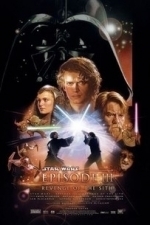


After three long years of waiting, countless internet rumors, and high expectations, the final big screen Star Wars film, Star Wars: Episode III Revenge of the Sith has arrived to the delight of millions of fans worldwide.
The lavish and dark film chronicles the fall of the Republic, the demise of the Jedi Knights, and the creation of Darth Vader amongst several plotlines that complete the Prequel Trilogy.
While many critics and fans had mixed reactions to the previous films in the Prequel Trilogy, the rumors of a much darker more mature Star Wars had even the most jaded curious to see just how dark creator George Lucas was willing to go.
The film opens with the familiar main theme by John Williams and the scrolling text that updates the viewers that the Clone Wars that started at the end of the last film are still raging, and that the Separatist movement under the leadership of Count Dooku (Christopher Lee), have kidnapped the Chancellor of the Republic (Ian Mc Diarmid), and a desperate battle over the capitol planet of Coruscant has ensued.
In a dazzling blend of colors, action, and motion, two fighters piloted by Obi Wan Kenobi (Ewan McGregor), and Anakin Skywalker (Hayden Christensen), weave in and around countless fighters and capitol ships engaged in deadly combat. To say that it is an overwhelming visual display would be an understatement, as it is simply jaw dropping to see the detail that the magicians at Industrial Light and Magic have crafted.
Obi Wan and Anakin are spearheading the rescue effort that eventually puts them not only against Dooku, but the new villain, the deadly cyborg General Grevious and this is all within the first 15 minutes of the film.
Upon returning the Chancellor to Coruscant, Anakin is greeted by his wife in secret, Padme, (Natalie Portman), who informs him that she is expecting their baby.
Overjoyed by the news, and to be home after many long months away fighting, Anakin as if in a true Shakespearean tragedy proclaims that he has never been happier in his life.
Anakin’s peace is soon disrupted as he begins to have visions of his wife dying in childbirth, since these are the same type of visions Anakin had shortly before the death of his mother years earlier, he becomes obsessed with protecting his wife.
As further political intrigue unfolds, Chancellor Palpatine appoints Anakin to be his representative on the Jedi Council in a move that does nor sit well with the Jedi Elite, especially Mace Windu (Samuel L. Jackson), who begrudgingly accepts the appointment but does not bestow the title of Master upon Anakin causing further friction for the emotional Anakin.
It seems that the Jedi do not trust Palpatine and are convinced he is up to something, and will not relinquish his emergency powers that were granted to him during the war.. Towards this end, The Jedi Council tasks Anakin to spy on his friend the Chancellor and report what he has learned to the council.
This in turn causes much conflict in Anakin as he is torn between his duty as a Jedi and his friendship with the Chancellor. Since Obi Wan has been dispatched to hunt down General Grevious, Anakin is without his usually confidant and mentor leaving Palpatine to influence Anakin and turn him toward fateful decisions that will eventually change the course of the galaxy.
While filled with plenty of political intrigue, and dazzling action sequences, what drives this film is the gripping, human drama of the characters. While the viewers know what is to become of Anakin, seeing the path he takes is what makes this film a true tragedy as he does what he does for noble reasons. In a true Faustian tale, the devil does not reveal himself nor his true intentions until it is already well past the point of no return.
Lucas is careful to show Anakin as a sympathetic and loving person, who has matured from the spoiled character that he was in the last film. While at times the dialogue of the film may seem to some to be very basic, the tragic turn of events in the film helps to underscore the central themes of love, friendship, and betrayal.
The supporting work in the film is solid, especially the emotionally packed work of Mc Gregor and the maniacal performance of Mc Diarmid. My only real regret is that Portman did not have a larger role or more for her character to do, that being said, the film works on all levels.
Visually the film is amazing as the exotic locales, action, and computer generated characters such as Yoda and Grevious are a marvel to behold. It is amazing how much technology has advanced since the last film, but once again, Lucas has set the bar very high for others to follow.
Lucas has taken in my opinion some very undeserved criticism for the Prequel Trilogy, and Sith should dispel those who said that his best work was behind him and that he should have turned the directing duties over to another as this film once again underscores that he is one of the most gifted visionaries ever, and has created the ultimate saga for the ages that is second to none, and one that has and will stand the test of time.
Sith is a riveting and emotional film, that holds nothing back, it is the darkest Star Wars yet and is easily the best of the Prequel trilogy and on par with any of the classic originals, and is a true masterpiece that will delight fans old and new.
The lavish and dark film chronicles the fall of the Republic, the demise of the Jedi Knights, and the creation of Darth Vader amongst several plotlines that complete the Prequel Trilogy.
While many critics and fans had mixed reactions to the previous films in the Prequel Trilogy, the rumors of a much darker more mature Star Wars had even the most jaded curious to see just how dark creator George Lucas was willing to go.
The film opens with the familiar main theme by John Williams and the scrolling text that updates the viewers that the Clone Wars that started at the end of the last film are still raging, and that the Separatist movement under the leadership of Count Dooku (Christopher Lee), have kidnapped the Chancellor of the Republic (Ian Mc Diarmid), and a desperate battle over the capitol planet of Coruscant has ensued.
In a dazzling blend of colors, action, and motion, two fighters piloted by Obi Wan Kenobi (Ewan McGregor), and Anakin Skywalker (Hayden Christensen), weave in and around countless fighters and capitol ships engaged in deadly combat. To say that it is an overwhelming visual display would be an understatement, as it is simply jaw dropping to see the detail that the magicians at Industrial Light and Magic have crafted.
Obi Wan and Anakin are spearheading the rescue effort that eventually puts them not only against Dooku, but the new villain, the deadly cyborg General Grevious and this is all within the first 15 minutes of the film.
Upon returning the Chancellor to Coruscant, Anakin is greeted by his wife in secret, Padme, (Natalie Portman), who informs him that she is expecting their baby.
Overjoyed by the news, and to be home after many long months away fighting, Anakin as if in a true Shakespearean tragedy proclaims that he has never been happier in his life.
Anakin’s peace is soon disrupted as he begins to have visions of his wife dying in childbirth, since these are the same type of visions Anakin had shortly before the death of his mother years earlier, he becomes obsessed with protecting his wife.
As further political intrigue unfolds, Chancellor Palpatine appoints Anakin to be his representative on the Jedi Council in a move that does nor sit well with the Jedi Elite, especially Mace Windu (Samuel L. Jackson), who begrudgingly accepts the appointment but does not bestow the title of Master upon Anakin causing further friction for the emotional Anakin.
It seems that the Jedi do not trust Palpatine and are convinced he is up to something, and will not relinquish his emergency powers that were granted to him during the war.. Towards this end, The Jedi Council tasks Anakin to spy on his friend the Chancellor and report what he has learned to the council.
This in turn causes much conflict in Anakin as he is torn between his duty as a Jedi and his friendship with the Chancellor. Since Obi Wan has been dispatched to hunt down General Grevious, Anakin is without his usually confidant and mentor leaving Palpatine to influence Anakin and turn him toward fateful decisions that will eventually change the course of the galaxy.
While filled with plenty of political intrigue, and dazzling action sequences, what drives this film is the gripping, human drama of the characters. While the viewers know what is to become of Anakin, seeing the path he takes is what makes this film a true tragedy as he does what he does for noble reasons. In a true Faustian tale, the devil does not reveal himself nor his true intentions until it is already well past the point of no return.
Lucas is careful to show Anakin as a sympathetic and loving person, who has matured from the spoiled character that he was in the last film. While at times the dialogue of the film may seem to some to be very basic, the tragic turn of events in the film helps to underscore the central themes of love, friendship, and betrayal.
The supporting work in the film is solid, especially the emotionally packed work of Mc Gregor and the maniacal performance of Mc Diarmid. My only real regret is that Portman did not have a larger role or more for her character to do, that being said, the film works on all levels.
Visually the film is amazing as the exotic locales, action, and computer generated characters such as Yoda and Grevious are a marvel to behold. It is amazing how much technology has advanced since the last film, but once again, Lucas has set the bar very high for others to follow.
Lucas has taken in my opinion some very undeserved criticism for the Prequel Trilogy, and Sith should dispel those who said that his best work was behind him and that he should have turned the directing duties over to another as this film once again underscores that he is one of the most gifted visionaries ever, and has created the ultimate saga for the ages that is second to none, and one that has and will stand the test of time.
Sith is a riveting and emotional film, that holds nothing back, it is the darkest Star Wars yet and is easily the best of the Prequel trilogy and on par with any of the classic originals, and is a true masterpiece that will delight fans old and new.

Jordan Binkerd (567 KP) rated The Long Earth in Books
Aug 13, 2019


Note: this review is transposted from my personal review blog, and so was originally written several years ago. I figured if I reposted it here, someone might actually read it….
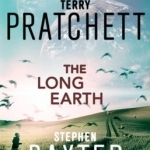
I’m a huge fan of Terry Pratchett’s work, in case you hadn’t noticed. I’m slowly working my way through his Discworld novels and Good Omens: The Nice and Accurate Predictions of Agnes Nutter, Witch, cowritten with Neil Gaiman, is among my favorite books of all time.* So when I discovered The Long Earth at my local library, I was ecstatic. I’d heard good things about Stephen Baxter, but never actually read any of his material. What I found was one of the best novels I have read in a very long time.
The premise here is that there are infinite worlds parallel to ours, spread out across the vast “contingency tree” of possible Earths, and in all of the Long Earth only one iteration has developed Human life–ours. Throughout our history there have always been a few with the natural ability to “step” between worlds at will, and still others who did so unintentionally and disappeared forever, but the world at large was unaware of this phenomenon until a reclusive scientist posted the blueprint for a “stepper” device on the internet and promptly disappeared from his apartment. Suddenly, the whole of the Long Earth is opened up to humanity. Suddenly, there is no shortage of land or resources. Economies are hard hit, jobs are lost, and once again humanity’s pioneer spirit is stirred to go out into the frontier and try to make their way….
Joshua Valiente is a so-called “natural stepper,” but he is probably unique among humanity. In the stress of childbirth, his mother stepped out of her world and into a parallel forest before slipping back without him. She managed to get back and recover him pretty quickly, but nevertheless young Joshua spent the first ten minutes or so of his life completely alone in his universe. As a result, he is uniquely attuned to the Long Earth. He can step between worlds without nausea, and is keenly sensitive to the number of people around, growing intensely uncomfortable the more crowded things get. Now, fifteen years after the world learned of the Long Earth, he spends most of his time exploring where no man has gone before. Lobsang, on the other hand, is a keenly intelligent AI, who may or may not be the latest reincarnation of a Tibetan motorcycle repairman. In collaboration with the shadowy Black Corporation, Lobsang has conceived a plan to test just how far the Long Earth goes. And he wants Joshua to go with him….the resulting journey is as much an exploration of what may have been as it is a geographical one, with most worlds mirroring our own, but a few display the effects of a cosmic “toss of a coin” going the other way–for example, there’s one where the Earth was completely destroyed by an asteroid strike sometime in the distant past.
Put quite plainly, this was the best thing I’ve read in a very long time. Very original, and to my (admittedly limited) understanding very faithful to the relevant science without losing quality of narrative or character. Pratchett’s humor and sardonic narrative voice shines through quite often in the interpersonal or introspective moments as well as those detailing more plot driven points–those scenes that would, in a film, become some form of montage showing that time is passing and this is what’s happening in the meantime. As I mentioned, I’ve never read Baxter before, so it’s harder to pick out his voice from their collaboration.
Infodumping has become something of a cardinal sin in the science fiction world, but sometimes you just have to throw some information at the reader so that he doesn’t get lost. I felt that The Long Earth handled that very well. We get our first glimpse at the long earth in montage mode, a series of vignettes that don’t make sense on their own, people popping in and out of worlds without understanding themselves what is going on. This is followed by the main story, twenty years after the discovery of the Long Earth, in which the bare bones are presented via a TV interview a character is half-watching while he waits. These bare bones of the conceptual basis of the book are then fleshed out in more detail as Joshua and Lobsang and introduced and get to know each other, discussing the various theories regarding the Long Earth at length in an effort to better understand it themselves. This is interspersed with flashbacks, sometimes Joshua recalling his experiences, sometimes Lobsang telling stories of other people based on his research into early encounters with the Long Earth. In this way Pratchett and Baxter manage to convey how humanity as a whole is dealing, not just Joshua and Lobsang. If I have one complaint with this it is not always clear why or how we are being told this–you don’t discover until the end of the chapter that Lobsang is telling this to Joshua instead of the authors just throwing in a tangential bit with no direct connection. And it is all connected–every revelation, every character you visit and then abandon early in the book will come back and have significance later on.
This is perhaps not the easiest read–you do have to engage it to understand it properly–but neither is it an incomprehensible enigma. As long as you pay attention you should be fine.
CONTENT: Some R-rated language, but not nearly what you could find elsewhere. Some violence, some grisly aftermath of violence. Sexual references, but nothing explicit.
*I’m frankly a little surprised I don’t have a review of that one up here, I must have reread it last just before I started doing this. I’ll have to fix that in the near future….
Original post: https://jordanbinkerd.wordpress.com/2013/09/18/review-the-long-earth-by-terry-pratchett-stephen-baxter/
I’m a huge fan of Terry Pratchett’s work, in case you hadn’t noticed. I’m slowly working my way through his Discworld novels and Good Omens: The Nice and Accurate Predictions of Agnes Nutter, Witch, cowritten with Neil Gaiman, is among my favorite books of all time.* So when I discovered The Long Earth at my local library, I was ecstatic. I’d heard good things about Stephen Baxter, but never actually read any of his material. What I found was one of the best novels I have read in a very long time.
The premise here is that there are infinite worlds parallel to ours, spread out across the vast “contingency tree” of possible Earths, and in all of the Long Earth only one iteration has developed Human life–ours. Throughout our history there have always been a few with the natural ability to “step” between worlds at will, and still others who did so unintentionally and disappeared forever, but the world at large was unaware of this phenomenon until a reclusive scientist posted the blueprint for a “stepper” device on the internet and promptly disappeared from his apartment. Suddenly, the whole of the Long Earth is opened up to humanity. Suddenly, there is no shortage of land or resources. Economies are hard hit, jobs are lost, and once again humanity’s pioneer spirit is stirred to go out into the frontier and try to make their way….
Joshua Valiente is a so-called “natural stepper,” but he is probably unique among humanity. In the stress of childbirth, his mother stepped out of her world and into a parallel forest before slipping back without him. She managed to get back and recover him pretty quickly, but nevertheless young Joshua spent the first ten minutes or so of his life completely alone in his universe. As a result, he is uniquely attuned to the Long Earth. He can step between worlds without nausea, and is keenly sensitive to the number of people around, growing intensely uncomfortable the more crowded things get. Now, fifteen years after the world learned of the Long Earth, he spends most of his time exploring where no man has gone before. Lobsang, on the other hand, is a keenly intelligent AI, who may or may not be the latest reincarnation of a Tibetan motorcycle repairman. In collaboration with the shadowy Black Corporation, Lobsang has conceived a plan to test just how far the Long Earth goes. And he wants Joshua to go with him….the resulting journey is as much an exploration of what may have been as it is a geographical one, with most worlds mirroring our own, but a few display the effects of a cosmic “toss of a coin” going the other way–for example, there’s one where the Earth was completely destroyed by an asteroid strike sometime in the distant past.
Put quite plainly, this was the best thing I’ve read in a very long time. Very original, and to my (admittedly limited) understanding very faithful to the relevant science without losing quality of narrative or character. Pratchett’s humor and sardonic narrative voice shines through quite often in the interpersonal or introspective moments as well as those detailing more plot driven points–those scenes that would, in a film, become some form of montage showing that time is passing and this is what’s happening in the meantime. As I mentioned, I’ve never read Baxter before, so it’s harder to pick out his voice from their collaboration.
Infodumping has become something of a cardinal sin in the science fiction world, but sometimes you just have to throw some information at the reader so that he doesn’t get lost. I felt that The Long Earth handled that very well. We get our first glimpse at the long earth in montage mode, a series of vignettes that don’t make sense on their own, people popping in and out of worlds without understanding themselves what is going on. This is followed by the main story, twenty years after the discovery of the Long Earth, in which the bare bones are presented via a TV interview a character is half-watching while he waits. These bare bones of the conceptual basis of the book are then fleshed out in more detail as Joshua and Lobsang and introduced and get to know each other, discussing the various theories regarding the Long Earth at length in an effort to better understand it themselves. This is interspersed with flashbacks, sometimes Joshua recalling his experiences, sometimes Lobsang telling stories of other people based on his research into early encounters with the Long Earth. In this way Pratchett and Baxter manage to convey how humanity as a whole is dealing, not just Joshua and Lobsang. If I have one complaint with this it is not always clear why or how we are being told this–you don’t discover until the end of the chapter that Lobsang is telling this to Joshua instead of the authors just throwing in a tangential bit with no direct connection. And it is all connected–every revelation, every character you visit and then abandon early in the book will come back and have significance later on.
This is perhaps not the easiest read–you do have to engage it to understand it properly–but neither is it an incomprehensible enigma. As long as you pay attention you should be fine.
CONTENT: Some R-rated language, but not nearly what you could find elsewhere. Some violence, some grisly aftermath of violence. Sexual references, but nothing explicit.
*I’m frankly a little surprised I don’t have a review of that one up here, I must have reread it last just before I started doing this. I’ll have to fix that in the near future….
Original post: https://jordanbinkerd.wordpress.com/2013/09/18/review-the-long-earth-by-terry-pratchett-stephen-baxter/