Search
Search results
This book drew me down the rabbit hole and never let go. I hate Marissa Meyer for making me fall in love with these characters when I know that they may not have a happy ending. No, I don't actually hate her book (I loved it) but it gives you so many feelings and yet you feel that it's not possible for it to work out. If you are familiar with Lewis Carroll's work, you know what happens in Alice in Wonderland. As this is a prequel, you expect that you know how each character turns out and wonder if it will inevitably play out the same way in Heartless. It crushes your heart to know their dreams and realize that they may not come true. My only hope going into this book was that it would have a Wicked-style secret that explains how any of them could possibly find their happily ever afters.
I have always been a huge fan of well-done fairytale re-tellings (or prequels in this case) and Heartless does not disappoint. Marissa Meyer did a wonderful job with the Lunar Chronicles and this is just as well done. We get a different look at our most beloved and hated characters, prior to their lives intersecting with Alice's. Most Wonderland retellings I've read feature Alice, so this was a nice change of pace.
Catherine is our likable if a bit spineless heroine who is set to be the future Queen of Hearts - if her mother has any say. She is joined by the Joker, Hatter, March Hare and other classic characters. Cath's dream is to open the finest bakery in Hearts, but her parents have other plans.
The Joker, Jest is my favourite character by far and he has a great arc throughout the story. He is witty, kind, magical and so much more than just the Fool. I almost wish he was the main character because his scenes were always my favourite.
The author took some liberties with the characters, but overall they just helped to make them more believable. Their personalities are developed and expanded, lending them an air of realness that doesn't always permeate Wonderland.
The Mad Tea Party scene was highly enjoyable as each guest was called upon to perform whilst jauntily adorned with a hat. My only negative is that I wish the Hatter was more likable. I understand his motivations but as classically one of my favourite characters I wish I had enjoyed his role more in this novel. I also wish that Cath could have been more pro-active, even though I understand her less than stellar backbone due to the period and her upbringing.
The world is vividly described from the fabric and accouterment laden Hatta's shop to the lavish King's castle. The author even adds a little Wonderland flair to common phrases and anecdotes. World-building is very well done and makes me long to visit Hearts.
Highly recommended to young adult/teen readers who enjoy fantasy and the fantastical, fairytale re-tellings, prequels and Marissa Meyer's wonderful writing.
I have always been a huge fan of well-done fairytale re-tellings (or prequels in this case) and Heartless does not disappoint. Marissa Meyer did a wonderful job with the Lunar Chronicles and this is just as well done. We get a different look at our most beloved and hated characters, prior to their lives intersecting with Alice's. Most Wonderland retellings I've read feature Alice, so this was a nice change of pace.
Catherine is our likable if a bit spineless heroine who is set to be the future Queen of Hearts - if her mother has any say. She is joined by the Joker, Hatter, March Hare and other classic characters. Cath's dream is to open the finest bakery in Hearts, but her parents have other plans.
The Joker, Jest is my favourite character by far and he has a great arc throughout the story. He is witty, kind, magical and so much more than just the Fool. I almost wish he was the main character because his scenes were always my favourite.
The author took some liberties with the characters, but overall they just helped to make them more believable. Their personalities are developed and expanded, lending them an air of realness that doesn't always permeate Wonderland.
The Mad Tea Party scene was highly enjoyable as each guest was called upon to perform whilst jauntily adorned with a hat. My only negative is that I wish the Hatter was more likable. I understand his motivations but as classically one of my favourite characters I wish I had enjoyed his role more in this novel. I also wish that Cath could have been more pro-active, even though I understand her less than stellar backbone due to the period and her upbringing.
The world is vividly described from the fabric and accouterment laden Hatta's shop to the lavish King's castle. The author even adds a little Wonderland flair to common phrases and anecdotes. World-building is very well done and makes me long to visit Hearts.
Highly recommended to young adult/teen readers who enjoy fantasy and the fantastical, fairytale re-tellings, prequels and Marissa Meyer's wonderful writing.
<i>This eBook was provided by the publisher via NetGalley in exchange for an honest review
Before she was the Queen of Hearts she was just a girl who wanted to fall in love. </i>When Marissa Meyer finished writing <i>The Lunar Chronicles</i>, a series of books loosely based on fairytales, everyone wondered what she would do next. Continuing along the lines of using famous stories, Meyer has devoted an entire novel to Lewis Carroll’s <i>Alice’s Adventures in Wonderland</i>. With thousands of references to the original tale, and a couple of other works too, Heartless is perfect for fans of Carroll’s salient characters.
Unlike most retellings, Meyer has focused on events prior to Alice’s accidental discovery of Wonderland. The resulting novel is essentially a theory as to how the characters turned out the way they did in the original story published in 1865. Drawing attention to the predestined Queen of Hearts, a young woman named Catherine, readers discover a reason for her development into an infamous villain.
Lady Catherine Pinkerton is completely unlike the character she is fated to be. She is a kind, thoughtful girl whose greatest wish is to open her own bakery. Unfortunately, this dream is just that, a dream. With the asinine King of Hearts resolved to marry her, there is little Cath can do to avoid her royal future. At first it may appear odd that Cath is so against marrying the ruler of Hearts, but she soon makes it clear she would much rather marry for love. So, when the court joker, Jest – a similar character to the legendary Hatter – catches her eye, Catherine becomes determined to control her own future.
<i>Heartless</i> is a humorous, yet romantic, young adult novel, full of both well-known and new characters. Set in a world with morals similar to the Victorian era, it works extremely well as a prequel to <i>Alice’s Adventures in Wonderland</i>. Catherine is an admirable, feministic character who readers will struggle to believe will become such a notorious Queen. What could possibly happen to vastly alter her personality? Similarly, what is it that makes the Hatter go mad, and who is Jest? Being a character unique to this novel, there is a foreboding sense that this joker, and his poetry reciting raven – cue Edgar Allan Poe references – suffer a horrible demise.
Unlike Marissa Meyer’s previous books where the fairytales were not so obvious, the storyline in <i>Heartless</i> perfectly joins up with Lewis Carroll’s imagination. With references to mock turtles, the Jabberwock and other minor characters, there is so much to discover in Meyer’s interpretation of Wonderland – it even clears up a couple of scenarios from the original tale that may have bamboozled readers initially.
Admittedly, <i>Heartless</i> takes a little while to get going, but once it has, it is difficult to put down. Fans of Marissa Meyer may be disappointed that she did not stick to her futuristic storytelling, however all Alice enthusiasts will fall in love with this book – and probably with Jest as well. Overall, <i>Heartless</i> is a delightful book that reignites our inner childish imagination.
Before she was the Queen of Hearts she was just a girl who wanted to fall in love. </i>When Marissa Meyer finished writing <i>The Lunar Chronicles</i>, a series of books loosely based on fairytales, everyone wondered what she would do next. Continuing along the lines of using famous stories, Meyer has devoted an entire novel to Lewis Carroll’s <i>Alice’s Adventures in Wonderland</i>. With thousands of references to the original tale, and a couple of other works too, Heartless is perfect for fans of Carroll’s salient characters.
Unlike most retellings, Meyer has focused on events prior to Alice’s accidental discovery of Wonderland. The resulting novel is essentially a theory as to how the characters turned out the way they did in the original story published in 1865. Drawing attention to the predestined Queen of Hearts, a young woman named Catherine, readers discover a reason for her development into an infamous villain.
Lady Catherine Pinkerton is completely unlike the character she is fated to be. She is a kind, thoughtful girl whose greatest wish is to open her own bakery. Unfortunately, this dream is just that, a dream. With the asinine King of Hearts resolved to marry her, there is little Cath can do to avoid her royal future. At first it may appear odd that Cath is so against marrying the ruler of Hearts, but she soon makes it clear she would much rather marry for love. So, when the court joker, Jest – a similar character to the legendary Hatter – catches her eye, Catherine becomes determined to control her own future.
<i>Heartless</i> is a humorous, yet romantic, young adult novel, full of both well-known and new characters. Set in a world with morals similar to the Victorian era, it works extremely well as a prequel to <i>Alice’s Adventures in Wonderland</i>. Catherine is an admirable, feministic character who readers will struggle to believe will become such a notorious Queen. What could possibly happen to vastly alter her personality? Similarly, what is it that makes the Hatter go mad, and who is Jest? Being a character unique to this novel, there is a foreboding sense that this joker, and his poetry reciting raven – cue Edgar Allan Poe references – suffer a horrible demise.
Unlike Marissa Meyer’s previous books where the fairytales were not so obvious, the storyline in <i>Heartless</i> perfectly joins up with Lewis Carroll’s imagination. With references to mock turtles, the Jabberwock and other minor characters, there is so much to discover in Meyer’s interpretation of Wonderland – it even clears up a couple of scenarios from the original tale that may have bamboozled readers initially.
Admittedly, <i>Heartless</i> takes a little while to get going, but once it has, it is difficult to put down. Fans of Marissa Meyer may be disappointed that she did not stick to her futuristic storytelling, however all Alice enthusiasts will fall in love with this book – and probably with Jest as well. Overall, <i>Heartless</i> is a delightful book that reignites our inner childish imagination.
BankofMarquis (1832 KP) rated Terminator: Dark Fate (2019) in Movies
Nov 6, 2019
Good (enough) conclusion to the Franchise
After a few attempts at resurrecting this franchise, James Cameron has (wisely) decided to bury the franchise with one last TERMINATOR film starring the original Terminator himself, Arnold Schwarzenegger. TERMINATOR: DARK FATE is a direct sequel to T2: JUDGEMENT DAY (or so says Producer/Writer Cameron) as it ignores the 3rd and 4th movies in this series (as well as the television show THE SARAH CONNOR CHRONICLES).
And that is a wise move as it simplifies things and just lets us get on to what a Terminator movie does best - fantastic action sequences, state of the art CGI, a killer robot that will stop at nothing to accomplish it's mission, and a plucky hero or 2 to battle said killer robot.
Oh...did I mention that they recruit a Terminator to help them stop the Terminator?
And it all works well...enough. Set in this year (2019), TERMINATOR: DARK FATE tells the tale of what happens next after Sarah and John Connor stopped Judgement Day in the 2nd Terminator film. A deadly - even more dangerous - Terminator (version 9!) returns to 2019 to kill a single woman (Natalie Reyes). This time she is helped by an augmented human from the future (Mackenzie Davis) and...Sarah Connor! Returning to this film, all buffed up and aging, is a craggy voiced Linda Hamilton as Sarah, who brings an adequate amount of world-weary, "been there, done that" attitude to the proceedings that pretty much carry the first half of the film.
And...just as the film was beginning to sag in the middle, along comes Arnold.
Playing an aging Terminator (which is explained, well enough, in the plot), Arnold plays the Terminator (who has been living with humans for over 20 years) with a wink in his eye and a sense of humor about him. Yep...this is a Terminator with a funny bone. And - I'll be darned - it works! Thanks to the performance of Mr. Schwarzenegger. He knows exactly what kind of film he is in and brings the right amount of energy, muscle and humor to the proceedings. He pretty much carries this film on his broad shoulders for the 2nd half - and he carries it with ease.
Credit Director Tim Miller (DEADPOOL) for keeping things light, simple and moving along crisply. He, too, understands the type of film he is making (and the audience that will go see this type of film) so he keeps the dialogue light and snappy, the plot at it's simplest and the action as high as he can go - blowing things up at a moment's notice. It's not sublte art by any stretch of the imagination, but it is art - in a way - and art that he does well.
If this is the last Terminator film (and I hope it is), then it is going out on a high (enough) note. I was surprisingly entertained (and not preached to) and, I think that is all I could have hoped for in a Terminator flick.
Letter Grade: B
7 stars (out of 10) and you can take that to the Bank(ofMarquis)
And that is a wise move as it simplifies things and just lets us get on to what a Terminator movie does best - fantastic action sequences, state of the art CGI, a killer robot that will stop at nothing to accomplish it's mission, and a plucky hero or 2 to battle said killer robot.
Oh...did I mention that they recruit a Terminator to help them stop the Terminator?
And it all works well...enough. Set in this year (2019), TERMINATOR: DARK FATE tells the tale of what happens next after Sarah and John Connor stopped Judgement Day in the 2nd Terminator film. A deadly - even more dangerous - Terminator (version 9!) returns to 2019 to kill a single woman (Natalie Reyes). This time she is helped by an augmented human from the future (Mackenzie Davis) and...Sarah Connor! Returning to this film, all buffed up and aging, is a craggy voiced Linda Hamilton as Sarah, who brings an adequate amount of world-weary, "been there, done that" attitude to the proceedings that pretty much carry the first half of the film.
And...just as the film was beginning to sag in the middle, along comes Arnold.
Playing an aging Terminator (which is explained, well enough, in the plot), Arnold plays the Terminator (who has been living with humans for over 20 years) with a wink in his eye and a sense of humor about him. Yep...this is a Terminator with a funny bone. And - I'll be darned - it works! Thanks to the performance of Mr. Schwarzenegger. He knows exactly what kind of film he is in and brings the right amount of energy, muscle and humor to the proceedings. He pretty much carries this film on his broad shoulders for the 2nd half - and he carries it with ease.
Credit Director Tim Miller (DEADPOOL) for keeping things light, simple and moving along crisply. He, too, understands the type of film he is making (and the audience that will go see this type of film) so he keeps the dialogue light and snappy, the plot at it's simplest and the action as high as he can go - blowing things up at a moment's notice. It's not sublte art by any stretch of the imagination, but it is art - in a way - and art that he does well.
If this is the last Terminator film (and I hope it is), then it is going out on a high (enough) note. I was surprisingly entertained (and not preached to) and, I think that is all I could have hoped for in a Terminator flick.
Letter Grade: B
7 stars (out of 10) and you can take that to the Bank(ofMarquis)
Inc. Must Reads and Magazine
Business and Magazines & Newspapers
App
Inc. chronicles the fascinating world of entrepreneurship, providing you with the news, advice, and...
The Bard's Tale
Games and Entertainment
App
#1 RPG in 75 countries, including USA, UK, Australia, Canada, France, Germany, Italy, Spain, Russia,...
Leisure Suit Larry: Reloaded
Games
App
It’s not just the funniest game you've ever played… …it’s also the most infamous video game...
Kyera (8 KP) rated Tales from the Shadowhunter Academy in Books
Jan 31, 2018
Tales from the Shadowhunter Academy is a collection of short stories or novellas that delve deeper into the Shadow World. It follows Simon’s time at Shadowhunter Academy but is rife with additional fascinating information. Overall, it is a highly entertaining installment in the Shadowhunter Chronicles and I would definitely recommend that you read it prior to the Dark Artifices series. Please do not read this review if you have not yet read the Infernal Devices or the Mortal Instruments series as there will be plot points mentioned.
The first novella is Welcome to Shadowhunter Academy, where Simon decides that he wants to become a Shadowhunter. After losing his memories, Simon must decide who he wants to be – a mundane that does not remember the Shadow World or a future Shadowhunter that may regain some of his memories. He meets a collection of students, both Shadowhunter and mundane that will be with him for the next two years as they train to become proper Shadowhunters. Although we know these characters for less time than those we’ve grown to love in the other series, they are still likable and well-developed. Over the course of the two years that the novellas take place, each character learns what it means to be a Shadowhunter, to be loyal to their friends, and to not always take the Law at face value (thanks to Simon’s incessant dialogues that Downworlders are not lesser people.) Of course, we’ve loved Simon since we met him in the Mortal Instruments but this was a great series of stories that allowed us to get to know him better (even though he was missing his memories).
The second is The Lost Herondale, in which we learn more about the beliefs of the Shadowhunters. Deserting your fellow Shadowhunters is considered the worst thing that you can do – so the punishment is severe. This novella tells us the story of Tobias Herondale and shows Simon that not every story is as black and white as it may be presented. We also learn that Catarina Loss, Magnus’ friend and current teacher at Shadowhunter Academy, saved Tobias’ child – which means that there may be a lost Herondale in the world. This plot line is mentioned first in the Mortal Instruments and pursued more in the Dark Artifices, so that is one reason why I believe this series of novellas should be read prior to beginning Lady Midnight.
The third is the Whitechapel Fiend, in which Tessa comes to Shadowhunter Academy to teach a lesson. It was lovely to see more of our favourite characters from the Infernal Devices, especially because this was a later period in time than the books so we got a glimpse into their future lives. The fourth is Nothing but Shadows, which chronicles James Herondale’s time at the Academy. It made me miss the Infernal Devices and impatient for the next series that Cassandra Clare will be writing featuring the children we got glimpses of.
The fifth is The Evil We Love and a tale from the time of Valentine’s Circle. The Circle’s history is considered a dark time and infrequently talked about in the series. Most Shadowhunters who were involved are either ashamed of their actions and largely refuse to talk about it, or dead. It’s always fascinating to see what the power and influence of a charismatic leader can get people to do. Simon learns that he knows better than to just go along with the crowd and speaks out against ideas that he doesn’t agree with. It makes him even more likable as a character because I’m sure we all have experienced times when we disagreed with someone we cared about and how difficult it might be not to just follow their lead.
The sixth is Pale Kings and Princes, which creates some foundation for the world we will experience in the Dark Artifices. We learn how Mark and Helen Blackthorn came to be, with their half-faerie lineage. It is a heart-wrenching tale and makes you question the harshness of the Cold Peace. Helen is no longer trusted, and essentially banished, because of her heritage and that action fractures her entire family – as the Blackthorn parents were murdered during the War. Helen was willing to take care of her family, but she was torn away and those kinds of wounds will certainly affect the characters of the Dark Artifices in the future.
The seventh is Bitter of Tongue essentially just reiterates the point that Downworlders are not lesser beings than mundanes or Shadowhunters. We get to see more of the Blackthorn clan, the utterly repulsive treatment of the half-fae children Mark and Helen, and a lovely wedding.
The eighth is The Fiery Trial, in which Simon and Clary are asked to serve at witnesses for Julian and Emma’s parabatai ceremony. The story focuses more on the relationship between Simon and Clary than Julian and Emma but it was nice to see the ceremony. Jace and Alec became parabati prior to the Mortal Instruments, so until now, we had not seen the ceremony performed. It also made Simon and Clary evaluation their own friendship and the depth of their connection.
The ninth is Born to Endless Night and revolves around the beloved Malec, as well as Magnus Banes short tenure at Shadowhunter Academy. The character development shown in this novella was a culmination of Alec’s experiences throughout the Mortal Instruments and how he grew as a person. While not confident and cocky like Jace, he had become secure in his own skin and learned to love (romantically). It was the most normal of the novellas, showing a behind-the-scenes type look into the lives of our favourite Mortal Instruments characters.
The final novella in the collection is Angels Twice Descending in which Simon and the other mundanes of the Academy have their Ascension. Simon must decide whether he is ready to face the risks, to give up his mundane life and embrace the dangers and responsibility of being a Shadowhunter. It was a beautiful wrap up to the series, allowing Simon the time to explore the life he was leaving behind and the family that he was gaining. As I mentioned before, I would highly recommend reading this series of novellas as it only enhances the Shadowhunter experience (and deepens the world).
The first novella is Welcome to Shadowhunter Academy, where Simon decides that he wants to become a Shadowhunter. After losing his memories, Simon must decide who he wants to be – a mundane that does not remember the Shadow World or a future Shadowhunter that may regain some of his memories. He meets a collection of students, both Shadowhunter and mundane that will be with him for the next two years as they train to become proper Shadowhunters. Although we know these characters for less time than those we’ve grown to love in the other series, they are still likable and well-developed. Over the course of the two years that the novellas take place, each character learns what it means to be a Shadowhunter, to be loyal to their friends, and to not always take the Law at face value (thanks to Simon’s incessant dialogues that Downworlders are not lesser people.) Of course, we’ve loved Simon since we met him in the Mortal Instruments but this was a great series of stories that allowed us to get to know him better (even though he was missing his memories).
The second is The Lost Herondale, in which we learn more about the beliefs of the Shadowhunters. Deserting your fellow Shadowhunters is considered the worst thing that you can do – so the punishment is severe. This novella tells us the story of Tobias Herondale and shows Simon that not every story is as black and white as it may be presented. We also learn that Catarina Loss, Magnus’ friend and current teacher at Shadowhunter Academy, saved Tobias’ child – which means that there may be a lost Herondale in the world. This plot line is mentioned first in the Mortal Instruments and pursued more in the Dark Artifices, so that is one reason why I believe this series of novellas should be read prior to beginning Lady Midnight.
The third is the Whitechapel Fiend, in which Tessa comes to Shadowhunter Academy to teach a lesson. It was lovely to see more of our favourite characters from the Infernal Devices, especially because this was a later period in time than the books so we got a glimpse into their future lives. The fourth is Nothing but Shadows, which chronicles James Herondale’s time at the Academy. It made me miss the Infernal Devices and impatient for the next series that Cassandra Clare will be writing featuring the children we got glimpses of.
The fifth is The Evil We Love and a tale from the time of Valentine’s Circle. The Circle’s history is considered a dark time and infrequently talked about in the series. Most Shadowhunters who were involved are either ashamed of their actions and largely refuse to talk about it, or dead. It’s always fascinating to see what the power and influence of a charismatic leader can get people to do. Simon learns that he knows better than to just go along with the crowd and speaks out against ideas that he doesn’t agree with. It makes him even more likable as a character because I’m sure we all have experienced times when we disagreed with someone we cared about and how difficult it might be not to just follow their lead.
The sixth is Pale Kings and Princes, which creates some foundation for the world we will experience in the Dark Artifices. We learn how Mark and Helen Blackthorn came to be, with their half-faerie lineage. It is a heart-wrenching tale and makes you question the harshness of the Cold Peace. Helen is no longer trusted, and essentially banished, because of her heritage and that action fractures her entire family – as the Blackthorn parents were murdered during the War. Helen was willing to take care of her family, but she was torn away and those kinds of wounds will certainly affect the characters of the Dark Artifices in the future.
The seventh is Bitter of Tongue essentially just reiterates the point that Downworlders are not lesser beings than mundanes or Shadowhunters. We get to see more of the Blackthorn clan, the utterly repulsive treatment of the half-fae children Mark and Helen, and a lovely wedding.
The eighth is The Fiery Trial, in which Simon and Clary are asked to serve at witnesses for Julian and Emma’s parabatai ceremony. The story focuses more on the relationship between Simon and Clary than Julian and Emma but it was nice to see the ceremony. Jace and Alec became parabati prior to the Mortal Instruments, so until now, we had not seen the ceremony performed. It also made Simon and Clary evaluation their own friendship and the depth of their connection.
The ninth is Born to Endless Night and revolves around the beloved Malec, as well as Magnus Banes short tenure at Shadowhunter Academy. The character development shown in this novella was a culmination of Alec’s experiences throughout the Mortal Instruments and how he grew as a person. While not confident and cocky like Jace, he had become secure in his own skin and learned to love (romantically). It was the most normal of the novellas, showing a behind-the-scenes type look into the lives of our favourite Mortal Instruments characters.
The final novella in the collection is Angels Twice Descending in which Simon and the other mundanes of the Academy have their Ascension. Simon must decide whether he is ready to face the risks, to give up his mundane life and embrace the dangers and responsibility of being a Shadowhunter. It was a beautiful wrap up to the series, allowing Simon the time to explore the life he was leaving behind and the family that he was gaining. As I mentioned before, I would highly recommend reading this series of novellas as it only enhances the Shadowhunter experience (and deepens the world).
Purple Phoenix Games (2266 KP) rated Tidal Blades; Heroes of the Reef in Tabletop Games
Apr 20, 2021
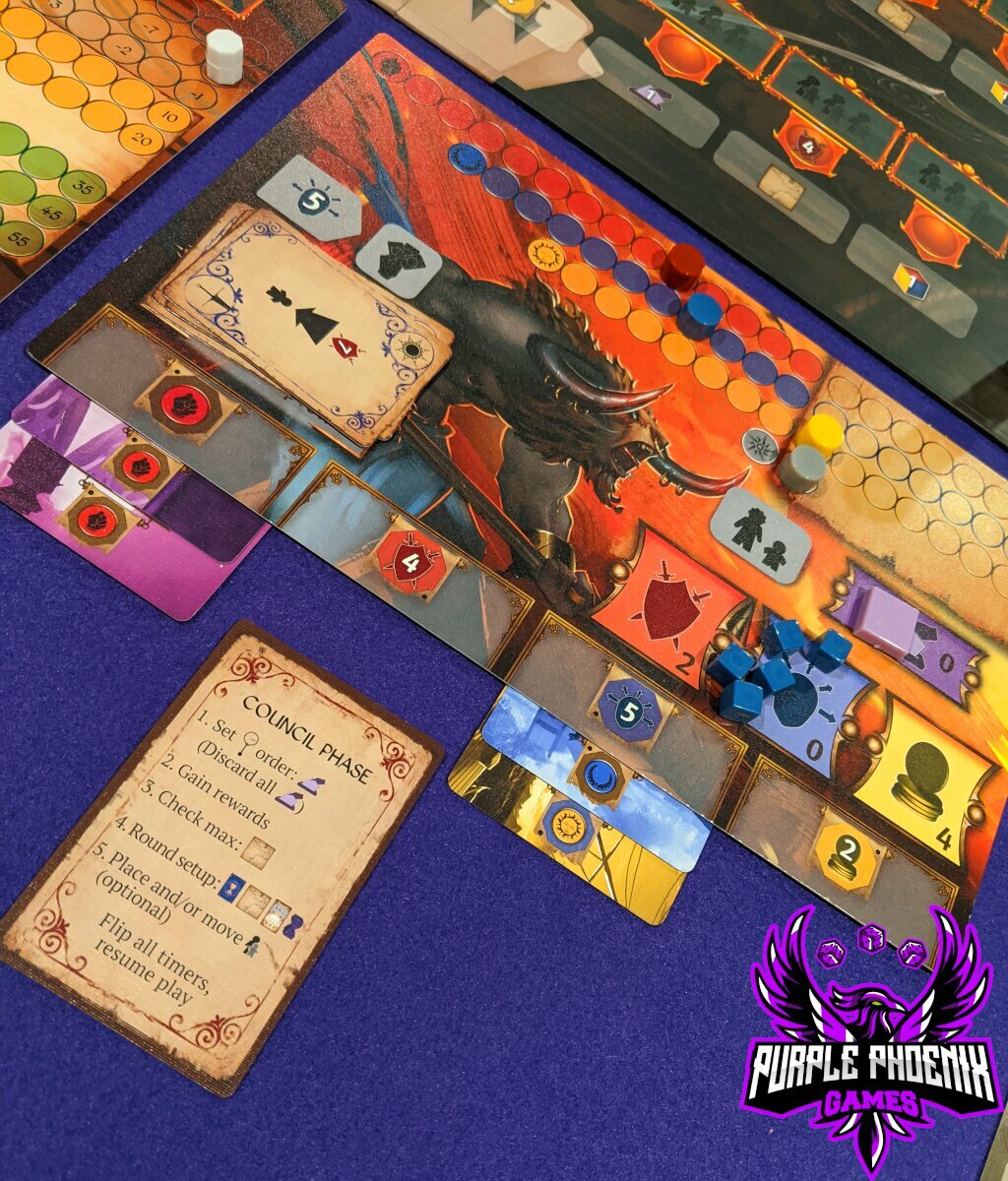
Tidal Blades: Heroes of the Reef (which I shall just call Tidal Blades from here on) is a very successful Kickstarter that funded in 45 minutes and raised over $780,000 with the campaign. I was lucky enough to be able to back this one when it went live, and the hype was REAL. The box is large and in charge, and setup and tear down takes about 14 years, but did I like this one? Dude. YES. We don’t rate Solo Chronicles, but this is a STRONG 6 from me.
DISCLAIMER: As this game is a giant and many reviewers are starting to tackle it using multiplayer rules, I decided I would talk about the differences between multiplayer and solo rules. This review is using the included Solo Mode rules.
Setup for the Solo Mode uses most of the setup rules for the multiplayer game with a few exceptions. In the Solo Mode the player will have one character to control and one Rival to beat. The Rival will need their player board and standee or mini (I have the Deluxe Edition, so it’s minis in my case). In addition, the player will also choose two other characters to be Allies, utilizing their ability cards and minis. The Allies and Rival will be placed on the Champion board ahead of the player to begin the game. The player wins by having more points than the Rival at the end of the game.
Quickly, here is Tidal Blades in a nutshell. Players are attempting to gather the greatest standing on the Champion board (like a VP track) and VP from Challenge cards gained. The players earn these cards by using Actions to move to islands, gather resources, fight monsters, perform boating maneuvers and tricks, and can increase the potential for each of these by upgrading their central board dials. Shells and Fruit are common resources, and each player starts with two Actions per turn. The game lasts four total Days (or phases with several turns in each), and players earn more Action discs on Day two and four. Every time the dice are rolled to complete Challenges a Danger Die is also rolled and can wound the player by forcing a discard of dice. Each Day players can refresh and upgrade used dice to better their skill and concentrate their abilities. After Day four the game ends and players count up points to declare a victor!
Here is how gameplay is slightly different from the multiplayer experience. The Rival always goes first. They will also have one more Action disc to use on their turn (unfair, right?). When they begin their turn, a Challenge card is drawn. Whichever Island is featured on the card is to where the Rival will travel. Once arrived, the amount of VP awarded on the card is how many spaces from the top of the Island the Rival will be placed. Depending upon which Island the Rival ends the Challenge card will then be placed under the Solo Mode mat and a special action taken. The special actions could be revealing and resolving a Plot card in Droska Ring (special to Solo Mode), removing Monster hits from the Fold in the Chronosseum, or moving the boat in Lamara Stadium. The Judge location also plays a role in special actions should the Rival land on the same Island as they are. Other special goodies await, but I will leave you to discover those.
On the player’s turn, if the player is tied with or ahead of their Allies on the Champion board, the player will be able to use the Allies on their turn. This is handled similar to having an extra Action disc on the player’s turn. Send the Ally to a location and reap the rewards. Otherwise, for the player, turns are the same.
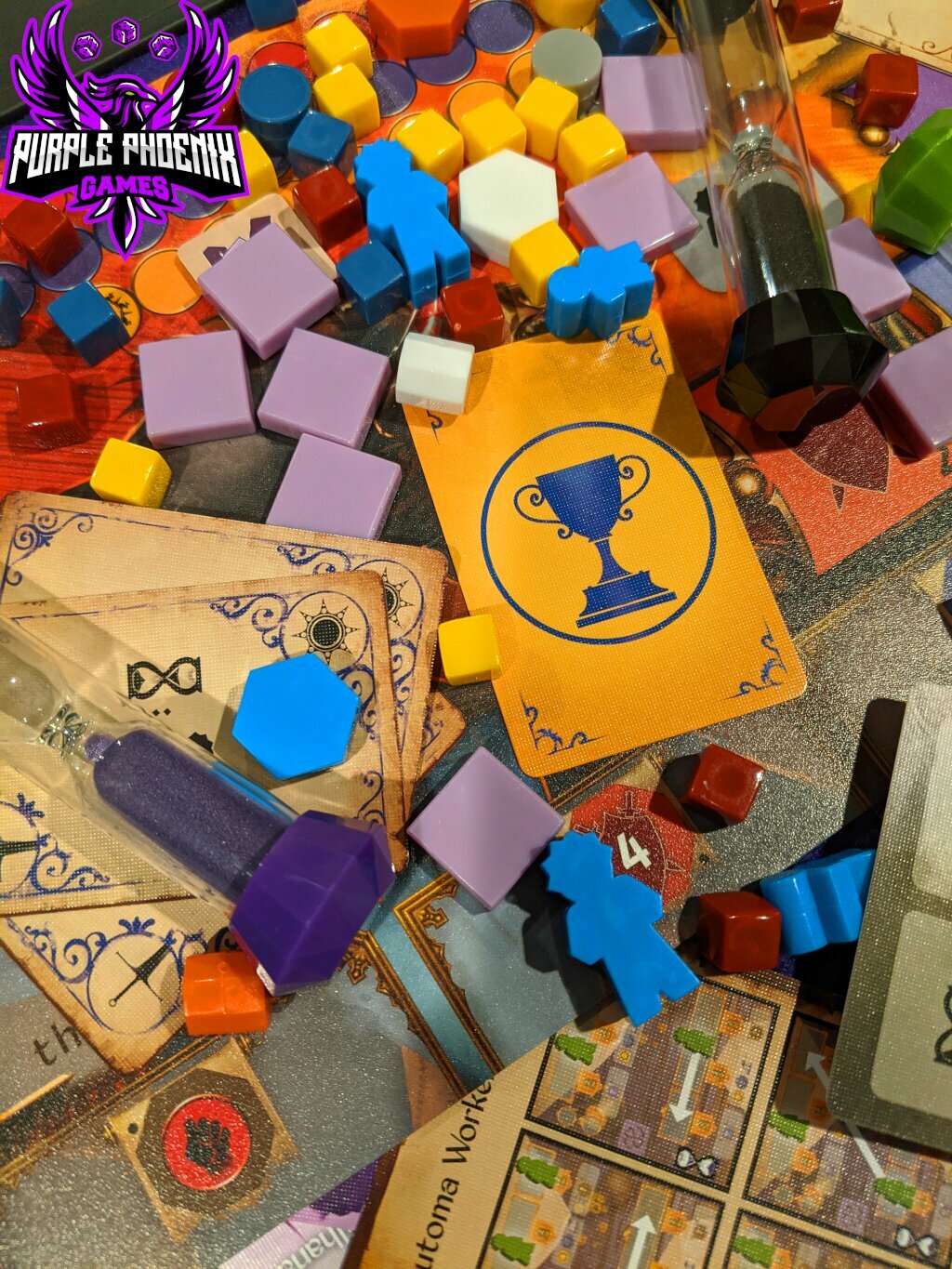
Components. Let me tell you: if you have the extra money to splurge for the Deluxe Edition, DO IT. The minis are amazing, the plastic shells are awesome, and those squishy fruit are so perfect! Obviously the game is perfectly playable and enjoyable with the basic components, but the improved bits are really something special. The cardboard everything is great, the GameTrayz inserts are incredible, and the art and colors are simply magical. I cannot say enough excellent things about what comes in this massive box. Druid City Games and Skybound Tabletop got everything right with this one.
It should be no surprise that I am in love with this game. Yes, it’s a Solo Chronicles, and I played by myself. I get that. Eventually I will be able to play this with others and by then I will be so engrossed in the lore that I will have no problems hyping up my playmates. Tidal Blades is an absolutely gorgeous game with so much going on that I don’t think I will ever tire of it. The game lasts four days but I wish it were a month because I just want to keep playing! The decisions to be made are all wonderfully delicious and there always seems to be too few on your turn. Yes, I know that sounds like all worker placement games, but it is especially true here. Almost every spot on the board gives immediate benefits that can be used, so even when a location is occupied, there will always be another of equal importance to your character. It’s so good.
Like I said before, I love the art and colors used. This is a stunner of a game on the table. It does take up quite a bit of room, especially if you use the arena dice tray (which I didn’t because I play at night when the kids are asleep and a hard plastic dice tray wakes up children). I count myself lucky to have the Deluxe Edition as well because those upgraded bits really make the game feel deluxe and fancy.
The Solo Mode is very good, and at least for me, very difficult to win. The combination I used for this review was playing as Axl against my Rival Caiman. Obviously switching out characters and using different Allies will change up the feel a bit, and I really cannot wait to try out all the permutations. When a game begs you to play it as often as you can and you look at it lovingly on your shelf, you know you have a Top 10 game, and a treasure in your collection.
DISCLAIMER: As this game is a giant and many reviewers are starting to tackle it using multiplayer rules, I decided I would talk about the differences between multiplayer and solo rules. This review is using the included Solo Mode rules.
Setup for the Solo Mode uses most of the setup rules for the multiplayer game with a few exceptions. In the Solo Mode the player will have one character to control and one Rival to beat. The Rival will need their player board and standee or mini (I have the Deluxe Edition, so it’s minis in my case). In addition, the player will also choose two other characters to be Allies, utilizing their ability cards and minis. The Allies and Rival will be placed on the Champion board ahead of the player to begin the game. The player wins by having more points than the Rival at the end of the game.
Quickly, here is Tidal Blades in a nutshell. Players are attempting to gather the greatest standing on the Champion board (like a VP track) and VP from Challenge cards gained. The players earn these cards by using Actions to move to islands, gather resources, fight monsters, perform boating maneuvers and tricks, and can increase the potential for each of these by upgrading their central board dials. Shells and Fruit are common resources, and each player starts with two Actions per turn. The game lasts four total Days (or phases with several turns in each), and players earn more Action discs on Day two and four. Every time the dice are rolled to complete Challenges a Danger Die is also rolled and can wound the player by forcing a discard of dice. Each Day players can refresh and upgrade used dice to better their skill and concentrate their abilities. After Day four the game ends and players count up points to declare a victor!
Here is how gameplay is slightly different from the multiplayer experience. The Rival always goes first. They will also have one more Action disc to use on their turn (unfair, right?). When they begin their turn, a Challenge card is drawn. Whichever Island is featured on the card is to where the Rival will travel. Once arrived, the amount of VP awarded on the card is how many spaces from the top of the Island the Rival will be placed. Depending upon which Island the Rival ends the Challenge card will then be placed under the Solo Mode mat and a special action taken. The special actions could be revealing and resolving a Plot card in Droska Ring (special to Solo Mode), removing Monster hits from the Fold in the Chronosseum, or moving the boat in Lamara Stadium. The Judge location also plays a role in special actions should the Rival land on the same Island as they are. Other special goodies await, but I will leave you to discover those.
On the player’s turn, if the player is tied with or ahead of their Allies on the Champion board, the player will be able to use the Allies on their turn. This is handled similar to having an extra Action disc on the player’s turn. Send the Ally to a location and reap the rewards. Otherwise, for the player, turns are the same.
Components. Let me tell you: if you have the extra money to splurge for the Deluxe Edition, DO IT. The minis are amazing, the plastic shells are awesome, and those squishy fruit are so perfect! Obviously the game is perfectly playable and enjoyable with the basic components, but the improved bits are really something special. The cardboard everything is great, the GameTrayz inserts are incredible, and the art and colors are simply magical. I cannot say enough excellent things about what comes in this massive box. Druid City Games and Skybound Tabletop got everything right with this one.
It should be no surprise that I am in love with this game. Yes, it’s a Solo Chronicles, and I played by myself. I get that. Eventually I will be able to play this with others and by then I will be so engrossed in the lore that I will have no problems hyping up my playmates. Tidal Blades is an absolutely gorgeous game with so much going on that I don’t think I will ever tire of it. The game lasts four days but I wish it were a month because I just want to keep playing! The decisions to be made are all wonderfully delicious and there always seems to be too few on your turn. Yes, I know that sounds like all worker placement games, but it is especially true here. Almost every spot on the board gives immediate benefits that can be used, so even when a location is occupied, there will always be another of equal importance to your character. It’s so good.
Like I said before, I love the art and colors used. This is a stunner of a game on the table. It does take up quite a bit of room, especially if you use the arena dice tray (which I didn’t because I play at night when the kids are asleep and a hard plastic dice tray wakes up children). I count myself lucky to have the Deluxe Edition as well because those upgraded bits really make the game feel deluxe and fancy.
The Solo Mode is very good, and at least for me, very difficult to win. The combination I used for this review was playing as Axl against my Rival Caiman. Obviously switching out characters and using different Allies will change up the feel a bit, and I really cannot wait to try out all the permutations. When a game begs you to play it as often as you can and you look at it lovingly on your shelf, you know you have a Top 10 game, and a treasure in your collection.
Purple Phoenix Games (2266 KP) rated Bananagrams in Tabletop Games
Jun 12, 2019
One of the best parts of the board gaming experience is finding a fun group of people with whom to play! Sometimes, though, coordinating a game night is easier said than done. We all must occasionally forego the group experience and face the world as the Lonely Only. But fear not! The world of solo-play is a vast and exciting realm! What follows is a chronicle of my journey into the solo-playing world – notes on gameplay, mechanics, rules, difficulty, and overall experience with solo variations of commonly multiplayer games! I hope this will provide some insight as you continue to grow your collection, or explore your already owned games!
What if I told you that you could play an entire game of Scrabble in about 15 minutes? You wouldn’t believe me, would you? I wouldn’t have believed me either until I discovered Bananagrams. Ok, so it’s not technically Scrabble, but the gist is the same – place tiles and create words! The biggest difference is that there are no points and there is no board. You have a ‘hand’ of letter tiles that you must use to create your own personal crossword faster than your opponents! If anyone uses all of their tiles, all players must draw a new tile from the center of the table and adjust/add to their existing crossword to incorporate the new letter. Once all of the letter tiles are gone, the first player to complete their crossword is the winner!
As a solo game, you play Bananagrams the same way as you would in a group – use your tiles to create your crossword, and the game is over when all of the tiles are used. It’s still a race against the clock – you are just trying to beat your own best time instead of finishing before your opponents.
Some games really were not made to be played solo and, in my opinion, Bananagrams is one of those games. Most of the excitement of this game comes from racing your opponents to finish your crossword before they do. Playing solo just feels a little pointless to me – it’s not as exciting or nearly as fun. You are in complete control when playing solo because the game advances only when you allow it to. In a group game, the game is controlled by the fastest players, and that might not always be you. Yeah, you’re still supposed to be trying to beat your own best time when playing solo, but speed doesn’t feel as necessary because honestly, it isn’t.
The only positive reason I have for playing Bananagrams solo is that it just allows you to practice playing the game. It gives you time to test out different strategies that could then be used in a group game. You can practice creating new words to better utilize your current tiles, or find easy ways to modify your current crossword without losing time. Solo play is a good exercise for your brain. Using the skills you’ve practiced in solo play can help you better succeed in group play. And group play is where Bananagrams really shines.
Bananagrams is a fast and fun game that definitely requires more thought and strategy than its silly title would lead you to believe. However, this is a game I would recommend mainly for group play. Give it a shot solo if you want, but don’t be expecting it to be particularly exciting or fun. I do love to play Bananagrams, but only when I get to play with a group.
https://purplephoenixgames.wordpress.com/2019/02/21/solo-chronicles-bananagrams/
What if I told you that you could play an entire game of Scrabble in about 15 minutes? You wouldn’t believe me, would you? I wouldn’t have believed me either until I discovered Bananagrams. Ok, so it’s not technically Scrabble, but the gist is the same – place tiles and create words! The biggest difference is that there are no points and there is no board. You have a ‘hand’ of letter tiles that you must use to create your own personal crossword faster than your opponents! If anyone uses all of their tiles, all players must draw a new tile from the center of the table and adjust/add to their existing crossword to incorporate the new letter. Once all of the letter tiles are gone, the first player to complete their crossword is the winner!
As a solo game, you play Bananagrams the same way as you would in a group – use your tiles to create your crossword, and the game is over when all of the tiles are used. It’s still a race against the clock – you are just trying to beat your own best time instead of finishing before your opponents.
Some games really were not made to be played solo and, in my opinion, Bananagrams is one of those games. Most of the excitement of this game comes from racing your opponents to finish your crossword before they do. Playing solo just feels a little pointless to me – it’s not as exciting or nearly as fun. You are in complete control when playing solo because the game advances only when you allow it to. In a group game, the game is controlled by the fastest players, and that might not always be you. Yeah, you’re still supposed to be trying to beat your own best time when playing solo, but speed doesn’t feel as necessary because honestly, it isn’t.
The only positive reason I have for playing Bananagrams solo is that it just allows you to practice playing the game. It gives you time to test out different strategies that could then be used in a group game. You can practice creating new words to better utilize your current tiles, or find easy ways to modify your current crossword without losing time. Solo play is a good exercise for your brain. Using the skills you’ve practiced in solo play can help you better succeed in group play. And group play is where Bananagrams really shines.
Bananagrams is a fast and fun game that definitely requires more thought and strategy than its silly title would lead you to believe. However, this is a game I would recommend mainly for group play. Give it a shot solo if you want, but don’t be expecting it to be particularly exciting or fun. I do love to play Bananagrams, but only when I get to play with a group.
https://purplephoenixgames.wordpress.com/2019/02/21/solo-chronicles-bananagrams/
Dana (24 KP) rated Fairest - Levana's Story in Books
Mar 23, 2018
As always, there are going to be spoilers in this review, so be warned.
As much as I love the Lunar Chronicles series, I did not enjoy reading this book. Yes, we got backstory into Levana's life and (finally) are told what she actually looks like, but she is not a likable character in the slightest. I was expecting some sort of redeemable quality for the character and got nothing. It is hard for me to believe that any villain has absolutely zero things that can be said are good, but Levana is one of them.
She is painted as this self involved, self-loathing, overly power hungry character who has no feelings except what she thinks is love. This, again, is hard to imagine. I mean, I understand (but do not condone) her lack of feelings toward her parents. They were not there for her at all as a child and basically let Channary get away with physically maiming her little sister. But still, she didn't feel anything toward them when they were brutally murdered and actually fantasized about doing it herself? Like, what the hell?
And then there comes her very abusive relationship with her "husband." First off, disguising yourself as his wife, that's weird, but then doing it after that wife dies, only weeks after she died, that's messed up. Then taking away his agency, his ability to say no, by manipulating him mentally, come on! Really? And getting jealous that he actually loves his daughter and wanting her to suffer for it. This girl has issues!
And to top it all off, trying to get Selene murdered by "accident" only to take her throne and have the gall to stand up at the podium at both Selene's and Channary's funeral smug as hell because she gets to be queen now? I can't believe that someone would be that heartless.
Channary, for all of her messed up qualities, is even given some amount of redemption in her love for Selene. It was only really revealed eight years after she was murdered, but still, it is something that shows she is at least part human in her emotions. Even though she is a pretty bad character, I kind of like Channary?!? Out of the two sisters, she is the most "real" in her ability to act like a person.
I also like getting the backstory of Winter so I can know what to expect and understand why she acts as she does before I start reading her book. It is interesting to know that she, Selene, and Jacin were really close as children and that Selene's death hit her so hard. I also like that we got to meet her mother, Solstice, because she was a freaking angel and should not have died. Ugh. But then, Selene wouldn't have had any friends growing up because Levana would have shut that down so fast.
Overall, I was disappointed with this book. Especially since all of the other ones have been so great. It is hard to see characters who are just so bad with no redeeming qualities. It makes me think less of the story, in a way, because it is not making that character as deep as they can be. I am going to read the rest of the series, because I love the other characters, but this one was kind of a let down.
As much as I love the Lunar Chronicles series, I did not enjoy reading this book. Yes, we got backstory into Levana's life and (finally) are told what she actually looks like, but she is not a likable character in the slightest. I was expecting some sort of redeemable quality for the character and got nothing. It is hard for me to believe that any villain has absolutely zero things that can be said are good, but Levana is one of them.
She is painted as this self involved, self-loathing, overly power hungry character who has no feelings except what she thinks is love. This, again, is hard to imagine. I mean, I understand (but do not condone) her lack of feelings toward her parents. They were not there for her at all as a child and basically let Channary get away with physically maiming her little sister. But still, she didn't feel anything toward them when they were brutally murdered and actually fantasized about doing it herself? Like, what the hell?
And then there comes her very abusive relationship with her "husband." First off, disguising yourself as his wife, that's weird, but then doing it after that wife dies, only weeks after she died, that's messed up. Then taking away his agency, his ability to say no, by manipulating him mentally, come on! Really? And getting jealous that he actually loves his daughter and wanting her to suffer for it. This girl has issues!
And to top it all off, trying to get Selene murdered by "accident" only to take her throne and have the gall to stand up at the podium at both Selene's and Channary's funeral smug as hell because she gets to be queen now? I can't believe that someone would be that heartless.
Channary, for all of her messed up qualities, is even given some amount of redemption in her love for Selene. It was only really revealed eight years after she was murdered, but still, it is something that shows she is at least part human in her emotions. Even though she is a pretty bad character, I kind of like Channary?!? Out of the two sisters, she is the most "real" in her ability to act like a person.
I also like getting the backstory of Winter so I can know what to expect and understand why she acts as she does before I start reading her book. It is interesting to know that she, Selene, and Jacin were really close as children and that Selene's death hit her so hard. I also like that we got to meet her mother, Solstice, because she was a freaking angel and should not have died. Ugh. But then, Selene wouldn't have had any friends growing up because Levana would have shut that down so fast.
Overall, I was disappointed with this book. Especially since all of the other ones have been so great. It is hard to see characters who are just so bad with no redeeming qualities. It makes me think less of the story, in a way, because it is not making that character as deep as they can be. I am going to read the rest of the series, because I love the other characters, but this one was kind of a let down.