
Search

Kristy H (1252 KP) rated The Shadow Cabinet (Shades of London, #3) in Books
Feb 13, 2018
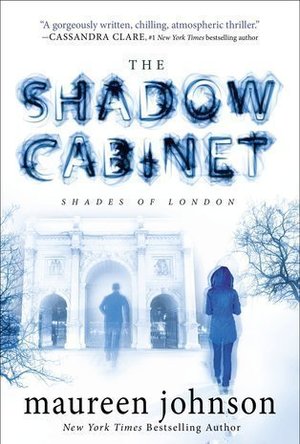

I read nearly 3/4 of this book curled up in my easy chair while the kids napped, snow falling softly outside. It is rare that I get that much peace and quiet anymore, so I roared through the book, wanting to finish it before the twins awoke and shattered the peace.
Therefore, any nitpicks I have about anything in the book feeling rushed are no doubt of my own doing, as I manically flipped pages, wanting to find out what happened to Rory and the rest of the gang. When the series is over, I look forward to reading all the books again, and savoring them a bit more.
Needless to say, I loved this book. Definitely my favorite novel to date this year. I am sure Johnson's Shade of London series isn't for everyone, but I've fallen for American-based Rory, a transplant in London, who can now see ghosts. It sounds preposterous, but Johnson has made it work- and work well- in all three novels so far. I love Rory, I love her character, and I love the group of people she's come to surround herself in London - far away from the home she knows in New Orleans.
<i>*spoilers if you haven't read the first two books - which you should, immediately!*</i>
In book three, Rory is dealing with the grief of losing Stephen, as the team frantically tries to find his ghost. They are also trying to find her prefect, Charlotte, who was kidnapped by Rory's therapist, Jane. We learn more about Jane and her past involvement in an ancient cult and a likely string of murders. It all involves a much bigger plot involving London's ability to harness its dead, and the existence of a murky, rumored government organization who polices ghosts.
We also meet a new character in this novel, Freddie (a girl), who is quite bright, but of whom I still remain suspicious - silly, perhaps, but it's so hard to trust new people coming into the gang. We see more of Jerome, which is nice, and Boo and Callum, of course. There's actually less focus on actual ghosts than you'd think and more on some big conspiracies, but it all works, really well. The camaraderie of the team, and the way Johnson voices Rory is just lovely, and the book reads so well. Even what should be a crazy plot is made readable and believable through the lens of these developed characters.
As always, I'm left a bit bereft, waiting for the next book. (And, for the record, I finished the last few pages right before the twins woke up. I feel like that's fate, right?)
Therefore, any nitpicks I have about anything in the book feeling rushed are no doubt of my own doing, as I manically flipped pages, wanting to find out what happened to Rory and the rest of the gang. When the series is over, I look forward to reading all the books again, and savoring them a bit more.
Needless to say, I loved this book. Definitely my favorite novel to date this year. I am sure Johnson's Shade of London series isn't for everyone, but I've fallen for American-based Rory, a transplant in London, who can now see ghosts. It sounds preposterous, but Johnson has made it work- and work well- in all three novels so far. I love Rory, I love her character, and I love the group of people she's come to surround herself in London - far away from the home she knows in New Orleans.
<i>*spoilers if you haven't read the first two books - which you should, immediately!*</i>
In book three, Rory is dealing with the grief of losing Stephen, as the team frantically tries to find his ghost. They are also trying to find her prefect, Charlotte, who was kidnapped by Rory's therapist, Jane. We learn more about Jane and her past involvement in an ancient cult and a likely string of murders. It all involves a much bigger plot involving London's ability to harness its dead, and the existence of a murky, rumored government organization who polices ghosts.
We also meet a new character in this novel, Freddie (a girl), who is quite bright, but of whom I still remain suspicious - silly, perhaps, but it's so hard to trust new people coming into the gang. We see more of Jerome, which is nice, and Boo and Callum, of course. There's actually less focus on actual ghosts than you'd think and more on some big conspiracies, but it all works, really well. The camaraderie of the team, and the way Johnson voices Rory is just lovely, and the book reads so well. Even what should be a crazy plot is made readable and believable through the lens of these developed characters.
As always, I'm left a bit bereft, waiting for the next book. (And, for the record, I finished the last few pages right before the twins woke up. I feel like that's fate, right?)

Darren (1599 KP) rated Alienated (2016) in Movies
Jun 20, 2019
Story: Alienated starts as we follow married couple Nate (Katt) & Paige (Burry) as they go about their everyday lives, we see the ups and downs in their communication which every couple has. When Nate believes he sees a space craft and Paige brushes off Nate’s request to watch the video leading to a fight between the two. We see how they have to rebuild their friendship and whether Paige wants to believe Nate did really see a spacecraft.
Alienated gives us a very interesting drama that bottles down to what people want to believe when a loved one believes in something. I will admit that I was expecting more sci-fi element involved as this while very entertaining follows only the conversations between the couple. This showed how to make an ultra-interesting film between the characters giving them a natural feel throughout.
Actor Review
George Katt: Nate is an artist meaning he spends most of his time at home, he is a conspiracy theorist making him believe. He has a smaller social circle compared to his wife and once he believes he sees a spacecraft the relationship with his wife is pushed to the limits as they deal with what is real. George is great in this role as we
Jen Burry: Paige is the successful business woman who comes home everyday to her husband Nate who can easily be pushed into believing in many different conspiracies. She wants to be noticed more by her husband instead of dealing with his theories on a daily basis. Jen is great in this role showing great chemistry with George.
Taylor Negron: Griffin is the neighbour of the couple, he comes off very strange but we don’t see too much of the character. Taylor is good giving us mystery about the character.
Director Review: Brian Ackley – Brian gives us one of the most interesting story driven film of the year.
Thriller: Alienated keeps us on edge as we wait to see what is the truth throughout.
Settings: Alienated keeps the setting in the home of the couple showing how this could come off as an everyday conversation but it could also be something bigger.
Suggestion: Alienated is one to try, I do think the casual fans might find this slightly hard to enjoy but once you start you just don’t want to stop. (Try It)
Best Part: Natural feeling throughout.
Worst Part: Not everything you think it will be.
Believability: No
Chances of Tears: No
Chances of Sequel: No
Post Credits Scene: No
Oscar Chances: No
Runtime: 1 Hour 21 Minutes
Overall: Very interesting thriller that takes away the action only to give us an engrossing story.
https://moviesreview101.com/2016/02/25/alienated-2015/
Alienated gives us a very interesting drama that bottles down to what people want to believe when a loved one believes in something. I will admit that I was expecting more sci-fi element involved as this while very entertaining follows only the conversations between the couple. This showed how to make an ultra-interesting film between the characters giving them a natural feel throughout.
Actor Review
George Katt: Nate is an artist meaning he spends most of his time at home, he is a conspiracy theorist making him believe. He has a smaller social circle compared to his wife and once he believes he sees a spacecraft the relationship with his wife is pushed to the limits as they deal with what is real. George is great in this role as we
Jen Burry: Paige is the successful business woman who comes home everyday to her husband Nate who can easily be pushed into believing in many different conspiracies. She wants to be noticed more by her husband instead of dealing with his theories on a daily basis. Jen is great in this role showing great chemistry with George.
Taylor Negron: Griffin is the neighbour of the couple, he comes off very strange but we don’t see too much of the character. Taylor is good giving us mystery about the character.
Director Review: Brian Ackley – Brian gives us one of the most interesting story driven film of the year.
Thriller: Alienated keeps us on edge as we wait to see what is the truth throughout.
Settings: Alienated keeps the setting in the home of the couple showing how this could come off as an everyday conversation but it could also be something bigger.
Suggestion: Alienated is one to try, I do think the casual fans might find this slightly hard to enjoy but once you start you just don’t want to stop. (Try It)
Best Part: Natural feeling throughout.
Worst Part: Not everything you think it will be.
Believability: No
Chances of Tears: No
Chances of Sequel: No
Post Credits Scene: No
Oscar Chances: No
Runtime: 1 Hour 21 Minutes
Overall: Very interesting thriller that takes away the action only to give us an engrossing story.
https://moviesreview101.com/2016/02/25/alienated-2015/

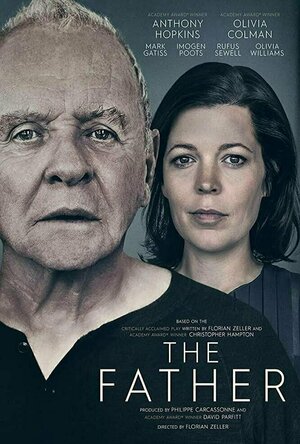
BankofMarquis (1832 KP) rated The Father (2020) in Movies
Apr 7, 2021

1st half is GREAT! The 2nd half? Not so much...
THE FATHER is one of those types of films that, generally, I would not seek out - except at Oscar time. A small, “drawing room” type of drama, based on a stage play and starring a couple of Oscar winning performers at it’s core.
And that is enough to make this film very entertaining and interesting…but, unfortunately…this piece of entertainment falls flat at the end, so one will have to be contented to watching a decent drawing room drama (based on a Stage play) starring 2 strong Oscar winning actors at it’s core.
Written and Directed by Florian Zeller, THE FATHER tells the tale of a…well…FATHER, who is aging and mentally deteriorating. His daughter is trying to aide him and bring him comfort, but his befuddled mind begins to see things (conspiracies) that are not there…or are they?
Zeller wrote the lead role, specifically for Anthony Hopkins and it is a very good thing that Hopkins agree to this role for he is in EVERY scene and commands this picture as only a performer of Hopkins stature and abilities can. Hopkins is, rightfully, nominated for this performance and could pull the upset (but I highly doubt it).
Strongly supporting him - in an Oscar nominated turn herself - as Olivia Colman as his daughter. She has the much less flashy - but no less important - role in this drama and Hopkins would not be as good as he is without her to play against.
Zeller (who was nominated for an Oscar for his Screenplay adaptation of his Stage Play) was smart to cast a strong ensemble of British Stage Actors for this film - Mark Gattis, Olivia Williams, Rufus Sewell and Imogen Poots are all strong, interesting people to watch on screen and they help bring an air of seriousness and gravitas to the proceedings.
The first half of this film is extremely fascinating to watch and I was intrigued by the premise, the direction, the script and the direction it seemed to be headed. But…unfortunately (at least for me) the 2nd half of the film (and I would imagine, the Stage Play) never, really capitalizes on the promise of the first half and THE FATHER just sorts of peters out in the end.
Which, I guess, you could say for the poor souls who suffer from dementia, but I don’t think that was the point that Zeller was trying to make.
Letter Grade: A- (did I mention that I really, really liked the first half)
8 stars (out of 10) and you can take that to the Bank(ofMarquis)
And that is enough to make this film very entertaining and interesting…but, unfortunately…this piece of entertainment falls flat at the end, so one will have to be contented to watching a decent drawing room drama (based on a Stage play) starring 2 strong Oscar winning actors at it’s core.
Written and Directed by Florian Zeller, THE FATHER tells the tale of a…well…FATHER, who is aging and mentally deteriorating. His daughter is trying to aide him and bring him comfort, but his befuddled mind begins to see things (conspiracies) that are not there…or are they?
Zeller wrote the lead role, specifically for Anthony Hopkins and it is a very good thing that Hopkins agree to this role for he is in EVERY scene and commands this picture as only a performer of Hopkins stature and abilities can. Hopkins is, rightfully, nominated for this performance and could pull the upset (but I highly doubt it).
Strongly supporting him - in an Oscar nominated turn herself - as Olivia Colman as his daughter. She has the much less flashy - but no less important - role in this drama and Hopkins would not be as good as he is without her to play against.
Zeller (who was nominated for an Oscar for his Screenplay adaptation of his Stage Play) was smart to cast a strong ensemble of British Stage Actors for this film - Mark Gattis, Olivia Williams, Rufus Sewell and Imogen Poots are all strong, interesting people to watch on screen and they help bring an air of seriousness and gravitas to the proceedings.
The first half of this film is extremely fascinating to watch and I was intrigued by the premise, the direction, the script and the direction it seemed to be headed. But…unfortunately (at least for me) the 2nd half of the film (and I would imagine, the Stage Play) never, really capitalizes on the promise of the first half and THE FATHER just sorts of peters out in the end.
Which, I guess, you could say for the poor souls who suffer from dementia, but I don’t think that was the point that Zeller was trying to make.
Letter Grade: A- (did I mention that I really, really liked the first half)
8 stars (out of 10) and you can take that to the Bank(ofMarquis)

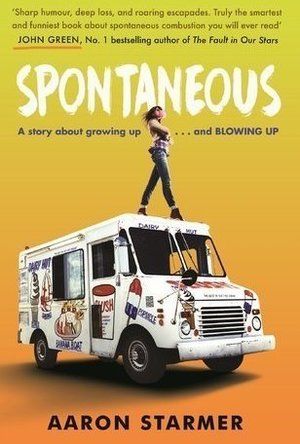
Hazel (1853 KP) rated Spontaneous in Books
Dec 14, 2018

<i>I received this book for free through Goodreads First Reads.</i>
Dubbed the “funniest book about spontaneous combustion you will ever read” by the acclaimed best-selling author, John Green, <i>Spontaneous</i> by Aaron Starmer is a story about growing up and blowing up. Seeing a classmate explode in front of you during third-period pre-calc class is not something you ever expect to happen. Nor do you expect this to be the first of many to randomly occur throughout your senior year, but for Mara, this is her appalling fate.
Mara’s senior year was not all that exciting until the first explosion, but after a few more students from her class spontaneously combust, it is clear she is never going to get a normal final year of school. Only affecting the seniors, Mara and her friends are ostracised from society while FBI agents try to solve the problematic situation. With bombs, terrorists and government conspiracies eventually ruled out, the class is left abandoned to explode at their own leisure – although they would rather not!
Mara, along with boyfriend, Dylan, and best friend, Tess, attempts to continue living their lives. They encourage students to start up their own school so that they can still graduate at the end of the year, but with an increasing number of messy ends, they begin to doubt they will make it that far.
Full of crack-pot ideas that will leave readers laughing, Mara’s dry sense of humour gets her through most of the year, however, the painful loss of her friends and acquaintances soon catch up with her. It is hard not to despair when you know you could detonate at any moment.
The easiest way to describe <i>Spontaneous</i> is bonkers, absolutely bonkers. For a start, spontaneous combustion is not a likelihood for any living creature. Mara’s inappropriate humour and acidulousness only add to the farcical state of affairs, providing a comical and entertaining narrative. However, as Mara begins to acquiesce to her new situation, and live as if regularly being sprayed with blood and guts is normal, the story takes a sombre downturn.
Annoyingly, the conclusion of <i>Spontaneous</i> is rather ambiguous, leaving attentive readers with no answers. Had Starmer not imaged a solution, or was it too difficult to explain? Whatever the reason, it leaves us with a dissatisfying ending.
On the other hand, the ending of a book is only one fragment of a story. The beginning and middle were of the author’s optimum quality. Combining typical teenage emotion and behaviour - romance included - with a horrifying crisis, results in a book that will make you “feel all the feels”, to borrow a Mara term, and enjoy every moment.
<i>Spontaneous</i> will entertain young and old adults, although perhaps not the more sensitive reader. With uncensored language and no sugarcoating, Mara gives us all the gory details blow-by-blow (literally). Be prepared for laughter, shock and unadulterated pleasure.
Dubbed the “funniest book about spontaneous combustion you will ever read” by the acclaimed best-selling author, John Green, <i>Spontaneous</i> by Aaron Starmer is a story about growing up and blowing up. Seeing a classmate explode in front of you during third-period pre-calc class is not something you ever expect to happen. Nor do you expect this to be the first of many to randomly occur throughout your senior year, but for Mara, this is her appalling fate.
Mara’s senior year was not all that exciting until the first explosion, but after a few more students from her class spontaneously combust, it is clear she is never going to get a normal final year of school. Only affecting the seniors, Mara and her friends are ostracised from society while FBI agents try to solve the problematic situation. With bombs, terrorists and government conspiracies eventually ruled out, the class is left abandoned to explode at their own leisure – although they would rather not!
Mara, along with boyfriend, Dylan, and best friend, Tess, attempts to continue living their lives. They encourage students to start up their own school so that they can still graduate at the end of the year, but with an increasing number of messy ends, they begin to doubt they will make it that far.
Full of crack-pot ideas that will leave readers laughing, Mara’s dry sense of humour gets her through most of the year, however, the painful loss of her friends and acquaintances soon catch up with her. It is hard not to despair when you know you could detonate at any moment.
The easiest way to describe <i>Spontaneous</i> is bonkers, absolutely bonkers. For a start, spontaneous combustion is not a likelihood for any living creature. Mara’s inappropriate humour and acidulousness only add to the farcical state of affairs, providing a comical and entertaining narrative. However, as Mara begins to acquiesce to her new situation, and live as if regularly being sprayed with blood and guts is normal, the story takes a sombre downturn.
Annoyingly, the conclusion of <i>Spontaneous</i> is rather ambiguous, leaving attentive readers with no answers. Had Starmer not imaged a solution, or was it too difficult to explain? Whatever the reason, it leaves us with a dissatisfying ending.
On the other hand, the ending of a book is only one fragment of a story. The beginning and middle were of the author’s optimum quality. Combining typical teenage emotion and behaviour - romance included - with a horrifying crisis, results in a book that will make you “feel all the feels”, to borrow a Mara term, and enjoy every moment.
<i>Spontaneous</i> will entertain young and old adults, although perhaps not the more sensitive reader. With uncensored language and no sugarcoating, Mara gives us all the gory details blow-by-blow (literally). Be prepared for laughter, shock and unadulterated pleasure.

Armie Hammer recommended Eyes Wide Shut (1999) in Movies (curated)


Hazel (1853 KP) rated The Treatment in Books
Sep 28, 2017
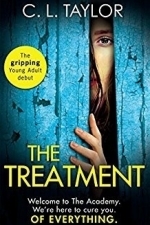

One Flew Over the Cuckoo's Nest for Teens
This ARC was provided by the publisher via NetGalley in exchange for an honest review
You have to help me. We’re not being reformed. We’re being brainwashed. When sixteen-year-old Drew Finch receives this note from a strange woman on the street claiming to be her brother’s psychologist, she does not know how to react. But when a speeding car hits the doctor immediately after, Drew begins to think something portentous is afoot. In The Treatment by C. L. Taylor, the Residential Reform Academy in Northumberland is achieving great things, turning antisocial teenagers into model citizens. Mason, Drew’s brother, has been expelled from three different schools and has been sent to the academy as a last resort, however, Drew now suspects that Mason is in trouble.
In a slightly dystopian setting, Drew, a usually quiet girl, easily gets herself admitted to the academy by punching the school bully. With the intention of helping Mason escape, Drew calmly arrives at the Academy, not realising how much danger she is placing herself in. She soon discovers that this would not be a transitory admission and, unless she escapes, she will become like all the other narcotised students.
Trying to remain fastidious whilst avoiding garrulous roommates and staff, Drew desperately tries to concoct an escape plan, however, she may be too late. The more she learns about the Residential Reform Academy, the more she discovers about the evil intentions behind it. How can she break out of the prison-like building and seek help when the government is deeply involved with the whole sordid procedure?
C. L. Taylor devises an exciting scenario that will appeal to fans of Cecelia Ahern’s Flawed and Kazuo Ishiguro’s Never Let Me Go. A thriller that needs a hero in the unlikely form of a teenage girl, The Treatment is a stimulating story about those without a public voice overthrowing the immoral experiments of the dastards in power.
A One Flew Over the Cuckoo’s Nest for teenagers, this book deals with themes of mental health, oppression and the misuse of authority. Told from the perspective of a girl who has been bullied most of her life and coming from a dysfunctional family, there is a lot for the reader to connect with. Although it does not allay the growing fears of governmental conspiracies, The Treatment ends with the positive message that by standing up to those who do you wrong has its rewards, not only for yourself but for those in similar situations too.
The Treatment is a very enjoyable book that pulls the reader into the story, causing them to question how they would handle a similar situation. Would they be as brave as Drew and her new friends, or would they be doomed to a fate of mindless obedience? Compelling from beginning to end, C. L. Taylor’s latest novel is a refreshing break from the over-the-top science fiction dystopian novels, preferring to tackle futuristic ideas that are much closer to home. This is a book that can be fully recommended to the Young Adult community.
You have to help me. We’re not being reformed. We’re being brainwashed. When sixteen-year-old Drew Finch receives this note from a strange woman on the street claiming to be her brother’s psychologist, she does not know how to react. But when a speeding car hits the doctor immediately after, Drew begins to think something portentous is afoot. In The Treatment by C. L. Taylor, the Residential Reform Academy in Northumberland is achieving great things, turning antisocial teenagers into model citizens. Mason, Drew’s brother, has been expelled from three different schools and has been sent to the academy as a last resort, however, Drew now suspects that Mason is in trouble.
In a slightly dystopian setting, Drew, a usually quiet girl, easily gets herself admitted to the academy by punching the school bully. With the intention of helping Mason escape, Drew calmly arrives at the Academy, not realising how much danger she is placing herself in. She soon discovers that this would not be a transitory admission and, unless she escapes, she will become like all the other narcotised students.
Trying to remain fastidious whilst avoiding garrulous roommates and staff, Drew desperately tries to concoct an escape plan, however, she may be too late. The more she learns about the Residential Reform Academy, the more she discovers about the evil intentions behind it. How can she break out of the prison-like building and seek help when the government is deeply involved with the whole sordid procedure?
C. L. Taylor devises an exciting scenario that will appeal to fans of Cecelia Ahern’s Flawed and Kazuo Ishiguro’s Never Let Me Go. A thriller that needs a hero in the unlikely form of a teenage girl, The Treatment is a stimulating story about those without a public voice overthrowing the immoral experiments of the dastards in power.
A One Flew Over the Cuckoo’s Nest for teenagers, this book deals with themes of mental health, oppression and the misuse of authority. Told from the perspective of a girl who has been bullied most of her life and coming from a dysfunctional family, there is a lot for the reader to connect with. Although it does not allay the growing fears of governmental conspiracies, The Treatment ends with the positive message that by standing up to those who do you wrong has its rewards, not only for yourself but for those in similar situations too.
The Treatment is a very enjoyable book that pulls the reader into the story, causing them to question how they would handle a similar situation. Would they be as brave as Drew and her new friends, or would they be doomed to a fate of mindless obedience? Compelling from beginning to end, C. L. Taylor’s latest novel is a refreshing break from the over-the-top science fiction dystopian novels, preferring to tackle futuristic ideas that are much closer to home. This is a book that can be fully recommended to the Young Adult community.
Hazel (1853 KP) rated The Treatment in Books
Dec 7, 2018
<i>This ARC was provided by the publisher via NetGalley in exchange for an honest review
You have to help me. We’re not being reformed. We’re being brainwashed. </i>When sixteen-year-old Drew Finch receives this note from a strange woman on the street claiming to be her brother’s psychologist, she does not know how to react. But when a speeding car hits the doctor immediately after, Drew begins to think something portentous is afoot. In <i>The Treatment</i> by C. L. Taylor, the Residential Reform Academy in Northumberland is achieving great things, turning antisocial teenagers into model citizens. Mason, Drew’s brother, has been expelled from three different schools and has been sent to the academy as a last resort, however, Drew now suspects that Mason is in trouble.
In a slightly dystopian setting, Drew, a usually quiet girl, easily gets herself admitted to the academy by punching the school bully. With the intention of helping Mason escape, Drew calmly arrives at the Academy, not realising how much danger she is placing herself in. She soon discovers that this would not be a transitory admission and, unless she escapes, she will become like all the other narcotised students.
Trying to remain fastidious whilst avoiding garrulous roommates and staff, Drew desperately tries to concoct an escape plan, however, she may be too late. The more she learns about the Residential Reform Academy, the more she discovers about the evil intentions behind it. How can she break out of the prison-like building and seek help when the government is deeply involved with the whole sordid procedure?
C. L. Taylor devises an exciting scenario that will appeal to fans of Cecelia Ahern’s <i>Flawed</i> and Kazuo Ishiguro’s <i>Never Let Me Go</i>. A thriller that needs a hero in the unlikely form of a teenage girl, <i>The Treatment</i> is a stimulating story about those without a public voice overthrowing the immoral experiments of the dastards in power.
A <i>One Flew Over the Cuckoo’s Nest</i> for teenagers, this book deals with themes of mental health, oppression and the misuse of authority. Told from the perspective of a girl who has been bullied most of her life and coming from a dysfunctional family, there is a lot for the reader to connect with. Although it does not allay the growing fears of governmental conspiracies, The Treatment ends with the positive message that by standing up to those who do you wrong has its rewards, not only for yourself but for those in similar situations too.
<i>The Treatment</i> is a very enjoyable book that pulls the reader into the story, causing them to question how they would handle a similar situation. Would they be as brave as Drew and her new friends, or would they be doomed to a fate of mindless obedience? Compelling from beginning to end, C. L. Taylor’s latest novel is a refreshing break from the over-the-top science fiction dystopian novels, preferring to tackle futuristic ideas that are much closer to home. This is a book that can be fully recommended to the Young Adult community.
You have to help me. We’re not being reformed. We’re being brainwashed. </i>When sixteen-year-old Drew Finch receives this note from a strange woman on the street claiming to be her brother’s psychologist, she does not know how to react. But when a speeding car hits the doctor immediately after, Drew begins to think something portentous is afoot. In <i>The Treatment</i> by C. L. Taylor, the Residential Reform Academy in Northumberland is achieving great things, turning antisocial teenagers into model citizens. Mason, Drew’s brother, has been expelled from three different schools and has been sent to the academy as a last resort, however, Drew now suspects that Mason is in trouble.
In a slightly dystopian setting, Drew, a usually quiet girl, easily gets herself admitted to the academy by punching the school bully. With the intention of helping Mason escape, Drew calmly arrives at the Academy, not realising how much danger she is placing herself in. She soon discovers that this would not be a transitory admission and, unless she escapes, she will become like all the other narcotised students.
Trying to remain fastidious whilst avoiding garrulous roommates and staff, Drew desperately tries to concoct an escape plan, however, she may be too late. The more she learns about the Residential Reform Academy, the more she discovers about the evil intentions behind it. How can she break out of the prison-like building and seek help when the government is deeply involved with the whole sordid procedure?
C. L. Taylor devises an exciting scenario that will appeal to fans of Cecelia Ahern’s <i>Flawed</i> and Kazuo Ishiguro’s <i>Never Let Me Go</i>. A thriller that needs a hero in the unlikely form of a teenage girl, <i>The Treatment</i> is a stimulating story about those without a public voice overthrowing the immoral experiments of the dastards in power.
A <i>One Flew Over the Cuckoo’s Nest</i> for teenagers, this book deals with themes of mental health, oppression and the misuse of authority. Told from the perspective of a girl who has been bullied most of her life and coming from a dysfunctional family, there is a lot for the reader to connect with. Although it does not allay the growing fears of governmental conspiracies, The Treatment ends with the positive message that by standing up to those who do you wrong has its rewards, not only for yourself but for those in similar situations too.
<i>The Treatment</i> is a very enjoyable book that pulls the reader into the story, causing them to question how they would handle a similar situation. Would they be as brave as Drew and her new friends, or would they be doomed to a fate of mindless obedience? Compelling from beginning to end, C. L. Taylor’s latest novel is a refreshing break from the over-the-top science fiction dystopian novels, preferring to tackle futuristic ideas that are much closer to home. This is a book that can be fully recommended to the Young Adult community.
Darren (1599 KP) rated Marauders (2016) in Movies
Jul 25, 2019
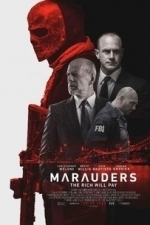

Story: Marauders starts when a bank robbery which leaves the bank manager executed, the president of the bank Hubert (Willis) has an excellent reputation and with the FBI investigating the robbery, Montgomery (Meloni) and his team Stockwell (Bautista) and newbie Wells (Grenier) try to put the clues together.
When the second heist happens, the fingers start pointing back at Hubert and a bigger conspiracy comes to the top with connection to a previous incident.
Thoughts on Marauders
Characters – Hubert is the bank president, he has always kept the face that the bank puts their customers first, but when his banks start getting robbed, he must deal with the fingers pointing back at him. Montgomery is the lead investigating from the FBI trying to get to the bottom of the heists, he has his own demons which haunt him everyday after the death of his wife and will not stop until he learns the truth. Stockwell is Montgomery’s trusted second, he is the tired cop figure, he is good at his job and hates people getting in his way. Wells is the rookie agent, with the qualifications to make him the best, he gets the jobs the others don’t want to do, while noticing things they miss.
Performances – The performances in the movie are mixed, we know that Bruce Willis is mostly mailing it in and it is a strange role for him. Christopher Meloni is the star of this movie, the determination and broken side of his character makes him stand out. Dave Bautista does get the funniest lines, some hit or than others, while Adrian Grenier starts strong but fades away in the biggest scenes of the middle of the movie.
Story – The story follows the effects of a brutal heist, the FBI must investigate the heist which brings us into the new web of conspiracies which could bring down a political powerhouse. This a story which does keep us guessing from start to finish, which is something I was surprised to see, as I thought this would be a lot messier. The positive of keeping us guessing, does leave the bigger question about just why the heists needed to be as brutal as they were because of certain injuries or deaths not needing to happen for the cause.
Action/Crime/Mystery – The action is brutal and often in your face when it comes to the gun sequences, the crime side of the film comes from the heists and just what they are aiming to achieve from the heists. The mystery is what draws us in because we don’t know what is happening which keeps us invested throughout.
Settings – The film is set in the city which shows how the panic of the robberies starts flying around we see how things get out of hand.
Scene of the Movie – The heists do feel very intense, which I did like.
That Moment That Annoyed Me – The last sequence.
Final Thoughts – This was a surprisingly entertaining film, having no expectations going in, this did become intense and kept you guessing even if things unravel in the final scene.
Overall: Enjoyable crime thriller.
When the second heist happens, the fingers start pointing back at Hubert and a bigger conspiracy comes to the top with connection to a previous incident.
Thoughts on Marauders
Characters – Hubert is the bank president, he has always kept the face that the bank puts their customers first, but when his banks start getting robbed, he must deal with the fingers pointing back at him. Montgomery is the lead investigating from the FBI trying to get to the bottom of the heists, he has his own demons which haunt him everyday after the death of his wife and will not stop until he learns the truth. Stockwell is Montgomery’s trusted second, he is the tired cop figure, he is good at his job and hates people getting in his way. Wells is the rookie agent, with the qualifications to make him the best, he gets the jobs the others don’t want to do, while noticing things they miss.
Performances – The performances in the movie are mixed, we know that Bruce Willis is mostly mailing it in and it is a strange role for him. Christopher Meloni is the star of this movie, the determination and broken side of his character makes him stand out. Dave Bautista does get the funniest lines, some hit or than others, while Adrian Grenier starts strong but fades away in the biggest scenes of the middle of the movie.
Story – The story follows the effects of a brutal heist, the FBI must investigate the heist which brings us into the new web of conspiracies which could bring down a political powerhouse. This a story which does keep us guessing from start to finish, which is something I was surprised to see, as I thought this would be a lot messier. The positive of keeping us guessing, does leave the bigger question about just why the heists needed to be as brutal as they were because of certain injuries or deaths not needing to happen for the cause.
Action/Crime/Mystery – The action is brutal and often in your face when it comes to the gun sequences, the crime side of the film comes from the heists and just what they are aiming to achieve from the heists. The mystery is what draws us in because we don’t know what is happening which keeps us invested throughout.
Settings – The film is set in the city which shows how the panic of the robberies starts flying around we see how things get out of hand.
Scene of the Movie – The heists do feel very intense, which I did like.
That Moment That Annoyed Me – The last sequence.
Final Thoughts – This was a surprisingly entertaining film, having no expectations going in, this did become intense and kept you guessing even if things unravel in the final scene.
Overall: Enjoyable crime thriller.

Lee (2222 KP) rated A Series of Unfortunate Events - Season 1 in TV
Jul 26, 2017
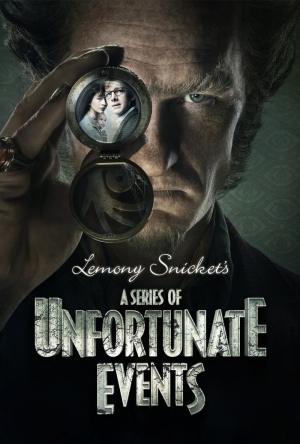
The latest adaptation of the thirteen books comprising ‘A Series of Unfortunate Events’ makes its way onto Netflix, the last being the 2004 film starring Jim Carrey. I haven’t read any of the books, or seen the movie. However my daughter has, and she loves them (the books, not so much the movie). So, we sat down together to watch season 1, which covers the first four books in the series, with two episodes devoted to each book.
The unfortunate events all involve three children – Violet, Klaus and Sunny Baudelaire, whose parents are killed in a fire at the beginning of the story. They inherit a vast fortune, which will not come into their possession until Violet comes of age, and are placed in the care of Count Olaf, supposedly their only living relative. Olaf is only concerned with getting his hands on the Baudelaire fortune though and the story covers his hilarious attempts to do so, quite often involving ridiculous disguises and usually involving further unfortunate unpleasantness for the children. The children initially escape Olaf, moving between a succession of guardians and locations for each book, only for him to catch up with them once more.
Quite simply, the show is excellent. I have to admit that the first episode took me a little while to settle into but from the opening credits, urging you to ‘look away’, through to the big budget Burtonesque sets and vibrant colours, the attention to detail is simply incredible. Partick Warburton is Lemony Snickett, our narrator, wryly and brilliantly interjecting at various points to explain details and guide us through the story. Neil Patrick Harris is Count Olaf, in full on pantomime villain mode, and I absolutely loved the humour he brought to every single scene he’s in, whether he’s as himself or disguised as a scientist/sailor/woman! My only gripe is that he’s never quite villainous or evil enough, more along the lines of a harmless Dick Dastardly as each desperately elaborate scheme is so easily foiled. He’s aided along the way by a group of oddball goons, who are all part of his theatre group – more creepy than scary – but it doesn’t detract from the shows overall enjoyment, and I guess this is a family show after all! There are also a few good cameos along the way – Don Johnson as owner of the Miserable Mill, and Rhys Darby as his downtrodden partner, for example. All of the supporting cast are all brilliant, however the main stars of the show are the children. Superb young actors, right down to little baby Sunny who cutely talks in baby speak (subtitled for us to understand!), gnawing her way through anything she can get her hands on and surviving all manner of unfortunate events the children find themselves in.
Things get a little formulaic after a while – the children settle in with a new guardian, Count Olaf appears in a new guise and with a new plot, the children foil his plan and move on again. However, things change slightly for the final few episodes and throughout the season we gradually discover a deep background of secrets and conspiracies, which I’m sure will help keep the story moving for the remainder of the seasons to come. And there are a few twists and turns along the way too. Overall I was hugely impressed with the show, as was my daughter. It appears to be a very faithful adaptation of what is a hugely popular series of books, and I’m very much looking forward to what’s to come next.
The unfortunate events all involve three children – Violet, Klaus and Sunny Baudelaire, whose parents are killed in a fire at the beginning of the story. They inherit a vast fortune, which will not come into their possession until Violet comes of age, and are placed in the care of Count Olaf, supposedly their only living relative. Olaf is only concerned with getting his hands on the Baudelaire fortune though and the story covers his hilarious attempts to do so, quite often involving ridiculous disguises and usually involving further unfortunate unpleasantness for the children. The children initially escape Olaf, moving between a succession of guardians and locations for each book, only for him to catch up with them once more.
Quite simply, the show is excellent. I have to admit that the first episode took me a little while to settle into but from the opening credits, urging you to ‘look away’, through to the big budget Burtonesque sets and vibrant colours, the attention to detail is simply incredible. Partick Warburton is Lemony Snickett, our narrator, wryly and brilliantly interjecting at various points to explain details and guide us through the story. Neil Patrick Harris is Count Olaf, in full on pantomime villain mode, and I absolutely loved the humour he brought to every single scene he’s in, whether he’s as himself or disguised as a scientist/sailor/woman! My only gripe is that he’s never quite villainous or evil enough, more along the lines of a harmless Dick Dastardly as each desperately elaborate scheme is so easily foiled. He’s aided along the way by a group of oddball goons, who are all part of his theatre group – more creepy than scary – but it doesn’t detract from the shows overall enjoyment, and I guess this is a family show after all! There are also a few good cameos along the way – Don Johnson as owner of the Miserable Mill, and Rhys Darby as his downtrodden partner, for example. All of the supporting cast are all brilliant, however the main stars of the show are the children. Superb young actors, right down to little baby Sunny who cutely talks in baby speak (subtitled for us to understand!), gnawing her way through anything she can get her hands on and surviving all manner of unfortunate events the children find themselves in.
Things get a little formulaic after a while – the children settle in with a new guardian, Count Olaf appears in a new guise and with a new plot, the children foil his plan and move on again. However, things change slightly for the final few episodes and throughout the season we gradually discover a deep background of secrets and conspiracies, which I’m sure will help keep the story moving for the remainder of the seasons to come. And there are a few twists and turns along the way too. Overall I was hugely impressed with the show, as was my daughter. It appears to be a very faithful adaptation of what is a hugely popular series of books, and I’m very much looking forward to what’s to come next.

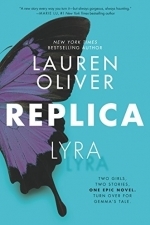
Replica is a fascinating novel about human cloning that is written from two points of view. It's really unique because it can be read in three different ways. The first is from Lena's perspective. Lena is a replica, or clone, and has only known a life at Haven. The second is from Gemma's point of view. Gemma is a normal girl who doesn't feel like she fits in. The final method, and way I chose to read the book, was alternating chapters. The two stories are woven together seamlessly and make for a great read.
On an island surrounded by guard towers and fences, ocean and marsh, alligators and water mocassins is Have - Lyra's home. Each day she is told when to eat, sleep and take her medication. Her life is not her own. It's not even considered a life by most of the staff who address her as "it".. if they recognize her at all.
Gemma attends high school and has two overprotective parents. she was very sick as a child and her parents never quite got over it. Gemma isn't even allowed to participate in gym, which doesn't help shield her from school bullies. Instead, it makes her more of a target. Her only true friend is April.
Somehow, Gemma and April manage to convince their parents to allow them to spend their spring break at April's grandparent's house in Florida. Just days before their trip, there is an explosion at Haven. Gemma overhears her parents fighting about it and suddenly she's not longer allowed on her trip. hurt and confused, Gemma begins to dig into Haven wondering why it is so important. She discovers a world of conspiracies and realized she must uncover the truth.
Catching a ride to Florida with a classmate, Pete, Gemma rebels for the first time in her life. She goes on a harrowing adventure and her path eventually crosses with Lyra's. Together, they begin to learn the truth and uncover life-altering information about Haven and themselves.
Both Lyra and Gemma are well-written characters that the reader can relate to. Lyra, or number 24, is new to the world and slow to trust. Gemma is caring and curious. Personally, I related to Gemma more than Lyra but I know a lot of people say the opposite. They are joined by the talkative and reliable Pete; the only person to ever make it to Haven Jake; and a fellow Haven resident number 72, or Caelum. Each boy has a unique personality and purpose in the story.
The world of Haven and the replicas is fascinating. Unfortunately, we only know as much as out protagonists do. I eagerly await more world building in future books. The backstory was a giant mystery involving Gemma's father, but she slowly discovers little pieces and the world is exposed to us bit by bit.
The story immediately draws you in and you can't put the book down (or at least I couldn't!) Recommended for fans of science fiction (or fact) and mystery young adult books. Even if you don't normally gravitate towards science related fiction, this book is very accessible. Fans of BBC's Orphan Black will find themselves in love with this novel. Definitely a must read!
On an island surrounded by guard towers and fences, ocean and marsh, alligators and water mocassins is Have - Lyra's home. Each day she is told when to eat, sleep and take her medication. Her life is not her own. It's not even considered a life by most of the staff who address her as "it".. if they recognize her at all.
Gemma attends high school and has two overprotective parents. she was very sick as a child and her parents never quite got over it. Gemma isn't even allowed to participate in gym, which doesn't help shield her from school bullies. Instead, it makes her more of a target. Her only true friend is April.
Somehow, Gemma and April manage to convince their parents to allow them to spend their spring break at April's grandparent's house in Florida. Just days before their trip, there is an explosion at Haven. Gemma overhears her parents fighting about it and suddenly she's not longer allowed on her trip. hurt and confused, Gemma begins to dig into Haven wondering why it is so important. She discovers a world of conspiracies and realized she must uncover the truth.
Catching a ride to Florida with a classmate, Pete, Gemma rebels for the first time in her life. She goes on a harrowing adventure and her path eventually crosses with Lyra's. Together, they begin to learn the truth and uncover life-altering information about Haven and themselves.
Both Lyra and Gemma are well-written characters that the reader can relate to. Lyra, or number 24, is new to the world and slow to trust. Gemma is caring and curious. Personally, I related to Gemma more than Lyra but I know a lot of people say the opposite. They are joined by the talkative and reliable Pete; the only person to ever make it to Haven Jake; and a fellow Haven resident number 72, or Caelum. Each boy has a unique personality and purpose in the story.
The world of Haven and the replicas is fascinating. Unfortunately, we only know as much as out protagonists do. I eagerly await more world building in future books. The backstory was a giant mystery involving Gemma's father, but she slowly discovers little pieces and the world is exposed to us bit by bit.
The story immediately draws you in and you can't put the book down (or at least I couldn't!) Recommended for fans of science fiction (or fact) and mystery young adult books. Even if you don't normally gravitate towards science related fiction, this book is very accessible. Fans of BBC's Orphan Black will find themselves in love with this novel. Definitely a must read!