
Search
The Ludicrous Laws of Old London
Book
London abounds with all manner of ludicrous laws, and not all of these curious statutes have been...

Lee (2222 KP) rated Pieces of a Woman (2020) in Movies
Dec 29, 2020



Vanessa Kirby (1 more)
The birth scene
Pieces of a Woman stars Vanessa Kirby and Shia LaBeouf as Martha and Sean, a married couple preparing for the imminent arrival of their first child. But a heartbreaking home birth leaves Martha struggling with grief and becoming increasingly isolated from Sean and her family.
If you've heard anything about Pieces of a Woman recently, it will no doubt be in relation to the home birth scene. Coming right at the start of the movie, and following a brief introduction to our two parents to be, the birth is shot in a single 22 minute take, from the point of Martha's waters breaking in the kitchen, to the arrival of the midwife and the eventual birth of the baby. As with any childbirth, there's a lot going on, a lot of emotions as the drama moves between the various rooms of the house. And everyone involved is outstanding, particularly Vanessa Kirby who is completely convincing. With the impressive, extended intro over, we cut to black and the title of the movie appears on screen. We then move onto the aftermath.
At first, we don't know exactly what went wrong with the birth and Martha and Sean do not have all of the answers either, which is essentially where a lot of the grief and tension arise from. Martha returns to work, to the shock of her co-workers, and it's clear that both her and Sean are very quickly beginning to drift apart, dealing with their grief in very different ways. Sean resorts to drinking, sleeping with Martha's cousin and having emotional outbursts, while Martha remains quietly detached from everyone and everything, and even meets with a local university to discuss donating their baby's body to medical science. Dirty plates stack up in the kitchen, house plants become limp from lack of water and attention.
We also discover that, in among all of the grief, everyone seems determined that the midwife who delivered their baby be blamed, prosecuted and sent to jail for five years, due to negligence and manslaughter. This is something which makes absolutely no sense when you first learn of it and even less sense when we finally arrive in the courtroom towards the end.
As we limp from month to month, the writing becomes worse and the film becomes increasingly frustrating and baffling. There's an impressive supporting cast of friends and family, all delivering their melodramatic monologues with flair, but the writing holds them back and prevents the movie from delivering any of the much needed emotional impact. At times, conversations appear to be badly improvised and just as it feels like we're about to get something of significance out of a scene or character, we cut to a different setting or later period in time, and all momentum is lost.
A bold, impressive 30 minute opening and a performance from Vanessa Kirby which continues to highlight just how talented she is. But apart from that, Pieces of a Woman just feels flat.
If you've heard anything about Pieces of a Woman recently, it will no doubt be in relation to the home birth scene. Coming right at the start of the movie, and following a brief introduction to our two parents to be, the birth is shot in a single 22 minute take, from the point of Martha's waters breaking in the kitchen, to the arrival of the midwife and the eventual birth of the baby. As with any childbirth, there's a lot going on, a lot of emotions as the drama moves between the various rooms of the house. And everyone involved is outstanding, particularly Vanessa Kirby who is completely convincing. With the impressive, extended intro over, we cut to black and the title of the movie appears on screen. We then move onto the aftermath.
At first, we don't know exactly what went wrong with the birth and Martha and Sean do not have all of the answers either, which is essentially where a lot of the grief and tension arise from. Martha returns to work, to the shock of her co-workers, and it's clear that both her and Sean are very quickly beginning to drift apart, dealing with their grief in very different ways. Sean resorts to drinking, sleeping with Martha's cousin and having emotional outbursts, while Martha remains quietly detached from everyone and everything, and even meets with a local university to discuss donating their baby's body to medical science. Dirty plates stack up in the kitchen, house plants become limp from lack of water and attention.
We also discover that, in among all of the grief, everyone seems determined that the midwife who delivered their baby be blamed, prosecuted and sent to jail for five years, due to negligence and manslaughter. This is something which makes absolutely no sense when you first learn of it and even less sense when we finally arrive in the courtroom towards the end.
As we limp from month to month, the writing becomes worse and the film becomes increasingly frustrating and baffling. There's an impressive supporting cast of friends and family, all delivering their melodramatic monologues with flair, but the writing holds them back and prevents the movie from delivering any of the much needed emotional impact. At times, conversations appear to be badly improvised and just as it feels like we're about to get something of significance out of a scene or character, we cut to a different setting or later period in time, and all momentum is lost.
A bold, impressive 30 minute opening and a performance from Vanessa Kirby which continues to highlight just how talented she is. But apart from that, Pieces of a Woman just feels flat.

Hadley (567 KP) rated The Amazing Crime and Trial of Leopold and Loeb in Books
Apr 13, 2019
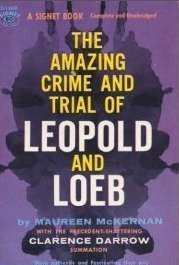

"The crime itself was indefensible. The brilliant, spoiled and bored sons of two of Chicago's wealthiest families planned to commit the perfect crime both for the thrill of and to prove their perverse misunderstanding of Friedrich Nietzsche's philosophy of the 'superman,' who was above all law so long as he made no mistake. Their plan, worked out over several months, was to kidnap and immediately kill one of their younger neighbors and hide his body. They would then demand and collect a ransom. The body would never be discovered, the crime would never be solved and only they would know that they had prevailed over ordinary human beings and their simple-minded legal system. But far from being the 'perfect crime,' the murder of 14-year-old Bobby Franks turned out to be amateurishly botched. Before any ransom could be paid, the boy's body was discovered in a culvert near where Nathan Leopold often went bird-watching. A pair of telltale glasses were found adjacent to the body. They were easily traced to Leopold who first came up with a paper-thin alibi and soon thereafter confessed to the crime. His fellow murderer likewise confessed. Each of the 'superboys' placed blame for the actual killing on the other." - Alan M. Dershowitz
If you mentioned the names Leopold and Loeb today, many people wouldn't know who you were talking about, but if you had mentioned them just thirty years ago, many people would recall the 'murder of the century.'
If you are a fan of the True Crime genre, you'll come across the case of two wealthy Chicago boys who thought they could get away with murder. (The trial is probably the most talked about trial to-date because this is the first time that psychology was brought before a court room.)
For a good part of the late 1920's, Leopold and Loeb were household names for good reason: they came from millionaire families, they were college graduates before they were 18-years-old, and their trial was the first time in history that the world saw psychology put in front of a judge. The trial was even more unforgettable due to a closing speech given by famous defense attorney, Clarence Darrow, which is reprinted in its entirety,spanning a hefty 93 pages.
Nathan Leopold, Jr. and Richard Loeb were two people who should have never met, according to the courtroom. The two met at about the age of fifteen, soon after they began to embark on criminal acts together, ranging from theft to arson. It's stated in 'the Amazing Crime and Trial of Leopold and Loeb' that Loeb had created a fantasy world where he was a crime ringleader that was too smart for the police to catch. Readers get to judge for themselves whether or not they believe Loeb was the cause of their crimes, or if Leopold was the one really in charge.
After robbing Loeb's fraternity house together, Leopold and Loeb came up with a plan to kidnap a wealthy child that they could then ransom. "They began to devise elaborate plans for this kidnapping, and soon the planning became the all-important thing. They gave up the idea of kidnapping this particular person [a young man named William], and settled on the idea of kidnapping anyone who would fit in their kidnapping plans." Throughout the book, we find out that the boys were pretty desperate for a kidnapping victim, that they even thought about kidnapping one of their close friends:
"The plan of kidnaping Dick Rubel was given up because Dick Rubel's father was so tight we might not get any money from him."
Leopold and Loeb discussed everything from how they would receive the ransom, what weapons they would use, how they would get the victim inside a rented vehicle, and what they would do with the body afterwards. "In March, 1924, the patient [Loeb] conceived the idea of securing the money by having it thrown off a moving train. This idea was discussed in great detail, and gradually developed into a carefully systematized plan. As time wore on the plan became greatly modified from the original one. They discussed at considerable length the choice of a suitable subject for kidnapping. The patient's companion [Leopold] suggested that they kidnap a young girl instead of a boy, but the patient [Loeb] objected to this. His companion [Leopold] also suggested that they kidnap the patient's [Loeb] younger brother, but the patient apparently did not seriously consider doing this. They then considered half a dozen boys, any one of whom would do, for the following reasons: that they were physically small enough to be easily handled and their parents were extremely wealthy and would have no difficulty or disinclination to pay ransom money."
During the trial, Leopold and Loeb's psychological evaluations became the forefront of their guilty plea, stating that they were not responsible for their actions due to their upbringing and environment. "I submit the facts do not rest on the evidence of these boys alone. It is proven by the writings; it is proven by every act. It is proven by their companions, and there can by no question about it." Clarence Darrow explains in his famous closing statement. "We brought into this courtroom a number of their boy friends, whom they had known day by day, who had associated with them in the club house, were their constant companions, and they tell the same stories. They tell the story that neither of these two boys was responsible for his conduct."
'The Amazing Crime and Trial of Leopold and Loeb' contains the portions of the psychiatric evaluations that were submitted in court,but the testimony of character witnesses is omitted. For a factual telling of a real life trial, this book is okay. If the reader pays attention, they may notice that some of the book contradicts itself, such as one page states that the car robe used to wrap up Franks' body was found buried near Lake Michigan,but then pages later, the book states it had been burned at Loeb's home.
The psychiatric reports are very repetitive,just using different words to describe the same things. Yet, these reports are the backbone of the trial and well worth a read. The evaluations and Darrow's extensive speech were what saved Leopold and Loeb from a death sentence.
There are very few books written about the 'murder of the century,' and even less about the 'lawyer of the century.' Leopold and Loeb, as well as Darrow, have faded into the obscurity of the True Crime genre, but because the boys' mental state was brought into question, we now accept forensic science/psychology in the court room today. I feel that only people who are truly interested in True Crime, or even have a fascination for the court room are the only ones who will enjoy 'The Amazing Crime and Trial of Leopold and Loeb.'
If you mentioned the names Leopold and Loeb today, many people wouldn't know who you were talking about, but if you had mentioned them just thirty years ago, many people would recall the 'murder of the century.'
If you are a fan of the True Crime genre, you'll come across the case of two wealthy Chicago boys who thought they could get away with murder. (The trial is probably the most talked about trial to-date because this is the first time that psychology was brought before a court room.)
For a good part of the late 1920's, Leopold and Loeb were household names for good reason: they came from millionaire families, they were college graduates before they were 18-years-old, and their trial was the first time in history that the world saw psychology put in front of a judge. The trial was even more unforgettable due to a closing speech given by famous defense attorney, Clarence Darrow, which is reprinted in its entirety,spanning a hefty 93 pages.
Nathan Leopold, Jr. and Richard Loeb were two people who should have never met, according to the courtroom. The two met at about the age of fifteen, soon after they began to embark on criminal acts together, ranging from theft to arson. It's stated in 'the Amazing Crime and Trial of Leopold and Loeb' that Loeb had created a fantasy world where he was a crime ringleader that was too smart for the police to catch. Readers get to judge for themselves whether or not they believe Loeb was the cause of their crimes, or if Leopold was the one really in charge.
After robbing Loeb's fraternity house together, Leopold and Loeb came up with a plan to kidnap a wealthy child that they could then ransom. "They began to devise elaborate plans for this kidnapping, and soon the planning became the all-important thing. They gave up the idea of kidnapping this particular person [a young man named William], and settled on the idea of kidnapping anyone who would fit in their kidnapping plans." Throughout the book, we find out that the boys were pretty desperate for a kidnapping victim, that they even thought about kidnapping one of their close friends:
"The plan of kidnaping Dick Rubel was given up because Dick Rubel's father was so tight we might not get any money from him."
Leopold and Loeb discussed everything from how they would receive the ransom, what weapons they would use, how they would get the victim inside a rented vehicle, and what they would do with the body afterwards. "In March, 1924, the patient [Loeb] conceived the idea of securing the money by having it thrown off a moving train. This idea was discussed in great detail, and gradually developed into a carefully systematized plan. As time wore on the plan became greatly modified from the original one. They discussed at considerable length the choice of a suitable subject for kidnapping. The patient's companion [Leopold] suggested that they kidnap a young girl instead of a boy, but the patient [Loeb] objected to this. His companion [Leopold] also suggested that they kidnap the patient's [Loeb] younger brother, but the patient apparently did not seriously consider doing this. They then considered half a dozen boys, any one of whom would do, for the following reasons: that they were physically small enough to be easily handled and their parents were extremely wealthy and would have no difficulty or disinclination to pay ransom money."
During the trial, Leopold and Loeb's psychological evaluations became the forefront of their guilty plea, stating that they were not responsible for their actions due to their upbringing and environment. "I submit the facts do not rest on the evidence of these boys alone. It is proven by the writings; it is proven by every act. It is proven by their companions, and there can by no question about it." Clarence Darrow explains in his famous closing statement. "We brought into this courtroom a number of their boy friends, whom they had known day by day, who had associated with them in the club house, were their constant companions, and they tell the same stories. They tell the story that neither of these two boys was responsible for his conduct."
'The Amazing Crime and Trial of Leopold and Loeb' contains the portions of the psychiatric evaluations that were submitted in court,but the testimony of character witnesses is omitted. For a factual telling of a real life trial, this book is okay. If the reader pays attention, they may notice that some of the book contradicts itself, such as one page states that the car robe used to wrap up Franks' body was found buried near Lake Michigan,but then pages later, the book states it had been burned at Loeb's home.
The psychiatric reports are very repetitive,just using different words to describe the same things. Yet, these reports are the backbone of the trial and well worth a read. The evaluations and Darrow's extensive speech were what saved Leopold and Loeb from a death sentence.
There are very few books written about the 'murder of the century,' and even less about the 'lawyer of the century.' Leopold and Loeb, as well as Darrow, have faded into the obscurity of the True Crime genre, but because the boys' mental state was brought into question, we now accept forensic science/psychology in the court room today. I feel that only people who are truly interested in True Crime, or even have a fascination for the court room are the only ones who will enjoy 'The Amazing Crime and Trial of Leopold and Loeb.'

Kristy H (1252 KP) rated Best Intentions in Books
Feb 13, 2018

Marti Trailor is a beleaguered mother of three young children, struggling to hold on to any pieces of her own self as she takes care of her household and family while her husband, Elliot, works endless hours as an obstetrician. When her youngest daughter starts kindergarten, Marti, a former social worker, decides to go back to work. She gets a job, which, coincidentally happens to be in her husband's hospital--something he doesn't seem too thrilled about. Once there, Marti realizes just how overworked many of the doctors are. She also can't help but get a little too involved in the lives of her clients. It's while helping a client--and skirting that precarious line between social worker and friend--that Marti sees something horrible happen at the hospital. This event will change the course of her life forever and threaten everything she holds dear.
<i>This was an interesting novel, to say the least.</i> I was immediately drawn to it, as the author apparently lives in Charlottesville, my hometown. This book is set in Richmond, VA, and she certainly captures the area and the state quite well.
The book is told entirely from Marti's perspective and it takes a little while to fall into the pattern of reading, as present-tense and past-tense are presented together in the chapters without any break (at least they were in my ARC), leaving you a bit confused at first. The back and forth can be a little awkward and jarring in the beginning, though once you get used to it, it's a pretty compelling device. The novel isn't exactly exciting in a thriller-type way, but there's <i>a fascinating element to it that keeps you reading.</i>
There's a lot going on in this book--marital issues, a discussion on hospital policies, Marti juggling work and motherhood, investigative journalism, discussion into Richmond politics, etc. Sometimes it seems a little too much: did Marti really need to be the daughter of a Congressman, for instance?
Still, Raskin is a descriptive writer, and her prose is fairly easy to read, and again, as I mentioned, it's a hard-to-put down book. She had me from nearly the beginning, when she described one of the characters as "Tommy Lee Jones in his heyday cute." (She gets me, she really gets me, I thought!)
As the novel progresses, I found it almost Jodi Picoult-esque. There's a strong emphasis on character development, courtroom drama, and plot elements designed to make you think. Sure, the characters are drawn a bit black and white--Elliot bad, Marti good, but it works: Elliot is just so awful you cannot help but like Marti even more. Did I find the novel quite as persuasive and enjoyable as Picoult in her heyday? No. But that's pretty hard to do.
Overall, I enjoyed this one. It's descriptive, oddly compelling, and was a nice change of pace from the thrillers I've been reading lately. Definitely worth a read. I'd go with around 3.75 stars, rounded up to 4 here.
I received a copy of this novel from the publisher and Netgalley (thank you!); it is available everywhere as of 08/15/2017.
<center><a href="http://justacatandabookatherside.blogspot.com/">Blog</a>; ~ <a href="https://twitter.com/mwcmoto">Twitter</a>; ~ <a href="https://www.facebook.com/justacatandabook/">Facebook</a>; ~ <a href="https://plus.google.com/u/0/+KristyHamiltonbooks">Google+</a>; ~ <a href="https://www.instagram.com/justacatandabook/">Instagram</a>; </center>
<i>This was an interesting novel, to say the least.</i> I was immediately drawn to it, as the author apparently lives in Charlottesville, my hometown. This book is set in Richmond, VA, and she certainly captures the area and the state quite well.
The book is told entirely from Marti's perspective and it takes a little while to fall into the pattern of reading, as present-tense and past-tense are presented together in the chapters without any break (at least they were in my ARC), leaving you a bit confused at first. The back and forth can be a little awkward and jarring in the beginning, though once you get used to it, it's a pretty compelling device. The novel isn't exactly exciting in a thriller-type way, but there's <i>a fascinating element to it that keeps you reading.</i>
There's a lot going on in this book--marital issues, a discussion on hospital policies, Marti juggling work and motherhood, investigative journalism, discussion into Richmond politics, etc. Sometimes it seems a little too much: did Marti really need to be the daughter of a Congressman, for instance?
Still, Raskin is a descriptive writer, and her prose is fairly easy to read, and again, as I mentioned, it's a hard-to-put down book. She had me from nearly the beginning, when she described one of the characters as "Tommy Lee Jones in his heyday cute." (She gets me, she really gets me, I thought!)
As the novel progresses, I found it almost Jodi Picoult-esque. There's a strong emphasis on character development, courtroom drama, and plot elements designed to make you think. Sure, the characters are drawn a bit black and white--Elliot bad, Marti good, but it works: Elliot is just so awful you cannot help but like Marti even more. Did I find the novel quite as persuasive and enjoyable as Picoult in her heyday? No. But that's pretty hard to do.
Overall, I enjoyed this one. It's descriptive, oddly compelling, and was a nice change of pace from the thrillers I've been reading lately. Definitely worth a read. I'd go with around 3.75 stars, rounded up to 4 here.
I received a copy of this novel from the publisher and Netgalley (thank you!); it is available everywhere as of 08/15/2017.
<center><a href="http://justacatandabookatherside.blogspot.com/">Blog</a>; ~ <a href="https://twitter.com/mwcmoto">Twitter</a>; ~ <a href="https://www.facebook.com/justacatandabook/">Facebook</a>; ~ <a href="https://plus.google.com/u/0/+KristyHamiltonbooks">Google+</a>; ~ <a href="https://www.instagram.com/justacatandabook/">Instagram</a>; </center>

Sass Perilla (36 KP) rated Frankenstein in Books
Aug 9, 2019
The plot and major themes. (1 more)
Further work it inspired.
Readable, but disjointed and repetitive in parts.
Contains spoilers, click to show
Fundamentally, the problem with this book is the narrator, Victor. He is thoroughly detestable. A selfish, cowardly, irresponsible, excuse ridden, narcissistic d****e-bag of the highest order. And unfortunately, it is Victor Frankenstein’s POV that we are forced into for the majority of the novel.
My hatred for and frustration with the self-pitying, feckless behaviour of the (pseudo)
protagonist made this an irritating read for me- and to an extent I think this was Shelley’s intention. Victor isn’t designed to be the likable, affable, morally “good” man fallen from grace he believes himself to be, and the horrific events that befall those around him are of his making.
However, this doesn’t make him any less grating! The "monster" (to me reminiscent of Caliban with his lyrical speech and enforced isolation, being neither man nor not man) is eloquent and persuasive when he asks his creator to account for his misdoings. So, you’ve got to ask yourself, if an infanticidal, demonic, bag of sew together corpses is actually more engaging than the main storyteller, is that storyteller really the
right character to be telling the story?
Now, with all that said, it is an important book. A work by a female author with strong female characters (albeit background characters) who was only nineteen when she wrote the initial draft. Very impressive. But, for me her youth is evident. When we teach secondary school pupils to write creatively, we often give them the ambiguous instruction “show don’t tell”, and for me the book is more of a list of horrible and horrific events told in a Chinese puzzle box style story within a story, rather than an engaging and “complete” narrative. It feels like she chooses to place focus on the wrong “bits”- for example the whole of chapter nineteen where Victor travels the British Isles, comments briefly on the local architecture of each town and city and
then repetitively reminds us that he couldn’t enjoy the surroundings because of his angst.
And I would have at least like to have seen some of the courtroom drama when Victor is tried for the death of Clerval...
So, I hate to be “that” gal, who poo-poos these fantastic works of fiction (we know they’re great because some clever-britches told us they were) but in all honesty, the novel ain’t that good, and I’ll maintain that stance no matter how clever the britches of the opposing schools of thought.
I think the continuing appeal is in it’s universal themes: parenting, nature versus
nurture; morality and scientific advancement- and the whole idea of stitching a creature out of
corpse-parts and electrocuting it to life is pretty darn cool. And there are some really effective
horror scenes, such as the vignette of Victor ripping apart project lady-monster (I kind wish she had a name- a working title- but given he can’t even be bothered to name monster number one I guess this was all too much to hope for).
It’s readable, but it’s value, for me at any rate, lies in the offshoots and creativity it has spawned, rather than the work itself.
My hatred for and frustration with the self-pitying, feckless behaviour of the (pseudo)
protagonist made this an irritating read for me- and to an extent I think this was Shelley’s intention. Victor isn’t designed to be the likable, affable, morally “good” man fallen from grace he believes himself to be, and the horrific events that befall those around him are of his making.
However, this doesn’t make him any less grating! The "monster" (to me reminiscent of Caliban with his lyrical speech and enforced isolation, being neither man nor not man) is eloquent and persuasive when he asks his creator to account for his misdoings. So, you’ve got to ask yourself, if an infanticidal, demonic, bag of sew together corpses is actually more engaging than the main storyteller, is that storyteller really the
right character to be telling the story?
Now, with all that said, it is an important book. A work by a female author with strong female characters (albeit background characters) who was only nineteen when she wrote the initial draft. Very impressive. But, for me her youth is evident. When we teach secondary school pupils to write creatively, we often give them the ambiguous instruction “show don’t tell”, and for me the book is more of a list of horrible and horrific events told in a Chinese puzzle box style story within a story, rather than an engaging and “complete” narrative. It feels like she chooses to place focus on the wrong “bits”- for example the whole of chapter nineteen where Victor travels the British Isles, comments briefly on the local architecture of each town and city and
then repetitively reminds us that he couldn’t enjoy the surroundings because of his angst.
And I would have at least like to have seen some of the courtroom drama when Victor is tried for the death of Clerval...
So, I hate to be “that” gal, who poo-poos these fantastic works of fiction (we know they’re great because some clever-britches told us they were) but in all honesty, the novel ain’t that good, and I’ll maintain that stance no matter how clever the britches of the opposing schools of thought.
I think the continuing appeal is in it’s universal themes: parenting, nature versus
nurture; morality and scientific advancement- and the whole idea of stitching a creature out of
corpse-parts and electrocuting it to life is pretty darn cool. And there are some really effective
horror scenes, such as the vignette of Victor ripping apart project lady-monster (I kind wish she had a name- a working title- but given he can’t even be bothered to name monster number one I guess this was all too much to hope for).
It’s readable, but it’s value, for me at any rate, lies in the offshoots and creativity it has spawned, rather than the work itself.

Andy K (10827 KP) rated The People Vs. Larry Flynt (1996) in Movies
Sep 14, 2019

The tragedy. The comedy. The pornography.
Not many filmmakers can say they won two Oscars and for Best Director in two different decades and were nominated a third time in a different decade. The recently deceased movie maestro Milos Forman is one that could.
This time he decides to take on a subject he is passionate about through the lens of someone he doesn't particularly like. It is hard to believe the real Larry Flynt became a poster child for free speech and freedom of expression just so he could peddle Hustler magazine which showed every variety of "smut", "vile" and immoral behavior and imagery which makes most people disgusted. They even featured a cartoon depicting the characters from "The Wizard of Oz" getting it on with each other!
Larry Flynt started with his brother managing a strip club, but dreaming for something more. Larry decided he would publish a "newsletter" to increase awareness of the club. Upon publication, people became interested in viewing and subscribing to its controversial content, thus an empire was born.
From this club Larry also met his latest dancer soon to be wife, Althea.
The hits started coming almost immediately with different groups causing trouble for Larry and having him arrested. His legal battles soon began as well. His lawyer is not able to control his increasingly belligerent client who shows no respect for the court and openly mocked and disrespected it. Unfortunately, after one of his court appearances, he and his lawyer were shot by a sniper leaving Larry paralyzed from the waist down.
Larry didn't let up; however, deciding instead to take on Reverend Jerry Falwell in Hustler which would ultimately end up with his case being seen at the US Supreme Court.
No stranger to telling a keen biography (Amadeus ranks among the greatest biopics in movie history), director Forman manages to fashion a true tale with such fervor and passion, you get drawn in almost immediately. Even if you hate Larry's message and attitude, you must ultimately completely agree with his right to express it.
Woody Harrelson began getting noticed as a dramatic actor in 1994 with Natural Born Killers and continues to this day including blockbusters like Solo and The Hunger Games franchise as well as meaningful dramatic roles in recent films like Three Billboards and Game Change, Hard to believe the numskull from Cheers has blossomed into a full fledged movie star. His Academy Award nominated performance in this film is so well deserved. He is able to make Larry Flynt repulsive and sympathetic, rude and adorable as well as repugnant and charming all at the same time.
Courtney Love comes form nowhere and plays Larry's wife Althea with energy and really give it her all showing herself as the woman who would stand by her husband no matter what and up against the system. An early performance from Edward Norton is also welcome coming right on the heels of his breakout role in Primal Fear.
The courtroom scenes and not revolutionary, however, the drama and intensity are there broken up by Larry's quips and infant like behavior.
A very entertaining watch from a true master filmmaker highly recommended.
This time he decides to take on a subject he is passionate about through the lens of someone he doesn't particularly like. It is hard to believe the real Larry Flynt became a poster child for free speech and freedom of expression just so he could peddle Hustler magazine which showed every variety of "smut", "vile" and immoral behavior and imagery which makes most people disgusted. They even featured a cartoon depicting the characters from "The Wizard of Oz" getting it on with each other!
Larry Flynt started with his brother managing a strip club, but dreaming for something more. Larry decided he would publish a "newsletter" to increase awareness of the club. Upon publication, people became interested in viewing and subscribing to its controversial content, thus an empire was born.
From this club Larry also met his latest dancer soon to be wife, Althea.
The hits started coming almost immediately with different groups causing trouble for Larry and having him arrested. His legal battles soon began as well. His lawyer is not able to control his increasingly belligerent client who shows no respect for the court and openly mocked and disrespected it. Unfortunately, after one of his court appearances, he and his lawyer were shot by a sniper leaving Larry paralyzed from the waist down.
Larry didn't let up; however, deciding instead to take on Reverend Jerry Falwell in Hustler which would ultimately end up with his case being seen at the US Supreme Court.
No stranger to telling a keen biography (Amadeus ranks among the greatest biopics in movie history), director Forman manages to fashion a true tale with such fervor and passion, you get drawn in almost immediately. Even if you hate Larry's message and attitude, you must ultimately completely agree with his right to express it.
Woody Harrelson began getting noticed as a dramatic actor in 1994 with Natural Born Killers and continues to this day including blockbusters like Solo and The Hunger Games franchise as well as meaningful dramatic roles in recent films like Three Billboards and Game Change, Hard to believe the numskull from Cheers has blossomed into a full fledged movie star. His Academy Award nominated performance in this film is so well deserved. He is able to make Larry Flynt repulsive and sympathetic, rude and adorable as well as repugnant and charming all at the same time.
Courtney Love comes form nowhere and plays Larry's wife Althea with energy and really give it her all showing herself as the woman who would stand by her husband no matter what and up against the system. An early performance from Edward Norton is also welcome coming right on the heels of his breakout role in Primal Fear.
The courtroom scenes and not revolutionary, however, the drama and intensity are there broken up by Larry's quips and infant like behavior.
A very entertaining watch from a true master filmmaker highly recommended.

Inseparable (Rise of the Iliri #4)
9.0 Rate It
Book
DISASTER! THE BLACK BLADES DISBANDED, AN ALLIANCE IN TURMOIL... Growing ever more tender yet always...

Phoenix Wright: Ace Attorney - Spirit of Justice
Games and Entertainment
App
************************************************ ※IMPORTANT※ ・Please read the “When...

Bob Mann (459 KP) rated The Mauritanian (2021) in Movies
Apr 14, 2021
Great acting from all four leads, especially Tahar Rahim (2 more)
Great use of screen ratios for flashbacks
Very thought provoking
War crimes don't just happen on the battlefield
It’s 2001. Bush and Rumsfeld seek vengeance on the perpetrators of 9/11. Quite right too. But rounding up hundreds of suspects and incarcerating them for years, without charge, in Guantánamo Bay in Cuba was an appalling act for a supposedly first-world country.
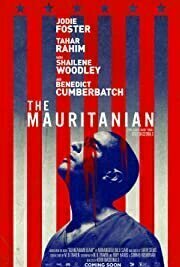
“The Mauritanian” then is the true story of one such unfortunate – Mohamedou Ould Slahi, played by Tahar Rahim. We first join Slahi at a family wedding in Nouakchott (good “Pointless” answer for the capital of Mauritania people!). ‘Invited for questioning’ by the American authorities, we next see Slahi in the Cuban stronghold.
Pro-bono lawyer Nancy Hollander (Jodie Foster) becomes a pariah by picking up his defence. Supporting her is assistant Teri Duncan (Shailene Woodley). Hollander is very formal and professionally aloof, not assuming his guilt or innocence. After meeting the man, and assuming his innocence, Duncan though is more emotionally involved. The man opposing them at trial is US Army prosecutor Stuart Couch (Benedict Cumberbatch). Couch, having lost one of his best friends aboard the South Tower plane, has an axe to grind.
As the pair battle unseen forces for access to documentation, they uncover more and more of the truth about life in Guantánamo Bay.
Positives:
- I've not read the book so I found the story gripping. As the related legal information is divulged, the movie drip-feeds flashbacks of Slahia's story, which is clever.
- Acting wise, "The Mauritanian" has top notch stuff. Tahir Rahim is excellent as Slahia. He portrays charismatic and confident businessman, brought down to earth with a bump. Not recognizing him with an Oscar nomination feels like a minor crime. He will have to make do with the BAFTA nomination. Also brilliant is Jodie Foster. As the illustrious Mrs Movie Man pointed out, it's so nice to see an actress acting her age with confidence. The ever-watchable Shailene Woodley is also great, especially in a dramatic 'dismissal' scene. She adds some much needed warmth to the legal team. The southern drawl from Cumberbatch is a bit of a surprise and takes some getting used to. But it's still a strong performance from him.
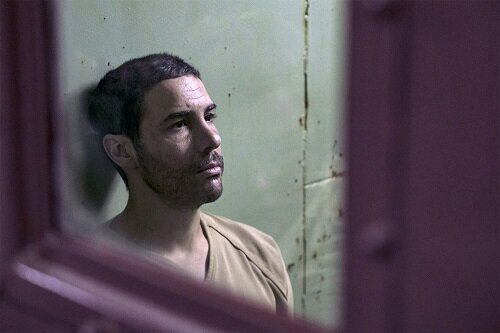
- After ranting on last time at Zack Snyder's use of 4:3 screen ratios in "Justice League", here is an intelligent use of the technique. The film is in 16:9 ratio, but then pivots to 4:3 for all of the Guantanamo flashback scenes, reflecting the claustrophobia of Slahia's position.
- Real-life footage over the closing titles is absolutely fascinating.
Negatives:
- I personally didn't find this a particular negative, but I went into the film knowing it to be a "legal drama". So there would be lots of scenes, as in "The Trial of the Chicago 7", with courtroom debate and gavel-banging, right? Actually, there is almost none of that. Most of the legal action is in terms of the preparation of the case and the paperwork involved. (If this makes the movie sound excruciatingly dull... think again!)
- The Guantanamo story ends quite abruptly (with the above-mentioned jolt), and left me wanting to see more of the intervening time. It's not often that I complain about a film running too short, but here is one where just a little of "the Snyder treatment" might have been welcomed!
Additional Note for the squeamish: For those worried about seeing distressing scenes of torture (e.g. Fingernail extraction, etc), these are - although disturbing - more of the "psychological torment" type. So those of a squeamish disposition can still watch this one.
Summary Thoughts:
The fact that "The Mauritanian" is a true story hammers home just what the US has been up to over the last 20 years. War crimes are not only committed on the battlefield.
Director Kevin Macdonald is no stranger to documentaries ("Touching the Void", "Whitney"). He's also proved adept at bringing gripping true stories to the screen (having previously given us "The Last King of Scotland"). Here, the emotional journeys of the key characters are well observed making the movie 'highly recommended'.
For the full One Mann's Movies review see here - https://bob-the-movie-man.com/2021/04/09/the-mauritanian-america-are-you-squirming-with-embarrassment/
“The Mauritanian” then is the true story of one such unfortunate – Mohamedou Ould Slahi, played by Tahar Rahim. We first join Slahi at a family wedding in Nouakchott (good “Pointless” answer for the capital of Mauritania people!). ‘Invited for questioning’ by the American authorities, we next see Slahi in the Cuban stronghold.
Pro-bono lawyer Nancy Hollander (Jodie Foster) becomes a pariah by picking up his defence. Supporting her is assistant Teri Duncan (Shailene Woodley). Hollander is very formal and professionally aloof, not assuming his guilt or innocence. After meeting the man, and assuming his innocence, Duncan though is more emotionally involved. The man opposing them at trial is US Army prosecutor Stuart Couch (Benedict Cumberbatch). Couch, having lost one of his best friends aboard the South Tower plane, has an axe to grind.
As the pair battle unseen forces for access to documentation, they uncover more and more of the truth about life in Guantánamo Bay.
Positives:
- I've not read the book so I found the story gripping. As the related legal information is divulged, the movie drip-feeds flashbacks of Slahia's story, which is clever.
- Acting wise, "The Mauritanian" has top notch stuff. Tahir Rahim is excellent as Slahia. He portrays charismatic and confident businessman, brought down to earth with a bump. Not recognizing him with an Oscar nomination feels like a minor crime. He will have to make do with the BAFTA nomination. Also brilliant is Jodie Foster. As the illustrious Mrs Movie Man pointed out, it's so nice to see an actress acting her age with confidence. The ever-watchable Shailene Woodley is also great, especially in a dramatic 'dismissal' scene. She adds some much needed warmth to the legal team. The southern drawl from Cumberbatch is a bit of a surprise and takes some getting used to. But it's still a strong performance from him.
- After ranting on last time at Zack Snyder's use of 4:3 screen ratios in "Justice League", here is an intelligent use of the technique. The film is in 16:9 ratio, but then pivots to 4:3 for all of the Guantanamo flashback scenes, reflecting the claustrophobia of Slahia's position.
- Real-life footage over the closing titles is absolutely fascinating.
Negatives:
- I personally didn't find this a particular negative, but I went into the film knowing it to be a "legal drama". So there would be lots of scenes, as in "The Trial of the Chicago 7", with courtroom debate and gavel-banging, right? Actually, there is almost none of that. Most of the legal action is in terms of the preparation of the case and the paperwork involved. (If this makes the movie sound excruciatingly dull... think again!)
- The Guantanamo story ends quite abruptly (with the above-mentioned jolt), and left me wanting to see more of the intervening time. It's not often that I complain about a film running too short, but here is one where just a little of "the Snyder treatment" might have been welcomed!
Additional Note for the squeamish: For those worried about seeing distressing scenes of torture (e.g. Fingernail extraction, etc), these are - although disturbing - more of the "psychological torment" type. So those of a squeamish disposition can still watch this one.
Summary Thoughts:
The fact that "The Mauritanian" is a true story hammers home just what the US has been up to over the last 20 years. War crimes are not only committed on the battlefield.
Director Kevin Macdonald is no stranger to documentaries ("Touching the Void", "Whitney"). He's also proved adept at bringing gripping true stories to the screen (having previously given us "The Last King of Scotland"). Here, the emotional journeys of the key characters are well observed making the movie 'highly recommended'.
For the full One Mann's Movies review see here - https://bob-the-movie-man.com/2021/04/09/the-mauritanian-america-are-you-squirming-with-embarrassment/

BankofMarquis (1832 KP) rated Marriage Story (2019) in Movies
Jan 19, 2020
Well Acted Scenes Do Not A Good Movie Make
Noah Baumbach is one of those filmmakers that is highly regarded in the "Art House" community for his semi-autobiographical humanistic films. These are domestic dramas heavy on dialogue - the type of film that "A-List" Actors swarm to perform in for the acting challenges it brings. His latest, MARRIAGE STORY, is no exception as it follows the dissolution of a marriage and the struggles of the 2 main players involved. The husband and wife are written realistically (according to Baumbach) with moments of pathos and moments of repulsion thrown in at equal measure.
So, naturally, Baumbach (THE SQUID AND THE WHALE) was able to draw 2 of the better performers working in film today to play the leads - Scarlett Johannson and Adam Driver - and they deliver the goods (along with Laura Dern) - all 3 were deserved Oscar nominees - and the performances of ALL of the actors on screen are worth watching.
But...that's about all this film has going for it. For I found the first hour and a half of this film tedious with (at times) preposterous dialogue that looked good on paper - and was enthusiastically performed - but wrang (at least to me) as unrealistic. Consequently, this film is filled with well acted scenes that I kept saying to myself - "that was a well acted scene and that was an interesting choice that that actor made in that scene", but I found that these disparate scenes in this part of the film did not hold together as a movie. It seemed to me a series of acting class scenes and not a film.
And, for that, I blame Writer/Director Baumbach. This film, purportedly, parallels his divorce from actress Jennifer Jason Leigh (HATEFUL 8) and it shows. It's a little too "on the nose" and "inside baseball" for my tastes. The dialogue, at times, was "too cute" and the pacing was deliberate - which is a nice way of saying "slow".
What saves this film is the performances. Johannson dominates the first part of this film and she brings her "A" game, bringing a strength and awakening purpose to her character that will have you rooting for her - at the beginning. The first half of the film (for the most part) is Johannson's film and is what gives her her Oscar nomination (she won't win), but she deserves the nomination.
Laura Dern is also Oscar nominated for her role as Johannson's Divorce Attorney. Bright, funny, articulate and a shark in the courtroom and boardroom, Dern's character was fascinating to watch onscreen. While I thought this performance was "fine" and I was "okay" with it getting an Oscar nomination, I kept waiting for the "Oscar scene" for this supporting character - and about 2/3 of the way into the film this character had that moment - and Dern killed it. I would now say Dern is the deserved frontrunner for Best Supporting Actress (ironically, over Johansson who is ALSO nominated for Supporting Actress for JoJo Rabbit).
This scene propels the last 1/3 of this film into interesting territory - a place that this film had not gone to thus far. I was sucked into this last part and I think it is in no small reason due to the fact that this part of the film is driven (no pun intended) by Adam Driver's character. I've always found Driver to be a fascinating actor and while his character was not front and center much in the first part of the film, he commands center stage in the last part and I could not take my eyes off of his powerful performance. In a strong year of Best Acting performances, he shines and I would be happily surprised and satisfied if he won the Best Actor Oscar.
Alan Alda, as usual, brings an interesting character to the screen as does Julie Hagerty (remember her from AIRPLANE?) as Scarlett's mother. The surprise to me was the strong play of Ray Liotta as one of Driver's lawyers - it is his best work in quite some time and shows he does have some acting chops. Finally, good ol' Wallace Shawn (the "inconceivable" Count Visini in PRINCESS BRIDE) was fun - and annoying - in his scenes.
So...if you want to see some good acting in scenes that I am sure will end up as good scenes in an acting class performed very strongly, then check out MARRIAGE STORY. Just make sure you are well rested. A fast-paced romp it is not.
Letter Grade: B (for the strong performances)
7 stars (out of 10) and you can take that to the Bank(ofMarquis)
So, naturally, Baumbach (THE SQUID AND THE WHALE) was able to draw 2 of the better performers working in film today to play the leads - Scarlett Johannson and Adam Driver - and they deliver the goods (along with Laura Dern) - all 3 were deserved Oscar nominees - and the performances of ALL of the actors on screen are worth watching.
But...that's about all this film has going for it. For I found the first hour and a half of this film tedious with (at times) preposterous dialogue that looked good on paper - and was enthusiastically performed - but wrang (at least to me) as unrealistic. Consequently, this film is filled with well acted scenes that I kept saying to myself - "that was a well acted scene and that was an interesting choice that that actor made in that scene", but I found that these disparate scenes in this part of the film did not hold together as a movie. It seemed to me a series of acting class scenes and not a film.
And, for that, I blame Writer/Director Baumbach. This film, purportedly, parallels his divorce from actress Jennifer Jason Leigh (HATEFUL 8) and it shows. It's a little too "on the nose" and "inside baseball" for my tastes. The dialogue, at times, was "too cute" and the pacing was deliberate - which is a nice way of saying "slow".
What saves this film is the performances. Johannson dominates the first part of this film and she brings her "A" game, bringing a strength and awakening purpose to her character that will have you rooting for her - at the beginning. The first half of the film (for the most part) is Johannson's film and is what gives her her Oscar nomination (she won't win), but she deserves the nomination.
Laura Dern is also Oscar nominated for her role as Johannson's Divorce Attorney. Bright, funny, articulate and a shark in the courtroom and boardroom, Dern's character was fascinating to watch onscreen. While I thought this performance was "fine" and I was "okay" with it getting an Oscar nomination, I kept waiting for the "Oscar scene" for this supporting character - and about 2/3 of the way into the film this character had that moment - and Dern killed it. I would now say Dern is the deserved frontrunner for Best Supporting Actress (ironically, over Johansson who is ALSO nominated for Supporting Actress for JoJo Rabbit).
This scene propels the last 1/3 of this film into interesting territory - a place that this film had not gone to thus far. I was sucked into this last part and I think it is in no small reason due to the fact that this part of the film is driven (no pun intended) by Adam Driver's character. I've always found Driver to be a fascinating actor and while his character was not front and center much in the first part of the film, he commands center stage in the last part and I could not take my eyes off of his powerful performance. In a strong year of Best Acting performances, he shines and I would be happily surprised and satisfied if he won the Best Actor Oscar.
Alan Alda, as usual, brings an interesting character to the screen as does Julie Hagerty (remember her from AIRPLANE?) as Scarlett's mother. The surprise to me was the strong play of Ray Liotta as one of Driver's lawyers - it is his best work in quite some time and shows he does have some acting chops. Finally, good ol' Wallace Shawn (the "inconceivable" Count Visini in PRINCESS BRIDE) was fun - and annoying - in his scenes.
So...if you want to see some good acting in scenes that I am sure will end up as good scenes in an acting class performed very strongly, then check out MARRIAGE STORY. Just make sure you are well rested. A fast-paced romp it is not.
Letter Grade: B (for the strong performances)
7 stars (out of 10) and you can take that to the Bank(ofMarquis)