
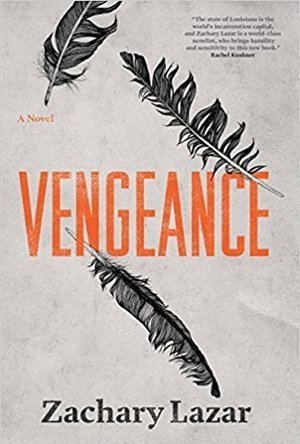
Vengeance
Book
Zachary Lazar's powerful and important novel was inspired by a passion play, The Life of Jesus...

Scorch (Homecoming Hearts #1)
10.0 Rate It
Book
At twenty-three, bad boy Blake is facing what most don't see until decades later: the end of his...
5 stars male/male romance crime/thriller too stinking cute personal reads 2018

Death is in the Details
5.0 Rate It
Book
A woman haunted by her past. A killer who won't let her forget. Faith Day's condition curses her...
thriller fiction adult crime mystery small town

Who Okayed This?! The Riveting Life of Grant Davis
Book
"A must-read thriller! Based on true events!" You know the saying ” Keep your friends close but...
thriller true crime bookbuzz

Mark @ Carstairs Considers (2692 KP) rated Partners in Crime in Books
Jan 4, 2024


Combined, these five stories reach novel length. Individually, they vary in length. The first one seems to wander a bit at first, but as a fan of the series, I didn’t mind. The stories take place around two of the novels, but there aren’t any spoilers. Instead, we get Big Red and Old Red and some great new characters in each story to keep us engaged. The crimes don’t always involve murder, which I enjoyed seeing. If you haven’t tried the series yet, this would be a fun way to sample the characters. If you’re already a fan, you’ll enjoy seeing what the brothers get up to here.
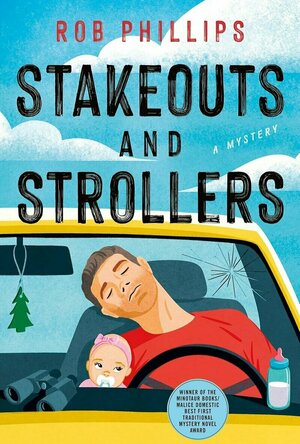
Stakeouts and Strollers
8.0 Rate It
Book
Amateur private investigator and new dad Charlie Shaw gets more than he bargained for when he agrees...

Scrublands
Book
Winner of the 2019 CWA Dagger New Blood Award for Best First Crime Novel In an isolated country...

Amanda (96 KP) rated Two Can Keep a Secret in Books
Mar 11, 2019
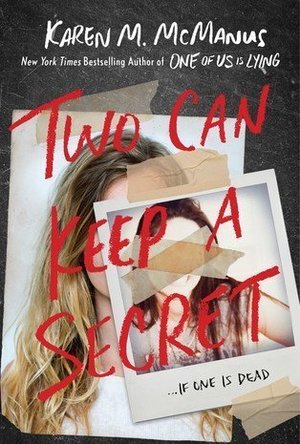
I talked about McManus' debut novel, but I never reviewed it. Those were back in my days before discovering reviewing books. I did read that book in a bookclub and it was fun, but I had mixed feelings about that book. I'll have to re-read the book to really get into it, so I won't do that right now.
I felt horrible for Malcolm to have to overcome the crap that he did with his older brother, Declan. I honestly do not like how much of a pushover and weak character Malcolm and Declan's mother is. I almot feel like she was put there to say that the boys did indeed have a mother. I understood WHY she was like that and the reasoning behind it, but I felt like she didn't have much of a true purpose in the story.
The twist was unexpected, but it was a twist that was not too terribly bad. The story kept me guessing and it ended well, even gave you a bit of a 'oh wow' kind of feeling.
Like I said, I liked the story better than McManus' first novel. They aren't connected, so this isn't a series that you have to start from the beginning.
As much as I found Ellery a bit of an annoyance with her questions and constant suspicions, it was hard not to like her. She paid attention and even if she is a bit obsessed with her true crime novels, they made her aware when nobody else was, or willing to be.
I did enjoy the mystery and the turn of events in this book. Each character had a role, no matter how minor or cliche, to play in the story. Nobody was tossed aside or mentioned but never seen again. It had me guessing and definitely had me not wanting to put it down even after finishing a chapter.

Billie Wichkan (118 KP) rated The Killer in Me (Frankie Sheehan, #2) in Books
May 22, 2019
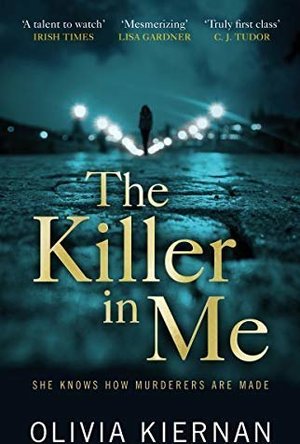
Meanwhile, a 17-year-old case is playing out on a TV documentary, the convicted professing his innocence and historical police errors being exposed daily in the media. Frankie's superior, commissioner Donna Hegarty, makes no bones about who she expects to clean things up - both in terms of past mishandlings and the present murders.
But not everyone working the cases wants the truth to come out. And the corridors of power have their own vested interest. Soon Frankie pinpoints just what is making her so nervous: the fact that anyone could be the next victim when justice is the killer.
The Killer In Me is a fast-paced thriller in which lies are safer than the truth, the past is never far from the present, and the ability to kill could well, it seems, live in everyone.
I would like to thank Netgalley and Quercus Books for an advance copy of The Killer in Me.
The Killer in Me is the second novel to feature Dublin based Detective Chief Superintendent Frankie Sheehan of An Garda Síochánas Bureau for Serious Crime.
I could use a lot of words to describe this book and how much I liked it, but I want to summarize it in few words: it's amazing and gripping.
This novel is fast paced and full of twists and turns which just ramp the suspense level up.
I was gripped from the start and read this book in one go. It is really well written and very cleverly thought out.
Dark and intense, this story is told wonderfully well.
I found the characters very interesting and also full of depth.
Lot of red herrings about to keep you guessing all the way to the end.
Highly Recommend.
I would like to thank Netgalley and Quercus Books for an advance copy of The Killer in Me; this is my honest voluntary review.

Haley Mathiot (9 KP) rated Crime and Punishment in Books
Apr 27, 2018
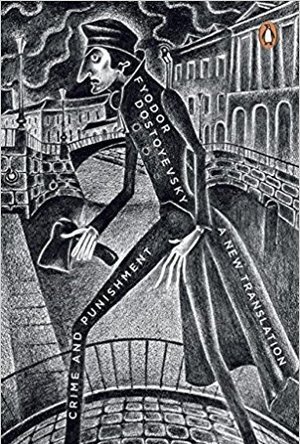

Crime and Punishment by Fyodor Dostoevsky. read by Anthony Heald.
Genre: Fiction, classic
Rating: 5
Sin, Sentence, and Salvation
The allegory of Crime and Punishment
Crime and Punishment, one of the more famous works of Fyodor Dostoevsky, is considered “the first great novel of his mature period,” (Frank, 1995) and is one of his more famous books, rivaled only by The Brothers Karamazov. What makes Crime and Punishment such a classic? Perhaps because it is a picture of the only classic, and greatest story of all time. Crime and Punishment is an allegory of Salvation.
Self-justified
The main character, Rodion Romanovich Raskolnikov, was a poor student at a university, and was overcome with hate toward an old pawnbroker, and decided to rid the world of her for the greater good of everyone. He believed that she was a “louse,” and since everyone would be happier without her, his actions would be justified. He believed that he had broken the letter of the law only, but that it didn’t have any authority over him anyway because it was written by people just as low as himself. He didn’t believe in God, and in prison he was convinced that he didn’t deserve his treatment, and that it was something he simply needed to get over with. He had no higher authority, so he said “my conscience is at rest.” This is a picture of man before he is touched by the merciful salvation of Christ.
A Troubled Man
Although Raskolnikov justified his actions in killing the old woman, he still felt an overwhelming sense of guilt and fear over what he did. He worked very hard at keeping it a secret, and at first he thought he could live with the guilt that sat in back of his mind, but he was wrong. Raskolnikov had horrible dreams, was always sick, and one of the other characters noticed that he was constantly “set off by little things” for no apparent reason (though the reader knew that it was only because it reminded him of his crime). This represents a man who knows in his heart that he is a sinner, but who will not turn and repent from his sin.
Unending Love
Sonya Semyonovna Marmeladov was the daughter of a drunkard who “took the yellow card” and prostituted herself to support her family. Throughout the book, Sonya began to love Raskolnikov. Eventually, Raskolnikov told Sonya his secret. Sonya was horrified, but still loved him and forgave him after her initial shock wore off. As Raskolnikov was fighting inside with his conscience and his sins, he repeatedly snapped at her, refused her comfort, yelled at her, and so on. He was a bitter, angry, hateful man—and yet Sonya forgave him for everything he did to her, and everything he had done in his past. What redeeming quality Sonya saw in the wretch and why she forgave him, one cannot begin to comprehend; aside from the simple truth that Sonya was a loving, gentile, merciful girl. She saw that Raskolnikov needed someone to love him and she reached out to him, even when he repeatedly pushed her away. Sonya’s love for him is a picture of Christ’s unending and perfect love to His sinful people.
A Silent Witness
When Raskolnikov finally broke down and confessed his crime, Sonya moved to Siberia with him. Raskolnikov expected this, and knew that telling her not to come would be fruitless. She visited him often in prison and wrote to his family for him. But although Raskolnikov expected her to preach to him and push the Gospel in his face, she did not. Sonya followed the scripture’s instruction to Christian wives with non-Christian husbands in 1 Peter 3:1—“ Wives, in the same way be submissive to your husbands so that, if any of them do not believe the word, they may be won over without words by the behavior of their wives…” The verse tells women to be good examples of Christ to their non-Christian husbands rather than to preach to them and try to convert them, and that is exactly what Sonya did, even though she was not married to him. She did not try to convert him with words; rather she won him with her love. She did not push the Testament into Raskolnikov’s hands, he asked for it. When she did bring it, she did not pester him to read it. She had faith, and showed Raskolnikov the love of Christ through her actions. In the end, it paid off. Although Dostoevsky does not specifically say that Raskolnikov was converted, he does imply that he eventually became a Christian when he mused “Can not her own convictions now be mine?”
The truth will set you free
When Raskolnikov finally realized that he loved Sonya, he accepted that he was a criminal, and a murderer. When he finally accepted that he was a sinner, he repented and had a new life in him. He said he felt like “he had risen again” and that Sonya “lived only in his life.” By life, Dostoevsky refers to his mentality. Before, he had been a living dead man in prison. He was hated by his inmates, was almost killed by them in an outbreak, was unaffected by anything that happened to him or his family, and eventually became ill from it all. But after his resurrection, he repented from his sins, learned to move on with his life, and started to change. He began to converse with his inmates, and they no longer hated him. Sonya was alive in his “life” because of her love for him. When he was changed, she was so happy that she became sick with joy, to the point that she was ill in bed. Dostoevsky paints a picture of a redeemed man at the end of his novel—redeemed both by the law, and by God. This picture symbolizes the miracle of salvation through Christ.
An amazing Allegory
Dostoevsky was a wonderful writer because of his use of dialogue to tell the story, his descriptive scenes, his powerfully developed characters, and their inner dialogue. He often times told you that something was happening by only telling you what the character who was speaking at the time said in response to what was going on. For example, if Sonya was standing up, Dostoevsky would write “… ‘hey, what do you stand for?’ for Sonya had stood.”
He also painted such good descriptions of his characters, that by the middle of the book he didn’t have to say that Raskolnikov was musing in the corner of the room, glaring at anyone who was brave enough to look at him, while he stewed in grief under his old ratted cap, because you knew from how well he was described earlier and how well his character was developed from the dialogue, that he was doing exactly that.
His characters are so real, they almost frighten you because you see the things they do and feel and experience reflected in your own life. They are not perfect—in fact they are all incredibly flawed, but they are a joy to read.
His ending is superb, because he closes the story without actually telling you everything. He never says that Raskolnikov was converted, he never says when he got out of prison, and he never says that Sonya and he were married, but you know that it happened. The last scene of the story is so superb, it makes you want to read it again, just to experience the joy all over again.
But what really made Crime and Punishment the classic that it was is the picture of the best story in the world, the classic story of the world, showing through. The story of the Gospel, of Jesus Christ’s unending love and sin and salvation is clearly portrayed, and makes a joyous read.
Works cited:
Quotes are from Crime and Punishment by Fyodor Dostoevsky, 1886
Frank, Joseph (1995). Dostoevsky: The Miraculous Years, 1865–1871. Princeton University Press. ISBN 0-691-01587-2. (source found and taken from Wikipedia.com)
1 Peter 3:1 New International Version of The Holy Bible
Audio review: I had a hard time reading the book, simply because it was so huge that it was intimidating. I bought (ouch) the audio book of Crime and Punishment, recorded by Anthony Heald who did a fantastic job reading. His voices for the characters perfectly matched them, he felt for them, and he acted them. None of them were cheesy (yeah you all know how lame some male readers are at acting female voices). He read fast enough that the story didn't drag at all, but not so fast that you'd feel like you'd miss something if you didn't listen hard. I will definitely re-listen to the audio book.
Content: some gruesome descriptions of blood from the murder
Recommendation: Ages 14+