
Search
Kirk Bage (1775 KP) rated Spider-Man: Far From Home (2019) in Movies
Oct 11, 2020 (Updated Jan 22, 2021)
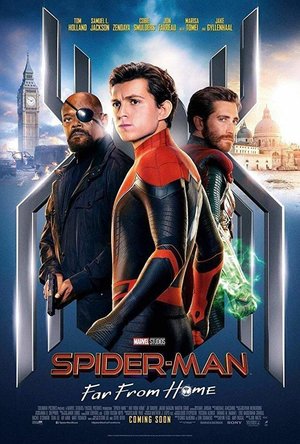


I’m sure I wasn’t alone in the Summer of 2019 when Spider-Man: Far From Home was released in just needing a minute or two, maybe a couple of months, longer to catch my breath after Avengers: Engame, and what very much felt like an ending to the MCU plan that had been in motion since 2008. That climax was so satisfying and complete that the thought of any of them donning the costume and fighting bad guys again so soon felt wrong.
I wasn’t against the survivors having continued adventures, of course not. It was more a question of where do we go from here? And how? Well, perhaps Tom Holland as the youngest and most emotionally resilient of the bunch was the right choice to continue the universe, if any at all. Knowing that Jake Gyllenhaal had been brought onboard certainly added to the appeal, being one of my very favourite actors of the last decade (together with Ryan Gosling and Joaquin Phoenix), but I had made up my mind to skip this one at the cinema.
And so, before any of us knew where we were, it was Spring 2020 and we were all in a different place. Needing films, any films, to fill out the days of lockdown and isolation became a case of make a list and tick them off. This was one of those that made the shortlist around June when I began the trial month of Now TV and discovered that this was where all the big films of the last year I had missed were hiding.
I liked Spider-Man: Homecoming very much, after some initial trepidation over who the heck Jon Watts was, and why he had been trusted with such a big job out of seemingly nowhere? I also really like Tom Holland in the role. I think the idea of making him seem like a naive teenager again is a masterstroke, and he fast became The real Spider-Man in my head. His relationship with Robert Downey Jnr across the last handful of MCU films was rich, genuine and fully rounded, and Holland has managed to pitch the balance between nervy teen and likeable hero quite deftly.
The charm of the first film from Watts was how much it felt like a teen film, full of teens that were actual teens, not adults pretending to be teens. And in this second instalment that element is even more to the fore. It is a travelling road movie that keeps everything fresh and energetic, not giving a moment to dwell despondently on previous events, but looking forward to a bright, hopeful world, full of romance and adventure and discovery.
Other than Holland himself, who grows in stature and maturity as an actor every minute, the rising star of Zendaya as MJ fills the screen very pleasantly, she has a great aura about her for one so young. I am expecting great things from her, especially in the upcoming yet delayed Dune, directed by Denis Villeneuve. She doesn’t have a lot to do here, but steals enough scenes to hint at a serious talent. In fact, most of his classmates seem beyond their years ability-wise, or do they seem that way because of the skilled direction and bottomless production?
It’s also nice to get more time with Samuel L. Jackson as Nick Fury and Marisa Tomei as Aunt May in this one. You always do wonder what the lesser characters have been up to while everyone else was saving the world. But the backbone of the film as a spectacle is the Peter Parker / Quentin Beck face off. Every moment of Holland and Gyllenhaal together feels like a huge movie treat. And knowing nothing about who Quentin Beck was going in from comic book lore, I got a real thrill out of how it all develops.
I came away from my small screen experience of this movie thinking that I had really enjoyed it, but in a very disposable way, that I was happy to leave behind almost instantly. Nothing about it is especially deep or meaningful, just fun! And that was 100% what Marvel needed at this junction in the pantheon. These guys are pretty smart at knowing when and why and how much with these movies, and I’m pleased to say they did it again!
There is some serious work to be done to ever reach the heights of interest generated by the final pairing of Avengers films, and a lot has changed, as it must, as some actors age, some even pass away (RIP CB) and some call it a day. But if nothing else, there feels like there is plenty of mileage left in this incarnation of the friendly neighbourhood Spider-Man, and a lot of new fans to be hauled in by the onscreen romance between Tom Holland and Zendaya’s MJ. Older fans, like me, could maybe care less, but I believe that is the hook to ensure a future generation of fans stay loyal to Marvel. Every hero needs someone to save, after all. I’m still watching.
I wasn’t against the survivors having continued adventures, of course not. It was more a question of where do we go from here? And how? Well, perhaps Tom Holland as the youngest and most emotionally resilient of the bunch was the right choice to continue the universe, if any at all. Knowing that Jake Gyllenhaal had been brought onboard certainly added to the appeal, being one of my very favourite actors of the last decade (together with Ryan Gosling and Joaquin Phoenix), but I had made up my mind to skip this one at the cinema.
And so, before any of us knew where we were, it was Spring 2020 and we were all in a different place. Needing films, any films, to fill out the days of lockdown and isolation became a case of make a list and tick them off. This was one of those that made the shortlist around June when I began the trial month of Now TV and discovered that this was where all the big films of the last year I had missed were hiding.
I liked Spider-Man: Homecoming very much, after some initial trepidation over who the heck Jon Watts was, and why he had been trusted with such a big job out of seemingly nowhere? I also really like Tom Holland in the role. I think the idea of making him seem like a naive teenager again is a masterstroke, and he fast became The real Spider-Man in my head. His relationship with Robert Downey Jnr across the last handful of MCU films was rich, genuine and fully rounded, and Holland has managed to pitch the balance between nervy teen and likeable hero quite deftly.
The charm of the first film from Watts was how much it felt like a teen film, full of teens that were actual teens, not adults pretending to be teens. And in this second instalment that element is even more to the fore. It is a travelling road movie that keeps everything fresh and energetic, not giving a moment to dwell despondently on previous events, but looking forward to a bright, hopeful world, full of romance and adventure and discovery.
Other than Holland himself, who grows in stature and maturity as an actor every minute, the rising star of Zendaya as MJ fills the screen very pleasantly, she has a great aura about her for one so young. I am expecting great things from her, especially in the upcoming yet delayed Dune, directed by Denis Villeneuve. She doesn’t have a lot to do here, but steals enough scenes to hint at a serious talent. In fact, most of his classmates seem beyond their years ability-wise, or do they seem that way because of the skilled direction and bottomless production?
It’s also nice to get more time with Samuel L. Jackson as Nick Fury and Marisa Tomei as Aunt May in this one. You always do wonder what the lesser characters have been up to while everyone else was saving the world. But the backbone of the film as a spectacle is the Peter Parker / Quentin Beck face off. Every moment of Holland and Gyllenhaal together feels like a huge movie treat. And knowing nothing about who Quentin Beck was going in from comic book lore, I got a real thrill out of how it all develops.
I came away from my small screen experience of this movie thinking that I had really enjoyed it, but in a very disposable way, that I was happy to leave behind almost instantly. Nothing about it is especially deep or meaningful, just fun! And that was 100% what Marvel needed at this junction in the pantheon. These guys are pretty smart at knowing when and why and how much with these movies, and I’m pleased to say they did it again!
There is some serious work to be done to ever reach the heights of interest generated by the final pairing of Avengers films, and a lot has changed, as it must, as some actors age, some even pass away (RIP CB) and some call it a day. But if nothing else, there feels like there is plenty of mileage left in this incarnation of the friendly neighbourhood Spider-Man, and a lot of new fans to be hauled in by the onscreen romance between Tom Holland and Zendaya’s MJ. Older fans, like me, could maybe care less, but I believe that is the hook to ensure a future generation of fans stay loyal to Marvel. Every hero needs someone to save, after all. I’m still watching.
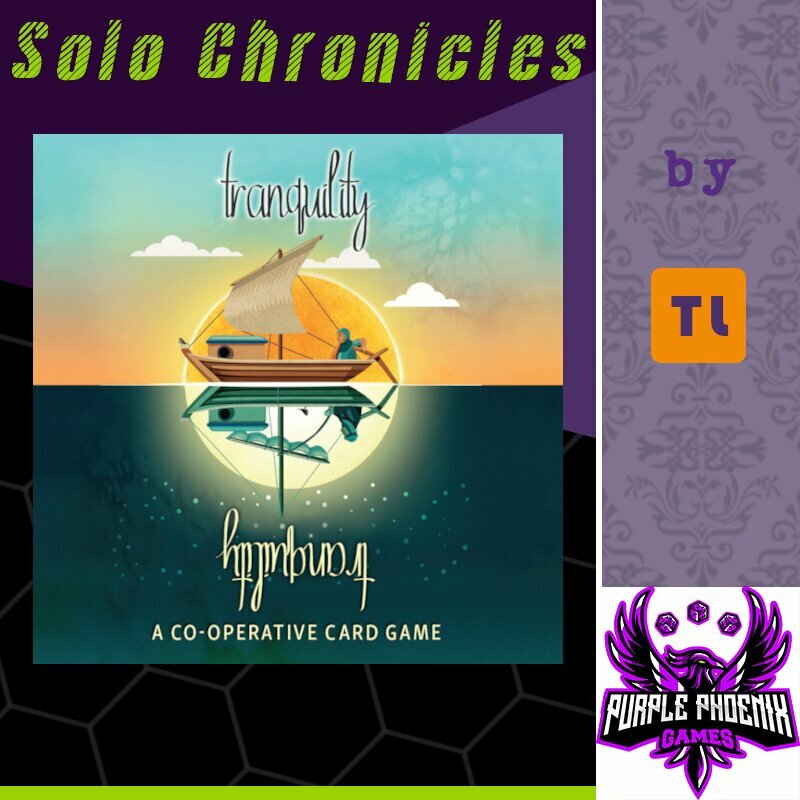
Purple Phoenix Games (2266 KP) rated Tranquility in Tabletop Games
Oct 21, 2021
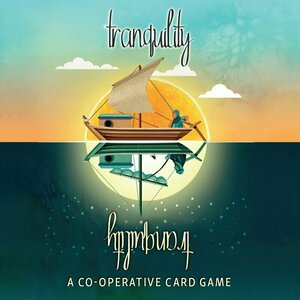
Are you a boat person? As in, do you enjoy lounging on a boat, floating to nowhere in particular, just enjoying the day? Or are you a thrill-seeking water-skiier or tuber that enjoys shredding the waves and nearly drowning? Perhaps you are neither. I am definitely in the first category. I would rather just toot around a lake in a boat, maybe throw out a fishing pole, and just enjoy being out on the water with little care for what may be happening in the world around me. So when I heard that Lucky Duck Games was planning on publishing Tranquility I just had to jump at the opportunity to get it on my table. And I was definitely impressed.
Tranquility is a cooperative hand management, tile placement card game for one to five players. In it players will be attempting to create a sea of islands around which they sail their boat towards infinite paradise. They will accomplish this by laying numbered cards from their hand in numerical order before any of the players run out of chances to play a card. Oh, and there’s also no talking during the game. That’s kind of a big deal.
DISCLAIMER: We were provided a copy of this game for the purposes of this review. This is a retail copy of the game, so what you see in these photos is exactly what would be received in your box. I do not intend to cover every single rule included in the rulebook, but will describe the overall game flow and major rule set so that our readers may get a sense of how the game plays. For more in depth rules, you may purchase a copy online or from your FLGS. -T
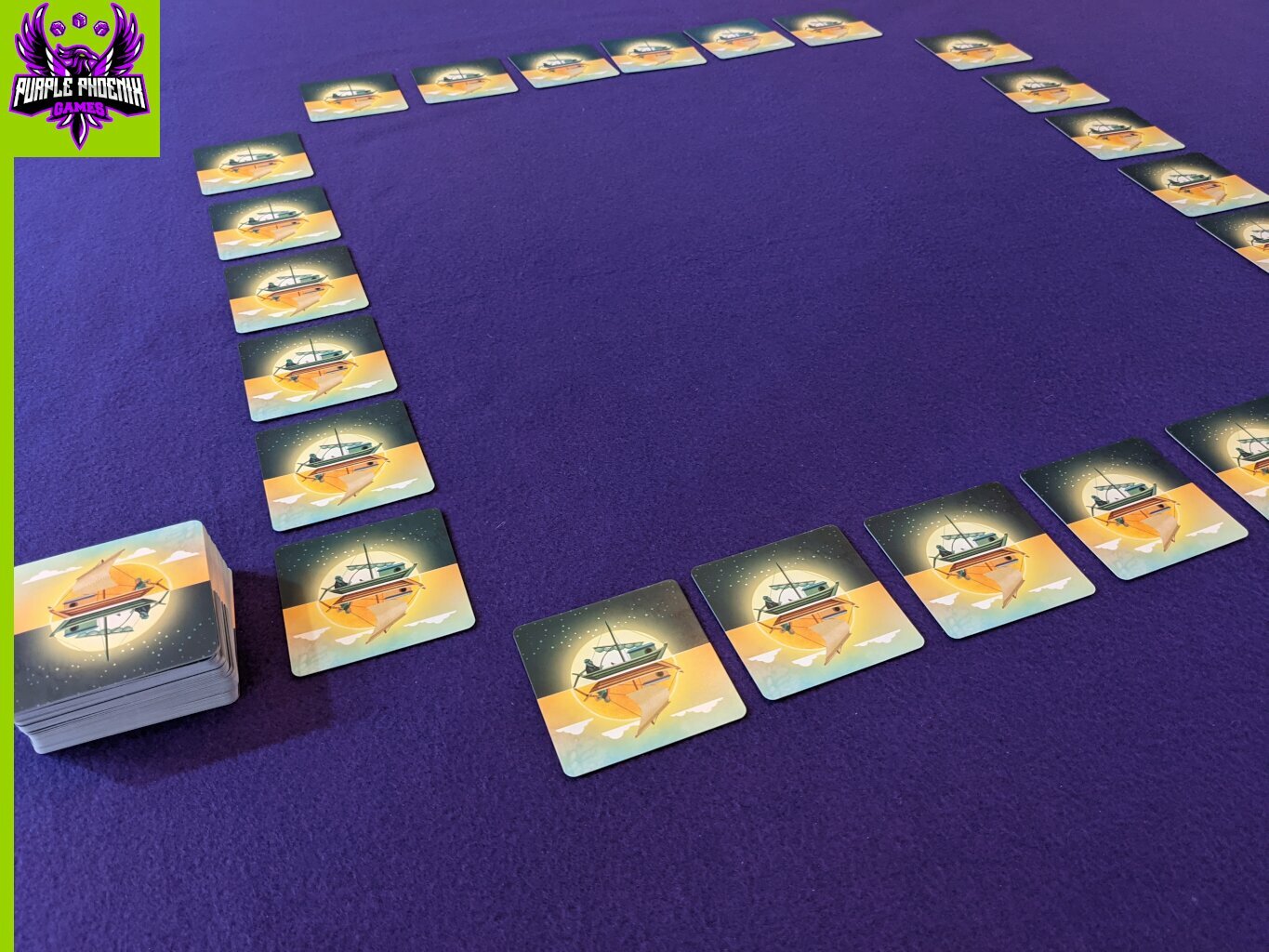
To setup the standard game, place all the border cards around a 6×6 grid, as in the photo below. Shuffle the appropriate number of Start and Finish cards into the deck of Island cards and place that beside the grid. Draw a hand of five cards and the game may begin. Setup is similar to the multiplayer setup, with a few changes. Once the hand of cards has been drawn, the game may begin! It is the solo player’s goal to build the sea of island cards, and place the Start and Finish cards before they run out of cards to be legally played.
The game is played over many turns. Each turn players will be either playing a card from hand or discarding two cards. When a player plays a card from hand to the grid, they may place it anywhere they wish within the grid. The goal is to have each card placed numerically in order beginning from the lower left of the grid in a zig-zag pattern left to right, then ascending to the next highest level. In other words, the play area would be ordered numerically as English-speaking people read, but from the bottom up instead of the top down – like a reverse typewriter.
When a card is played, the player may choose to place it in its own area, or immediately next to another card already in play. If the new card is placed adjacent to an existing card, the player must discard cards equal to the difference between the values of the two adjacent cards. For example, if a 12 is placed next to a 14, then the player would need to discard two cards after placement. If a card is placed that is already in direct numerical order, no discards are needed. Again, a card at the right-hand edge of a row is adjacent to the card on the next row higher on the left-hand edge, and this is the most difficult aspect of the game to grasp for new players.
Should a player instead wish to discard two cards for their turn, they do so to their discard pile. After each action (playing a card or discarding two cards) the player will draw back up to their hand of five cards.
Eventually, the player will happen across the Start and Finish cards. In the solo game, when a Start card is placed (outside the grid, but in amongst the border cards in the lower left-hand corner), the player will need to draw eight cards from the draw deck, keep four, and discard the remaining eight. This eats up cards from the draw pile and draws the game closer to the end. When the grid is completed and all the numbered cards are in numerical order, the player may then play the Finish card to end the game. If all cards are properly placed the player wins! If not, they must try again. Probably immediately, because it is that kind of game.
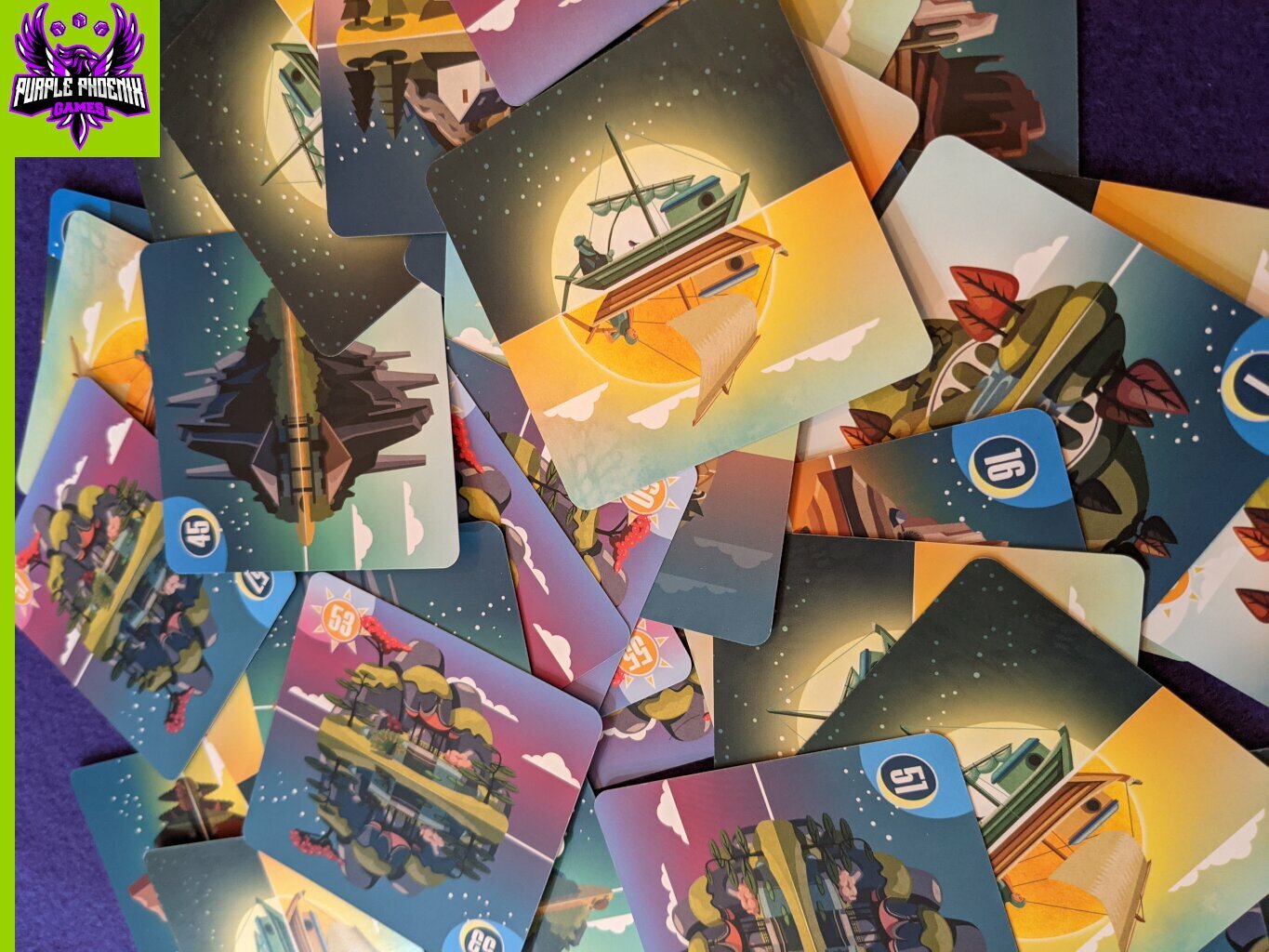
Components. This game is a bunch of square cards in a cubic box. Now, while that doesn’t sound super exciting, the art on the cards certainly make up for the lack of component diversity. Each card is matte finished, which I prefer for cards with great art on them. And oh man, that art is something wonderful! I have always been a fan of Tristam Rossin’s art, and it is on full display here. The cards are, well, I guess I cannot find the correct word because they aren’t double-sided, but split on the horizontal, with a daytime scene on the “top” and a nighttime scene on the “bottom” (or vice-versa, however you feel). I have nothing but praise for the components here.
The gameplay is familiar in feel, but definitely a little different and a whole lot of fun. Fans of The Mind will find this familiar in that the game is structured around silent players building a grid/stack of numerically appropriate cards until the win condition is met. However, I have not been able to play The Mind solo, and Tranquility comes with solo rules in the box. So that’s a win in my book.
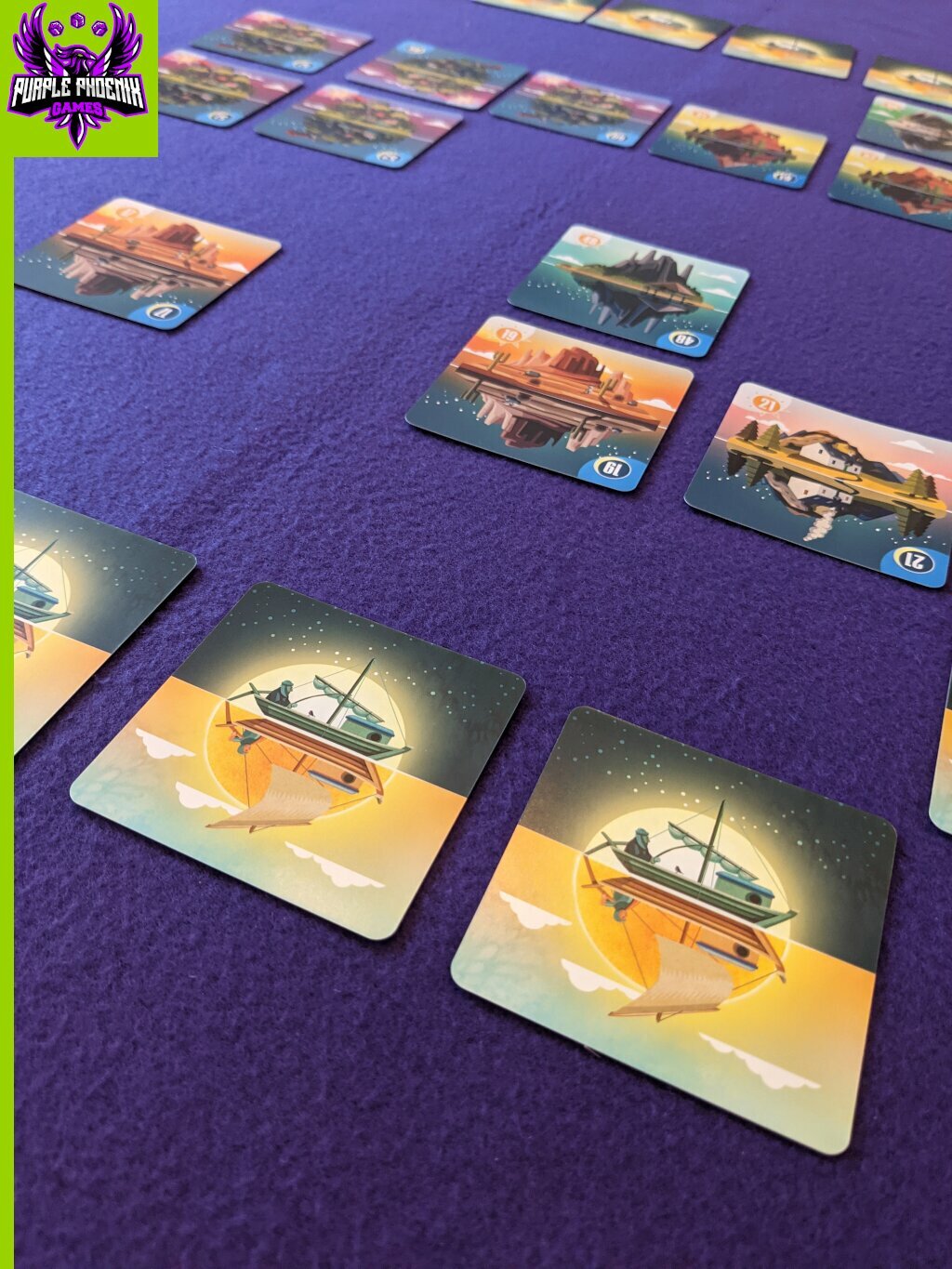
Now, Tranquility solo is no cakewalk. No, there are no other players to make crazy decisions to throw off any tactics planned, but you most certainly can misjudge where to place a card, and then be married to its position as you try to fill in all the appropriate cards around it. I learned that all too early when I decided my first game that I should try to divide the grid into equal sections and approximate where a 48 should go. Well, I’ll tell you now that a 48 has absolutely no business being a row above a 19 (check the photo above if you don’t believe me). Silly choices like this make for an afternoon of pondering optimal placements when unboxing your next play, and that brings a smile to my face. Any time I think about a game the next day or several days later and it entices me to play again with a different strategy, I feel is the mark of a great game.
I have yet to play this with a group (damn COVID), but I know the people I play with are going to love this one. And, honestly, I am going to love the peace and quiet as the game plays out, so I can think about my turn and then think about a different possibility once someone ruins my plans. But I tell you what, even as a solo game, this one is great. I am quite happy to keep this as a pure solo experience, but I do want to try it once with others. We do not typically give out ratings for Solo Chronicles reviews, but this one would be pretty high, I’m telling you now. Okay, I have to go get the boat ready and pack my cooler. Enjoy Tranquility!
Tranquility is a cooperative hand management, tile placement card game for one to five players. In it players will be attempting to create a sea of islands around which they sail their boat towards infinite paradise. They will accomplish this by laying numbered cards from their hand in numerical order before any of the players run out of chances to play a card. Oh, and there’s also no talking during the game. That’s kind of a big deal.
DISCLAIMER: We were provided a copy of this game for the purposes of this review. This is a retail copy of the game, so what you see in these photos is exactly what would be received in your box. I do not intend to cover every single rule included in the rulebook, but will describe the overall game flow and major rule set so that our readers may get a sense of how the game plays. For more in depth rules, you may purchase a copy online or from your FLGS. -T
To setup the standard game, place all the border cards around a 6×6 grid, as in the photo below. Shuffle the appropriate number of Start and Finish cards into the deck of Island cards and place that beside the grid. Draw a hand of five cards and the game may begin. Setup is similar to the multiplayer setup, with a few changes. Once the hand of cards has been drawn, the game may begin! It is the solo player’s goal to build the sea of island cards, and place the Start and Finish cards before they run out of cards to be legally played.
The game is played over many turns. Each turn players will be either playing a card from hand or discarding two cards. When a player plays a card from hand to the grid, they may place it anywhere they wish within the grid. The goal is to have each card placed numerically in order beginning from the lower left of the grid in a zig-zag pattern left to right, then ascending to the next highest level. In other words, the play area would be ordered numerically as English-speaking people read, but from the bottom up instead of the top down – like a reverse typewriter.
When a card is played, the player may choose to place it in its own area, or immediately next to another card already in play. If the new card is placed adjacent to an existing card, the player must discard cards equal to the difference between the values of the two adjacent cards. For example, if a 12 is placed next to a 14, then the player would need to discard two cards after placement. If a card is placed that is already in direct numerical order, no discards are needed. Again, a card at the right-hand edge of a row is adjacent to the card on the next row higher on the left-hand edge, and this is the most difficult aspect of the game to grasp for new players.
Should a player instead wish to discard two cards for their turn, they do so to their discard pile. After each action (playing a card or discarding two cards) the player will draw back up to their hand of five cards.
Eventually, the player will happen across the Start and Finish cards. In the solo game, when a Start card is placed (outside the grid, but in amongst the border cards in the lower left-hand corner), the player will need to draw eight cards from the draw deck, keep four, and discard the remaining eight. This eats up cards from the draw pile and draws the game closer to the end. When the grid is completed and all the numbered cards are in numerical order, the player may then play the Finish card to end the game. If all cards are properly placed the player wins! If not, they must try again. Probably immediately, because it is that kind of game.
Components. This game is a bunch of square cards in a cubic box. Now, while that doesn’t sound super exciting, the art on the cards certainly make up for the lack of component diversity. Each card is matte finished, which I prefer for cards with great art on them. And oh man, that art is something wonderful! I have always been a fan of Tristam Rossin’s art, and it is on full display here. The cards are, well, I guess I cannot find the correct word because they aren’t double-sided, but split on the horizontal, with a daytime scene on the “top” and a nighttime scene on the “bottom” (or vice-versa, however you feel). I have nothing but praise for the components here.
The gameplay is familiar in feel, but definitely a little different and a whole lot of fun. Fans of The Mind will find this familiar in that the game is structured around silent players building a grid/stack of numerically appropriate cards until the win condition is met. However, I have not been able to play The Mind solo, and Tranquility comes with solo rules in the box. So that’s a win in my book.
Now, Tranquility solo is no cakewalk. No, there are no other players to make crazy decisions to throw off any tactics planned, but you most certainly can misjudge where to place a card, and then be married to its position as you try to fill in all the appropriate cards around it. I learned that all too early when I decided my first game that I should try to divide the grid into equal sections and approximate where a 48 should go. Well, I’ll tell you now that a 48 has absolutely no business being a row above a 19 (check the photo above if you don’t believe me). Silly choices like this make for an afternoon of pondering optimal placements when unboxing your next play, and that brings a smile to my face. Any time I think about a game the next day or several days later and it entices me to play again with a different strategy, I feel is the mark of a great game.
I have yet to play this with a group (damn COVID), but I know the people I play with are going to love this one. And, honestly, I am going to love the peace and quiet as the game plays out, so I can think about my turn and then think about a different possibility once someone ruins my plans. But I tell you what, even as a solo game, this one is great. I am quite happy to keep this as a pure solo experience, but I do want to try it once with others. We do not typically give out ratings for Solo Chronicles reviews, but this one would be pretty high, I’m telling you now. Okay, I have to go get the boat ready and pack my cooler. Enjoy Tranquility!

Hazel (1853 KP) rated Small Great Things in Books
May 24, 2017
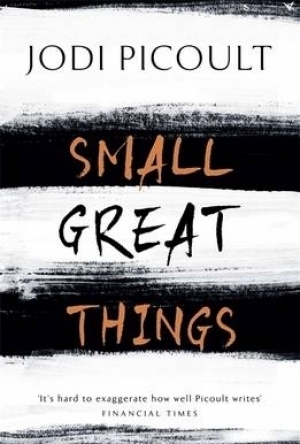

Small is an Understatement
Jodi Picoult has been my favourite author since I first came across her novels in 2008. With twenty-three novels under her belt, she continues to delight readers with her page-turning stories. Most of Picoult’s books contain a moral issue, often, but not always, in the form of medical ethics, as well as a hefty court case. Although following along similar lines, Small Great Things is a radical, revolutionary book, which, with great courage, Picoult has written with the intent to expose the reader to truths that most of us, as a society, are intentionally oblivious to.
The gist of the storyline is that a baby dies whilst under the care of a nurse, prompting the grieving parents to take her to court with the accusation of murder. Although that sounds like an interesting story, it barely begins to describe what the book is about. The character on trial, Ruth, is an African American labour and delivery nurse – something that in this day and age need not by an issue. On the other hand, the parents of the baby are White Supremacists: seriously racist with the belief that white people are the master race. The father, Turk, refuses to let his wife and child be treated by Ruth, however circumstances result in her being the only nurse available to watch Davis, when, unfortunately, he so happens to go into cardiac arrest. Although the reader knows that Ruth is not at fault, Turk insists she murdered his child – but is he accusing her of medical negligence, or punishing her for being black?
Three characters, all with different views and experience when it comes to racism, alternately narrate Small Great Things. Ruth and Turk represent the extremes at either side of the scale. Ruth experiences first hand the negative impact of prejudice in the American system and society, not only through this court case, but in everyday life as well. She also reveals the difficulties growing up in a predominately white environment, never feeling like she fitted in with her peers. Alternatively, Turk spent his teenage years attending KKK rallies, participating in a white power movement, and beating up anyone who was different: black, foreign, gay, Jewish and so forth.
The third character represents the majority of white people living in America. Kennedy is a public defender and the lawyer assigned to Ruth’s case. Like most of the population, she believes that she is not racist, and persuades Ruth to leave the colour of her skin out of the argument. However, as she gets to know her client, she begins to realize that it is nigh on impossible to ignore racial prejudice.
Picoult shocks the reader on two accounts: one, the way that people of colour have been, and still are, treated; and two, the revelation that an invisible empire of White Supremacists are living amongst us. Yet there is a third way in which Picoult provokes outrage – she indirectly accuses the reader of being racist, too.
There is always something to learn in a Jodi Picoult novel, for instance medical terminology, or the way in which a court trial is conducted. Small Great Things provides a lot more eye opening information than any of her previous books, unveiling facts about such a controversial subject.
Through Kennedy, the reader’s eyes are opened to the racial discrimination that we all turn a blind eye to. Ignored are the difficulties African Americans suffer when going shopping, applying for jobs, attending school, walking down the street, sitting on a bus, and so forth. Picoult asks me as a reader to think about how my life has been affected by racial discrimination: being served politely in shops because I am white, not having my ethnicity questioned when applying for college etc. Living in Britain I have not experienced openly hateful comments or behaviours towards people with a different skin tone – I used to believe this was primarily an American problem. Yet, Small Great Things has really made me think about the hierarchy of power within society, particularly in regards to the ethnicity of those at the top, compared with those at the bottom.
Jodi Picoult sat on the idea of writing a book about racism for well over a decade, yet it is particularly apt that it is published now, with the current predicaments America is facing. Although we have come a long way in attempts to achieve equality for all – compare the trial in To Kill A Mockingbird to Picoult’s version – recent events have revealed that we are no where near.
Small Great Things will shock everyone who reads it regardless of their ethnicity and so forth. Many may find it uncomfortable to read, become upset or outraged, and even feel like they are being directly targeted. If this is the case, then good – it should do that. Everyone needs to read this book. On the one hand it is a brilliant, well told story with a beautiful, almost poetic narrative, and on the other, it causes us to face up to the issues we are forever making light of or overlooking entirely. We have grown up believing that racism is a form of hatred when, actually, it is about power. However Small Great Things makes you feel, it is definitely worth reading, especially for the satisfying ending – one that you do not see coming.
The gist of the storyline is that a baby dies whilst under the care of a nurse, prompting the grieving parents to take her to court with the accusation of murder. Although that sounds like an interesting story, it barely begins to describe what the book is about. The character on trial, Ruth, is an African American labour and delivery nurse – something that in this day and age need not by an issue. On the other hand, the parents of the baby are White Supremacists: seriously racist with the belief that white people are the master race. The father, Turk, refuses to let his wife and child be treated by Ruth, however circumstances result in her being the only nurse available to watch Davis, when, unfortunately, he so happens to go into cardiac arrest. Although the reader knows that Ruth is not at fault, Turk insists she murdered his child – but is he accusing her of medical negligence, or punishing her for being black?
Three characters, all with different views and experience when it comes to racism, alternately narrate Small Great Things. Ruth and Turk represent the extremes at either side of the scale. Ruth experiences first hand the negative impact of prejudice in the American system and society, not only through this court case, but in everyday life as well. She also reveals the difficulties growing up in a predominately white environment, never feeling like she fitted in with her peers. Alternatively, Turk spent his teenage years attending KKK rallies, participating in a white power movement, and beating up anyone who was different: black, foreign, gay, Jewish and so forth.
The third character represents the majority of white people living in America. Kennedy is a public defender and the lawyer assigned to Ruth’s case. Like most of the population, she believes that she is not racist, and persuades Ruth to leave the colour of her skin out of the argument. However, as she gets to know her client, she begins to realize that it is nigh on impossible to ignore racial prejudice.
Picoult shocks the reader on two accounts: one, the way that people of colour have been, and still are, treated; and two, the revelation that an invisible empire of White Supremacists are living amongst us. Yet there is a third way in which Picoult provokes outrage – she indirectly accuses the reader of being racist, too.
There is always something to learn in a Jodi Picoult novel, for instance medical terminology, or the way in which a court trial is conducted. Small Great Things provides a lot more eye opening information than any of her previous books, unveiling facts about such a controversial subject.
Through Kennedy, the reader’s eyes are opened to the racial discrimination that we all turn a blind eye to. Ignored are the difficulties African Americans suffer when going shopping, applying for jobs, attending school, walking down the street, sitting on a bus, and so forth. Picoult asks me as a reader to think about how my life has been affected by racial discrimination: being served politely in shops because I am white, not having my ethnicity questioned when applying for college etc. Living in Britain I have not experienced openly hateful comments or behaviours towards people with a different skin tone – I used to believe this was primarily an American problem. Yet, Small Great Things has really made me think about the hierarchy of power within society, particularly in regards to the ethnicity of those at the top, compared with those at the bottom.
Jodi Picoult sat on the idea of writing a book about racism for well over a decade, yet it is particularly apt that it is published now, with the current predicaments America is facing. Although we have come a long way in attempts to achieve equality for all – compare the trial in To Kill A Mockingbird to Picoult’s version – recent events have revealed that we are no where near.
Small Great Things will shock everyone who reads it regardless of their ethnicity and so forth. Many may find it uncomfortable to read, become upset or outraged, and even feel like they are being directly targeted. If this is the case, then good – it should do that. Everyone needs to read this book. On the one hand it is a brilliant, well told story with a beautiful, almost poetic narrative, and on the other, it causes us to face up to the issues we are forever making light of or overlooking entirely. We have grown up believing that racism is a form of hatred when, actually, it is about power. However Small Great Things makes you feel, it is definitely worth reading, especially for the satisfying ending – one that you do not see coming.
Daniel Boyd (1066 KP) rated 10 Cloverfield Lane (2016) in Movies
Jul 24, 2017

The limited cast is great (1 more)
The sound design is amazing
Expect the Unexpected
Contains spoilers, click to show
I remember when the first Cloverfield movie was released, it was made in secret and after the trailer dropped people were really hyped. Then the movie came out and it was okay, but nowhere near as good as the trailer and most people quickly forgot about it and it has kind of faded into obscurity since then, remembered only as an interesting experiment that never really lived up to its full potential. So when a follow up movie set in the same universe was announced at the start of this year, you can imagine the surprise of movie fans. Again this movie was made in secret, not an easy thing to do in this day and age and although it shared a name with the first movie, this isn’t necessarily a sequel or a prequel. This review will contain a spoiler free section then a section where I will spoil the hell out of everything in the movie, but don’t worry I’ll give you fair warning before I do that.
This movie is an example of why sometimes it is better to have a small, focused team of people working on a restrictive budget towards a collective aim and end product, because what we end up with is a concentrated, purposeful film, in which each aspect has been handled with care. First off, this movie has three characters and that’s it, so the performances have to be nothing less than stellar for the piece to work. Luckily they are here. Mary Elizabeth Winstead plays a young girl called Michelle who has just left her man, however it is when she is driving away that she has a car accident and wakes up in the basement of Howard’s Doomsday bunker, the character played by John Goodman. As the film’s traumatising event unfold, she shows resilience, persistence, tenacity and resourcefulness and she pulls it off in a believable way. John Gallagher Jr plays a man called Emmet who has known John Goodman’s character from before the events of the movie play out. He is the comic relief of the movie, but his character is just as important as the other two and he delivers a spot on performance. However John Goodman’s performance in this film is of a different class, he runs away with the movie and steals every scene he is in. This film is a great reminder of why he is considered one of the great character actors of our time. it is very rare that I will say that an actor is perfect in a role, to be a perfect performance, the character must have no lines or scenes that I dislike, steal every scene that they are in and make me totally forget about the actor playing the part and only see the character that they are portraying. The last person to successfully pull it off was JK Simmons in Whiplash, that is the level of quality that we are talking about here, definitely Goodman’s best performance of the last decade.
The other star of this film is the audio, both the score used and the sound effects are so well timed and effective. The various tracks played throughout mixed with the straight up terrifying noises of simple things in the environment, especially the door of Michelle’s room, which honestly sounds like a woman screaming every time it is opened or closed. Also, I don’t know if John Goodman’s breathing was amplified in any way, but it is terrifying. The editing in this movie is also fantastic, best executed during Michelle’s crash at the start of the movie, the abrupt nature of the scenes and sound effects instantly let you know what kind of ride you are in for, for the next 90 minutes.
Okay, from this point on major plot points and twists will be spoiled, you have been warned.
As the film progresses, we learn that Howard had a daughter called Megan, but Emmet and Michelle suspect that he may have killed his daughter or at least some other young girls, so they hatch a plan to break out. Howard finds evidence of the plan and confronts the pair, Emmett takes the blame and what is one of the most shocking scenes I have seen in cinema, Howard shoots him point blank in the head with a thunderous gunshot. After this, Michelle realises he really is crazy and she has to get out, but he also catches her with evidence of the escape plan and chases her around the bunker. Michelle then kicks acid over him and makes for the exit hatch in a terrifying chase sequence. After she gets out the bunker explodes, but she soon realises she isn’t in the clear yet. A dog like monster chases her around the garden which she runs from, then a large alien ship lifts her up, but just as it is about to devour her, she makes a Molotov cocktail and throws it into the mouth of the beast blowing it up, she then drives away and the movie ends. People have a problem with the end of this movie after Michelle leaves the bunker, but although I will say that the first half is definitely superior, I still enjoyed the ending and overall this is probably my favourite movie of 2016 so far.
This movie is an example of why sometimes it is better to have a small, focused team of people working on a restrictive budget towards a collective aim and end product, because what we end up with is a concentrated, purposeful film, in which each aspect has been handled with care. First off, this movie has three characters and that’s it, so the performances have to be nothing less than stellar for the piece to work. Luckily they are here. Mary Elizabeth Winstead plays a young girl called Michelle who has just left her man, however it is when she is driving away that she has a car accident and wakes up in the basement of Howard’s Doomsday bunker, the character played by John Goodman. As the film’s traumatising event unfold, she shows resilience, persistence, tenacity and resourcefulness and she pulls it off in a believable way. John Gallagher Jr plays a man called Emmet who has known John Goodman’s character from before the events of the movie play out. He is the comic relief of the movie, but his character is just as important as the other two and he delivers a spot on performance. However John Goodman’s performance in this film is of a different class, he runs away with the movie and steals every scene he is in. This film is a great reminder of why he is considered one of the great character actors of our time. it is very rare that I will say that an actor is perfect in a role, to be a perfect performance, the character must have no lines or scenes that I dislike, steal every scene that they are in and make me totally forget about the actor playing the part and only see the character that they are portraying. The last person to successfully pull it off was JK Simmons in Whiplash, that is the level of quality that we are talking about here, definitely Goodman’s best performance of the last decade.
The other star of this film is the audio, both the score used and the sound effects are so well timed and effective. The various tracks played throughout mixed with the straight up terrifying noises of simple things in the environment, especially the door of Michelle’s room, which honestly sounds like a woman screaming every time it is opened or closed. Also, I don’t know if John Goodman’s breathing was amplified in any way, but it is terrifying. The editing in this movie is also fantastic, best executed during Michelle’s crash at the start of the movie, the abrupt nature of the scenes and sound effects instantly let you know what kind of ride you are in for, for the next 90 minutes.
Okay, from this point on major plot points and twists will be spoiled, you have been warned.
As the film progresses, we learn that Howard had a daughter called Megan, but Emmet and Michelle suspect that he may have killed his daughter or at least some other young girls, so they hatch a plan to break out. Howard finds evidence of the plan and confronts the pair, Emmett takes the blame and what is one of the most shocking scenes I have seen in cinema, Howard shoots him point blank in the head with a thunderous gunshot. After this, Michelle realises he really is crazy and she has to get out, but he also catches her with evidence of the escape plan and chases her around the bunker. Michelle then kicks acid over him and makes for the exit hatch in a terrifying chase sequence. After she gets out the bunker explodes, but she soon realises she isn’t in the clear yet. A dog like monster chases her around the garden which she runs from, then a large alien ship lifts her up, but just as it is about to devour her, she makes a Molotov cocktail and throws it into the mouth of the beast blowing it up, she then drives away and the movie ends. People have a problem with the end of this movie after Michelle leaves the bunker, but although I will say that the first half is definitely superior, I still enjoyed the ending and overall this is probably my favourite movie of 2016 so far.
Daniel Boyd (1066 KP) rated Big Little Lies - Season 1 in TV
Feb 8, 2019 (Updated Feb 8, 2019)
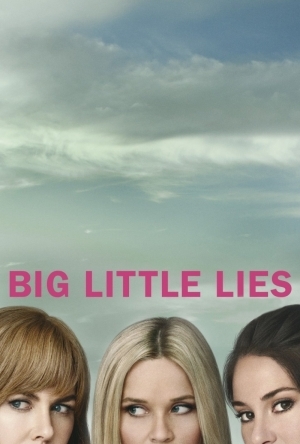

Rich White People Problems: The Show
As more news of Season 2 of this show seeps out, I decided to eventually get around to catching the first season of this highly praised and seemingly universally lauded show. I went in expecting greatness from this thing after reading all of the glowing critic's reviews. I am also a huge fan of many of the cast members involved in this project, so knowing nothing about the plot or subject matter the show is based on, I went in blind; excited to see what this series had in store.
The series opens with some ominous editing and vague hints that a major crime has been committed, which we eventually realise to be a murder. Then we are taken backwards tin time and are introduced to Reese Witherspoon's character Madeline, whom initially comes off as entitled and annoying, but you assume that this is going to have a purpose in her character's arc and she will grow on you. You are wrong to assume that as she is extremely irritating throughout the entire duration of the series, constantly interrupting other characters lines and sticking her oar in during group situations, just for the sake of clinging on to the spotlight and keeping herself at the centre of attention.
Thankfully, Nicole Kidman's character Celeste is less annoying and instead just a bit strange. We see pretty early on that she is a victim of domestic abuse at the hands of her much younger husband played by Alexander Skarsgard. At first this is pretty harrowing and sad to see, but for some reason, - and I don't want to kink shame anyone, - but it seems like she kind of likes it. The third main character we are introduced to is Jane, played by Shailene Woodley who immediately seems like damaged goods.
The "conflict," is then set up. After the first day at school we see a highly unrealistic scene play out as the most insensitive teacher in the world with zero foresight gathers all of the children in her class along with their parents outside the school gates. A girl has marks on her neck from being choked by one of the other kids. The teacher then asks the girl to point out the kid that did this to her (in front of the entire class and their parents!) and she points to Jane's son Ziggy. The boy denies any wrongdoing, but the girl who has been hurt's mother, (played by Laura Dern, whom I normally really like,) is a horrible, bitter bitch who responds to the situation by berating the accused boy in front of everyone, degrading his mother in the process for defending her child and not "making," him apologise.
*Insert Peter Griffin "Oh my God, who the hell cares?" meme here.*
Yeah, this is the kind of schoolyard bullshit that this show expects us to treat as a life or death issue. The whole thing is full of non-issues and petty whines centred around 'he said/she said,' nonsense. Then we are supposed to relate to these immature, venomous parents who don't do anything to help the situation whatsoever. Meanwhile the show treats domestic abuse, - something that is a very real and threatening issue, - as just a weird kink in this oddball couple's relationship.
It is clear that all of these parents clearly care far more about self-image than they do about their own children, which makes all of them extremely gross and off putting as characters. They constantly make up excuses as if to try and justify themselves and claim that the bitchy, conniving choices that they make towards each other is for the sake of their kids, when it is clearly just to one up each other in pathetic, petty social warfare and childish beefs.
Website theodysseyonline.com has an article called, '13 Reasons Why Big Little Lies Is So Powerful.' I truly fail to see what is apparently so powerful and ground-breaking about this series. I'm not even sure what it is trying to say; that domestic abuse and rape are bad things done by evil people? Wow, what a brave and unique stance to take! I also resent the idea that everyone that says anything remotely negative about this show is a women-hating misogynist. I consider myself a left-leaning liberal and a feminist, I am a strong supporter of equal rights amongst all genders and races and I do regular work for a women's mental health charity, but I can still spot an overrated, hollow waste of 7 hours when I see one.
Overall, even though this season only last 7 episodes, it is not worth your time. After watching the first 2 episodes I thought about giving up on it, but then I thought about all of the glowing reviews and thought, 'no, surely this must get better.' Let me save you seven hours of your time; it doesn't. This is a melodramatic glorified soap opera that doesn't handle any of the issues that it tries to tackle well and it is filled, - to the point it is bursting at the seams, - with small scope issues and minor annoyances treated as life threatening scenarios, all the while brushing off the genuinely scary and potentially life threatening scenario of domestic abuse.
The series opens with some ominous editing and vague hints that a major crime has been committed, which we eventually realise to be a murder. Then we are taken backwards tin time and are introduced to Reese Witherspoon's character Madeline, whom initially comes off as entitled and annoying, but you assume that this is going to have a purpose in her character's arc and she will grow on you. You are wrong to assume that as she is extremely irritating throughout the entire duration of the series, constantly interrupting other characters lines and sticking her oar in during group situations, just for the sake of clinging on to the spotlight and keeping herself at the centre of attention.
Thankfully, Nicole Kidman's character Celeste is less annoying and instead just a bit strange. We see pretty early on that she is a victim of domestic abuse at the hands of her much younger husband played by Alexander Skarsgard. At first this is pretty harrowing and sad to see, but for some reason, - and I don't want to kink shame anyone, - but it seems like she kind of likes it. The third main character we are introduced to is Jane, played by Shailene Woodley who immediately seems like damaged goods.
The "conflict," is then set up. After the first day at school we see a highly unrealistic scene play out as the most insensitive teacher in the world with zero foresight gathers all of the children in her class along with their parents outside the school gates. A girl has marks on her neck from being choked by one of the other kids. The teacher then asks the girl to point out the kid that did this to her (in front of the entire class and their parents!) and she points to Jane's son Ziggy. The boy denies any wrongdoing, but the girl who has been hurt's mother, (played by Laura Dern, whom I normally really like,) is a horrible, bitter bitch who responds to the situation by berating the accused boy in front of everyone, degrading his mother in the process for defending her child and not "making," him apologise.
*Insert Peter Griffin "Oh my God, who the hell cares?" meme here.*
Yeah, this is the kind of schoolyard bullshit that this show expects us to treat as a life or death issue. The whole thing is full of non-issues and petty whines centred around 'he said/she said,' nonsense. Then we are supposed to relate to these immature, venomous parents who don't do anything to help the situation whatsoever. Meanwhile the show treats domestic abuse, - something that is a very real and threatening issue, - as just a weird kink in this oddball couple's relationship.
It is clear that all of these parents clearly care far more about self-image than they do about their own children, which makes all of them extremely gross and off putting as characters. They constantly make up excuses as if to try and justify themselves and claim that the bitchy, conniving choices that they make towards each other is for the sake of their kids, when it is clearly just to one up each other in pathetic, petty social warfare and childish beefs.
Website theodysseyonline.com has an article called, '13 Reasons Why Big Little Lies Is So Powerful.' I truly fail to see what is apparently so powerful and ground-breaking about this series. I'm not even sure what it is trying to say; that domestic abuse and rape are bad things done by evil people? Wow, what a brave and unique stance to take! I also resent the idea that everyone that says anything remotely negative about this show is a women-hating misogynist. I consider myself a left-leaning liberal and a feminist, I am a strong supporter of equal rights amongst all genders and races and I do regular work for a women's mental health charity, but I can still spot an overrated, hollow waste of 7 hours when I see one.
Overall, even though this season only last 7 episodes, it is not worth your time. After watching the first 2 episodes I thought about giving up on it, but then I thought about all of the glowing reviews and thought, 'no, surely this must get better.' Let me save you seven hours of your time; it doesn't. This is a melodramatic glorified soap opera that doesn't handle any of the issues that it tries to tackle well and it is filled, - to the point it is bursting at the seams, - with small scope issues and minor annoyances treated as life threatening scenarios, all the while brushing off the genuinely scary and potentially life threatening scenario of domestic abuse.
Heather Cranmer (2721 KP) rated Broken Symmetry in Books
Jun 7, 2018

(This review can be found on my blog <a href=http://themisadventuresofatwentysomething.blogspot.com/">The (Mis)Adventures of a Twenty-Something Year Old Girl</a> at the end of October).
The blurb to this book sounded super intriguing, and I knew right away that I had to read it. Luckily, I was right about it being intriguing even if the blurb was a little off.
Blair Adams' dad disappeared 12 years ago without a trace. One day, he mysteriously shows up coughing up blood and making no sense in what he says. He tells Blair that she was the one that actually vanished for 12 years, not him. When Blair's father dies suddenly, Blair makes it her mission to find out what happened to him. She decides to start interning where her father worked to try to make sense of everything. There, she finds out she has two extra sets of chromosomes and that she can crossover into a reflection by using a mirror. However, nothing is as straightforward as it may seem, and Blair may just meet the same fate as her father.
The title is definitely interesting. After reading the blurb, the title stood out to me more. I think Broken Symmetry is a fantastic choice for a title as this is what the book's main focus is.
I think the cover is pretty but boring. It doesn't really give its readers a clue as to what the book is going to be about other then some girl is going to be in it. I wish this would've had a more sci-fi feel to it. I would've also have liked to see something about mirrors or reflections as this is what the book focuses on.
The world building is decent enough although I couldn't get a real picture of it with all that scientific jargon which just confused me more than anything. There's also one scene in the book that involves a severed appendage and to save you from some mini spoilers, let's just say that it didn't seem medically possible due to how much time had elapsed. However, I'm not a doctor so maybe I'm wrong. Also, when the characters would cross over into a mirror, shouldn't their reflection have been right there on the other side? Perhaps I'm just over thinking things.
I definitely enjoyed the pacing! I felt that it takes off right way and just gets faster and faster. I was totally hooked the whole time! I couldn't wait to finish this book to see what would happen next although I was disappointed when it did end because I was totally enjoying it.
The plot was definitely grabbed my attention. I like the whole idea of being able to enter a parallel universe just by going through a mirror. It's a little bit scary to think about though. I kept wondering if I was just a reflection, so the plot line is one that certainly makes you think. I also enjoyed the sub-plot going on between Blair and Damian. There's not a hardcore romance sub-plot between the two, but there's definitely some romance in this book. I must mention that there's a couple of plot twists in this book. One was fairly easy to figure out especially as Blair kept being told that she was the one thing that didn't belong. The other twist was a bit more difficult for me to figure out.
I loved, loved, loved the characters! I loved how Blair went from the pretty, popular girl to hardcore girl fairly quickly just to find out what happened to her father. I loved her sarcasm and wit. She was super funny, and I just all around enjoyed reading about her. I also liked Damian with his sarcasm and wit that was enough to match Blair's. I loved his devil may care attitude about crossing over, but I would've liked to learn more about his back story such as how and why he ended up where he did. Mr. Donovan was also an interesting character. He came across as a caring father figure and mentor. He seemed very intelligent as well. I would've liked to read more about Amy though. I actually found her a bit fascinating.
As for the dialogue, it was extremely confusing due to all the scientific jargon. Most of the time, I ended up not really understanding what was going on because of it. I know Mr. Donovan is a scientist and supposed to be very intelligent, but the majority of the readers aren't going to understand all that scientific lingo. I was really surprised Blair understood it because I didn't understand one word of it really. Other then all the scientific mumbo jumbo, the dialogue is very interesting. I loved the banter between Blair and Damian the most. There are a few swear words in this book as well.
Overall, Broken Symmetry by Dan Rix is a truly interesting albeit scary read. It does leave you thinking what if" long after you've finished read it. I think if there wasn't so much scientific wording used, this could've been a 5 star read, but unfortunately, the dialogue is what lets it down a bit.
I'd recommend this book to those aged 15+ who like to ponder over things as well as those that want to get immersed in an interesting read.
(I won this book in paperback form through the Goodreads First Reads Program).
The blurb to this book sounded super intriguing, and I knew right away that I had to read it. Luckily, I was right about it being intriguing even if the blurb was a little off.
Blair Adams' dad disappeared 12 years ago without a trace. One day, he mysteriously shows up coughing up blood and making no sense in what he says. He tells Blair that she was the one that actually vanished for 12 years, not him. When Blair's father dies suddenly, Blair makes it her mission to find out what happened to him. She decides to start interning where her father worked to try to make sense of everything. There, she finds out she has two extra sets of chromosomes and that she can crossover into a reflection by using a mirror. However, nothing is as straightforward as it may seem, and Blair may just meet the same fate as her father.
The title is definitely interesting. After reading the blurb, the title stood out to me more. I think Broken Symmetry is a fantastic choice for a title as this is what the book's main focus is.
I think the cover is pretty but boring. It doesn't really give its readers a clue as to what the book is going to be about other then some girl is going to be in it. I wish this would've had a more sci-fi feel to it. I would've also have liked to see something about mirrors or reflections as this is what the book focuses on.
The world building is decent enough although I couldn't get a real picture of it with all that scientific jargon which just confused me more than anything. There's also one scene in the book that involves a severed appendage and to save you from some mini spoilers, let's just say that it didn't seem medically possible due to how much time had elapsed. However, I'm not a doctor so maybe I'm wrong. Also, when the characters would cross over into a mirror, shouldn't their reflection have been right there on the other side? Perhaps I'm just over thinking things.
I definitely enjoyed the pacing! I felt that it takes off right way and just gets faster and faster. I was totally hooked the whole time! I couldn't wait to finish this book to see what would happen next although I was disappointed when it did end because I was totally enjoying it.
The plot was definitely grabbed my attention. I like the whole idea of being able to enter a parallel universe just by going through a mirror. It's a little bit scary to think about though. I kept wondering if I was just a reflection, so the plot line is one that certainly makes you think. I also enjoyed the sub-plot going on between Blair and Damian. There's not a hardcore romance sub-plot between the two, but there's definitely some romance in this book. I must mention that there's a couple of plot twists in this book. One was fairly easy to figure out especially as Blair kept being told that she was the one thing that didn't belong. The other twist was a bit more difficult for me to figure out.
I loved, loved, loved the characters! I loved how Blair went from the pretty, popular girl to hardcore girl fairly quickly just to find out what happened to her father. I loved her sarcasm and wit. She was super funny, and I just all around enjoyed reading about her. I also liked Damian with his sarcasm and wit that was enough to match Blair's. I loved his devil may care attitude about crossing over, but I would've liked to learn more about his back story such as how and why he ended up where he did. Mr. Donovan was also an interesting character. He came across as a caring father figure and mentor. He seemed very intelligent as well. I would've liked to read more about Amy though. I actually found her a bit fascinating.
As for the dialogue, it was extremely confusing due to all the scientific jargon. Most of the time, I ended up not really understanding what was going on because of it. I know Mr. Donovan is a scientist and supposed to be very intelligent, but the majority of the readers aren't going to understand all that scientific lingo. I was really surprised Blair understood it because I didn't understand one word of it really. Other then all the scientific mumbo jumbo, the dialogue is very interesting. I loved the banter between Blair and Damian the most. There are a few swear words in this book as well.
Overall, Broken Symmetry by Dan Rix is a truly interesting albeit scary read. It does leave you thinking what if" long after you've finished read it. I think if there wasn't so much scientific wording used, this could've been a 5 star read, but unfortunately, the dialogue is what lets it down a bit.
I'd recommend this book to those aged 15+ who like to ponder over things as well as those that want to get immersed in an interesting read.
(I won this book in paperback form through the Goodreads First Reads Program).
Hazel (1853 KP) rated Small Great Things in Books
Dec 7, 2018
Jodi Picoult has been my favourite author since I first came across her novels in 2008. With twenty-three novels under her belt, she continues to delight readers with her page-turning stories. Most of Picoult’s books contain a moral issue, often, but not always, in the form of medical ethics, as well as a hefty court case. Although following along similar lines, <i>Small Great Thing</i>s is a radical, revolutionary book, which, with great courage, Picoult has written with the intent to expose the reader to truths that most of us, as a society, are <s>intentionally</s> oblivious to.
The gist of the storyline is that a baby dies whilst under the care of a nurse, prompting the grieving parents to take her to court with the accusation of murder. Although that sounds like an interesting story, it barely begins to describe what the book is about. The character on trial, Ruth, is an African American labour and delivery nurse – something that in this day and age need not by an issue. On the other hand, the parents of the baby are White Supremacists: seriously racist with the belief that white people are the master race. The father, Turk, refuses to let his wife and child be treated by Ruth, however circumstances result in her being the only nurse available to watch Davis, when, unfortunately, he so happens to go into cardiac arrest. Although the reader knows that Ruth is not at fault, Turk insists she murdered his child – but is he accusing her of medical negligence, or punishing her for being black?
Three characters, all with different views and experience when it comes to racism, alternately narrate<i> Small Great Things</i>. Ruth and Turk represent the extremes at either side of the scale. Ruth experiences first hand the negative impact of prejudice in the American system and society, not only through this court case, but in everyday life as well. She also reveals the difficulties growing up in a predominately white environment, never feeling like she fitted in with her peers. Alternatively, Turk spent his teenage years attending KKK rallies, participating in a white power movement, and beating up anyone who was different: black, foreign, gay, Jewish and so forth.
The third character represents the majority of white people living in America. Kennedy is a public defender and the lawyer assigned to Ruth’s case. Like most of the population, she believes that she is not racist, and persuades Ruth to leave the colour of her skin out of the argument. However, as she gets to know her client, she begins to realize that it is nigh on impossible to ignore racial prejudice.
Picoult shocks the reader on two accounts: one, the way that people of colour have been, and still are, treated; and two, the revelation that an invisible empire of White Supremacists are living amongst us. Yet there is a third way in which Picoult provokes outrage – she indirectly accuses the reader of being racist, too.
There is always something to learn in a Jodi Picoult novel, for instance medical terminology, or the way in which a court trial is conducted. <i>Small Great Things</i> provides a lot more eye opening information than any of her previous books, unveiling facts about such a controversial subject.
Through Kennedy, the reader’s eyes are opened to the racial discrimination that we all turn a blind eye to. Ignored are the difficulties African Americans suffer when going shopping, applying for jobs, attending school, walking down the street, sitting on a bus, and so forth. Picoult asks me as a reader to think about how my life has been affected by racial discrimination: being served politely in shops because I am white, not having my ethnicity questioned when applying for college etc. Living in Britain I have not experienced openly hateful comments or behaviours towards people with a different skin tone – I used to believe this was primarily an American problem. Yet, <i>Small Great Things</i> has really made me think about the hierarchy of power within society, particularly in regards to the ethnicity of those at the top, compared with those at the bottom.
Jodi Picoult sat on the idea of writing a book about racism for well over a decade, yet it is particularly apt that it is published now, with the current predicaments America is facing. Although we have come a long way in attempts to achieve equality for all – compare the trial in <i>To Kill A Mockingbird</i> to Picoult’s version – recent events have revealed that we are no where near.
<i>Small Great Things</i> will shock everyone who reads it regardless of their ethnicity and so forth. Many may find it uncomfortable to read, become upset or outraged, and even feel like they are being directly targeted. If this is the case, then good – it should do that. Everyone needs to read this book. On the one hand it is a brilliant, well told story with a beautiful, almost poetic narrative, and on the other, it causes us to face up to the issues we are forever making light of or overlooking entirely. We have grown up believing that racism is a form of hatred when, actually, it is about power. However <i>Small Great Things </i>makes you feel, it is definitely worth reading, especially for the satisfying ending – one that you do not see coming.
The gist of the storyline is that a baby dies whilst under the care of a nurse, prompting the grieving parents to take her to court with the accusation of murder. Although that sounds like an interesting story, it barely begins to describe what the book is about. The character on trial, Ruth, is an African American labour and delivery nurse – something that in this day and age need not by an issue. On the other hand, the parents of the baby are White Supremacists: seriously racist with the belief that white people are the master race. The father, Turk, refuses to let his wife and child be treated by Ruth, however circumstances result in her being the only nurse available to watch Davis, when, unfortunately, he so happens to go into cardiac arrest. Although the reader knows that Ruth is not at fault, Turk insists she murdered his child – but is he accusing her of medical negligence, or punishing her for being black?
Three characters, all with different views and experience when it comes to racism, alternately narrate<i> Small Great Things</i>. Ruth and Turk represent the extremes at either side of the scale. Ruth experiences first hand the negative impact of prejudice in the American system and society, not only through this court case, but in everyday life as well. She also reveals the difficulties growing up in a predominately white environment, never feeling like she fitted in with her peers. Alternatively, Turk spent his teenage years attending KKK rallies, participating in a white power movement, and beating up anyone who was different: black, foreign, gay, Jewish and so forth.
The third character represents the majority of white people living in America. Kennedy is a public defender and the lawyer assigned to Ruth’s case. Like most of the population, she believes that she is not racist, and persuades Ruth to leave the colour of her skin out of the argument. However, as she gets to know her client, she begins to realize that it is nigh on impossible to ignore racial prejudice.
Picoult shocks the reader on two accounts: one, the way that people of colour have been, and still are, treated; and two, the revelation that an invisible empire of White Supremacists are living amongst us. Yet there is a third way in which Picoult provokes outrage – she indirectly accuses the reader of being racist, too.
There is always something to learn in a Jodi Picoult novel, for instance medical terminology, or the way in which a court trial is conducted. <i>Small Great Things</i> provides a lot more eye opening information than any of her previous books, unveiling facts about such a controversial subject.
Through Kennedy, the reader’s eyes are opened to the racial discrimination that we all turn a blind eye to. Ignored are the difficulties African Americans suffer when going shopping, applying for jobs, attending school, walking down the street, sitting on a bus, and so forth. Picoult asks me as a reader to think about how my life has been affected by racial discrimination: being served politely in shops because I am white, not having my ethnicity questioned when applying for college etc. Living in Britain I have not experienced openly hateful comments or behaviours towards people with a different skin tone – I used to believe this was primarily an American problem. Yet, <i>Small Great Things</i> has really made me think about the hierarchy of power within society, particularly in regards to the ethnicity of those at the top, compared with those at the bottom.
Jodi Picoult sat on the idea of writing a book about racism for well over a decade, yet it is particularly apt that it is published now, with the current predicaments America is facing. Although we have come a long way in attempts to achieve equality for all – compare the trial in <i>To Kill A Mockingbird</i> to Picoult’s version – recent events have revealed that we are no where near.
<i>Small Great Things</i> will shock everyone who reads it regardless of their ethnicity and so forth. Many may find it uncomfortable to read, become upset or outraged, and even feel like they are being directly targeted. If this is the case, then good – it should do that. Everyone needs to read this book. On the one hand it is a brilliant, well told story with a beautiful, almost poetic narrative, and on the other, it causes us to face up to the issues we are forever making light of or overlooking entirely. We have grown up believing that racism is a form of hatred when, actually, it is about power. However <i>Small Great Things </i>makes you feel, it is definitely worth reading, especially for the satisfying ending – one that you do not see coming.

Gareth von Kallenbach (980 KP) rated End of Watch (2012) in Movies
Aug 7, 2019
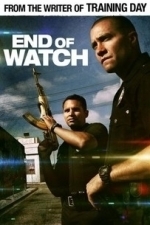
Director/Writer David Ayer (Street Kings, Training day) once again takes us into the world of the Los Angeles police department in the new movie End of Watch. Only this time rather than go in the corrupt police officer direction he has gone before, Ayer instead takes audiences on a honest and somewhat realistic emotionally charged ride along with two young and confident LAPD patrolmen.
While the story in this film is as simple as two cops over reaching their pay grades causing them to get on a drug cartels hit list. The film is more like an unrated extended episode of the TV series Cops, focusing on the everyday encounters of our heroes as they patrol south central LA. These encounters range from calls for lost children, domestic disturbance, and noise violations, albeit a bit exaggerated in these and several other incidents. Still the various types of encounters cause the film to feel like a true ride along into the lives of these LAPD cops. Additionally the use of the handheld “found footage” film style works surprisingly well at giving the movie that TV episodic style that makes the overall experience feel realistic. That being said, there are a few scenes where it is not clear who is holding the camera or where the shot is coming from, however these scenes are barely noticeable because of the excellent performances by our protagonists that keeps our interest on what they are saying and doing on screen rather than who is holding the camera.
Officer Bryan Taylor (Jake Gyllenhaal, Source Code) is our main protagonist of this movie. The ex-marine turned cop has to take an art elective in his pre-law studies and decides to take a documentary film class and take us on the inside of the LAPD. Gyllenhaal ‘s performance embodies Taylor as the good natured ambitious officer wanting more in his life of relationships and career. It would be easy for this character to be the traditional good cop in movies like this however given the found footage film style we instead find that Taylor, while good, can also be a complete “jerk” cop who is quick to anger and use brutish force when he deems necessary. This only helps solidify the rawness and reality of this film which pays a nod to the difficult nature of this job for real life police officers. Gyllenhaal gives yet another outstanding performance in his career causing us to grow attached to his character and respect him.
In addition Michel Pena (Crash) delivers a fantastic performance as Taylor’s partner and best friend Officer Mike Zavala. Pena embodies the other side to Gyllenhaal’s “jerk” cop by with his own good natured, simple man who is quick to become a bull when pushed. No more is this better shown in a scene where Zavala and a gang member get into a war of words and caused Zavala to drop his gun and badge and fight man to man to settle their dispute in the “street” way. Thus earning respect from that particular gang member.
Together Gyllenhaal and Pena share the screen wonderfully. Their relationship seems effortless and natural as if they were actually partners and best friends. You can tell they are having fun on set working together and it shows in their performance together as they really get a sense that they are more than partners and friends but are in fact, brothers. Their relationship and characters are only developed further as we watch Taylor pursue a deeper intellectual relationship with scientist Janet (Anna Kendrick, Up In The Air) and Zavala through the birth of his first born from wife Gabby (Natalie Martinez, Death Race). Kendrick and Martinez give believable performances as love interests to our heroes that show us a more human and softer side of these testosterone filled officers who will do whatever it takes to uphold the law. Throw in a strong supporting cast of other police officers led by Frank Grillo (Warrior) who plays the LAPD’s sergeant and you have a performance where we not only care about our heroes but we see the brotherhood of the police force in general.
One thing that I was not expecting from the film is the amount of moments where the audience literally laughed out loud. That is not to say that this is a comedy, in fact it is far from it. But the quick witted jokes and verbal jabs by our onscreen partners help alleviate some of the heavy emotional scenes of the movie. I felt that these characters used that good natured humor to keep themselves from going off of the deep end in handling all of the gruesome encounters they witness. These well placed laughs helped the audience deal with these gruesome scenes as well and helped strengthen our bond with these brothers.
All in all, this movie is a buddy cop film on steroids. While there is not much of a traditional story arch, this helps develop the realistic feel more like an unrated extended episode of Cops. That being said Gyllenhaal and Pena deliver a fantastic performance together. They have a real connection that makes you believe they have been partners for years and consider each other brothers. Add in a solid ensemble cast and the overall experience is worth the price of admission. However those who grow motion sick from found footage films may want to stay clear as there is a definite lack of steady cam
While the story in this film is as simple as two cops over reaching their pay grades causing them to get on a drug cartels hit list. The film is more like an unrated extended episode of the TV series Cops, focusing on the everyday encounters of our heroes as they patrol south central LA. These encounters range from calls for lost children, domestic disturbance, and noise violations, albeit a bit exaggerated in these and several other incidents. Still the various types of encounters cause the film to feel like a true ride along into the lives of these LAPD cops. Additionally the use of the handheld “found footage” film style works surprisingly well at giving the movie that TV episodic style that makes the overall experience feel realistic. That being said, there are a few scenes where it is not clear who is holding the camera or where the shot is coming from, however these scenes are barely noticeable because of the excellent performances by our protagonists that keeps our interest on what they are saying and doing on screen rather than who is holding the camera.
Officer Bryan Taylor (Jake Gyllenhaal, Source Code) is our main protagonist of this movie. The ex-marine turned cop has to take an art elective in his pre-law studies and decides to take a documentary film class and take us on the inside of the LAPD. Gyllenhaal ‘s performance embodies Taylor as the good natured ambitious officer wanting more in his life of relationships and career. It would be easy for this character to be the traditional good cop in movies like this however given the found footage film style we instead find that Taylor, while good, can also be a complete “jerk” cop who is quick to anger and use brutish force when he deems necessary. This only helps solidify the rawness and reality of this film which pays a nod to the difficult nature of this job for real life police officers. Gyllenhaal gives yet another outstanding performance in his career causing us to grow attached to his character and respect him.
In addition Michel Pena (Crash) delivers a fantastic performance as Taylor’s partner and best friend Officer Mike Zavala. Pena embodies the other side to Gyllenhaal’s “jerk” cop by with his own good natured, simple man who is quick to become a bull when pushed. No more is this better shown in a scene where Zavala and a gang member get into a war of words and caused Zavala to drop his gun and badge and fight man to man to settle their dispute in the “street” way. Thus earning respect from that particular gang member.
Together Gyllenhaal and Pena share the screen wonderfully. Their relationship seems effortless and natural as if they were actually partners and best friends. You can tell they are having fun on set working together and it shows in their performance together as they really get a sense that they are more than partners and friends but are in fact, brothers. Their relationship and characters are only developed further as we watch Taylor pursue a deeper intellectual relationship with scientist Janet (Anna Kendrick, Up In The Air) and Zavala through the birth of his first born from wife Gabby (Natalie Martinez, Death Race). Kendrick and Martinez give believable performances as love interests to our heroes that show us a more human and softer side of these testosterone filled officers who will do whatever it takes to uphold the law. Throw in a strong supporting cast of other police officers led by Frank Grillo (Warrior) who plays the LAPD’s sergeant and you have a performance where we not only care about our heroes but we see the brotherhood of the police force in general.
One thing that I was not expecting from the film is the amount of moments where the audience literally laughed out loud. That is not to say that this is a comedy, in fact it is far from it. But the quick witted jokes and verbal jabs by our onscreen partners help alleviate some of the heavy emotional scenes of the movie. I felt that these characters used that good natured humor to keep themselves from going off of the deep end in handling all of the gruesome encounters they witness. These well placed laughs helped the audience deal with these gruesome scenes as well and helped strengthen our bond with these brothers.
All in all, this movie is a buddy cop film on steroids. While there is not much of a traditional story arch, this helps develop the realistic feel more like an unrated extended episode of Cops. That being said Gyllenhaal and Pena deliver a fantastic performance together. They have a real connection that makes you believe they have been partners for years and consider each other brothers. Add in a solid ensemble cast and the overall experience is worth the price of admission. However those who grow motion sick from found footage films may want to stay clear as there is a definite lack of steady cam
Gareth von Kallenbach (980 KP) rated The Thing (2011) in Movies
Aug 7, 2019

After the success of a videogame based on the original film, rumors of a sequel arose many times but never came to fruition, with creative differences between Universal and John Carpenter cited as the main reason. It was oft-speculated that Carpenter made a deal to write and produce a sequel provided he got to name has director. But when he opted to name himself director the studio balked and the project fell apart. In the aftermath, rumors of a miniseries on the SyfY channel arose along with the possibility of retelling the story with 20-somethings on a tropical island but (thankfully) they never saw the light of day.
Rather than do a sequel or remake, Universal opted to jump start the franchise with a prequel that covers the events leading up to the John Carpenter film. It is set in 1982 at a Norwegian research station in Antarctica shortly before the scientists make an amazing discovery. When they uncover an alien craft that had been buried in the ice for over 100,000 years, as well as a frozen crewmember from the craft, they quickly celebrate the scientific discovery of a lifetime.
Kate Lloyd (Mary Elizabeth Winstead), is recruited by a famed scientist to travel to the desolate continent to research the find. Told only that they are about to research an amazing discovery, Kate and a team of specialists arrive and are absolutely stunned by the magnitude of their discovery. Kate urges caution but is overridden by the expedition leader Dr. Halvorsan (Ulrich Thomsen), who insists on taking a tissue sample of the frozen creature encassed in a block of ice.
Later that evening while celebrating, the very much alive creature escapes from its icy prison and begins to systematically hunt the members of the research team. The creature is eventually trapped and burned which causes some consternation over the loss of the creature for further scientific study, but many in the camp applaud its loss after seeing firsthand the destruction it is capable of.
After a bizarre series of events, Kate makes the startling discovery that the cells of the creature are able to imitate and perfectly replicate any thing that it comes in contact with. As a result, not only is the creature very much alive, but the individuals in the camp may no longer be human. Trapped in a remote location with an advancing winter storm, suspicions and paranoia go through the roof as the survivors are pitted against one another, unsure of who is still human. What follows is a high-octane adventure awash in action and grisly special-effects as the two species are locked in the ultimate battle for survival.
The film has a good supporting cast and Joel Edgerton does solid supporting work as an American helicopter pilot assigned to the camp. Eric Christian Olsen provides a steadying presence as a research assistant but his character is not as developed as it could be. It is known that he and Kate know each other but their past history is undefined which makes their relationship a bit puzzling in the film especially when the survivors begin to pick sides.
While the movie is not going to make fans forget the original, it is a very worthy companion piece. As the film was winding down I found myself checking off a couple of inconsistencies with the original film, but was very pleasantly surprised when this was all explained during the end credits which perfectly synced the end of this film with the opening of John Carpenter’s classic.
In many ways the weakness of film is due to the success of John Carpenter’s previous film, in that the creature is not that much of a mystery this time around. Part of the suspense of the previous film was not knowing how the creature operated nor how it was capable of infecting and replicating numerous individuals.
This time around the suspense is lost due to the familiarity with the creature. As a result, director Matthijs van Heijningen focused his efforts on a more action adventure oriented film that gave very little time for character development. We are not told very much about many of the characters in the film as they simply exist to serve as potential victims for the creature. All one really needs to know is they are scientists or support staff as aside from a handful of characters we’re not really given much reason to care whether they survive.
Visually the film is sharp and it is clear that a lot of attention was paid to replicate the look of the previous film. The shots of vast fields of ice and snow emphasized the remote and isolated setting that the characters find themselves in and served as a reminder that danger lurks all around. The special-effects have obviously been upgraded since 1982 and it was nice to see that the creative elements did not go overboard on CGI effects, and actually used puppetry and animatronics to provide updated creature effects that were still in keeping with the look and tone from the previous film.
While the film is not likely to reach the iconic status of the previous film, it is still a worthy companion piece that has enough action and effects to keep it interesting to fans of the series – just so long as they keep their expectations reasonable and do not expect a film on par with the previous one.
Rather than do a sequel or remake, Universal opted to jump start the franchise with a prequel that covers the events leading up to the John Carpenter film. It is set in 1982 at a Norwegian research station in Antarctica shortly before the scientists make an amazing discovery. When they uncover an alien craft that had been buried in the ice for over 100,000 years, as well as a frozen crewmember from the craft, they quickly celebrate the scientific discovery of a lifetime.
Kate Lloyd (Mary Elizabeth Winstead), is recruited by a famed scientist to travel to the desolate continent to research the find. Told only that they are about to research an amazing discovery, Kate and a team of specialists arrive and are absolutely stunned by the magnitude of their discovery. Kate urges caution but is overridden by the expedition leader Dr. Halvorsan (Ulrich Thomsen), who insists on taking a tissue sample of the frozen creature encassed in a block of ice.
Later that evening while celebrating, the very much alive creature escapes from its icy prison and begins to systematically hunt the members of the research team. The creature is eventually trapped and burned which causes some consternation over the loss of the creature for further scientific study, but many in the camp applaud its loss after seeing firsthand the destruction it is capable of.
After a bizarre series of events, Kate makes the startling discovery that the cells of the creature are able to imitate and perfectly replicate any thing that it comes in contact with. As a result, not only is the creature very much alive, but the individuals in the camp may no longer be human. Trapped in a remote location with an advancing winter storm, suspicions and paranoia go through the roof as the survivors are pitted against one another, unsure of who is still human. What follows is a high-octane adventure awash in action and grisly special-effects as the two species are locked in the ultimate battle for survival.
The film has a good supporting cast and Joel Edgerton does solid supporting work as an American helicopter pilot assigned to the camp. Eric Christian Olsen provides a steadying presence as a research assistant but his character is not as developed as it could be. It is known that he and Kate know each other but their past history is undefined which makes their relationship a bit puzzling in the film especially when the survivors begin to pick sides.
While the movie is not going to make fans forget the original, it is a very worthy companion piece. As the film was winding down I found myself checking off a couple of inconsistencies with the original film, but was very pleasantly surprised when this was all explained during the end credits which perfectly synced the end of this film with the opening of John Carpenter’s classic.
In many ways the weakness of film is due to the success of John Carpenter’s previous film, in that the creature is not that much of a mystery this time around. Part of the suspense of the previous film was not knowing how the creature operated nor how it was capable of infecting and replicating numerous individuals.
This time around the suspense is lost due to the familiarity with the creature. As a result, director Matthijs van Heijningen focused his efforts on a more action adventure oriented film that gave very little time for character development. We are not told very much about many of the characters in the film as they simply exist to serve as potential victims for the creature. All one really needs to know is they are scientists or support staff as aside from a handful of characters we’re not really given much reason to care whether they survive.
Visually the film is sharp and it is clear that a lot of attention was paid to replicate the look of the previous film. The shots of vast fields of ice and snow emphasized the remote and isolated setting that the characters find themselves in and served as a reminder that danger lurks all around. The special-effects have obviously been upgraded since 1982 and it was nice to see that the creative elements did not go overboard on CGI effects, and actually used puppetry and animatronics to provide updated creature effects that were still in keeping with the look and tone from the previous film.
While the film is not likely to reach the iconic status of the previous film, it is still a worthy companion piece that has enough action and effects to keep it interesting to fans of the series – just so long as they keep their expectations reasonable and do not expect a film on par with the previous one.

Lee (2222 KP) rated Titans - Season 1 in TV
Feb 4, 2019
Outstanding. This is DC done right
As the DC movie universe continues to struggle with consistency and quality, it is so refreshing to finally come across a DC TV show as entertaining and as epic as this one. A show which, in my opinion, manages to get the tone and style just right, restrained at times, but constantly teasing much bigger and much more exciting possibilities. I struggle with most superhero TV shows, failing to get more than a season into shows like The Flash, or more than just a handful of episodes into shows like Daredevil or Luke Cage, but this one just got me hooked. It kept me engaged and enthralled through every single episode, and managed to tweak every geeky bone in my body during its final episode. It had a decent cliffhanger finale, an interesting post-credits scene, and I absolutely loved it. What Titans manages to do extremely well is with the introduction of its main characters. It does this slowly, but enjoyably, leaving much of their character traits and abilities to be discovered throughout the season. It takes a while for them all to come together as a team, but even when they do it's more about them discovering who they all are individually and how to deal with the dangerous situations they find themselves in than just kicking bad guy ass (although they manage to do plenty of that too!). Occasionally, an episode will end on a real cliffhanger, only for the next episode to go off on a tangent, exploring another character and their past. But it just works, developing and enriching the story rather than acting as unnecessary or frustrating season filler.
We kick things off by meeting Dick Grayson, or Batman sidekick Robin as he's more usually known. He's currently working as a detective in Detroit having left Gotham City about a year ago. When asked about his reasons for leaving Gotham, he puts it down to problems with a difficult partner, but he still likes to wear the Robin suit occasionally - picking up leads as part of his day job, then dealing out swift vigilante justice as Robin by night. The criminals can't quite take him seriously though - scouring the skies, wondering whether the more terrifying Batman is going to show up to help out his little sidekick. Robin can more than handle his own though, brutally taking care of business before growling "F*** Batman". Yep, if you hadn't already gathered, Titans is a much grittier show than animated show Teen Titans! This version is much darker - we get blood, we get violence, our heroes have sex and they also have potty mouths!
Next up is Rachel Roth, a teenager with purple hair who sleeps in a locked room with crucifixes affixed to the door, fearful of a dark entity living within her. She has a vision of Dick Grayson, who she has never met, witnessing the moment from his childhood when his parents died during their acrobat act, the Flying Graysons. Rachel is being pursued by a number of individuals for reasons that are unclear for much of the season and, following the murder of her guardian, heads to Detroit where she crosses paths with Dick. Meanwhile, a fiery redhead named Koriand'r awakens in a crashed car in Austria, with no memory of who she is. She learns that she has some pretty good combat skills and some cool superhuman abilities. She also discovers that she is on the hunt for Rachel Roth, but she has no idea why. There is also a teenage boy called Gar, who is able to shape shift into a green tinged tiger, but only when he's naked!
Along the way, as these core characters all come together, we're introduced to a variety of other weird and wonderful characters from comic book history. Some, such as Hawk and Dove, have a recurring and increasingly important role, earning one of the more enjoyable episodes later on in the season when we delve into their backstory. Other characters, such as Doom Patrol and The Nuclear Family are briefly introduced, only to disappear for now - although I'm sure we'll be seeing them all again in future seasons (hopefully). But it's when new Robin Jason Todd appeared on the scene, and then Wonder Woman sidekick Wonder Girl, that I really started geeking out. New Robin is younger and much more sadistic than his predecessor (Robin 2.0 as he puts it), while Wonder Girl now leads a much quieter life. Her and Dick also share a past, with both of them being sidekicks, and we get a brief glimpse of her abilities a couple of times throughout the season. Hopefully with a lot more to come next season.
And then we come to the finale, with things coming to a head and with a serious threat to our planet looming. Dick heads back to Gotham where Commissioner Gordon has been murdered, the streets are rife with crime and Batman has gone off the rails - on a mission to kill The Joker and all of his enemies in Arkham Asylum. I loved this episode. The Joker, Batman, Wayne Manor, the Batcave - all of these things we're so used to seeing in countless movies and TV shows over the years, but in this context and as part of this world, this huge story that's been unfolding over 11 episodes, there was something about it that just blew me away. As mentioned before, the show also ends on a fantastic cliffhanger and teases some interesting additions post credits. I cannot wait for more of this!
We kick things off by meeting Dick Grayson, or Batman sidekick Robin as he's more usually known. He's currently working as a detective in Detroit having left Gotham City about a year ago. When asked about his reasons for leaving Gotham, he puts it down to problems with a difficult partner, but he still likes to wear the Robin suit occasionally - picking up leads as part of his day job, then dealing out swift vigilante justice as Robin by night. The criminals can't quite take him seriously though - scouring the skies, wondering whether the more terrifying Batman is going to show up to help out his little sidekick. Robin can more than handle his own though, brutally taking care of business before growling "F*** Batman". Yep, if you hadn't already gathered, Titans is a much grittier show than animated show Teen Titans! This version is much darker - we get blood, we get violence, our heroes have sex and they also have potty mouths!
Next up is Rachel Roth, a teenager with purple hair who sleeps in a locked room with crucifixes affixed to the door, fearful of a dark entity living within her. She has a vision of Dick Grayson, who she has never met, witnessing the moment from his childhood when his parents died during their acrobat act, the Flying Graysons. Rachel is being pursued by a number of individuals for reasons that are unclear for much of the season and, following the murder of her guardian, heads to Detroit where she crosses paths with Dick. Meanwhile, a fiery redhead named Koriand'r awakens in a crashed car in Austria, with no memory of who she is. She learns that she has some pretty good combat skills and some cool superhuman abilities. She also discovers that she is on the hunt for Rachel Roth, but she has no idea why. There is also a teenage boy called Gar, who is able to shape shift into a green tinged tiger, but only when he's naked!
Along the way, as these core characters all come together, we're introduced to a variety of other weird and wonderful characters from comic book history. Some, such as Hawk and Dove, have a recurring and increasingly important role, earning one of the more enjoyable episodes later on in the season when we delve into their backstory. Other characters, such as Doom Patrol and The Nuclear Family are briefly introduced, only to disappear for now - although I'm sure we'll be seeing them all again in future seasons (hopefully). But it's when new Robin Jason Todd appeared on the scene, and then Wonder Woman sidekick Wonder Girl, that I really started geeking out. New Robin is younger and much more sadistic than his predecessor (Robin 2.0 as he puts it), while Wonder Girl now leads a much quieter life. Her and Dick also share a past, with both of them being sidekicks, and we get a brief glimpse of her abilities a couple of times throughout the season. Hopefully with a lot more to come next season.
And then we come to the finale, with things coming to a head and with a serious threat to our planet looming. Dick heads back to Gotham where Commissioner Gordon has been murdered, the streets are rife with crime and Batman has gone off the rails - on a mission to kill The Joker and all of his enemies in Arkham Asylum. I loved this episode. The Joker, Batman, Wayne Manor, the Batcave - all of these things we're so used to seeing in countless movies and TV shows over the years, but in this context and as part of this world, this huge story that's been unfolding over 11 episodes, there was something about it that just blew me away. As mentioned before, the show also ends on a fantastic cliffhanger and teases some interesting additions post credits. I cannot wait for more of this!