

Chris Sawin (602 KP) rated District 9 (2009) in Movies
Jun 20, 2019
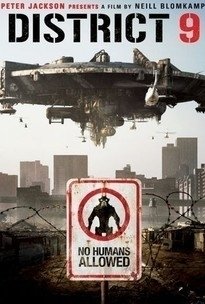


The MNU, who have no interest in the well-being of the aliens, decide they should relocate 1.8 million aliens to a new camp, District 10, located outside the Johannesburg city limits since the people of Johannesburg think the aliens have worn out their welcome. Wikus van der Mirwe is put in charge of evicting the aliens, but it's soon revealed that the aliens have been searching and building towards something the past two decades. Wikus is just trying to do his job the best that he can until he's exposed to a black fluid that was stored in an alien canister. Soon after, his world is turned upside down and he becomes the most wanted man in the world.
District 9 is one of the most advertised films of the year, probably due to Peter Jackson's involvement. The film seemed to materialize without much of a trace beforehand a few months ago with that first teaser trailer that included the interrogation of one of the aliens. A viral marketing campaign began as images of new posters and production stills found their way onto the internet. The buildup was giving the impression that it was one of the most incredible and original sci-fi films to ever grace the screen and, truth be told, it might just be.
The film starts off a bit slow at first using that documentary-style you've probably come to expect from the trailers, but the tension begins to rise as we begin to see more and more of the "prawns." It doesn't take long for things to get interesting and you know the film is building towards something big once the evictions start and Wikus is exposed. The most entertaining aspect of the film is the alien technology. When we're introduced to one of their weapons, wondering how much damage it's going to cause is half the fun. Then when you finally see it come into play, it's nothing short of extraordinary. The film definitely earns its R-rating. F-bombs are littered throughout the film, but it all seems like a natural response to the circumstances of what's happened with District 9. The gore is pretty ridiculous, too; ridiculous in a good way. Humans explode as blood and body chunks splatter everywhere. It's insane how many scenes make you go, "AUGH!" or "OHHHH!" in the film.
Everything else is top notch, as well. The actors are all pretty much unknown, which was a great route to take with a film like this. Not recognizing anyone in the film made it a lot more believable. There really isn't a bad actor in the bunch either, but Sharlto Copley as Wikus steals the film since we're around him the entire time. The scenes where he's on the phone with his wife are generally rather heartbreaking as you feel for what Wikus is going through and it rides on his performance. The story is also pretty incredible. It starts off rather simple with the aliens just wanting to go home and the MNU wanting to keep them around so they can discover the secrets of their technology, but it slowly unravels into something more. Perhaps the biggest element of the film is its special effects. They have to be rather astounding to make these aliens and their technology believable. Since Peter Jackson is involved, you can pretty much expect the CG to be superb. There was a scene or two that mainly involved one of the alien ships being a big part of the scene where the CG was noticeable. The effects looked generally as realistic as they needed to be 95% of the time though, which is a big thing in a film like this. Bad CG can ruin a good film. I Am Legend is a great example, but it's safe to say that most people won't find an issue with it in District 9.
District 9 is quite possibly the best sci-fi film I've seen in a long, long time. The only film that really rivals it is Moon, but I never thought 2009 would be such a good year for the sci-fi genre. District 9 delivers with incredible action sequences, fantastic special effects, a great story, and superb acting. I have no doubt in my mind that it'll be in my top five films of the year. It isn't every day that a film lives up to its hype, but this one surely does that and then some.

Gareth von Kallenbach (980 KP) rated End of Watch (2012) in Movies
Aug 7, 2019

While the story in this film is as simple as two cops over reaching their pay grades causing them to get on a drug cartels hit list. The film is more like an unrated extended episode of the TV series Cops, focusing on the everyday encounters of our heroes as they patrol south central LA. These encounters range from calls for lost children, domestic disturbance, and noise violations, albeit a bit exaggerated in these and several other incidents. Still the various types of encounters cause the film to feel like a true ride along into the lives of these LAPD cops. Additionally the use of the handheld “found footage” film style works surprisingly well at giving the movie that TV episodic style that makes the overall experience feel realistic. That being said, there are a few scenes where it is not clear who is holding the camera or where the shot is coming from, however these scenes are barely noticeable because of the excellent performances by our protagonists that keeps our interest on what they are saying and doing on screen rather than who is holding the camera.
Officer Bryan Taylor (Jake Gyllenhaal, Source Code) is our main protagonist of this movie. The ex-marine turned cop has to take an art elective in his pre-law studies and decides to take a documentary film class and take us on the inside of the LAPD. Gyllenhaal ‘s performance embodies Taylor as the good natured ambitious officer wanting more in his life of relationships and career. It would be easy for this character to be the traditional good cop in movies like this however given the found footage film style we instead find that Taylor, while good, can also be a complete “jerk” cop who is quick to anger and use brutish force when he deems necessary. This only helps solidify the rawness and reality of this film which pays a nod to the difficult nature of this job for real life police officers. Gyllenhaal gives yet another outstanding performance in his career causing us to grow attached to his character and respect him.
In addition Michel Pena (Crash) delivers a fantastic performance as Taylor’s partner and best friend Officer Mike Zavala. Pena embodies the other side to Gyllenhaal’s “jerk” cop by with his own good natured, simple man who is quick to become a bull when pushed. No more is this better shown in a scene where Zavala and a gang member get into a war of words and caused Zavala to drop his gun and badge and fight man to man to settle their dispute in the “street” way. Thus earning respect from that particular gang member.
Together Gyllenhaal and Pena share the screen wonderfully. Their relationship seems effortless and natural as if they were actually partners and best friends. You can tell they are having fun on set working together and it shows in their performance together as they really get a sense that they are more than partners and friends but are in fact, brothers. Their relationship and characters are only developed further as we watch Taylor pursue a deeper intellectual relationship with scientist Janet (Anna Kendrick, Up In The Air) and Zavala through the birth of his first born from wife Gabby (Natalie Martinez, Death Race). Kendrick and Martinez give believable performances as love interests to our heroes that show us a more human and softer side of these testosterone filled officers who will do whatever it takes to uphold the law. Throw in a strong supporting cast of other police officers led by Frank Grillo (Warrior) who plays the LAPD’s sergeant and you have a performance where we not only care about our heroes but we see the brotherhood of the police force in general.
One thing that I was not expecting from the film is the amount of moments where the audience literally laughed out loud. That is not to say that this is a comedy, in fact it is far from it. But the quick witted jokes and verbal jabs by our onscreen partners help alleviate some of the heavy emotional scenes of the movie. I felt that these characters used that good natured humor to keep themselves from going off of the deep end in handling all of the gruesome encounters they witness. These well placed laughs helped the audience deal with these gruesome scenes as well and helped strengthen our bond with these brothers.
All in all, this movie is a buddy cop film on steroids. While there is not much of a traditional story arch, this helps develop the realistic feel more like an unrated extended episode of Cops. That being said Gyllenhaal and Pena deliver a fantastic performance together. They have a real connection that makes you believe they have been partners for years and consider each other brothers. Add in a solid ensemble cast and the overall experience is worth the price of admission. However those who grow motion sick from found footage films may want to stay clear as there is a definite lack of steady cam

Kirk Bage (1775 KP) rated Roma (2018) in Movies
Mar 2, 2020 (Updated Mar 3, 2020)


Not that it didn’t get attention at the time of its release, it did, receiving 10 Oscar nominations and winning 3, for best foreign language film, director and cinematography, but it certainly wasn’t seen by as many people as it should have been, despite its presence on Netflix from the start. Having digested it now, and spending some time reading about how and why it was made, I feel a slight mission to recommend it to as many people as I can.
Based on Alfonso Cuarón’s own childhood in Mexico City, and his memories of his family and especially their housemaid, Liboria (Libo) Rodriguez, to whom the film is dedicated, it is a masterpiece labour of love that few directors ever achieve or even attempt to make. After a strong career of exceptional films, including Y Tu Mamá También, Children of Men and Gravity, it was the box office and critical success of the latter that gave Cuarón carte blanche to go and make whatever project he chose. Where many might have been tempted by the big money of superhero or fantasy movies (for which he had some experience with Harry Potter and the Prisoner of Azkaban) he went back to his roots and shot a very personal non-English film, in black and white, where no music exists except that which occurs naturally, and on the surface not much happens.
At least it feels like not much is happening, such is the naturalistic, almost improvised (although it wasn’t) style and pace; shot with a lens capturing detail and nuance with some of the most beautiful photography I have ever had the privilege to see. Truly, an awful lot is happening, but you have to feel and experience it, not simply be told it by the narrative. It takes a while for our Hollywood conditioned brains to accept this at first, and many might come to it and give up half an hour in because of that challenge. I can promise, however, there is not a single thing boring about this film, unless humanity is boring.
Oscar nominated lead Yalitza Aparicio as the shy, loving maid, Cleo, was not an actor before this film. She auditioned and was hand picked by Cuarón from hundreds of young women, without knowing who he was or what the film was about. Apparently, the film was shot in sequence so as not to confuse her emotionally on her extraordinary journey. She is so unassuming and natural that part of you falls in love with her immediately. In time, we almost come to forget we are watching an act at all, and almost become her, such is the empathy she evokes.
Which isn’t an easy ride, as we watch her be gently and then cruelly ignored, mistreated and used; climaxing in one of the most astonishingly painful and jaw-dropping scenes imaginable, and then a scene of such powerful redemption and humanity it instantly breaks the heart and lifts the soul. All the while she never asks for attention or love, but is just herself: a young woman living a difficult but beautiful life in a country and time full of turmoil, prejudice and social change.
The recreation of Mexico in 1970 is so breathtaking, it is hard to imagine at times we are not watching a documentary from that era. But, it is the detail the lens chooses to capture that reminds you this is a visual poem and a love-letter to a time, a place and a family far away in history and the memory of one man (represented by ten year old Carlos Peralta as Paco). At times it evokes the work of the very greatest film artists of all time: Bergman, Fellini, Hitchcock etc. Not one image is wasted or insignificant, from the reflection of the sky in water, to the dog-shit constantly lining the driveway. Everything is chosen and meaningful in the full context of the work.
There is no awkward exposition, no dramatic moments milked for all they are worth, no sequences of heightened excitement that manipulate us; simply truthful moments that hang in the air for what they are, leaving us to decide how we relate to them without ever preaching or teaching us how. In that way, it is a work of such maturity that I doubt many living directors could emulate it at all. The closest comparison I can think of is the personal passion Spielberg put into Shindler’s List, but really it is a moot comparison, and in fact owes much more to films like Haneke’s The White Ribbon.
Can it be faulted? Well, yes, certainly. But, honestly, I don’t see the point in trying. It is as close to perfection a small story of this kind can be. Importantly, I think it is an open film, that allows us to take from it whatever we like, relating to our own experiences and cares. For me, it said that any pain and hardship can be overcome, as long as there is love and beauty walking by its side. A message of no small importance. If you haven’t seen it, I urge you to do so. If you have, then please keep spreading the word. I believe it to be a genuine classic that will endure the criticism of many decades to come. Without a doubt in my mind something very special indeed.




Bob Mann (459 KP) rated The Post (2017) in Movies
Sep 29, 2021
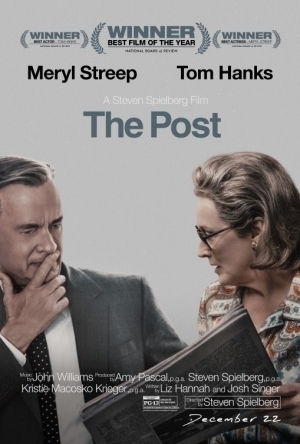
Nothing as it turns out. After, for me, the disappointment of “The BFG” here is Spielberg on firm ground and at the height of his game.
It’s 1971 and the New York Times is in trouble for publishing what became known as “The Pentagon Papers”: a damning account of multiple administration’s dodgy dealings around the Vietnam War, put together by Robert McNamara (Bruce Greenwood, “Star Trek: Into Darkness“) and meant for “posterity” – not for publication! Watching from the sidelines with frustration at their competitor’s scoop are the Washington Post’s editor Ben Bradlee (Tom Hanks, “Bridge of Spies“, “Inferno“) and the new owner Kay Graham (Meryl Streep, “Florence Foster Jenkins“, “Suffragette“). With immaculate timing, Graham is taking the paper public, so needs the newspaper embroiled in any sort of scandal like a hole in the head. But with the US First Amendment under pressure, will Graham and Bradlee put their business and their freedom at risk by publishing and being damned?
Bradlee (Tom Hanks) and Graham (Meryl Streep) in the Washington Post’s newsroom.
Both of the leads play characters that are quite strikingly out of character from their normal roles.
In a seamingly endless run of ‘kick-ass’ women in the movie driving seat, here I expected Streep to be in full “Iron Lady” mode, but in fact she starts the film as quite the opposite: nervous, timid, vascillating. For although the story is about “The Washington Post” and “The Pentagon Papers”, the real story is about Graham herself (Liz Hannah’s script is actually based on Graham’s autobiography). In many ways it’s about a woman, in a male world, overcoming her fear and finding her own voice. As has been demonstrated in many recent films (“Hidden Figures” for example) the working world for woman has changed so markedly since the 60’s and 70’s that it’s almost impossible to relate to these chavenistic attitudes. Graham is repeatedly downtrodden as “not good enough” by her underlings within earshot, and then thanks them “for their frankness”. When the women folk retire at dinner, to let the men-folk talk politics, Graham meekly goes with them. Even her father, for God’s sake, left the newspaper not to her but to her (now late) husband! It’s no surprise then that she is coming from a pretty low base of self-confidence, and her journey in the film – as expertly played by Streep – is an extraordinarily rousing one.
The real deal: Ben Bradlee and Kay Graham.
Hanks, normally the guy you’d most like to invite round for dinner (@tomhanks if you happen to be reading this sir, that’s a genuine invitation… we make a mean lasagne here!) also plays somewhat outside of his normal character here. As Bradlee, he is snappy, brusque and businesslike. Although I don’t think he could ever quite match the irascibility of the character’s portrayal by Jason Robards in the classic “All the President’s Men” – who could? – its a character with real screen presence.
The similarities with Alan J Pakula’s 1976 classic Watergate movie – one of my personal favourites – don’t stop there. The same sets that were once populated by Redford and Hoffman are gloriously reproduced with Spielberg and Janusz Kaminski delivering great tracking shots through the newsroom. (Watch out for Sacha Spielberg – daughter of Stephen and Kate Capshaw – who also turns up there delivering a package).
The scoop revealed: Odenkirk, Hanks and David Cross get the low-down.
The supporting cast includes Sarah Paulson (so memorable in “The Trial of O.J. Simpson”) as Bradlee’s wife Tony, Bradley Whitford (“The West Wing”, “Get Out“) and Tracy Letts (“The Big Short“) as two of Graham’s board advisors and Jesse Plemons (“The Program“, “Bridge of Spies“) as the lead legal advisor. Particularly impressive though is Bob Odenkirk (“Breaking Bad”) as Ben Bagdikian, Bradlee’s lead investigative reporter on the case: all stress, loose change and paranoia in his dealings with the leaky Daniel Ellsberg (Matthew Rhys).
Bagdikian (Bob Odenkirk) ordering a drink for himself and his travelling companion.
In a memorable piece of casting Richard Nixon is played by…. Richard Nixon. Although a silluohetted Curzon Dobell stalks the Oval office, the ex-president’s original phone recordings are played on the soundtrack. (There, I knew those recordings would be useful for something… thank heavens he kept them all!)
The film also demonstrates in fascinating style the newsprint business of yesteryear. When I click a button on my PC and a beautifully laser-printed page streams out of my Epson printer, it still seems like witchcraft to me! But it is extraordinary to think that newspapers in those days were put together by typesetters manually building up the pages from embossed metal letters laboriously slotted into a frame. Brilliantly evocative.
Ellsberg (Matthew Rhys) takes a risk.
If Spielberg has a fault, it is one of sentimentality – something that is pointed out in Susan Lacy’s superb HBO documentary on Spielberg (something I have yet to write a review on, but if you like Spielberg you should definitely seek out). Here he falls into that trap again, with an unnecessary bedroom scene between Graham and her daughter tipping the screenplay into mawkishness. It’s unnecessary since we don’t need the points raised rammed down our throats again. It’s something repeated in a rather bizarre final scene with Graham walking down the steps of the supreme court with admiring woman – only woman – watching her. These irritations tarnish for me what could have been a top-rated film.
But the movie is an impressive watch and older viewers, and anyone interested in American political history will, I think, love it. The film, especially with its nice epilogue, did make me immediately want to come home and put “All the President’s Men” on again… which is never a bad thing. Highly recommended.

Hadley (567 KP) rated Those Bones Are Not My Child in Books
Nov 12, 2019

Bambara writes not in a normal narrative - - - just telling a story from specific viewpoints, but she often breaks off into smash poetry to depict a character's state-of-mind, which, sometimes can be off putting for the reader, breaking the flow of the story. Yet, the use of smash poetry combined with the era and the heart breaking subject at hand, separates Those Bones Are Not My Child from every True Crime book I have ever read. But a note for fans of True Crime, this story is from the view point of the victims' families and the search they went through to try and catch the murderer(s), unlike most TC books, which follow the police through the investigation leading to, usually, the capture of the perpetrator. From living in Atlanta during the time of the murders, Bambara was able to reconstruct the life of a black family in 1980's Georgia, while focusing on the effect these terrible crimes had on the surrounding community. Bambara did an amazing job on what most writers cannot.
The amount of characters, specifically the fictional ones, are very well created. She describes just enough to give readers the ability to tell them apart, showing every now and then from their own viewpoints. Out of all the characters, I came to really like Zala's two other children: Kenti and Kofi. One particular scene shows the strain of Sonny's disappearance on their family: " Zala parked the comb again and sat back. 'Listen, you two.' Kofi dropped down onto his knees. 'The police and the newspapers don't know what the hell is going on, so they feel stupid, because they're supposed to know, they're trained to know, they're paid to know. It's their job. Understand? But it's hard for grown-ups to admit they're stupid, especially if they're professionals like police and reporters. So they blame the children. Or they ignore them and fill up the papers with the hostages in Iran. Understand? And now... Jesus... they've got people calling those kids juvenile delinquents.'
'Don't cry.' Kenti tried to lean into her lap and got pushed away.
'They don't know a damn thing and they act like they don't want to know. So they blame the kids 'cause they can't speak up for themselves. They say the kids had no business being outdoors, getting themselves in trouble.'
'You let us go outdoors.'
'Of course I do, baby. We go lots of places, 'cause a lot of people fought hard for our right to go any damn where we please. But when the children go out like they've a right to and some maniac grabs them, then it's the children's fault or the parents who should've been watching every minute, like we don't have to work like dogs just to put food on the table.'
Kofi walked on his knees towards the bed, but he didn't lean on her like he wanted 'cause she might push him away. So he just put his hand on the mattress next to hers."
During the Atlanta Child Murders, victims were random, except for that they were children from the same neighborhood, and they were African-American. At first, police didn't believe a serial murderer was going around abducting children, but rather that 'poor, broken' families were killing their own. In the Prologue, Bambara shows that the victims' families and private detectives came up with more ideas of the motive than the police did:
" White cops taking license in Black neighborhoods.
The Klan and other Nazi thugs on the rampage.
Diabolical scientists experimenting on Third World people.
Demonic cults engaging in human sacrifices.
A 'Nam vet unable to make the transition.
UFO aliens conducting exploratory surgery.
Whites avenging Dewey Baugus, a white youth beaten to death in spring '79, allegedly by Black youths.
Parents of a raped child running amok with 'justice.'
Porno filmmakers doing snuff flicks for entertainment.
A band of child molesters covering their tracks.
New drug forces killing the young (unwitting?) couriers of the old in a bid for turf.
Unreconstructed peckerwoods trying to topple the Black administration.
Plantation kidnappers of slave labor issuing the pink slip.
White mercenaries using Black targets to train death squadrons for overseas jobs and for domestic wars to come. "
All of these theories are explored with evidence in Those Bones Are Not My Child. One scene in Part III, Zala's cop friend, B.J. shows up to her house to tell her to stop bringing attention to the investigation, " 'That Eubanks woman - - - your husband's friend? - - - she said you were bringing in the TV networks to blow the case open. I thought we had an agreement to keep each other informed. This morning I find out through the grapevine that you parents got a medium stashed in a hotel here in town, some woman who's been making headlines up north with cases that supposedly have the authorities stumped. If you knew how much work has been done on this case - - - no, listen, don't interrupt me. Then I find out - - - and not from you - - - that some of you parents are planning to tour the country cracking on the investigation. That's not too smart. And you should have told me.' " These two may have been fictional characters, but in Bambara's Acknowledgments, she states that all scenarios were true, and that she made B.J. to tell about the actual police officers who were involved with the investigation.
The tension between the police and the public is felt throughout the entire story. Despite all of the work the citizen task force put in, police arrested a man named Wayne Williams for the murder of two adult victims (who, due to their mental age, which was stated to be that of children, were placed on the victims' list of the Atlanta Child Murders): " Wayne Williams, charged with the murder of twenty-seven-year-old Nathaniel Cater and implicated in the murder of the other adults and children on the official list..." Zala, having worked for almost a year at the STOP offices, she, along with most of the community, doubt that Williams was a lone killer or even the killer at all. Williams never stood trial for the childrens' murders, but the police informed the public that he did it, case closed - - - although, after Williams' arrest, children were still being abducted and their bodies were still being found. Even after Williams' trial and the guilty verdict for two adult victims, some people stuck around to continue to investigate and claim Williams a 'scapegoat' of politics: " There were still pockets of interest and people who wouldn't let the case go. James Baldwin had been coming to town off and on; a book was rumored. Sondra O'Neale, the Emory University professor, hadn't abandoned her research, either. From time to time, TV and movie types were in the city poking around for an angle. Camille Bell was moving to Tallahassee to write up the case from the point of view of the STOP committee. The vets had taken over The Call now that Speaker was working full-time with the Central American Committee. The Revolutionary Communist Party kept running pieces on the case in the Revolutionary Worker. Whenever Abby Mann sent down a point man for his proposed TV docudrama, the Atlanta officials and civil rights leaders would go off the deep end. " At the end of it all, the questions still remain: did Williams kill all of those children by himself? Was he part of a pornographic cult that killed the children? Or is Williams completely innocent, and the murderer(s) are still out there? In Those Bones Are Not My Child, I guarantee you will be left questioning if the police were right.
All in all, the writing transitions can become confusing sometimes, especially the interludes of smash poetry, but I highly recommend this book to people who like the True Crime genre, especially of any interest in this specific case.

AbemaTV
Entertainment
App
◆大好評!2,000万ダウンロード突破!横画面だけでなく縦画面でも視聴ができる新機能など、続々リリース! ◆今なら見逃した番組をいつでもみられるAbemaビデオが1ヶ月無料で体験できます ◆AbemaTVでしかみられないオリジナル番組も盛りだくさん 【AbemaTVとは】 「全て無料で楽しめるインターネットテレビ局」 会員数4000万人超のAmeba(アメーバ)を運営するサイバーエージェントとテレビ朝日が共同で、"インターネットテレビ局"として展開する、新たな動画配信事業です。 2016年4月11日(月)の本開局以降は、オリジナルのニュース番組や生放送番組をはじめ、アニメやドラマ、音楽、スポーツなど多彩な番組が楽しめる約25チャンネルを全て無料で提供しています。 【配信チャンネル】約25チャンネルが全て無料で視聴できます。 ・AbemaNews ・AbemaSPECIAL ・AbemaSPECIAL 2 ・AbemaGOLD ・ドラマ ・韓流華流ドラマ ・K WORLD ・REALITY SHOW ・MTV HITS ・Documentary ・アニメ24 ・深夜アニメ ・なつかしアニメ ・家族アニメ ・新作TVアニメ ・HIPHOP ・格闘 ・SPORTS ・ゴルフ ・釣り ・将棋 ・麻雀 【会員登録不要で超簡単!】 会員登録なしで誰でもすぐに気になるチャンネルを視聴できます。 【Wi-Fiをつなげば画質がキレイ&早い】 Wi-Fi環境下では、動画読み込み時間が少なく、スムーズな番組視聴とチャンネルの切り替えが可能です。 ※Wi-Fi環境でのご利用を推奨しておりますが、通信環境によって画質や通信速度が異なります。 【こんな方におすすめ!】 ・テレビを家でゆっくりみている時間がない方 ・移動中などの隙間時間に動画で暇つぶししたい方 ・地震、災害時などに緊急ニュースをいち早く確認したい方 ・アニメやドラマを観たい方 ・手軽に情報収集ができるキュレーションアプリが好きな方 ・見逃したドラマやアニメなどのテレビ番組を見られる無料動画アプリを探している方 ・PC、スマホ、タブレットで見られるテレビアプリを探している方 ・海外ドラマや韓国ドラマなど日本以外のドラマを見たい方 ・ライブ配信や生放送を見たい方 ・スポーツや音楽ライブの生中継を見たい方 ・無料の動画見放題アプリが欲しい方 ・24時間放送しているストリーミング動画アプリが見たい方 ・テレビではあまり放送されない格闘技を生配信で見たい方 ・お笑い好きで、動画視聴アプリだけでやっているバラエティ番組もチェックしたい方 ・ミュージックビデオやライブ映像を見たい方 ・映画(洋画、邦画)が大好きな方 ・ドキュメンタリー番組が好きな方 ・注目の藤井聡太四段の将棋を生放送で見たい方 【テレビにつないで大画面でみられる】 AppleTVでテレビに接続して、大画面でAbemaTVを視聴できます。 様々なデバイスで迫力の映像をお楽しみください。 【AbemaTVオリジナル番組もたくさん】 「亀田興毅に勝ったら1000万円」など、AbemaTVでしかみられない番組を制作、放送しています。 また、AbemaNews(アベマニュース)は、24時間本格ニュースやオリジナルの報道番組を放送しています。 【プレミアムプランについて】 価格: 960円(税込) 期間: 1ヶ月間(申し込み日から起算)/ 月額自動更新 過去の番組やAbemaビデオのコンテンツをいつでもみることができます。 ※コンテンツによって視聴期限があります。また一部視聴できないコンテンツがあります。 視聴できないコンテンツについては、各詳細ページにてご確認いただけます。 ◆◇今なら1ヶ月無料キャンペーン中!◇◆(初回登録のみ) ・課金について ご利用のiTunesアカウントに課金されます。 ・有料プラン購入時の自動更新に関する注意点 有料プランの期間終了日の24時間以上前に自動更新を解除しない限り、有料プランの期間が自動更新されます。 自動更新される際の課金については、有料プラン期間の終了後の24時間以内に行われます。 ・有料プランの確認方法と解約方法 プラン状況の確認と解約は下記ページから行うことができます。 [ App Store アプリ/おすすめページ最下部 > Apple ID/アカウントを表示 > 購読/管理 ] 次回の自動更新タイミングの確認や、自動更新の解除/設定をこの画面内で行うことができます。 ※ iTunesからも同様の確認や自動更新の解除・設定を行うことができます ・当月分のキャンセルについて 有料プランの当月分のキャンセルについては受けつけておりません。 【AbemaTVの使い方】 ■通知設定(予約) TV番組表から見たい番組にチェックを入れると、番組開始の直前にプッシュ通知が届きます。 通知リストに登録した番組は[メニュー]>[マイリスト]>[通知リスト]から確認できます。 ■マイビデオ 気に入った番組は番組詳細ページからマイビデオに追加することができます。 マイビデオに追加すると、放送終了後に見逃し視聴がすること可能です。 マイビデオは[メニュー]>[マイリスト]>[マイビデオ]から確認できます。 ■コメントの投稿と閲覧 視聴画面の右下のアイコンをタップするとコメントの投稿、閲覧が可能になります。 コメントはTwitterと連携して投稿することもできます。 ■シェア機能 番組詳細ページから簡単に、Twitter、Facebook、LINEに共有することができます。 自分の好きな番組を友達にも教えてあげましょう! 【AbemaTV公式ガイド】 その他の詳しい使い方や疑問は下記、ページをご確認下さい。 https://guide.abema.tv/ 【お問い合わせ】 不具合報告、その他お問い合わせは下記アドレスまでお問い合わせください。 info@support.abema.tv プライバシーポリシー : https://abema.tv/about/privacy-policy 利用規約 : https://abema.tv/about/terms JASRAC 許諾番号 : 第9016941001Y45038号 NexTone許諾番号:ID000000424, ID000000425