
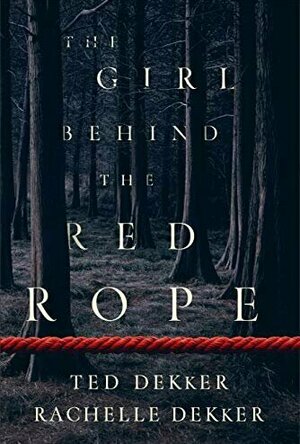
The Girl Behind the Red Rope
Ted Dekker and Rachelle Dekker
5.3 Rate It
Book
Ten years ago, Grace saw something that would forever change the course of history. When a...
Christian Suspense dystopian dystopia Christian fiction Christian suspense
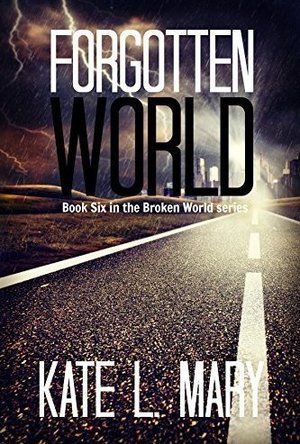
Forgotten World
8.0 Rate It
Book
Forgotten World, book six in the Broken World series, continues following a group of survivors after...
Post Apocalyptic Apocalypse Dystopia Dystopian Zombies
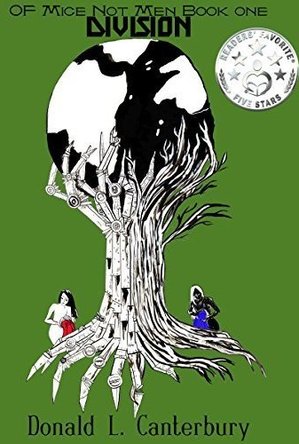
Of Mice Not Men
6.0 Rate It
Book
In the near future, mankind has exhausted the last of their fossil fuels and a new energy crisis...
space science fiction dystopian horror violence apocalypse
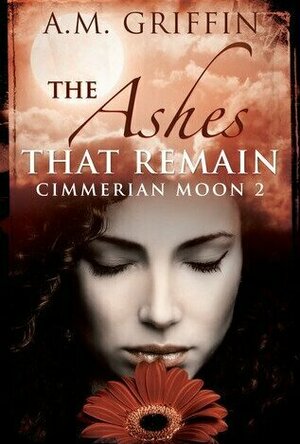
The Ashes That Remain (Cimmerian Moon #2)
10.0 Rate It
Book
We’re at war against the aliens that have invaded Earth, fighting the only way we can—by...
Young Adult Dystopian
Merissa (14160 KP) rated Estranged in Books
Jun 8, 2023
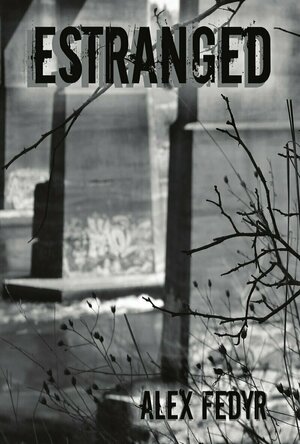
This is an enjoyable story that is full of action. It became a bit difficult to read halfway through, simply due to the amount of action that was taking place, plus the 'street talk' that was prevalent. It did even itself out though, and once again, became a thrilling read. With plenty of twists and turns, you don't ever see what is coming before the author wants you to.
This story is all wrapped up in this book, but it has been left open for a sequel. I hope that the story does continue as I would love to carry on with Kalei's story. Definitely recommended.
* Verified Purchase on Amazon *
Merissa
Archaeolibrarian - I Dig Good Books!
Jun 2, 2016
<i>I received this book for free through Goodreads First Reads.</i>
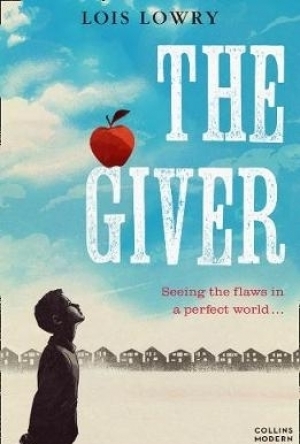
It has been over twenty years since Lois Lowry’s controversial children’s story <i>The Giver</i> was published and it certainly deserves its status as an essential modern classic. Jonas has grown up in the perfect world of the Community whose survival relies on strict rules and rituals. Adults are assigned spouses and children (one boy and one girl) as they take up their role within the society. At the beginning of the book Jonas is approaching then end of his eleventh year and feeling apprehensive about the Ceremony of Twelve where he will be assigned a job for him to do for the rest of his adult life. Jonas gets selected as the Receiver of Memory – a very rare position – and begins to experience memories from humans who lived a long time ago. For Jonas this is exciting until he begins to see the flaws in his perfect world.
Dystopian literature has become popular over the past few years and it would not be surprising if it were <i>The Giver</i> that inspired these contemporary works. Lowry claims that she did not intend for The Giver to have a sinister feel about it; she was writing an adventure story and exploring the concept of the importance of memory, but it turned out to be something much more thought provoking. As the children’s novelist Margaret Mahy (<i>The Haunting</i>) pointed out, up until the publication of this novel in 1993 Lowry was best known for her funny stories about Anastasia Krupnik resulting in <i>The Giver</i> being even more shocking and unexpected.
<i>The Giver</i> highlights that attempting to produce perfection can often result in the loss of good things as well as the bad. The notion of the ideal world may seem like a wonderful proposal, but in order to achieve it humans would have to do away with free choice as in ironing out the inequalities and injustices of the present world would result in everything becoming the same for each individual.
This is a difficult concept to grasp, particularly for a child. Although intended as a children’s series, <i>The Giver</i> and its following installments are more suitable for young adults and older. The only issue with this is that the writing style was target at a younger audience meaning that the overall story is short and lacks depth. If it were to have been written for older readers then there would have been the scope for it to become a much lengthier novel.
There are a lot of mixed reviews surrounding this book although they have changed greatly since the original publication. To begin with <i>The Giver</i> was banned in some areas however the dystopian theme has become accepted in today’s society. What many people comment on now is the oversimplification of such strong ideas. Then again, as already mentioned, it needs to be emphasized that this book was aimed at children, thus the language reflects the reading skills of its target audience.
<i>The Giver</i> is a gem of a book that not only is enjoyable but also can educate the reader on the dangers of attempting a utopian society and why it is important to retain human memories – even the bad – in order that wisdom can exist. Those who have become fans of contemporary dystopian novels, for example <i>Divergent</i> by Veronica Roth or <i>Delirium</i> by Lauren Oliver, will be sure to love this series.

Hazel (1853 KP) rated Divergent Thinking: YA Authors on Veronica Roth's Divergent Trilogy in Books
Dec 17, 2018

<i>This eBook was provided by the publisher via NetGalley in exchange for an honest review</i>
For fans of Veronica Roth’s <i>Divergent</i> series here is a book that delves deeper into the trilogy. Commonly referred to as “the next <i>Hunger Games</i>” Leah Wilson has compiled together several essays that treat <i>Divergent</i> in its own right. <i>Divergent Thinking: YA Authors on Veronica Roth’s Divergent Trilogy</i> is full of a variety of ideas each expressed by a different well-known author.
Although <i>Divergent</i> is a dystopian novel leaning heavily towards the science fiction genre, the essays in this book compare the storyline and its components with reality. Through the complex heroine, Tris, the reader learns about family values, friendships, secrets and lies – all of these things being something that is experienced within everyone’s lives.
What are really interesting are the various authors’ perceptions on Roth’s use of factions - from this stem essays on personality types, life choices, psychology, bravery and science. <i>Divergent Thinking</i> is full of thought-provoking ideas that many readers would not have considered when first reading the trilogy. These authors make the reader think more about their own lives in relation to Tris and Tobias’. Most importantly Wilson’s compilation draws attention to the amount of research Roth must have done in order to create a dystopian future.
What is particularly good about this book is that the authors treat the characters as people in their own right with their own personalities and opinions. Instead of criticizing the way Roth has portrayed someone they comment instead on how they disagree with a particular characters thought or action. This proves, in a way, the brilliance behind Roth’s writing. Through reading <i>Divergent</i> we are not only staring at a page of writing, we are drawn directly into the storyline.
To be able to appreciate the essays included in this book readers need to already have a good understanding of the original novels, in other words read the trilogy first. There are also many spoilers for those who have not yet reached the final installment, <i>Allegiant</i>. It would also help to be a fan of <i>Divergent</i> as all these authors clearly are. Overall this is such a fascinating read. Some chapters are more interesting than others but that will also depend on the reader. If you prefer science and facts there are essays in here for you, likewise if you prefer a more personal touch there is something for you too.

Suswatibasu (1703 KP) rated Ready Player One in Books
Oct 21, 2017
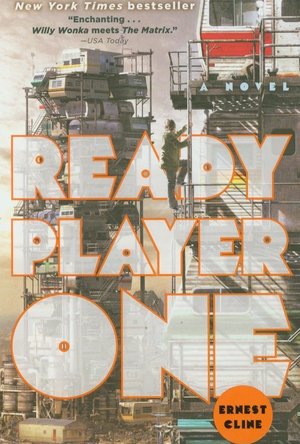

Growing up in the 1980's means I can relate to much of the references in this book such as Blade Runner, Ferris Bueller's Day Out etc. but it seems to be laid on too thick as if it's trying to go along with this new revival of the era (Stranger Things, Ghostbusters).
Also as a non-gamer, this virtual world appears fatuous and vapid, hence the author seems to be gearing this book towards a new generation of players rather than those who were actually living during this time.
The character development and context of much of the book is poor, as Wade seems to have skills that materialise from nowhere, we just have to accept that he had indeed "read this and that". Overall, this book was clearly made to be a film, so it's unsurprising that Steven Spielberg has bought the rights.

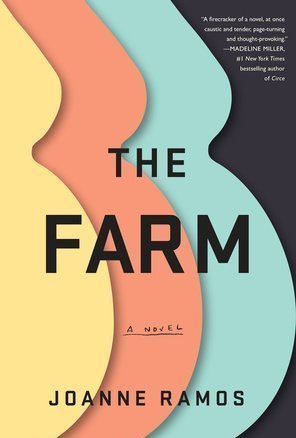
Reagan is white, educated and wants to make a difference in the world.
Jane and Regan are just two of the many girls who work at Golden Oaks as ‘Hosts’.They are basically surrogates for the rich and influential.
But is all as it seems at Golden Oaks, (nick named ‘The Farm’ by some of the hosts) and can you truly sell a part of yourself without ramifications.
The story essentially focuses on Jane and her struggles, but it is also told from the perspective of Reagan (Jane’s room mate) Ate (Janes Cousin) and Mae (The manager at Golden Oaks).
This took me a little while to really get into the characters at first, but once I had the story flowed nicely and it was easy to get engrossed in. The thing that drew me to the book was that it had been highlighted at ‘A Handmaids Tale for 2019’ and you can definitely see that. The set up at Golden Oaks is all very plausible and sounds idyllic, the Hosts are all there willingly and being paid handsomely. However, you can see how an institute like Golden Oaks could descend into Margaret Atwoods dystopian nightmare.